Uploaded Tactic
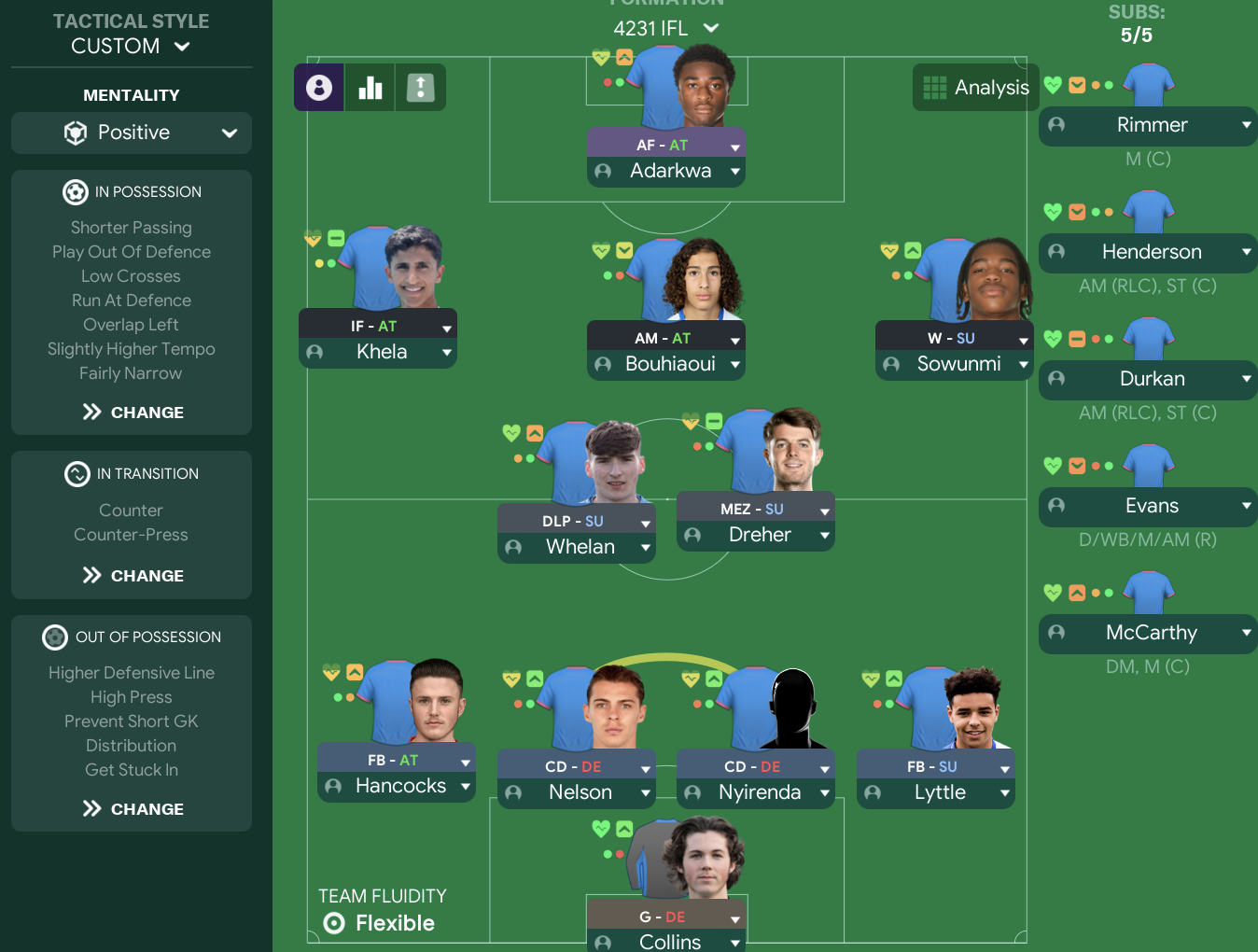
Formation & Style
Tactical Style:Custom
Mentality:Positive
Formation:4-2-3-1 IFL
Team Fluidity:Flexible
In Possession
Shorter Passing
Play Out Of Defence
Low Crosses
Run At Defence
Overlap Left
Slightly Higher Tempo
Fairly Narrow
In Transition
Counter
Counter-Press
Out of Possession
Higher Defensive Line
High Press
Prevent Short GK Distribution
Get Stuck In
Team Shape Without Ball
No team shape without ball data available
Team Shape With Ball
No team shape with ball data available
Key Strengths
Fluid Attack
Utilizes a flexible shape with a positive mentality, encouraging players to express themselves in attack.
Counter-Press Philosophy
Quick to regain possession after losing the ball, allowing for immediate goal-scoring opportunities.
Width and Overlaps
Full-backs and wingers can create space and provide width, stretching the opposition's defense effectively.
Dynamic Midfield
A mix of support and attack-minded roles in midfield ensures creative play while maintaining defensive stability.
Conflicting Directions
High Press with Defensive Line
The high defensive line may leave gaps that can be exploited by fast-paced counter-attacks from the opposition.
Narrow Width vs. Wing Play
A fairly narrow approach may contradict the wingers' responsibilities to stretch play, potentially isolating them.
Inside Forwards and Full-Back Roles
Inside forwards may not receive enough support from overlapping full-backs if not coordinated properly.
Tempo Management
A slightly higher tempo could lead to rushed play that undermines shorter passing strategy.
Tactical Suggestions
Adjust Defensive Line
Consider a standard defensive line to lessen the vulnerability to opposition counter-attacks.
Change Width Setting
Increasing the attacking width could allow the wingers and full-backs to exploit space more effectively.
Role Coordination
Ensure that the inside forwards and full-backs have synchronized movements to maximize their impact.
Flexibility in Midfield
Adjusting the Mezzala to an Attacking Midfielder may increase creativity in the attacking third.
Ask Questions About Your Lineup
Guides for this formation
The tactical theory behind the 4-2-3-1 IFL: roles, instructions, and the trade-offs that decide whether the system holds up.
Player pairings
Midfield Pairs in 4-2-3-1 and 4-4-2
Double pivots and flat pairs in 4-2-3-1 and 4-4-2: when each pairing works, when it collapses, and the AMC unicorn that rescues both.
Read guide
Playing styles
Gegenpressing: A Full Guide
Klopp-style gegenpressing in FM, including squad profile, line-and-press pairing, sustainable workload, and the antipatterns to avoid.
Read guide