Uploaded Tactic
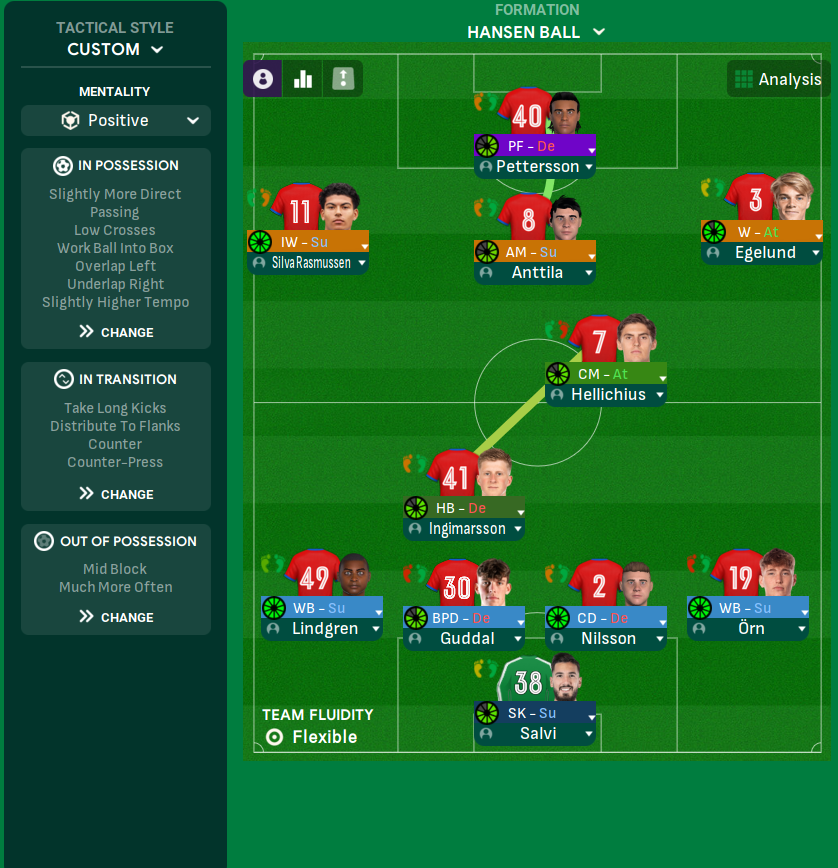
Formation & Style
Tactical Style:Custom
Mentality:Positive
Formation:4-2-3-1 Narrow
Team Fluidity:Flexible
In Possession
Slightly More Direct Passing
Low Crosses
Work Ball Into Box
Overlap Left
Underlap Right
Slightly Higher Tempo
In Transition
Take Long Kicks
Distribute To Flanks
Counter
Counter-Press
Out of Possession
Mid Block
Much More Often
Team Shape Without Ball
No team shape without ball data available
Team Shape With Ball
No team shape with ball data available
Key Strengths
Attacking Width
Utilizing inside forwards and overlapping wing-backs, this setup creates options both centrally and on the flanks, allowing for effective attacking play.
Pressing Strategy
The pressing forward and counter-pressing focus can quickly regain possession, putting pressure on opponents high up the pitch.
Midfield Control
With a central midfielder on attack duty and an advanced playmaker support, this formation encourages creativity and control in the central areas.
Defensive Solidarity
The half-back role provides additional support to the defense and helps transition play from defense to attack efficiently.
Conflicting Directions
Inconsistent Forward Roles
Having both a pressing forward and advanced midfielder may lead to confusion, as the pressing forward will push higher, potentially isolating the AM.
Mid Block Limitations
While a mid block can provide structure, it may not take full advantage of the high pressing emphasis during transitions, potentially allowing opponents too much time on the ball.
Wing Play vs Central Focus
Low crosses may conflict with an attack plan focusing heavily on central play, as the inside forward's role may not take full advantage of opposite wing-play.
Possession vs Transition
Slightly more direct passing may conflict with the aim to work the ball into the box, creating potential inefficiencies in the build-up.
Tactical Suggestions
Adjust Forward Roles
Consider using a more traditional striker role to complement the advanced midfielder, ensuring fluidity in the final third.
Enhance Transition Strategy
Encouraging a slightly higher line of engagement may allow the team to harness their pressing ability more effectively.
Alternative Width Strategy
If consistent wing play is desired, consider switching the inside forward to a winger role to maximize width and crossing opportunities.
Clarify Player Instructions
Ensure player instructions align with overall tactical goals, emphasizing what each player should focus on during different phases of play.
Ask Questions About Your Lineup
Related Tactics
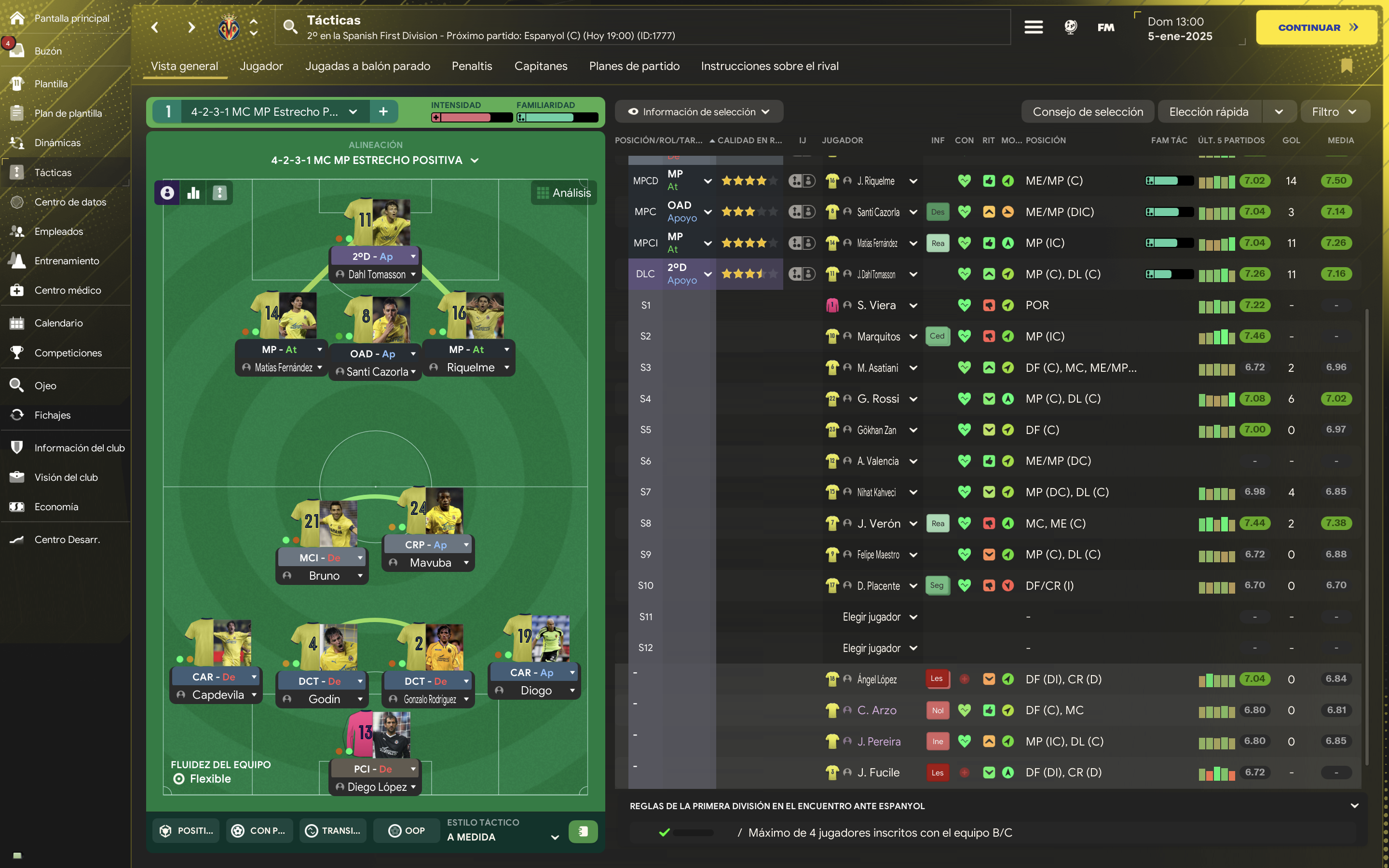
4-2-3-1 Narrow Formation
Positional
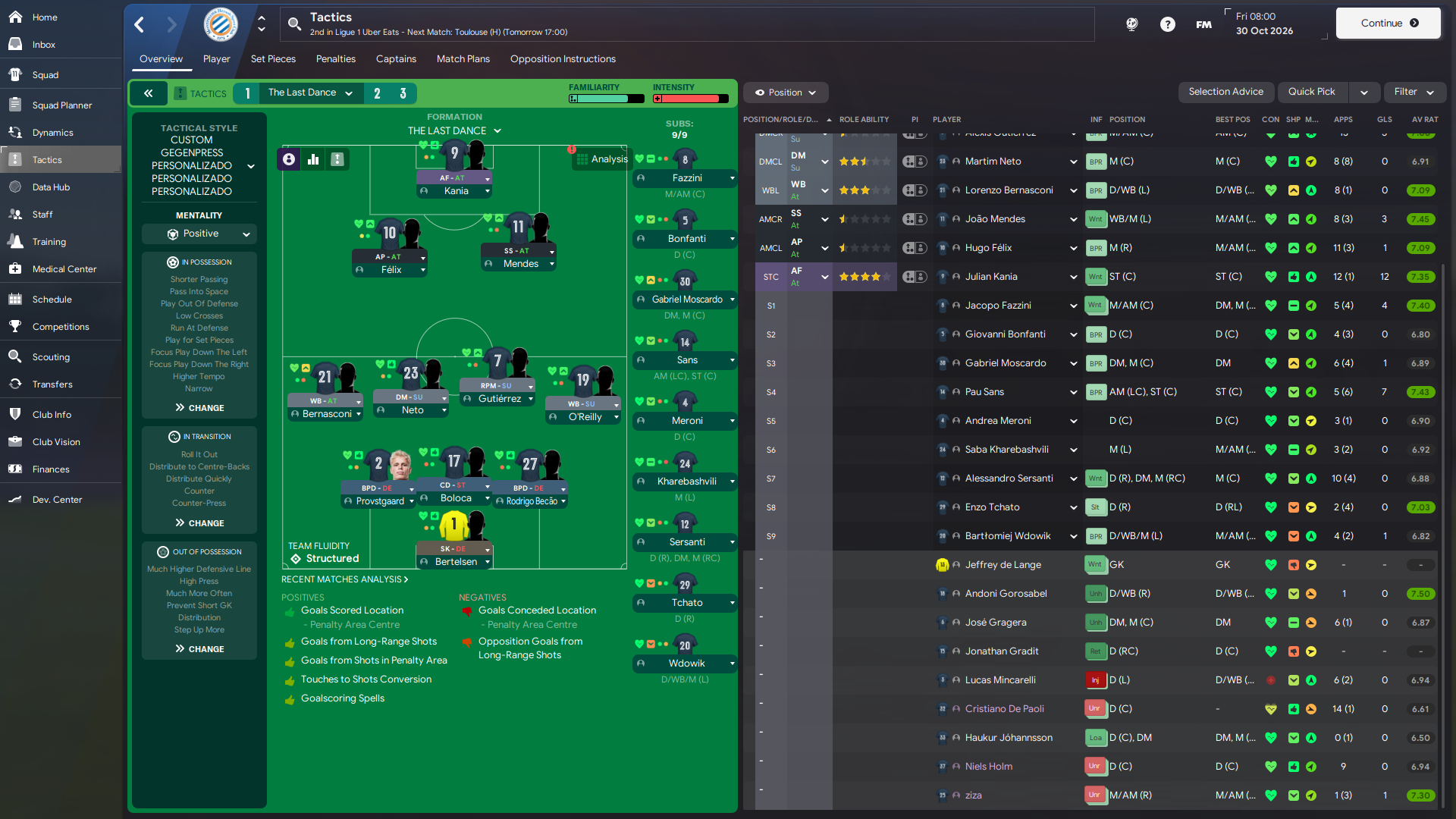
Gegenpress 4-2-3-1 Narrow
Gegenpress
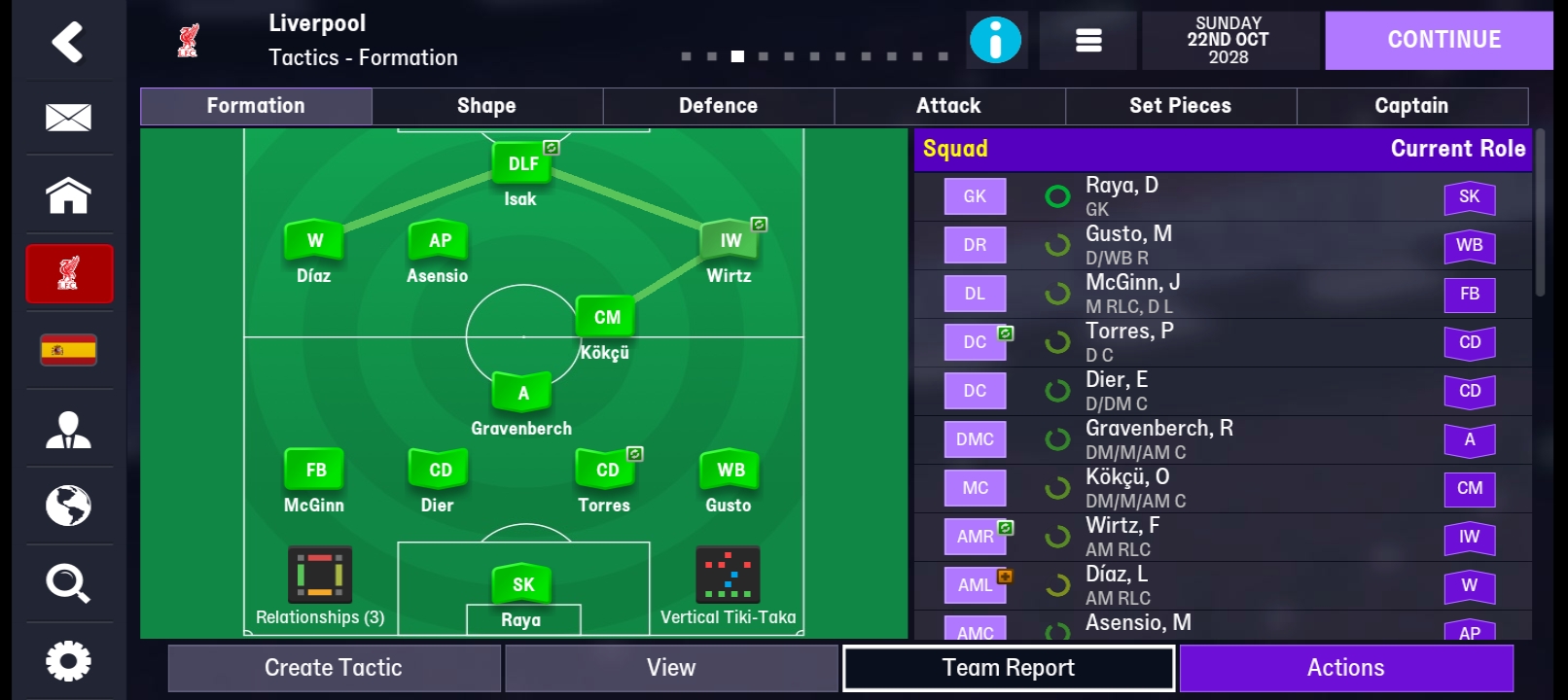
Vertical Tiki-Taka 4-2-3-1 Narrow
Vertical Tiki-Taka
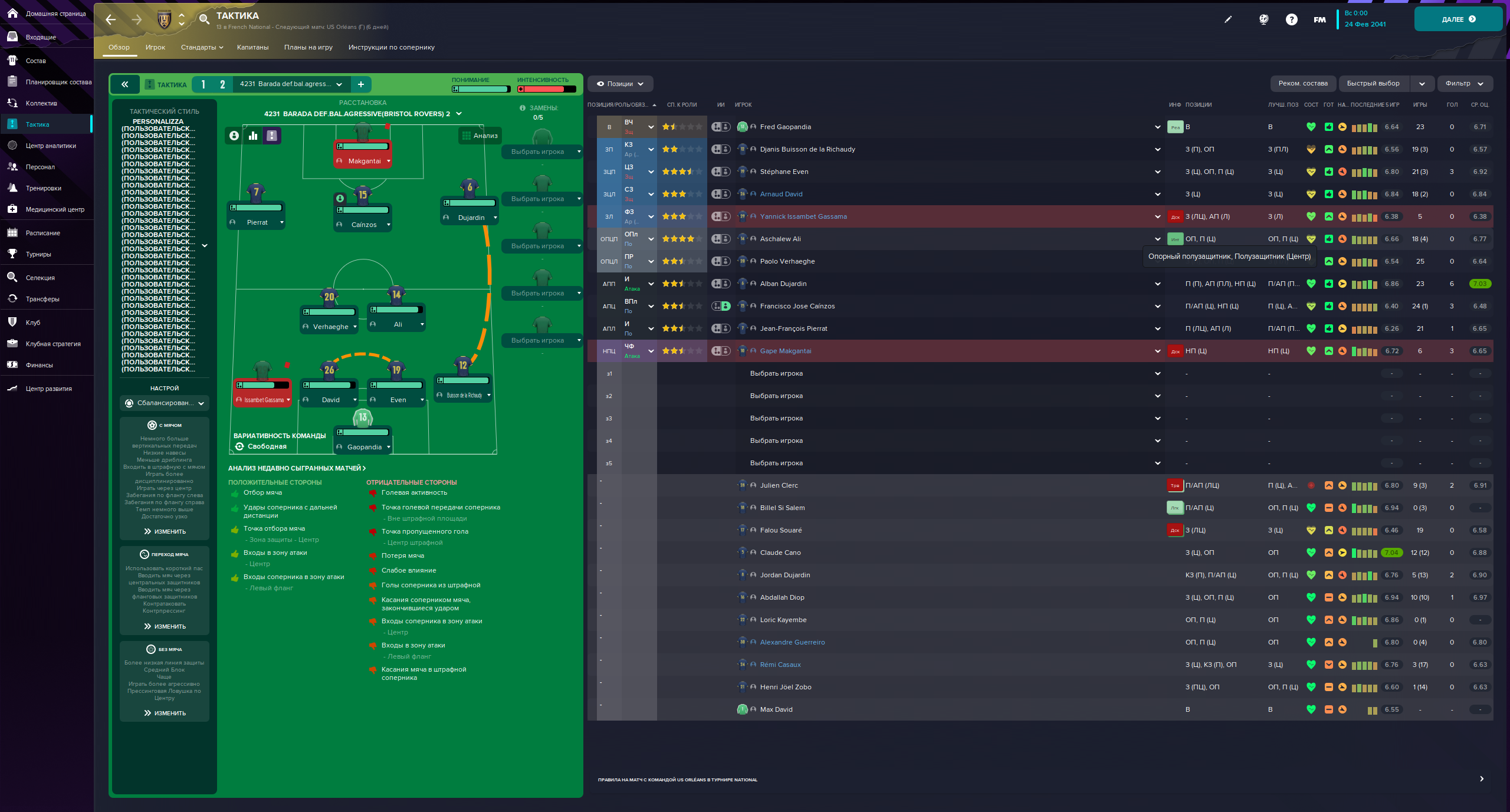
Balanced 4-2-3-1 Narrow
Balanced
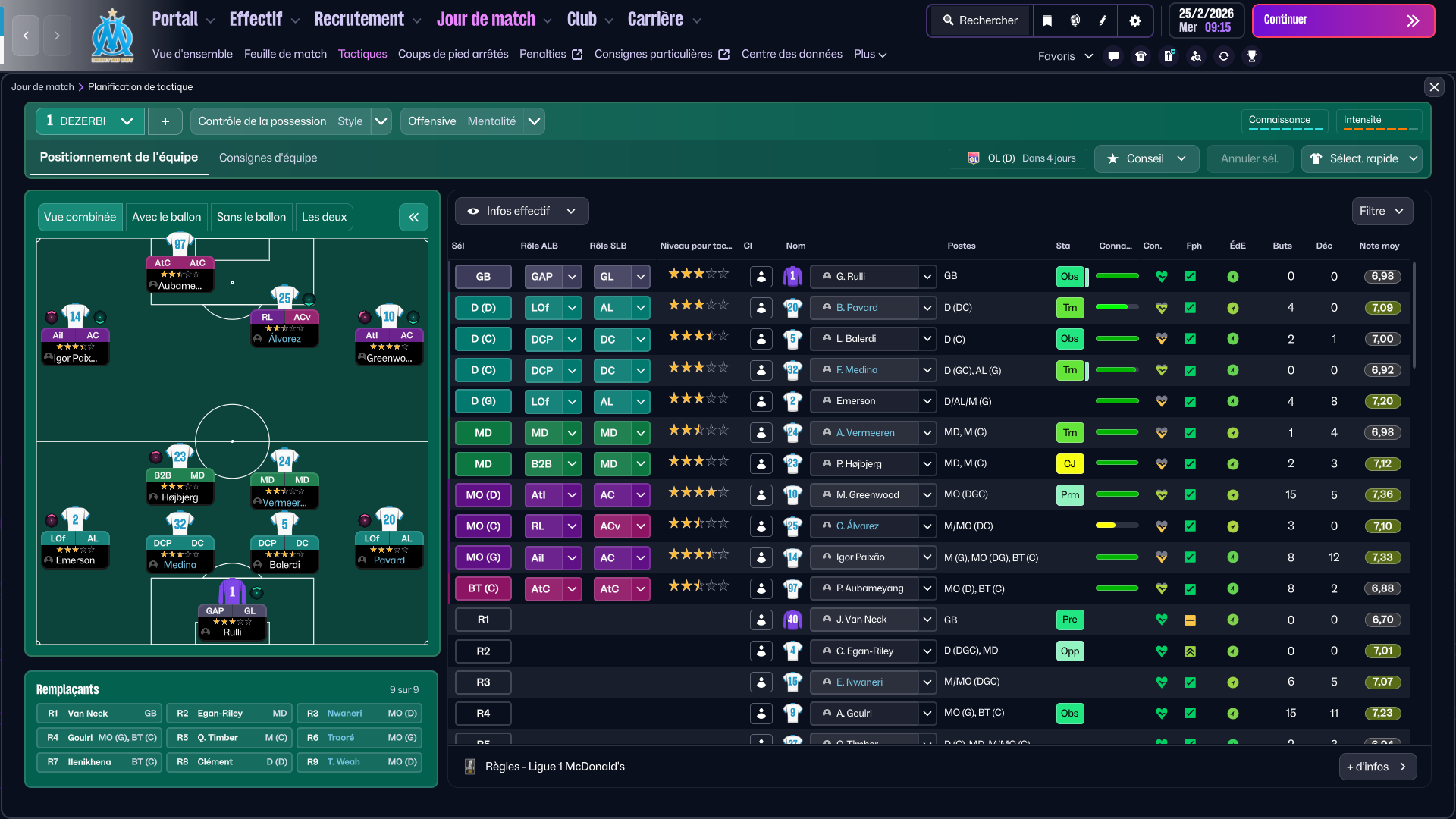
Possession Control 4-2-3-1 Narrow
Possession Control
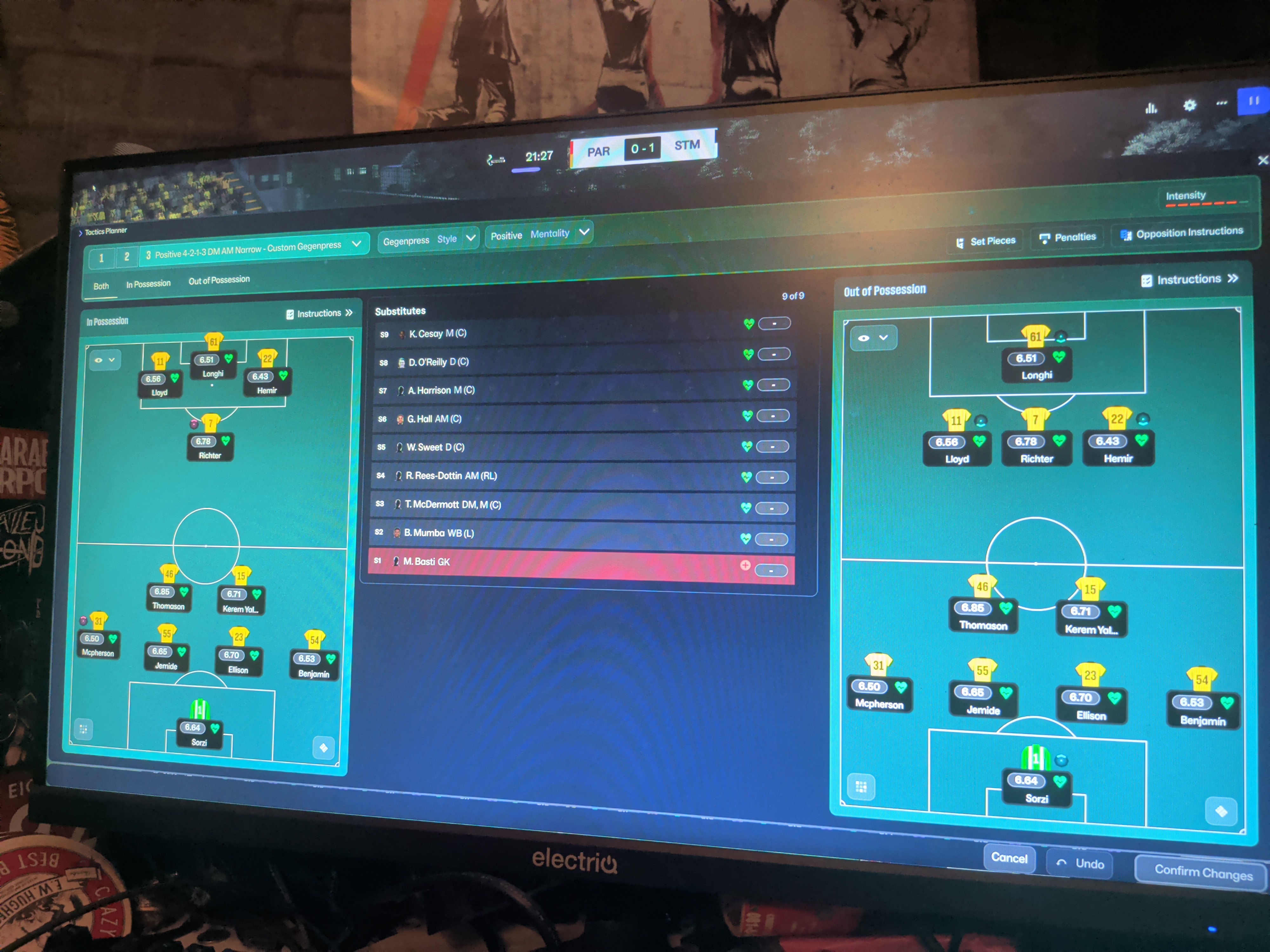
Gegenpress 4-2-3-1 Narrow
Gegenpress
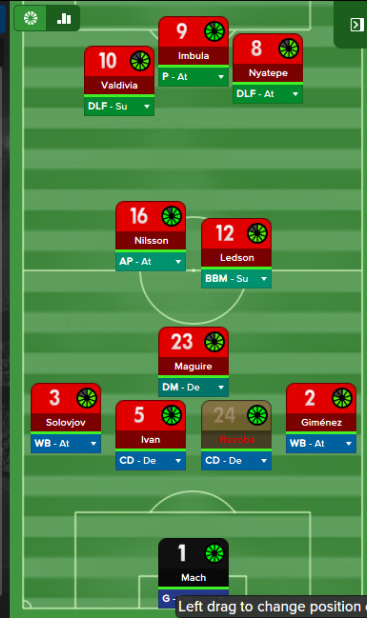
Attacking 4-2-3-1 Narrow
Attacking
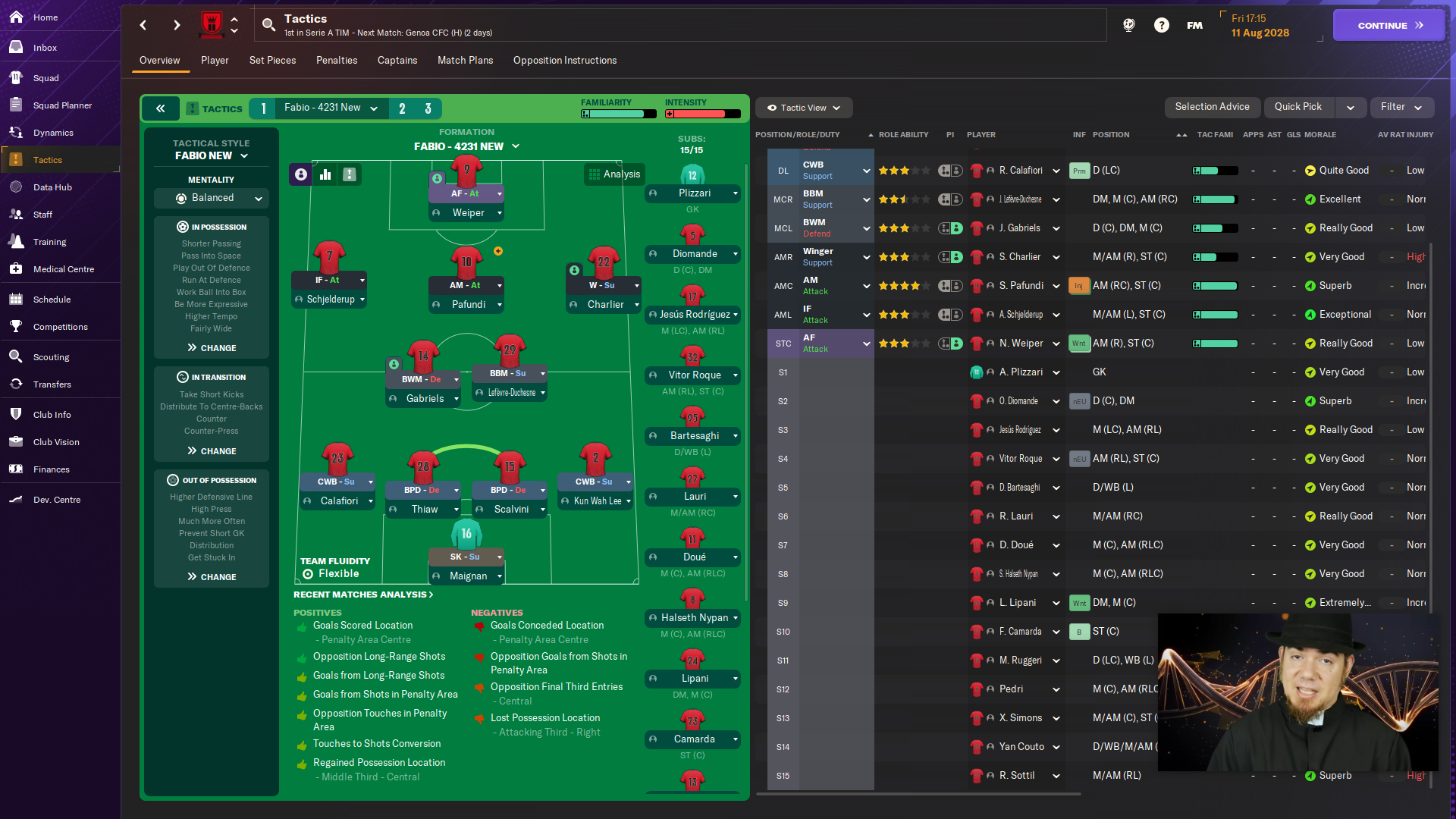
Balanced 4-2-3-1 Narrow
Balanced
Guides for this formation
The tactical theory behind the 4-2-3-1 Narrow: roles, instructions, and the trade-offs that decide whether the system holds up.
Player pairings
Midfield Pairs in 4-2-3-1 and 4-4-2
Double pivots and flat pairs in 4-2-3-1 and 4-4-2: when each pairing works, when it collapses, and the AMC unicorn that rescues both.
Read guide
Playing styles
Gegenpressing: A Full Guide
Klopp-style gegenpressing in FM, including squad profile, line-and-press pairing, sustainable workload, and the antipatterns to avoid.
Read guide