Uploaded Tactic
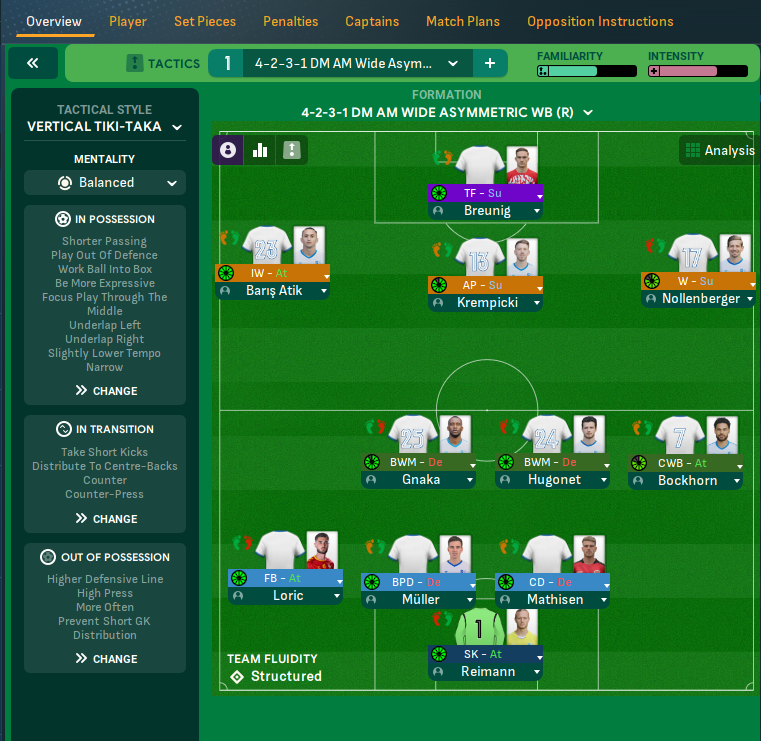
Formation & Style
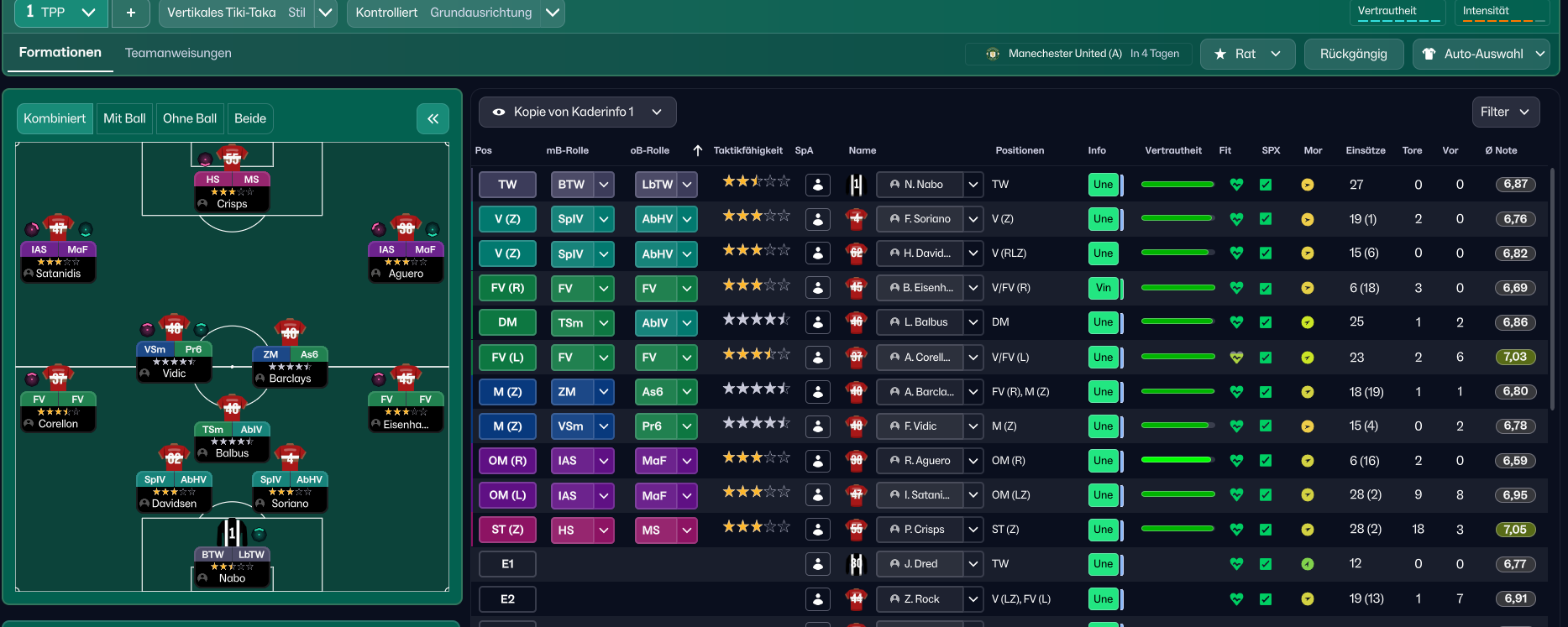
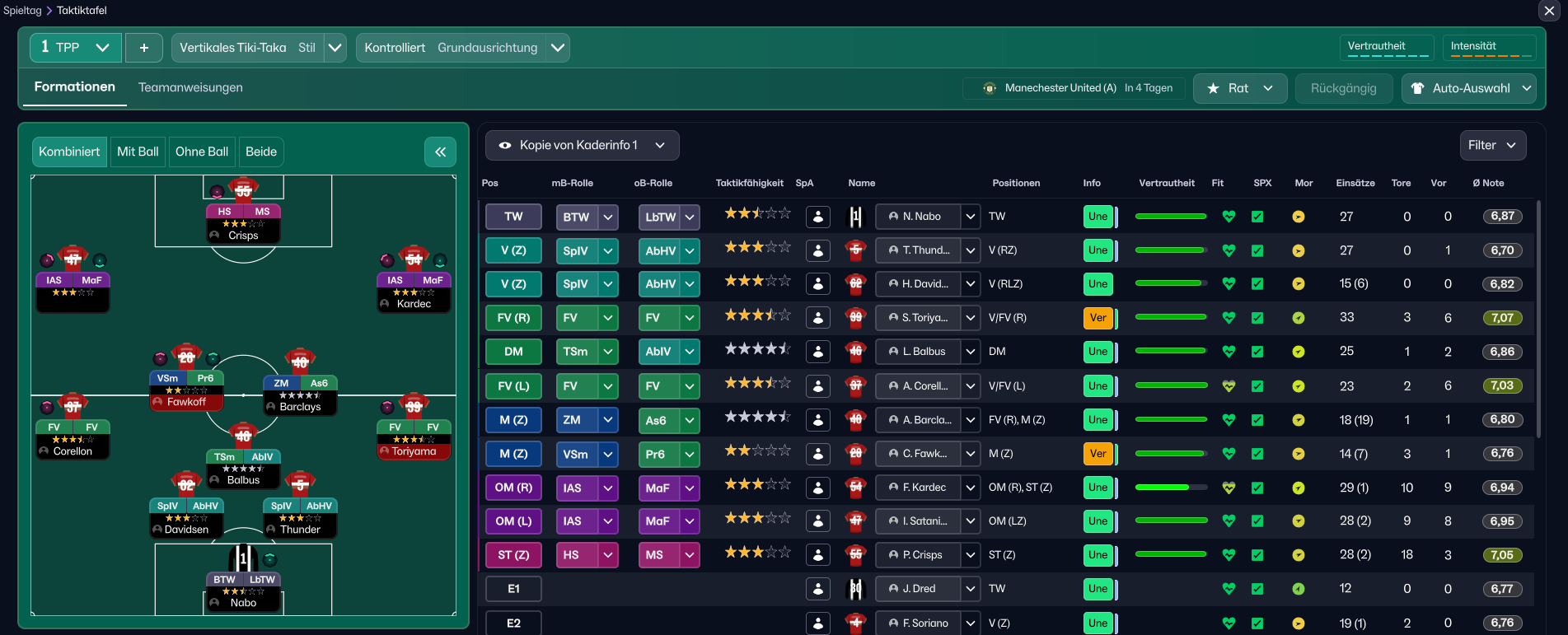
Tactical Style:Vertical Tiki-Taka
Mentality:Balanced
Formation:4-2-3-1 Wide Asymmetric
Team Fluidity:Structured
In Possession
Shorter Passing
Play Out Of Defence
Work Ball Into Box
Be More Expressive
Focus Play Through The Middle
Underlap Left
Slightly Lower Tempo
Narrow
In Transition
Take Short Kicks
Distribute To Centre-Backs
Counter
Counter-Press
Out of Possession
Higher Defensive Line
High Press
More Often Prevent Short GK Distribution
Team Shape Without Ball
Shape:4-2
Description:Standard defensive shape with two solid midfielders shielding the defence.
Evidence:BWM-D at [3,2] and [3,3] offering protection and allowing flexibility.
Team Shape With Ball
Shape:4-3
Description:Wide attacking shape with options for crossing and through-balls due to the positional flexibility of the wing players.
Evidence:IW-A at [5,1] and W-Su at [5,3] creating width and attacking depth.
Phase Description
Attacking Play
Utilizes short passing and underlaps to create chances while focusing on a central playmaker.
Defensive Transition
Quickly recovers possession with a counter-press initiative, aided by ball-winning midfielders.
Main Focus
Controlling the game through possession while maintaining attacking threats from the wings.
Key Strengths
Balanced Midfield
The blend of attacking and defending roles in midfield provides both creativity and stability.
Wing Play
The combination of inside wingers and complete wing-backs aids in stretching the opposition.
Pressing and Countering
High pressing coupled with a counter-attacking threat when possession is won.
Conflicting Directions
Narrow Play vs Wide Players
The tactical instruction promotes narrow play, conflicting with the width offered by wingers.
Attack vs Defensive Duties
Having an attacking mentality from midfield can lead to vulnerability at the back.
High Press with Low Tempo
Pressing high while maintaining a lower tempo can hinder transitions.
Tactical Suggestions
Adjust Tempo
Raising the tempo can complement the high pressing style and enhance attacking fluidity.
Wider Focus
Encouraging more width while maintaining narrowness in midfield can exploit opposition flanks.
Use of Secondary Playmaker
Introducing another playmaker role in midfield can increase creativity.
Ask Questions About Your Lineup
Related Tactics
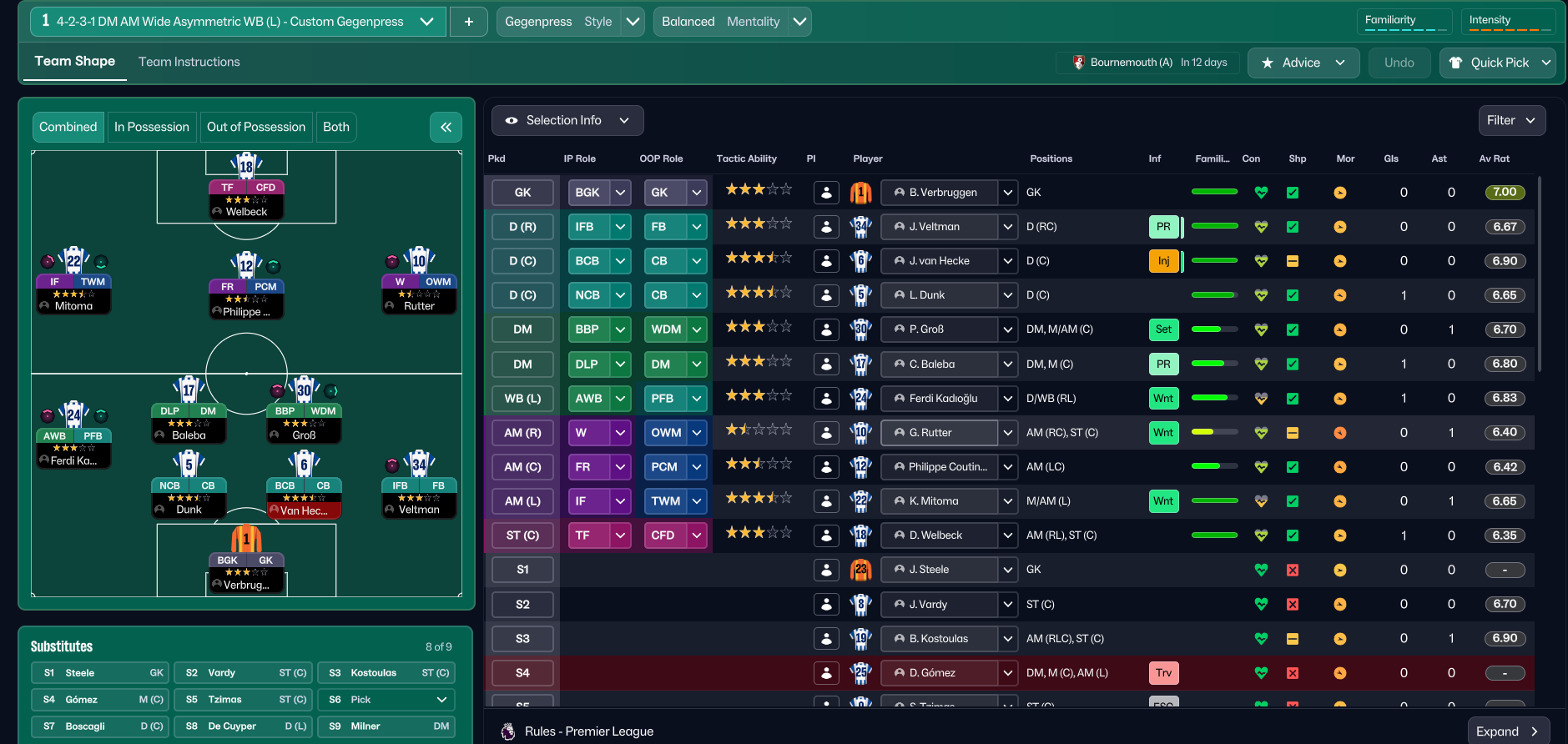
More Vertical Tiki-Taka tactics
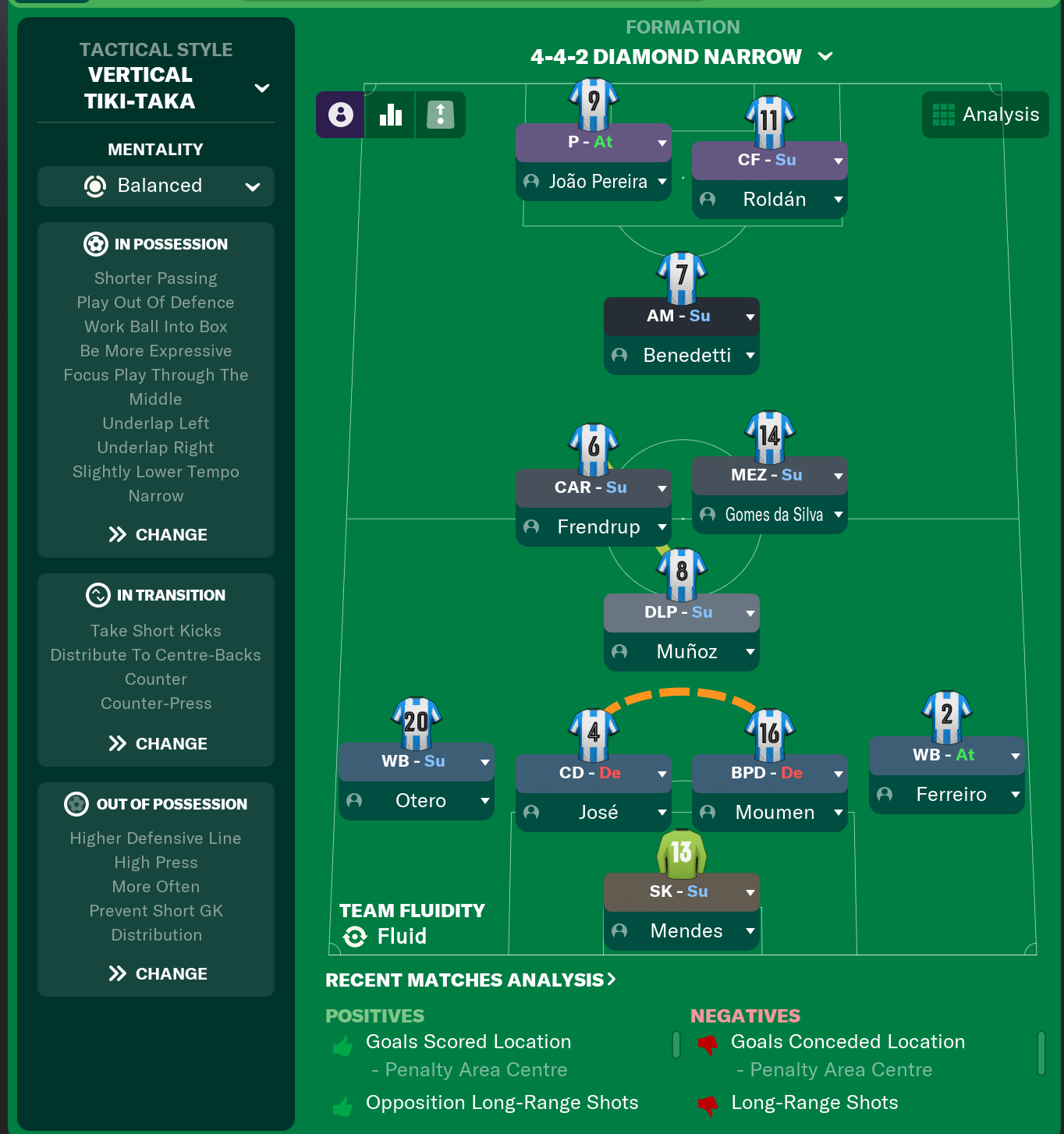
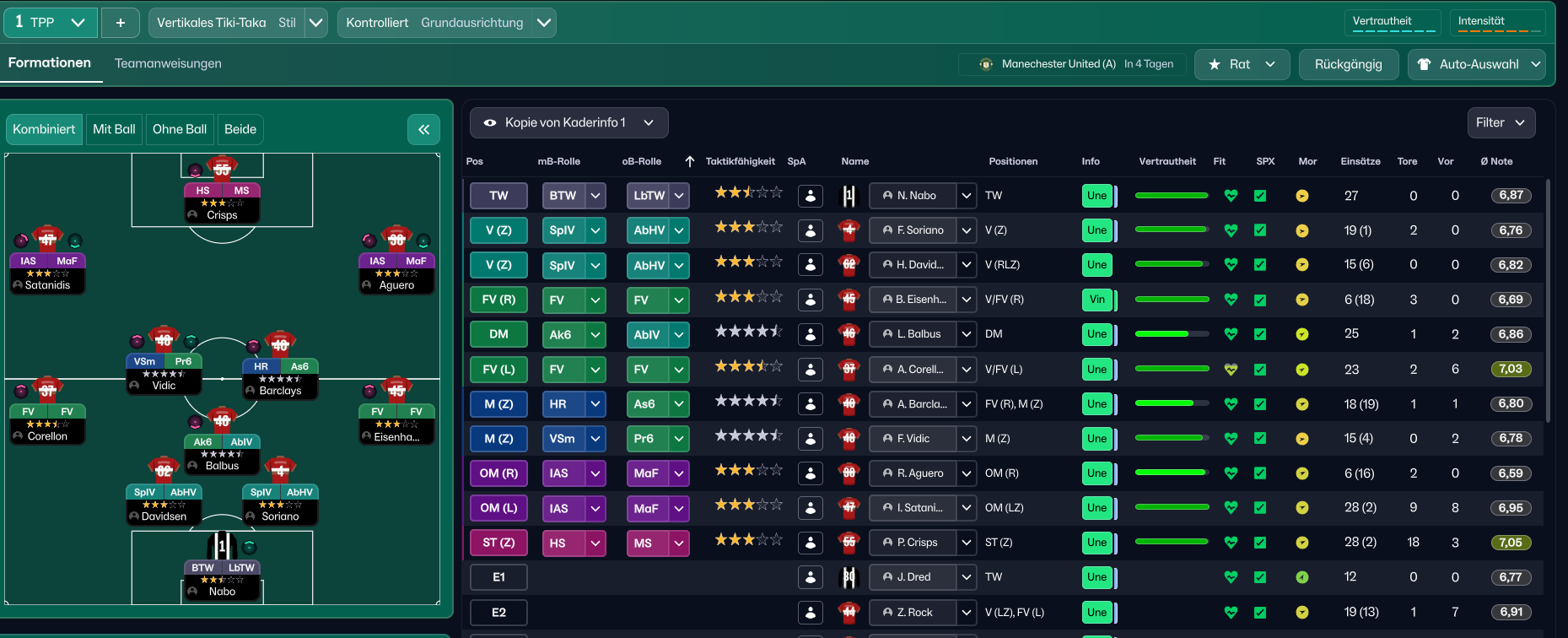
Guides for this formation
The tactical theory behind the 4-2-3-1 Wide Asymmetric: roles, instructions, and the trade-offs that decide whether the system holds up.
Player pairings
Midfield Pairs in 4-2-3-1 and 4-4-2
Double pivots and flat pairs in 4-2-3-1 and 4-4-2: when each pairing works, when it collapses, and the AMC unicorn that rescues both.
Read guide
Playing styles
Gegenpressing: A Full Guide
Klopp-style gegenpressing in FM, including squad profile, line-and-press pairing, sustainable workload, and the antipatterns to avoid.
Read guide