Uploaded Tactic
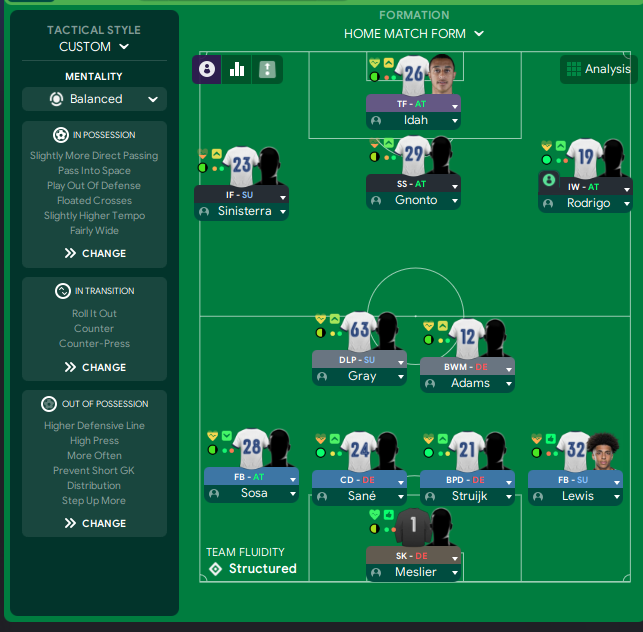
Formation & Style
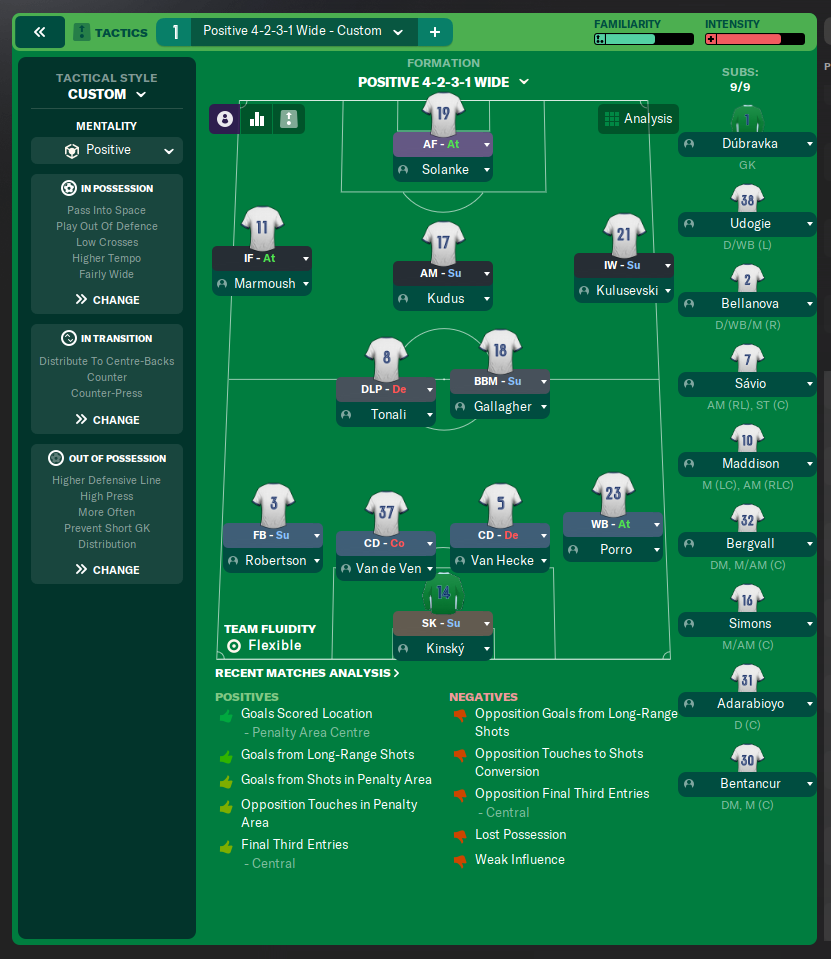
Tactical Style:Custom
Mentality:Balanced
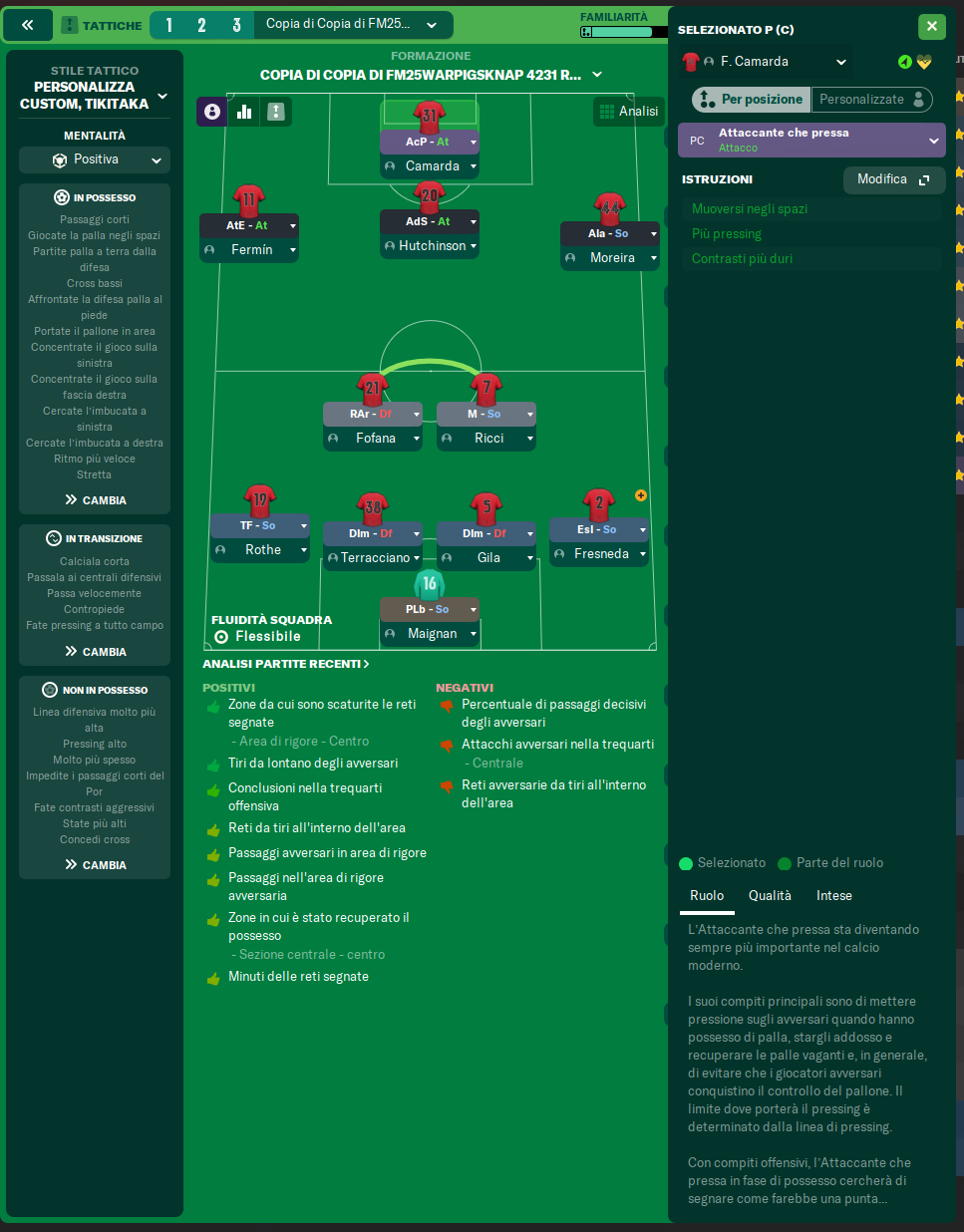
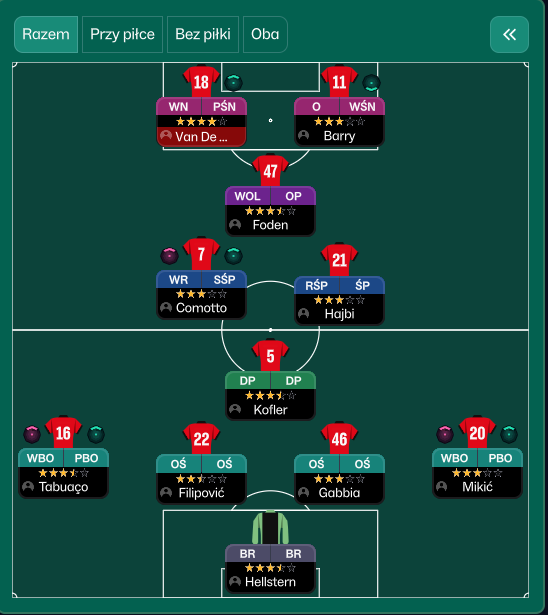
Formation:4-2-3-1 Wide
Team Fluidity:Structured
In Possession
Slightly More Direct Passing
Pass Into Space
Play Out Of Defence
Floated Crosses
Slightly Higher Tempo
Fairly Wide
In Transition
Roll It Out
Counter
Counter-Press
Out of Possession
Higher Defensive Line
High Press
More Often Prevent Short GK Distribution
Team Shape Without Ball
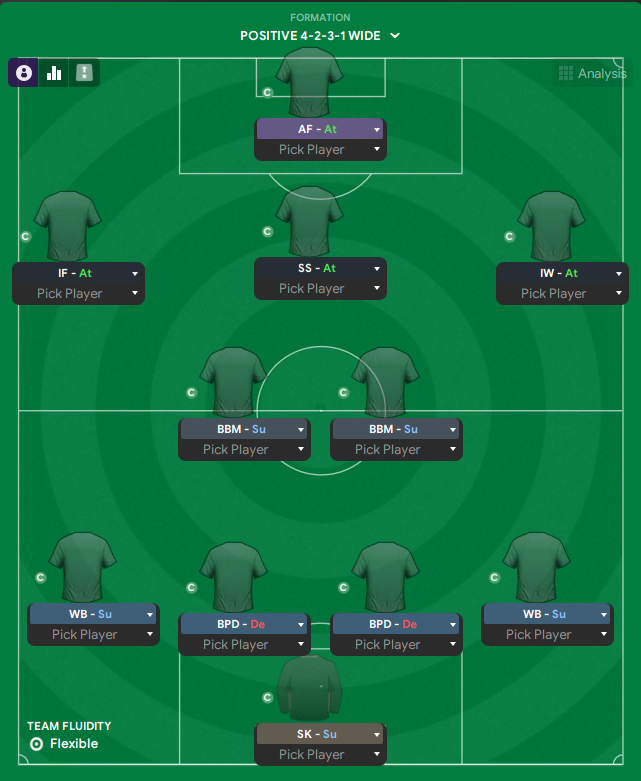
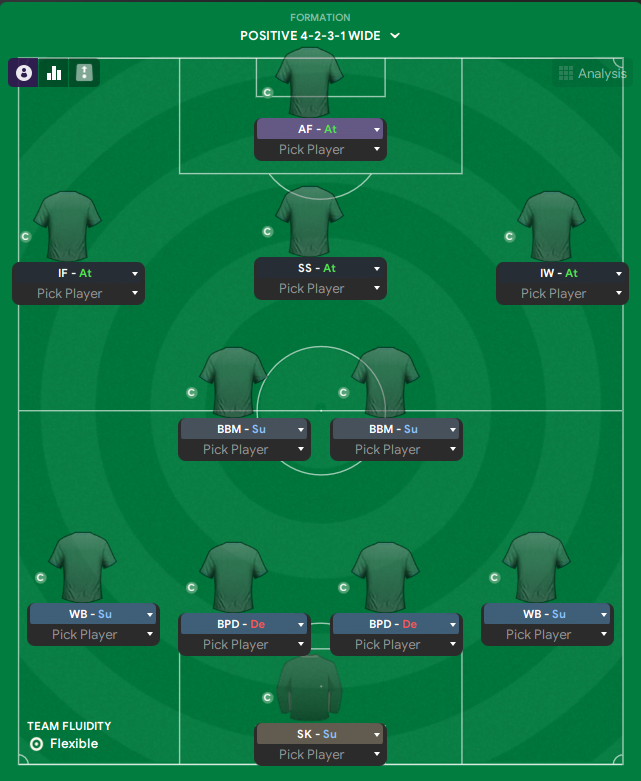
Shape:4-4-2
Description:In a defensive setup, the team can drop into a compact 4-4-2, stifling spaces between the lines.
Evidence:DCs ensure central compactness with full-backs dropping back to support the midfield.
Team Shape With Ball
Shape:4-2-3-1
Description:The attacking shape has width from the inside forwards and inverted winger, with the target forward central for finishing opportunities.
Evidence:Full-backs pushing high add to the attacking width alongside the creative players.
Phase Description
Attacking Play
Utilizes width through the inside forwards and inverted winger, with the target forward ready to hold up play and link with the attacking midfield.
Defensive Transition
Quick transition to a counter-pressing scenario, aiming to win the ball back high up the pitch.
Main Focus
Maximizing space using direct passing and player movement to exploit defensive gaps.
Key Strengths
Dynamic Attack
The combination of inside forwards and an attacking target forward creates multiple goal-scoring avenues.
Solid Midfield Balance
With a DLP-S and BWM-D, there is both playmaking ability and defensive cover in midfield.
Pressing Capability
The tactics emphasize high pressing and quick recoveries, creating immediate pressure on opponents.
Conflicting Directions
High Defensive Line and Counter-Press
While a high defensive line can be effective, it may expose the team's defense to quick transitions.
Full-Back Roles
The balance of attacking full-backs (FB-A) may compromise defensive stability.
Inverted Winger and Inside Forward Synergy
The interplay could become predictable if not supported adequately by overlapping runs.
Tactical Suggestions
Consider Full-Back Role Adjustments
Switch one full-back to a more defensive role to aid stability while the other supports.
Adjust High Press Tactics
Consider lowering the defensive line slightly to prevent exposure at the back.
Enhance Midfield Flexibility
Implement a rotational dynamic between the DLP and BWM to confuse opposing midfielders.
Ask Questions About Your Lineup
Related Tactics
Guides for this formation
The tactical theory behind the 4-2-3-1 Wide: roles, instructions, and the trade-offs that decide whether the system holds up.
Player pairings
Midfield Pairs in 4-2-3-1 and 4-4-2
Double pivots and flat pairs in 4-2-3-1 and 4-4-2: when each pairing works, when it collapses, and the AMC unicorn that rescues both.
Read guide
Playing styles
Gegenpressing: A Full Guide
Klopp-style gegenpressing in FM, including squad profile, line-and-press pairing, sustainable workload, and the antipatterns to avoid.
Read guide