Uploaded Tactic
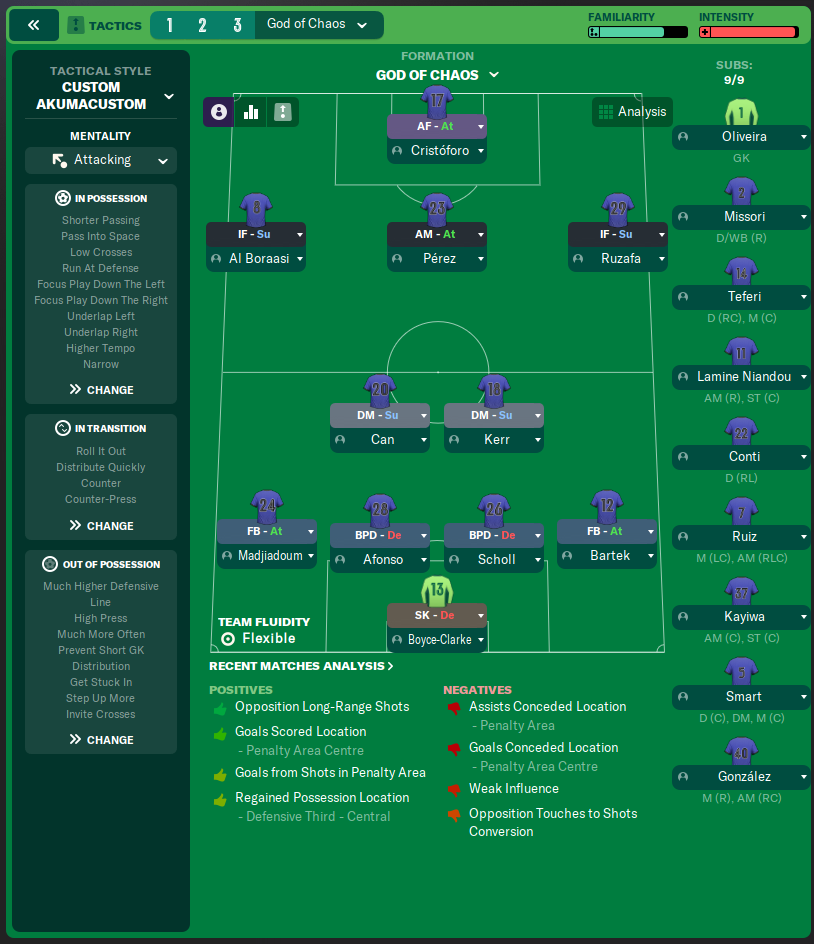
Formation & Style
Tactical Style:Custom AkumaCustom
Mentality:Attacking
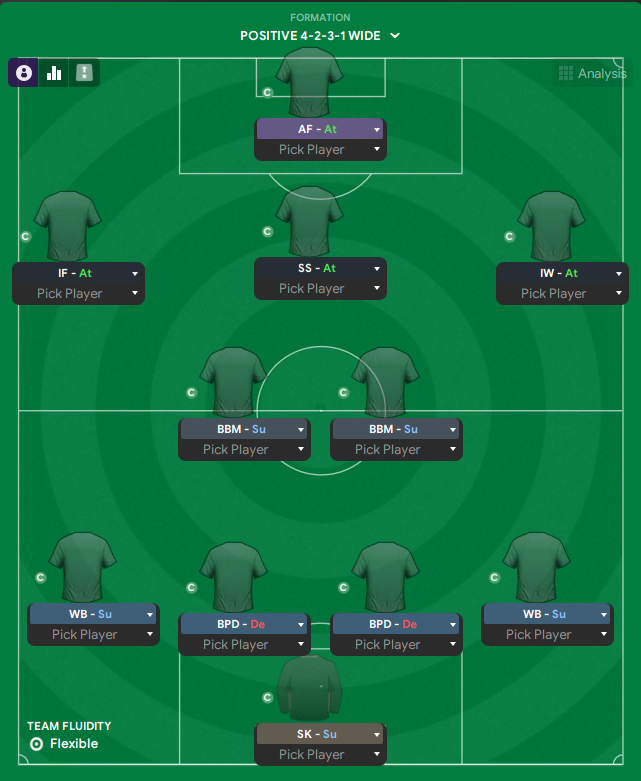
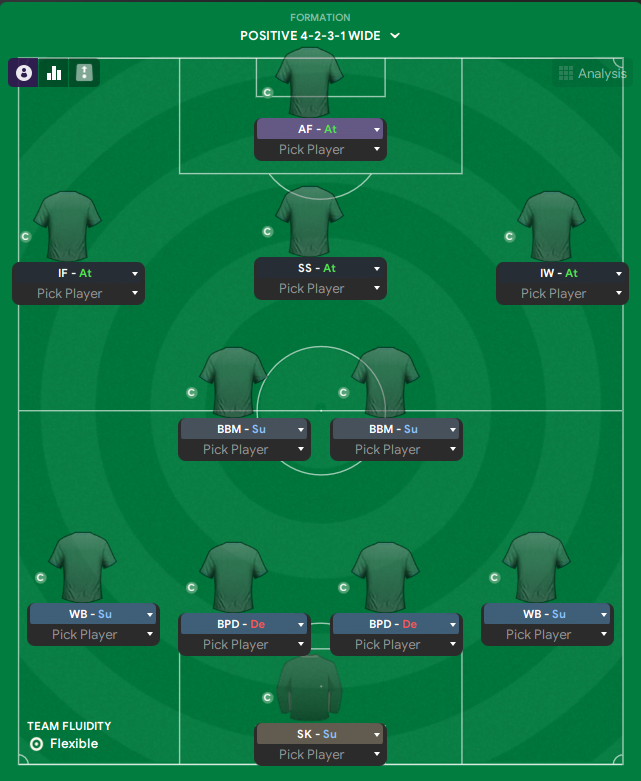
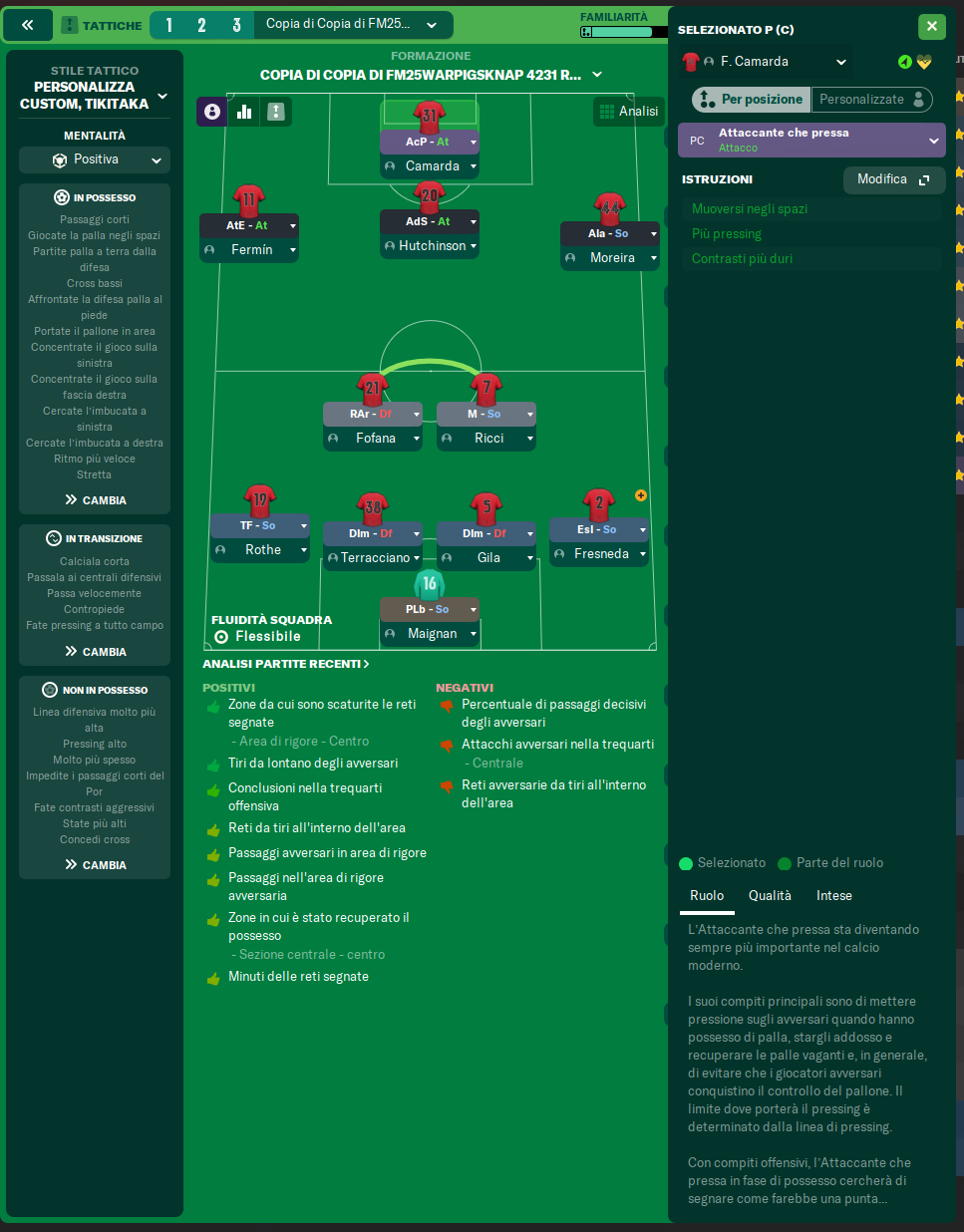
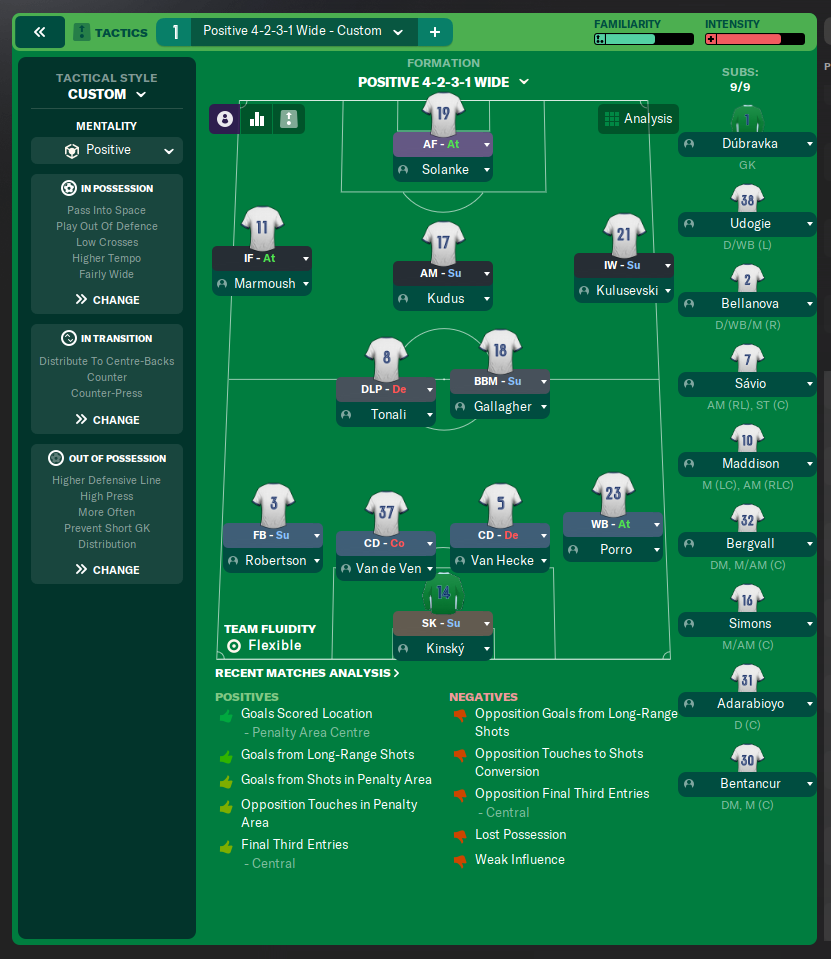
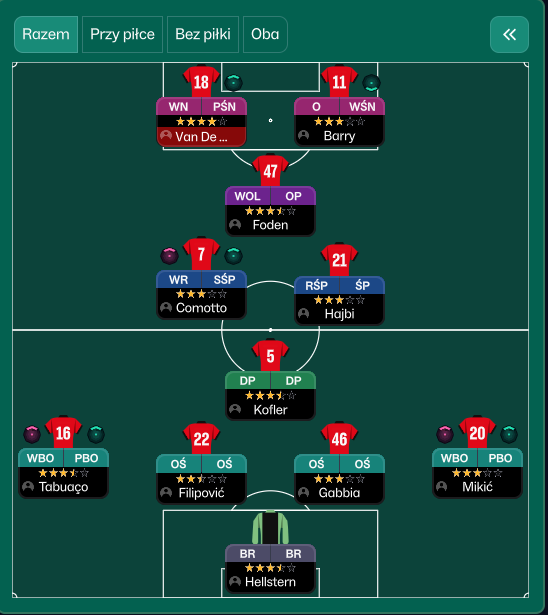
Formation:4-2-3-1 Wide
Team Fluidity:Flexible
In Possession
Shorter Passing
Pass Into Space
Low Crosses
Run At Defense
Focus Play Down The Left
Focus Play Down The Right
Underlap Left
Underlap Right
Higher Tempo
Narrow
In Transition
Roll It Out
Distribute Quickly
Counter
Counter-Press
Out of Possession
Much Higher Defensive Line
High Press
Much More Often Prevent Short GK Distribution
Get Stuck In
Step Up More
Invite Crosses
Team Shape Without Ball
Shape:4-2-3-1
Description:Compact defensive shape with a higher line to compress space.
Evidence:Much Higher Defensive Line, High Press combined with two DMs providing cover
Team Shape With Ball
Shape:4-3-3
Description:Fluid attacking setup with overlapping full-backs providing width.
Evidence:Full-Backs (FB-A) at [2,1] and [2,5] underlapping wingers create space.
Phase Description
Attacking Play
Fast-paced with a focus on exploiting the flanks and creating opportunities through the middle.
Defensive Transition
Quickly regroup and apply pressure, emphasizing high intensity to regain possession.
Main Focus
Utilizing width to create scoring chances while maintaining defensive solidity.
Key Strengths
Explosive Attack
The combination of an Advanced Forward and Inside Forwards allows for dynamic movements that can exploit defensive weaknesses.
Midfield Control
Two Defensive Midfielders provide balance and support for both attack and defense.
Width in Attack
Full-Backs pushing forward create additional width, making it harder for defenses to contain wingers.
Conflicting Directions
High Defensive Line vs. Counter
The high defensive line can be vulnerable to quick counter-attacks, especially against pacey forwards.
Inverted Play vs. Wing Play
Inner focus on passing through the center may clash with the requirement for width in build-up.
Pressing Intensity vs. Fatigue
High pressing can lead to fatigue if not managed properly, risking reduced performance in the later stages.
Tactical Suggestions
Adjust Defensive Shape
Consider lowering the defensive line to reduce vulnerability to counters.
Incorporate More Central Play
Adding a focus on central play can balance the width with creative buildup options.
Rotate Player Roles
Switch roles within the midfield to add unpredictability and confuse opposing defenses.
Ask Questions About Your Lineup
Related Tactics
Guides for this formation
The tactical theory behind the 4-2-3-1 Wide: roles, instructions, and the trade-offs that decide whether the system holds up.
Player pairings
Midfield Pairs in 4-2-3-1 and 4-4-2
Double pivots and flat pairs in 4-2-3-1 and 4-4-2: when each pairing works, when it collapses, and the AMC unicorn that rescues both.
Read guide
Playing styles
Gegenpressing: A Full Guide
Klopp-style gegenpressing in FM, including squad profile, line-and-press pairing, sustainable workload, and the antipatterns to avoid.
Read guide