Uploaded Tactic
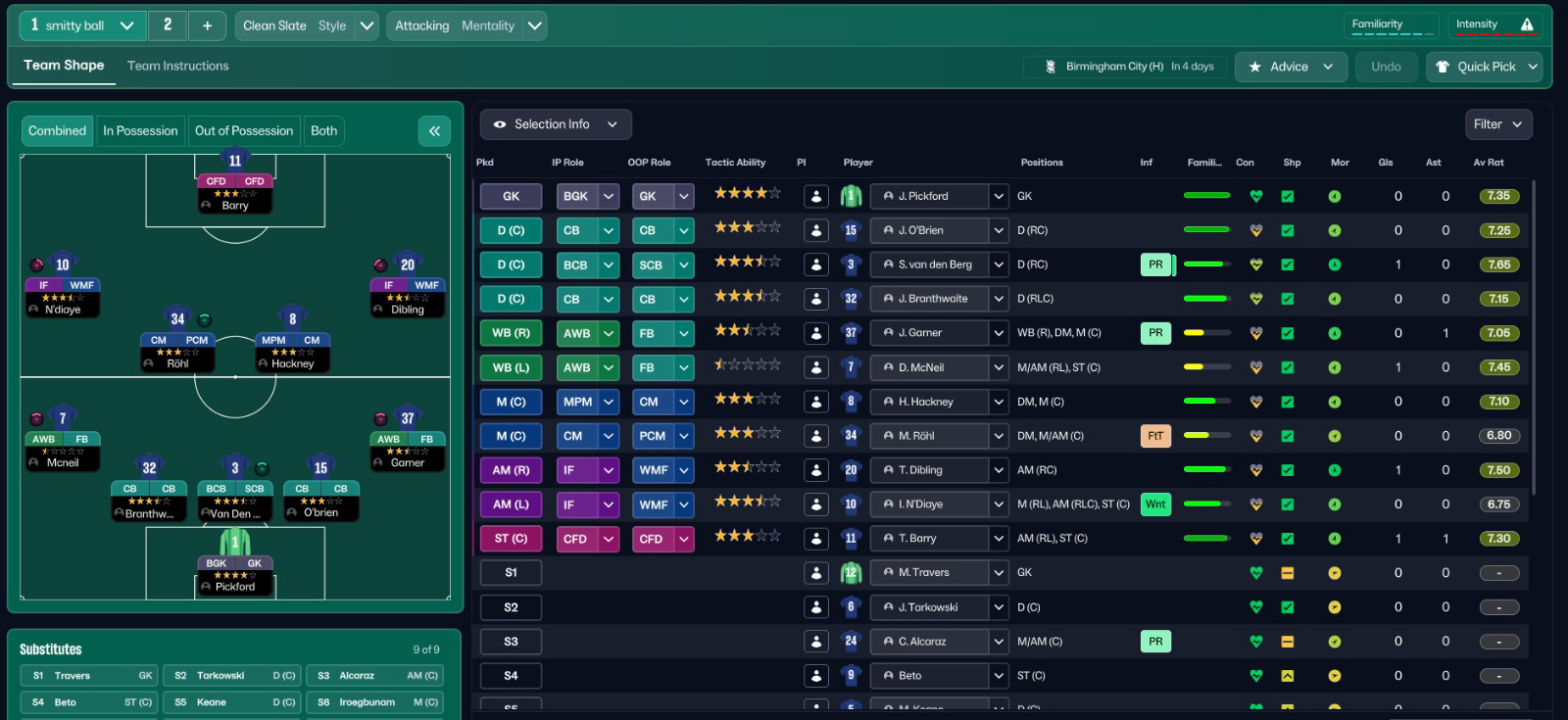
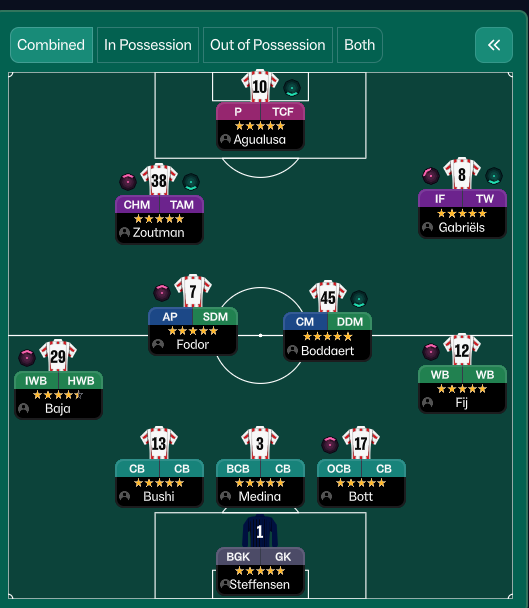
Formation & Style
Tactical Style:Attacking
Mentality:Attacking
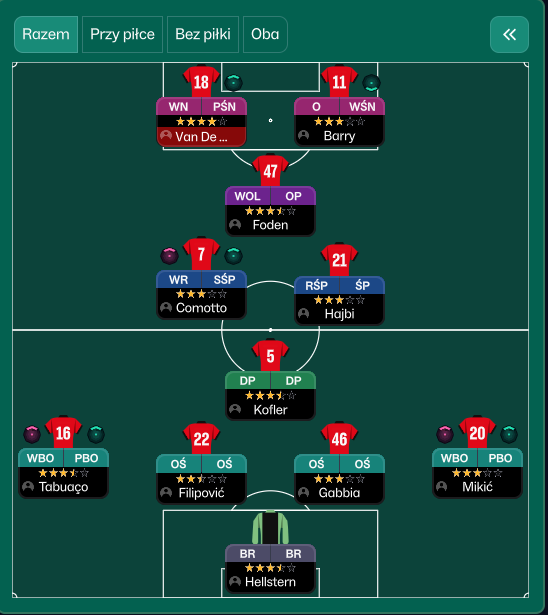
Formation:4-2-3-1 Wide
Team Fluidity:Structured
In Possession
Play Out of Defence
Work Ball Into Box
Lower Tempo
In Transition
Counter-Press
Counter
Out of Possession
Higher Defensive Line
Higher Line of Engagement
Prevent Short GK Distribution
Team Shape Without Ball
Shape:4-2-3-1
Description:Compact defensive shape with two screening midfielders and a flat back four.
Evidence:CB and Wing-Back orientation with the two CMs (DLP & Mezzala) forming a strong defensive support.
Team Shape With Ball
Shape:4-2-3-1
Description:Fluid attacking shape with attacking intent from the width and a focal point in the striker.
Evidence:RB and LB occupy high positions to stretch the opposition while inside forwards cut centrally.
Phase Description
Attacking Play
Utilizes wide play with inside forwards cutting in, aiming to exploit central spaces while utilizing wing-backs for width.
Defensive Transition
Quick recovery with a counter-press to regain possession high up the pitch.
Main Focus
Creating goal-scoring opportunities through dynamic movement and ensuring compactness when out of possession.
Key Strengths
Strong Wing Play
Utilizing inside forwards and wing-backs allows for dynamic width.
Attacking Midfield Control
The Advanced Playmaker facilitates creativity between the lines.
Defensive Stability
A solid double pivot provides both defensive coverage and transition options.
Conflicting Directions
Vulnerability on Counter
High defensive line may expose spaces for quick counter-attacks.
Limited Depth
Over-reliance on wing play may make team predictable against structured defenses.
Defensive Midfield Exposure
If opponents bypass the initial press, they could exploit gaps left by the advanced positions.
Tactical Suggestions
Adjust Defensive Line
Consider lowering the defensive line against faster opposition to prevent exposure.
Utilize CM for Two-Way Role
Modifying one CM to a BBM can support both forward runs and defensive duties.
Create Exploits through Central Play
Encourage central runs from WBs to create overloads against narrow formations.
Ask Questions About Your Lineup
Related Tactics
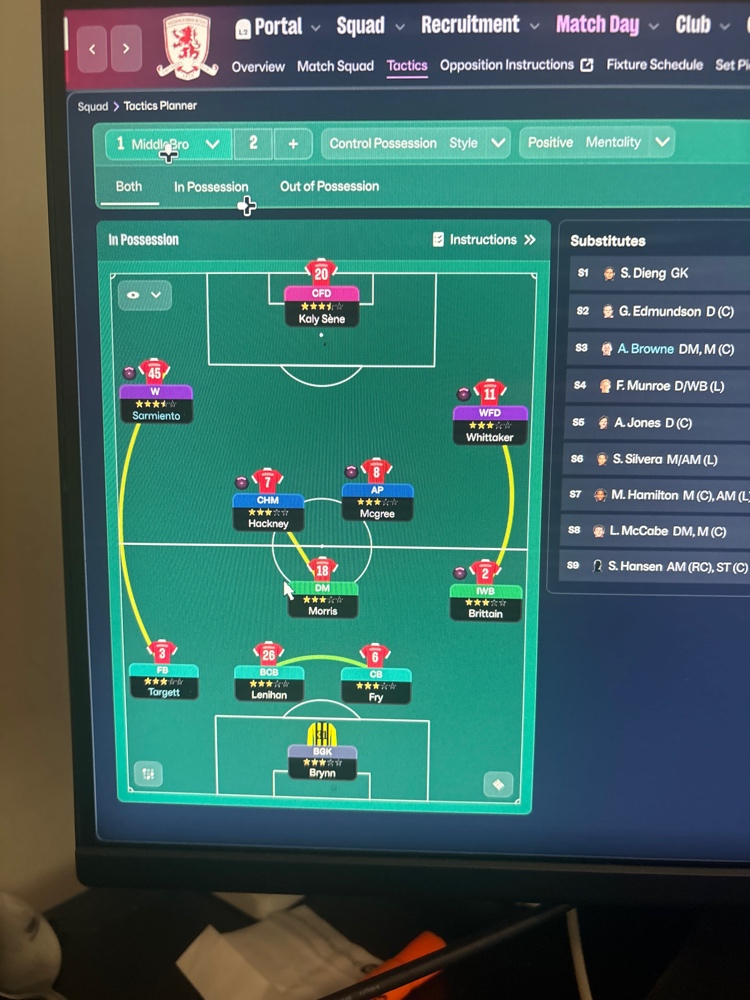
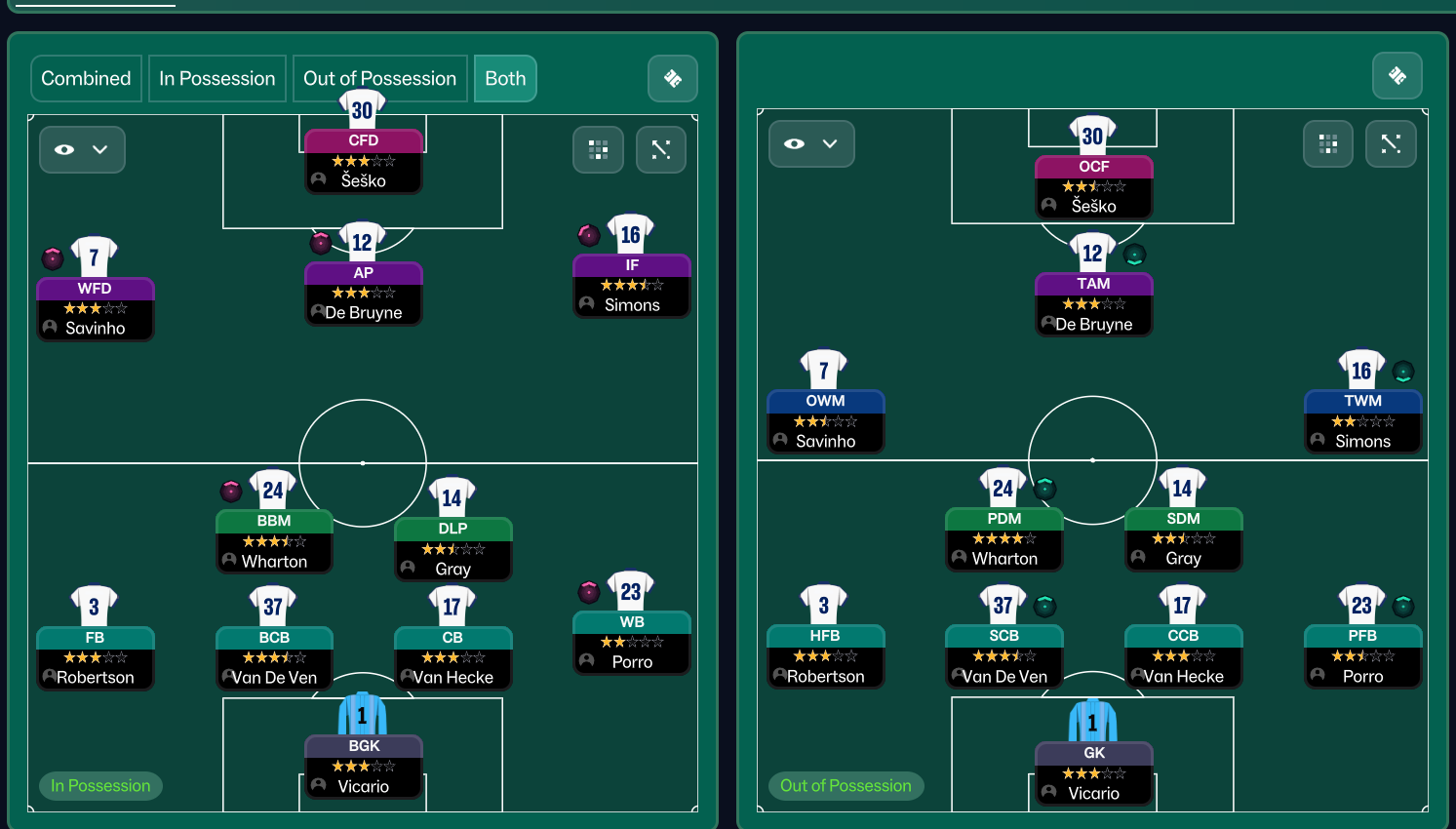
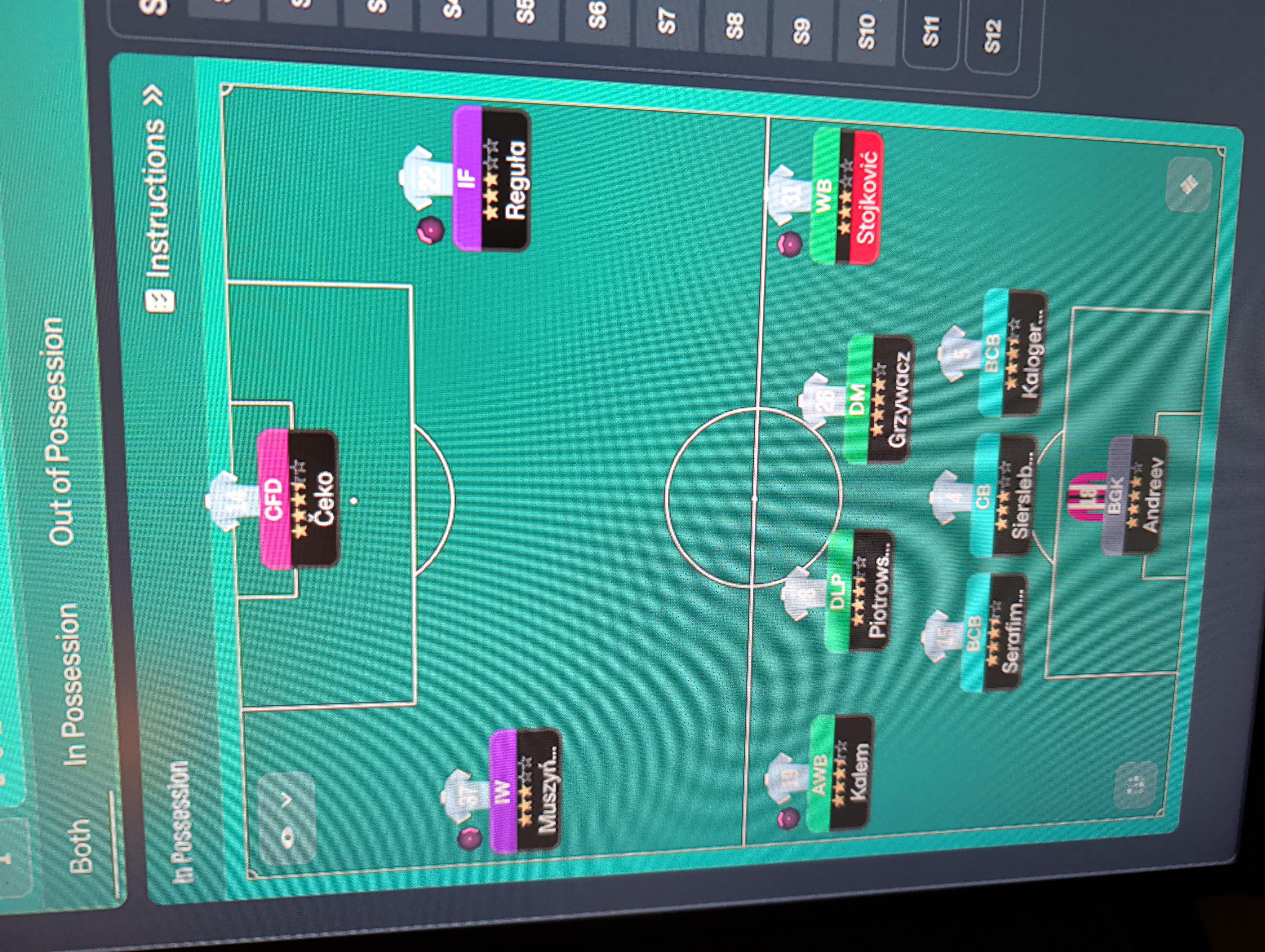
More Attacking tactics
Guides for this formation
The tactical theory behind the 4-2-3-1 Wide: roles, instructions, and the trade-offs that decide whether the system holds up.
Player pairings
Midfield Pairs in 4-2-3-1 and 4-4-2
Double pivots and flat pairs in 4-2-3-1 and 4-4-2: when each pairing works, when it collapses, and the AMC unicorn that rescues both.
Read guide
Playing styles
Gegenpressing: A Full Guide
Klopp-style gegenpressing in FM, including squad profile, line-and-press pairing, sustainable workload, and the antipatterns to avoid.
Read guide