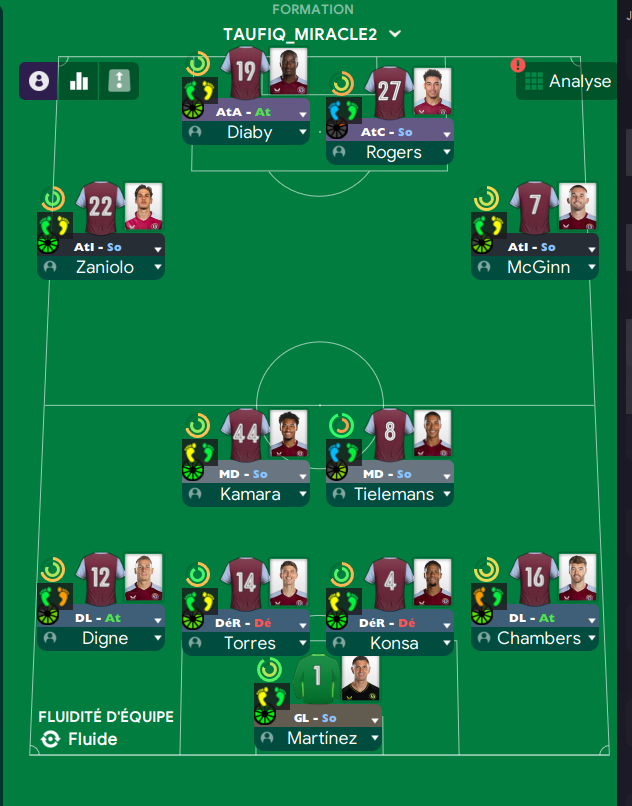
Uploaded Tactic
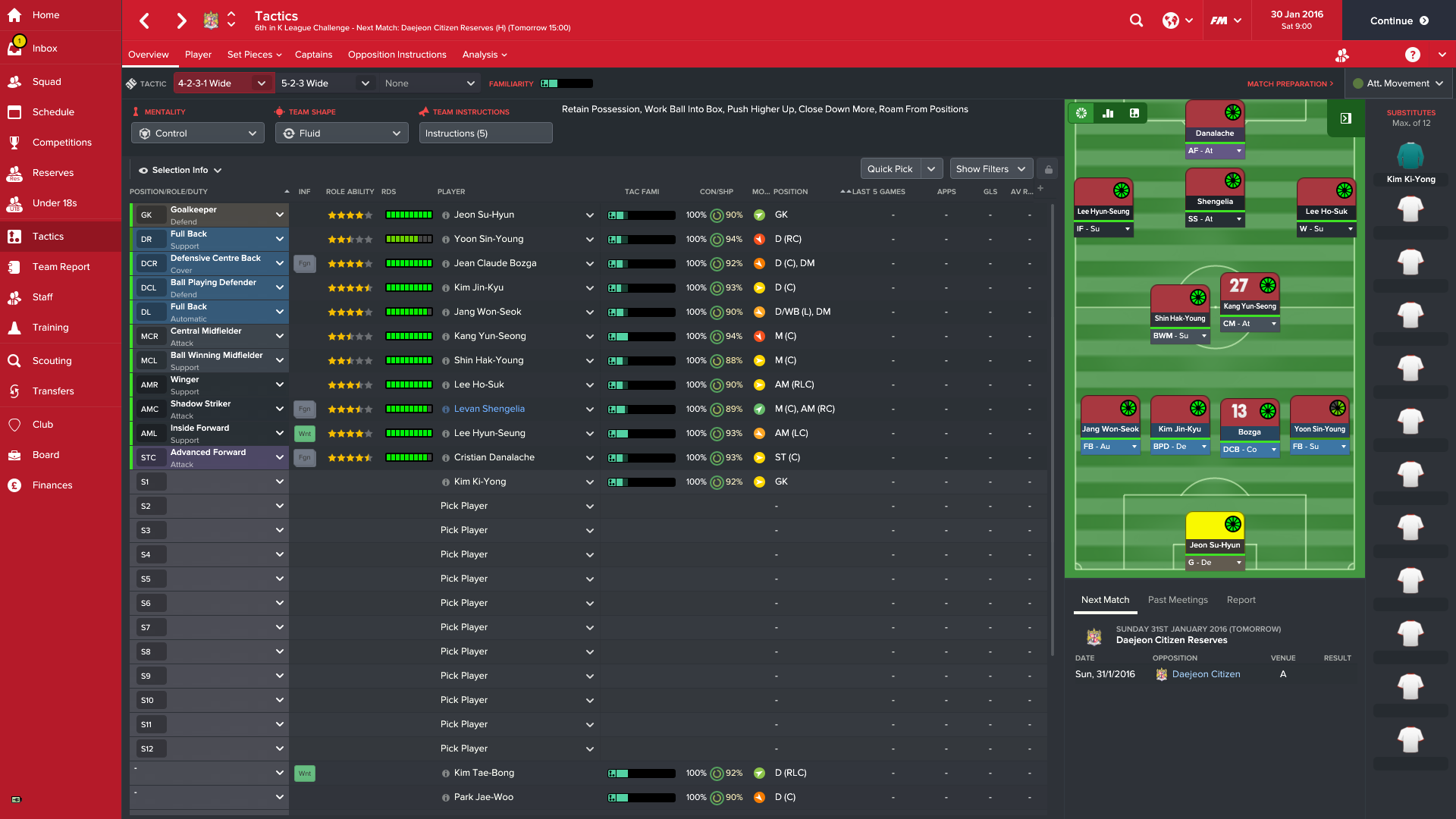
Formation & Style
Tactical Style:Fluid
Mentality:Control
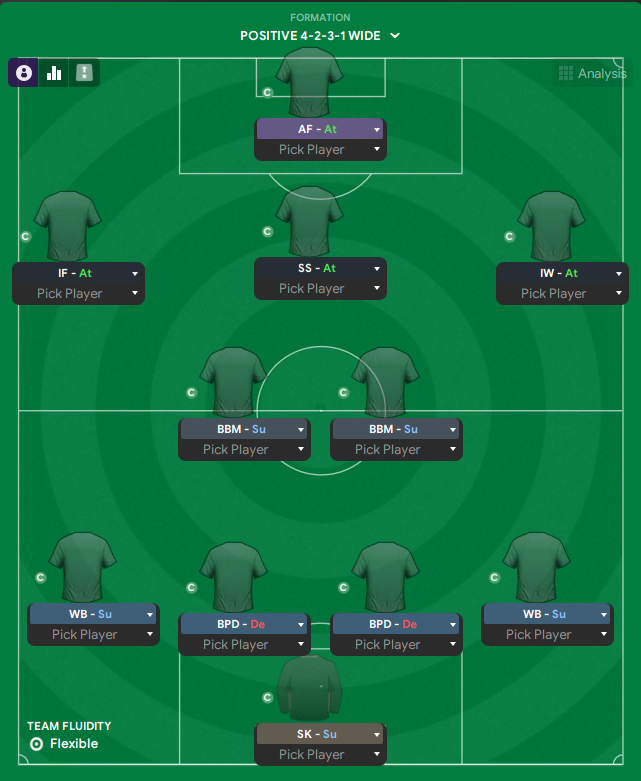
Formation:4-2-3-1 Wide
Team Fluidity:Fluid
In Possession
Retain Possession
Work Ball Into Box
Push Higher Up
In Transition
Close Down More
Roam From Positions
Out of Possession
Higher Defensive Line
Team Shape Without Ball
Shape:4-2
Description:Compact shape when out of possession, with a solid double pivot to break up opposition play.
Evidence:BWM-S at [3,4] and CM-A at [3,3] provide defensive support and help transition to attack.
Team Shape With Ball
Shape:4-3
Description:Wide attacking shape with wingers stretching the defense, coupled with central attacking options.
Evidence:Wingers at [6,2] and [6,4] with an AF at [6,3] ensures versatility in forward positions.
Phase Description
Attacking Play
Utilizes width through the wingers while central play is supported by the Shadow Striker, creating goal-scoring opportunities.
Defensive Transition
Immediately closes down opposition players after losing the ball, aiming for quick recoveries.
Main Focus
Dominating possession and maintaining high pressing to limit opposition time on the ball.
Key Strengths
Ball Playing Defender Contribution
The BPD can initiate plays from the back and help in ball retention.
Winger and Shadow Striker Synergy
Wingers can deliver crosses while the Shadow Striker provides alternative attacking angles.
Defensive Stability
Set up with two solid midfielders enhances defensive structure and breaks up opposition play.
Conflicting Directions
Overreliance on Central Play
With focus on retaining possession, there may be slow build-up, enabling organized defensive setups from opponents.
Vulnerability to Counter-Attacks
Pushing higher up the pitch may leave gaps if possession is lost quickly.
Potential Imbalance on Wings
Reliance on wingers might stretch resources if one side becomes overloaded.
Tactical Suggestions
Consider a Deeper Defensive Line
Adopting a slightly deeper line may help mitigate counter-attack risks.
Introduce Direct Passing
Implement direct passing options to break down stubborn defenses more efficiently.
Rotate Wingers Strategically
Altering wingers' roles for specific matches may help combat different style of defenses.
Ask Questions About Your Lineup
Related Tactics
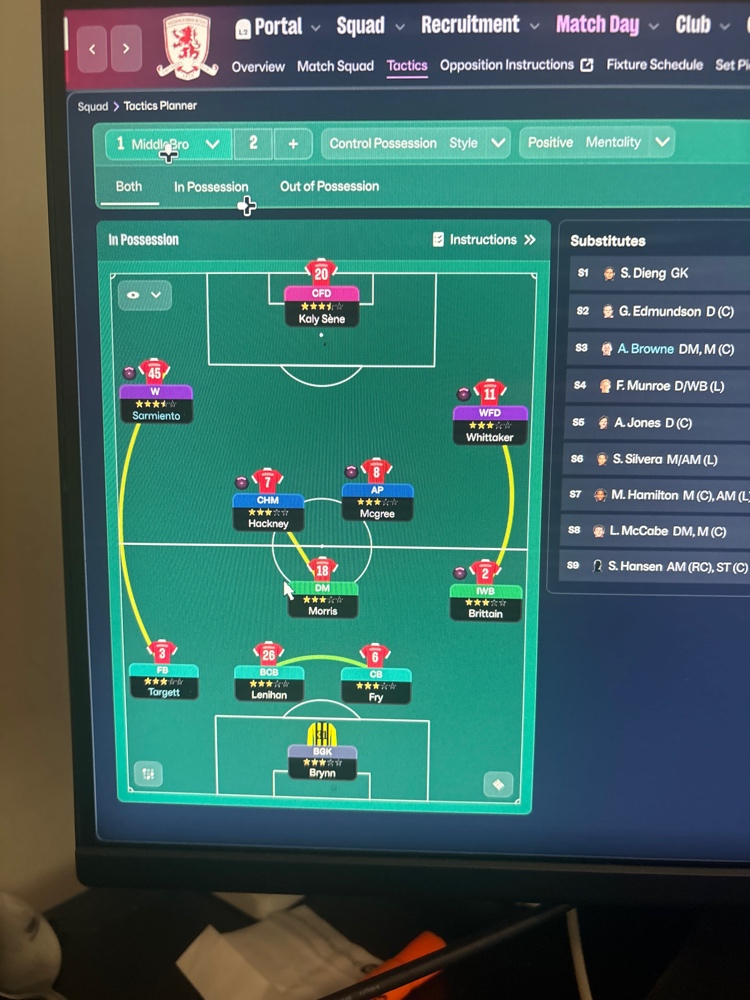
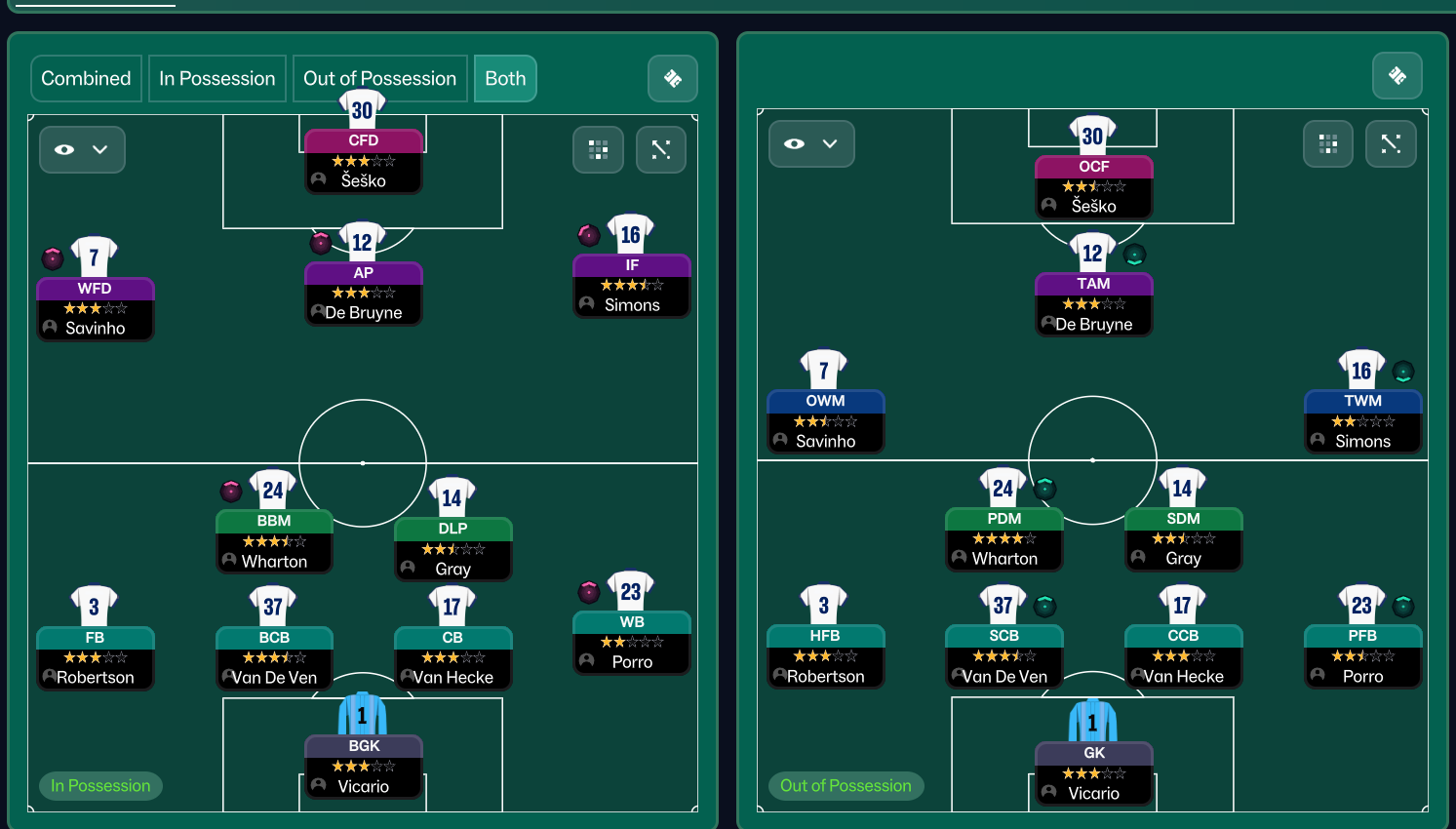
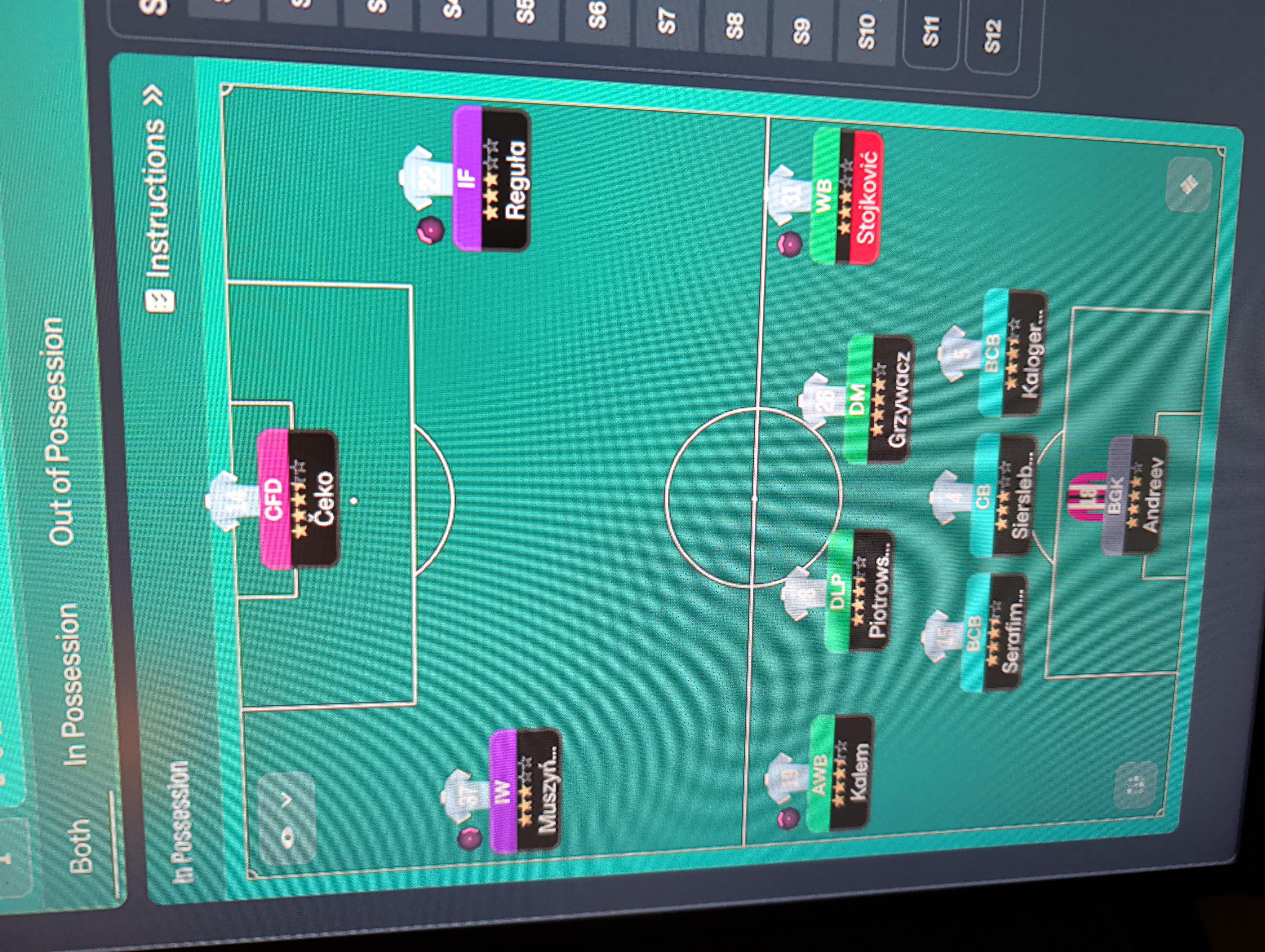
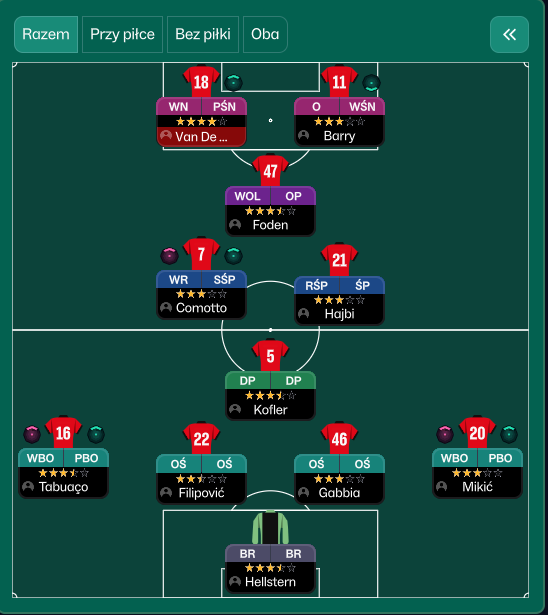
More Fluid tactics
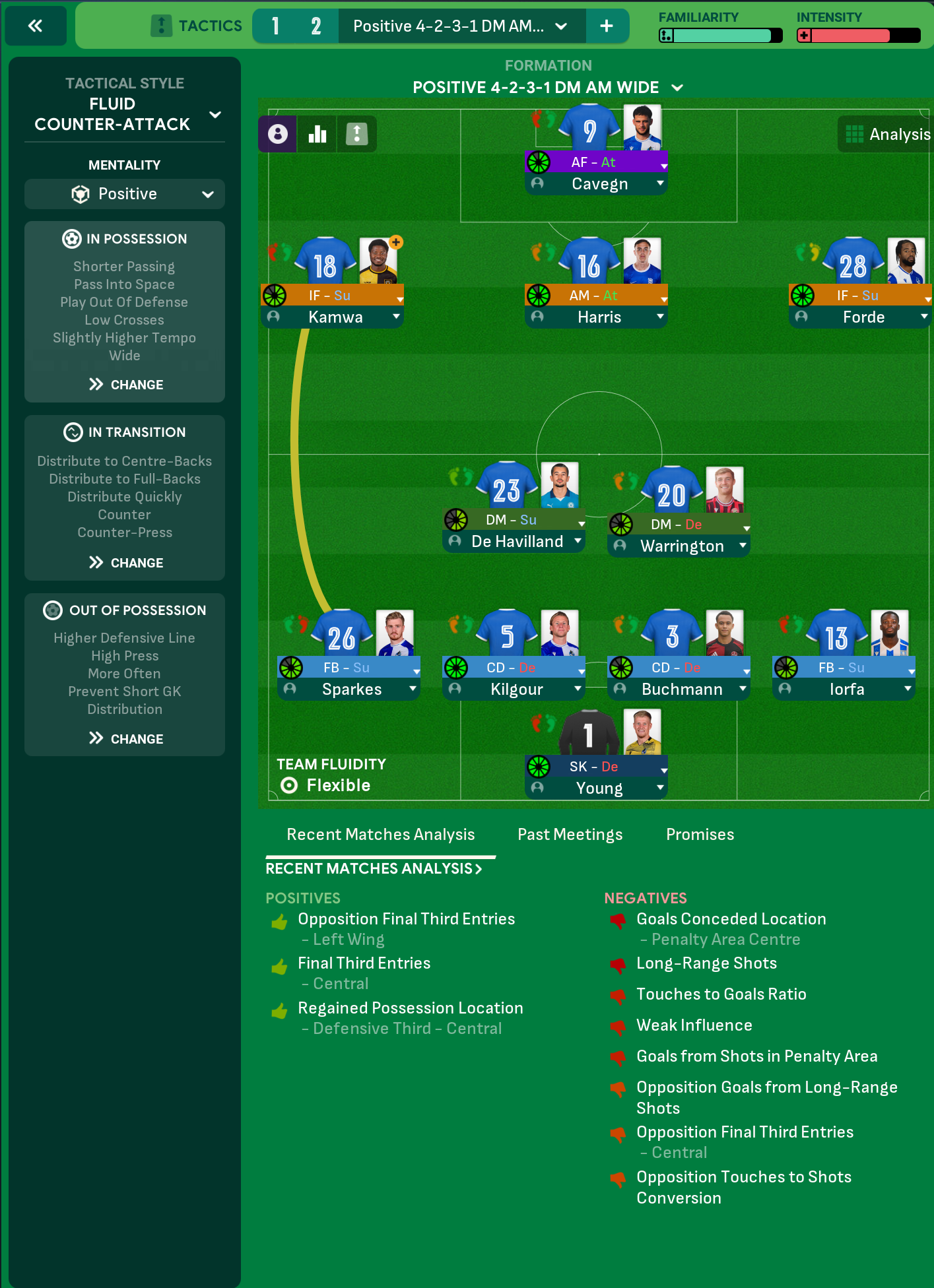
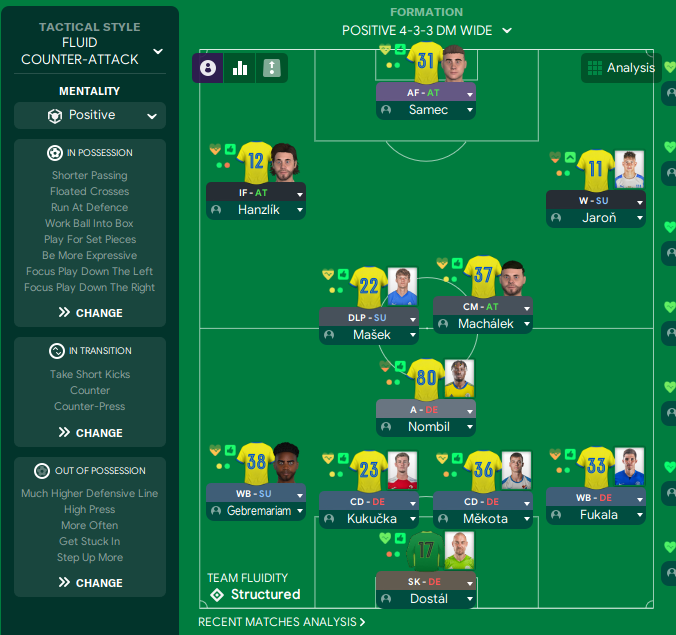
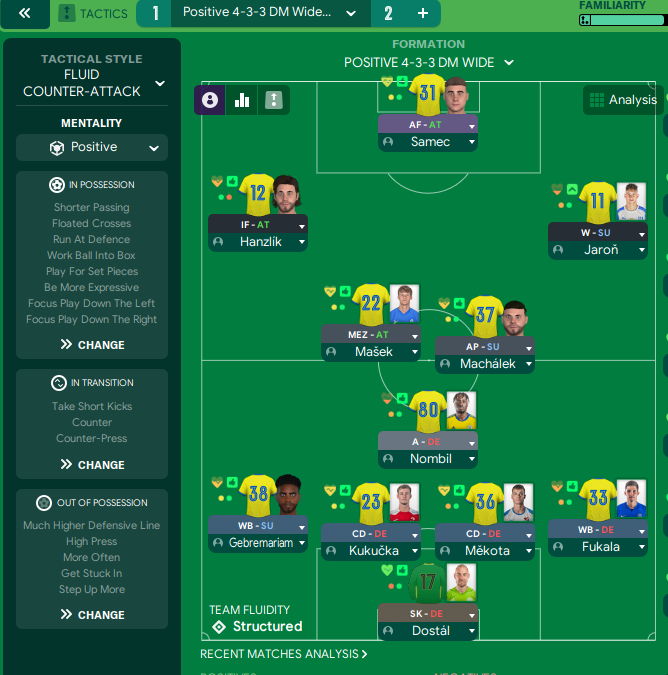
Guides for this formation
The tactical theory behind the 4-2-3-1 Wide: roles, instructions, and the trade-offs that decide whether the system holds up.
Player pairings
Midfield Pairs in 4-2-3-1 and 4-4-2
Double pivots and flat pairs in 4-2-3-1 and 4-4-2: when each pairing works, when it collapses, and the AMC unicorn that rescues both.
Read guide
Playing styles
Gegenpressing: A Full Guide
Klopp-style gegenpressing in FM, including squad profile, line-and-press pairing, sustainable workload, and the antipatterns to avoid.
Read guide