Uploaded Tactic
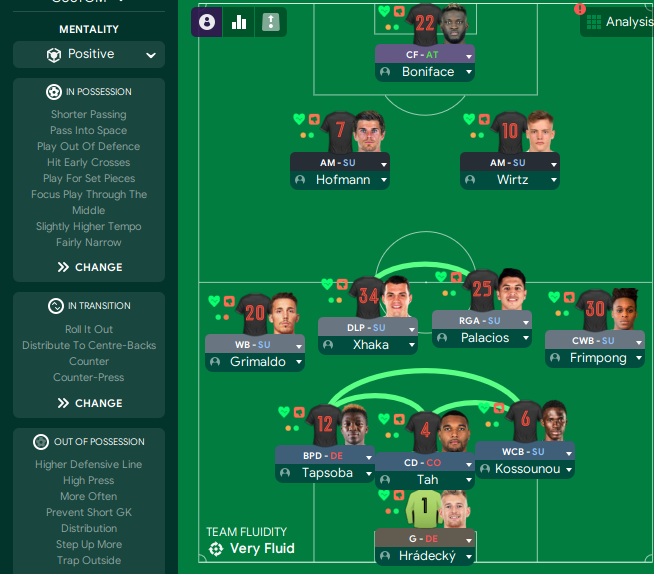
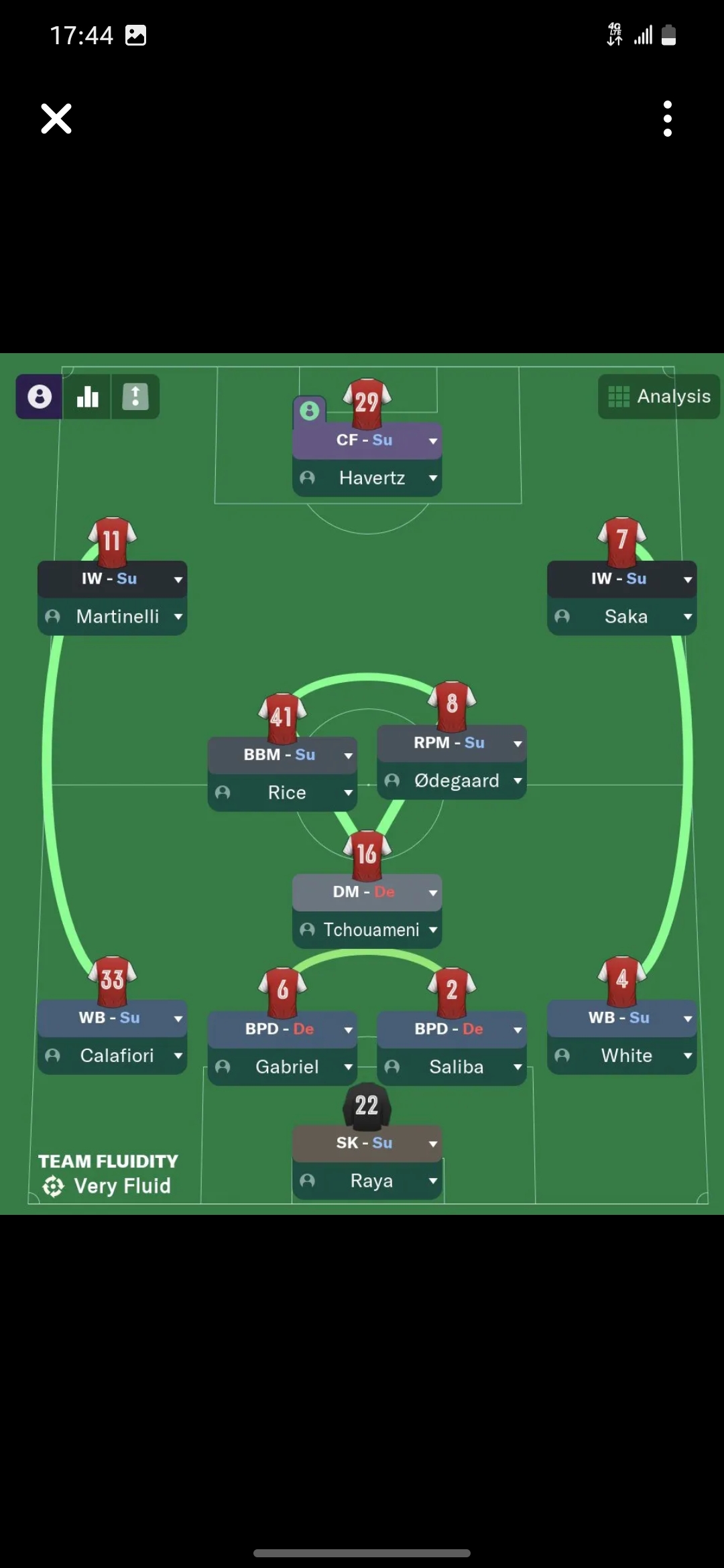
Formation & Style
Tactical Style:Very Fluid
Mentality:Positive
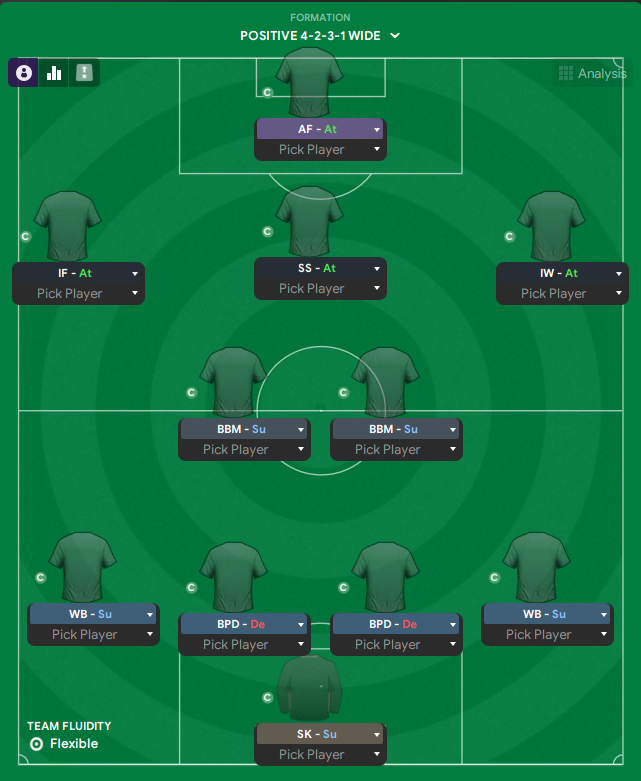
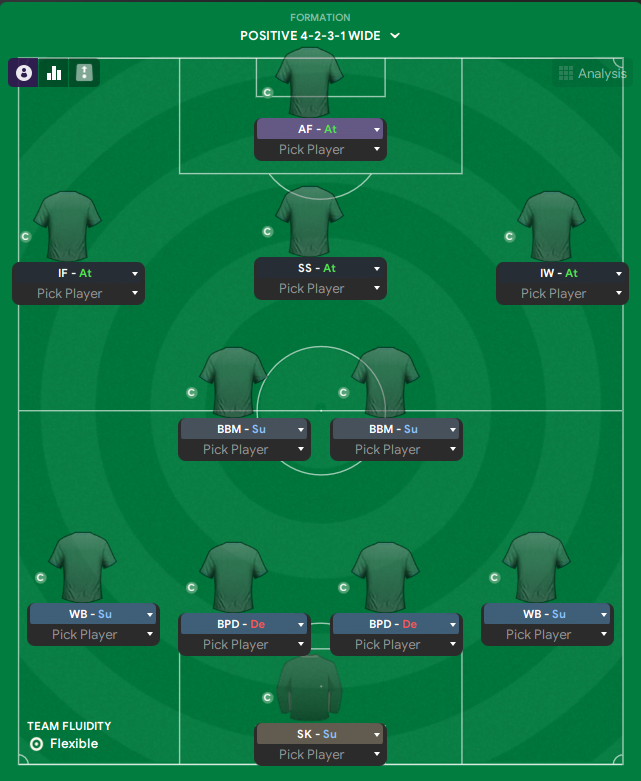
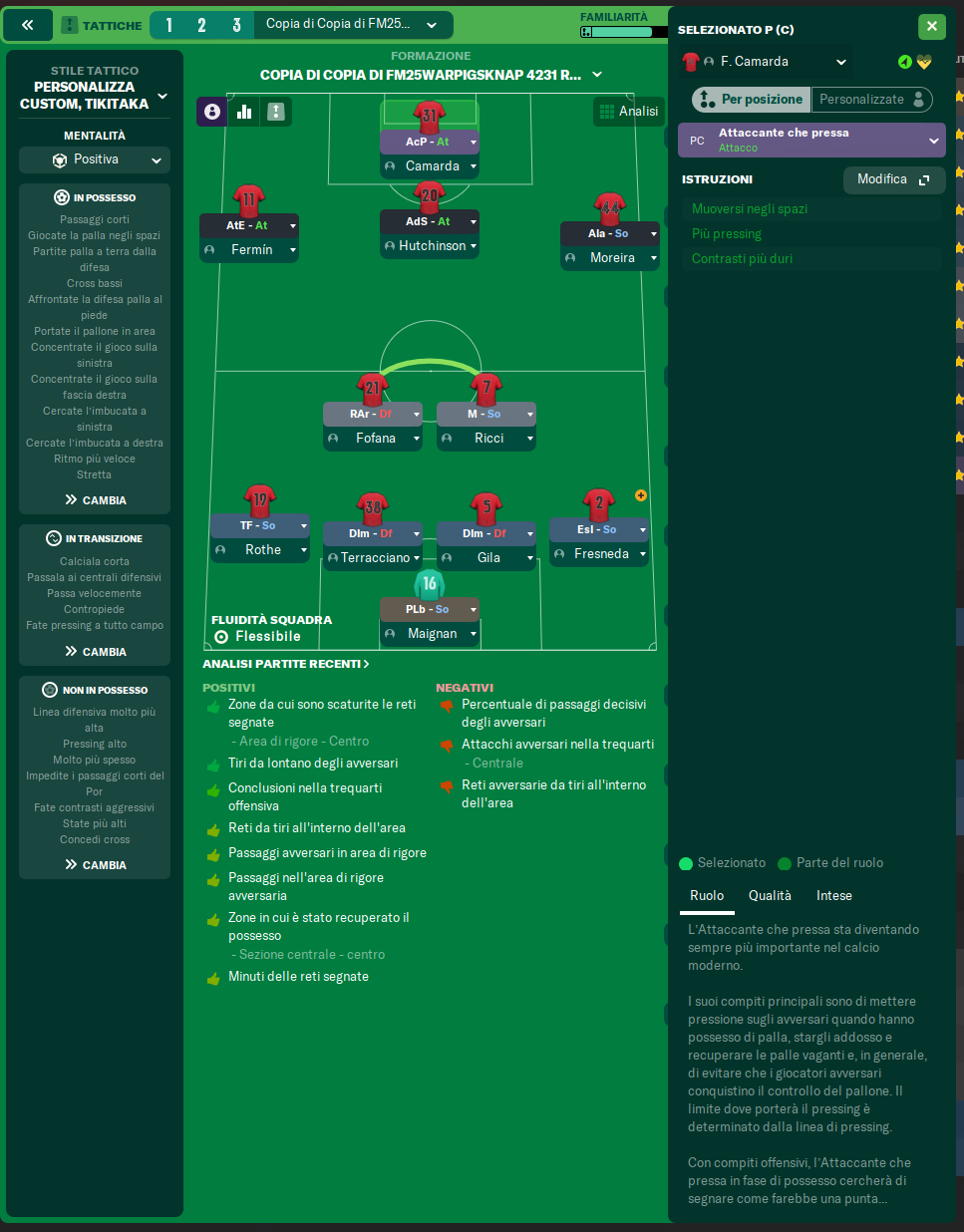
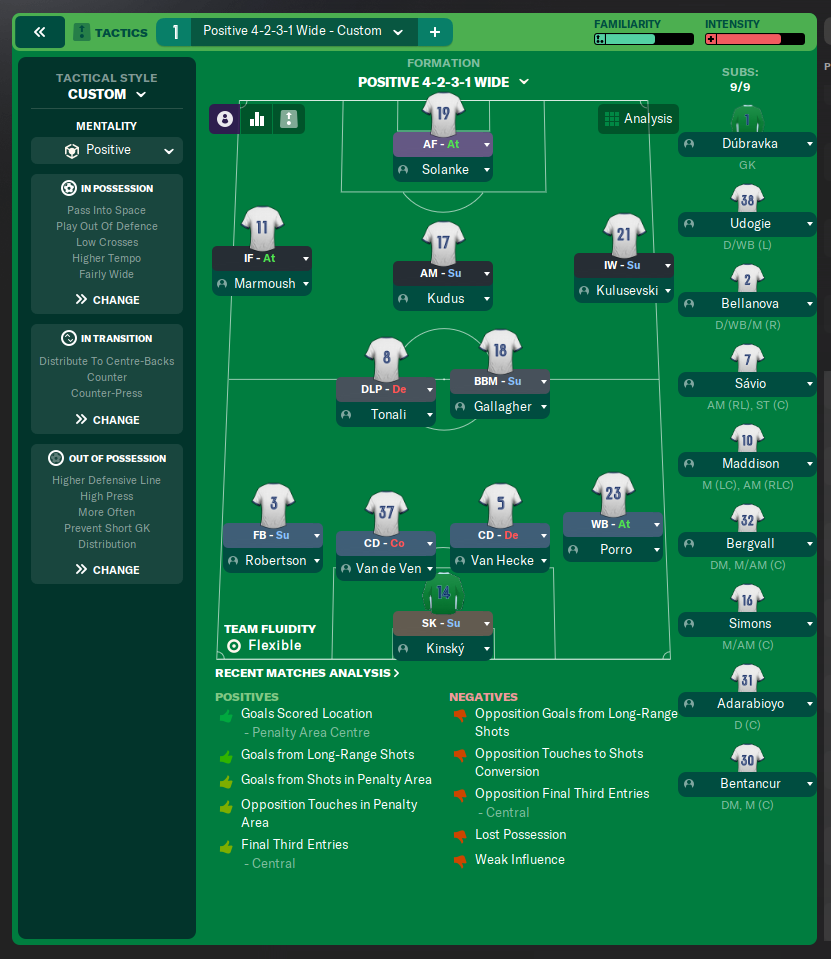
Formation:4-2-3-1 Wide
Team Fluidity:Very Fluid
In Possession
Shorter Passing
Pass Into Space
Play Out Of Defence
Hit Early Crosses
Play For Set Pieces
Focus Play Through The Middle
Slightly Higher Tempo
Fairly Narrow
In Transition
Roll It Out
Distribute To Centre-Backs
Counter
Counter-Press
Out of Possession
Higher Defensive Line
High Press
More Often Prevent Short GK Distribution
Trap Outside
Team Shape Without Ball
Shape:4-2
Description:Compact shape with two pivots screening the back line.
Evidence:4 defenders and 2 midfielders form a solid barrier with pressing engaging.
Team Shape With Ball
Shape:4-3-3
Description:Wide and fluid attack with players interchanging positions.
Evidence:WBs providing width and AMs supporting the CF.
Phase Description
Attacking Play
The team focuses on short, quick passes, utilizing wing play with overlapping full-backs to create space.
Defensive Transition
Upon losing the ball, the team presses high to regain possession quickly.
Main Focus
Utilize width effectively and exploit spaces in the defensive line.
Key Strengths
Fluidity in Attack
The team has multiple players capable of interchanging roles in the attacking phase, making it difficult for defenses to track movements.
Controlled Build-Up Play
Using the DLP and RGA roles, the team can maintain possession and dictate the tempo.
Effective Wing Play
Wing-backs contribute significantly to the attack, providing width and overlapping runs.
Conflicting Directions
High Defensive Line vs. Counter-Pressing
While high pressing can win the ball high up, it may leave spaces behind for counter-attacks.
Fairly Narrow Width
This could potentially reduce the effectiveness of wing-backs and create congestion in the midfield.
Pressing on a High Defensive Line
Pressing high makes defending against fast counter-attacks more challenging.
Tactical Suggestions
Adjust Width in Transition
Allowing a slightly wider formation during transitions could help with spreading the play and countering effectively.
Rotate Player Roles
Experimenting with different roles in the midfield could offer more dynamism.
Increase Defensive Solidity
Implementing one defensive-minded player in midfield could help stabilize the defense.
Ask Questions About Your Lineup
Related Tactics
More Very Fluid tactics
Guides for this formation
The tactical theory behind the 4-2-3-1 Wide: roles, instructions, and the trade-offs that decide whether the system holds up.
Player pairings
Midfield Pairs in 4-2-3-1 and 4-4-2
Double pivots and flat pairs in 4-2-3-1 and 4-4-2: when each pairing works, when it collapses, and the AMC unicorn that rescues both.
Read guide
Playing styles
Gegenpressing: A Full Guide
Klopp-style gegenpressing in FM, including squad profile, line-and-press pairing, sustainable workload, and the antipatterns to avoid.
Read guide