Uploaded Tactic
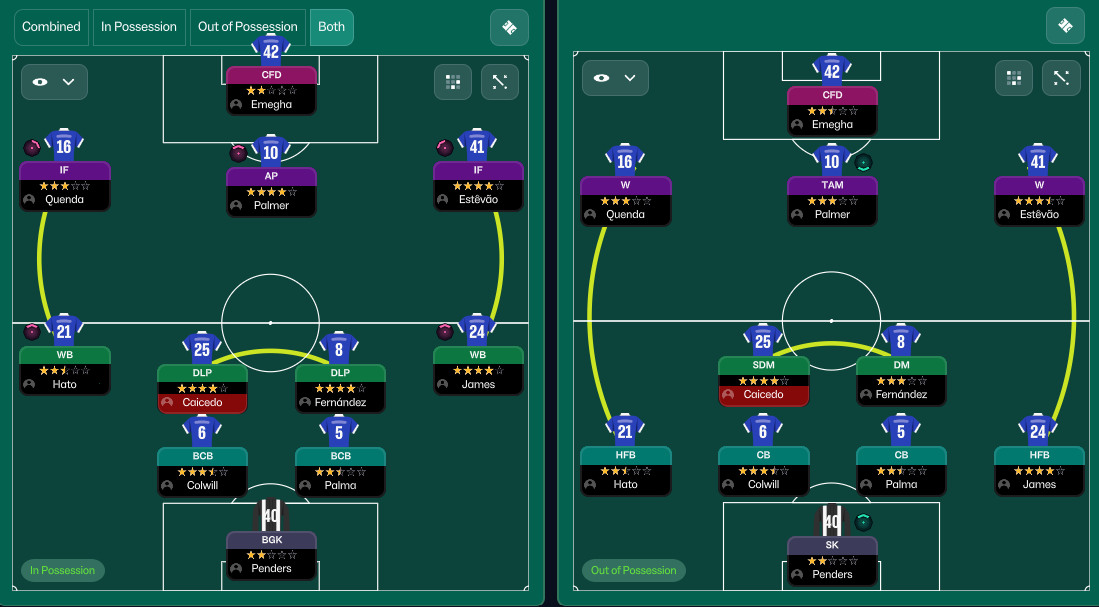
Formation & Style
Tactical Style:Possession
Mentality:Positive
Formation:4-2-3-1 Wide
Team Fluidity:Fluid
In Possession
Focus play down both flanks
Use overlaps
Work ball into box
In Transition
Counter-press
Counter
Out of Possession
More Urgent Pressing
Defensive Line: Higher
Use Offside Trap
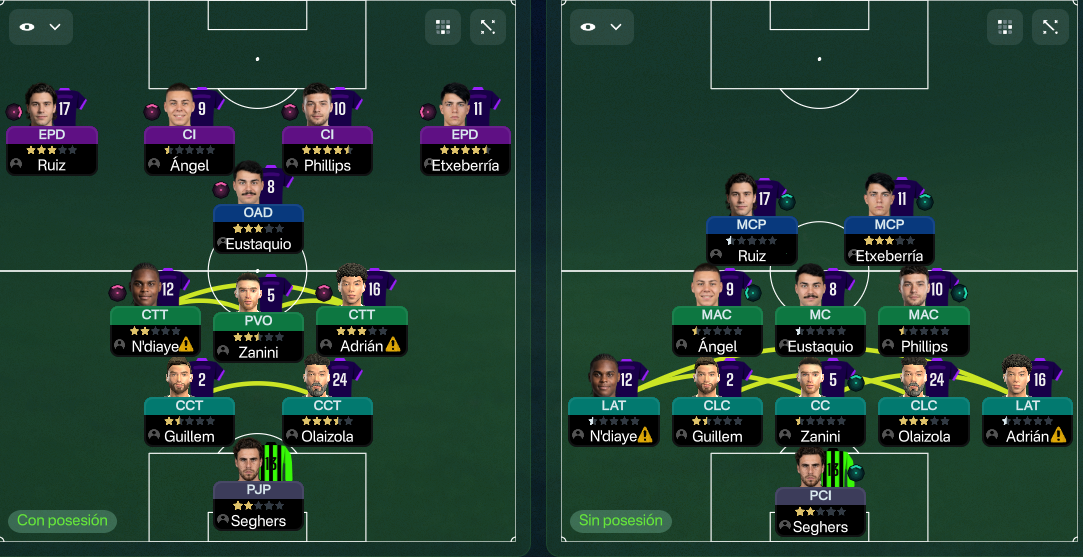
Team Shape Without Ball
Shape:4-2
Description:The team maintains a compact shape defensively with two deep midfielders offering protection to the backline.
Evidence:The DM and two CBs maintain a strong base at [3,3], [2,2], [2,3], and [2,4].
Team Shape With Ball
Shape:4-1-3-2
Description:Forward players stretch the opposition, creating space for midfield runners and overlapping wing-backs.
Evidence:Positioning of the inside forwards and advanced playmaker in the attacking line at [5,2], [5,3], and [6,3].
Phase Description
Attacking Play
Focuses on width with wing-backs providing service while the inside forwards cut inside to take shots.
Defensive Transition
Quick recovery with emphasis on counter-pressing to regain possession high up the pitch.
Main Focus
Maintain ball possession while exploiting space down the wings.
Key Strengths
Width and Fluidity
The use of wing-backs allows for stretching the opposition, providing opportunities for inside forwards.
Strong Midfield Control
The double DLP combination reinforces possession and facilitates buildup plays.
Flexibility in Attacking Options
The advanced playmaker supports both the striker and wide forwards, creating multiple passing options.
Conflicting Directions
Vulnerable Width in Defense
Opponents may exploit spaces left by advancing wing-backs, especially during quick counter-attacks.
Dependency on Wing-backs
Over-reliance on wing-backs to provide width may limit central penetration.
High Risk in Transition
Aggressive counter-pressing could lead to gaps if possession is lost.
Tactical Suggestions
Adjust Width for Greater Central Penetration
Narrowing the team's width could allow better central through balls and increased chances.
Use of Target Man Role
Incorporating a target man could aid in flick-ons for midfield runners.
Enhanced Defensive Duties
Assigning more defensive duties to the AM could strengthen transitions.
Ask Questions About Your Lineup
Related Tactics
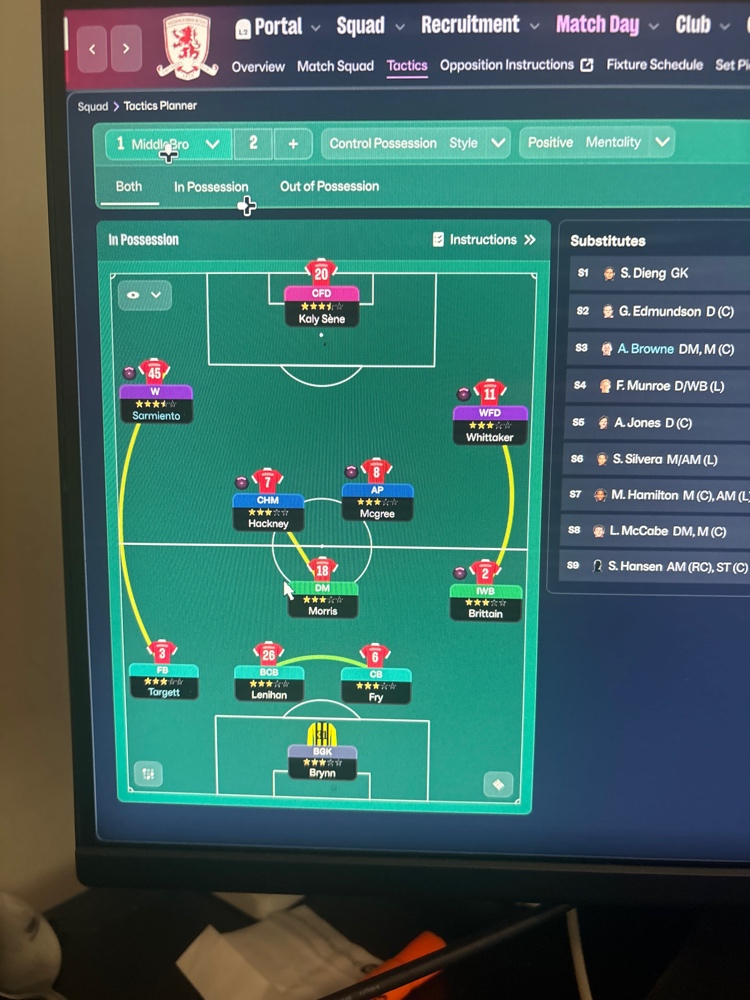
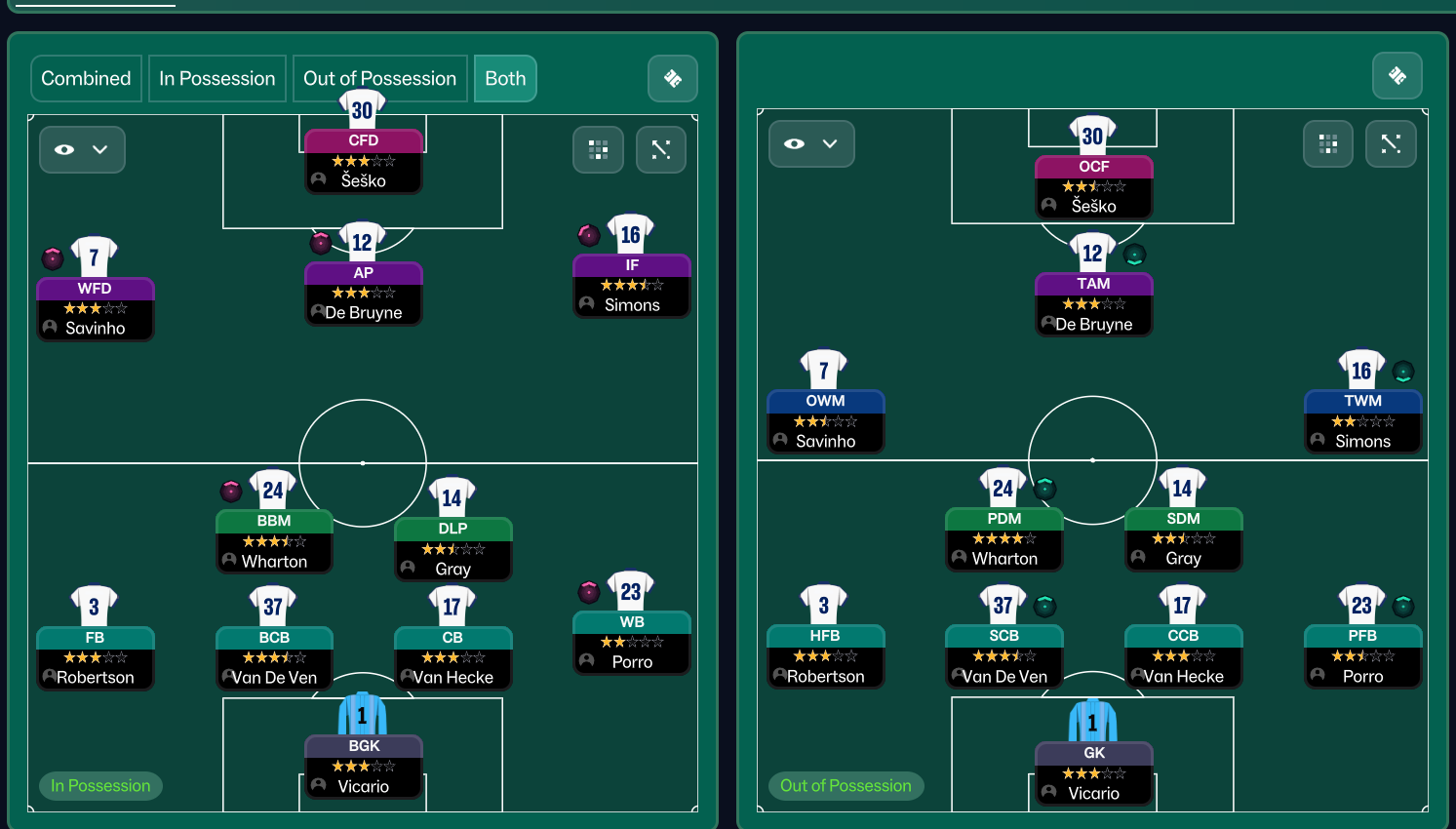
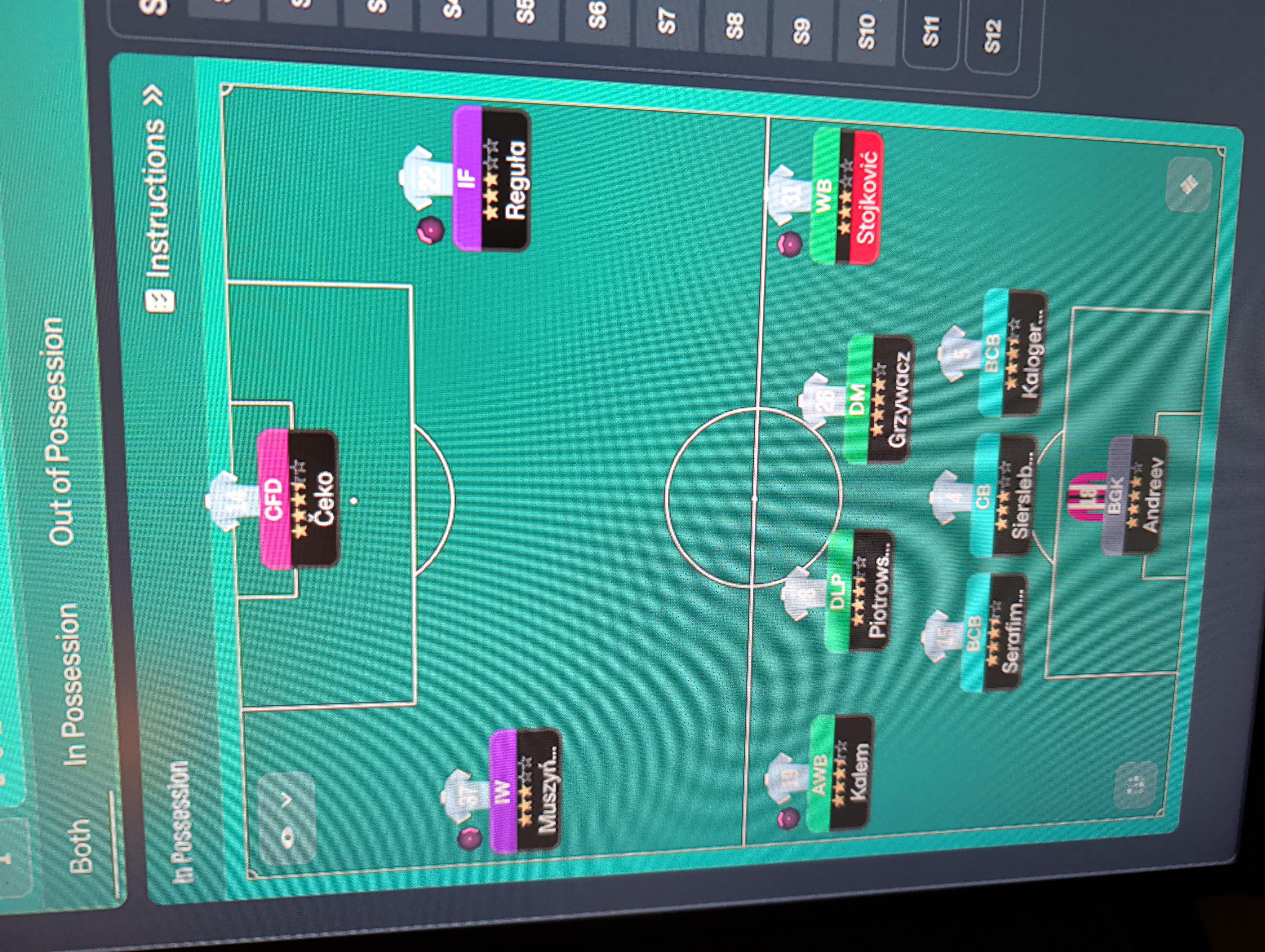
More Possession tactics
Guides for this formation
The tactical theory behind the 4-2-3-1 Wide: roles, instructions, and the trade-offs that decide whether the system holds up.
Player pairings
Midfield Pairs in 4-2-3-1 and 4-4-2
Double pivots and flat pairs in 4-2-3-1 and 4-4-2: when each pairing works, when it collapses, and the AMC unicorn that rescues both.
Read guide
Playing styles
Gegenpressing: A Full Guide
Klopp-style gegenpressing in FM, including squad profile, line-and-press pairing, sustainable workload, and the antipatterns to avoid.
Read guide