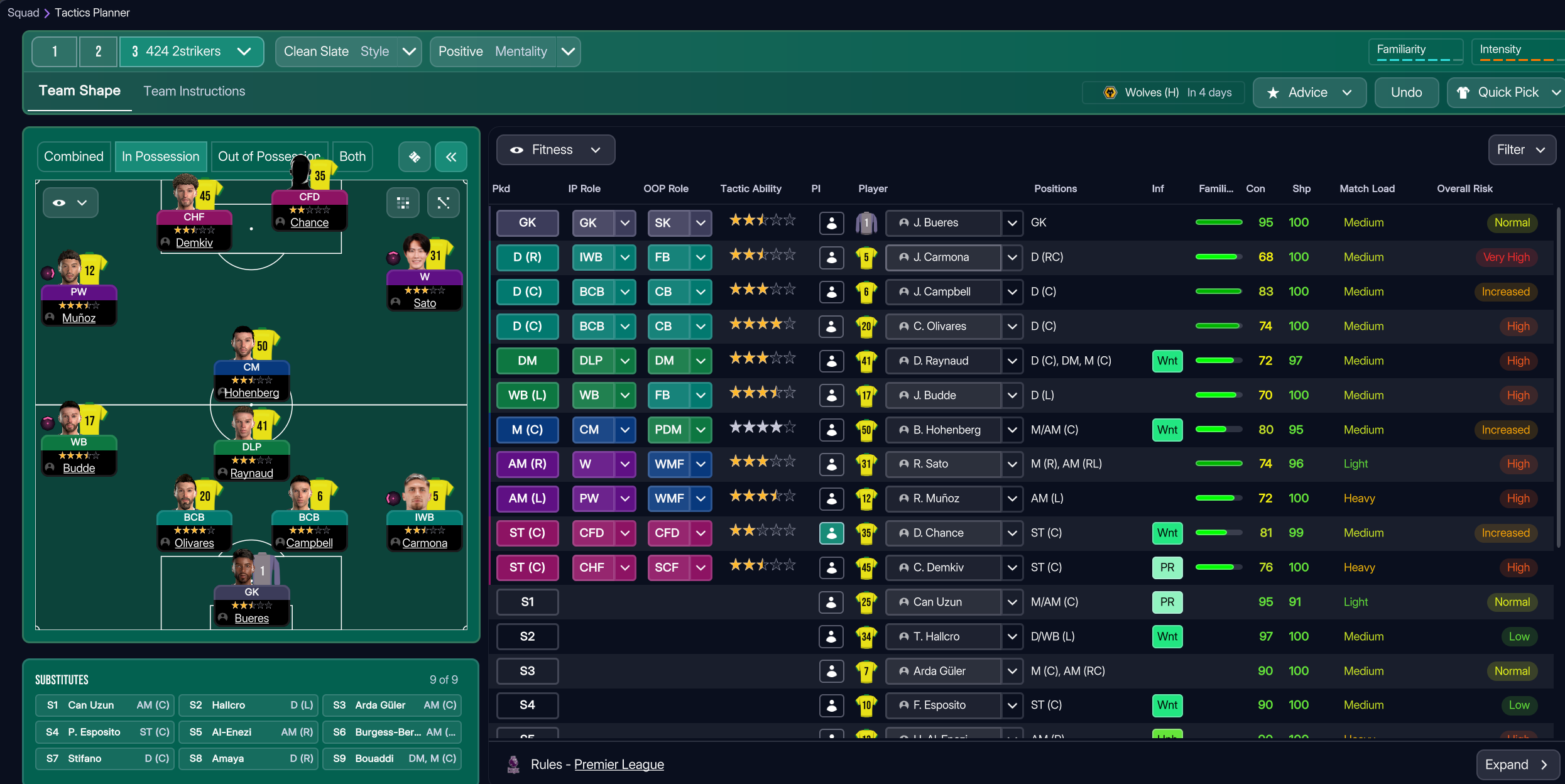
Uploaded Tactic
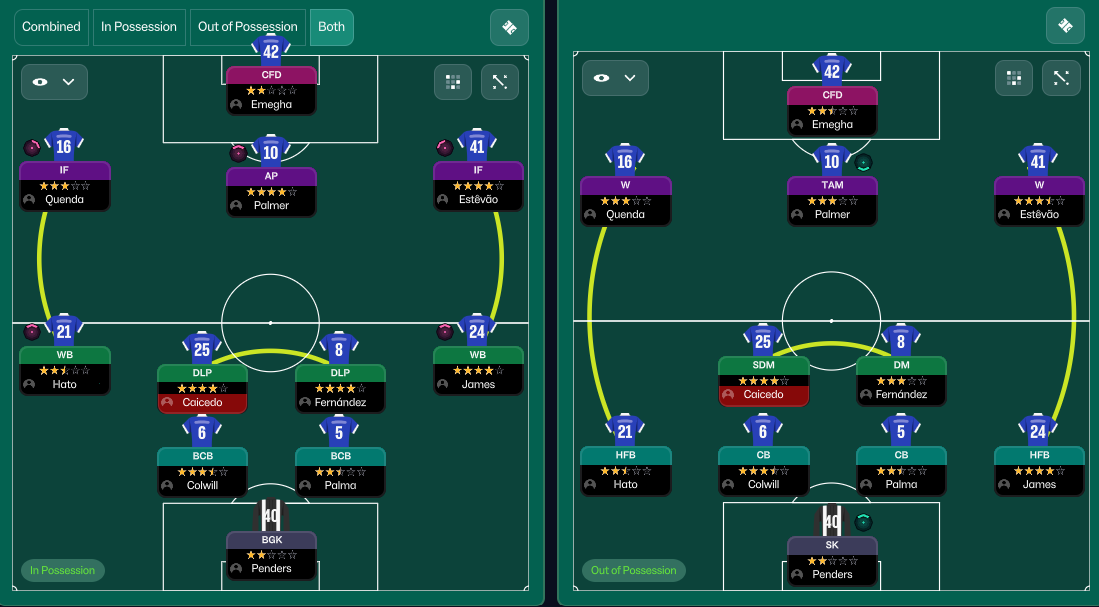
Formation & Style
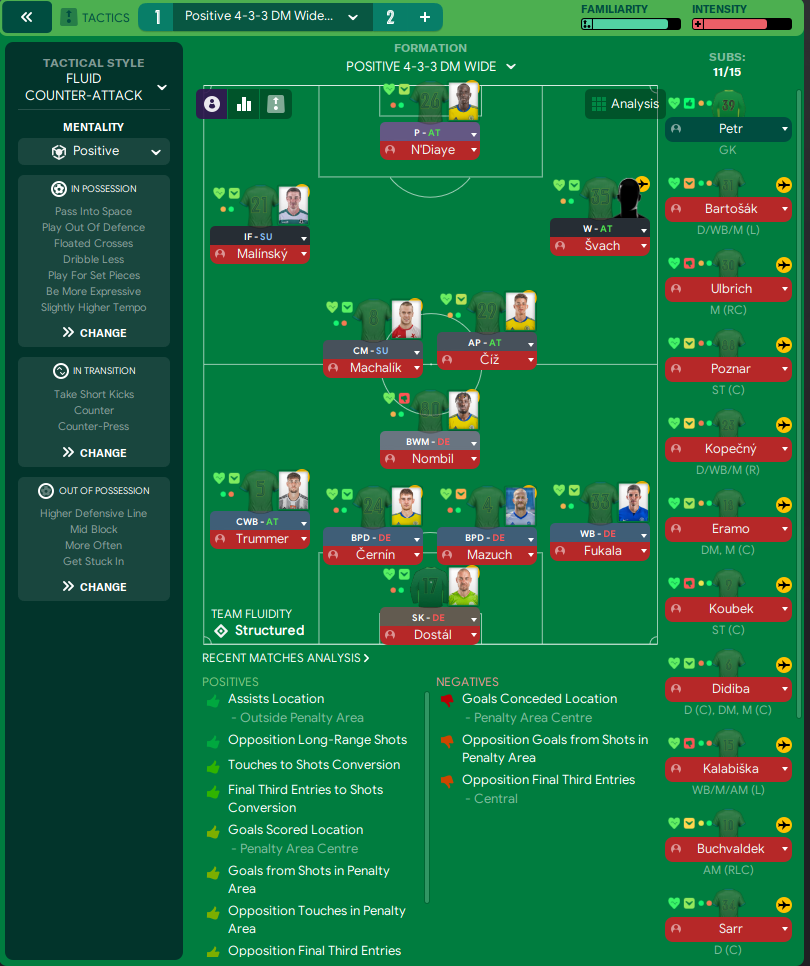
Tactical Style:Fluid Counter-Attack
Mentality:Positive
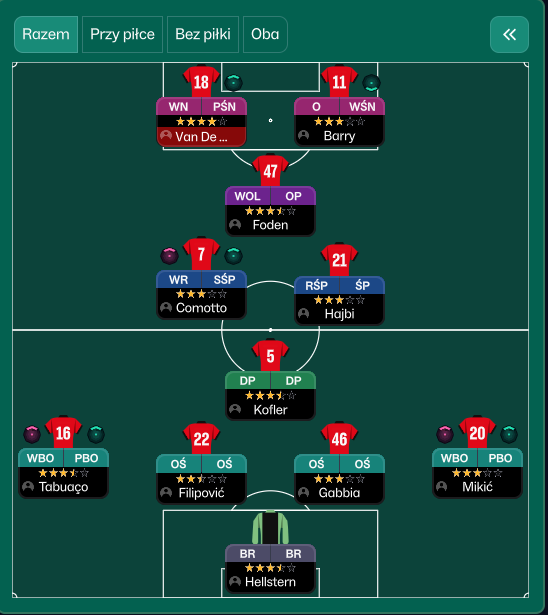
Formation:4-2-3-1 Wide
Team Fluidity:Fluid
In Possession
Play out of defence
Focus play down the flanks
Utilize width
In Transition
Counter-Press
Counter
Out of Possession
More urgent pressing
Higher defensive line
Tighter marking
Team Shape Without Ball
Shape:Compact
Description:Maintaining a compact shape to limit space for the opposition.
Evidence:Tighter marking and a high defensive line with the ball-playing defenders at [2,2] and [2,3].
Team Shape With Ball
Shape:Fluid Front Three
Description:Dynamic attacking movements with frequent rotations among the front players.
Evidence:The inside forwards and attacking midfielder creating varied attacking angles at [6,1], [6,2], [5,1].
Phase Description
Attacking Play
Quick transitions from defence with an emphasis on exploiting wide areas through the wing-backs and inside forwards.
Defensive Transition
Immediate counter-press upon losing possession, aiming to regain the ball quickly.
Main Focus
Utilizing width and exploiting space behind the opposition's defensive line.
Key Strengths
Versatile Attackers
The front three (AM (TAM), IF, IF) can interchange, confusing defenders and creating space.
Strong Midfield Control
Double pivot supports both defence and attack, maintaining possession and dictating play.
Excellent Width
Utilizing wing-backs and inside forwards for width allows for stretching the opposing defence.
Conflicting Directions
Defensive Vulnerability
High pressing may leave gaps in midfield, potentially exposing the defence.
Over-Reliance on Width
Heavy focus on wing play could lead to predictability, allowing opponents to adapt.
Midfield Overlap
Two playmakers may clash in their roles, leading to ineffective ball progression.
Tactical Suggestions
Adjust Midfield Roles
Consider changing one DLP to a Box-to-Box Midfielder to add dynamic movement.
Defensive Adjustments
Consider lowering the defensive line slightly to avoid being caught on the break.
Increase Forward Rotations
Encourage forwards to interchange more frequently to disrupt opponent defensive lines.
Ask Questions About Your Lineup
Related Tactics
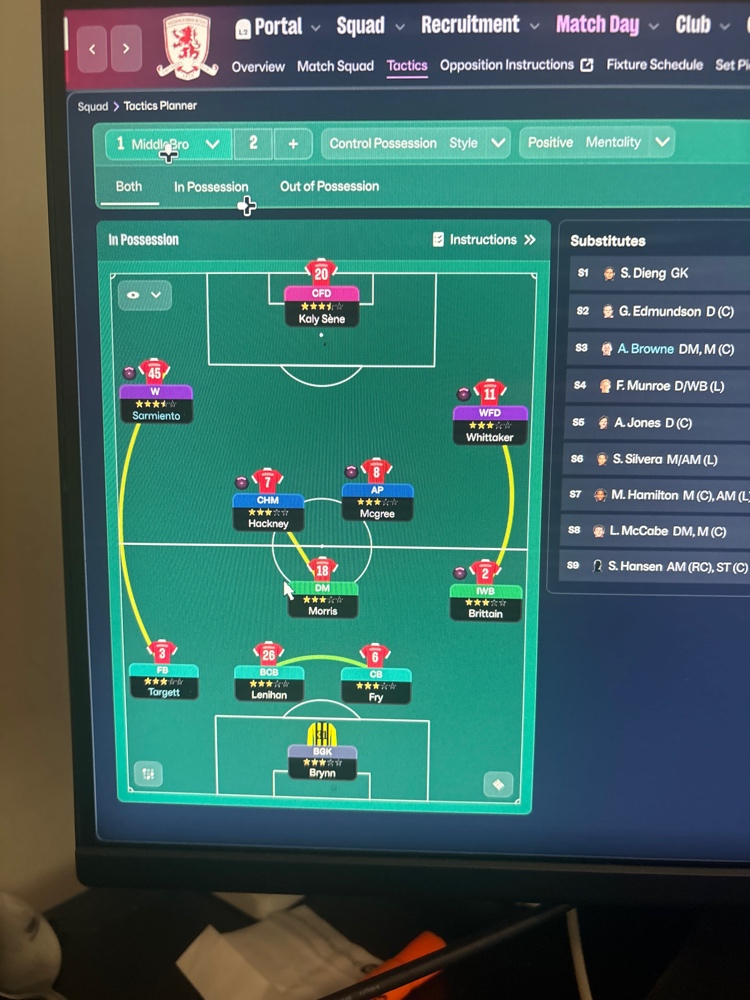
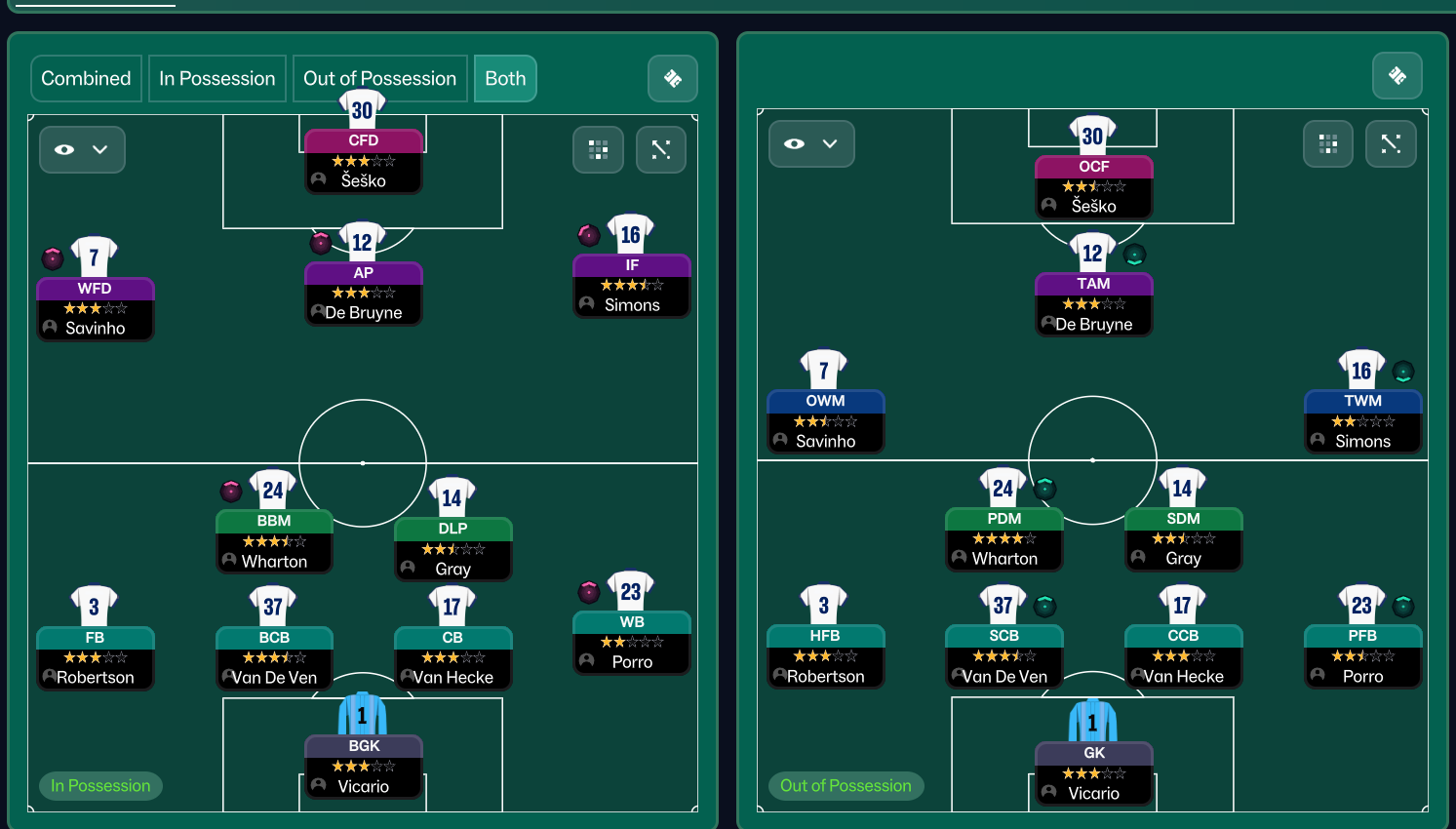
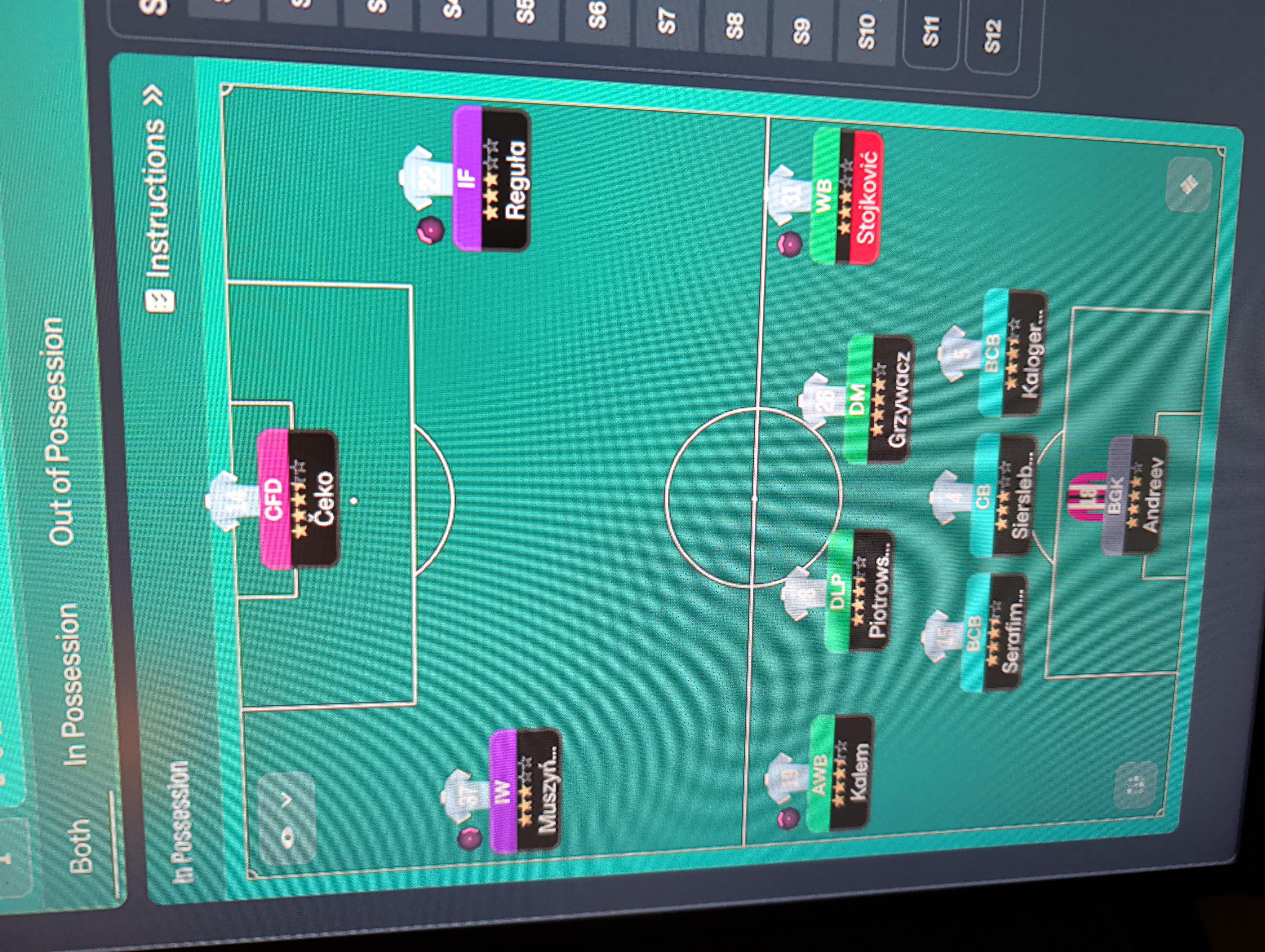
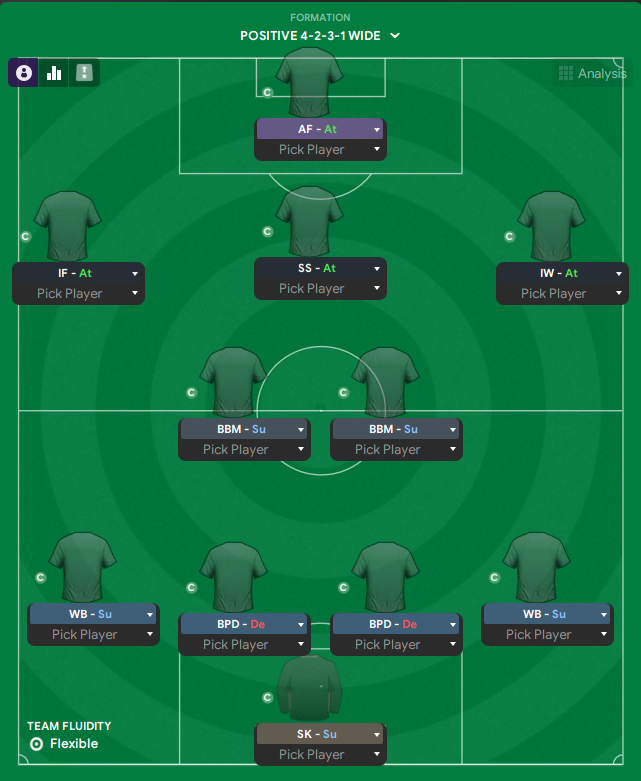
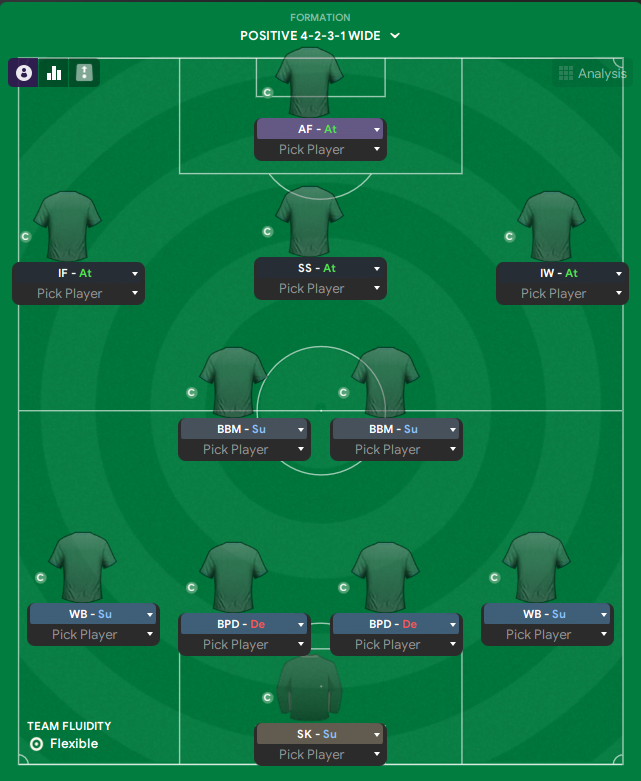
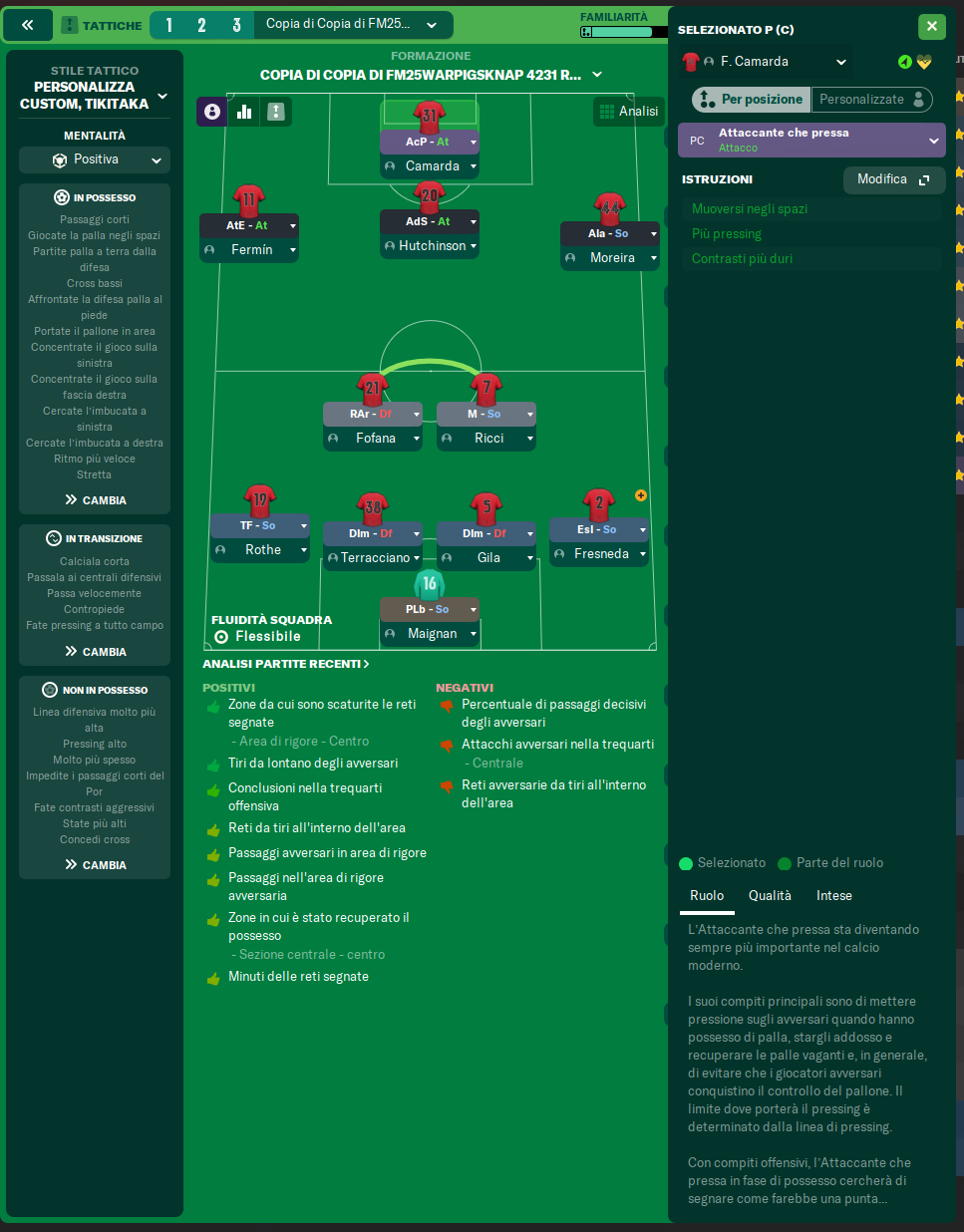
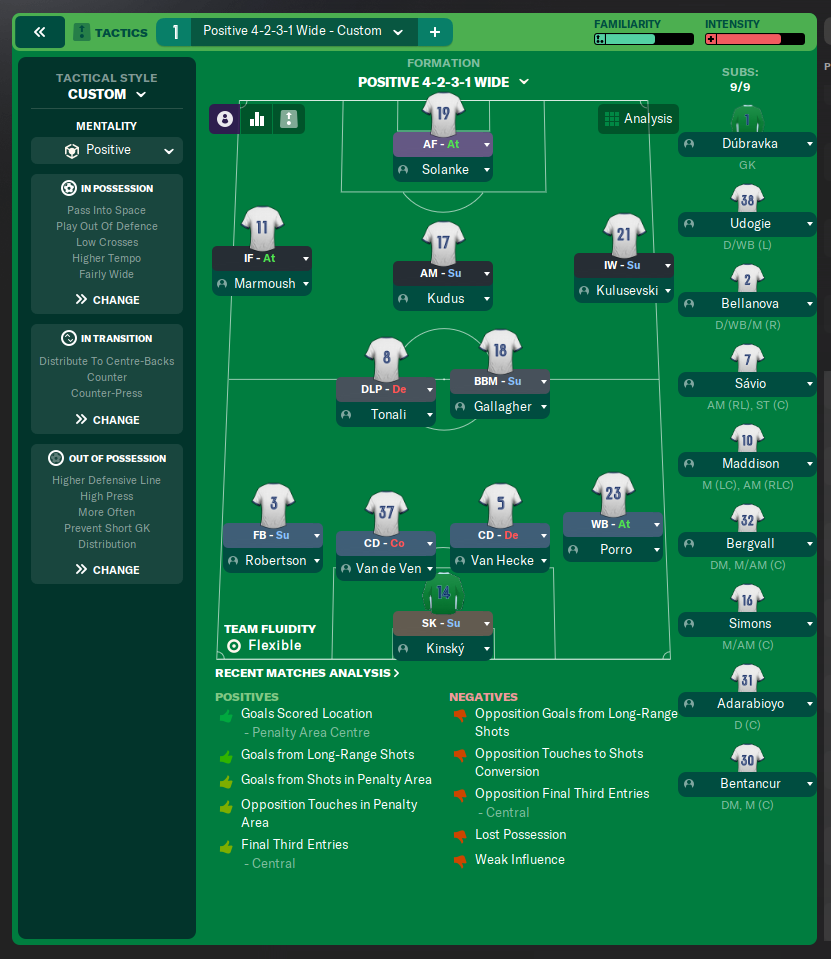
More Fluid Counter-Attack tactics
Guides for this formation
The tactical theory behind the 4-2-3-1 Wide: roles, instructions, and the trade-offs that decide whether the system holds up.
Player pairings
Midfield Pairs in 4-2-3-1 and 4-4-2
Double pivots and flat pairs in 4-2-3-1 and 4-4-2: when each pairing works, when it collapses, and the AMC unicorn that rescues both.
Read guide
Playing styles
Gegenpressing: A Full Guide
Klopp-style gegenpressing in FM, including squad profile, line-and-press pairing, sustainable workload, and the antipatterns to avoid.
Read guide