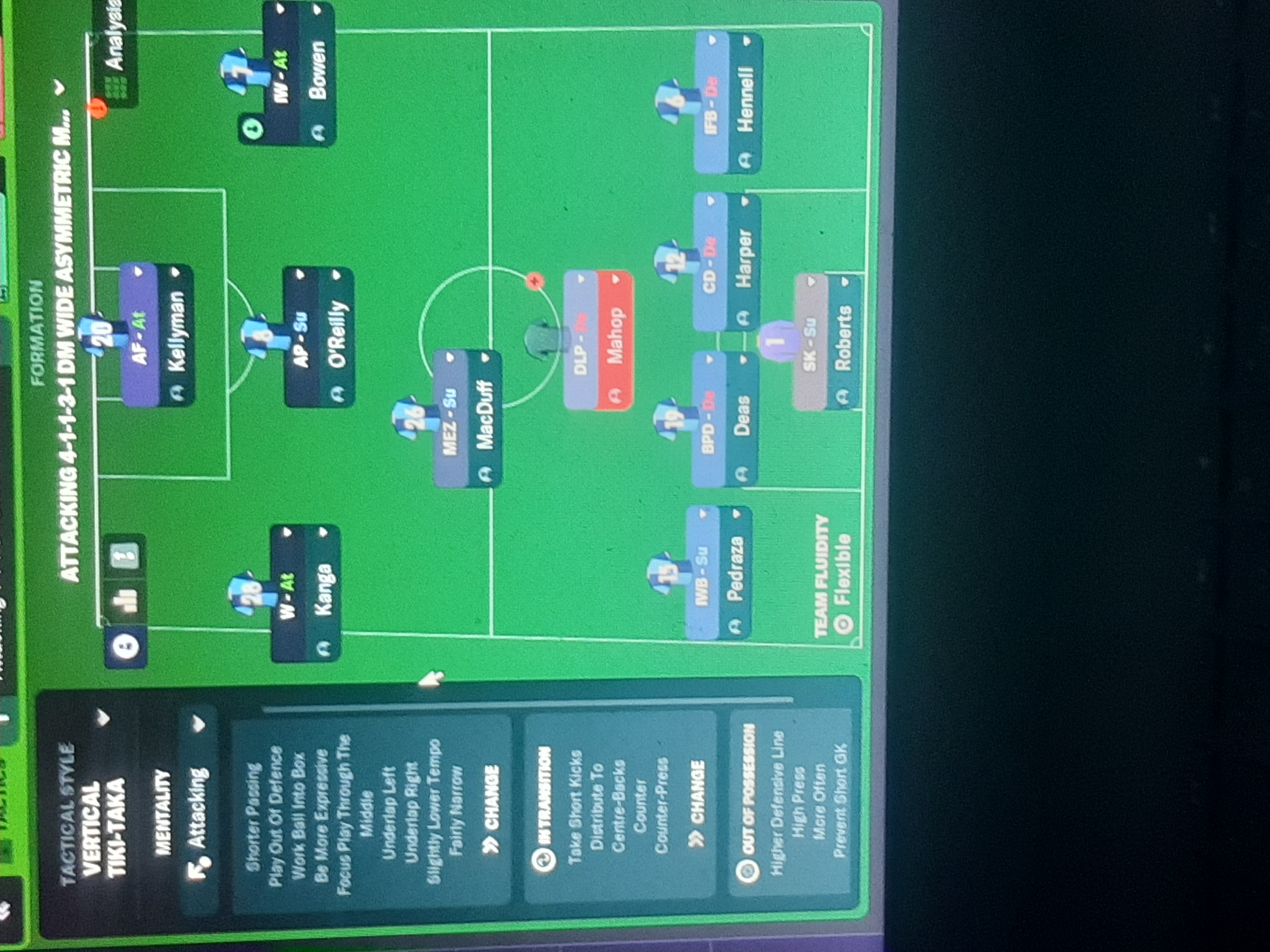
Uploaded Tactic
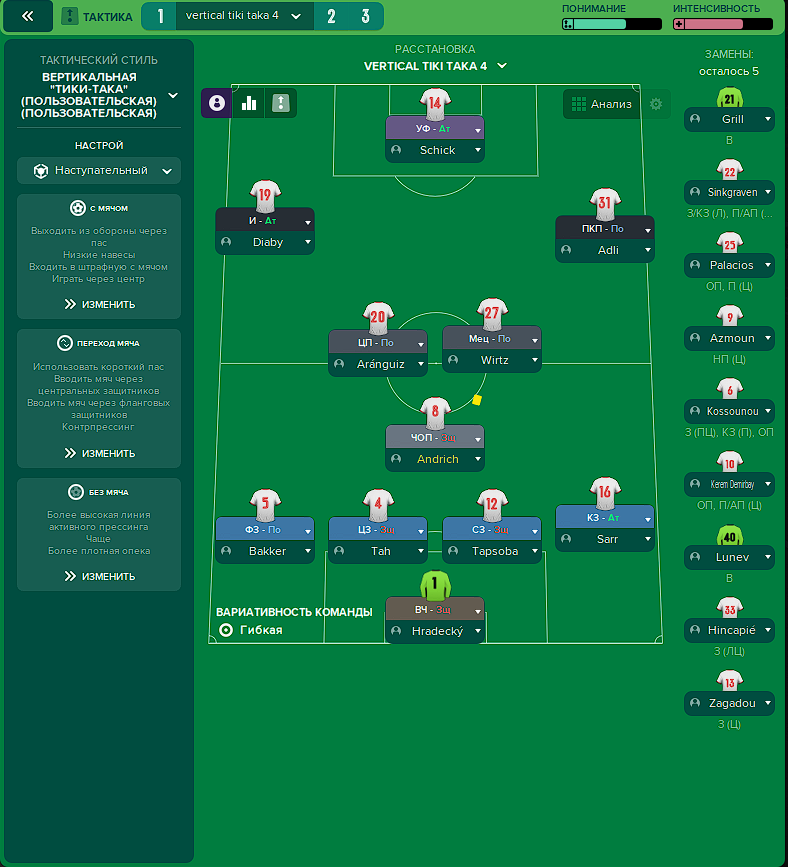
Formation & Style
Tactical Style:Vertical Tiki-Taka
Mentality:Attacking
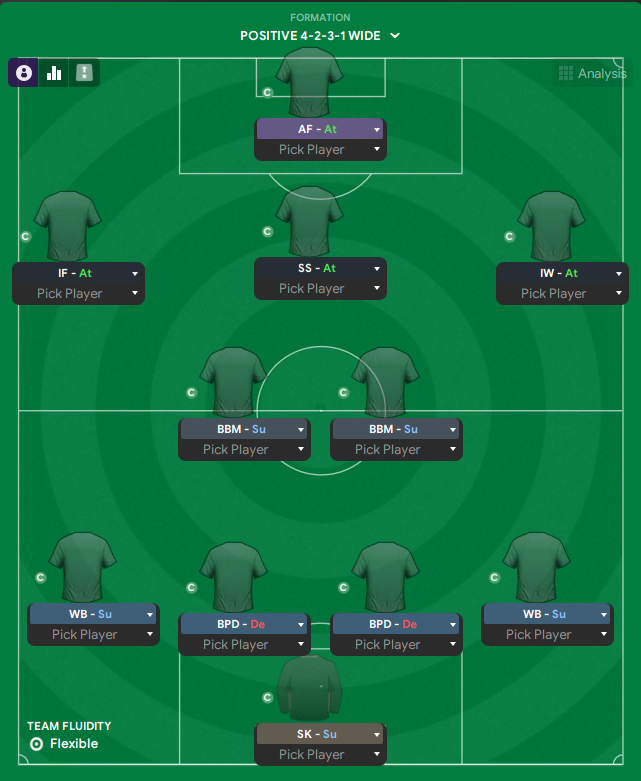
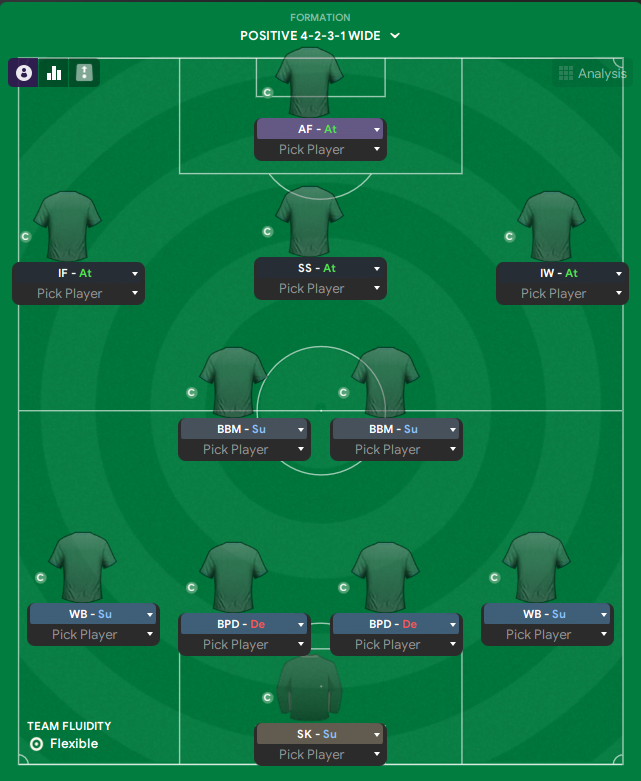
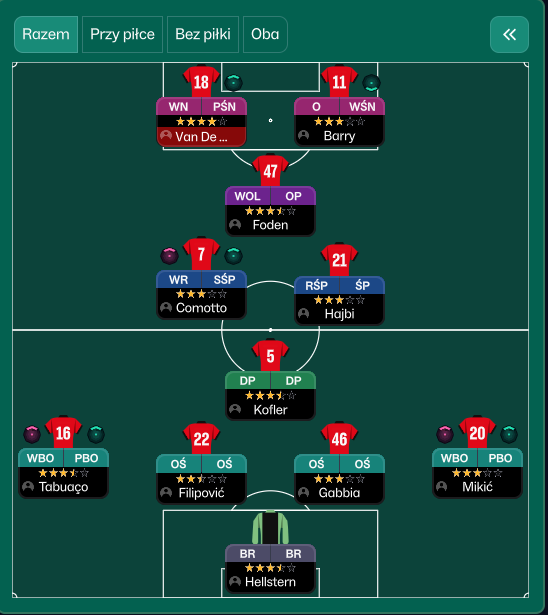
Formation:4-2-3-1 Wide
Team Fluidity:Flexible
In Possession
Utilize short passing
Exploit overlaps through full-backs
Work the ball into the box
In Transition
Counter-press opponents after losing possession
Quickly transition to counter-attacks
Out of Possession
Higher defensive line
More intense pressing
Tighter marking
Team Shape Without Ball
Shape:Compact 4-2
Description:The team maintains a compact shape with two central midfielders providing cover to the back four.
Evidence:DM (DLP-S at [3,2]) and DM (BWM-S at [4,3]) form a solid shield in front of the defence.
Team Shape With Ball
Shape:Fluid 4-3-3
Description:Fluid attacking structure leveraging width and depth, creating various passing options.
Evidence:RW (IF-A at [6,5]), LW (IF-A at [6,1]), and CAM (AP-A at [5,3]) work in tandem, stretching the opposition.
Phase Description
Attacking Play
Focuses on retaining possession and creating spaces through intricate passing and position rotations.
Defensive Transition
Involves immediate pressing to recover possession, ideally forcing errors from the opponent.
Main Focus
Dominating ball control while taking advantage of wide areas and exploiting defensive gaps.
Key Strengths
Possession Control
The team emphasizes short passes and maintaining possession, minimizing risks.
Attacking Width
Using inside forwards allows for exploitation of wide spaces while creating central passing lanes.
Pressing Intensity
Higher pressing leads to quick recovery of possession and disorganization of the opponent's defence.
Conflicting Directions
Defensive Stability
Aggressive pressing might leave the defence vulnerable to counter-attacks if not executed properly.
Width vs Central Play
Over-reliance on inside forwards could lead to congestion in the midfield if not balanced.
Risk of Over Commitment
Pushing full-backs high might expose the defence if possession is lost quickly.
Tactical Suggestions
Adjust Defensive Line Height
Consider dropping the defensive line to mitigate risks from fast counter-attacks.
Implement a Shadow Striker
Alternatively, using a shadow striker could enhance creativity in attack and create better goal-scoring opportunities.
Balance Width and Central Play
Ensure that central midfielders frequently support attacking players to maintain possession and create overloads.
Ask Questions About Your Lineup
Related Tactics
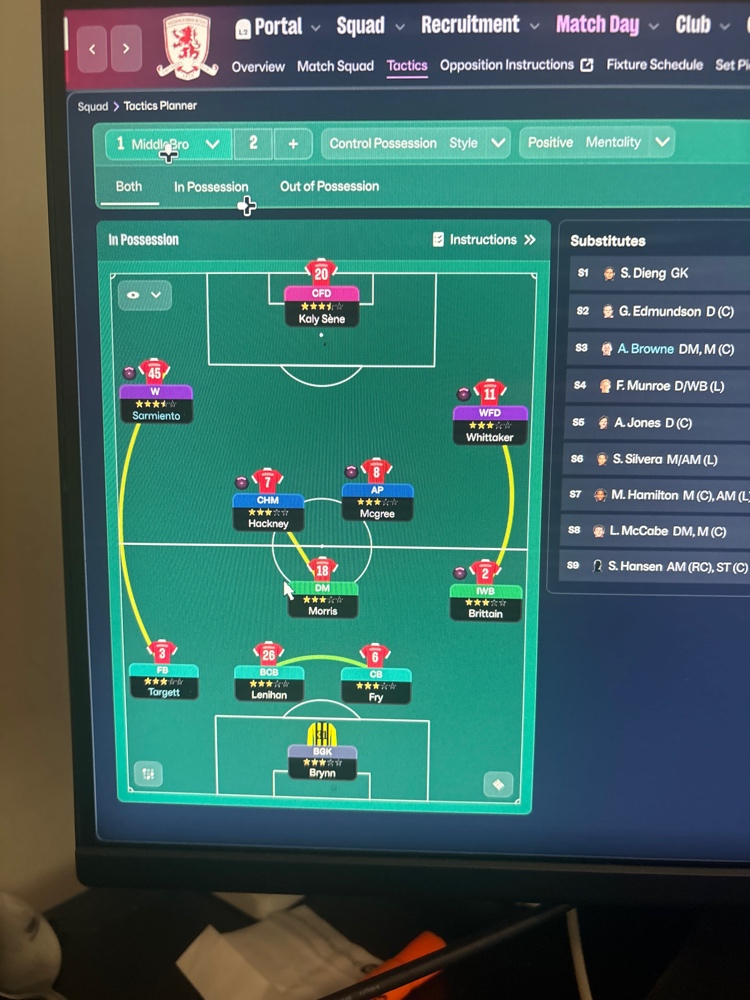
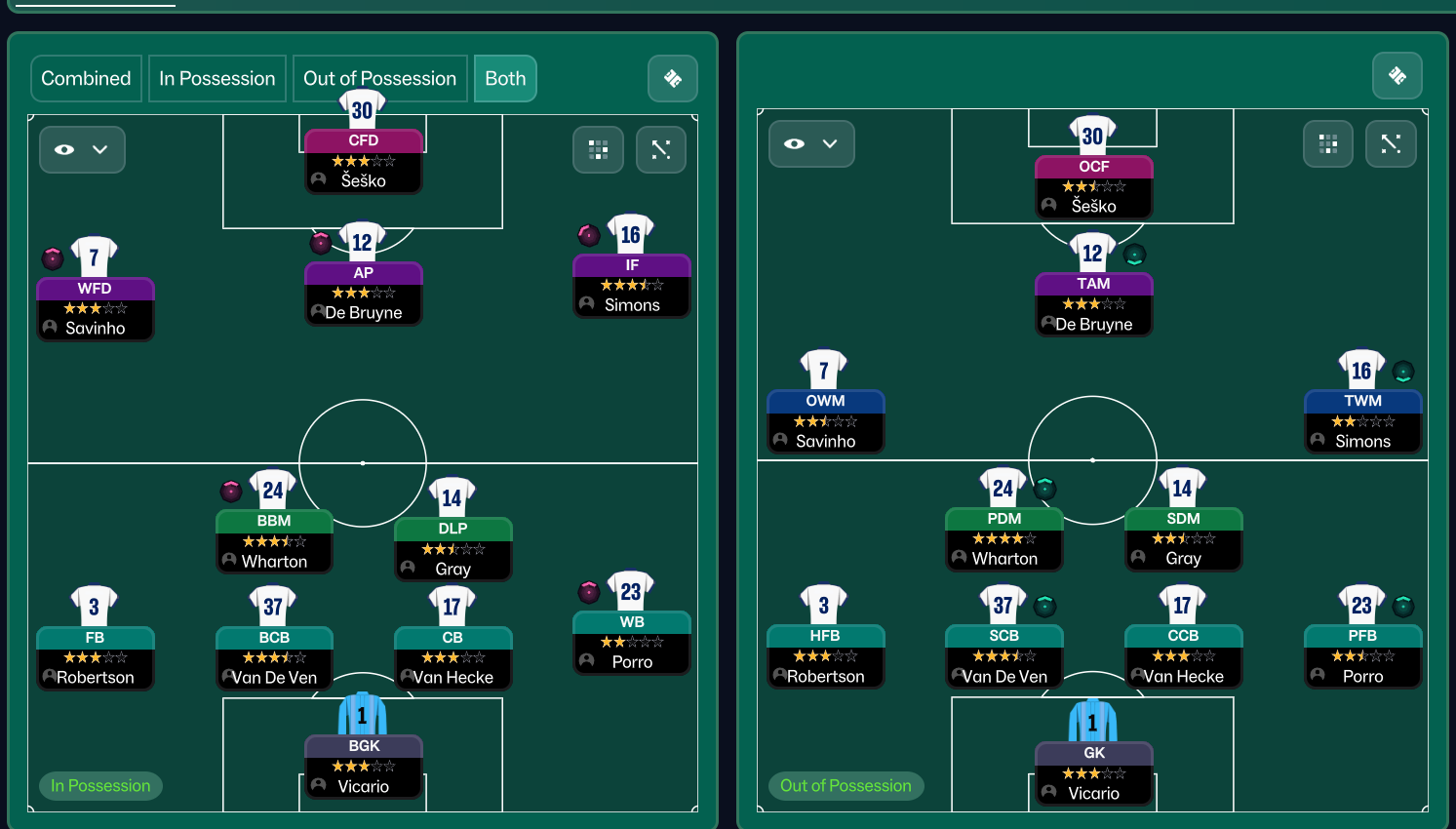
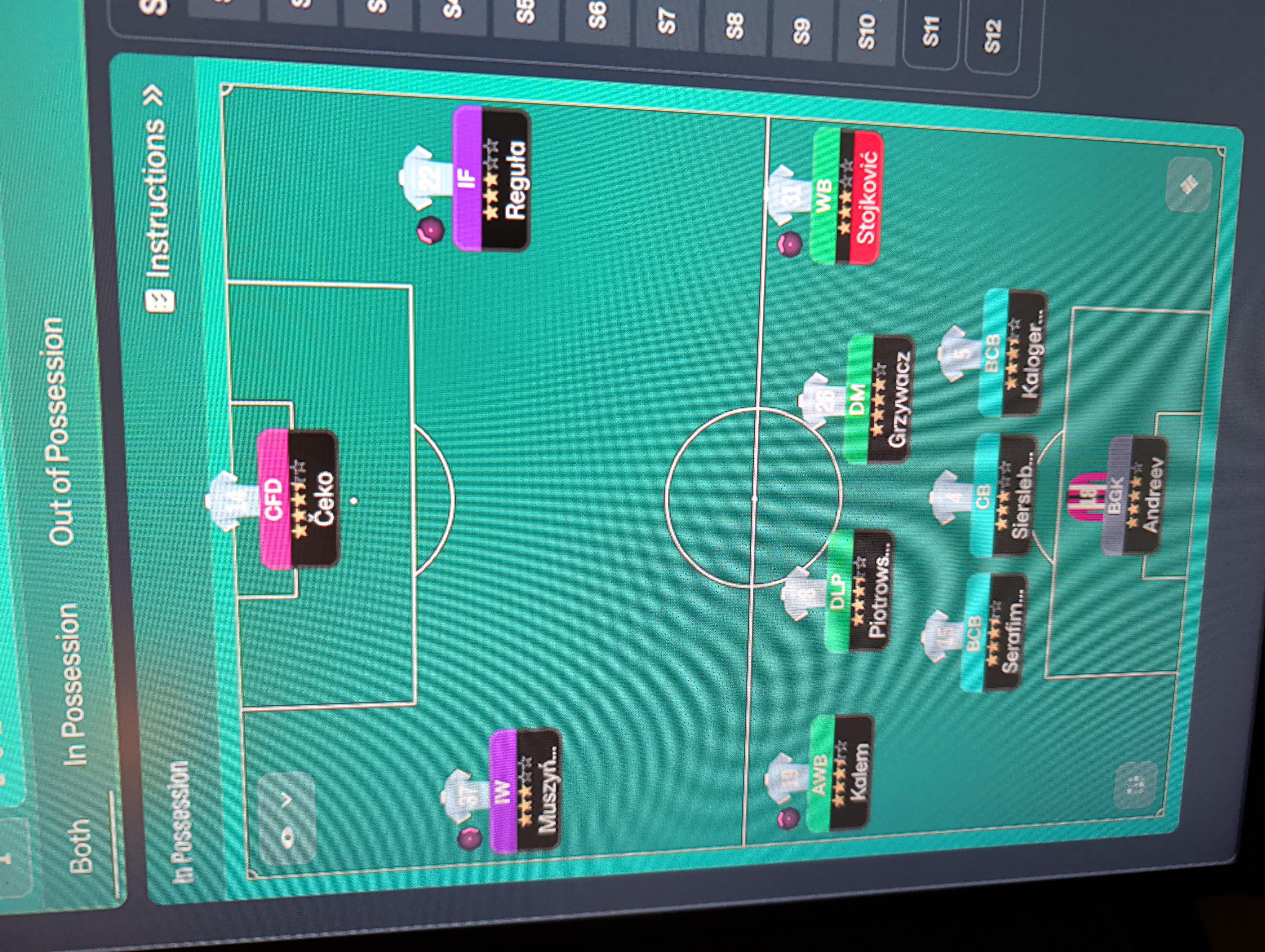
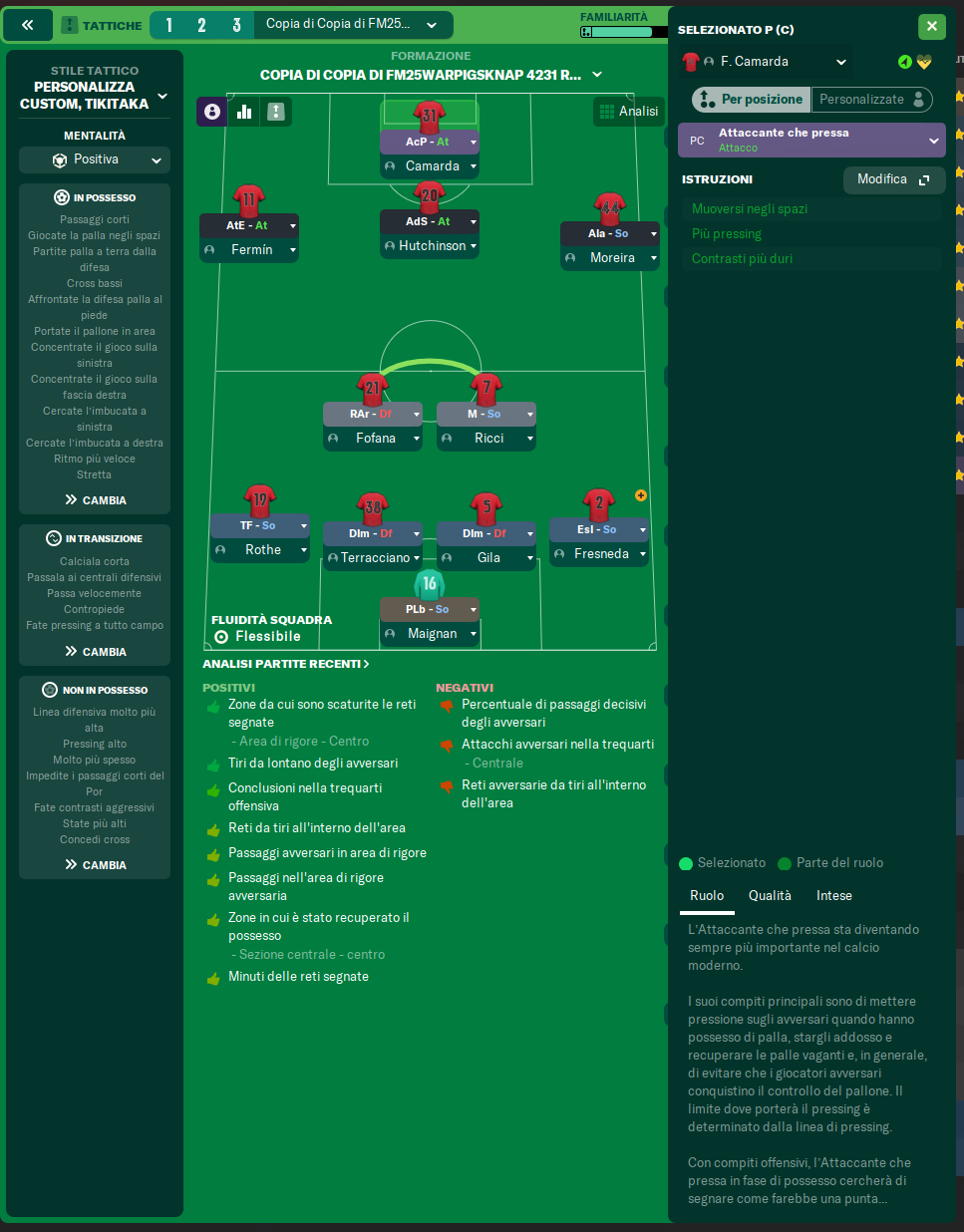
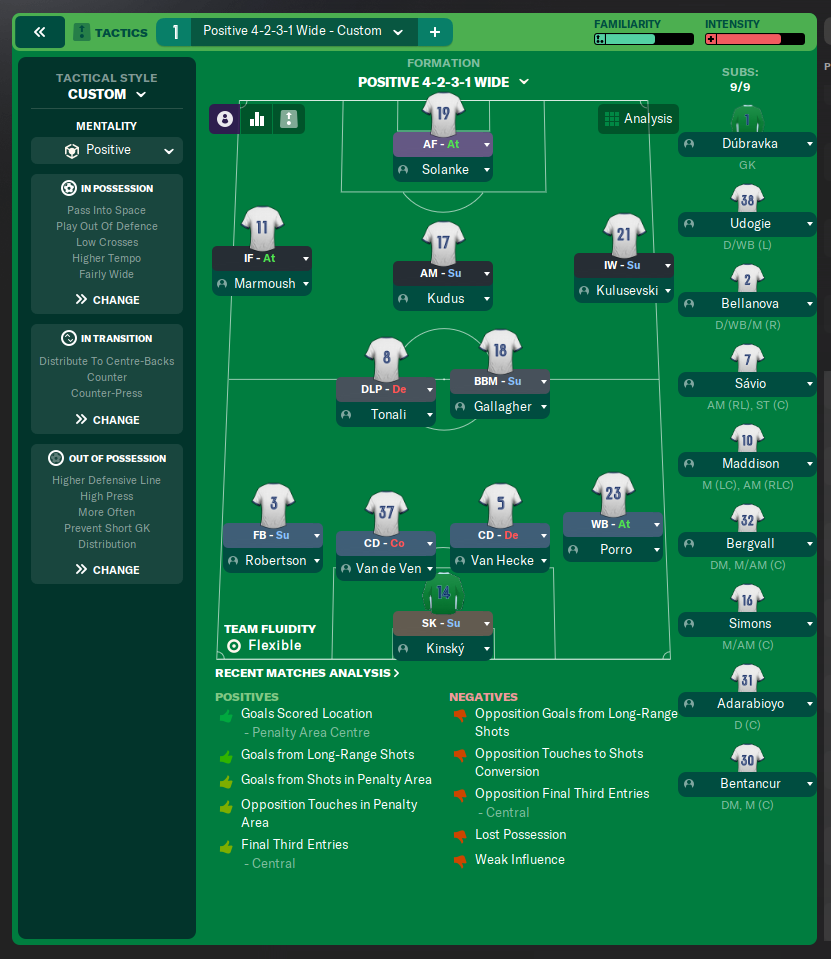
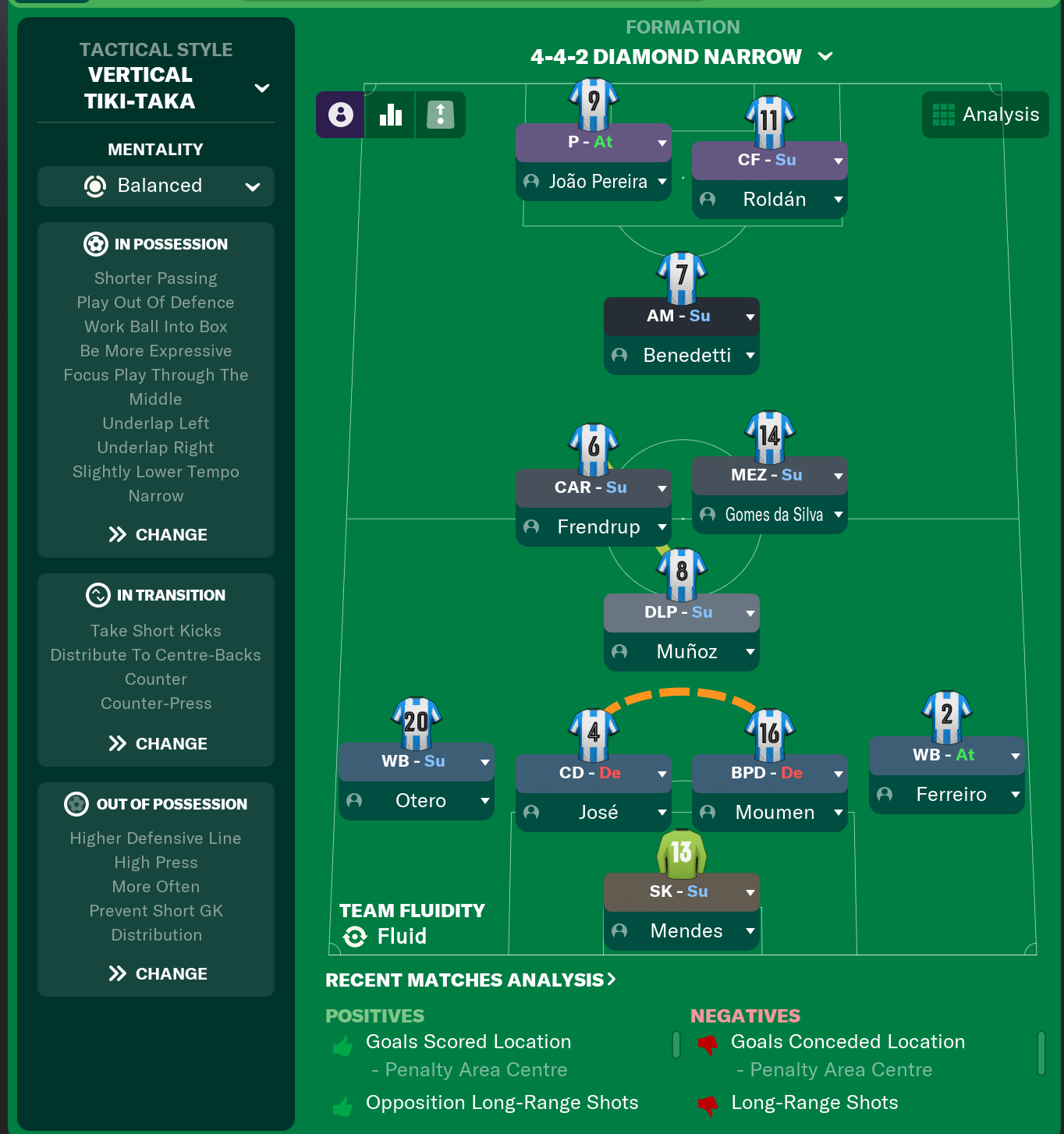
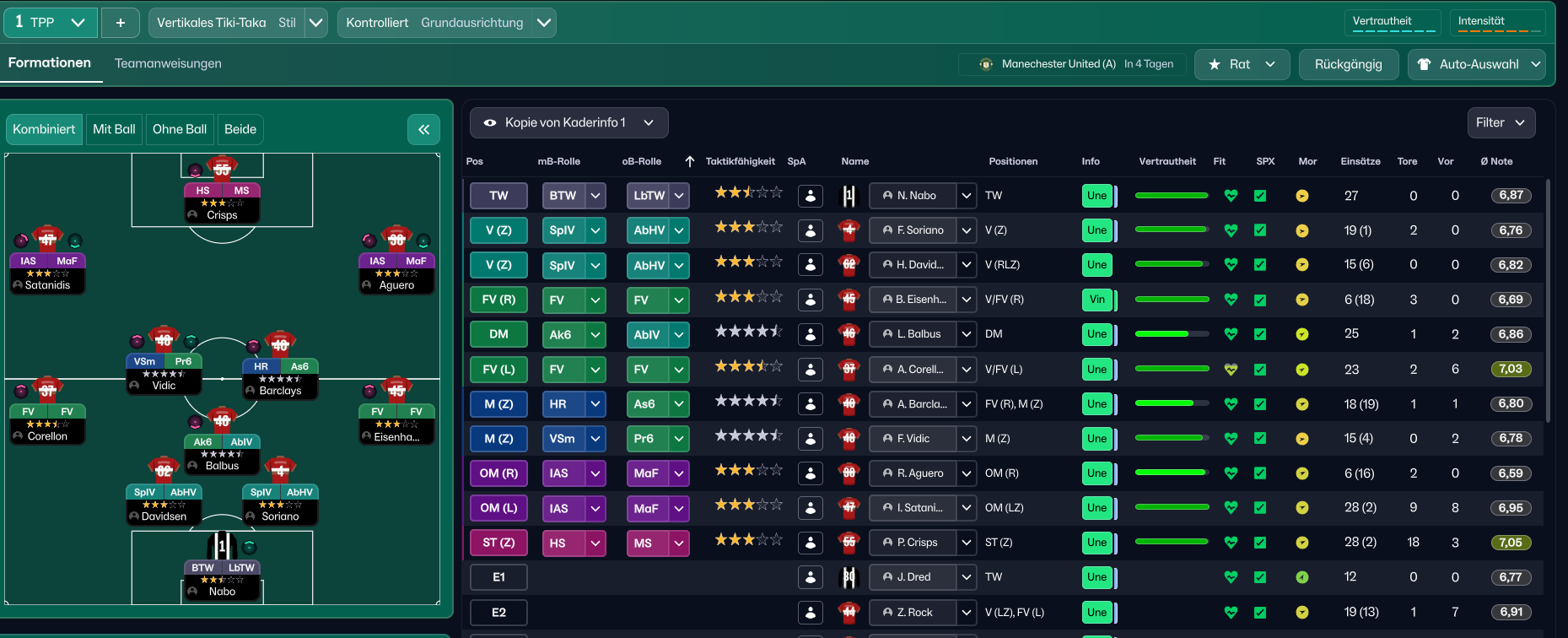
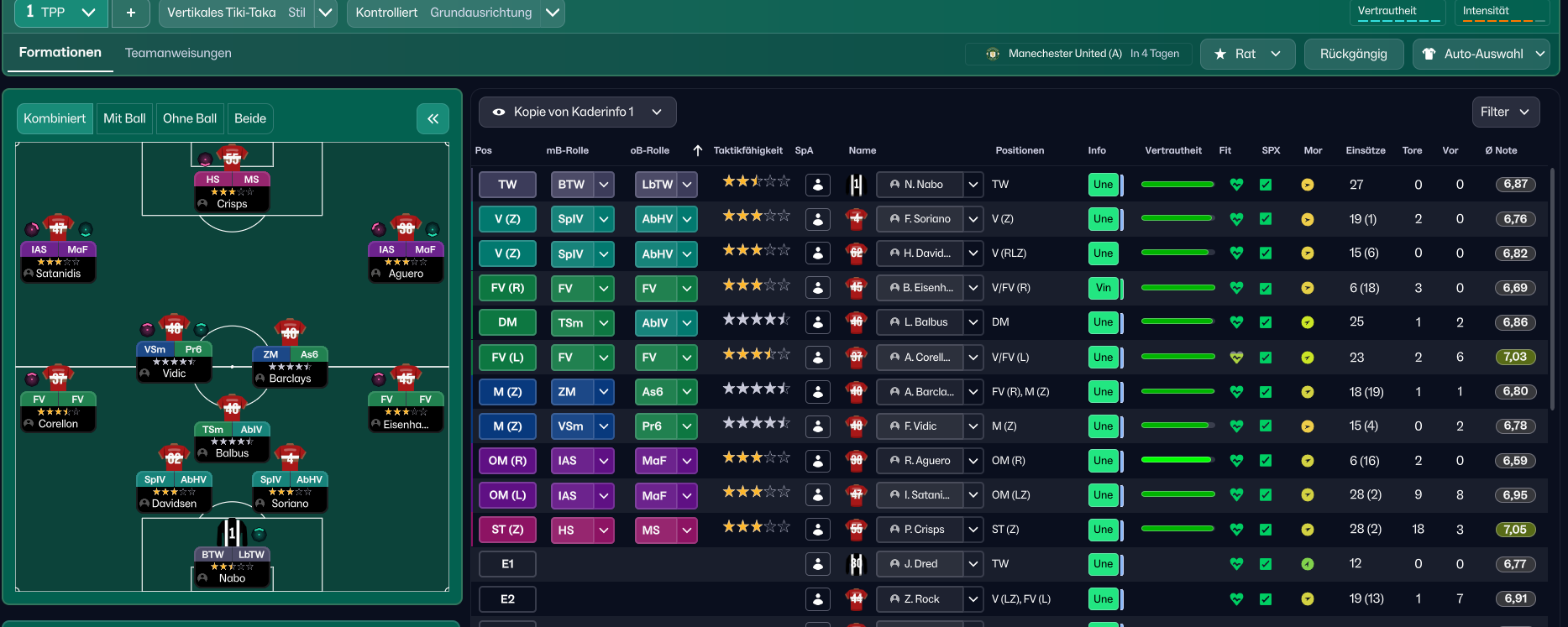
More Vertical Tiki-Taka tactics
Guides for this formation
The tactical theory behind the 4-2-3-1 Wide: roles, instructions, and the trade-offs that decide whether the system holds up.
Player pairings
Midfield Pairs in 4-2-3-1 and 4-4-2
Double pivots and flat pairs in 4-2-3-1 and 4-4-2: when each pairing works, when it collapses, and the AMC unicorn that rescues both.
Read guide
Playing styles
Gegenpressing: A Full Guide
Klopp-style gegenpressing in FM, including squad profile, line-and-press pairing, sustainable workload, and the antipatterns to avoid.
Read guide