Uploaded Tactic
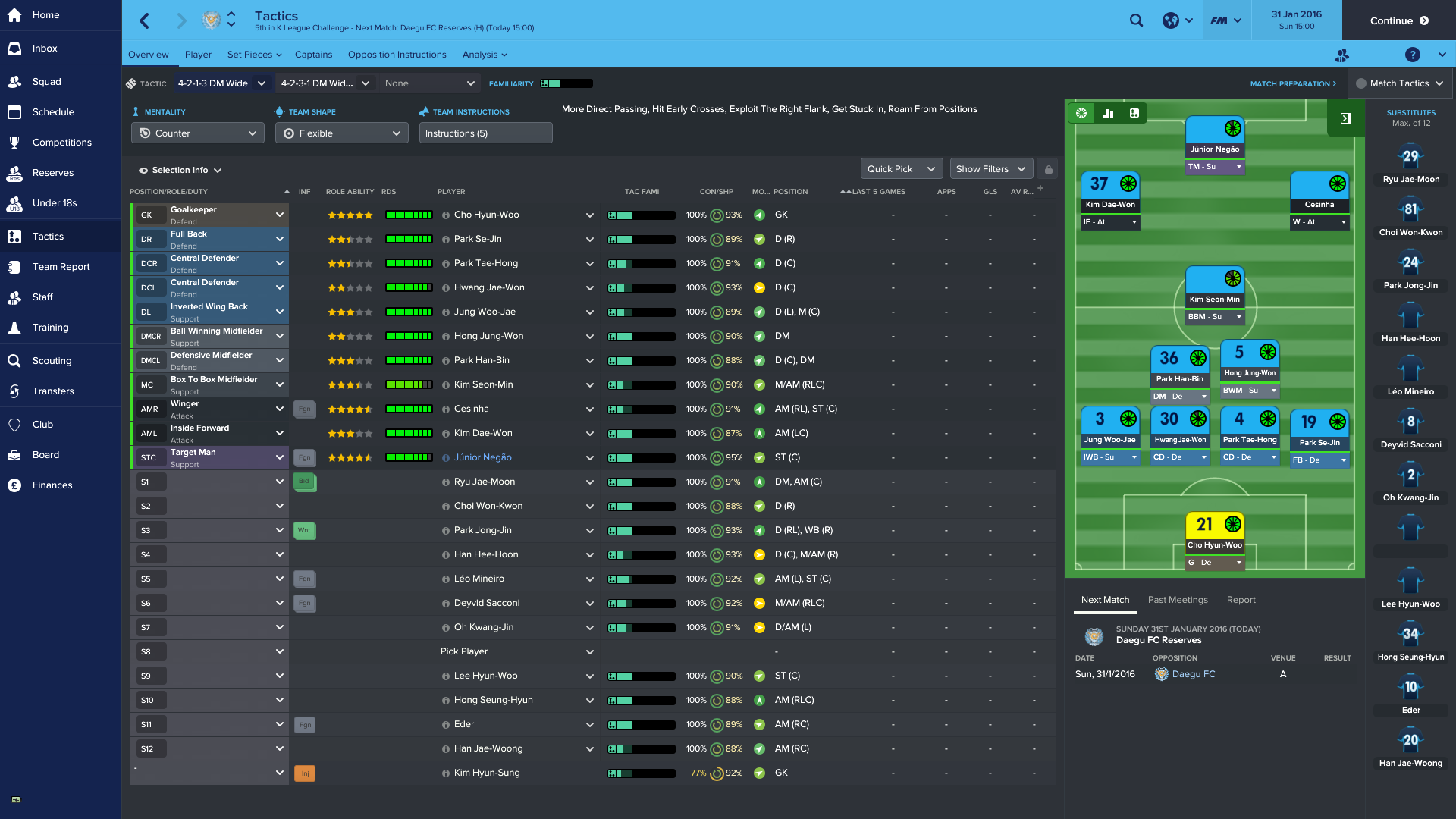
Formation & Style
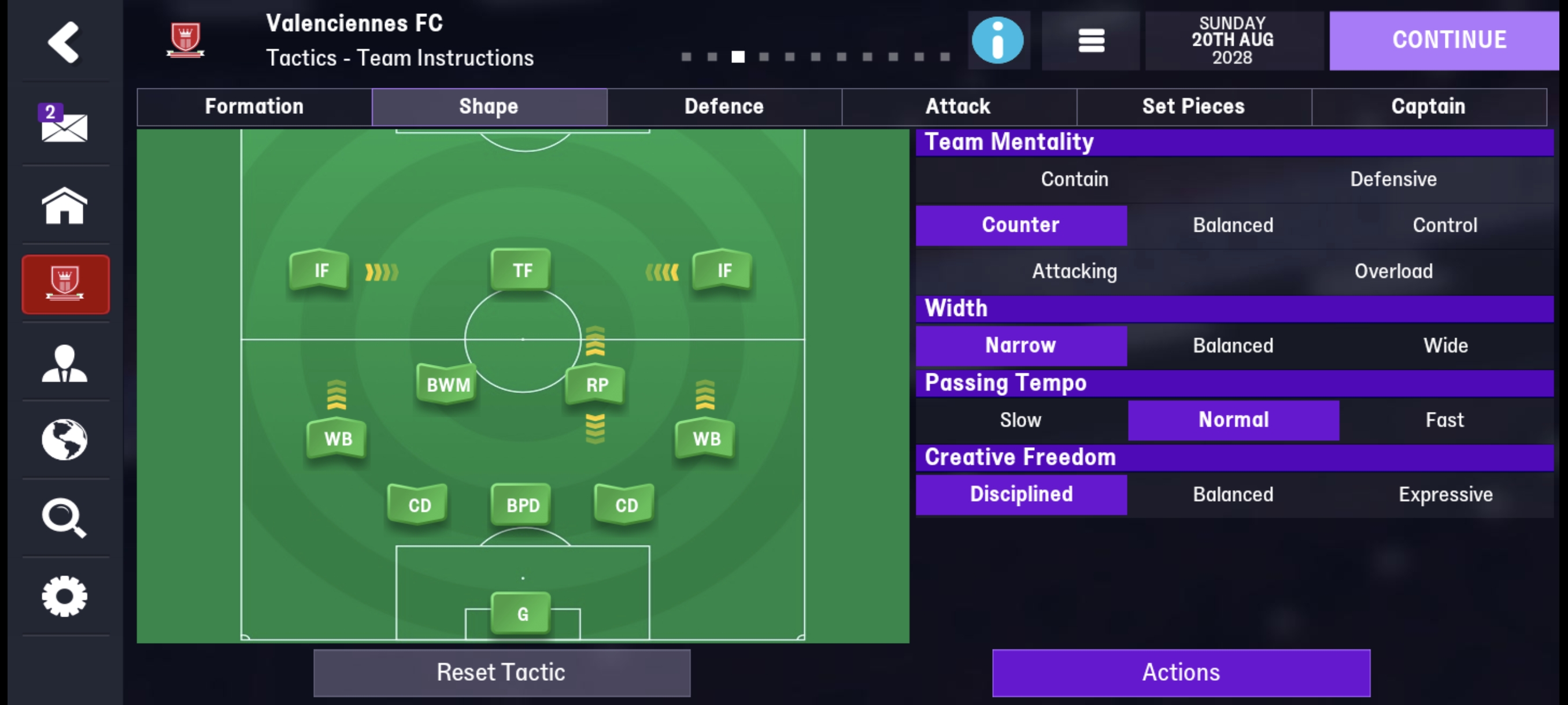
Tactical Style:Counter
Mentality:Flexible
Formation:4-2-3-1 Wide
Team Fluidity:Structured
In Possession
More Direct Passing
Hit Early Crosses
Exploit The Right Flank
In Transition
Get Stuck In
Out of Possession
Roam From Positions
Team Shape Without Ball
Shape:4-2
Description:Compact shape with two lines of four and a defender providing cover.
Evidence:DM-Defend at [3,3] and BWM-S at [3,2] aids in protecting the defense.
Team Shape With Ball
Shape:4-3
Description:Dynamic attacking setup with width from wingers and depth with a target man.
Evidence:IF-A at [6,1] and W-S at [6,5] provide stretching options.
Phase Description
Attacking Play
Utilizes width through the wingers and overlaps from the wing back to create chances.
Defensive Transition
Quick recovery to defensive shape, focusing on winning the ball high up the pitch.
Main Focus
Exploit flanks and create scoring opportunities through crosses.
Key Strengths
Defensive Solidity
The two central defenders keep the defensive line stable while a ball-winning midfielder adds pressure.
Width in Attack
The wingers provide crucial width that pulls defenders out of position.
Counter-Attack Threat
Quick transitions with direct passing support effective counter-attacks.
Conflicting Directions
Possession Play Conflict
The direct passing style may conflict with maintaining possession.
Lack of Central Presence in Attack
The focus on wingers may leave the central area less populated.
High Defensive Line Risks
Getting stuck in could lead players out of position causing gaps.
Tactical Suggestions
Adjust Width
Narrowing the team width could improve central play and control.
Increase Ball Retention
Focusing on possession may allow for less aggressive counter-play.
Add a Central Attacker
Introducing an attacking midfielder could add more pressure in central areas.
Ask Questions About Your Lineup
Related Tactics
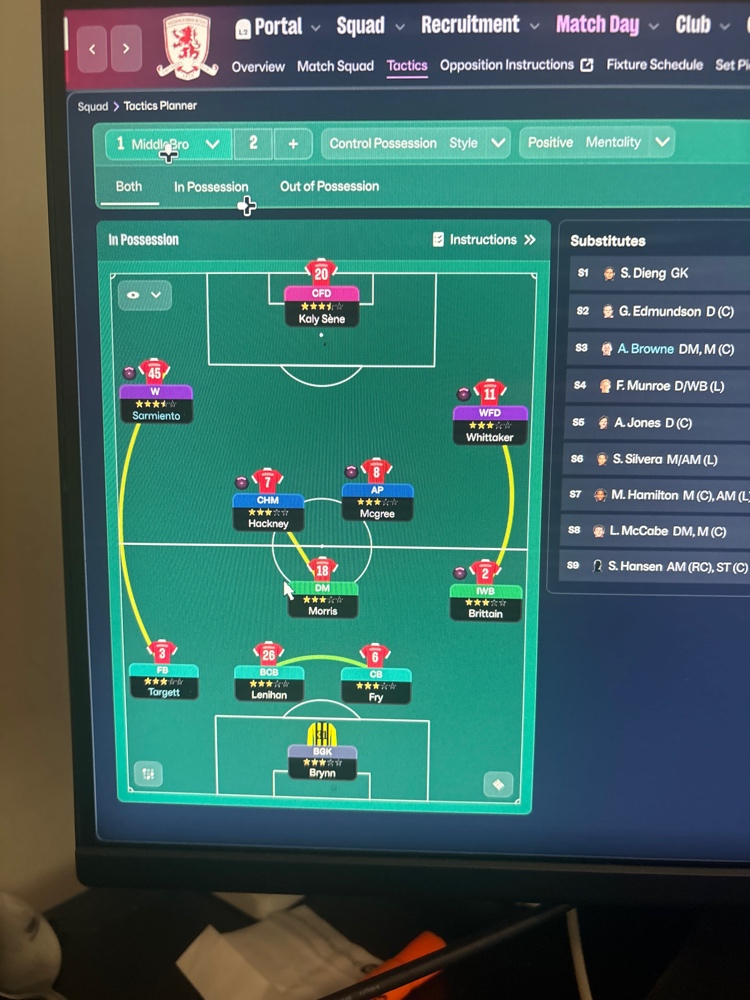
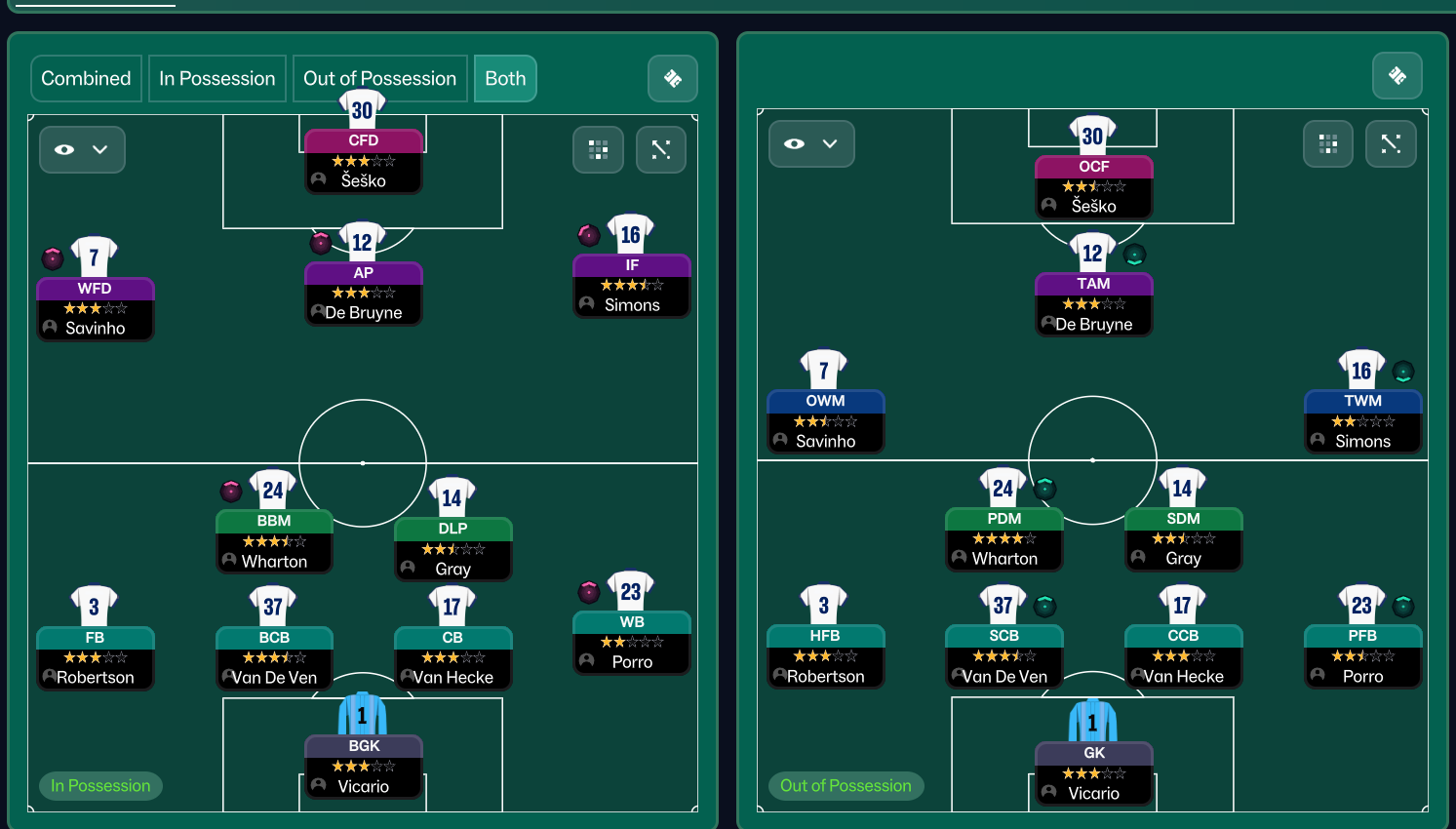
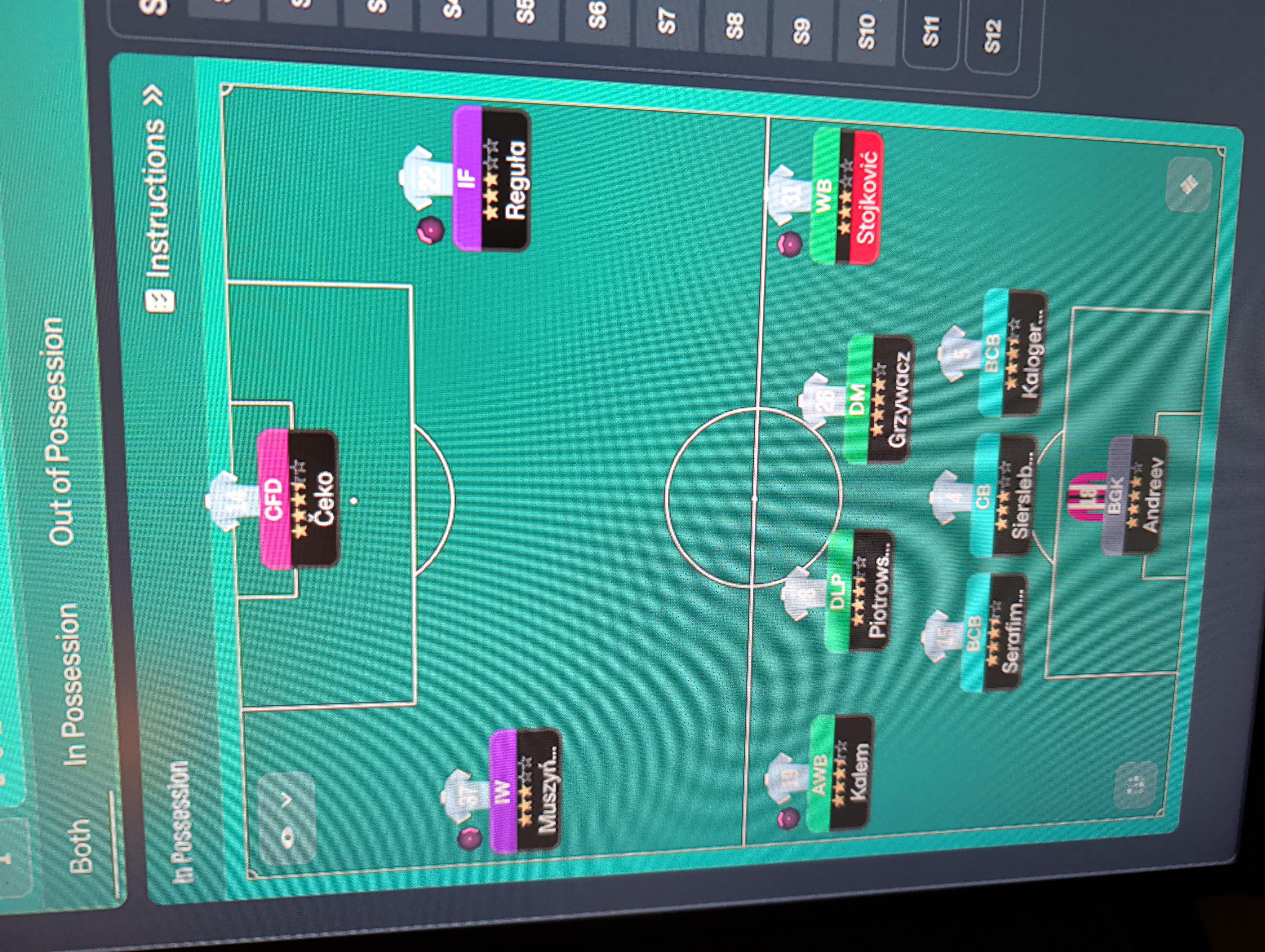
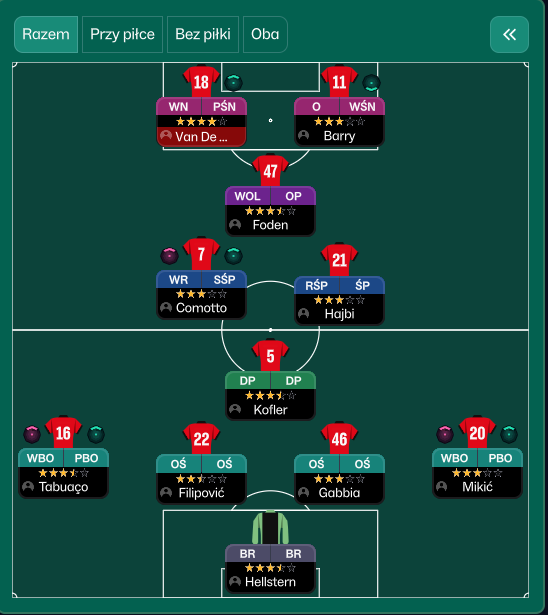
More Counter tactics
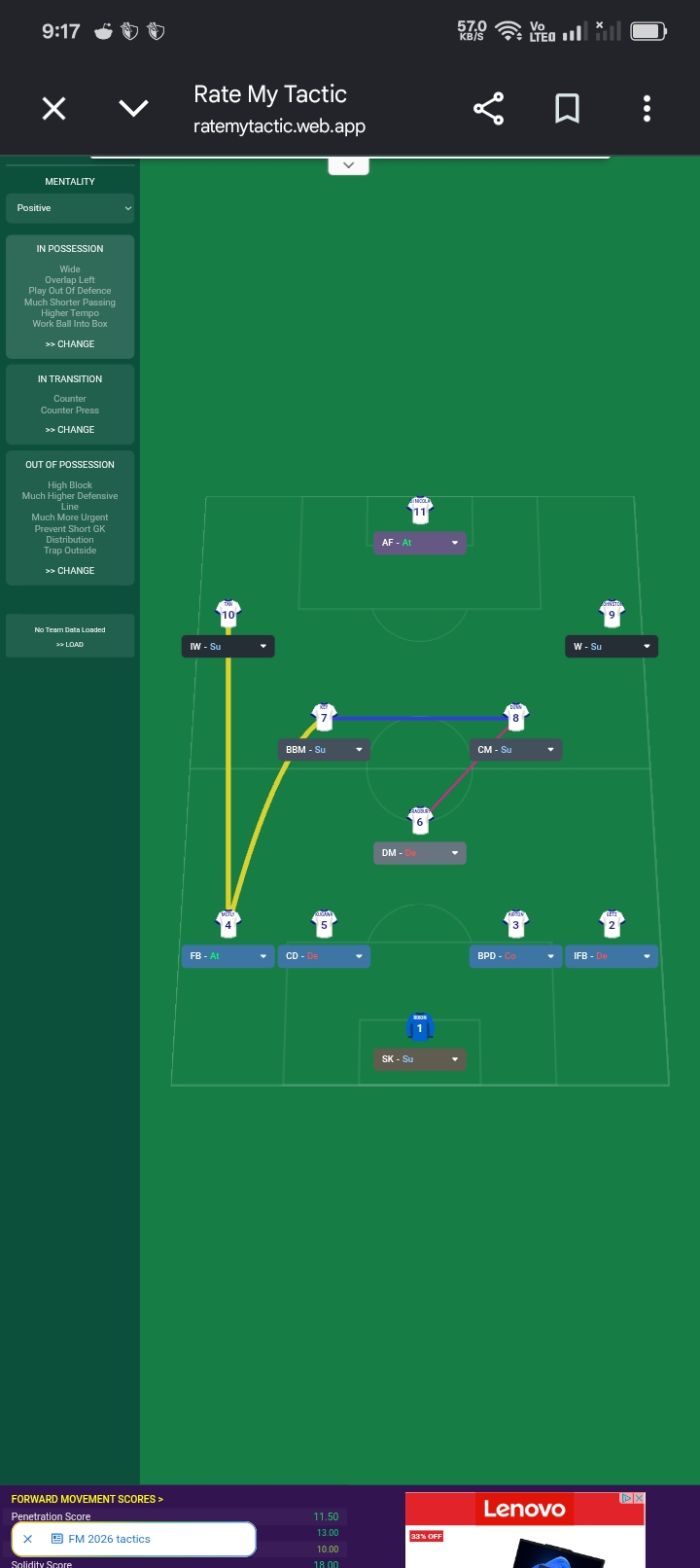
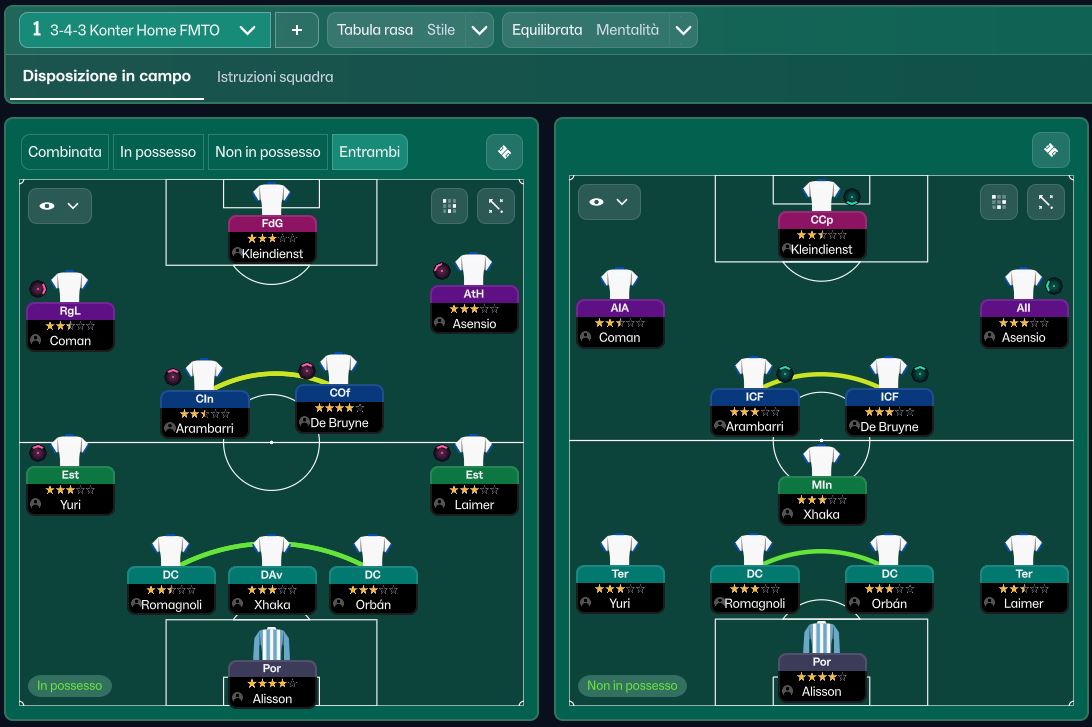
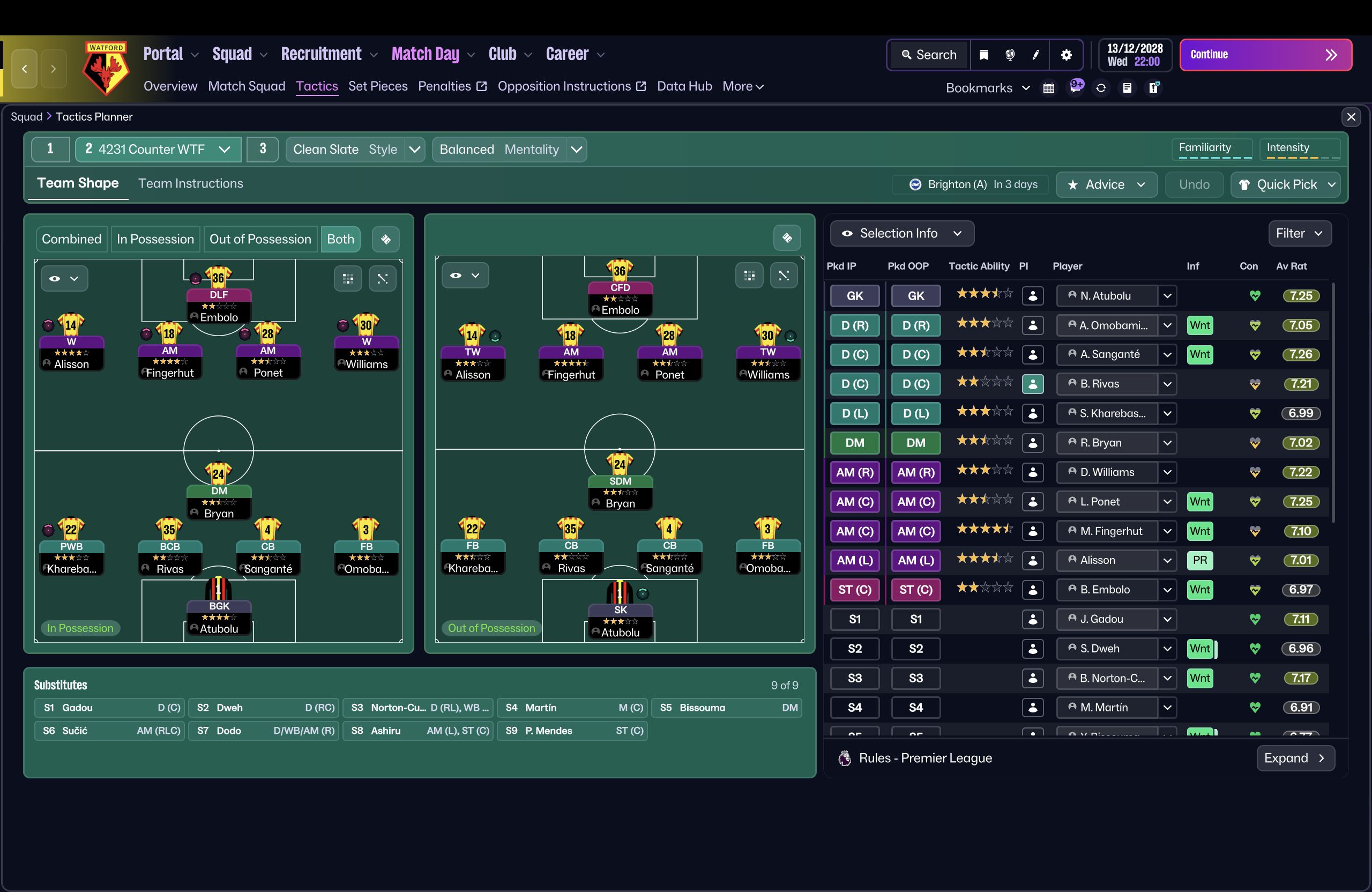
Guides for this formation
The tactical theory behind the 4-2-3-1 Wide: roles, instructions, and the trade-offs that decide whether the system holds up.
Player pairings
Midfield Pairs in 4-2-3-1 and 4-4-2
Double pivots and flat pairs in 4-2-3-1 and 4-4-2: when each pairing works, when it collapses, and the AMC unicorn that rescues both.
Read guide
Playing styles
Gegenpressing: A Full Guide
Klopp-style gegenpressing in FM, including squad profile, line-and-press pairing, sustainable workload, and the antipatterns to avoid.
Read guide