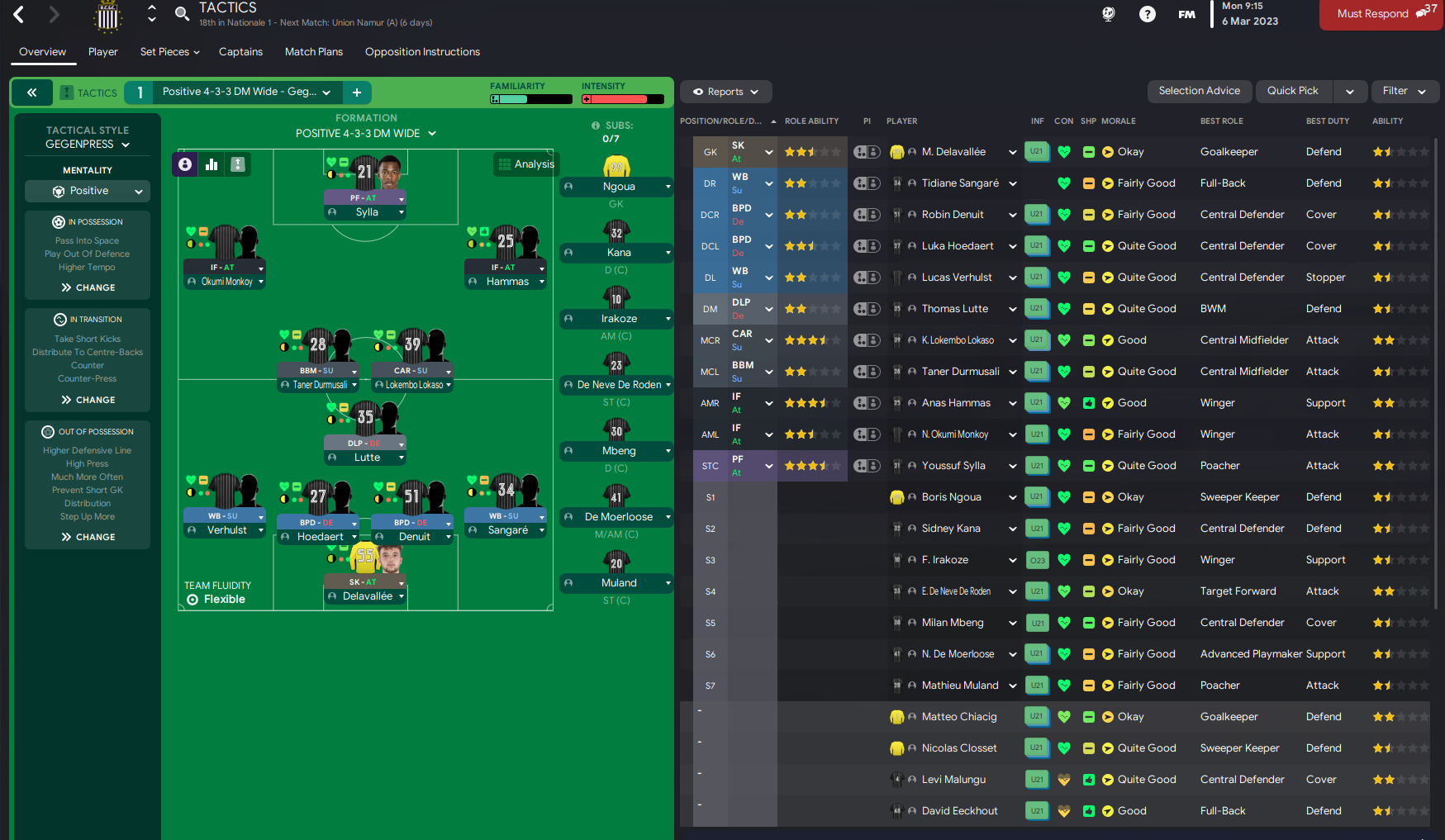
Uploaded Tactic
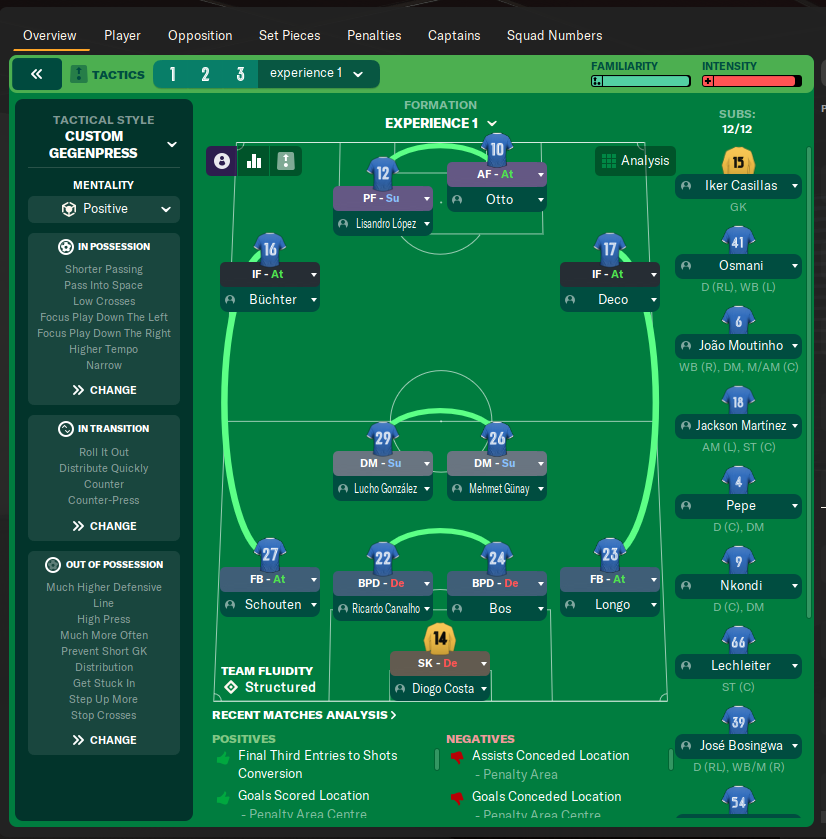
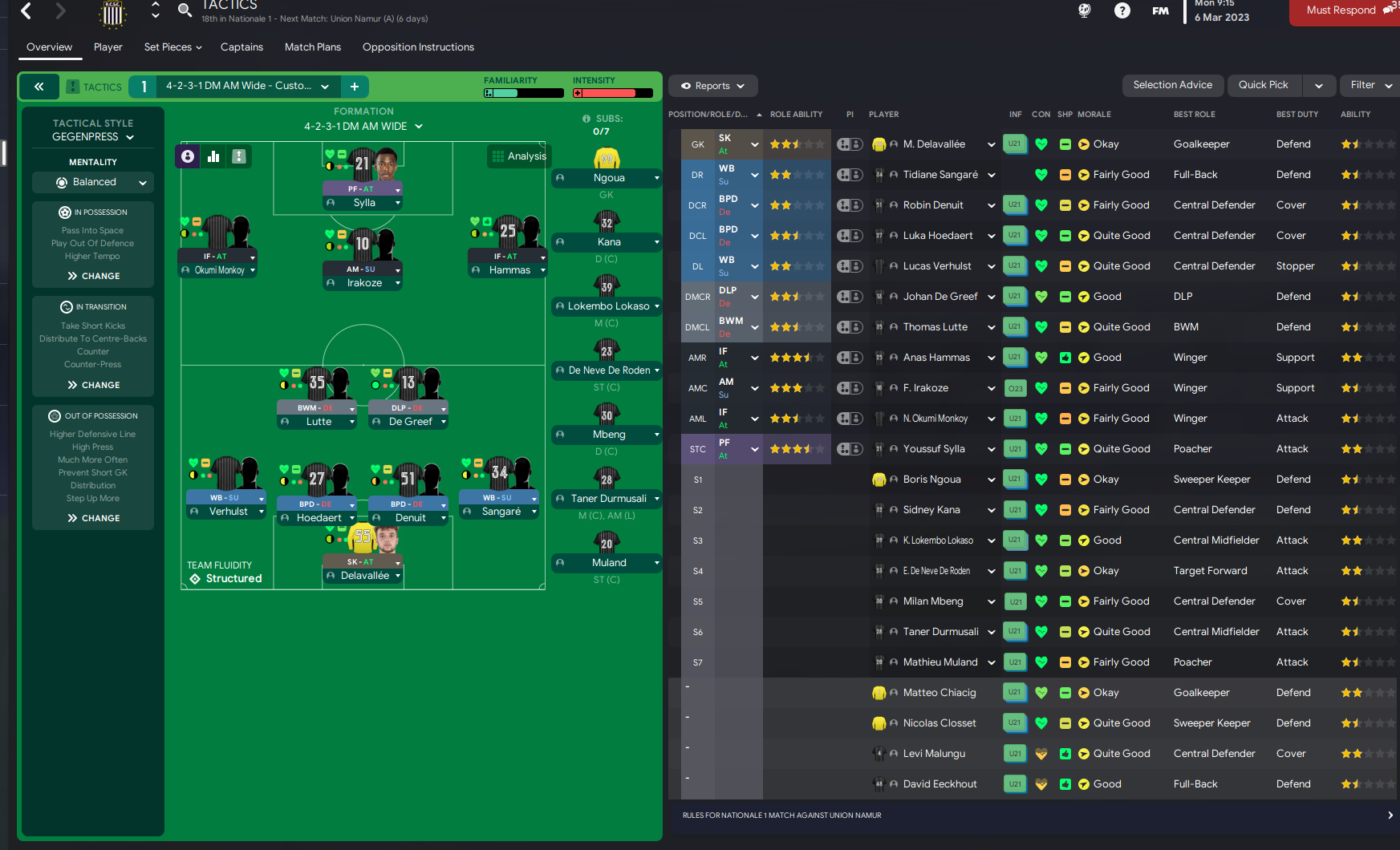
Formation & Style
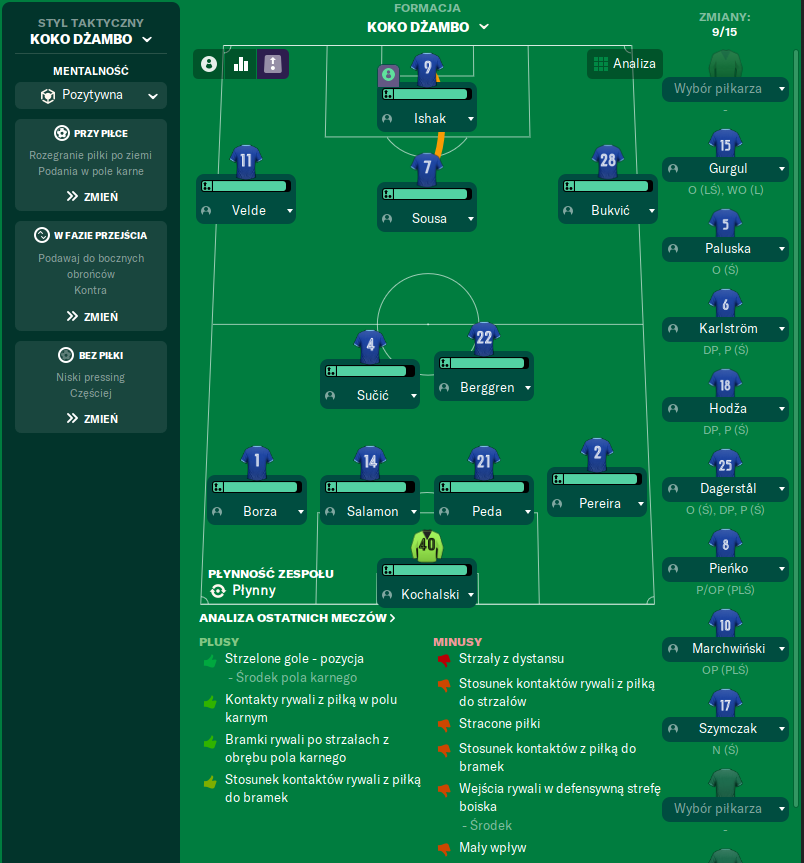
Tactical Style:Gegenpress
Mentality:Positive
Formation:4-2-3-1 Wide
Team Fluidity:Structured
In Possession
Shorter Passing
Pass Into Space
Low Crosses
Focus Play Down The Left
Higher Tempo
Focus Play Down The Right
Narrow
In Transition
Roll It Out
Distribute Quickly
Counter
Out of Possession
Much Higher Defensive Line
High Press
Prevent Short GK Distribution
Get Stuck In
Step Up More
Much More Often
Team Shape Without Ball
No team shape without ball data available
Team Shape With Ball
No team shape with ball data available
Key Strengths
High Pressing
The gegenpress style ensures the team applies pressure immediately after losing possession, disrupting the opponent's build-up.
Fluid Attack
With two inverted forwards and an advanced forward, the attack can switch flanks quickly, creating unpredictability.
Versatile Midfield
The midfield configuration allows for both creativity and defensive cover, adapting to different phases of the game.
Width in Attack
Full-backs are tasked with attacking duties, providing width to stretch the opponent's defense and create space for midfielders.
Conflicting Directions
Defensive Depth
The much higher defensive line may leave the team vulnerable to counter-attacks, especially against rapid opponents.
Role Balance
Having multiple players designated as inverted forwards may lead to congestion in the middle, reducing width available for attacks.
GK Distribution
With a high pressing style, the goalkeeper's distribution could become predictable, making it easy for opponents to counter.
Attacking Full-Backs and Defensive Responsibility
While full-backs support attacks, their defensive duties might be compromised, especially if wide players do not track back effectively.
Tactical Suggestions
Adjust Defensive Line
Consider lowering the defensive line slightly to mitigate vulnerability to speed-based counter-attacks.
Diverse Forward Roles
Introduce more diverse forward roles (e.g., a target man) to balance the attacking threat and prevent congestion.
GK Role Adjustment
Consider using a 'Sweeper Keeper - Support' role for the goalkeeper to improve distribution options under pressing scenarios.
Encourage Wider Play
Instruct the wide players to maintain width, allowing for better spacing and reducing congestion in central areas.
Ask Questions About Your Lineup
Related Tactics
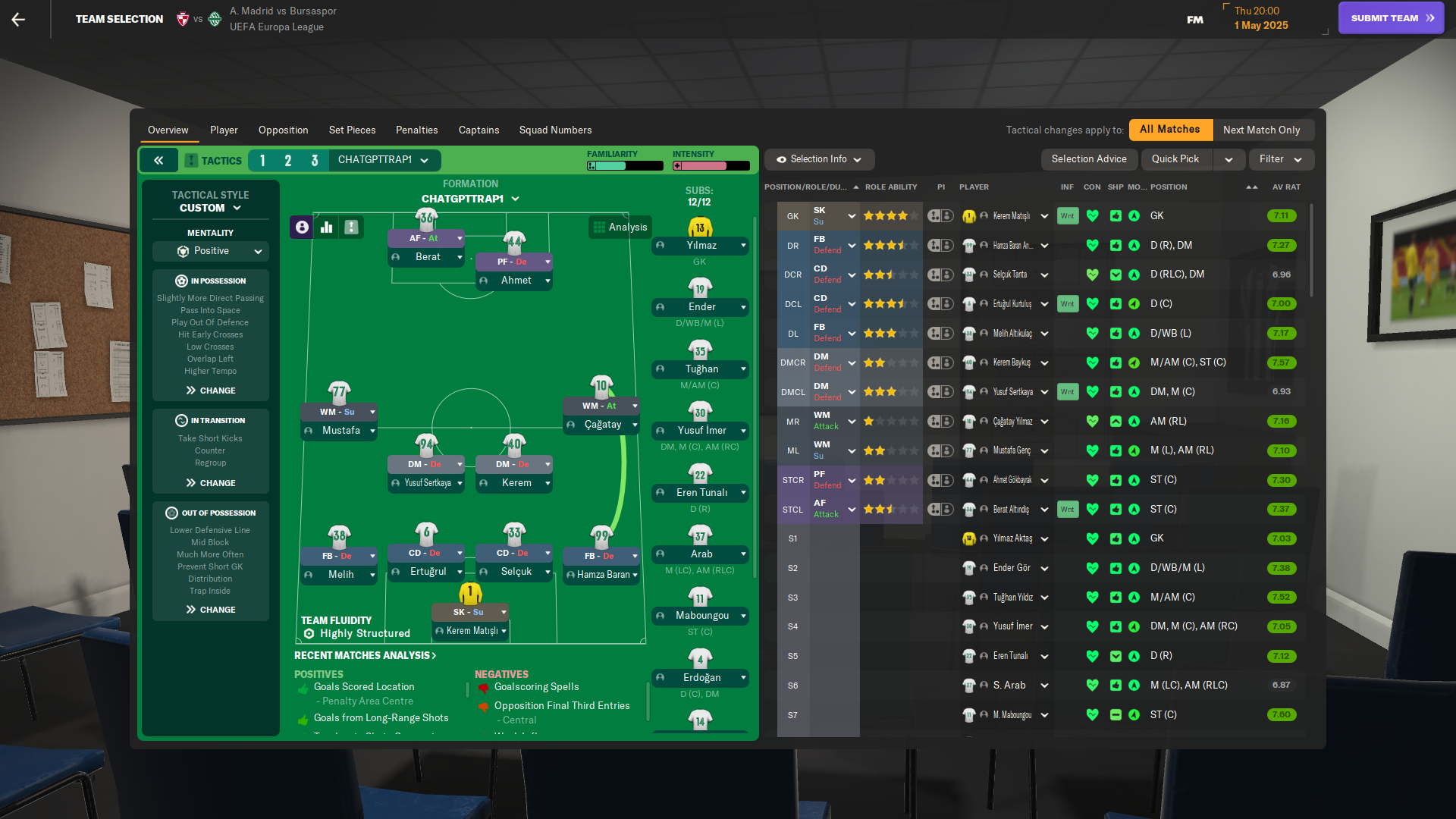
More Gegenpress tactics
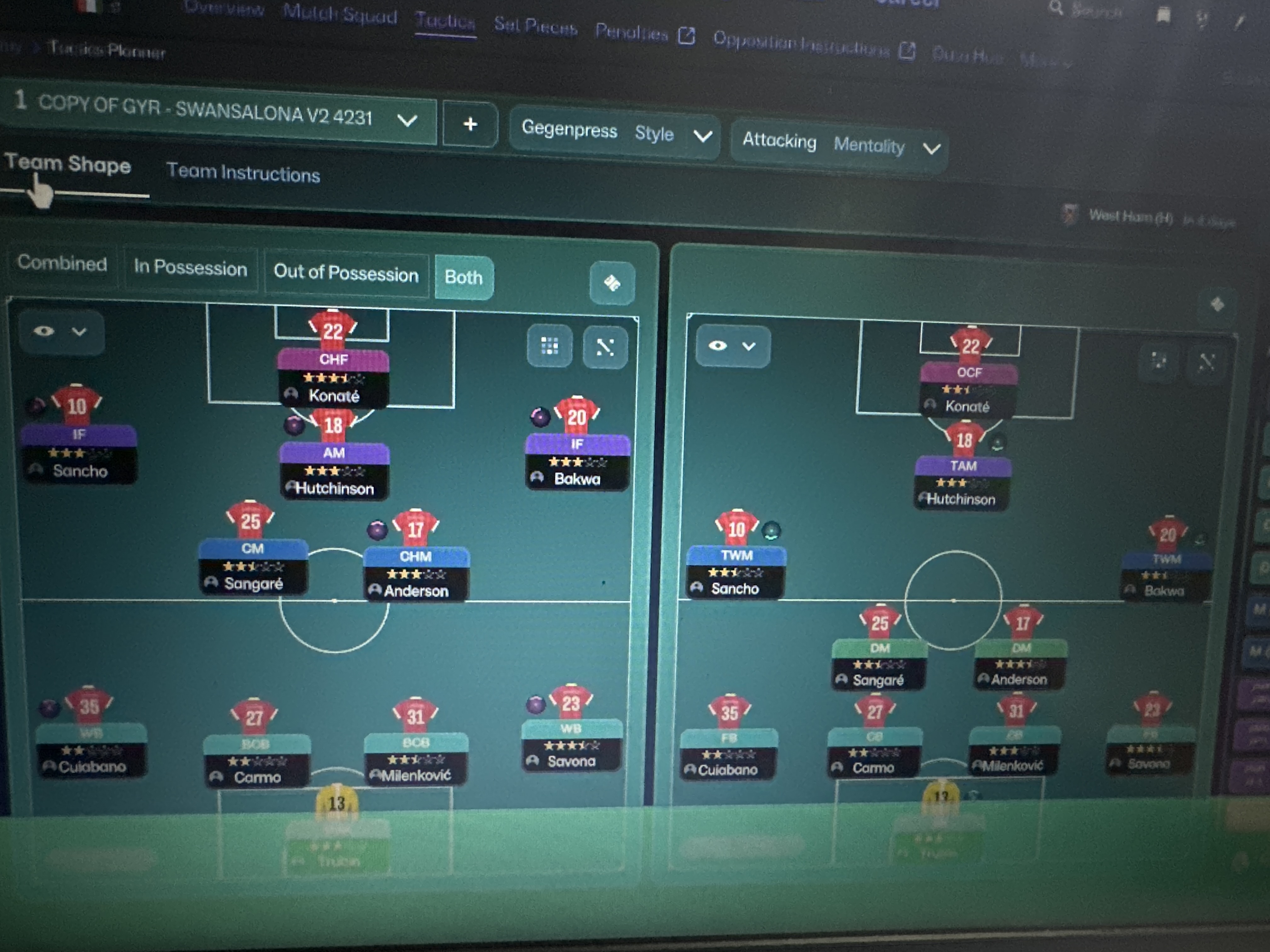
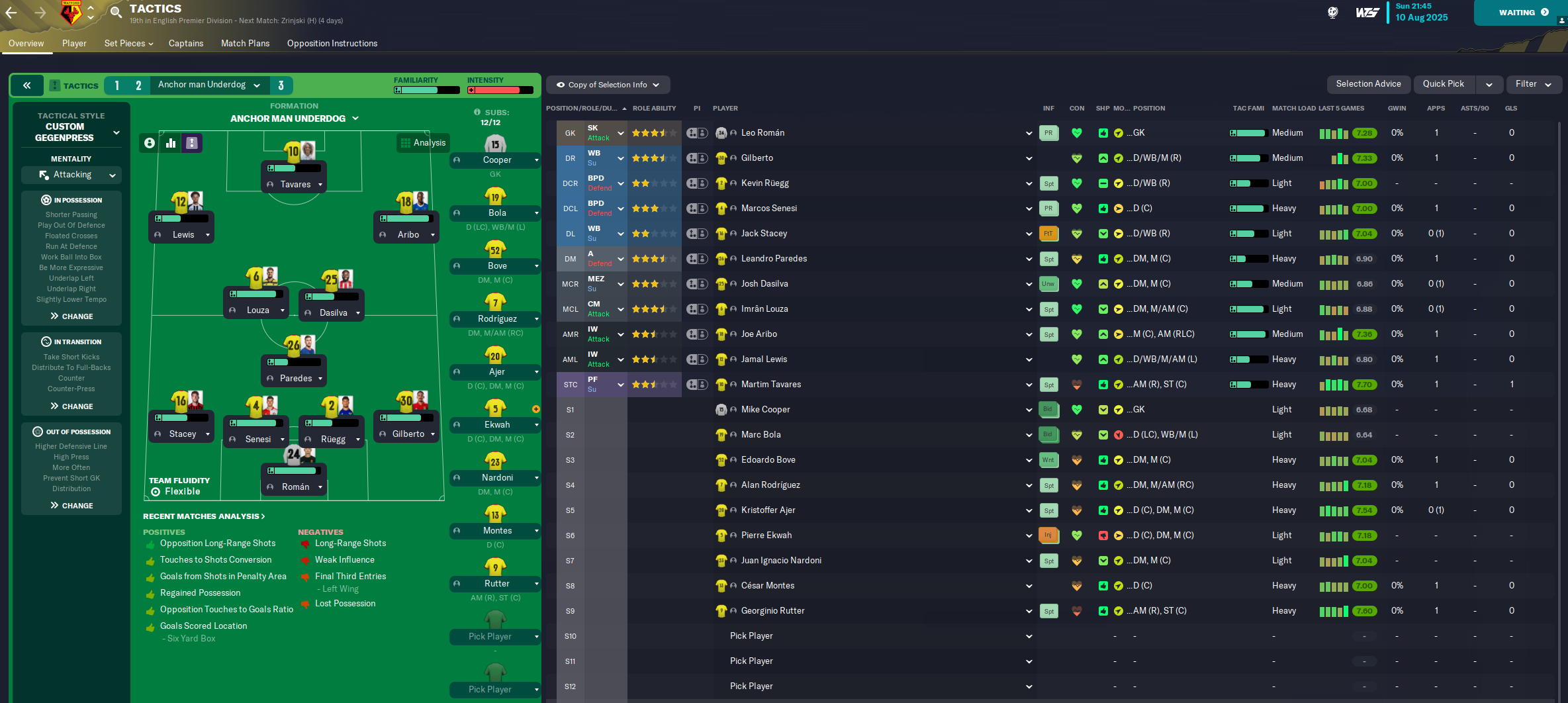
Guides for this formation
The tactical theory behind the 4-2-3-1 Wide: roles, instructions, and the trade-offs that decide whether the system holds up.
Player pairings
Midfield Pairs in 4-2-3-1 and 4-4-2
Double pivots and flat pairs in 4-2-3-1 and 4-4-2: when each pairing works, when it collapses, and the AMC unicorn that rescues both.
Read guide
Playing styles
Gegenpressing: A Full Guide
Klopp-style gegenpressing in FM, including squad profile, line-and-press pairing, sustainable workload, and the antipatterns to avoid.
Read guide