Uploaded Tactic
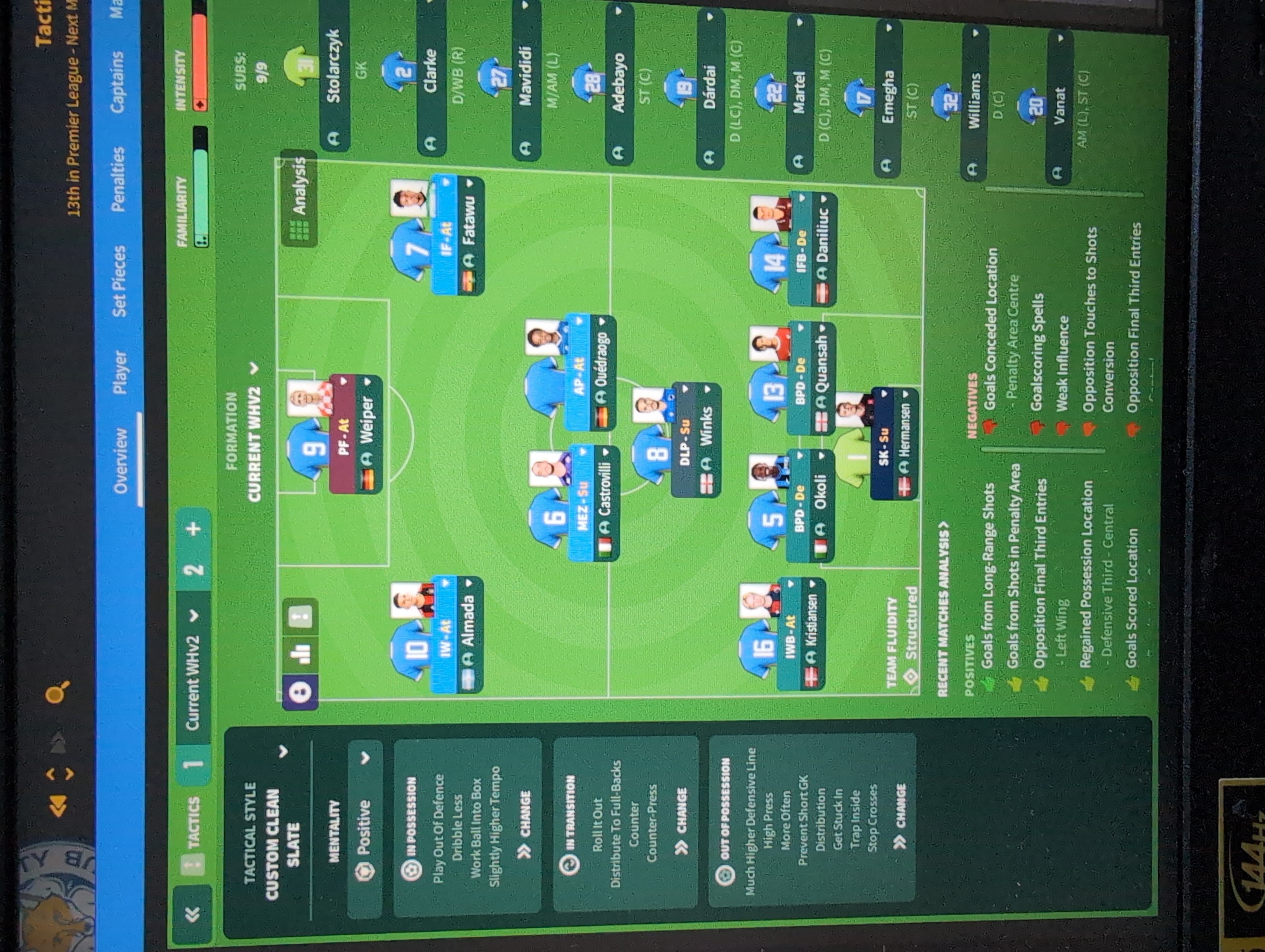
Formation & Style
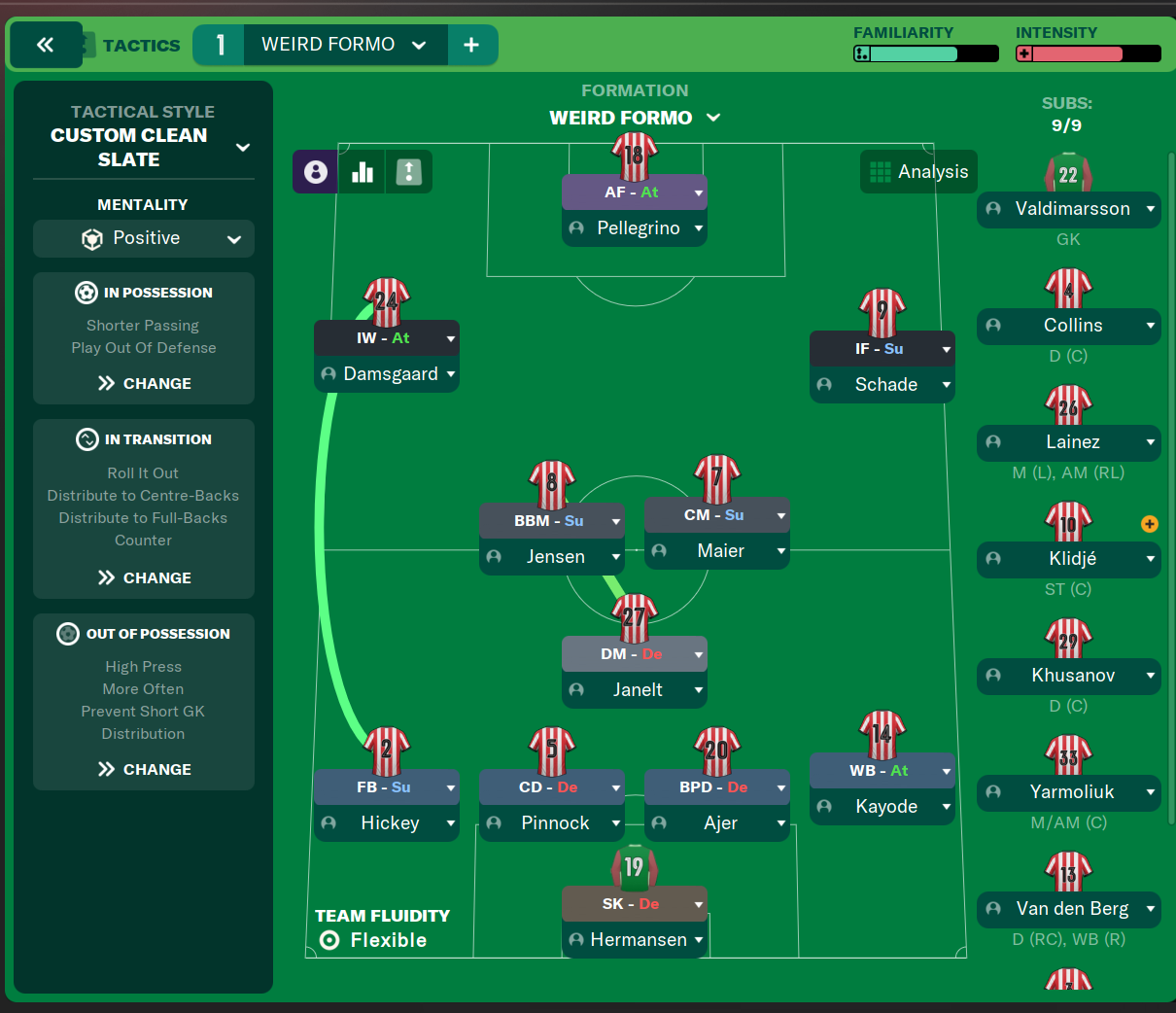
Tactical Style:Custom Clean Slate
Mentality:Positive
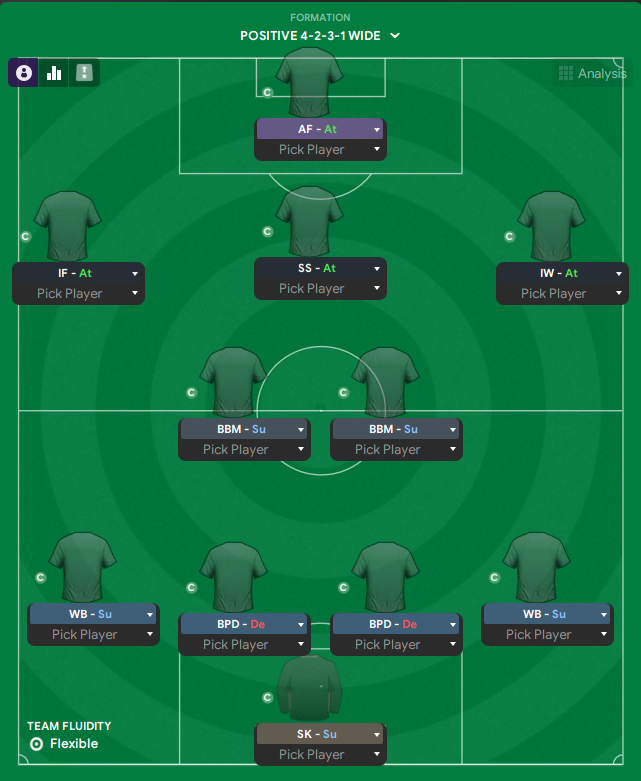
Formation:4-2-3-1 Wide
Team Fluidity:Structured
In Possession
Play Out Of Defence
Dribble Less
Work Ball Into Box
Slightly Higher Tempo
In Transition
Roll It Out
Distribute To Full-Backs
Counter
Counter-Press
Out of Possession
Much Higher Defensive Line
High Press
More Often
Prevent Short GK Distribution
Get Stuck In
Trap Inside
Stop Crosses
Team Shape Without Ball
Shape:4-2
Description:A compact defensive shape preventing central penetration.
Evidence:4 defenders and 2 holding midfielders (BPD-D at [2,2] and BPD-D at [2,3]) provide stability.
Team Shape With Ball
Shape:4-3
Description:Fluid attacking setup with the potential for overloads through the wings.
Evidence:Inverted Wing-Backs (IW-B at [4,1] and IW-B at [4,5]) provide width while Inside Forward (IF-A at [5,2]) cuts inside.
Phase Description
Attacking Play
Utilizing lateral movement and combination play from midfield to create opportunities.
Defensive Transition
Quick recovery through counter-pressing to regain possession immediately.
Main Focus
Possession-based attacking with a focus on building from the back.
Key Strengths
Fluid Midfield Play
The DLP and MEZ can interchange play effectively, allowing for dynamic passing options.
Attacking Width
Inverted Wing-Backs can stretch the opposition and add numerical superiority in attack.
Counter-Pressing
The pressing forward can disrupt opponents' build-up and recover possession high up the pitch.
Conflicting Directions
High Defensive Line vs. Pace
A high line can be exploited by pacey forwards, especially if full-backs push forward.
Aggressive Pressing with Slow Build-Up
The pressing may compromise build-up speed if defenders are forced to play quickly under pressure.
Wide Playmaking vs. Central Overloads
While focus is on width, midfield may become isolated during transitions.
Tactical Suggestions
Consider a Balanced Defensive Approach
Adjusting the defensive line could mitigate risks against pacey attackers.
Experiment with Player Roles
Trying a more defensive midfield option might increase control during matches.
Increase Tempo for Quick Transitions
Adapting tempo to a more aggressive stance can catch defenses off guard.
Ask Questions About Your Lineup
Related Tactics
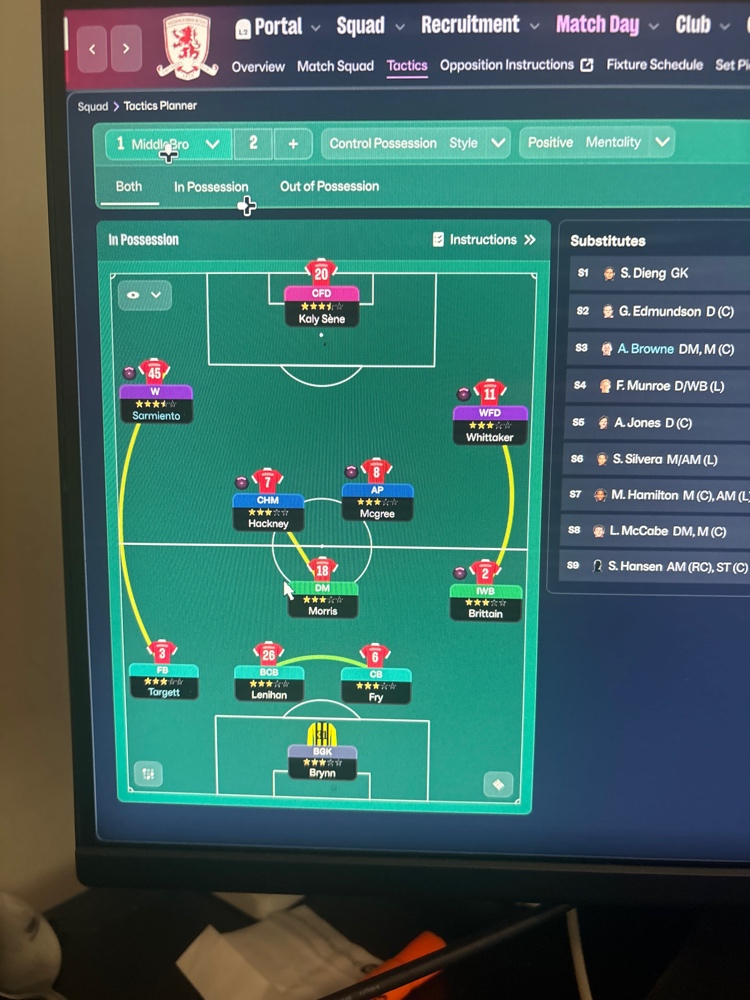
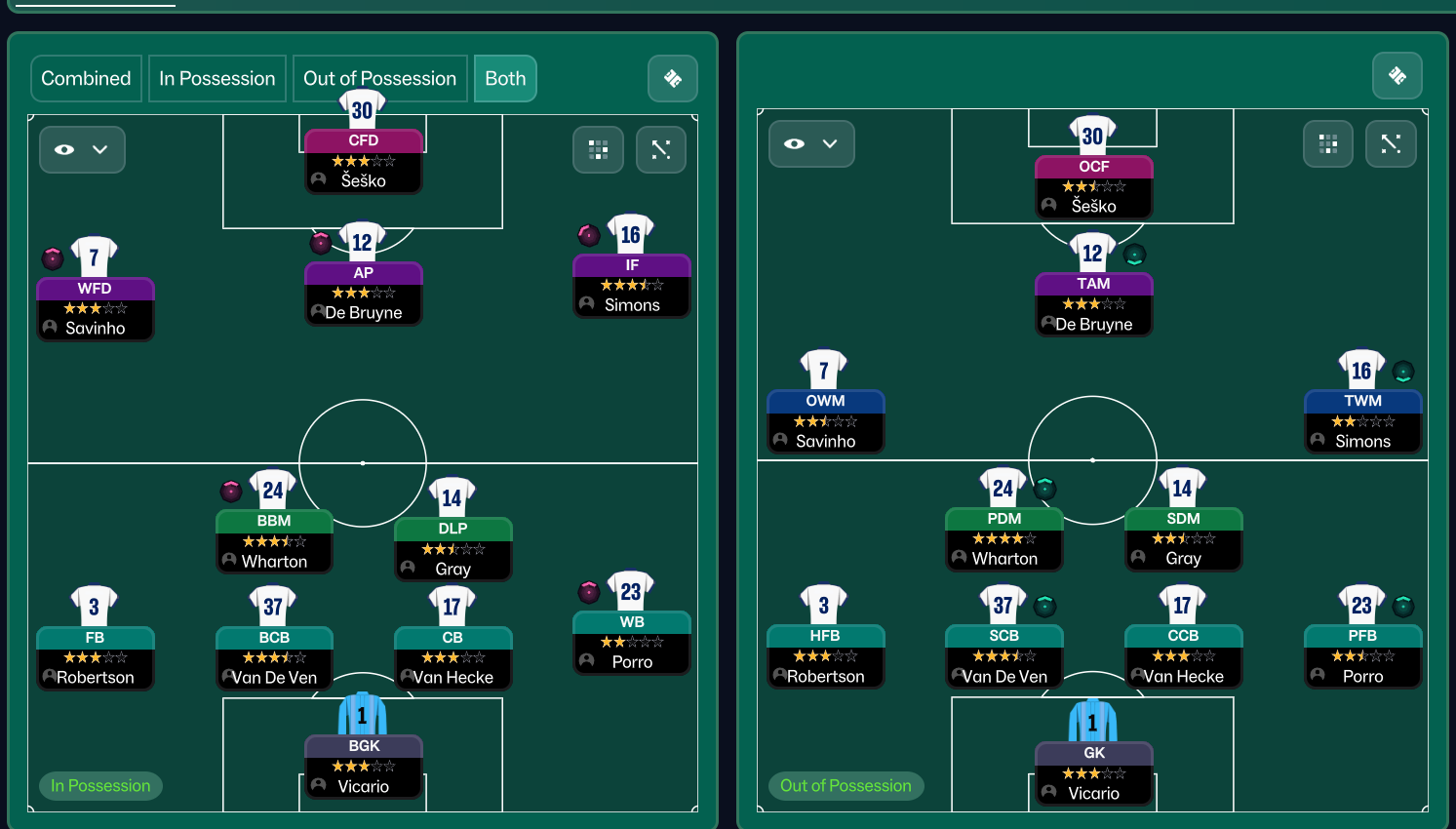
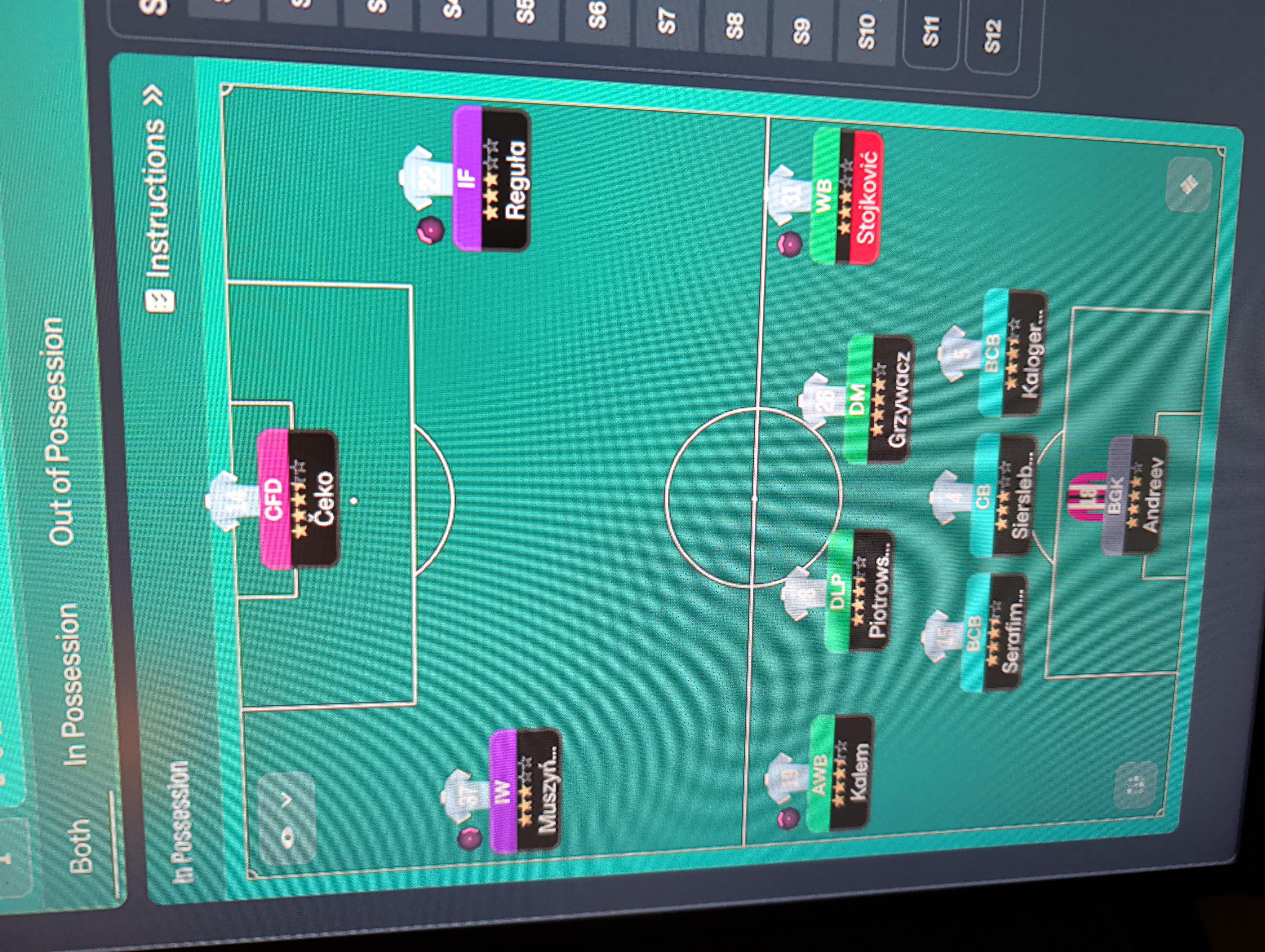
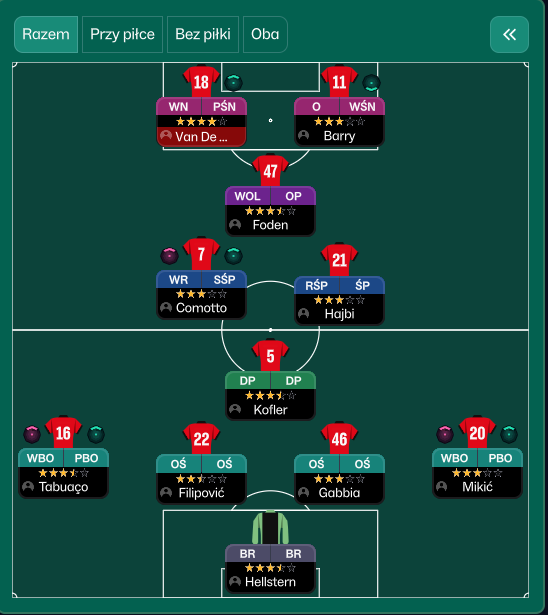
More Custom Clean Slate tactics
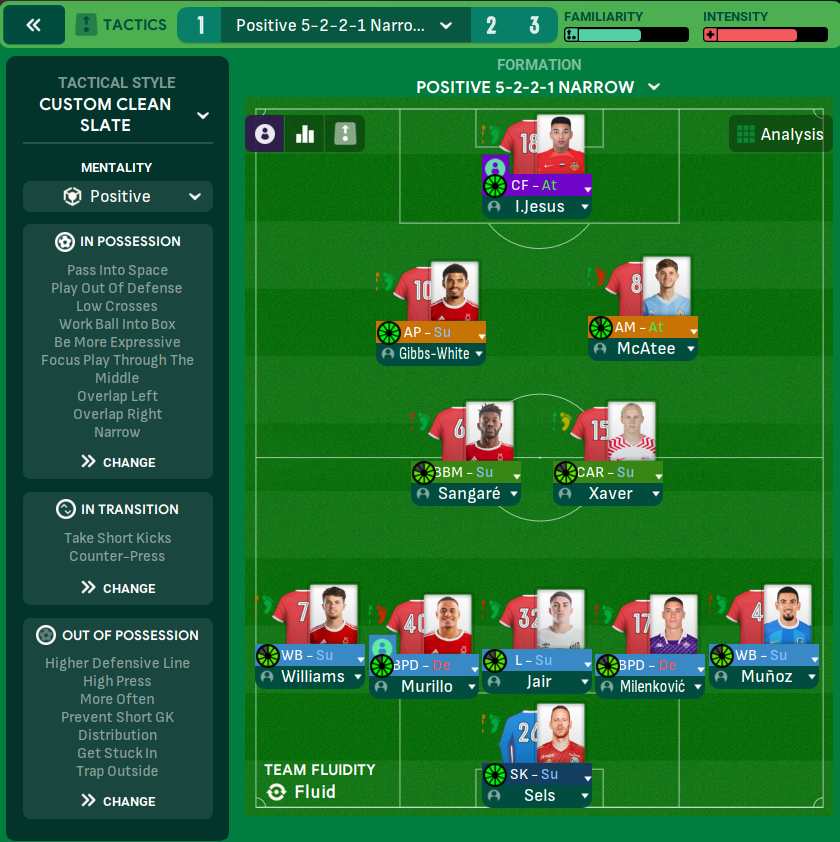
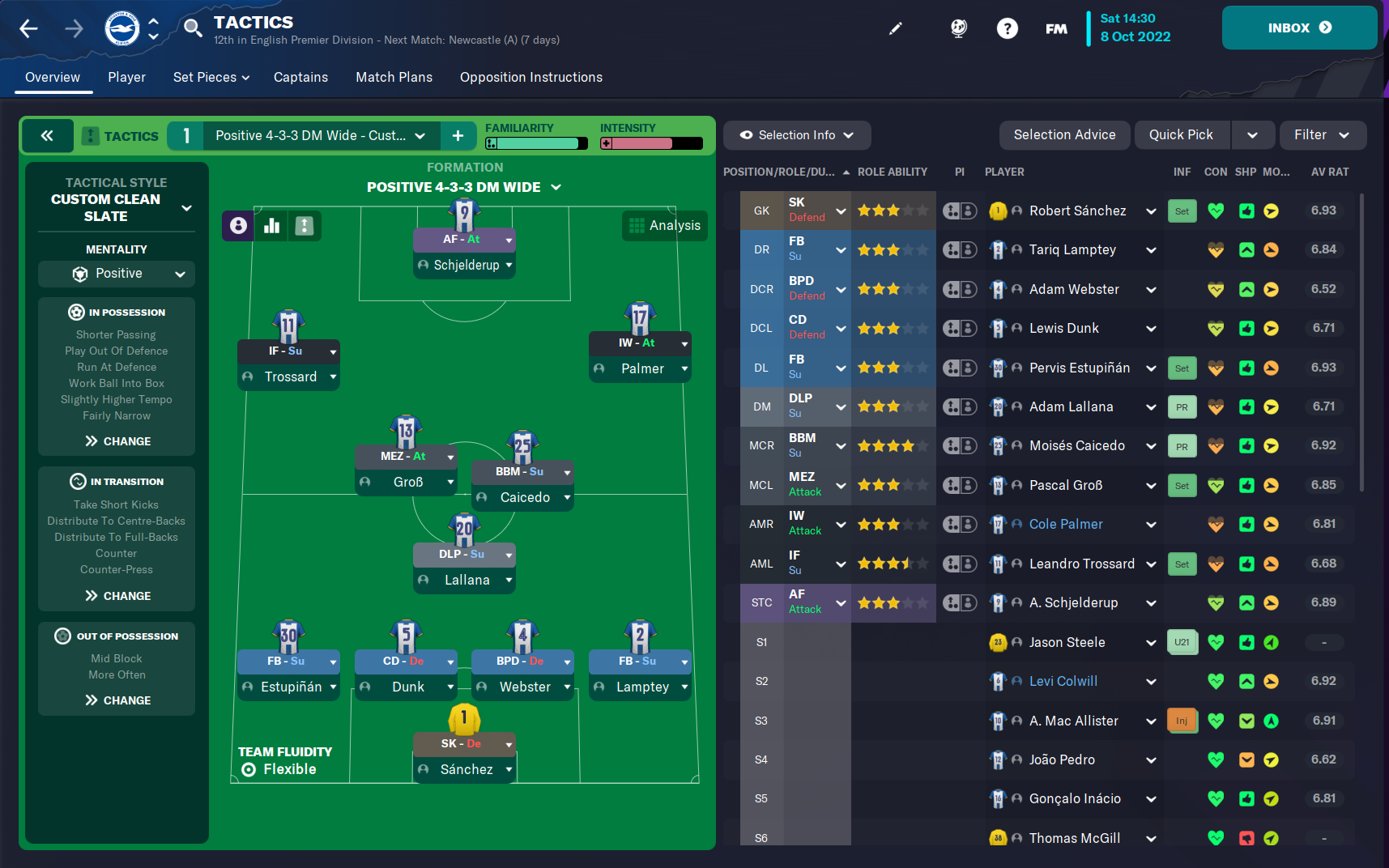
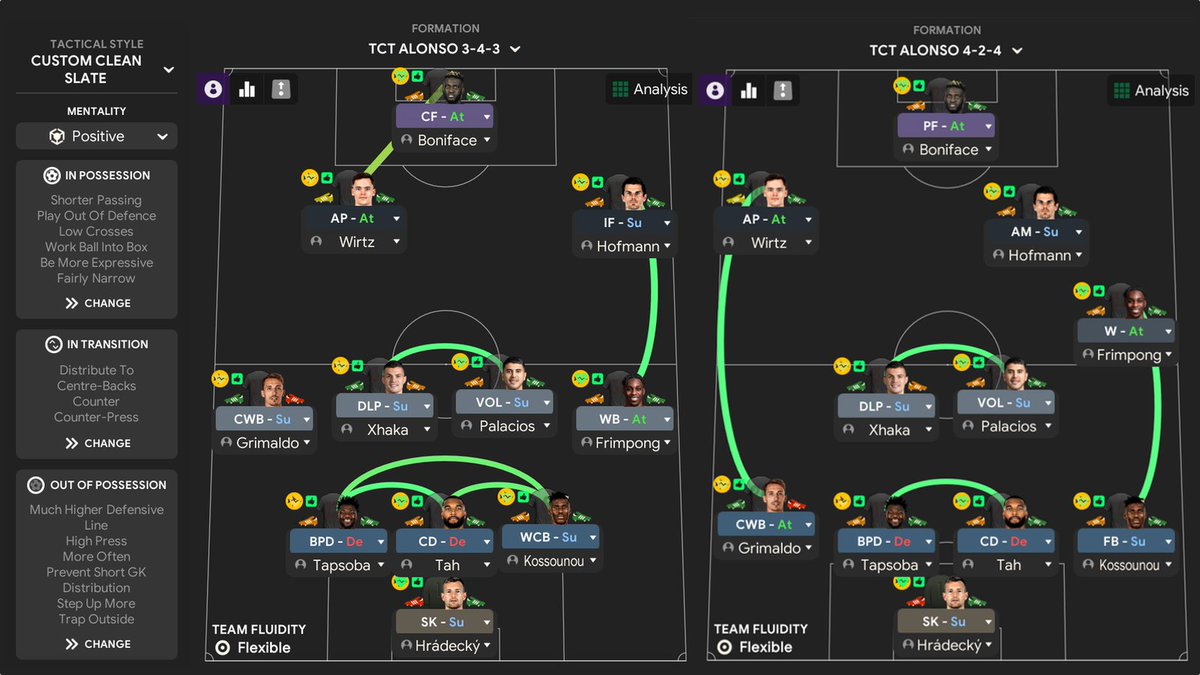
Guides for this formation
The tactical theory behind the 4-2-3-1 Wide: roles, instructions, and the trade-offs that decide whether the system holds up.
Player pairings
Midfield Pairs in 4-2-3-1 and 4-4-2
Double pivots and flat pairs in 4-2-3-1 and 4-4-2: when each pairing works, when it collapses, and the AMC unicorn that rescues both.
Read guide
Playing styles
Gegenpressing: A Full Guide
Klopp-style gegenpressing in FM, including squad profile, line-and-press pairing, sustainable workload, and the antipatterns to avoid.
Read guide