Uploaded Tactic
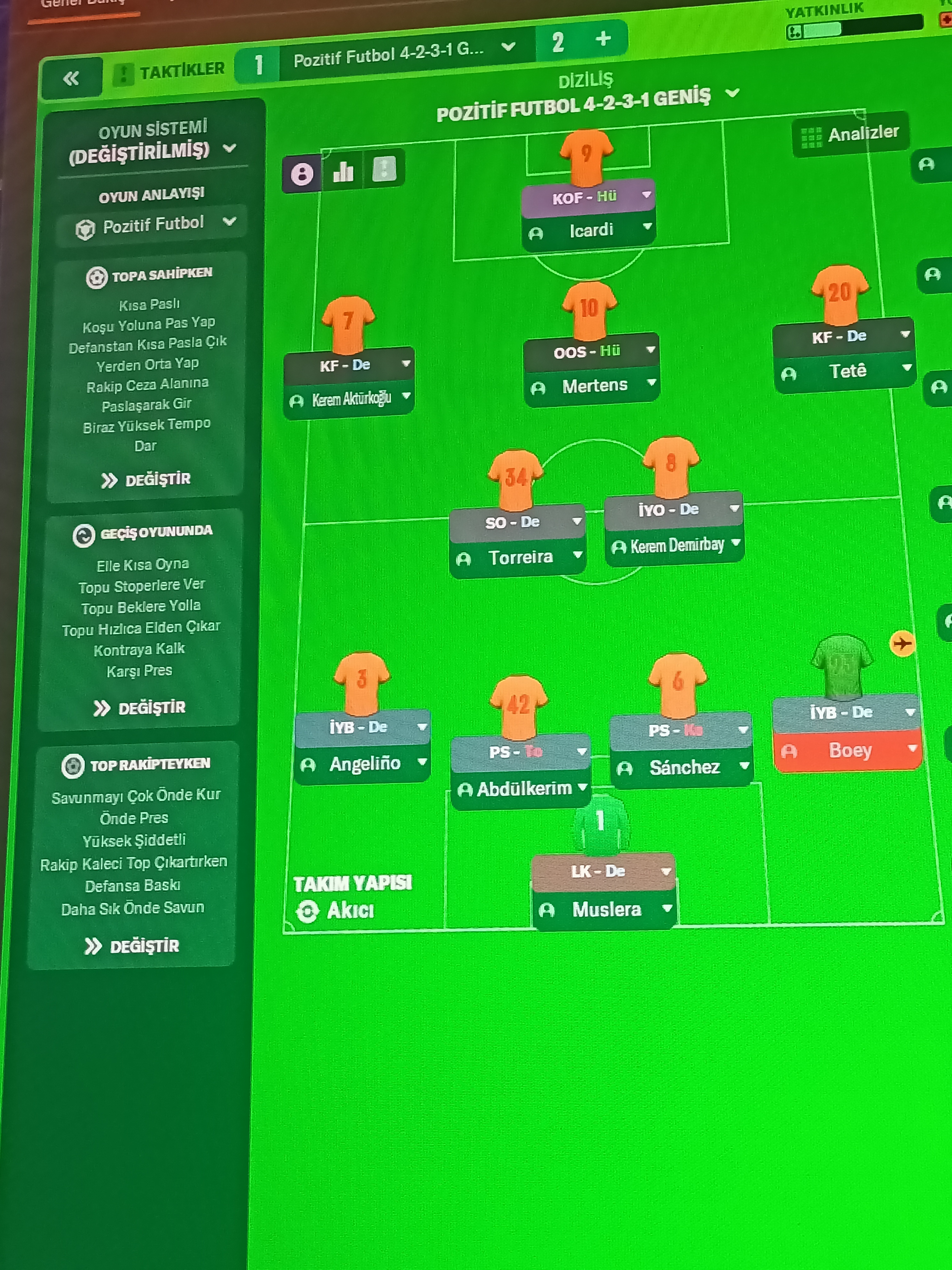
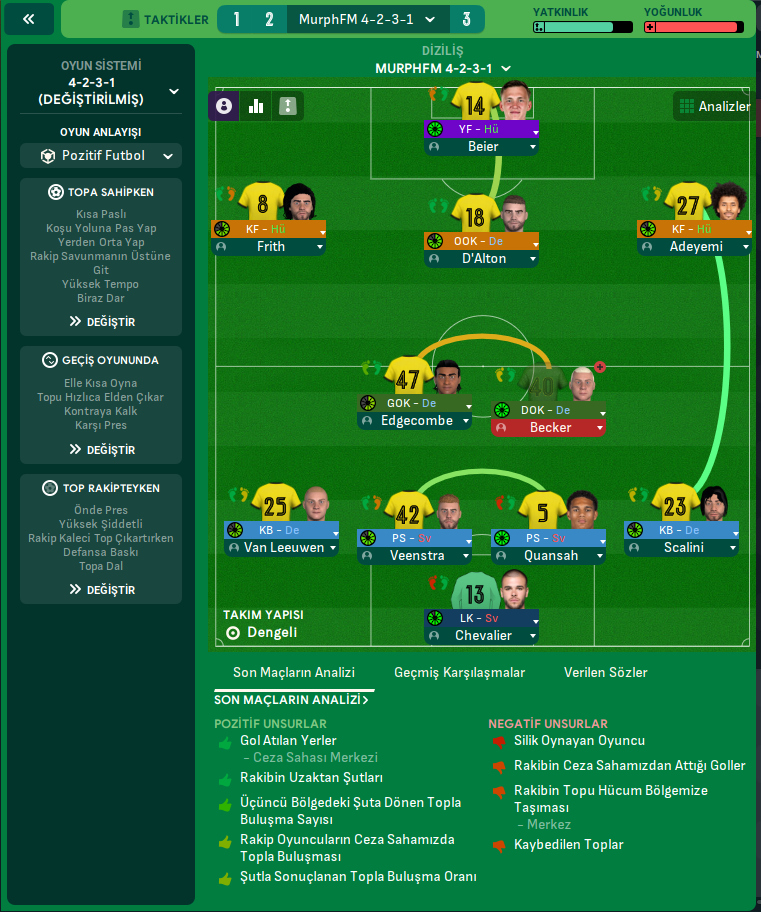
Formation & Style
Tactical Style:Pozitif Futbol
Mentality:Positive
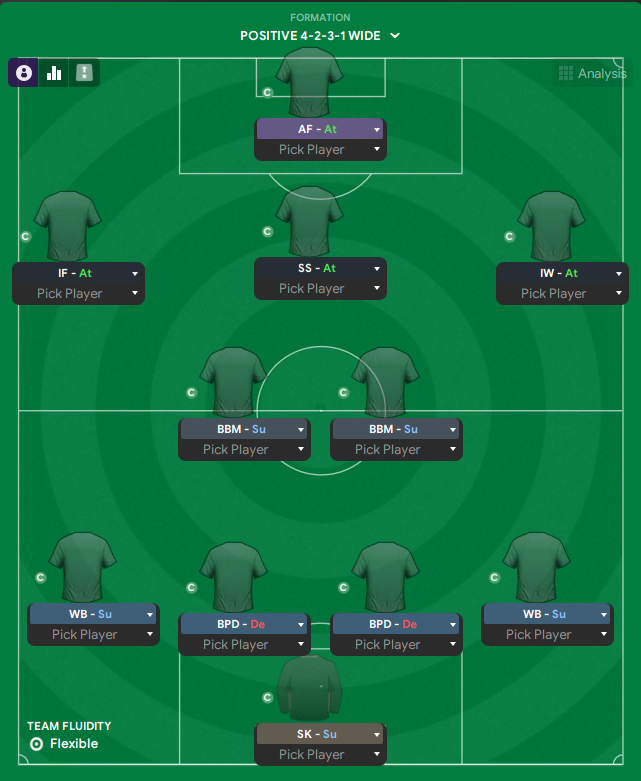
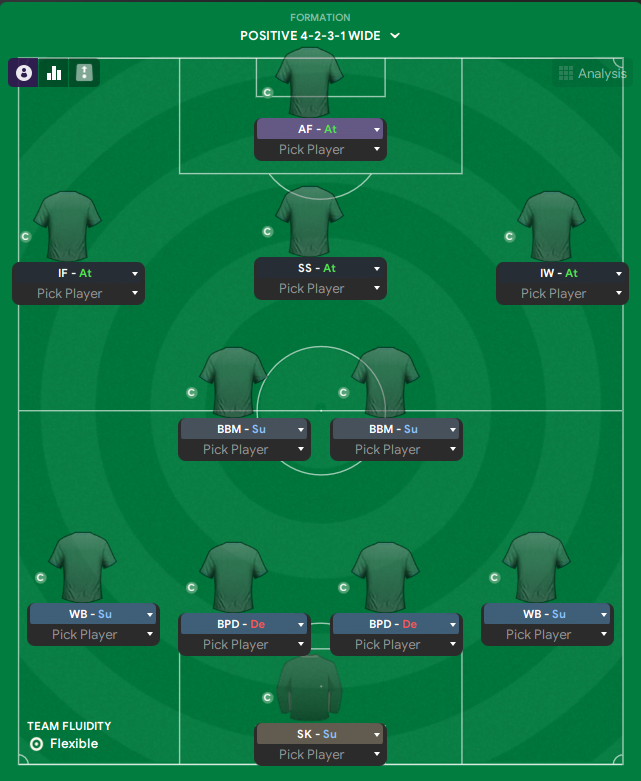
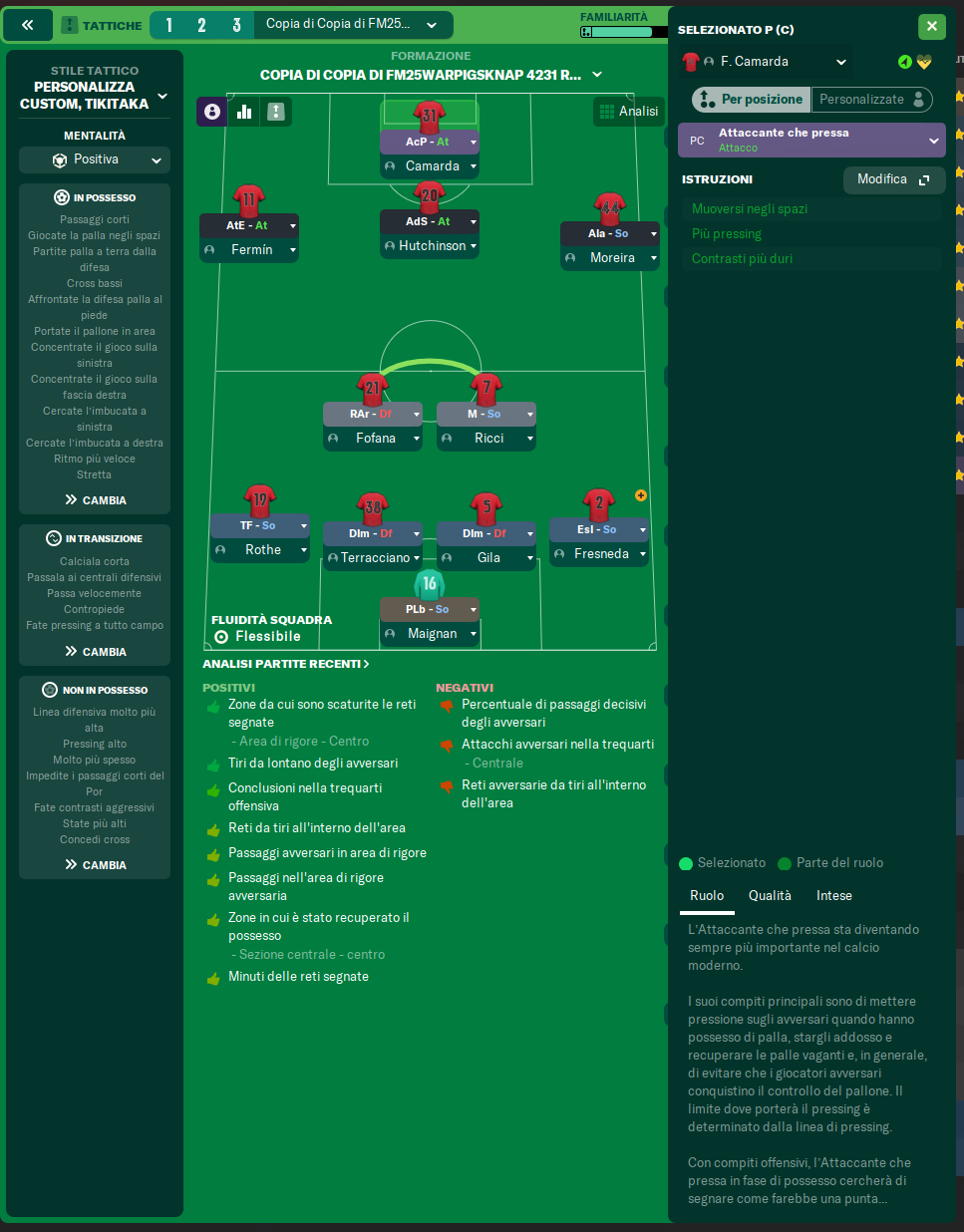
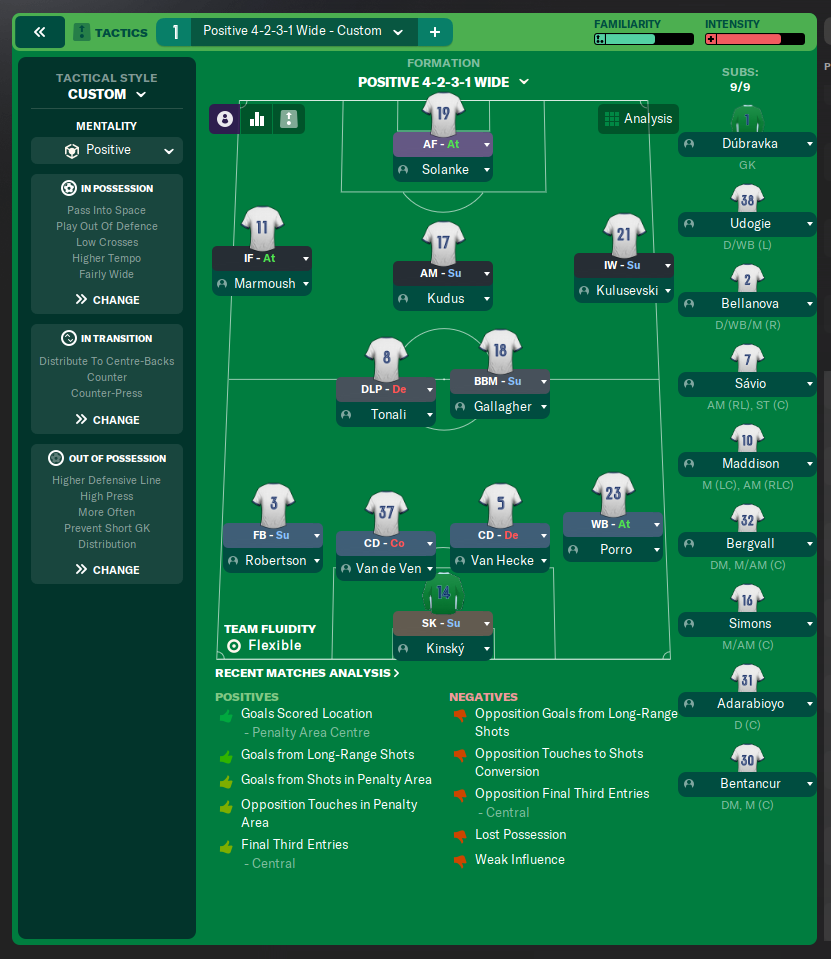
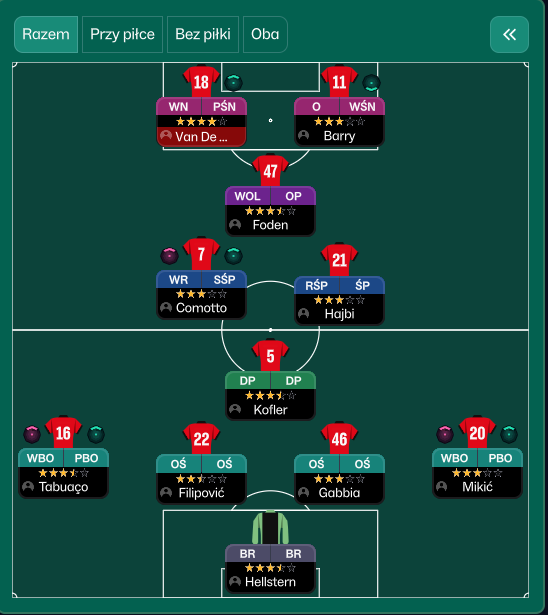
Formation:4-2-3-1 Wide
Team Fluidity:Structured
In Possession
Short Passing
Use Width
Run at Defence
In Transition
Counter-Press
Counter
Out of Possession
Higher Line of Engagement
More Urgent Pressing
Team Shape Without Ball
Shape:4-2-3-1
Description:Defensive shape maintains a solid core with a deep midfield line.
Evidence:Four defenders plus two holding midfielders provide coverage.
Team Shape With Ball
Shape:4-2-3-1
Description:Dynamic attack with dual Inside Forwards and a Complete Forward.
Evidence:The Advanced Playmaker links midfield and attackers effectively.
Phase Description
Attacking Play
Focus on building play through the midfield with the Deep-Lying Playmaker facilitating the attack.
Defensive Transition
Quick transition back into a compact shape to retain defensive integrity.
Main Focus
Utilizing width via the Inside Forwards and Inverted Wing-Backs.
Key Strengths
Fluid Attack
The combination of Inside Forwards and an Advanced Playmaker allows for varied attacking options.
Strong Midfield
The presence of a Deep-Lying Playmaker and a Box-to-Box Midfielder offers both defensive stability and offensive support.
Possession Play
Short passing combined with an emphasis on width enhances build-up play.
Conflicting Directions
Pressing Style
High pressing may leave gaps in defense if not balanced with defensive shape.
Counter-Press Limitations
Counter-pressing requires quick recovery, which might not be feasible against organized defenses.
Over-reliance on Wings
Heavy focus on Inside Forwards could lead to predictability in attack.
Tactical Suggestions
Adapt Pressing Intensity
Consider varying pressing intensity based on opposition's strengths to mitigate risk.
Use More Central Play
Encouraging more through-the-middle play could disrupt defensive structures.
Rotate Players
Periodic rotation of Inside Forwards could maintain unpredictability and challenge defenses.
Ask Questions About Your Lineup
Related Tactics
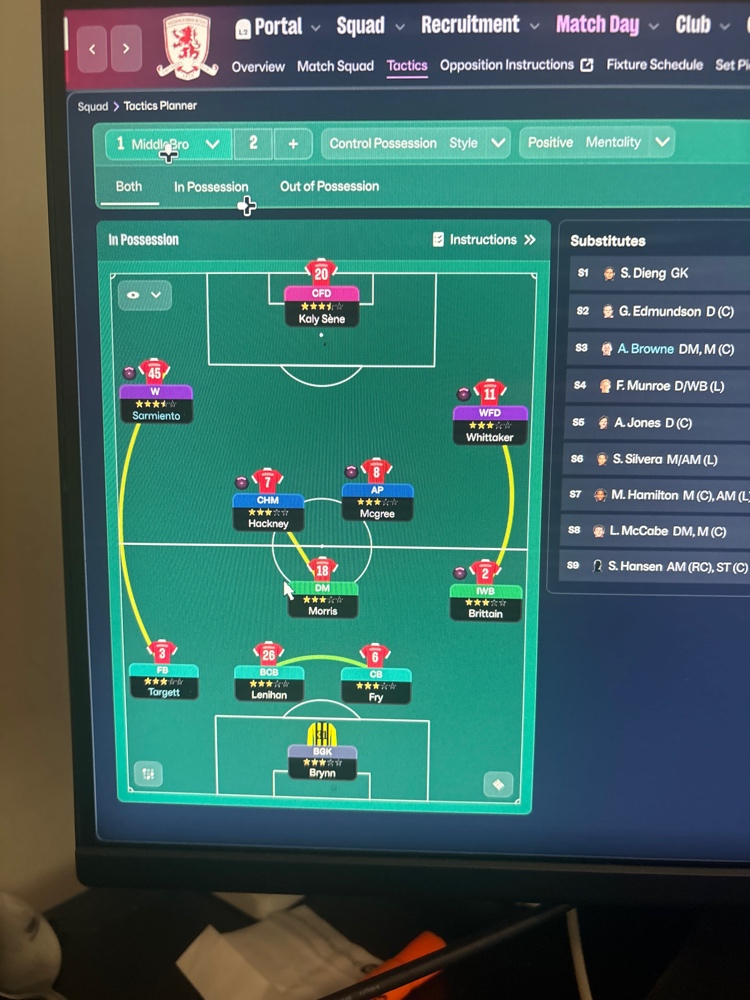
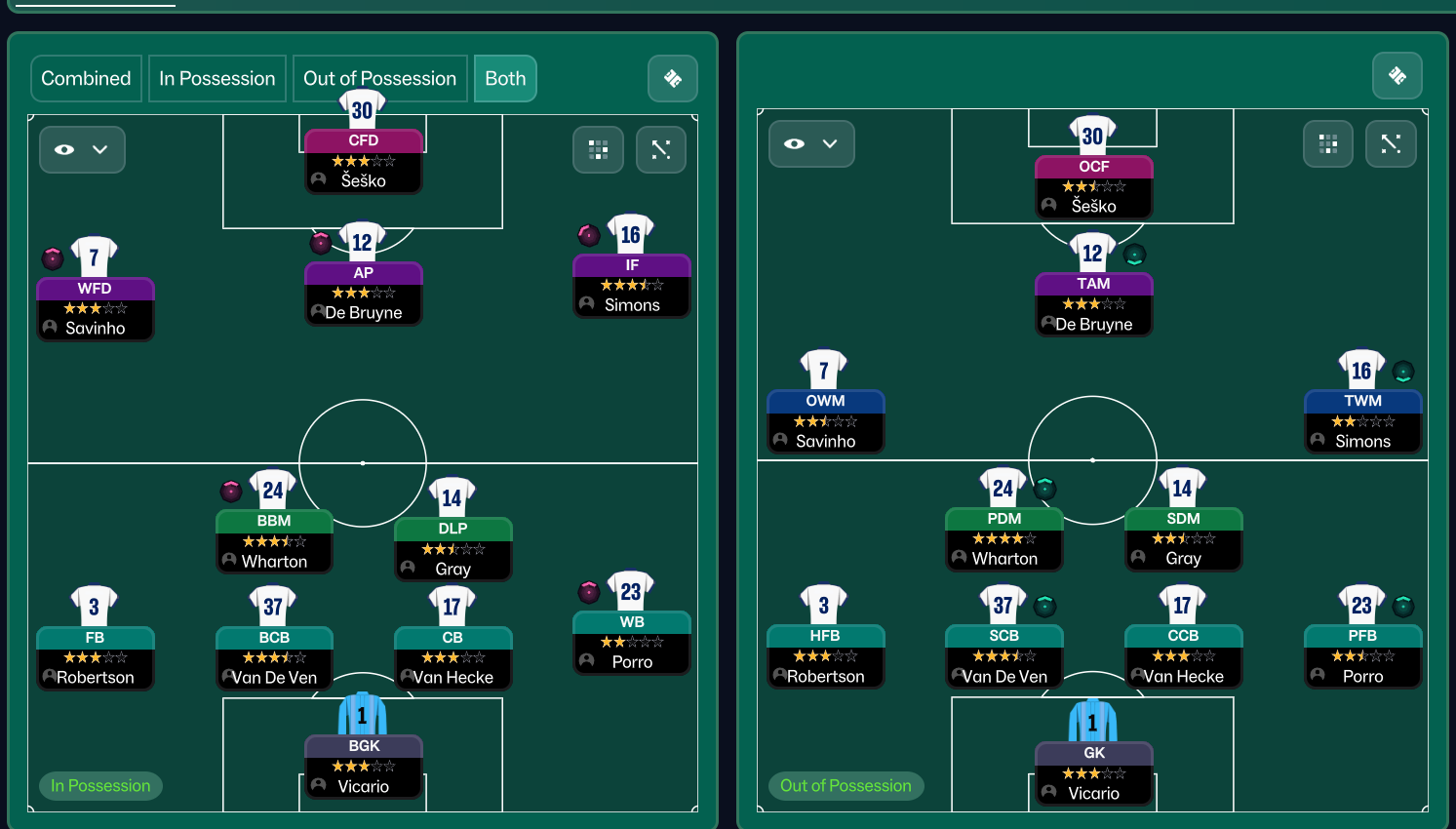
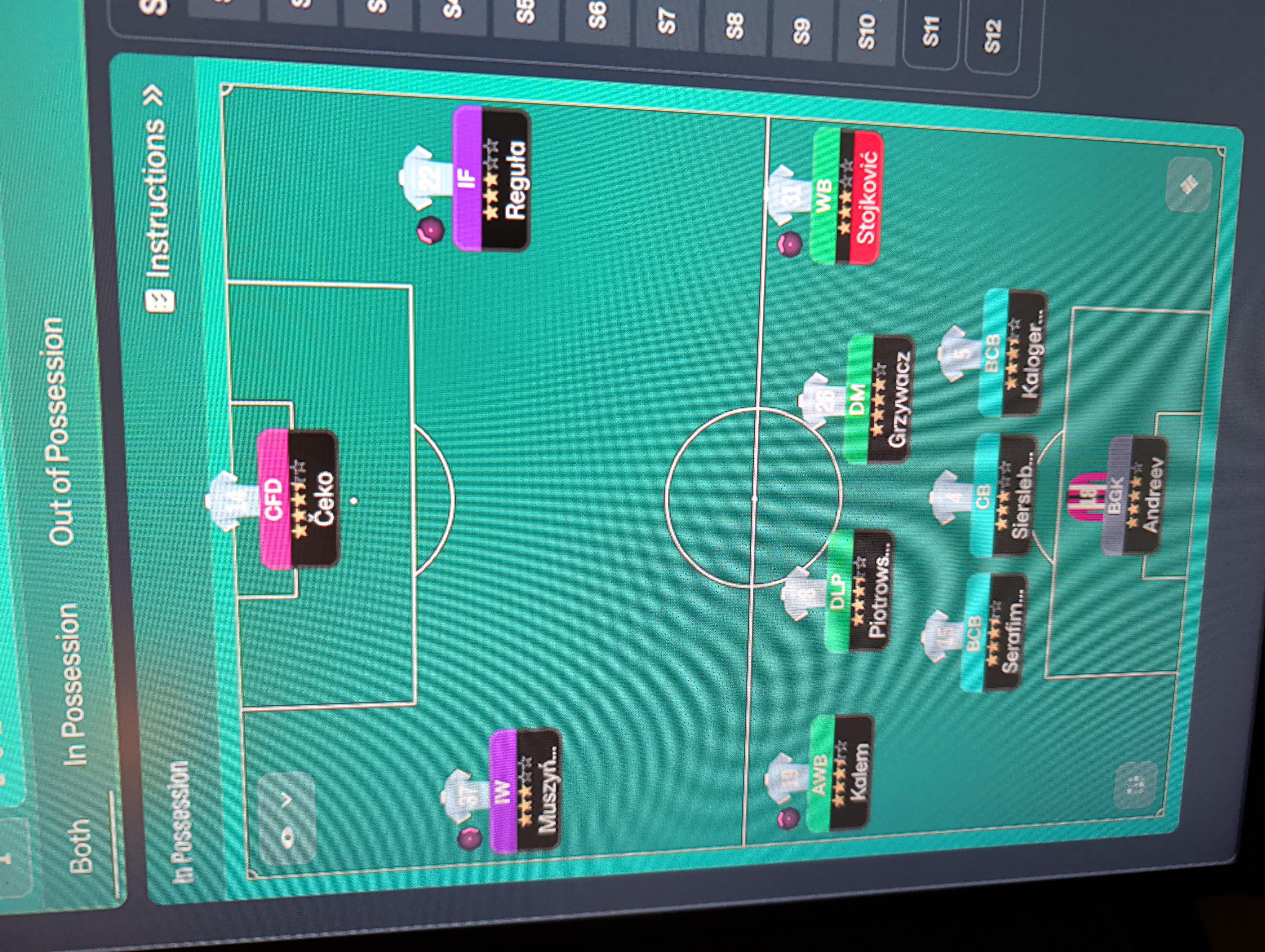
More Pozitif Futbol tactics
Guides for this formation
The tactical theory behind the 4-2-3-1 Wide: roles, instructions, and the trade-offs that decide whether the system holds up.
Player pairings
Midfield Pairs in 4-2-3-1 and 4-4-2
Double pivots and flat pairs in 4-2-3-1 and 4-4-2: when each pairing works, when it collapses, and the AMC unicorn that rescues both.
Read guide
Playing styles
Gegenpressing: A Full Guide
Klopp-style gegenpressing in FM, including squad profile, line-and-press pairing, sustainable workload, and the antipatterns to avoid.
Read guide