Uploaded Tactic
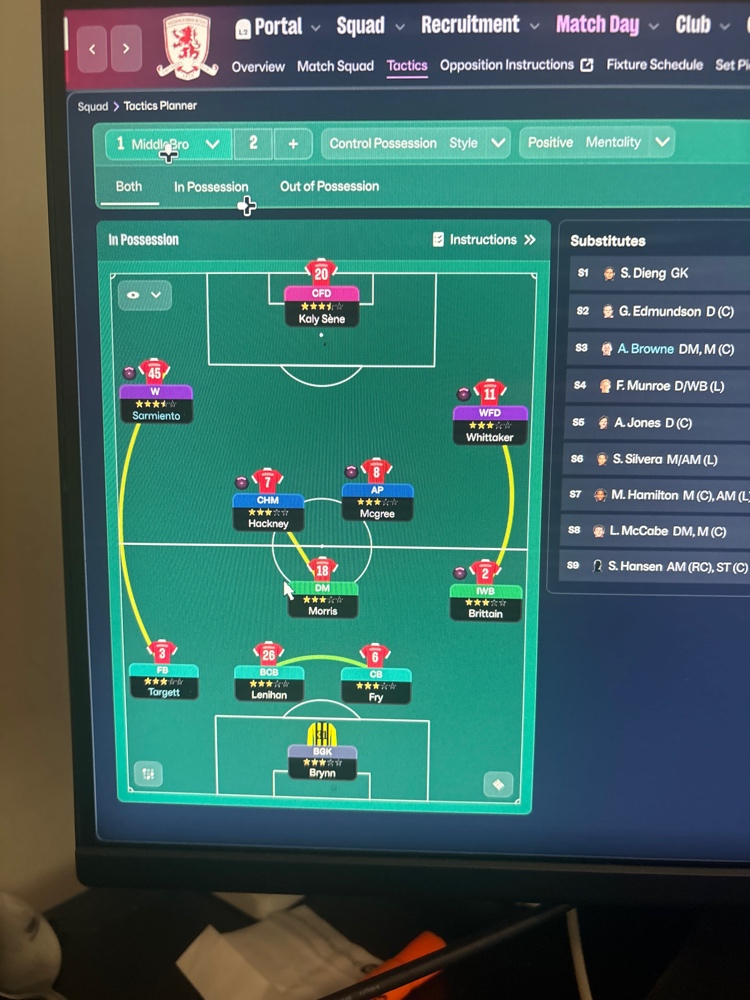
Formation & Style
Tactical Style:Possession Play
Mentality:Positive
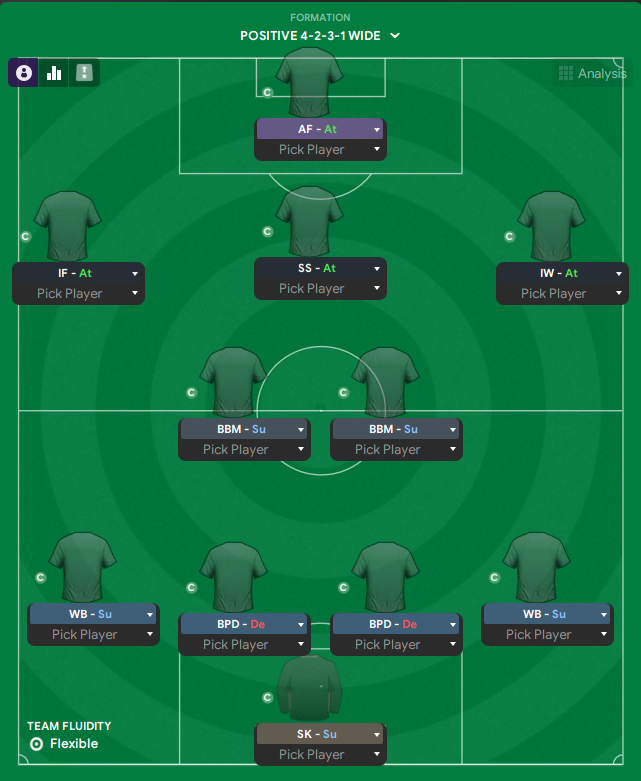
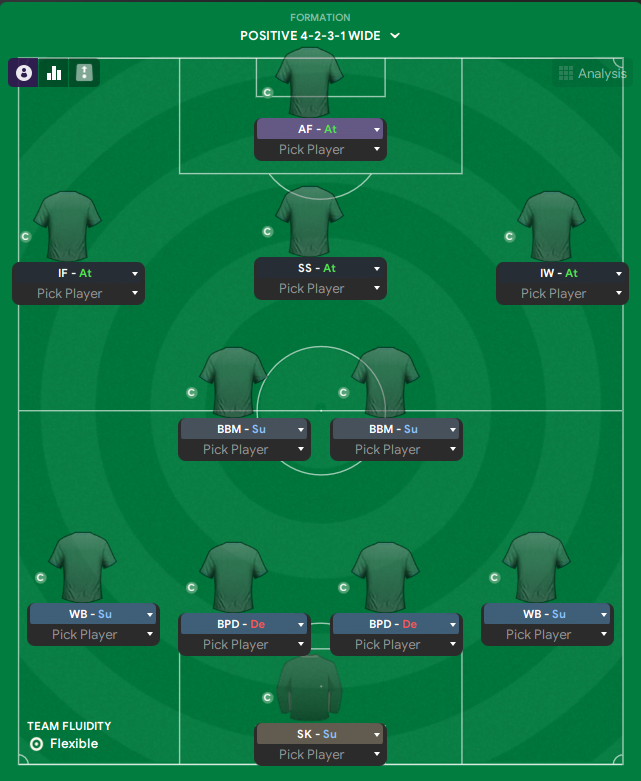
Formation:4-2-3-1 Wide
Team Fluidity:Structured
In Possession
Focus on short passing and maintaining possession
Utilize wide players to stretch the opposition
Incorporate overlapping full-backs to create width
In Transition
Quick vertical transitions to exploit open spaces
Retain structure when losing possession to minimize counter-attacks
Out of Possession
Press opposing defenders to force mistakes
Maintain a compact shape to deny spaces between lines
Team Shape Without Ball
No team shape without ball data available
Team Shape With Ball
No team shape with ball data available
Key Strengths
Fluid Midfield Movement
The interplay between midfielders allows for dynamic transitions and support in attack.
Width Utilization
Wingers and overlapping full-backs create space for central players to operate effectively.
High Pressing Capability
A coordinated press can disrupt opposition build-up play and recover possession quickly.
Solid Defensive Structure
The compact shape when out of possession allows for effective tracking and blocking of passing lanes.
Conflicting Directions
Overlapping vs. Inverted Roles
The nature of overlapping full-backs may conflict with wingers cutting inside, potentially leading to congestion.
Pressing vs. Structured Build-Up
Aggressive pressing may disrupt the intended structured possession play, leading to losses in midfield.
Central Overload vs. Width
Focusing too much on central overloads could leave wide areas vulnerable, inviting opposition counters.
Player Workload Management
High pressing combined with forward runs requires careful management to avoid fatigue in crucial players.
Tactical Suggestions
Adjust Full-Back Duties
Consider adjusting one full-back to stay wider to maintain better width when wingers cut inside.
Refine Pressing Triggers
Establish clearer pressing triggers to maintain structure while pressing, minimizing vulnerability on counters.
Utilize Double Pivot
Implement a double pivot approach to reinforce midfield control and support defensive stability.
Promote Quick Counter-Attacking
Encourage quick transitions upon recovering the ball to catch the opposition off-guard, especially when they are compact.
Ask Questions About Your Lineup
Related Tactics
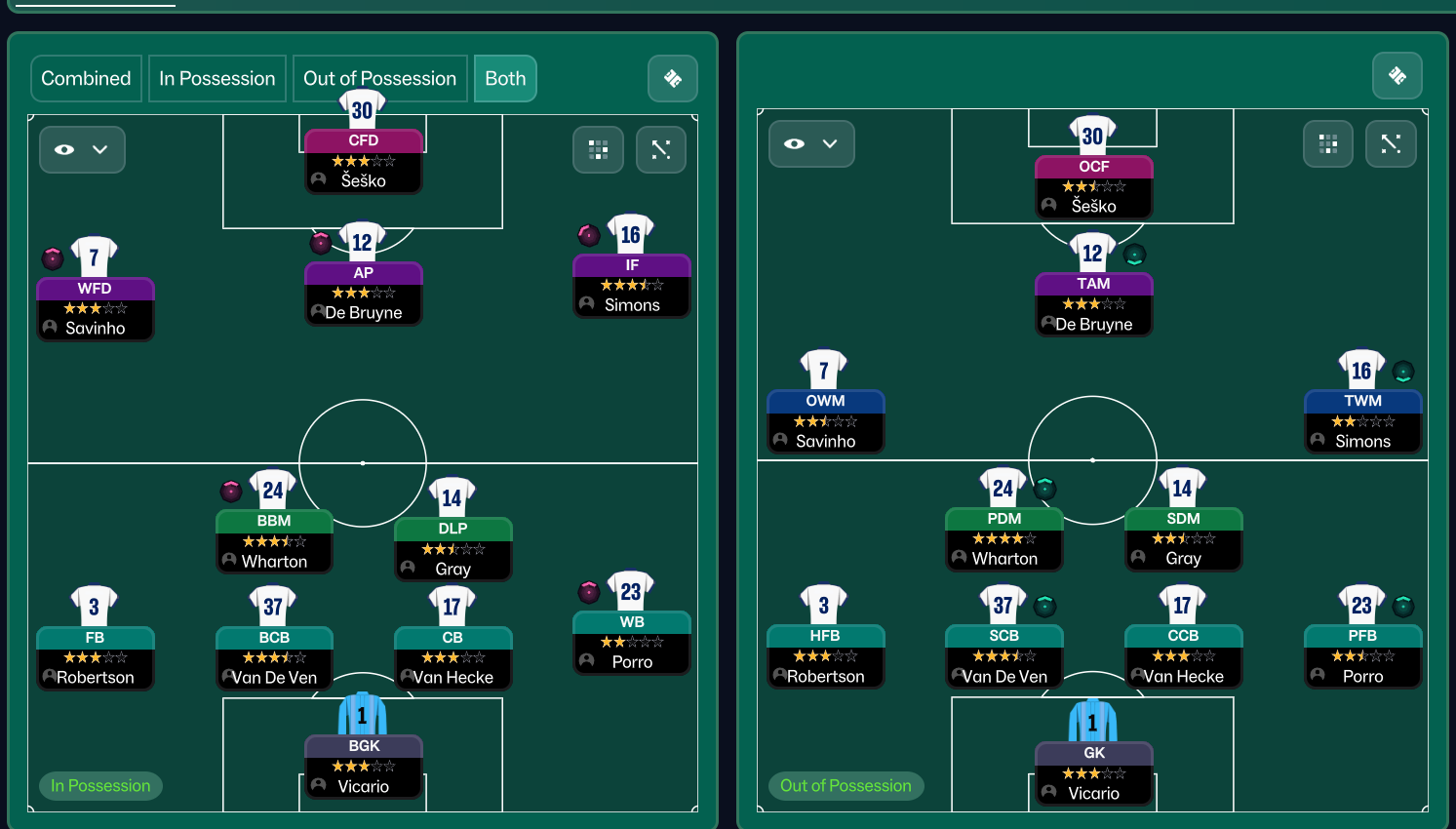
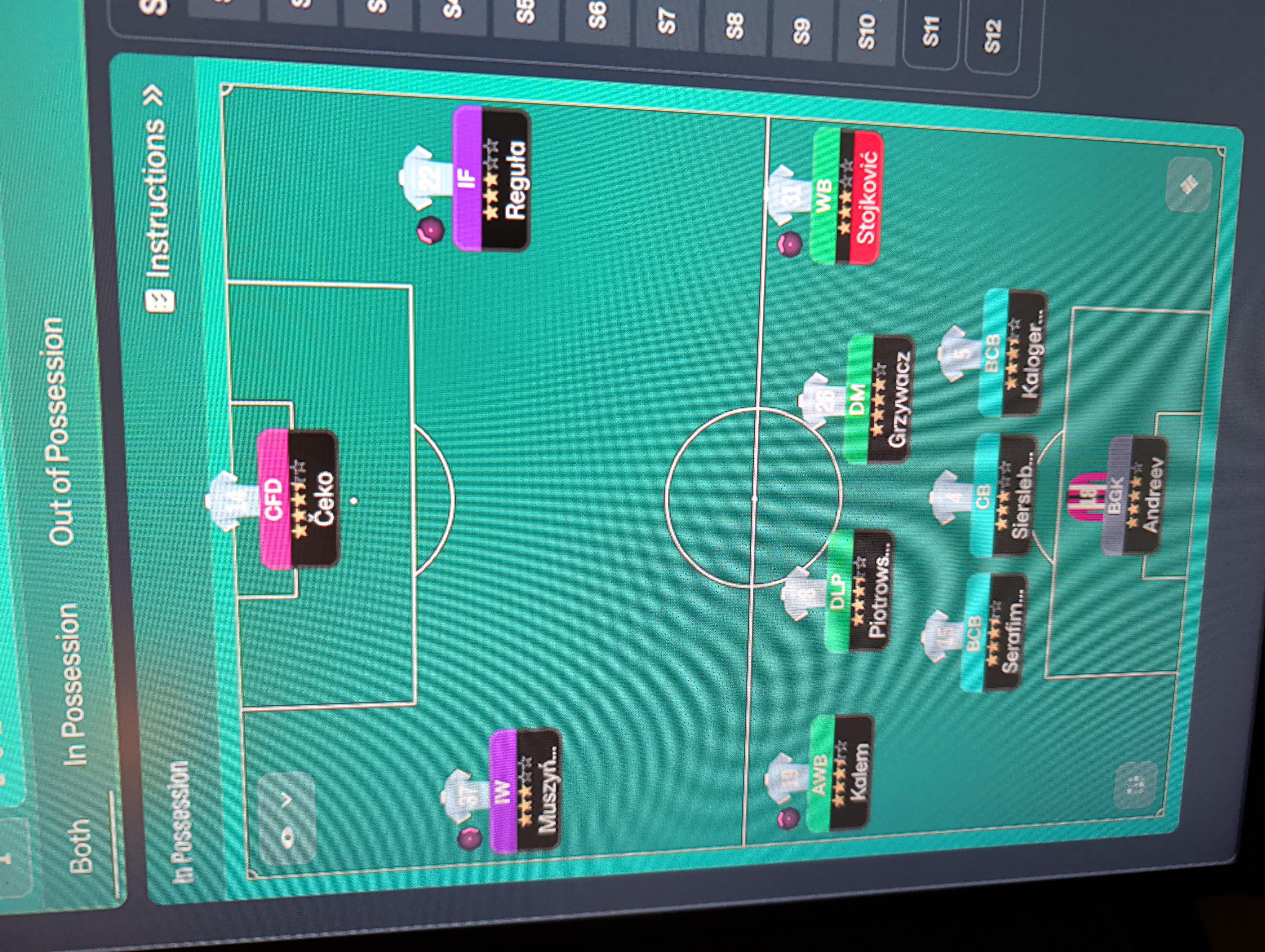
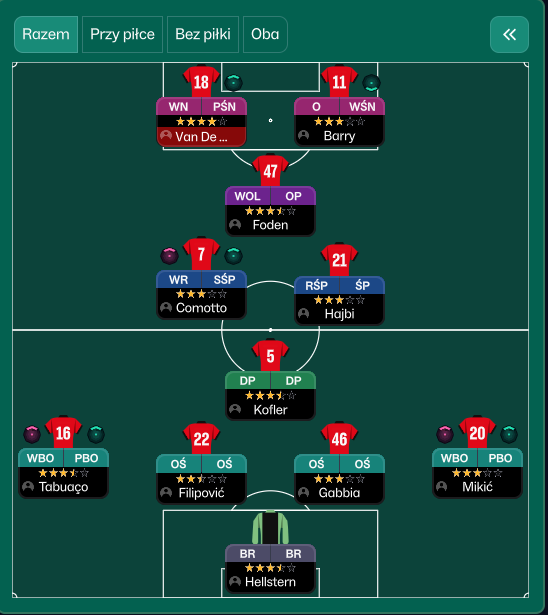
More Possession Play tactics
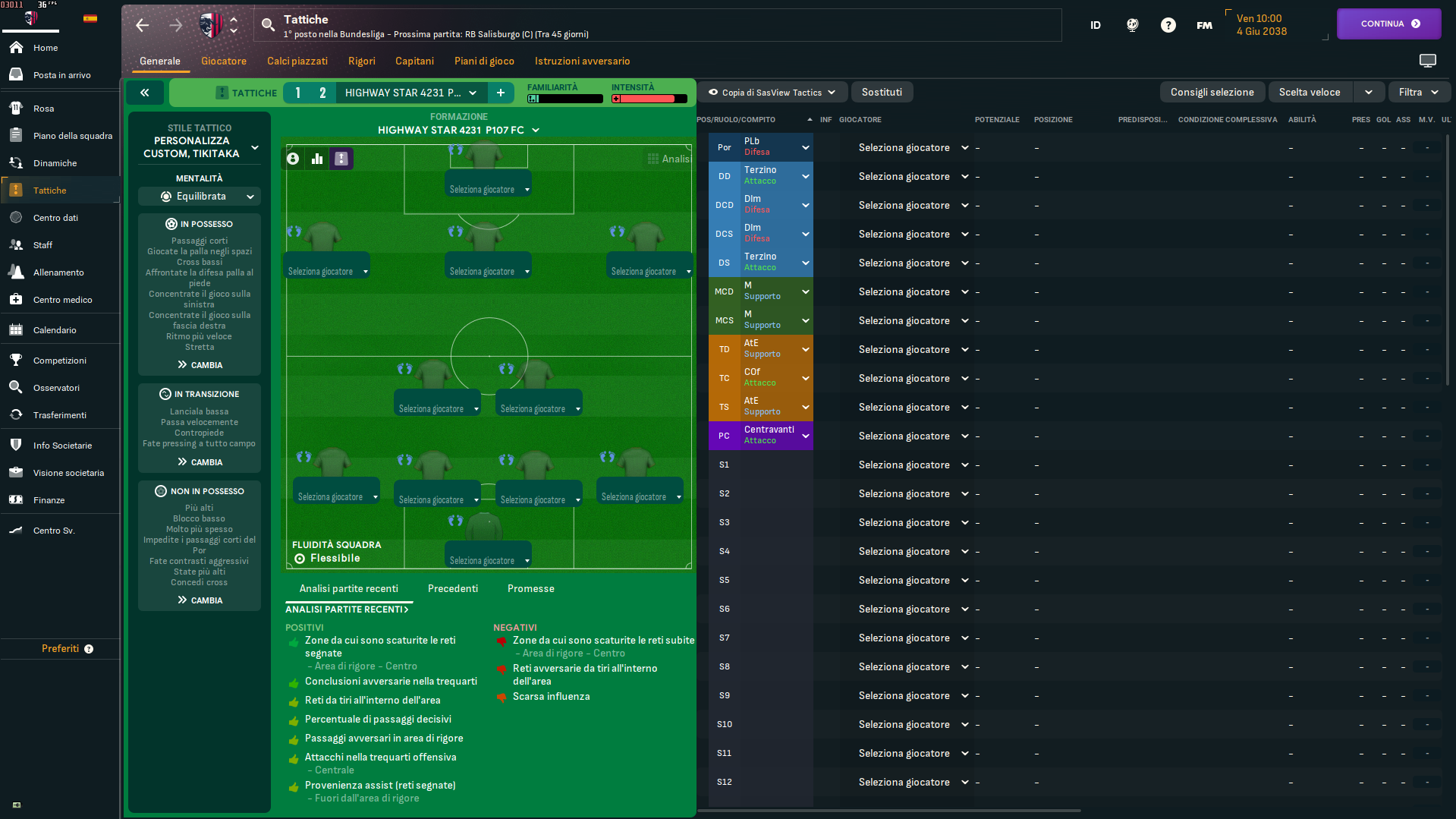
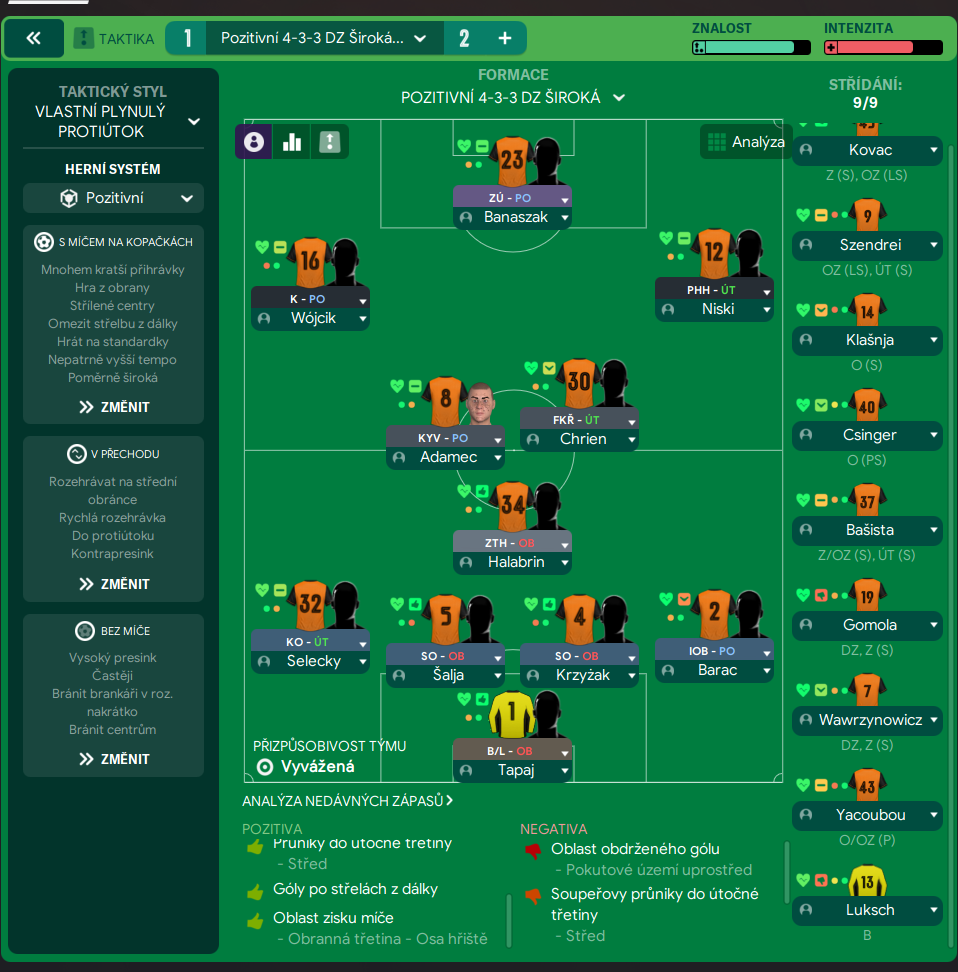
Guides for this formation
The tactical theory behind the 4-2-3-1 Wide: roles, instructions, and the trade-offs that decide whether the system holds up.
Player pairings
Midfield Pairs in 4-2-3-1 and 4-4-2
Double pivots and flat pairs in 4-2-3-1 and 4-4-2: when each pairing works, when it collapses, and the AMC unicorn that rescues both.
Read guide
Playing styles
Gegenpressing: A Full Guide
Klopp-style gegenpressing in FM, including squad profile, line-and-press pairing, sustainable workload, and the antipatterns to avoid.
Read guide