Uploaded Tactic
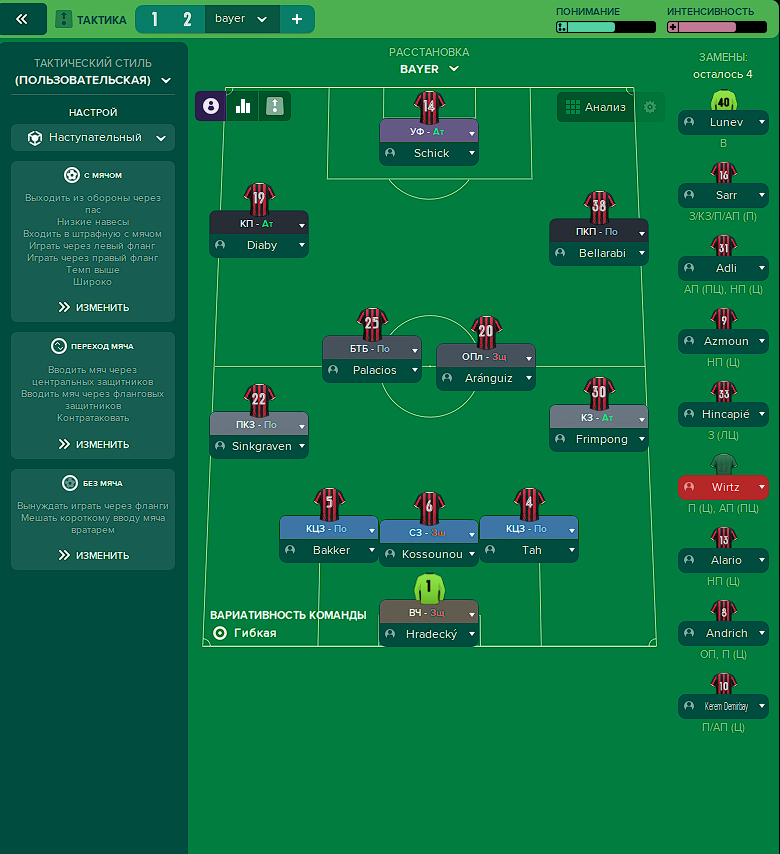
Formation & Style
Tactical Style:Custom (User-defined)
Mentality:Attacking
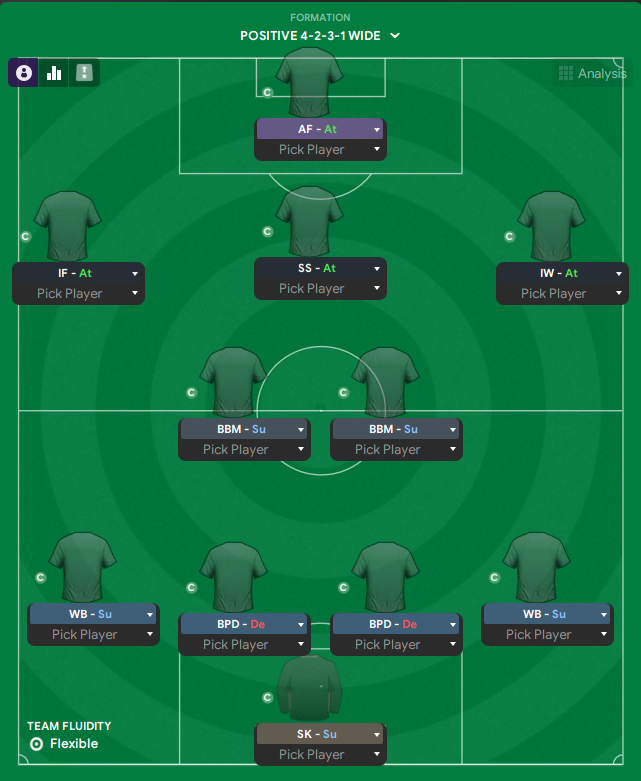
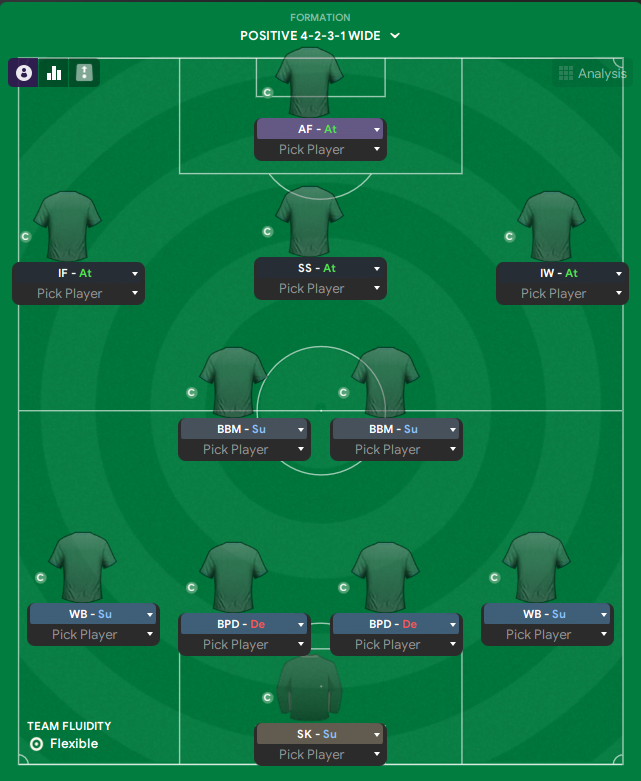
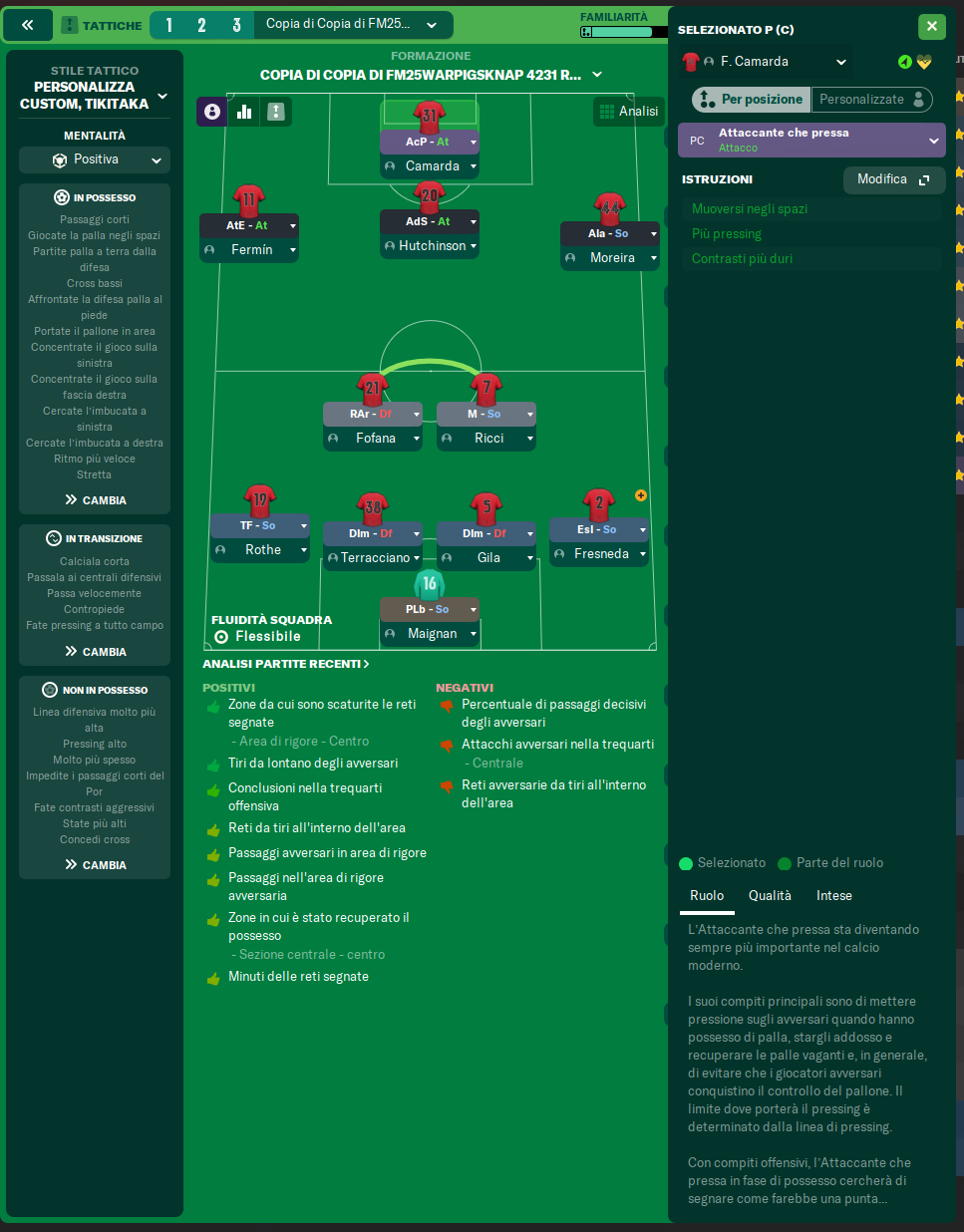
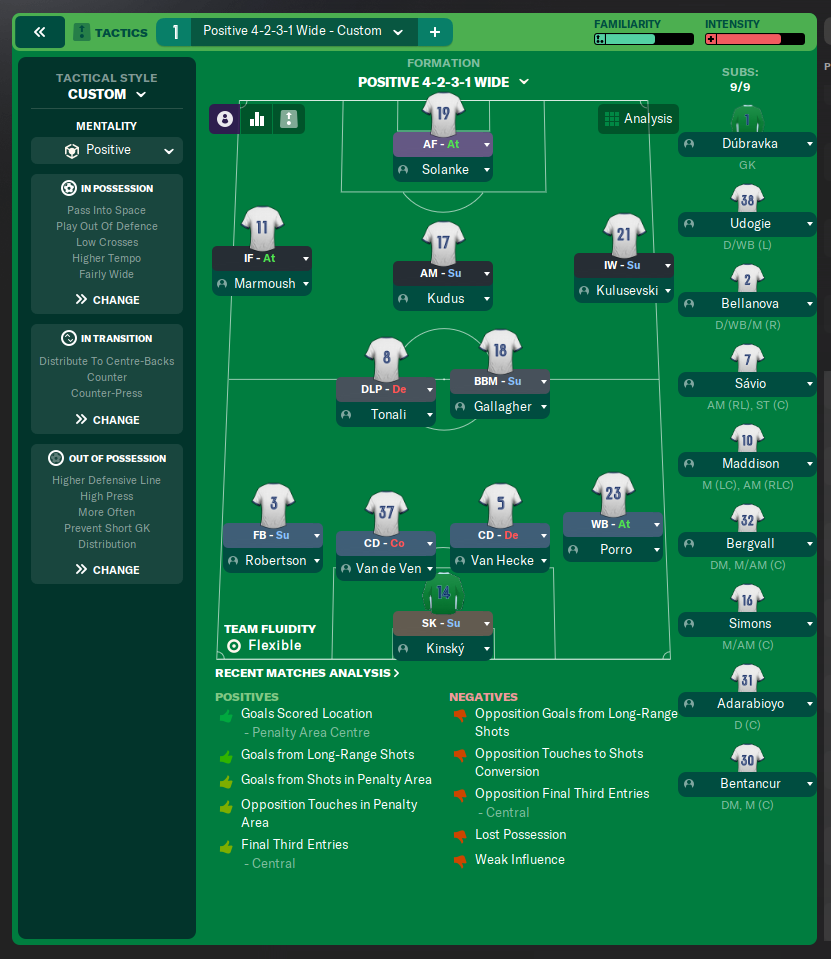
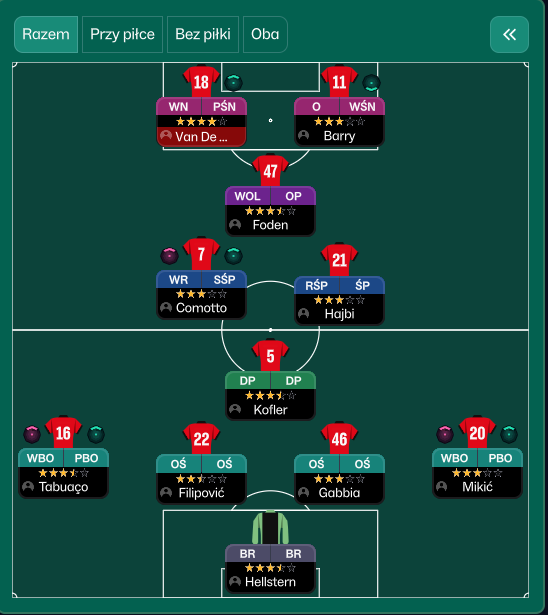
Formation:4-2-3-1 Wide
Team Fluidity:Flexible
In Possession
Play Out Of Defence
Work Ball Into Box
Attacking Width: Fairly Wide
In Transition
Counter-Press
Counter
Out of Possession
Higher Defensive Line
Use Offside Trap
More Urgent Pressing
Team Shape Without Ball
Shape:4-2
Description:Compact defensive structure that aims to close down space through both pressure and positioning.
Evidence:The two central defensive midfielders provide cover for the back four.
Team Shape With Ball
Shape:4-3
Description:Attacking players positioned to create overloads on the wings and pass through the middle.
Evidence:Positioning of the Inside Forward and Advanced Playmaker facilitates fluidity.
Phase Description
Attacking Play
Utilizes the wings effectively with Inside Forwards and Wide Playmakers pushing against defensive lines, complemented by central support from the Advanced Playmaker.
Defensive Transition
Quickly recovers possession through counter-pressing, aiming to regain control high up the pitch.
Main Focus
Utilize width while maintaining central attacking options through overlapping full-backs.
Key Strengths
Fluid Wing Play
Inside Forwards and Wing-Backs create overlapping runs, maximizing width.
Central Midfield Dominance
The pairing of DLP and Box-to-Box Midfielder allows for transitional play.
Dynamic Forward Line
The Advanced Forward role capitalizes on spaces created by wingers.
Conflicting Directions
High Defensive Line with Counter-Pressing
Could lead to vulnerability against fast counter-attacks if possession is lost.
Over-Reliance on Wings
Excessive focus on wide play could lead to predictable patterns and congestion.
Commitment of Wing-Backs
Potential defensive imbalance if wing-backs are caught too far up the pitch.
Tactical Suggestions
Increase Central Player Movement
Facilitate more quick passes through the center to exploit gaps.
Adjust Team Instructions
Consider changing to a shorter passing approach to maintain possession.
Utilize Substitutions Strategically
Introduce fresh attacking options if the game becomes stagnant.
Ask Questions About Your Lineup
Related Tactics
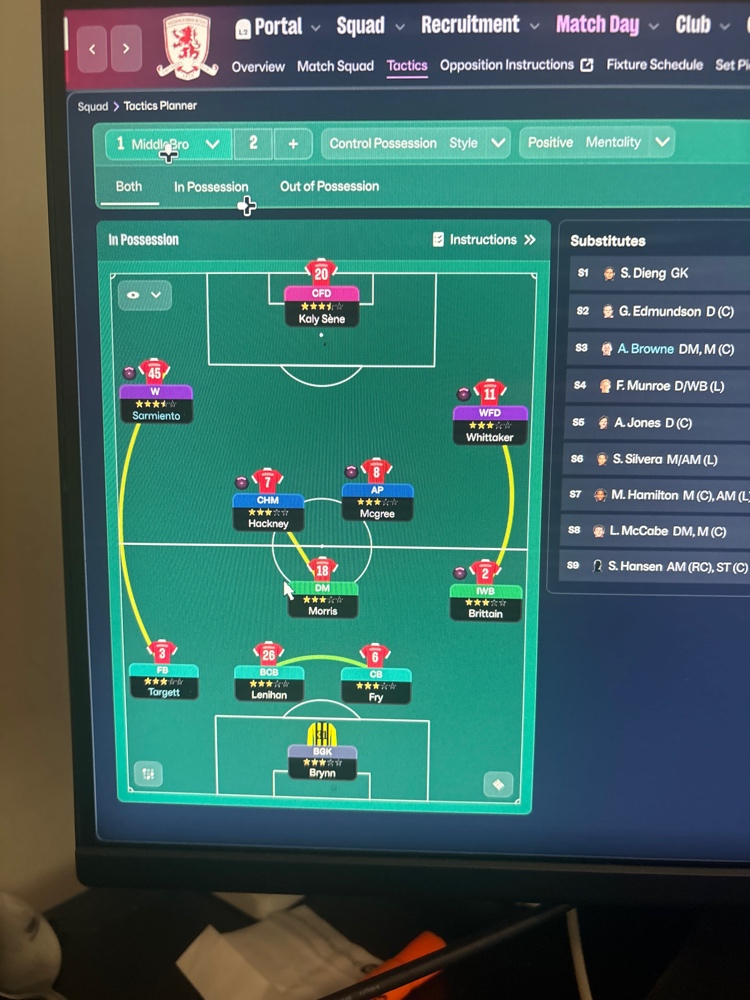
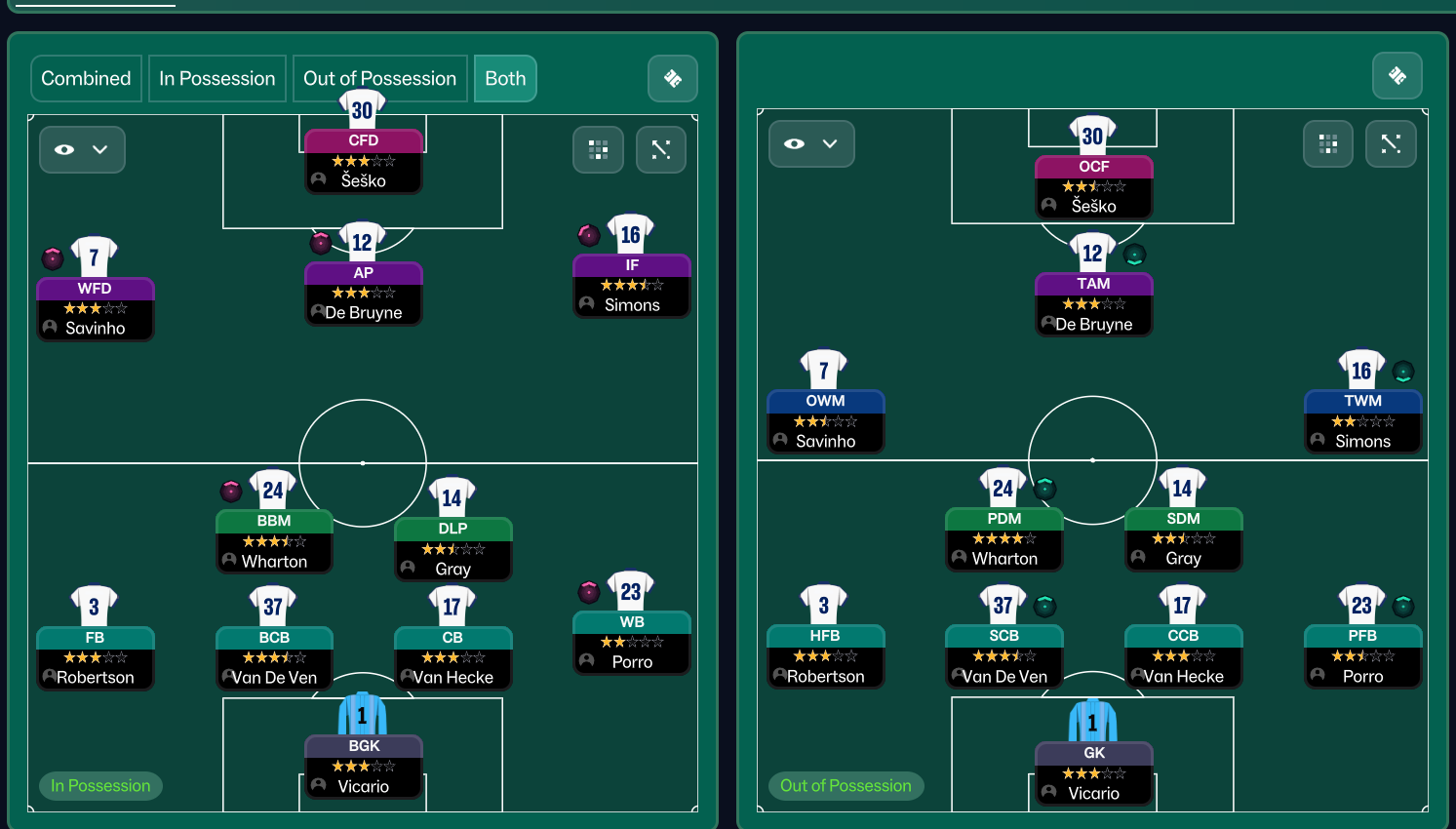
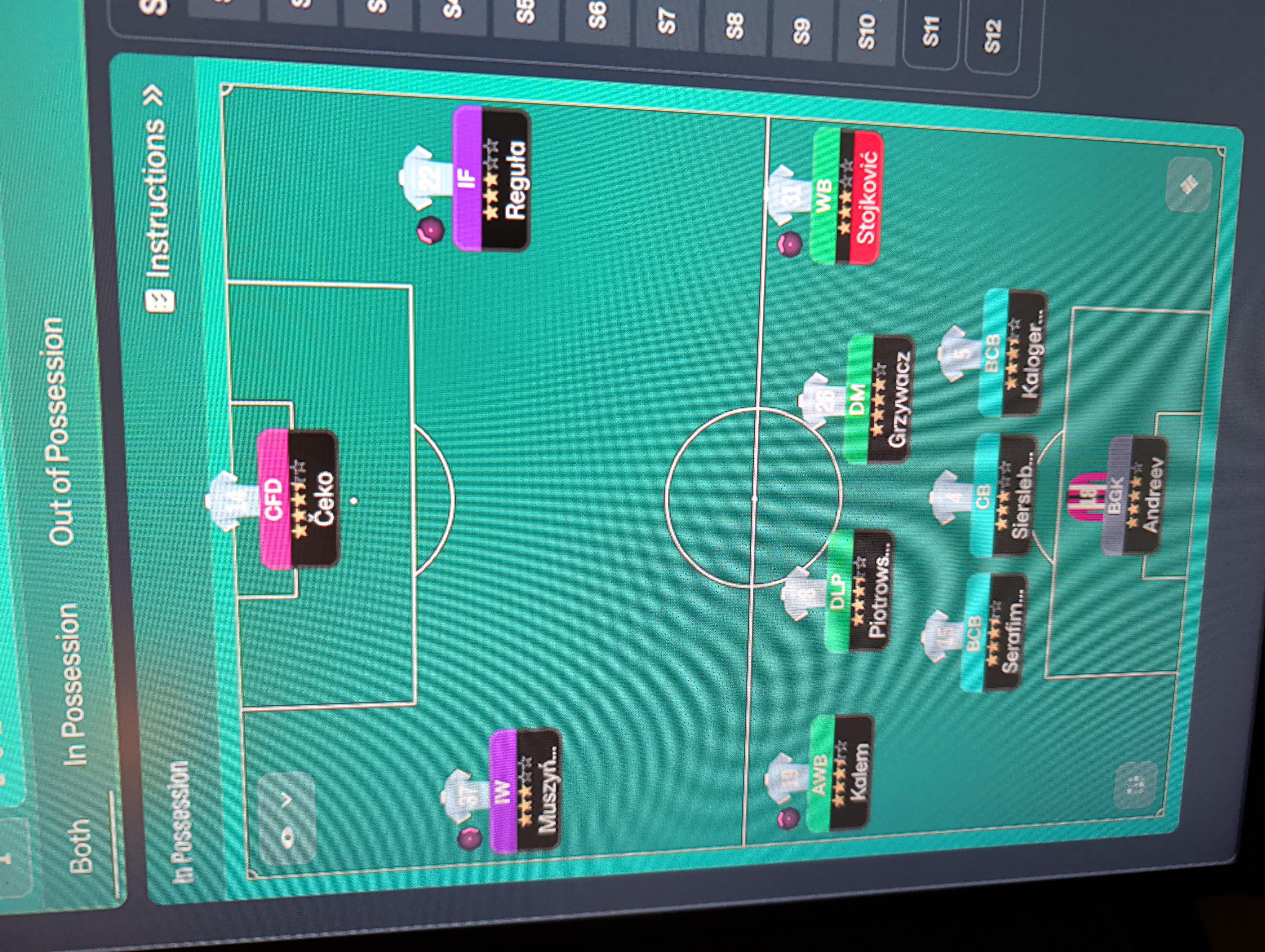
Guides for this formation
The tactical theory behind the 4-2-3-1 Wide: roles, instructions, and the trade-offs that decide whether the system holds up.
Player pairings
Midfield Pairs in 4-2-3-1 and 4-4-2
Double pivots and flat pairs in 4-2-3-1 and 4-4-2: when each pairing works, when it collapses, and the AMC unicorn that rescues both.
Read guide
Playing styles
Gegenpressing: A Full Guide
Klopp-style gegenpressing in FM, including squad profile, line-and-press pairing, sustainable workload, and the antipatterns to avoid.
Read guide