Uploaded Tactic
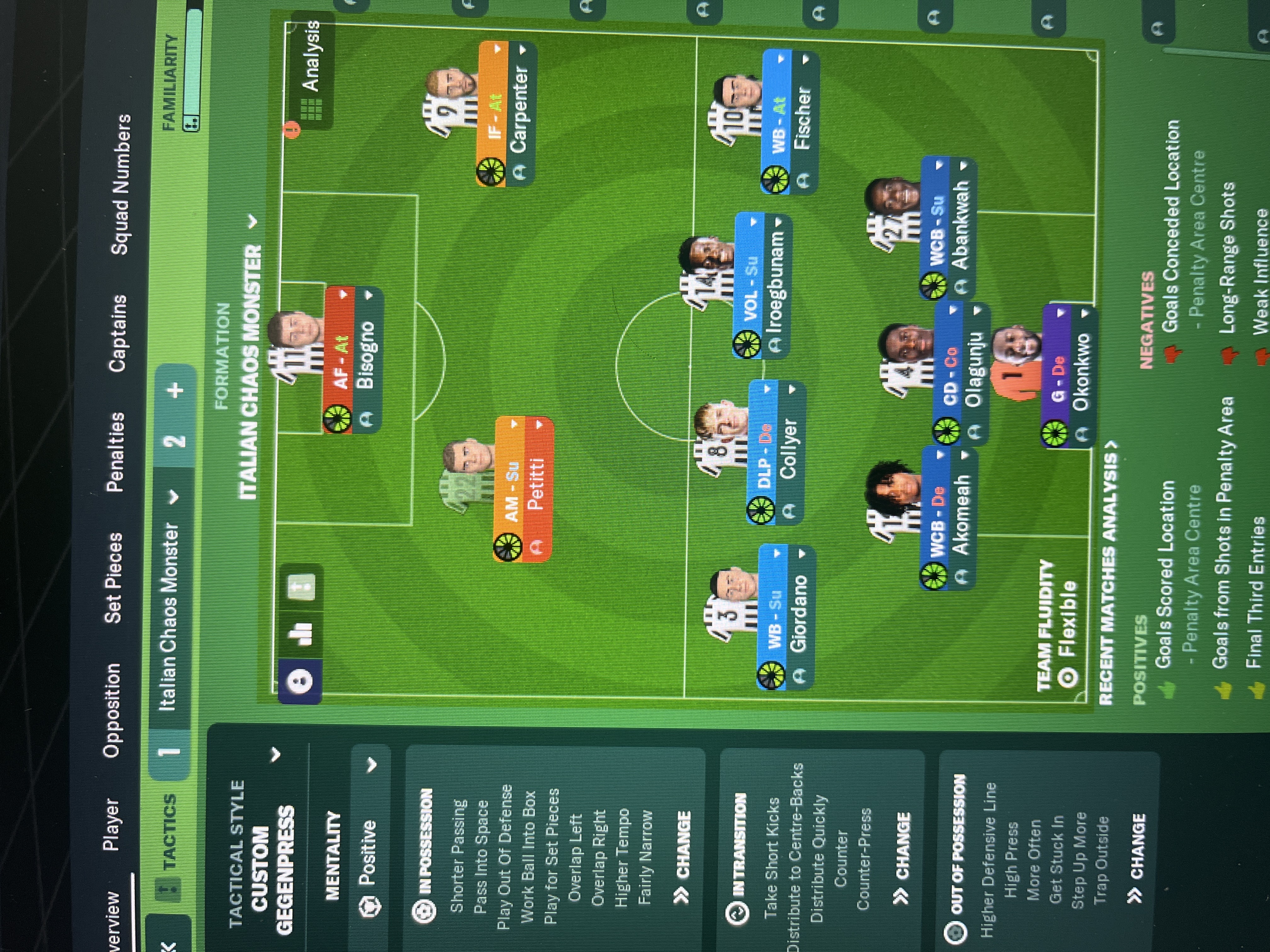
Formation & Style
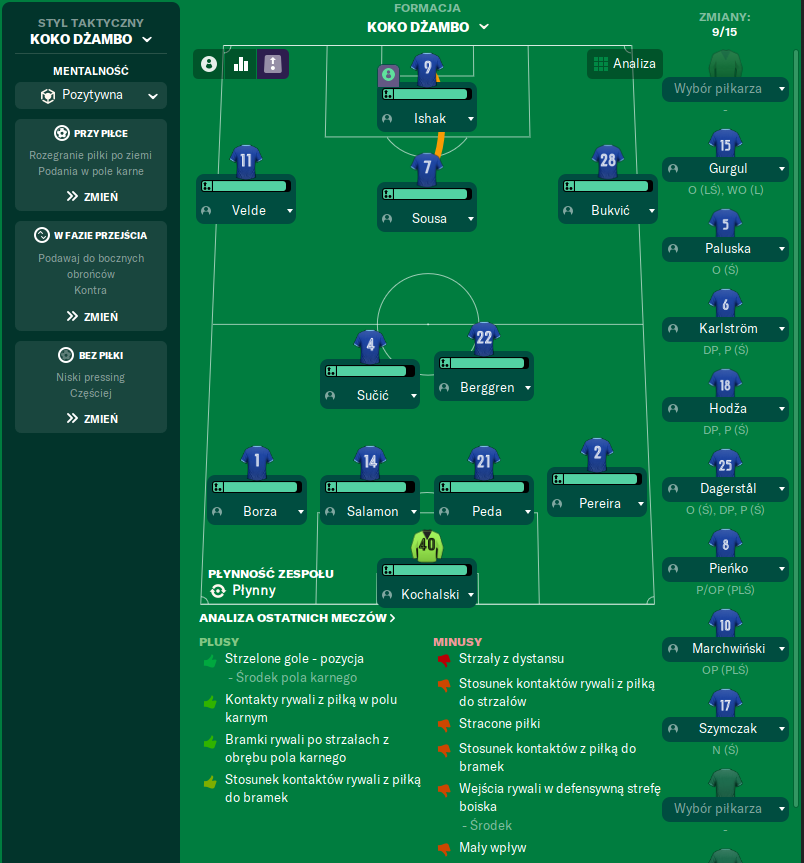
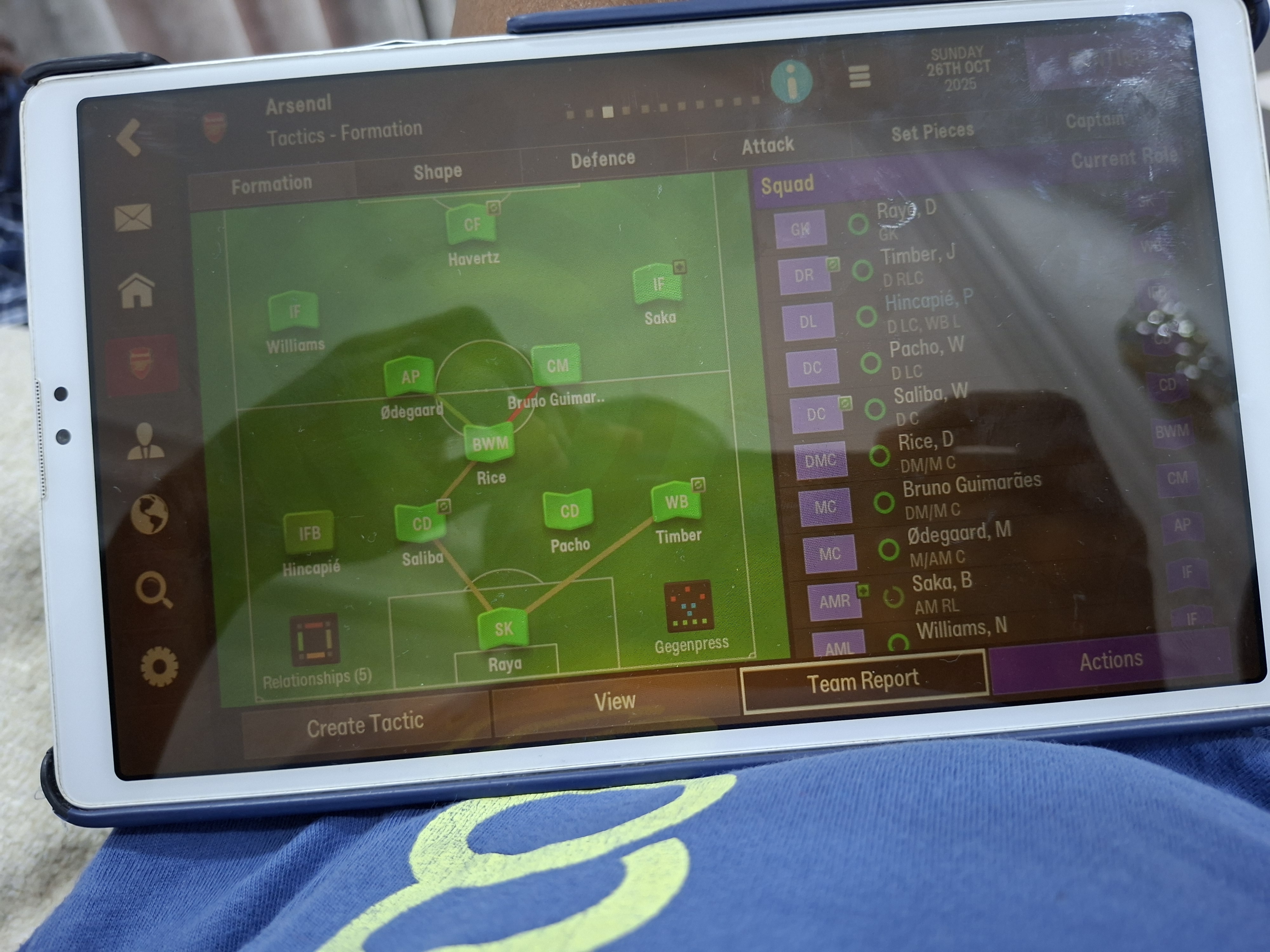
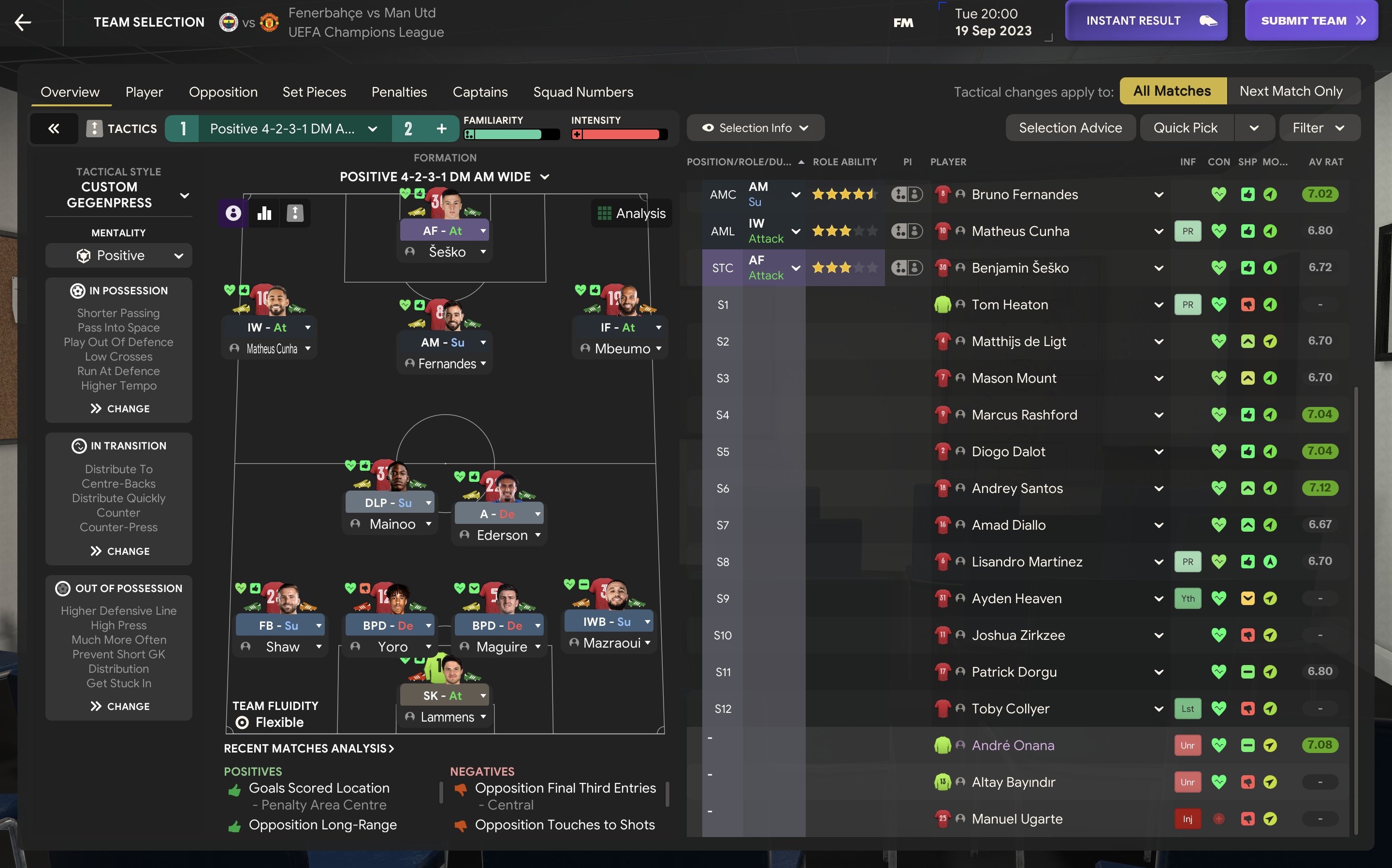
Tactical Style:Custom Gegenpress
Mentality:Positive
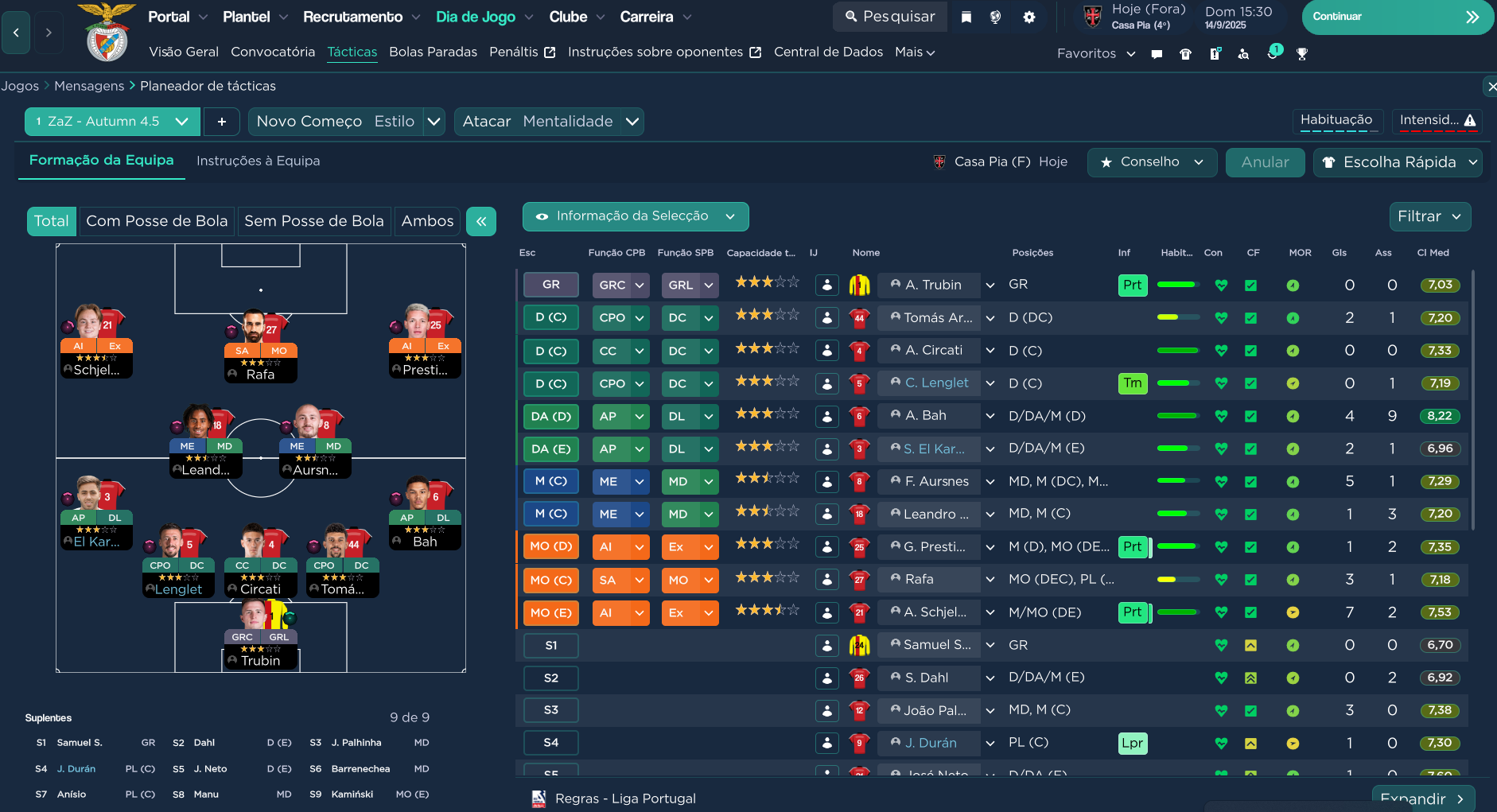
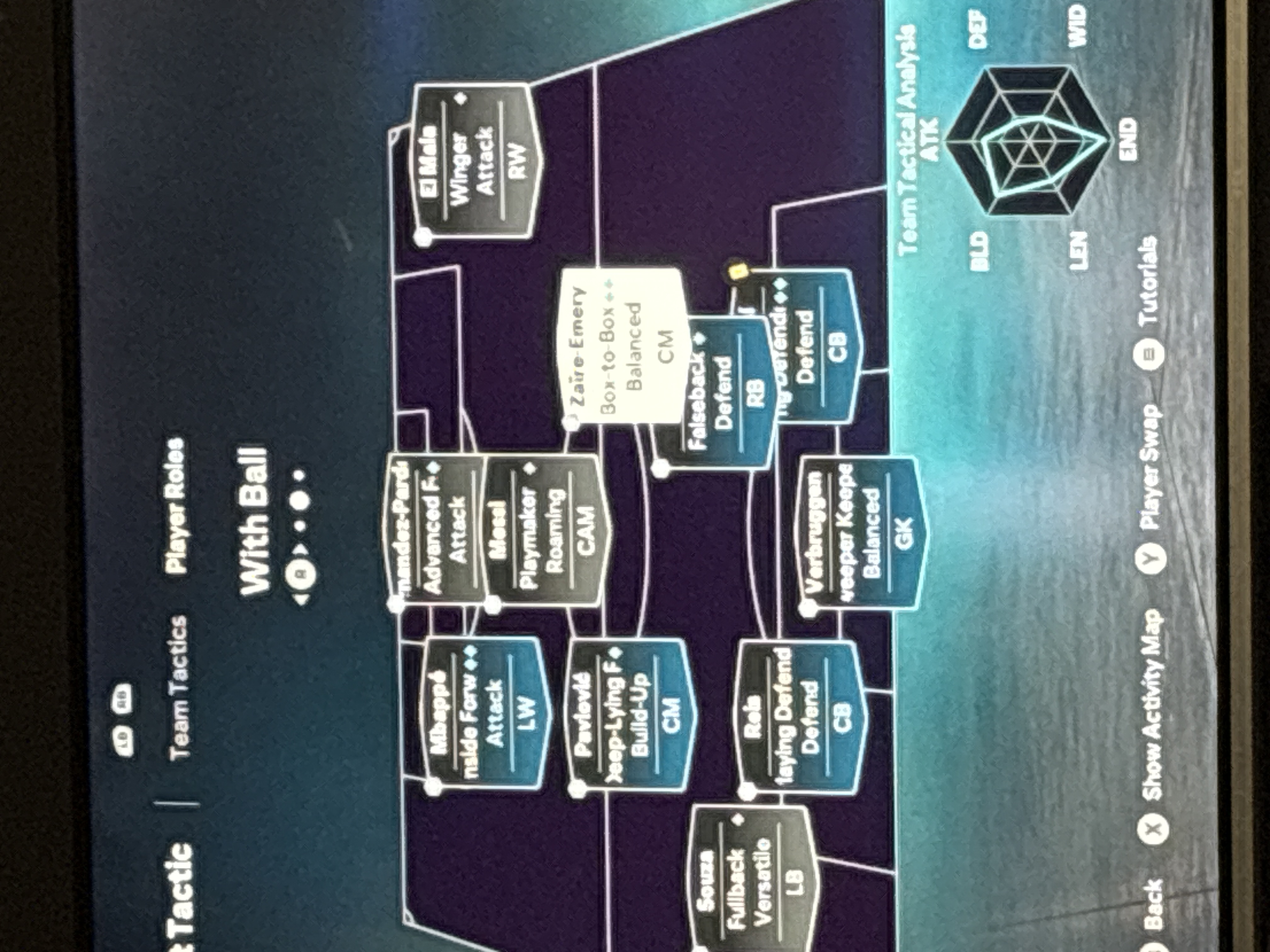
Formation:4-2-3-1 Wide
Team Fluidity:Flexible
In Possession
Shorter Passing
Pass Into Space
Play Out Of Defense
Overlapping Full-backs
Overlap Left
Overlap Right
In Transition
Take Short Kicks
Distribute Quickly
Counter
Counter-Press
Out of Possession
Higher Defensive Line
High Press
Get Stuck In
Step Up More
Trap Outside
Team Shape Without Ball
No team shape without ball data available
Team Shape With Ball
No team shape with ball data available
Key Strengths
Dynamic Attacking Play
The use of an Advanced Forward and Inside Forward creates multiple attacking options that can unsettle defenses.
Strong Pressing
High pressing combined with a counter-press ensures opponents struggle to transition.
Effective Width
Wing-backs provide width and depth, allowing for combined attacks down the flanks.
Midfield Creativity
The Deep Lying Playmaker facilitates quick transitions and retains possession effectively.
Conflicting Directions
High Defensive Line vs. Pace of Opponents
If facing a quick opponent, the high line may lead to exploiting space behind.
Overlap and Central Play Balance
Excessive overlapping might crowd the middle, affecting the Attacking Midfielder’s influence.
Defensive Duties of Wing-backs
Wing-backs with a Support duty can leave gaps if not balanced with defensive responsibilities.
Counter-Pressing Intensity vs. Fatigue
Consistent counter-pressing may lead to fatigue; ensuring squad depth is critical for maintaining intensity.
Tactical Suggestions
Consider a Ball-Winning Midfielder
Adding a Ball-Winning Midfielder can improve defensive stability and regain possession more effectively.
Adjust Wing-back Duty
Switching one Wing-back to an Attack duty may create more offensive width.
Employ a Second Striker
Using a second striker could provide additional attacking threat and relieve pressure on the Advanced Forward.
Tactical Variation for Different Opponents
Adapting mentality or style based on the opponent will optimize performances in varying match contexts.
Ask Questions About Your Lineup
Related Tactics
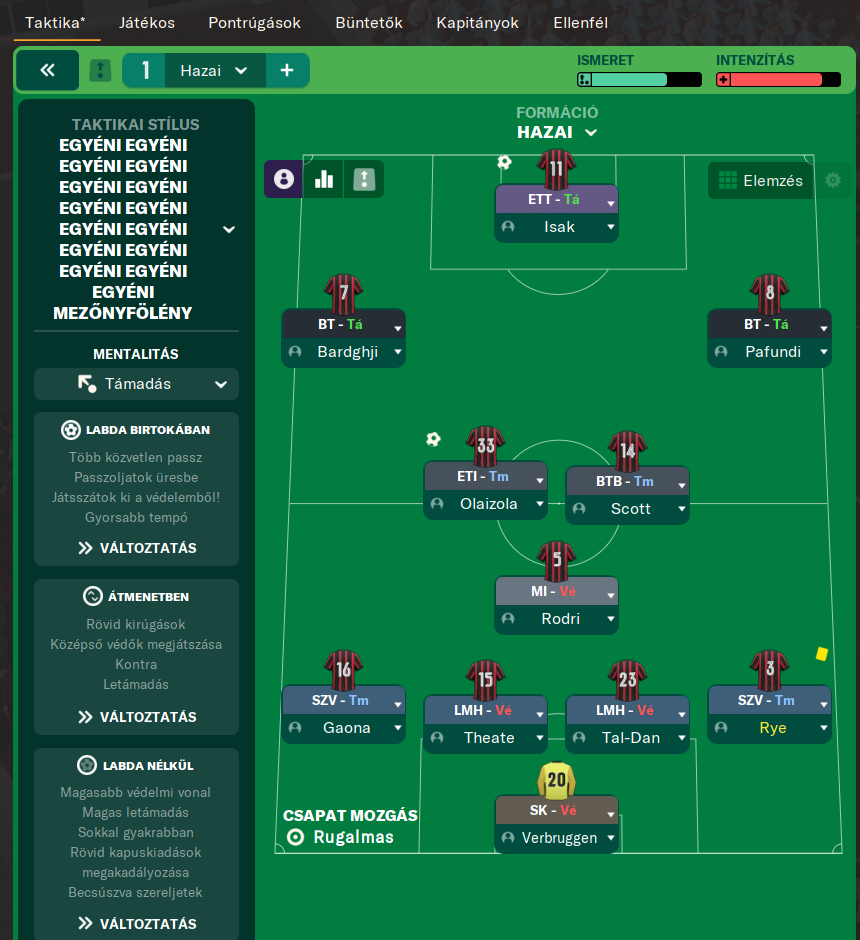
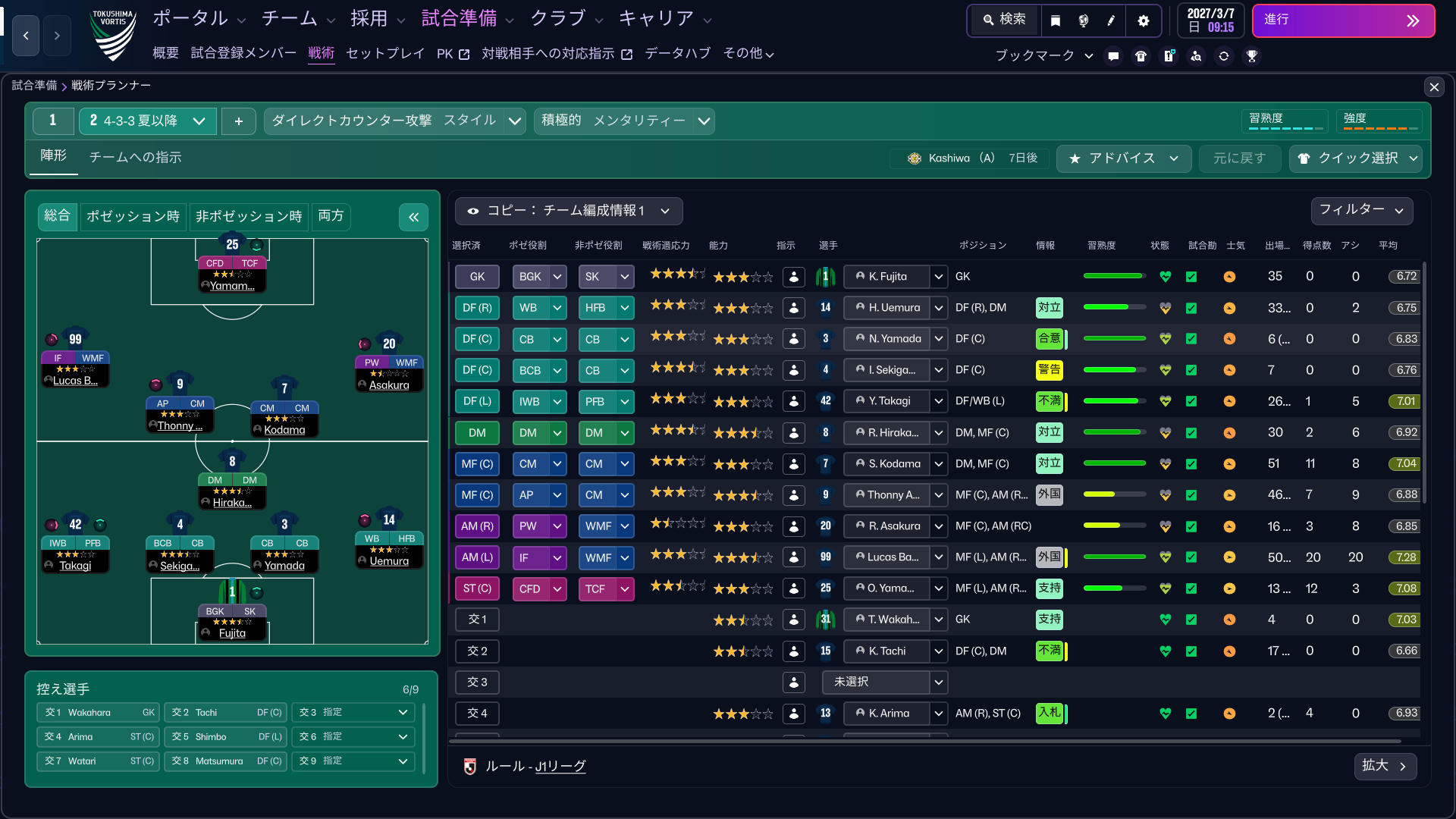
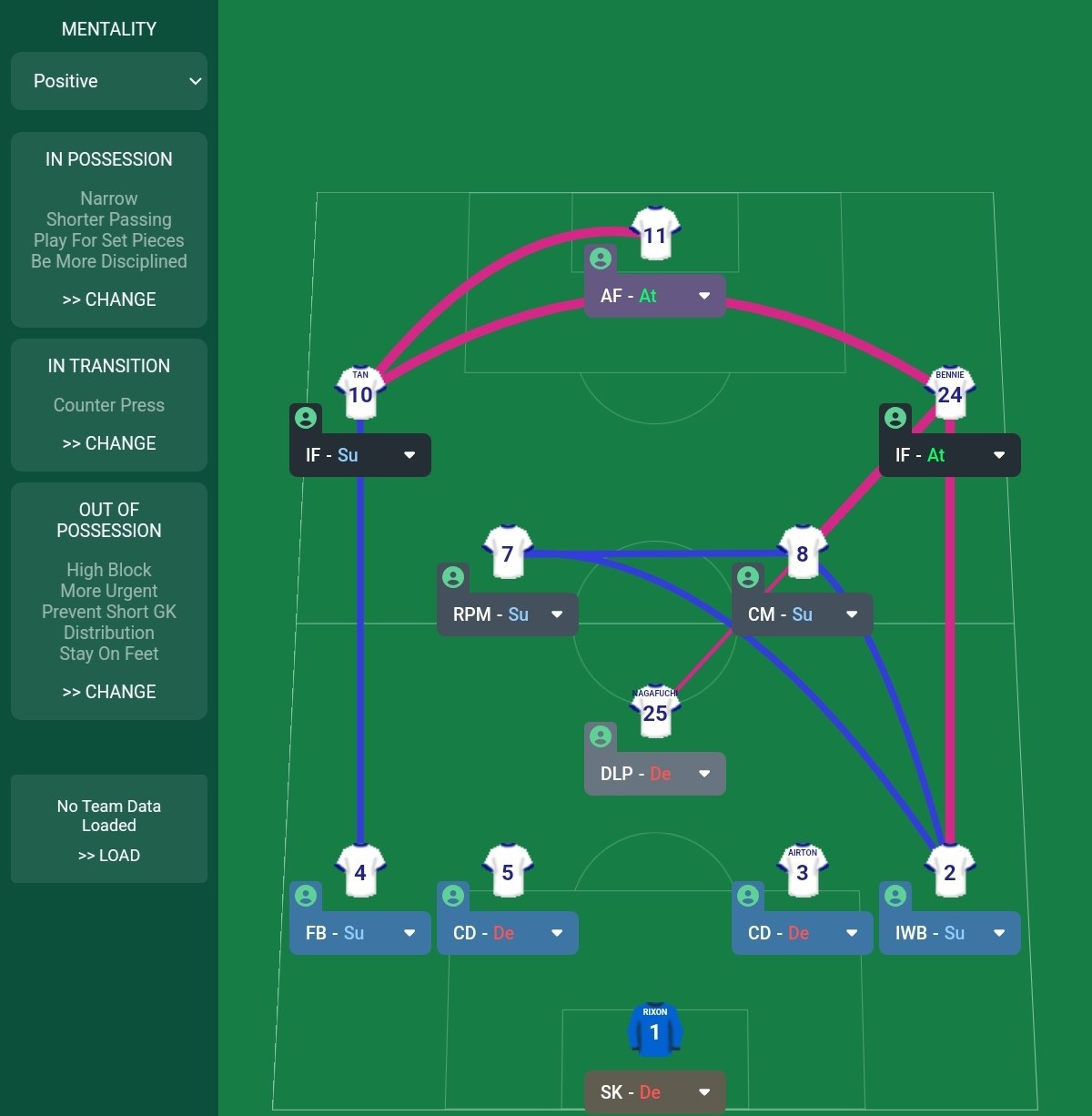
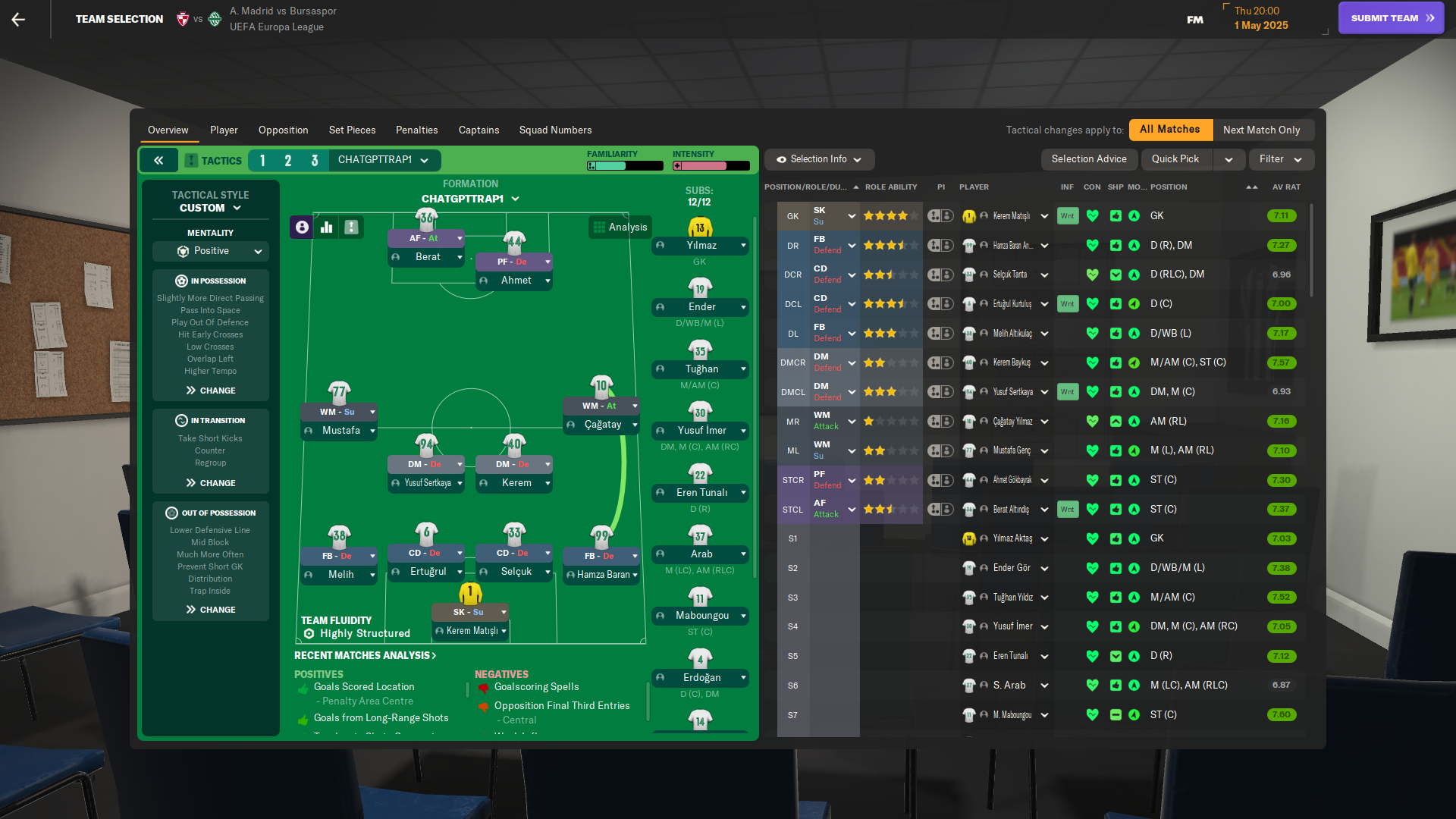
More Custom Gegenpress tactics
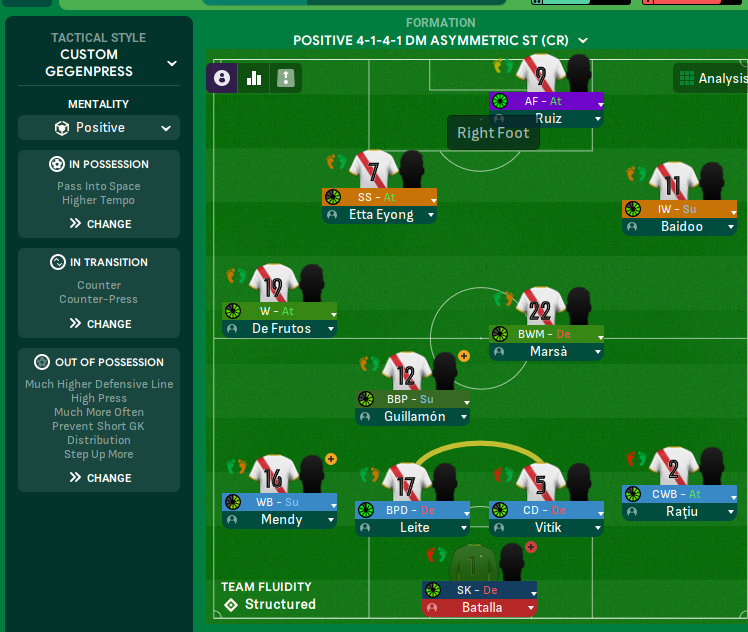
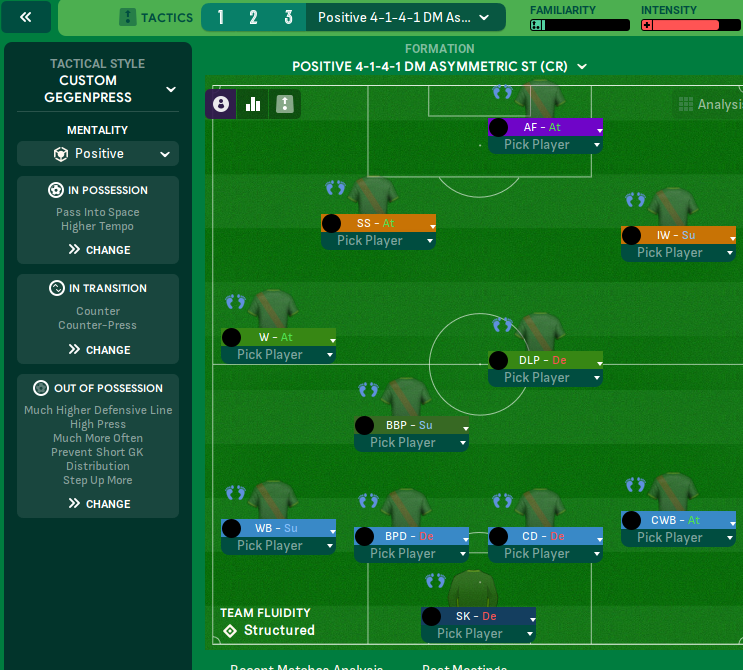
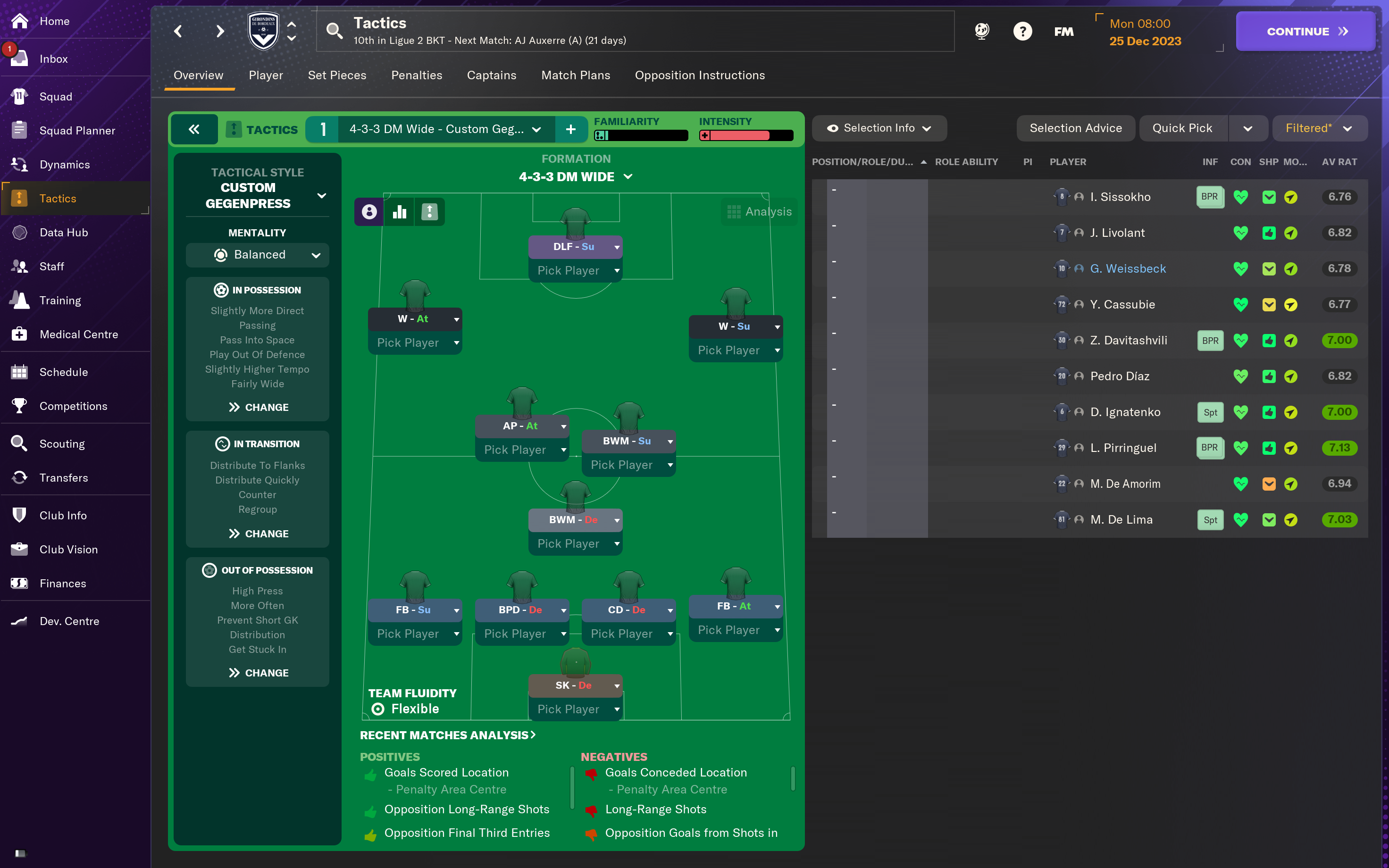
Guides for this formation
The tactical theory behind the 4-2-3-1 Wide: roles, instructions, and the trade-offs that decide whether the system holds up.
Player pairings
Midfield Pairs in 4-2-3-1 and 4-4-2
Double pivots and flat pairs in 4-2-3-1 and 4-4-2: when each pairing works, when it collapses, and the AMC unicorn that rescues both.
Read guide
Playing styles
Gegenpressing: A Full Guide
Klopp-style gegenpressing in FM, including squad profile, line-and-press pairing, sustainable workload, and the antipatterns to avoid.
Read guide