Uploaded Tactic
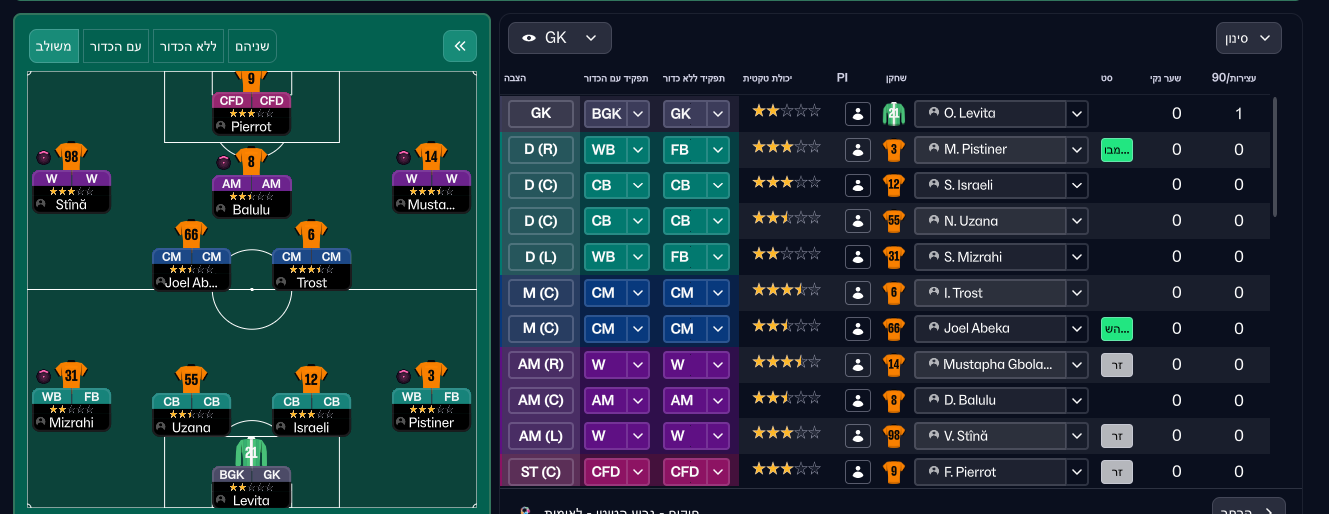
Formation & Style
Tactical Style:Balanced
Mentality:Positive
Formation:4-2-3-1 Wide
Team Fluidity:Structured
In Possession
Play Out Of Defence
High Tempo
Work Ball Into Box
In Transition
Counter
Out of Possession
Higher Defensive Line
More Urgent Pressing
Team Shape Without Ball
Shape:Compact
Description:The team stays closely compact, particularly in the central areas, limiting space for the opposition.
Evidence:FB-S at [2,1] and [2,5] support the defensive line while pressing effectively.
Team Shape With Ball
Shape:Fluid Width
Description:Fluid movement allows wide players to overlap and create space for the attacking midfielder.
Evidence:W-A at [6,1] and AM-S at [5,3] are key to stretching the opposition’s defense.
Phase Description
Attacking Play
Utilizes quick transitions and seeks to break through the middle after drawing defenders out wide.
Defensive Transition
Focus on regaining possession quickly, employing counter-pressing immediately after losing the ball.
Main Focus
Maximizing width and exploiting space behind the defense.
Key Strengths
Width in Attack
Utilizing wingers to create space and stretch the opponent’s defense.
Control in Midfield
Two central midfielders establish control and facilitate ball distribution.
Defensive Solidity
Strong and compact defensive line minimizes chances against.
Conflicting Directions
Counter-Attacking Play
Possibly too cautious during transitions if pressing is not synchronized.
High Defensive Line
May leave vulnerability to pacey counter-attacks.
Wide Play Execution
Wingers may get isolated if not adequately supported by the midfield.
Tactical Suggestions
Adjust Defensive Line Height
Consider lowering the defensive line to mitigate risk against speedy attackers.
Increase Midfield Support on Wings
Encourage midfielders to shift wider to support wingers.
Deploy a Target Man
Introduce a physical presence up top to hold up play and allow support runs.
Ask Questions About Your Lineup
Related Tactics
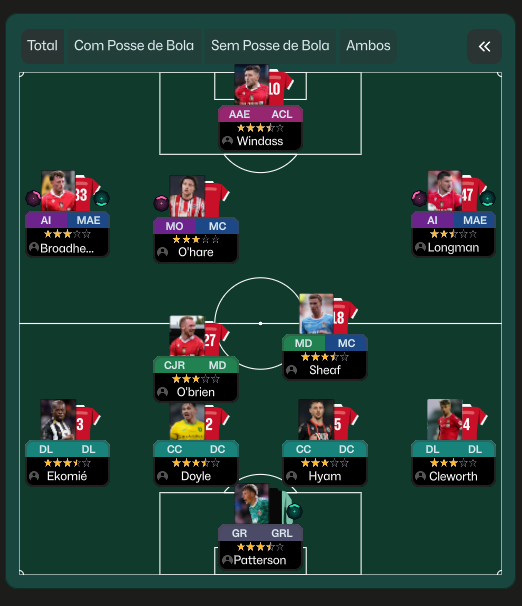
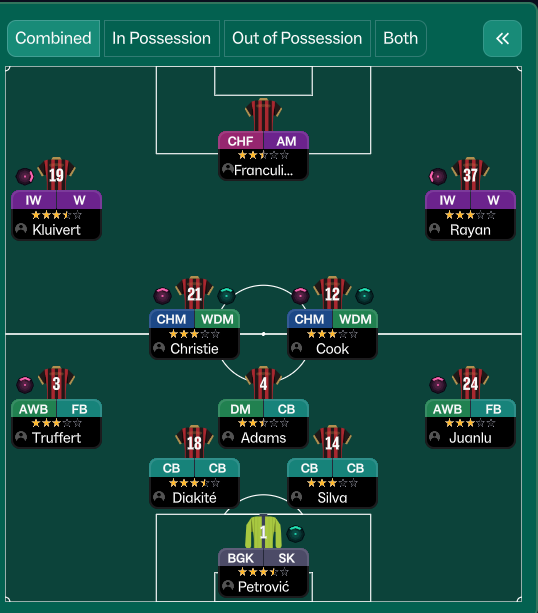

Guides for this formation
The tactical theory behind the 4-2-3-1 Wide: roles, instructions, and the trade-offs that decide whether the system holds up.
Player pairings
Midfield Pairs in 4-2-3-1 and 4-4-2
Double pivots and flat pairs in 4-2-3-1 and 4-4-2: when each pairing works, when it collapses, and the AMC unicorn that rescues both.
Read guide
Playing styles
Gegenpressing: A Full Guide
Klopp-style gegenpressing in FM, including squad profile, line-and-press pairing, sustainable workload, and the antipatterns to avoid.
Read guide