Uploaded Tactic
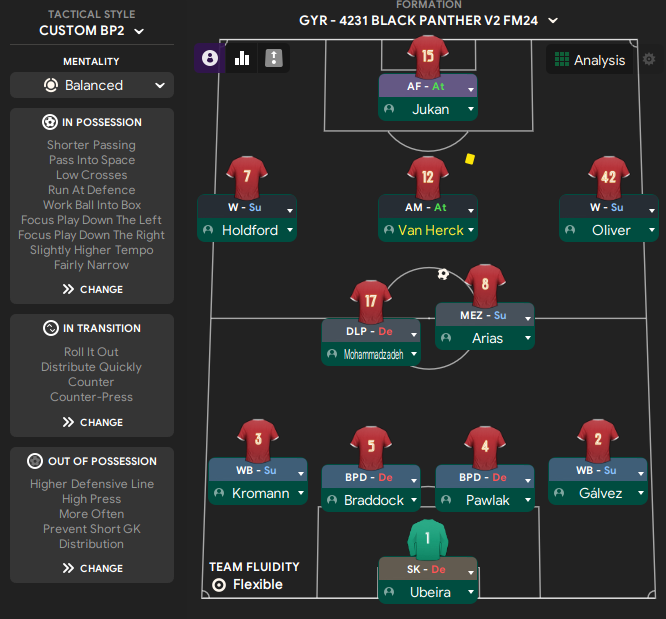
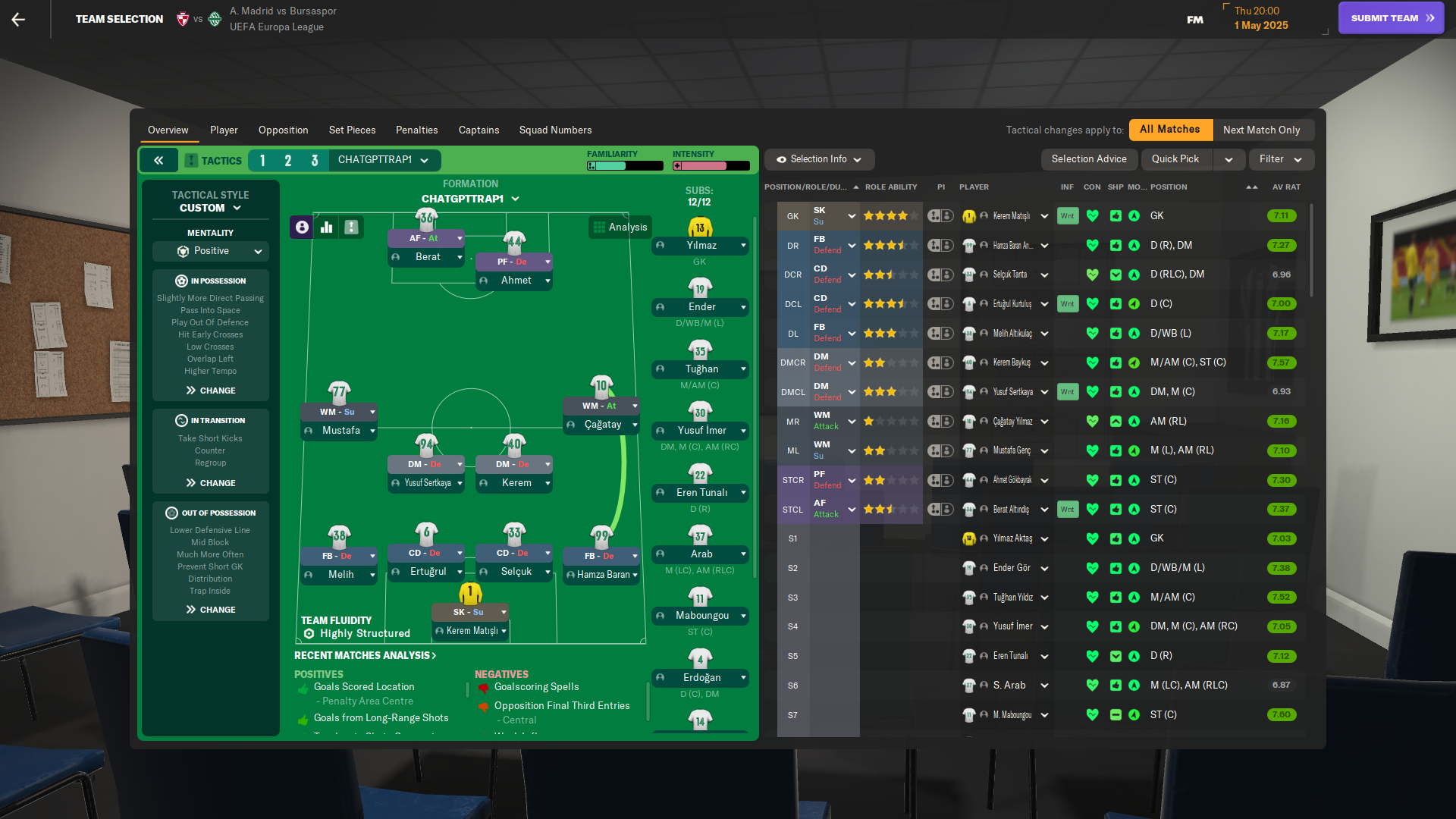
Formation & Style
Tactical Style:Custom BP2
Mentality:Balanced
Formation:4-2-3-1 Wide
Team Fluidity:Flexible
In Possession
Shorter Passing
Pass Into Space
Low Crosses
Run At Defence
Work Ball Into Box
Focus Play Down The Left
Focus Play Down The Right
Slightly Higher Tempo
Fairly Narrow
In Transition
Roll It Out
Distribute Quickly
Counter
Counter-Press
Out of Possession
Higher Defensive Line
High Press
Prevent Short GK Distribution
Team Shape Without Ball
No team shape without ball data available
Team Shape With Ball
No team shape with ball data available
Key Strengths
Fluid Attack
The combination of Advanced Forward, Attacking Midfielder, and Wingers allows for dynamic attacking movements and fluid transitions into the final third.
Control in Midfield
The presence of a Deep Lying Playmaker and a Mezzala ensures effective ball retention, with the ability to dictate tempo and transition from defence to attack.
Width and Depth
Utilizing Wingers and Wing Backs provides width to stretch the opposition, creating space for attacking players to exploit.
High Pressing System
A higher defensive line and a high press can disrupt opposing attacks and force turnovers, allowing for rapid counterattacks.
Conflicting Directions
High Defensive Line vs Counter-Pressing
While a high defensive line encourages pressing, it can leave space in behind that opposition attackers may exploit, particularly against quick counter-attack teams.
Slightly Higher Tempo with Control Elements
A higher tempo may conflict with the shorter passing and control desired in midfield, potentially leading to rushed attacks.
Multiple Focus Points in Attack
Focusing play down both left and right may dilute attacks, creating confusion among players about where to direct their runs.
Wing Play vs Central Play
Overemphasis on wing play (via Wingers and Wing Backs) may lead to neglect of central areas, which is where the Mezzala and Attacking Midfielder should thrive.
Tactical Suggestions
Adjust Defensive Line
Consider adopting a slightly lower defensive line to balance between pressing and preventing space behind for counter-attacks.
Streamline Attacking Focus
Designate a stronger focus on one flank, rather than spreading threats across both sides, to increase the effectiveness of the attack.
Modify Player Instructions
Adjust the Wingers to have 'Cut Inside' instructions to increase goal-scoring opportunities and create space for overlapping Wing Backs.
Optimize Central Roles
Reconsider the role of the Mezzala to possibly an 'Attacking Midfielder' if more central attacking influence is needed, or vice versa.
Ask Questions About Your Lineup
Related Tactics
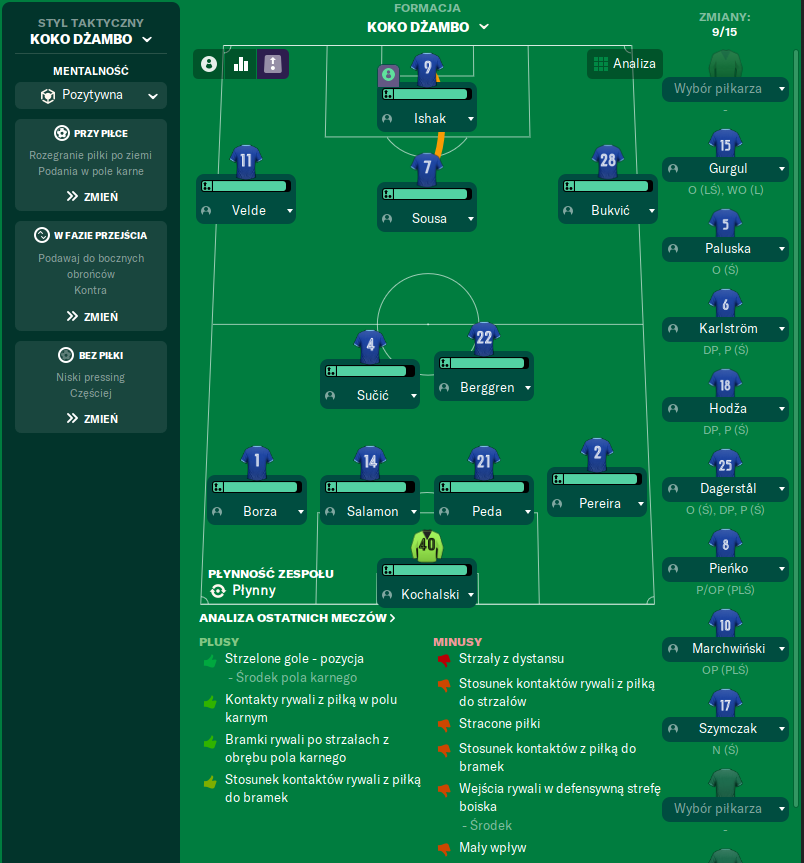
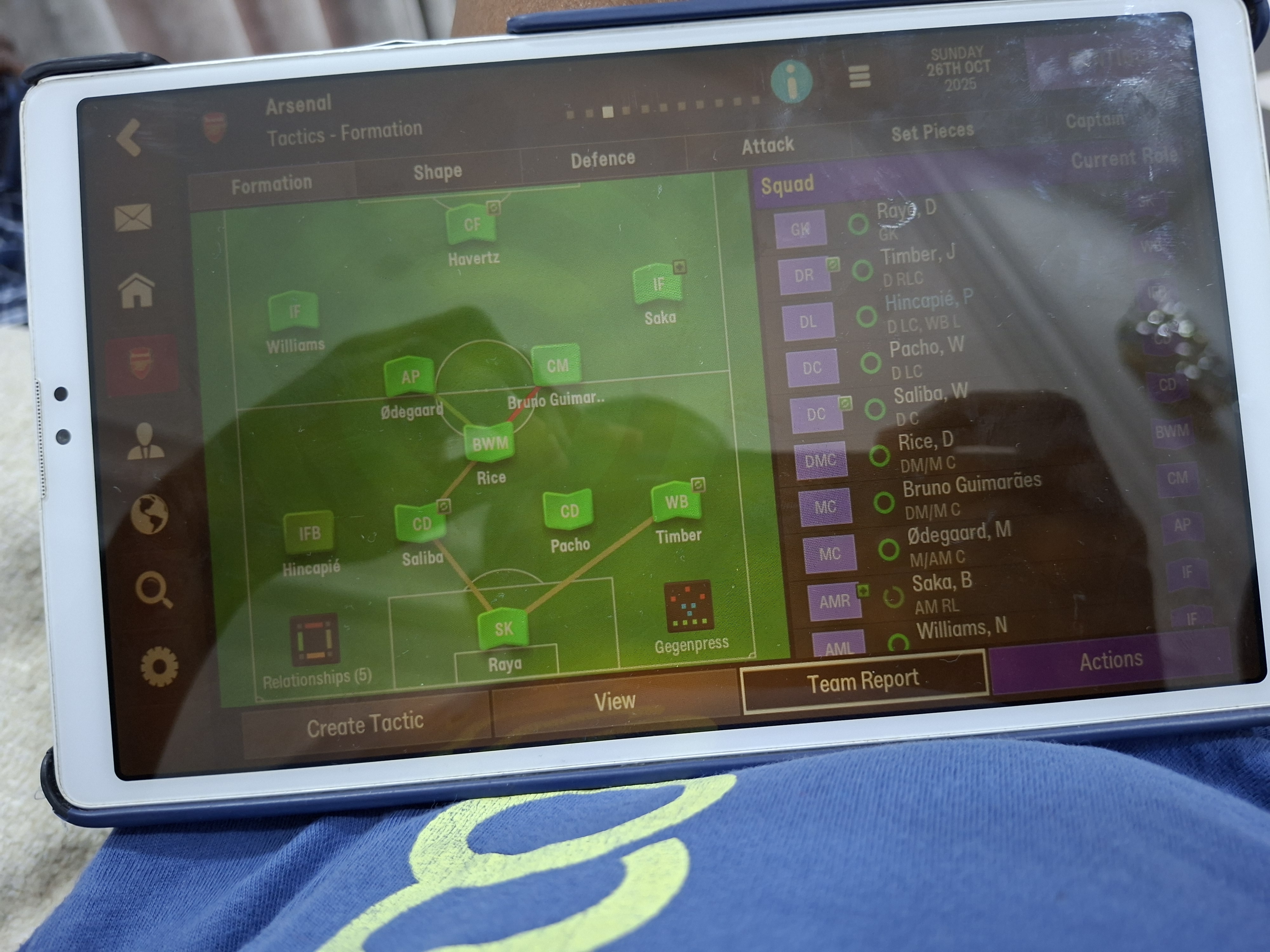
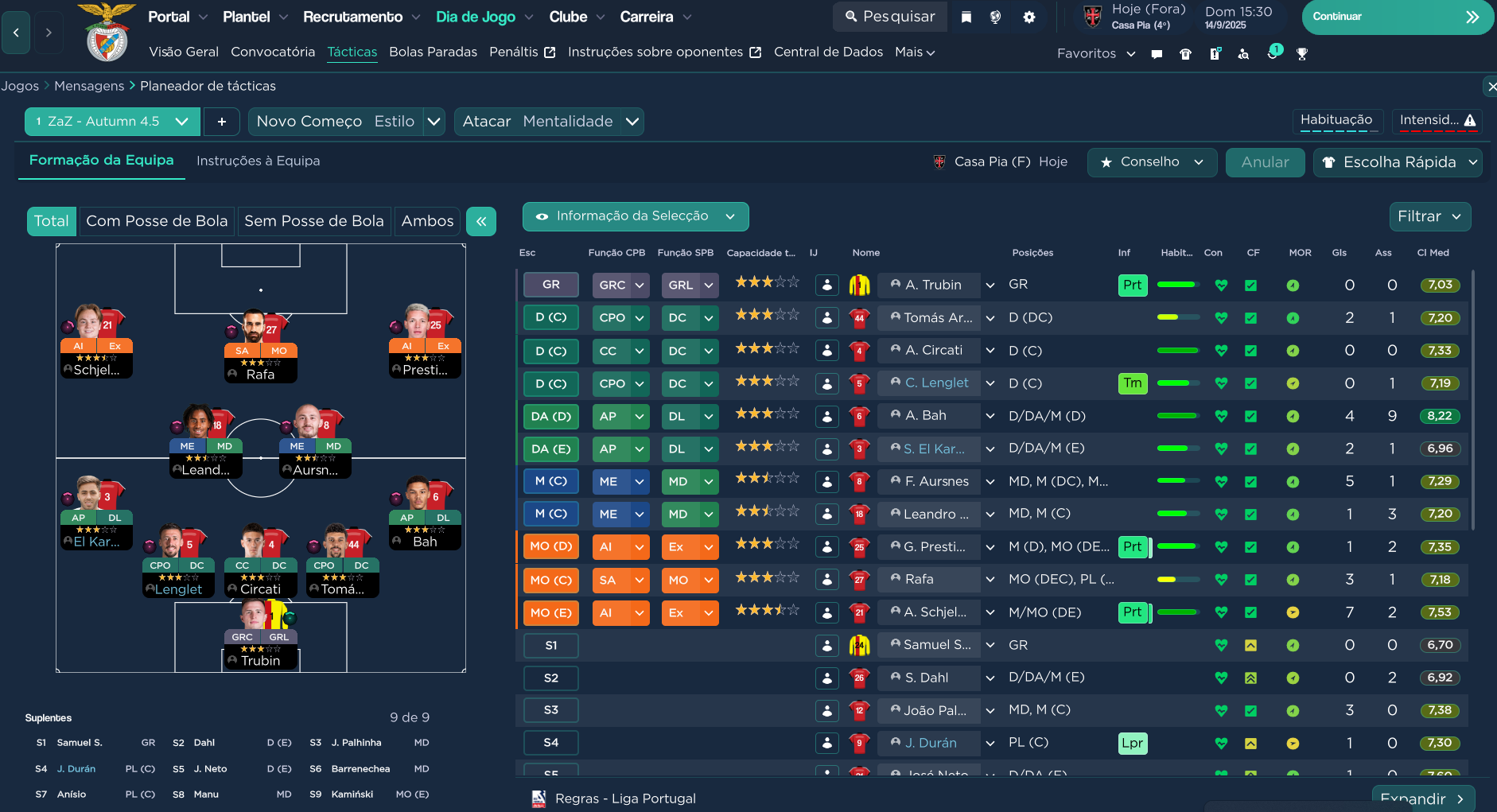
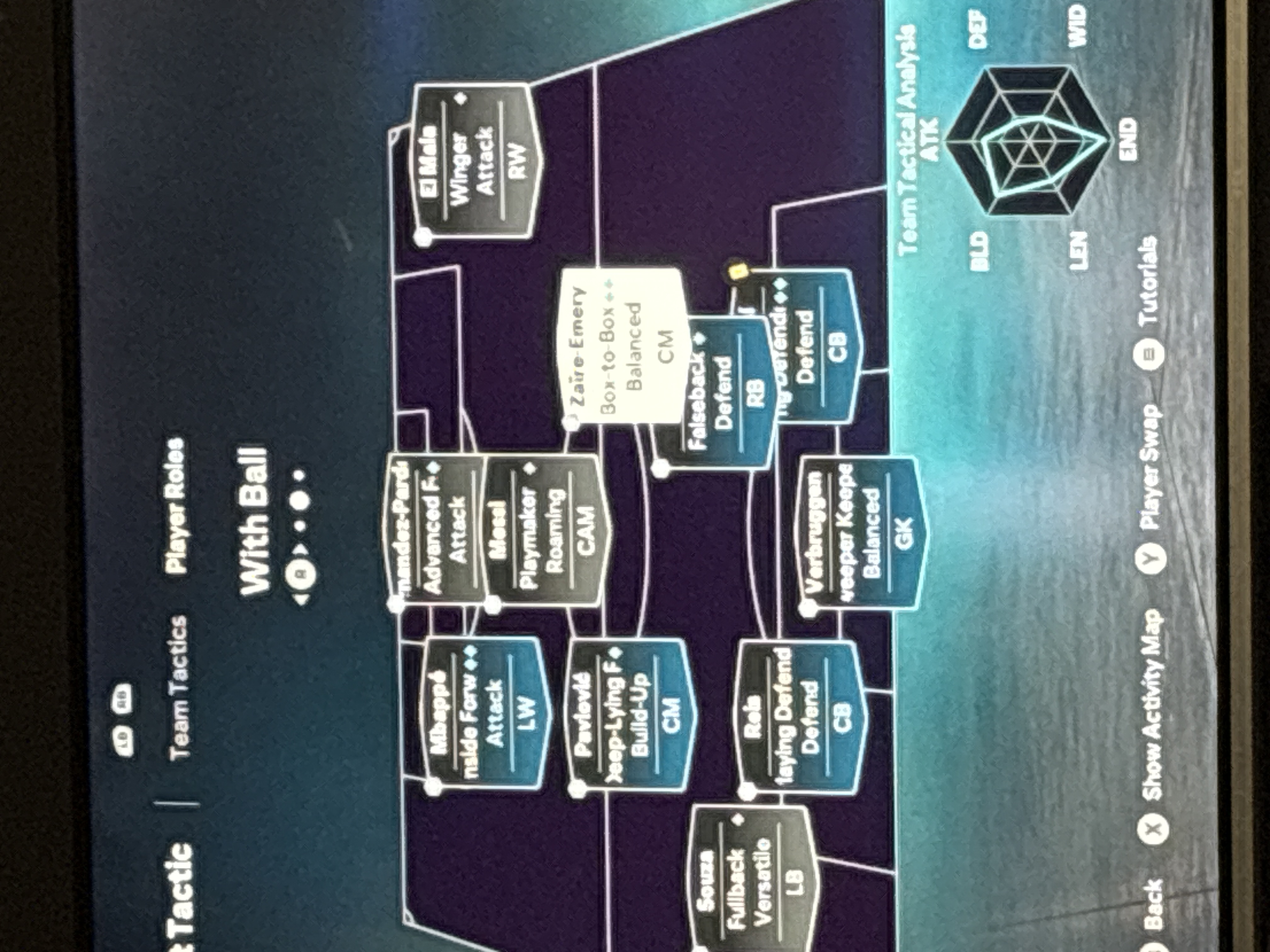
Guides for this formation
The tactical theory behind the 4-2-3-1 Wide: roles, instructions, and the trade-offs that decide whether the system holds up.
Player pairings
Midfield Pairs in 4-2-3-1 and 4-4-2
Double pivots and flat pairs in 4-2-3-1 and 4-4-2: when each pairing works, when it collapses, and the AMC unicorn that rescues both.
Read guide
Playing styles
Gegenpressing: A Full Guide
Klopp-style gegenpressing in FM, including squad profile, line-and-press pairing, sustainable workload, and the antipatterns to avoid.
Read guide