Uploaded Tactic
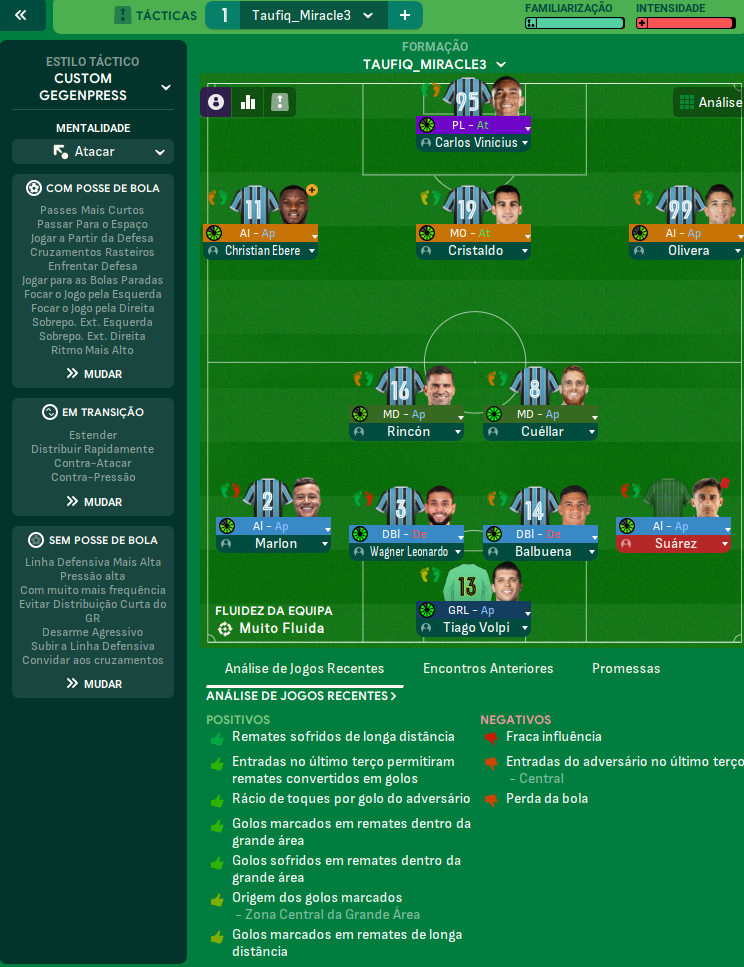
Formation & Style
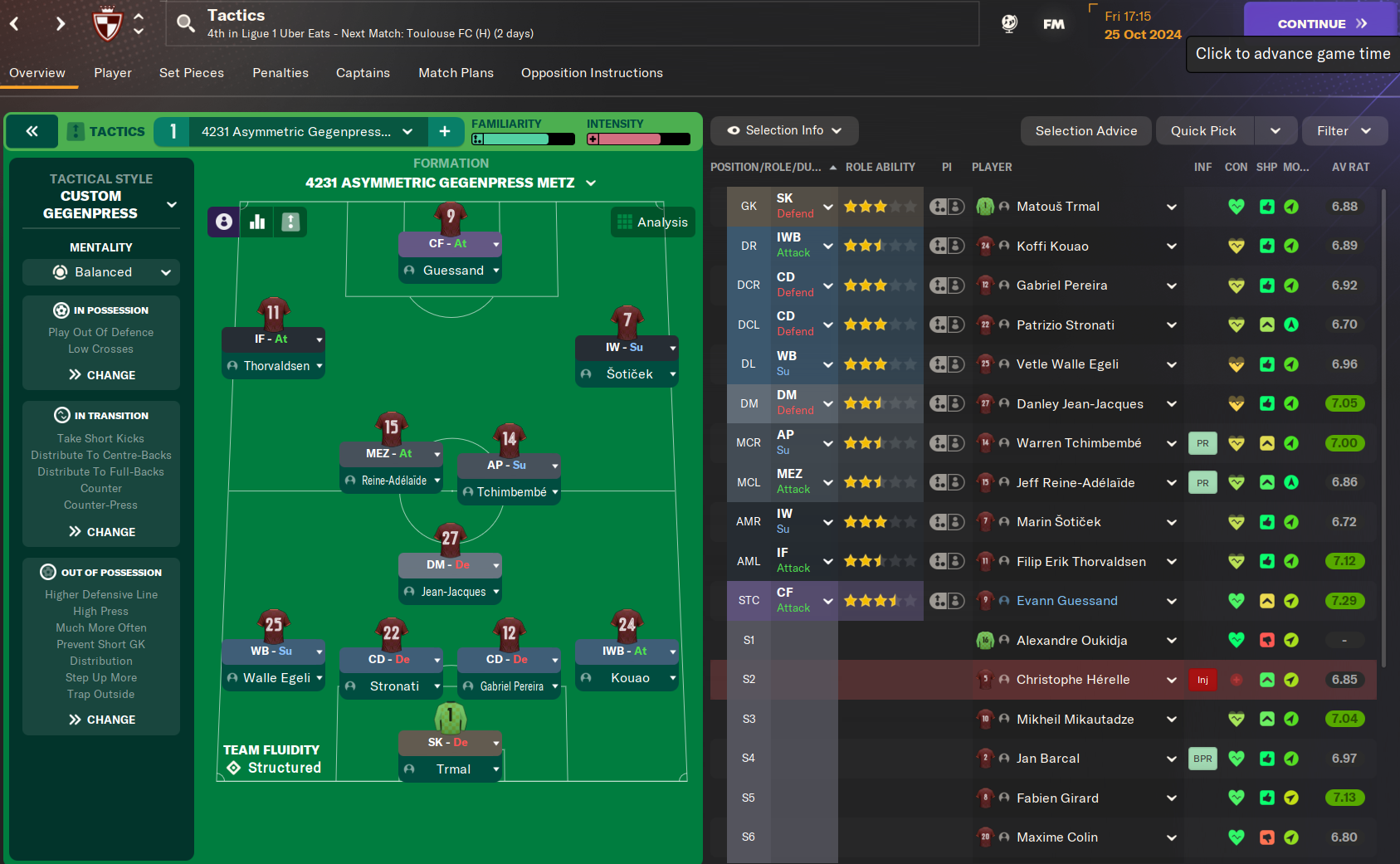
Tactical Style:Custom Gegenpress
Mentality:Attacking
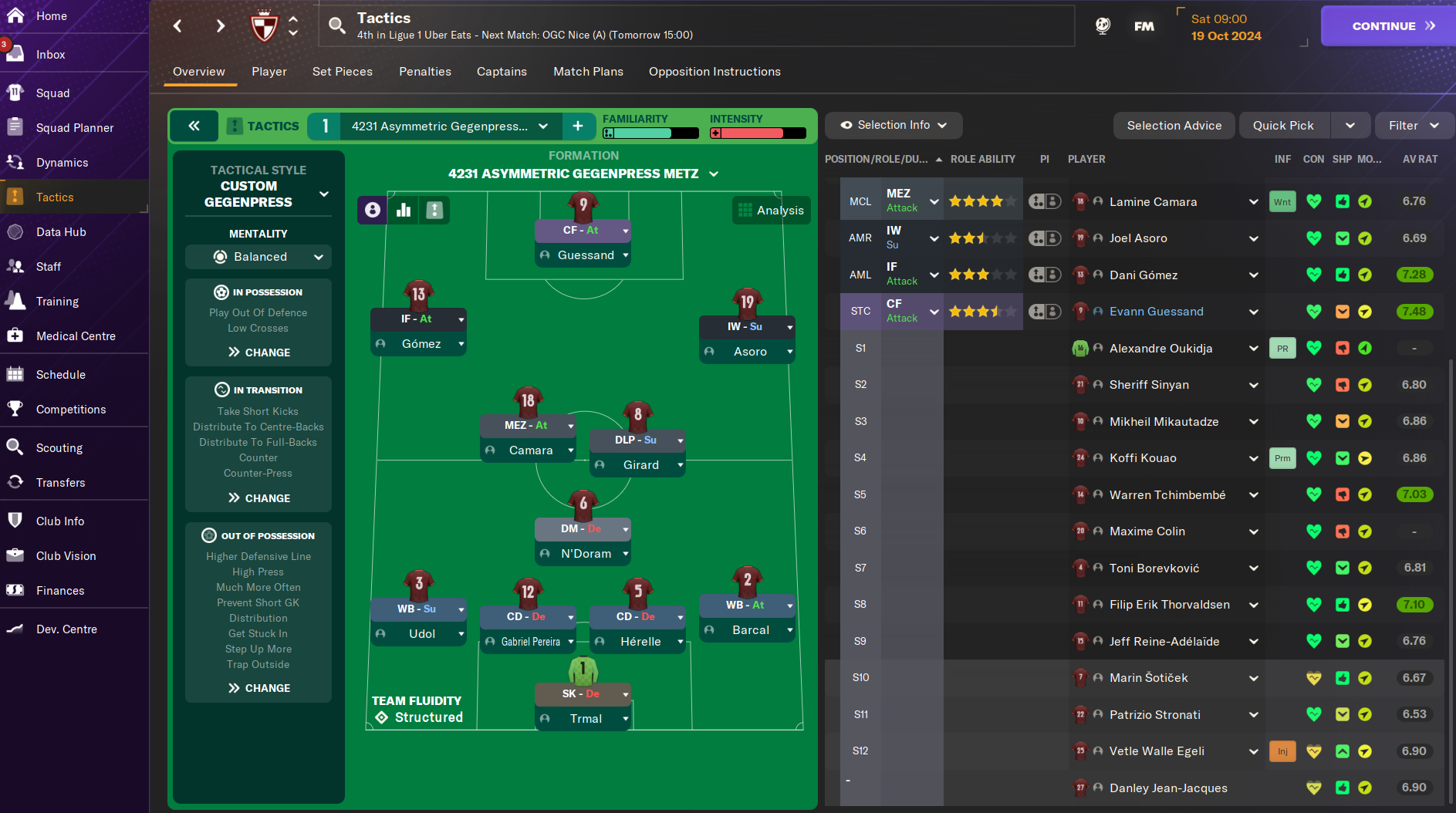
Formation:4-2-3-1 Wide
Team Fluidity:Muito Fluida
In Possession
Passes Mais Curtos
Jogar a Partir da Defesa
Focar o Jogo pela Esquerda
Ritmo Mais Alto
In Transition
Distribuir Rapidamente Contra-Atacar
Contra-Pressão
Out of Possession
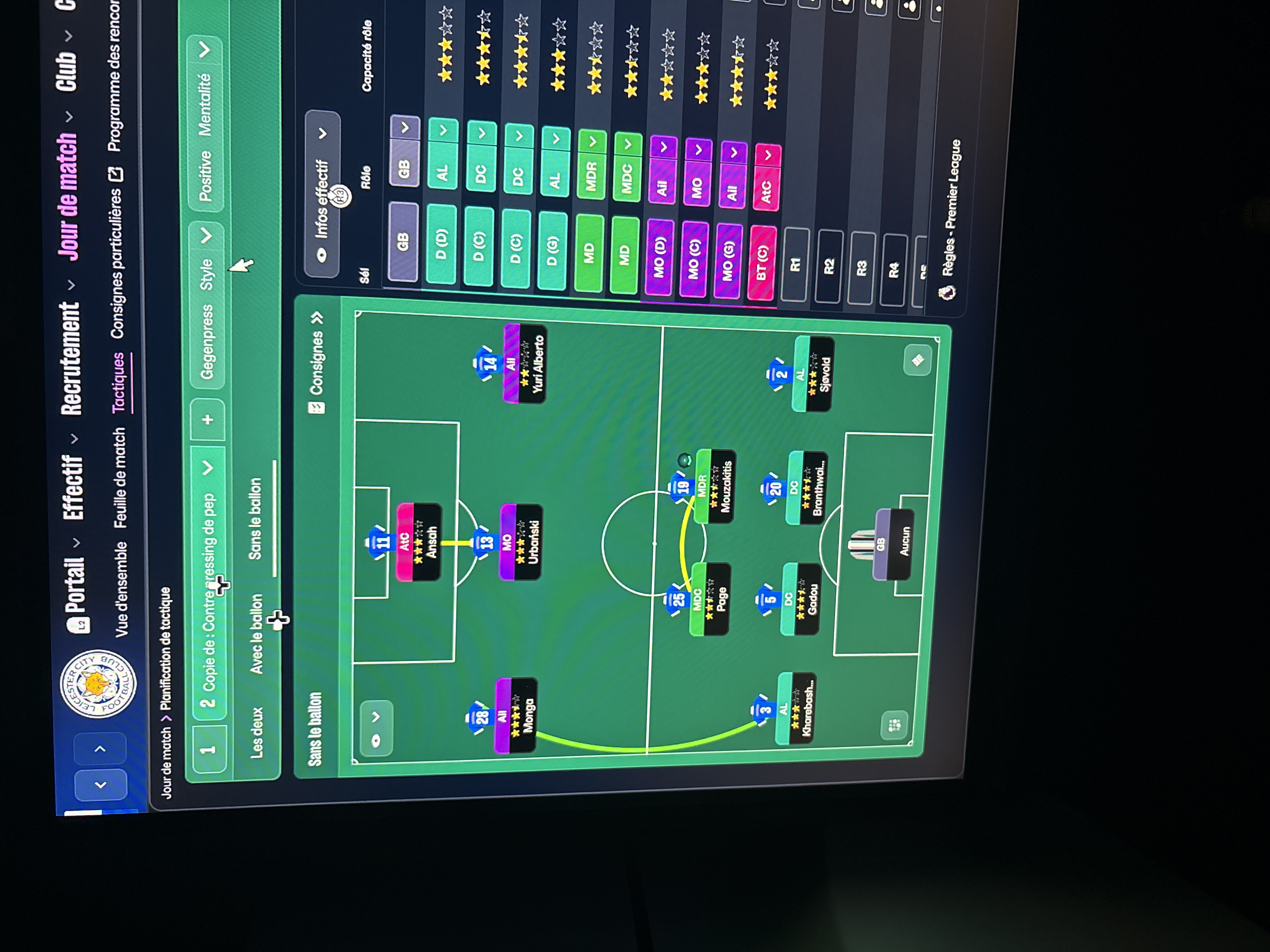
Linha Defensiva Mais Alta
Pressão Alta
Desarme Agressivo
Subir a Linha Defensiva
Team Shape Without Ball
Shape:High Block
Description:Defensive line retains a high position, compressing the space for opposition attacks.
Evidence:Defensive instructions include 'Linha Defensiva Mais Alta' and 'Desarme Agressivo'.
Team Shape With Ball
Shape:Fluid Build-Up
Description:Quick transitions and attacking runs from the wingers and forward.
Evidence:Instructions like 'Jogar a Partir da Defesa' and 'Focar o Jogo pela Esquerda' support dynamic play.
Phase Description
Attacking Play
Use quick, short passes and switch the play to exploit the flanks with wingers.
Defensive Transition
Immediately press opponents to regain possession and disrupt their play.
Main Focus
Create width through the wingers while maintaining a strong central presence.
Key Strengths
Fluid Winger Play
The wingers are able to create chances by cutting inside or crossing.
High Pressing
Effective pressing can stifle opposition build-up.
Pivotal Midfield Control
The double pivot allows for ball retention and distribution.
Conflicting Directions
Risk of Overcommitment
High defensive line may leave space behind for counter-attacks.
Dependence on Wingers
Over-reliance on wingers can lead to predictability in attack.
Vulnerability During Transition
The team can be exposed during transitions if possession is lost.
Tactical Suggestions
Rotate Wing Play
Encourage the use of the opposite flank to avoid predictability.
Introduce a Deeper CM Option
Consider a deeper playmaker to help control the midfield when possession is lost.
Adjust Defensive Depth
Evaluate if a moderate depth can provide more stability against counters.
Ask Questions About Your Lineup
Related Tactics
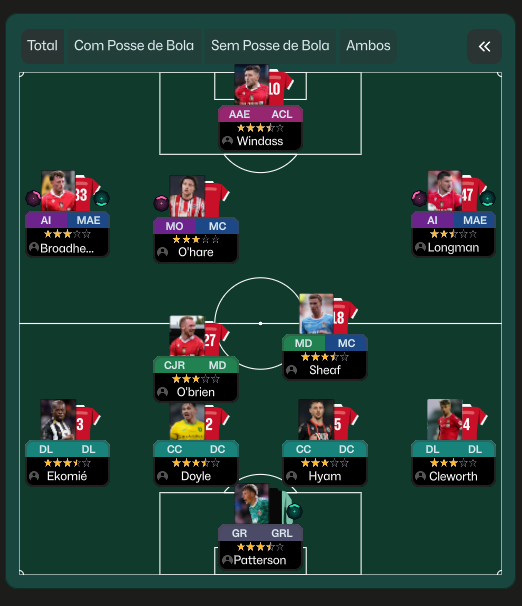
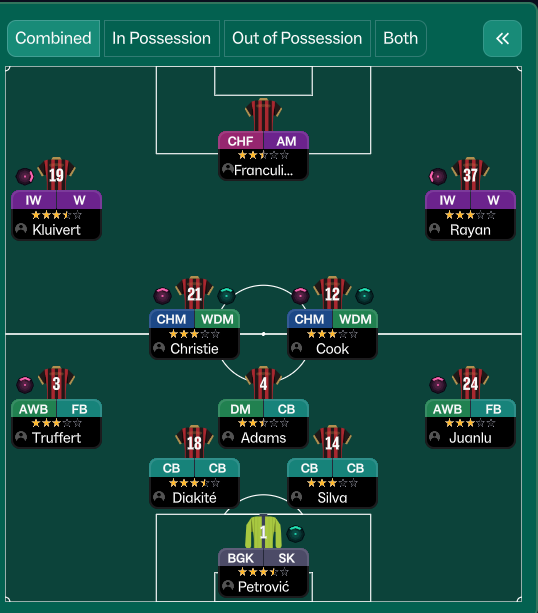
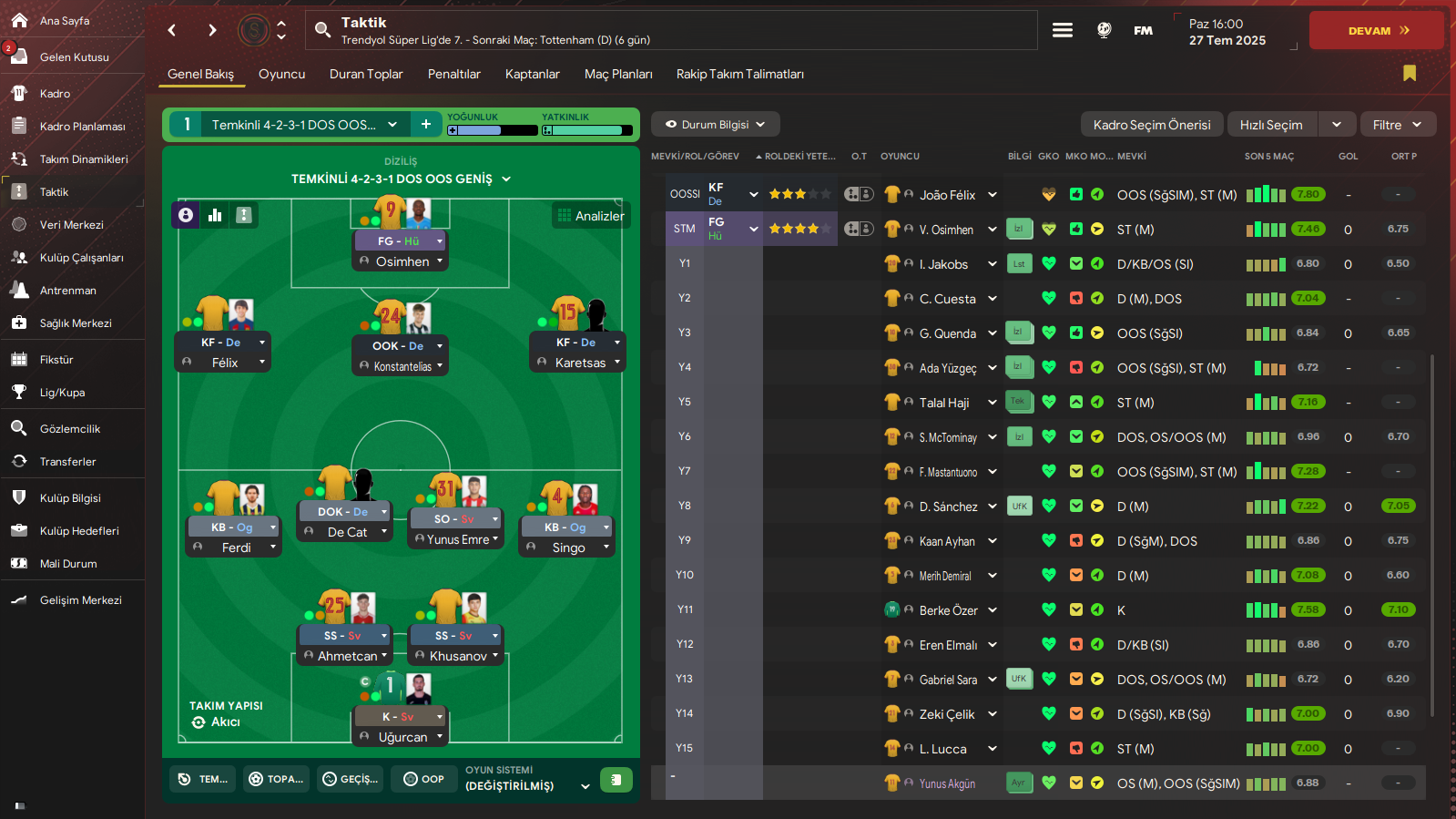

More Custom Gegenpress tactics
Guides for this formation
The tactical theory behind the 4-2-3-1 Wide: roles, instructions, and the trade-offs that decide whether the system holds up.
Player pairings
Midfield Pairs in 4-2-3-1 and 4-4-2
Double pivots and flat pairs in 4-2-3-1 and 4-4-2: when each pairing works, when it collapses, and the AMC unicorn that rescues both.
Read guide
Playing styles
Gegenpressing: A Full Guide
Klopp-style gegenpressing in FM, including squad profile, line-and-press pairing, sustainable workload, and the antipatterns to avoid.
Read guide