Uploaded Tactic
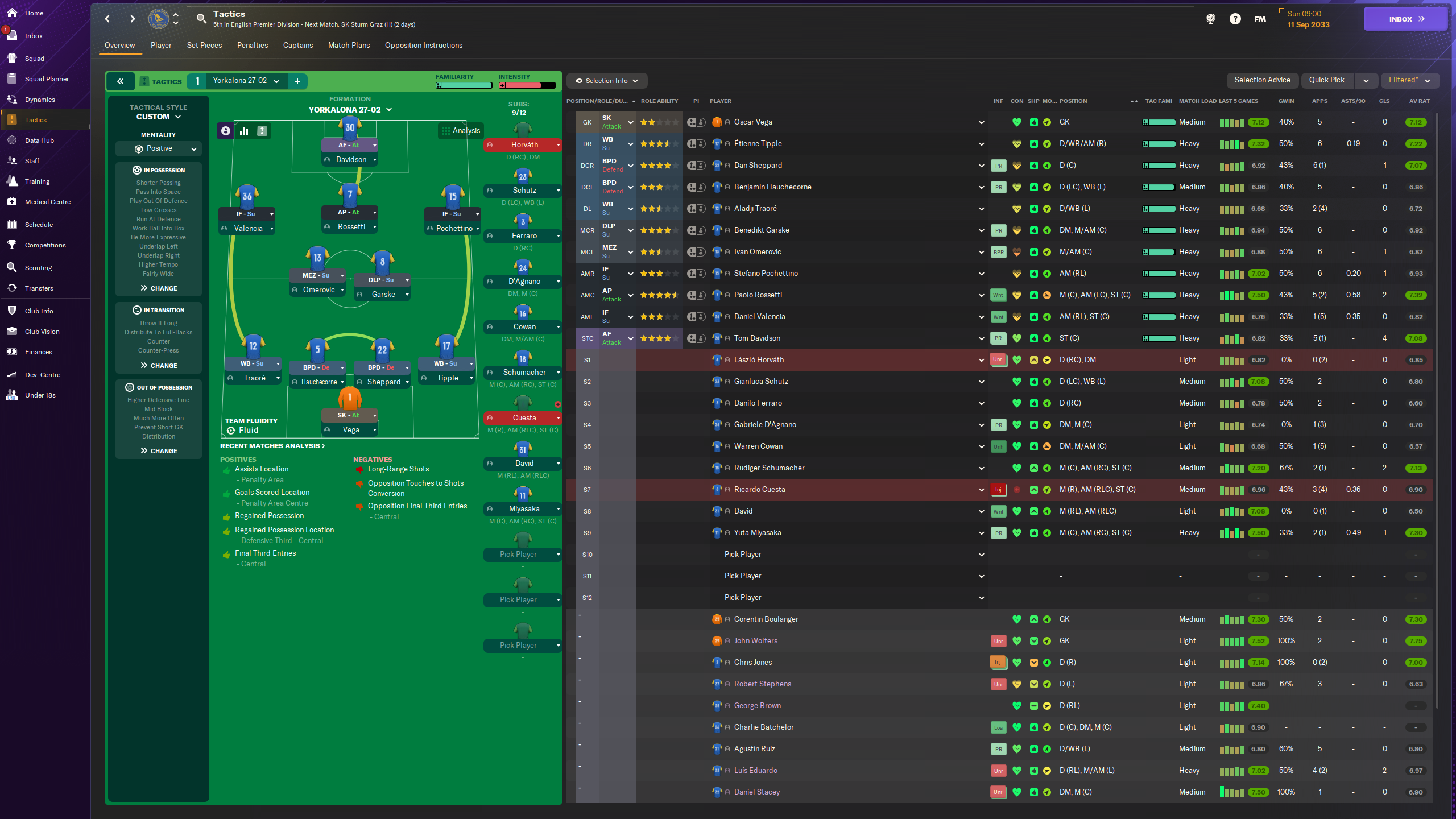
Formation & Style
Tactical Style:Custom
Mentality:Positive
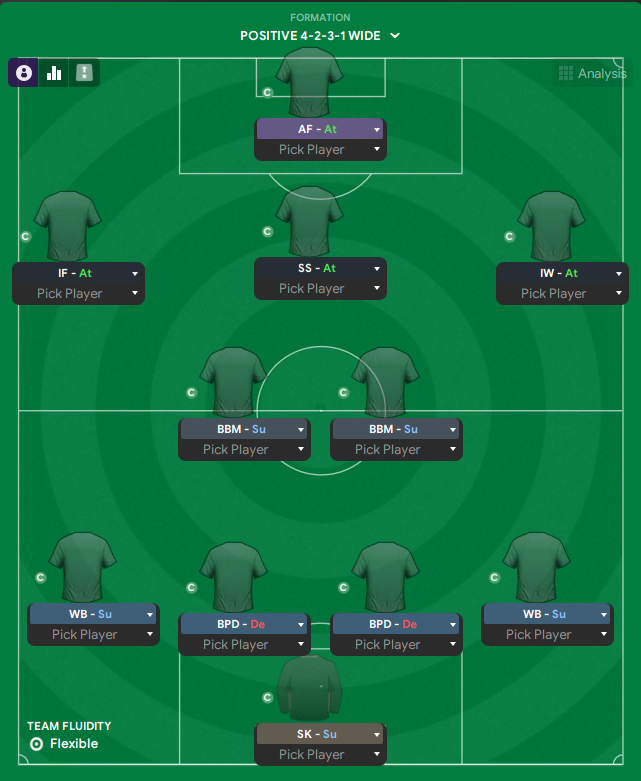
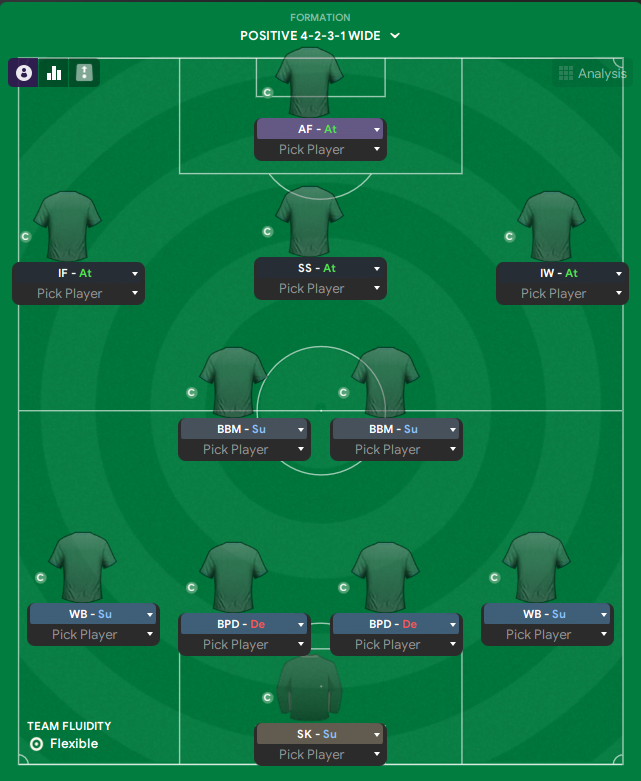
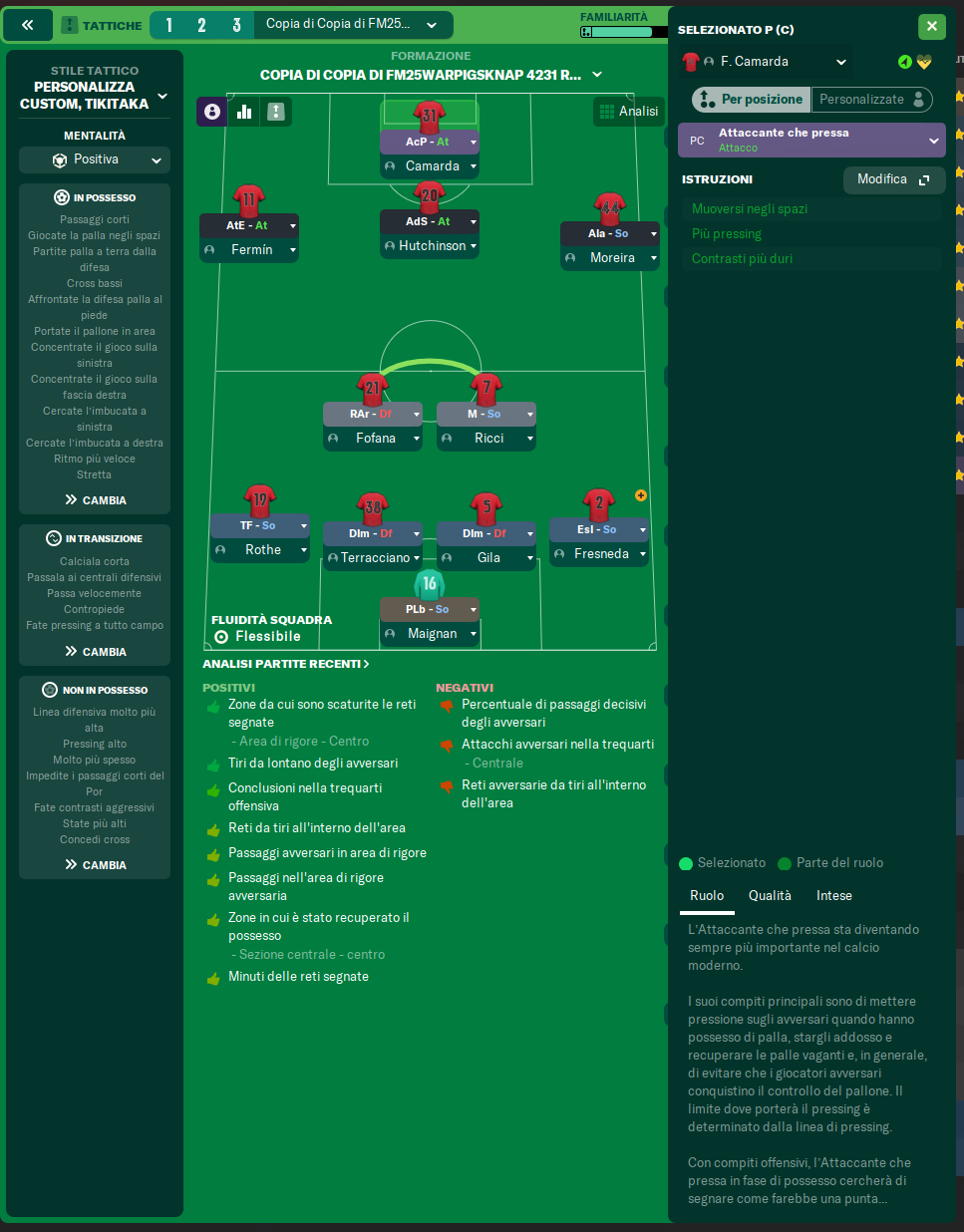
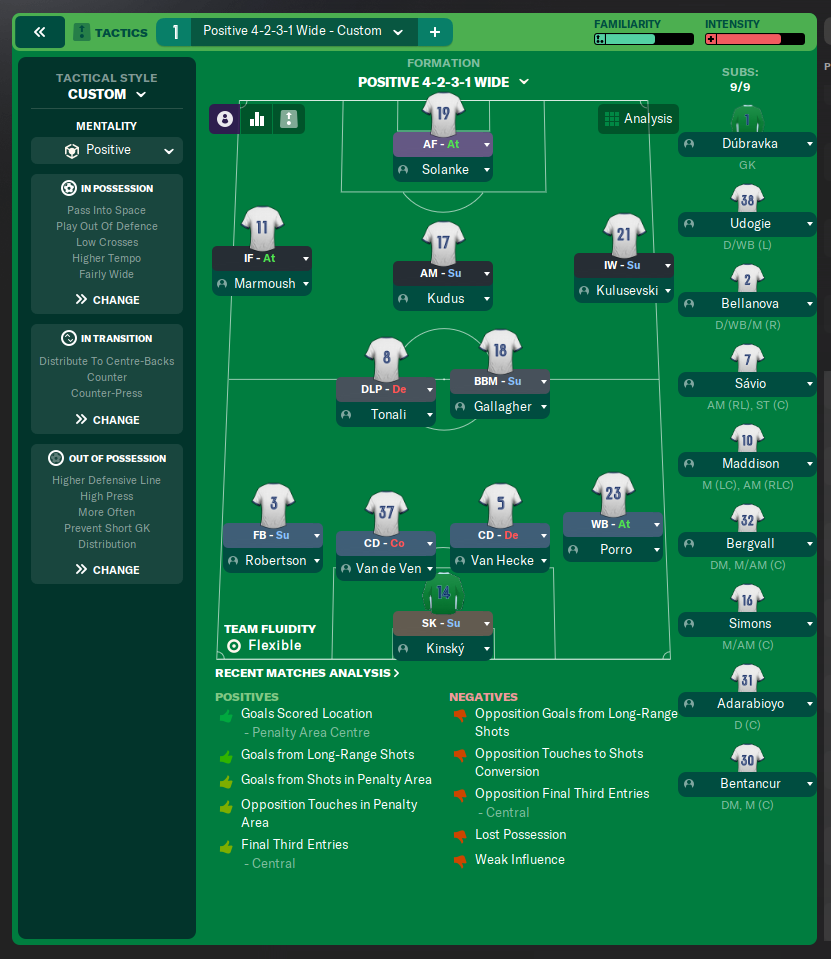
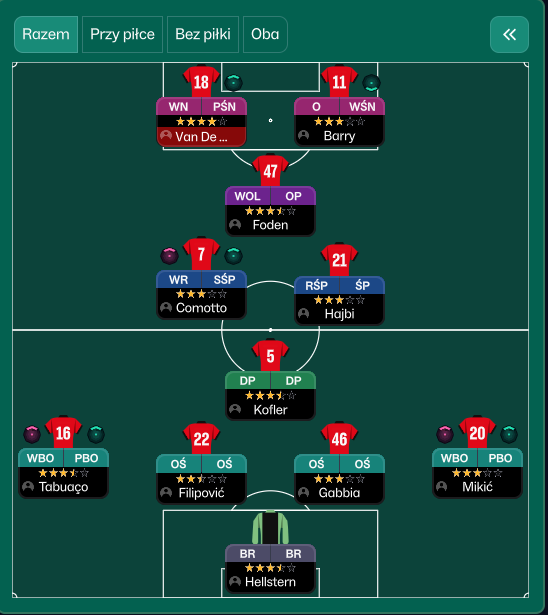
Formation:4-2-3-1 Wide
Team Fluidity:Fluid
In Possession
Higher Tempo
Play Out Of Defence
Focus Play Down Both Flanks
Work Ball Into Box
In Transition
Counter
Distribute To Full-Backs
Counter-Press
Out of Possession
Higher Defensive Line
Much More Often Prevent Short GK Distribution
Team Shape Without Ball
Shape:Compact
Description:The team stays compact, limiting space for the opposition while ensuring layers in defense.
Evidence:Higher Defensive Line plus Counter-Press means maintaining structure as opposition transitions.
Team Shape With Ball
Shape:Fluid with Width
Description:Wing-Backs push high while Inside Forwards cut inside, creating space for the Advanced Forward.
Evidence:Focus Play Down Both Flanks with Wide Roles contributing to fluid attacking patterns.
Phase Description
Attacking Play
Focus on building from the back with ball-playing defenders and transitioning quickly through the midfield.
Defensive Transition
Counters quickly to regain possession, pressing opponents high.
Main Focus
Utilizing width to create chances while maintaining a strong centralized attack.
Key Strengths
Strong Attacking Width
Wing-Backs provide additional width and support, allowing midfielders to exploit spaces.
Solid Midfield Structure
The combination of DLP and Mezzala offers both defensive cover and offensive support.
Fluid Counter-Attacking
Ability to quickly transition from defense to attack, catching opponents off-guard.
Conflicting Directions
Defensive Vulnerability Against Counter-attacks
High defensive line could leave spaces for fast opposition forwards.
Over-Reliance on Wide Play
Heavy focus on wing-play might make the attack predictable.
Limited Central Options
With the Advanced Playmaker, the midfield might lack depth in central areas.
Tactical Suggestions
Adjust Defensive Line
Consider dropping the defensive line to reduce vulnerability to counters.
Incorporate Central Plays
Encourage more central build-up play to complement the width.
Secondary Targets for Set-Pieces
Identify additional players for attacking set-pieces to diversify threats.
Ask Questions About Your Lineup
Related Tactics
Guides for this formation
The tactical theory behind the 4-2-3-1 Wide: roles, instructions, and the trade-offs that decide whether the system holds up.
Player pairings
Midfield Pairs in 4-2-3-1 and 4-4-2
Double pivots and flat pairs in 4-2-3-1 and 4-4-2: when each pairing works, when it collapses, and the AMC unicorn that rescues both.
Read guide
Playing styles
Gegenpressing: A Full Guide
Klopp-style gegenpressing in FM, including squad profile, line-and-press pairing, sustainable workload, and the antipatterns to avoid.
Read guide