Uploaded Tactic
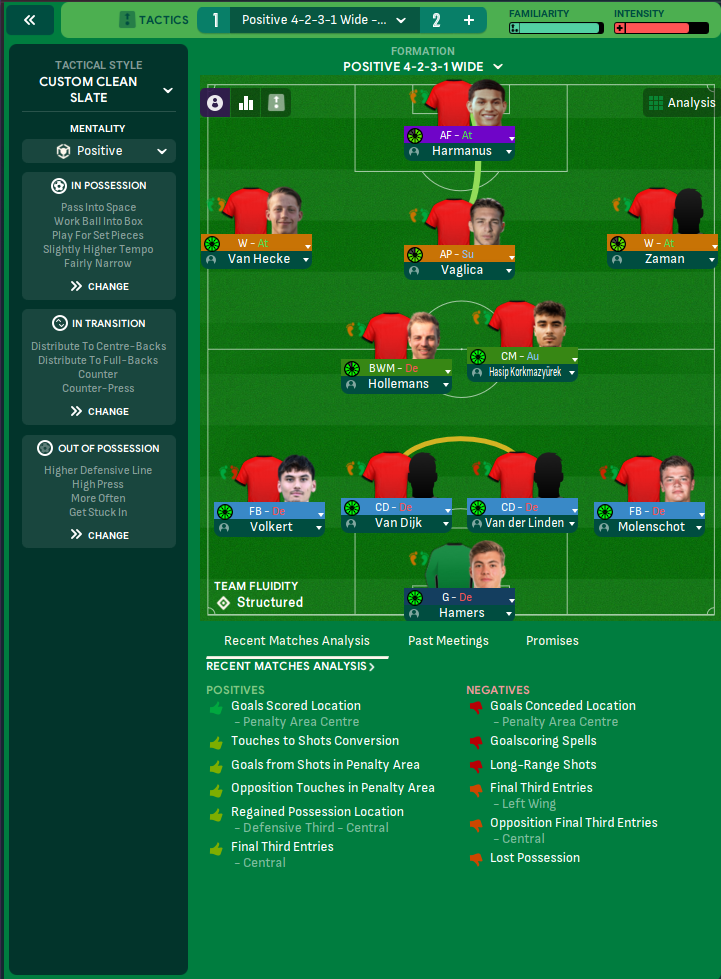
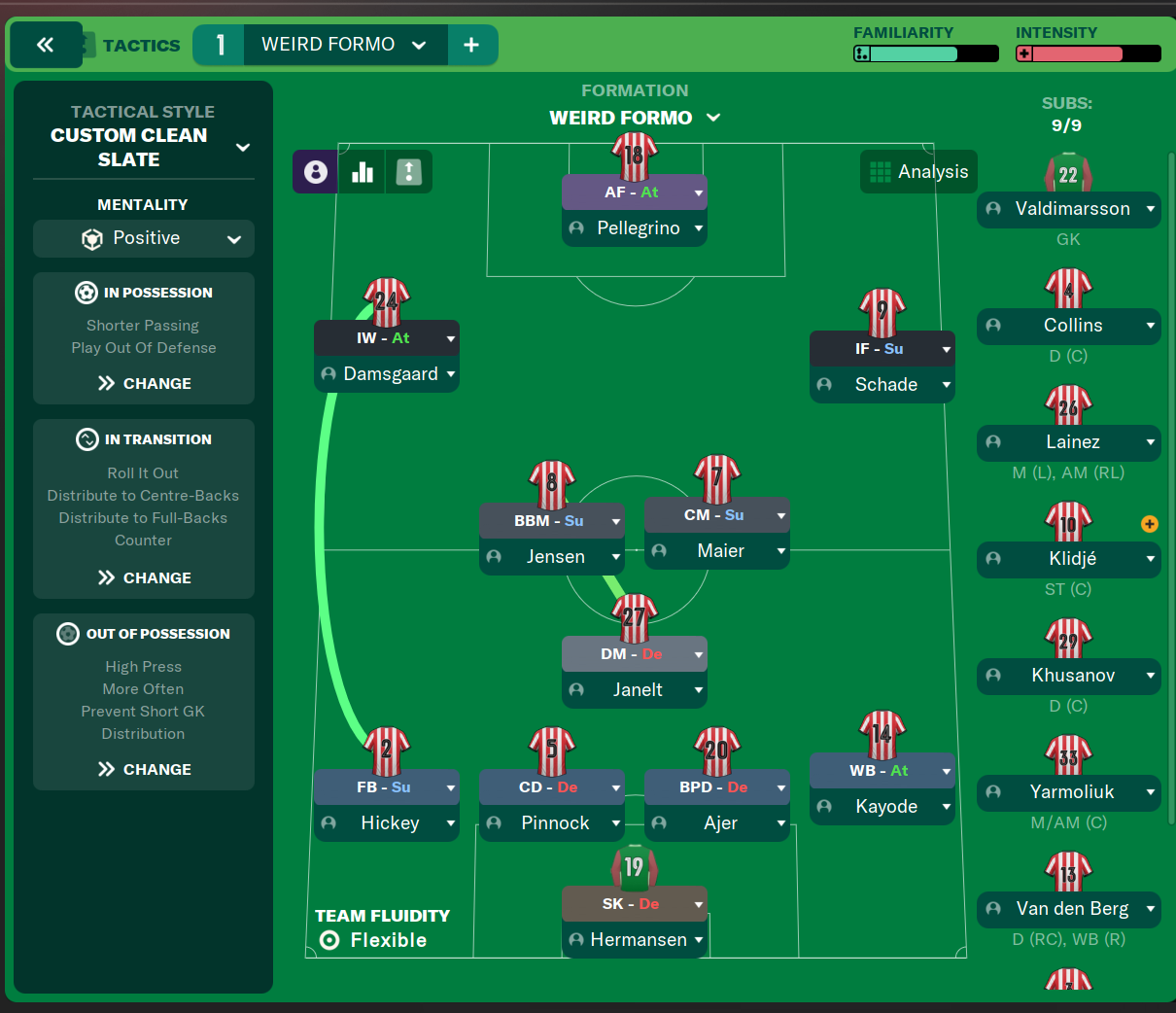
Formation & Style
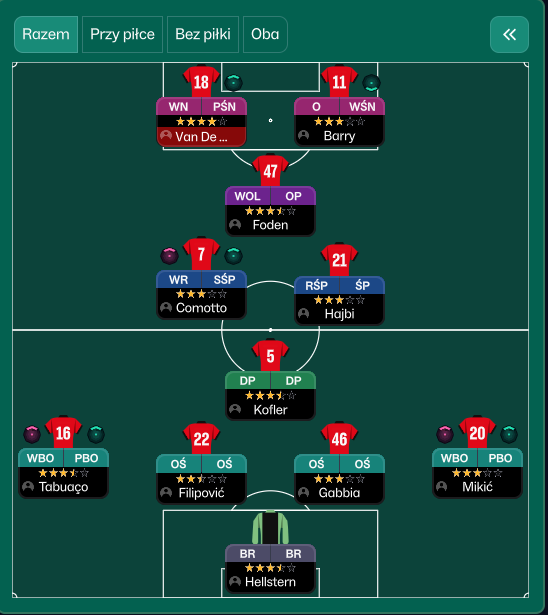
Tactical Style:Custom Clean Slate
Mentality:Positive
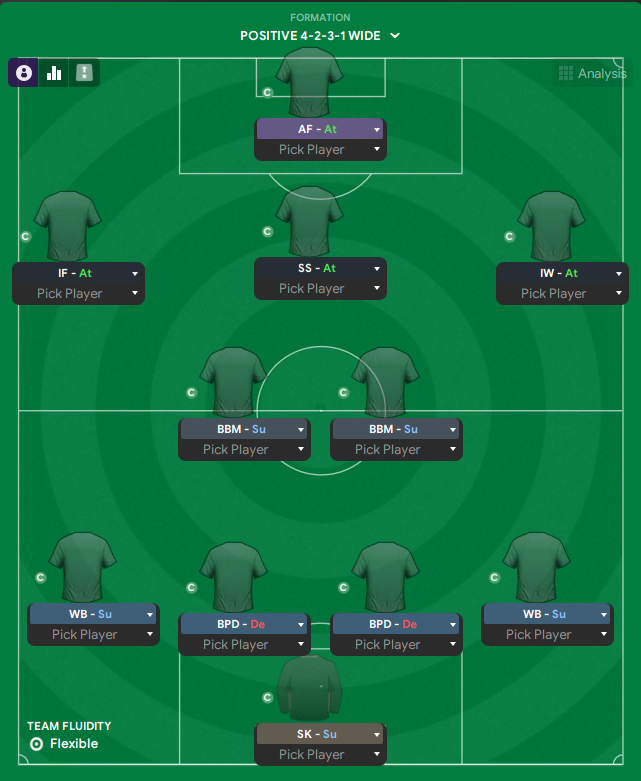
Formation:4-2-3-1 Wide
Team Fluidity:Structured
In Possession
Pass Into Space
Work Ball Into Box
Play For Set Pieces
Slightly Higher Tempo
In Transition
Distribute To Centre-Backs
Distribute To Full-Backs
Counter
Counter-Press
Out of Possession
Higher Defensive Line
High Press
More Often
Get Stuck In
Team Shape Without Ball
No team shape without ball data available
Team Shape With Ball
No team shape with ball data available
Key Strengths
Attacking Width
The 4-2-3-1 Wide formation allows for significant width, creating space for wingers and full-backs to exploit.
Solid Defensive Base
Two central midfielders provide a strong anchor in defense, offering stability against counter-attacks.
Effective Pressing
The high press and higher defensive line can disrupt the opposition's play, forcing mistakes in their half.
Fluid Attack
The Advanced Playmaker and wingers create a dynamic attacking front, with multiple players able to contribute to goal scoring.
Conflicting Directions
Winger Role Conflicts
With both wingers instructed to attack, there may be a lack of balance, leading to an overloaded attacking front and weaker transitions to defense.
Structural Rigidity
A structured team fluidity may hinder creativity and adaptability in open play situations.
High Defensive Line Risks
While suitable for pressing, it can expose backline to quick counter-attackers if the ball is lost.
Short Passing Under Pressure
The reliance on working the ball into the box may not be effective against teams that defend tightly in their third.
Tactical Suggestions
Adjust Winger Duties
Consider changing one winger to a support duty or a more defensive role to enhance balance and provide cover on the counter.
Explore Alternative Fluidity
Experimenting with more fluid settings could enhance creativity and increase attacking transitions.
Consider Deep Lying Playmaker
Adding a Deep Lying Playmaker in the midfield could add more control and distribution options when transitioning from defense to attack.
Allow Full-Backs to Join Attack
Instructing full-backs to attack could stretch the pitch further and create additional overloads in wide areas.
Ask Questions About Your Lineup
Related Tactics
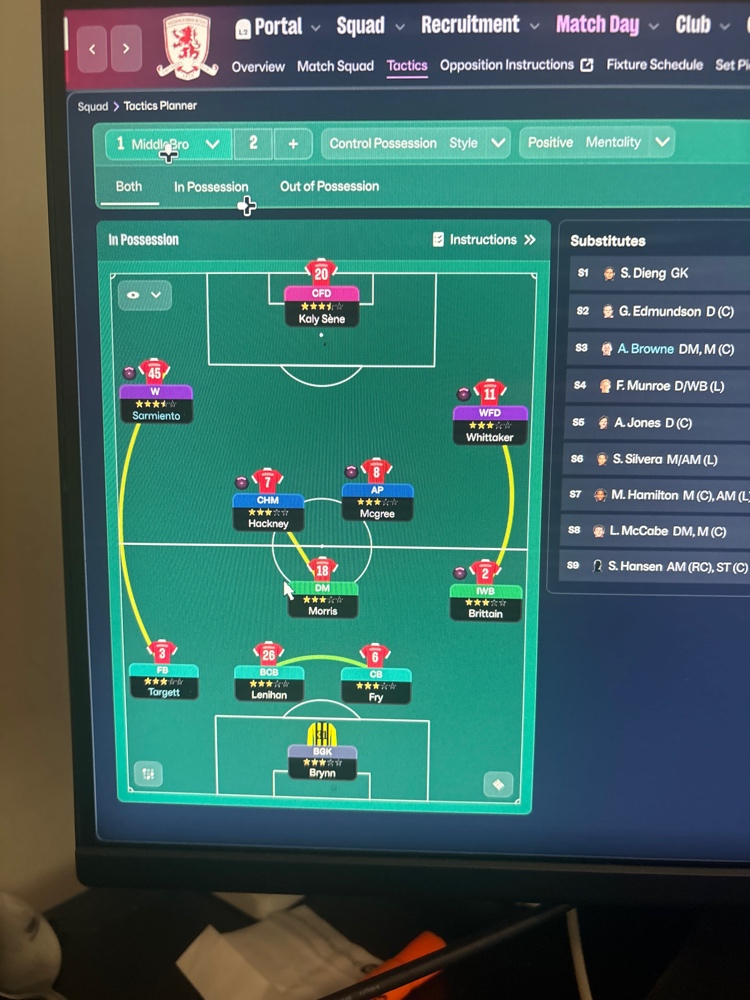
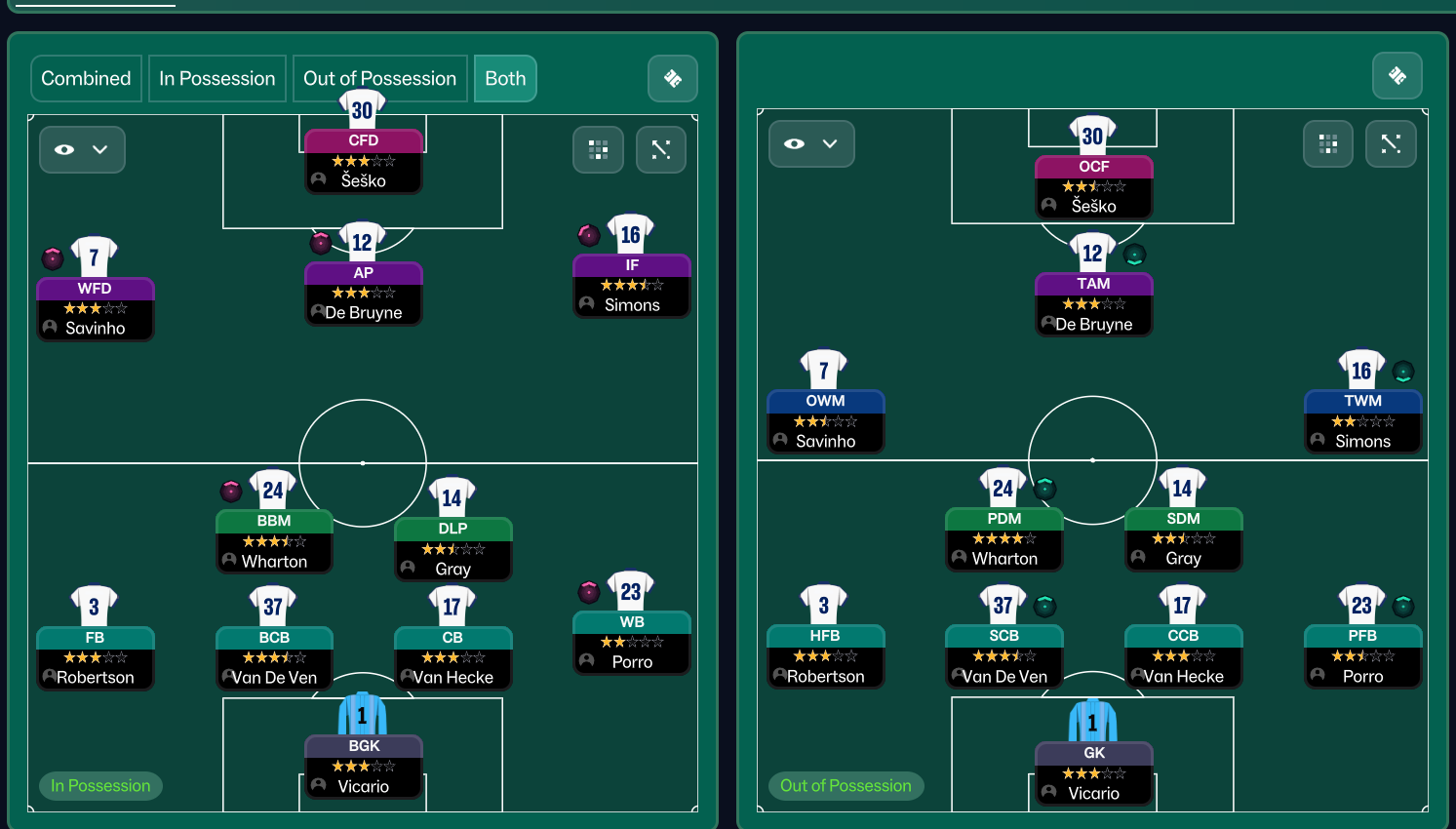
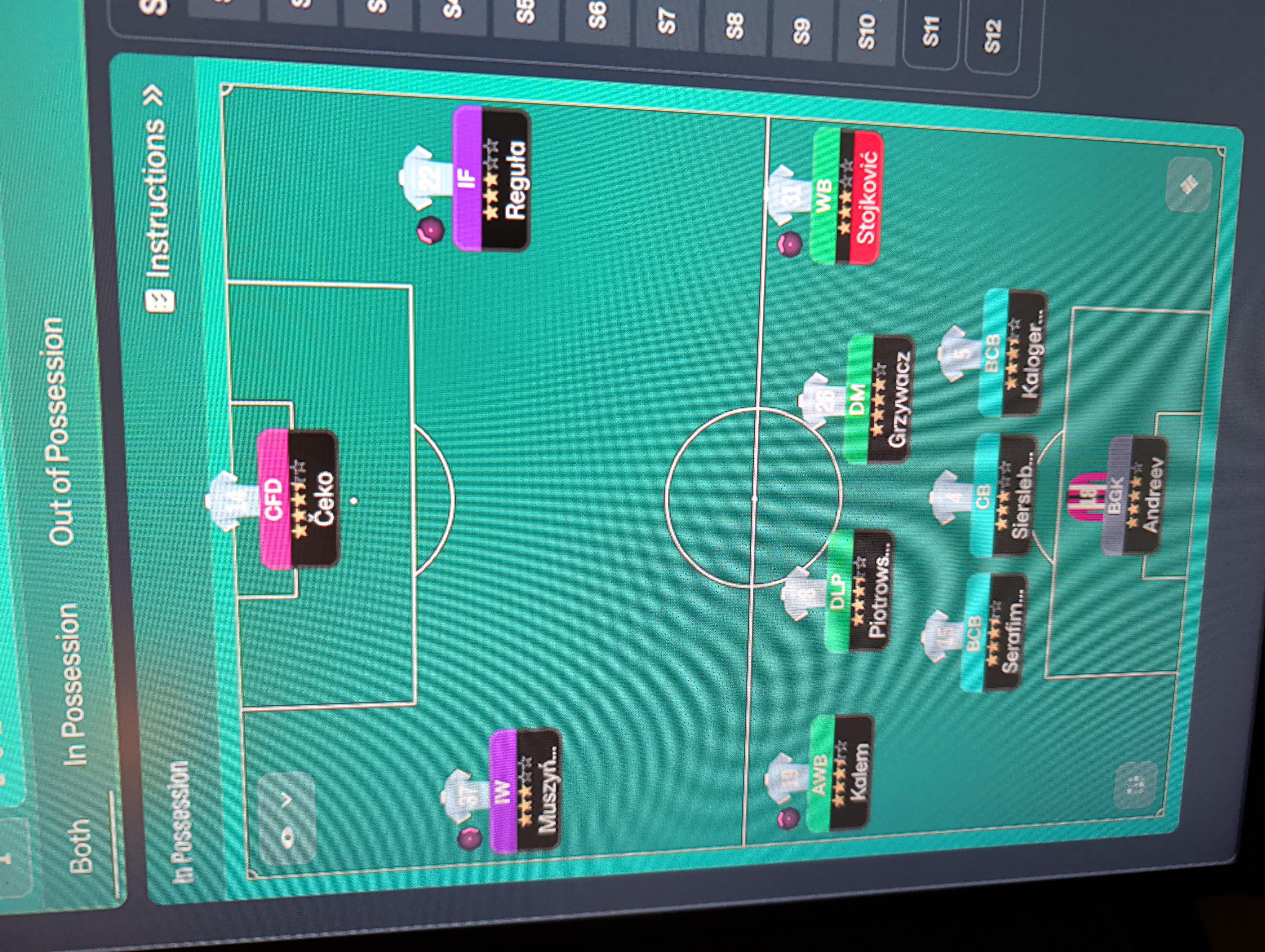
More Custom Clean Slate tactics
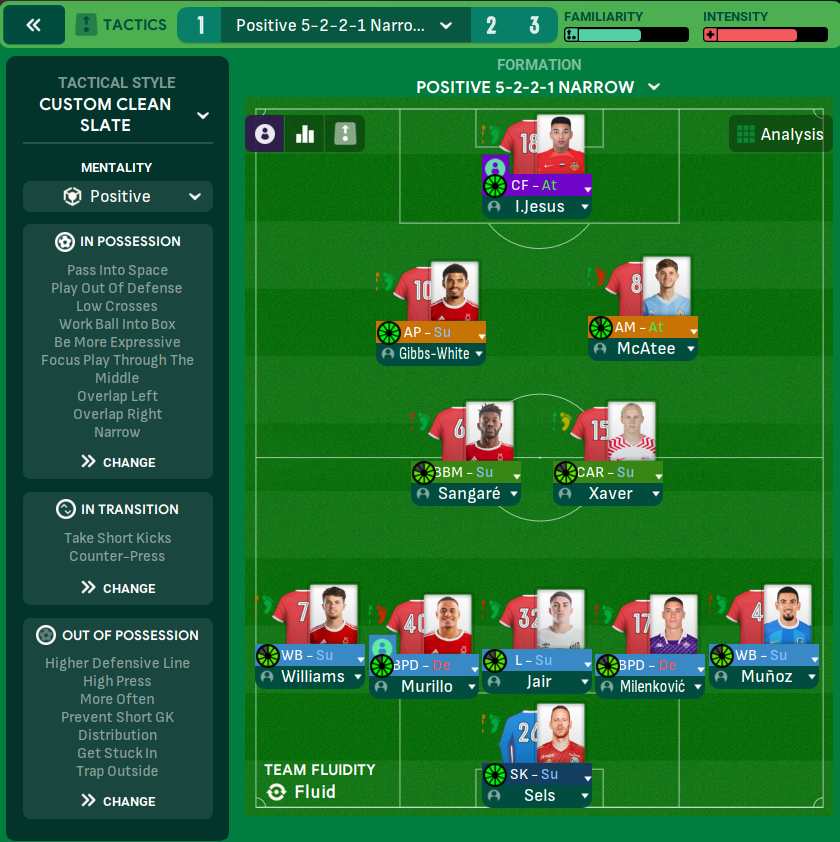
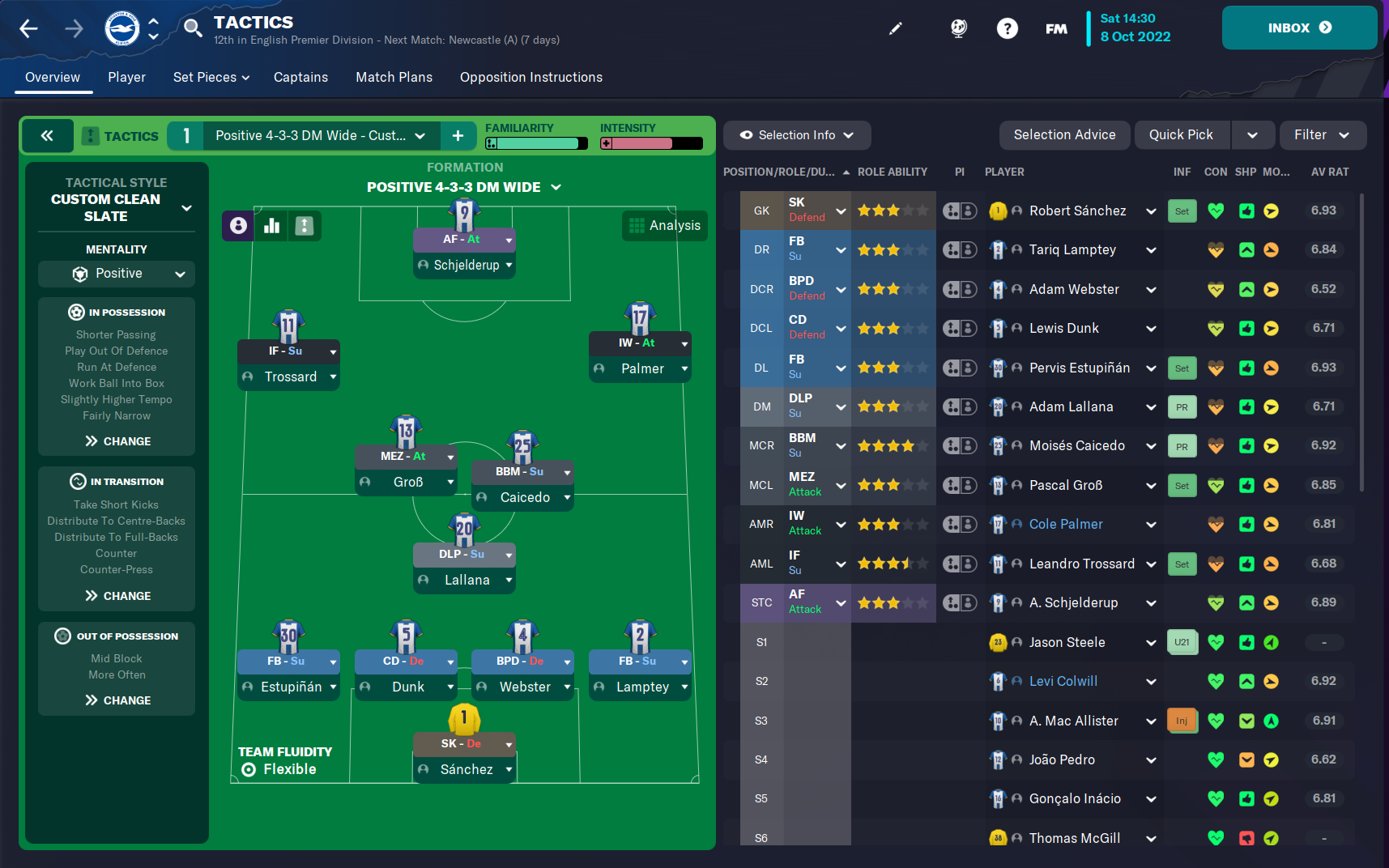
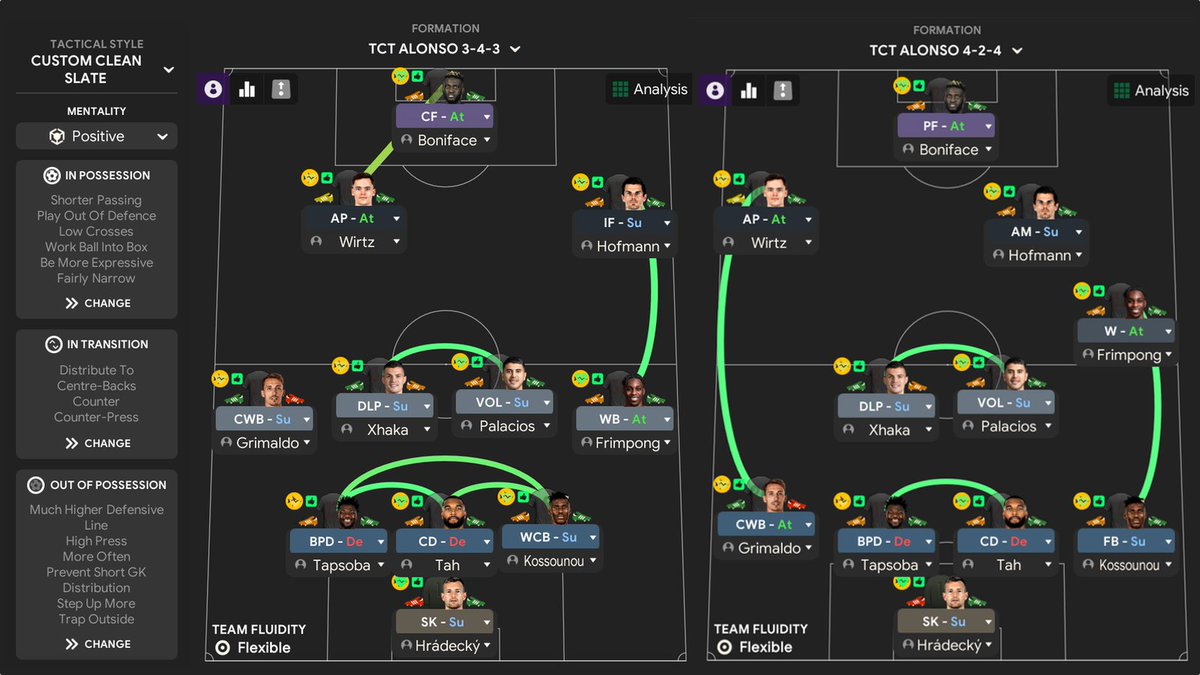
Guides for this formation
The tactical theory behind the 4-2-3-1 Wide: roles, instructions, and the trade-offs that decide whether the system holds up.
Player pairings
Midfield Pairs in 4-2-3-1 and 4-4-2
Double pivots and flat pairs in 4-2-3-1 and 4-4-2: when each pairing works, when it collapses, and the AMC unicorn that rescues both.
Read guide
Playing styles
Gegenpressing: A Full Guide
Klopp-style gegenpressing in FM, including squad profile, line-and-press pairing, sustainable workload, and the antipatterns to avoid.
Read guide