Uploaded Tactic
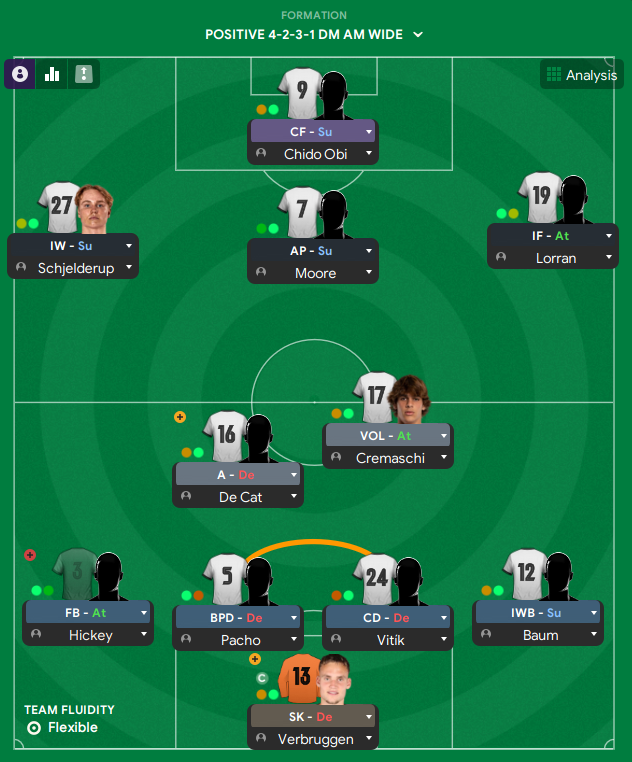
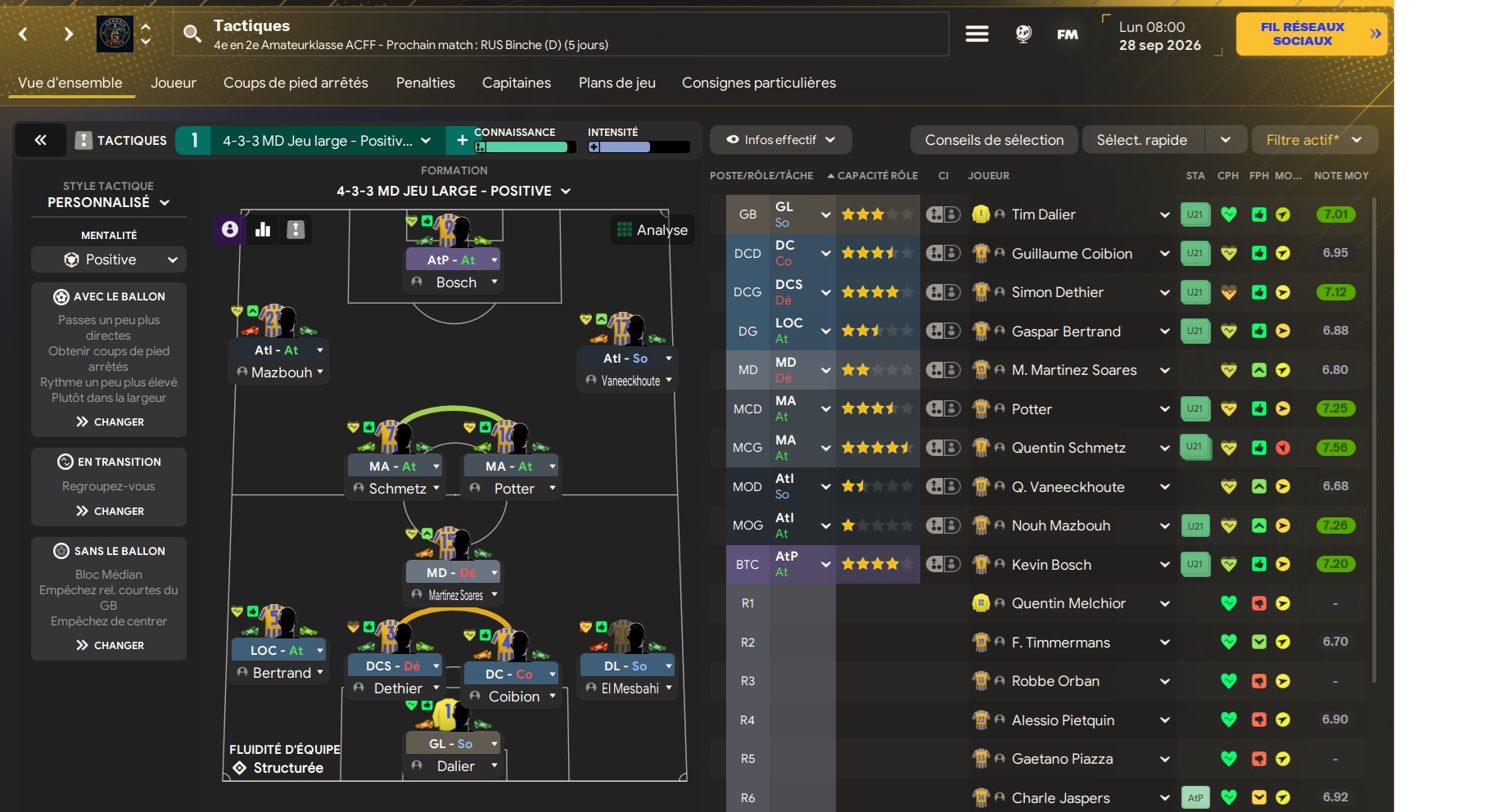
Formation & Style
Tactical Style:Positive
Mentality:Positive
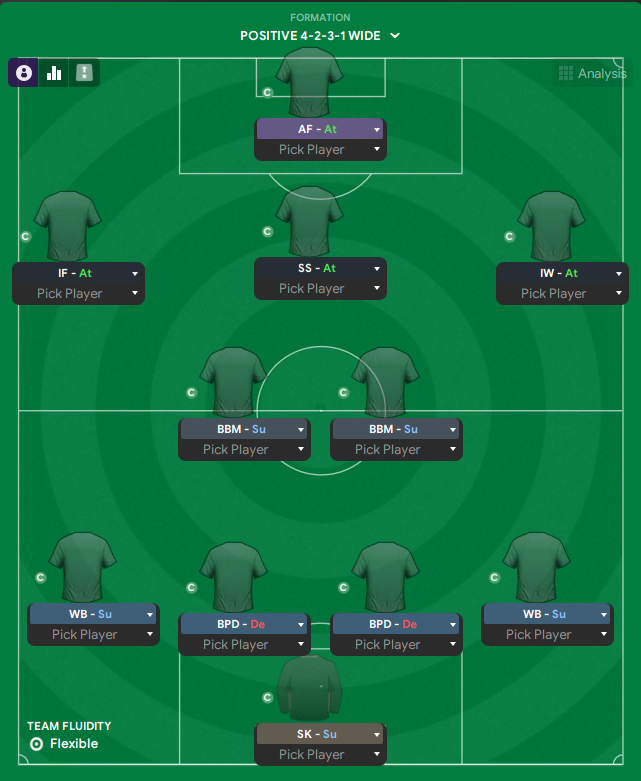
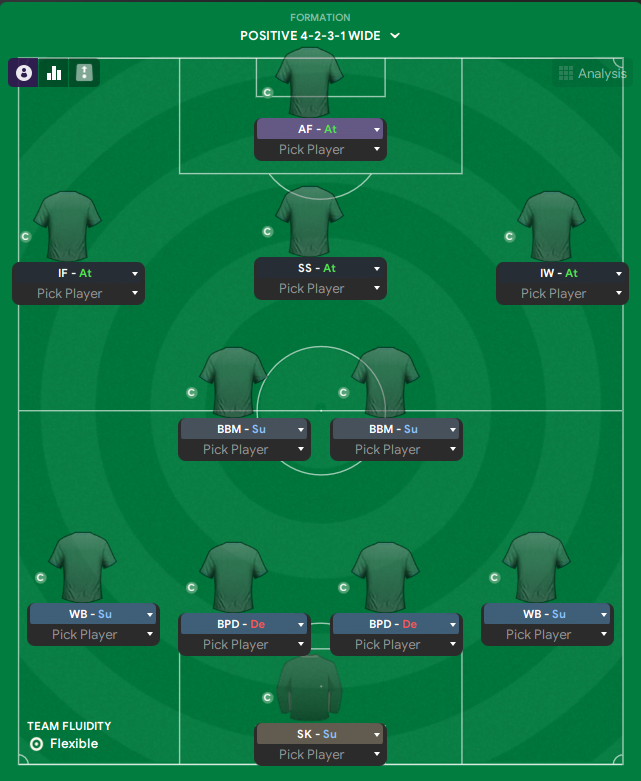
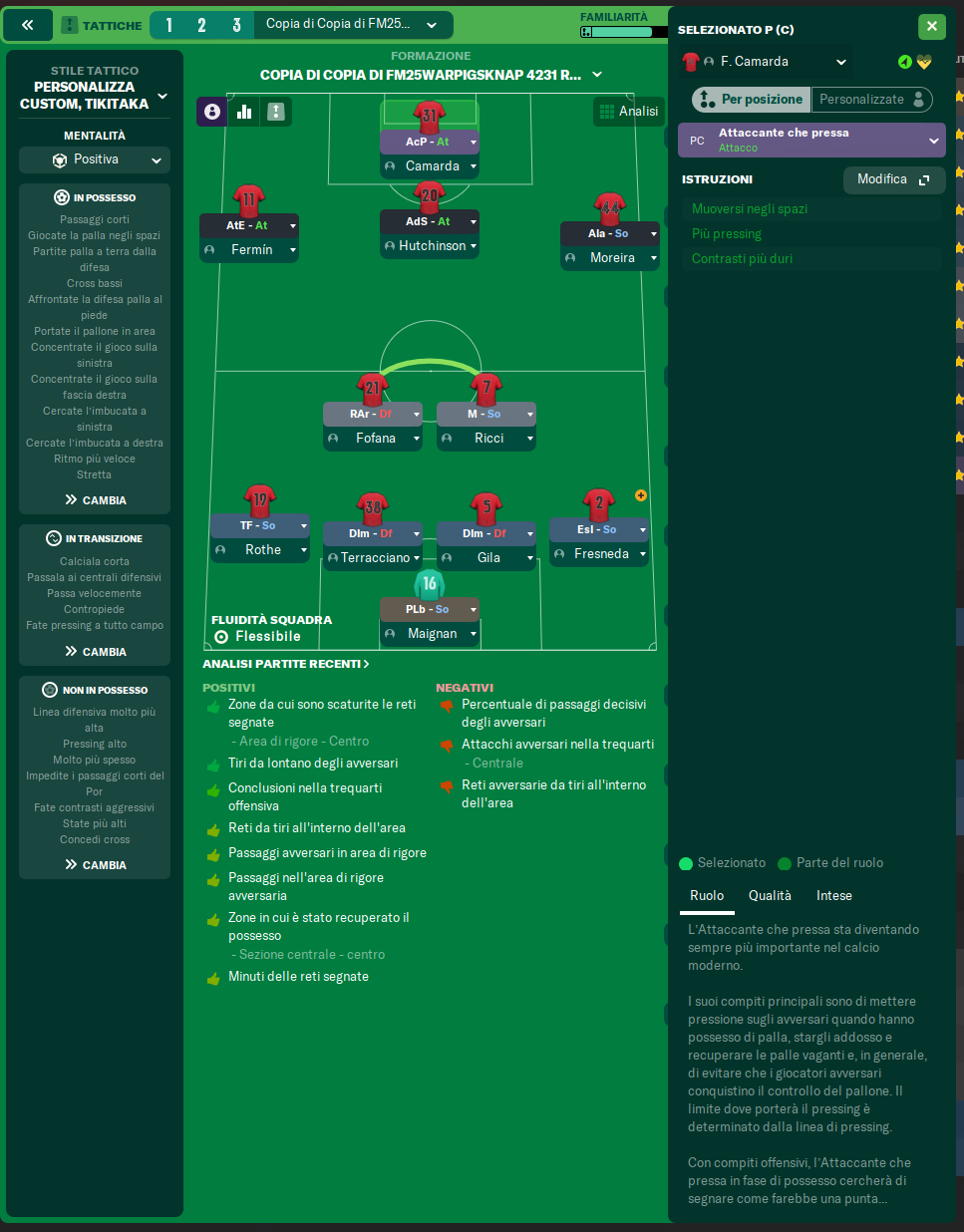
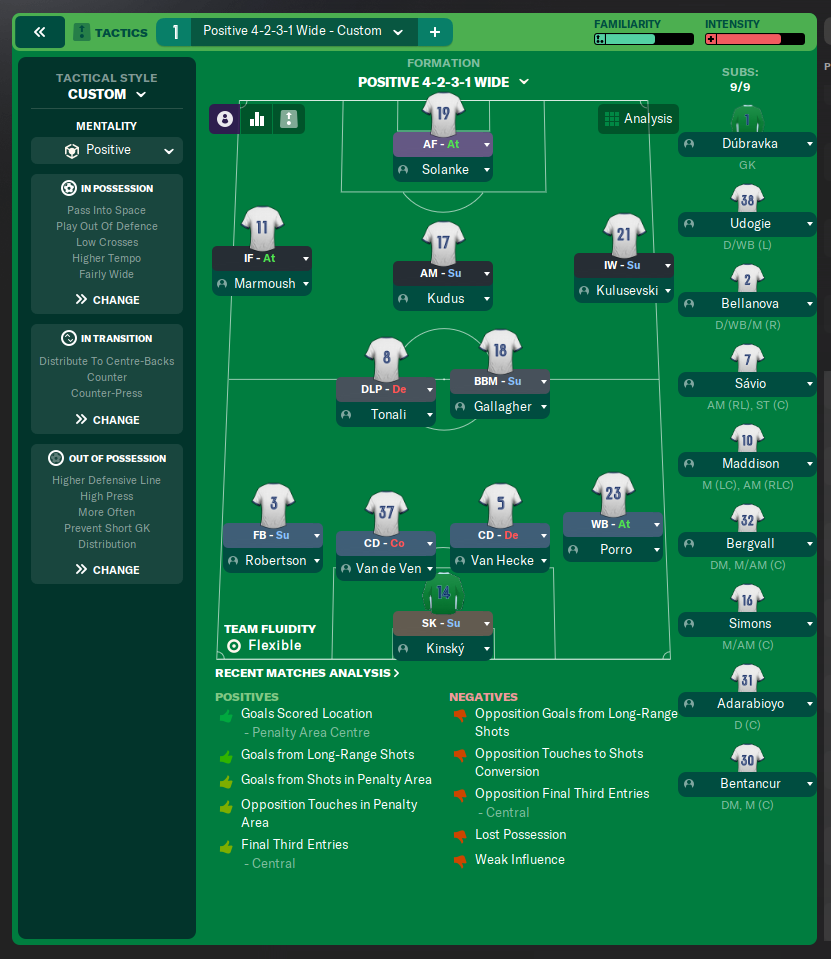
Formation:4-2-3-1 Wide
Team Fluidity:Flexible
In Possession
Play Out Of Defence
Shorter Passing
Work Ball Into Box
Focus Play Down Both Flanks
In Transition
Counter-Press
Counter
Out of Possession
High Defensive Line
More Urgent Pressing
Team Shape Without Ball
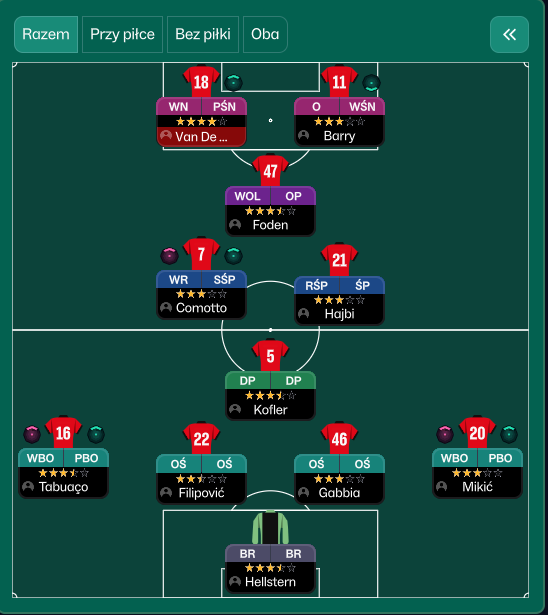
Shape:4-2-3-1
Description:Compact defensive organization with a two-man pivot in front of the defensive line.
Evidence:BPD at [2,2] and DM at [3,3] provide stability.
Team Shape With Ball
Shape:4-3-3
Description:Wide attacking play with inside forwards cutting in from the flanks.
Evidence:IF at [6,1] and [6,5] with AP at [5,3] support movement and goal threat.
Phase Description
Attacking Play
Quick passing and movement through the midfield with focus on utilizing the flanks to create opportunities.
Defensive Transition
Immediate pressing upon losing possession to recover the ball quickly.
Main Focus
Utilizing width with inside forwards and full-backs to create overlapping runs and space.
Key Strengths
Attacking Width
Utilization of inside forwards and attacking full-backs creates spaces and mismatches.
Midfield Control
Presence of an anchor and an advanced playmaker allows both defensive coverage and attacking support.
Counter-Attacking Threat
Quick transitions and rapid movement support effective counter-attacking.
Conflicting Directions
Defensive Fragility
High defensive line may expose the back line to pacey counter-attacks.
Overloading Midfield
With three players in the midfield, opponents may find it easier to overload the central areas.
Limited Width from Substitutes
Substitutions may not provide the same attacking width if natural wide players are unavailable.
Tactical Suggestions
Consider Dropping Defensive Line
Adjust the defensive line to avoid being too exposed on the counter.
Utilize a Second Anchor
Adding a second anchoring player could stabilize the midfield against overloads.
Width from Wings
Incorporate wingers or wider options on substitutes for more flexibility.
Ask Questions About Your Lineup
Related Tactics
More Positive tactics
Guides for this formation
The tactical theory behind the 4-2-3-1 Wide: roles, instructions, and the trade-offs that decide whether the system holds up.
Player pairings
Midfield Pairs in 4-2-3-1 and 4-4-2
Double pivots and flat pairs in 4-2-3-1 and 4-4-2: when each pairing works, when it collapses, and the AMC unicorn that rescues both.
Read guide
Playing styles
Gegenpressing: A Full Guide
Klopp-style gegenpressing in FM, including squad profile, line-and-press pairing, sustainable workload, and the antipatterns to avoid.
Read guide