Uploaded Tactic
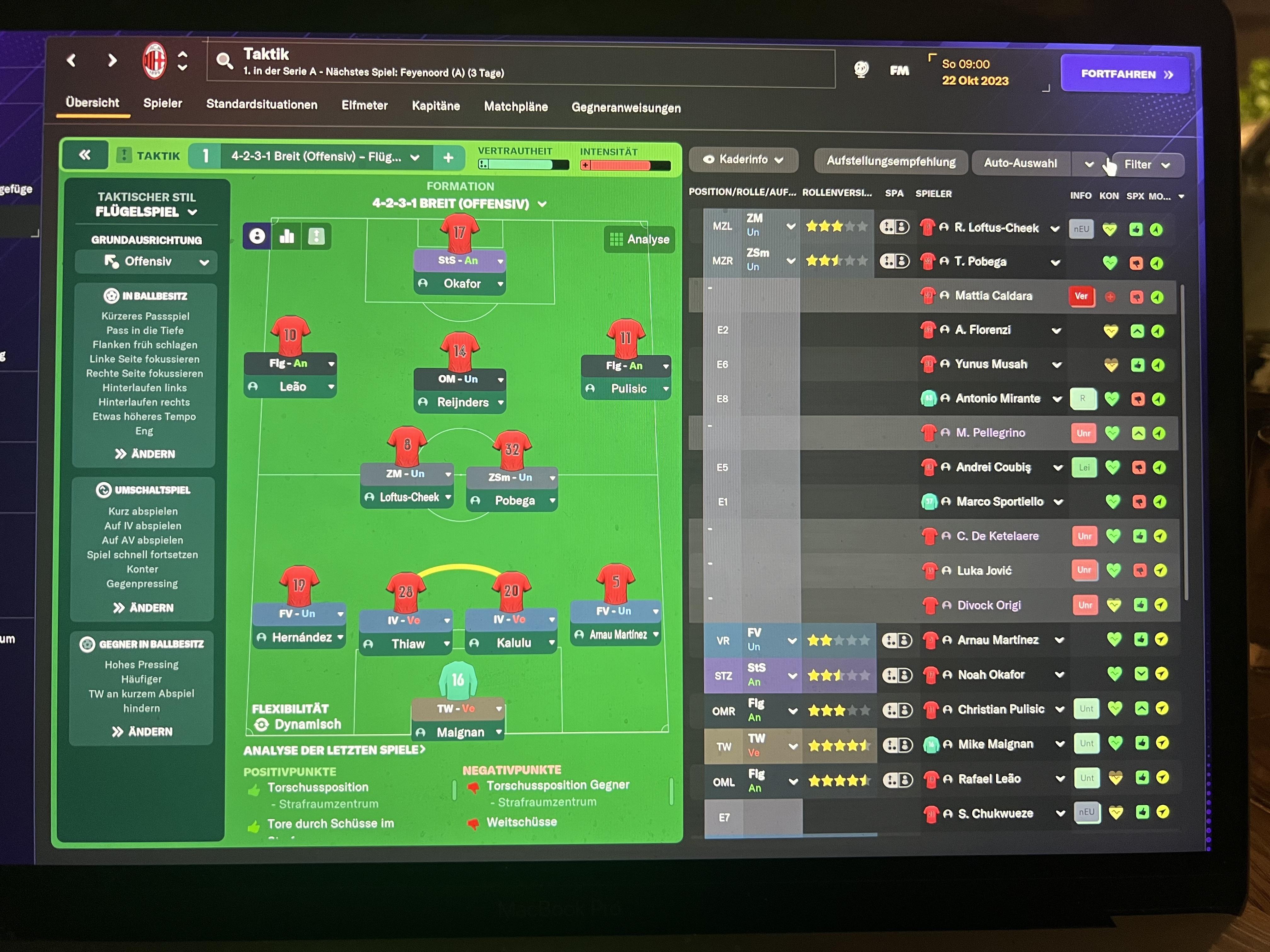
Formation & Style
Tactical Style:Offensiv
Mentality:Attacking
Formation:4-2-3-1 Wide
Team Fluidity:Fluid
In Possession
Kurz abspielen
Pässe in die Tiefe
Flanken früh schlagen
Rechte Seite fokussieren
Hinterlaufen rechts
Etwas höheres Tempo
In Transition
Auf Abspielen
Auf das Ballgewinnen
Konter
Out of Possession
Hohes Pressing
Häufiger TW an kurzer Abspielhindern
Team Shape Without Ball
Shape:4-2-3-1
Description:A structured defensive shape that allows for quick recovery after losing possession.
Evidence:The placement of two defensive midfielders and four defenders creates a solid line.
Team Shape With Ball
Shape:4-2-3-1 Wide
Description:Exploiting wing play with wingers stretching the field and creating space.
Evidence:Wing-forwards in wide roles with attacking duties facilitate wide attacks.
Phase Description
Attacking Play
Play is focused on utilizing width through the wingers, with through balls aimed at the striker and overlapping wing-backs.
Defensive Transition
Quick transition from attack to defense emphasizing high pressing to regain possession quickly.
Main Focus
Creating numerical advantages on the flanks while maintaining a solid structure in the central areas.
Key Strengths
Wide Play
The formation's focus on wingers increases width and stretching the opposition's defense.
Double Pivot Strength
The two ZM roles provide stability in midfield, allowing for ball retention and distribution.
High Pressing
The high pressing, combined with a high defensive line, increases the chance of winning the ball back in advanced positions.
Conflicting Directions
Over-reliance on Flanks
Depending too much on wingers may lead to predictability and lack of central penetration.
Vulnerability to Counterattacks
A high line may expose the defense during counterattacks, particularly if wing-backs advance.
Inexperience in Central Midfield
Younger or less experienced players in ZM roles may struggle in crucial midfield battles.
Tactical Suggestions
Enhance Central Attacking Play
Consider integrating an Advanced Playmaker in the AMC to capitalize on central spaces.
Adjust Defensive Shape
Consider a more compact formation when pressing to limit space for the opposition's counters.
Rotate Winger Positions
Rotating the wingers to create unpredictability and exploit mismatches.
Ask Questions About Your Lineup
Related Tactics
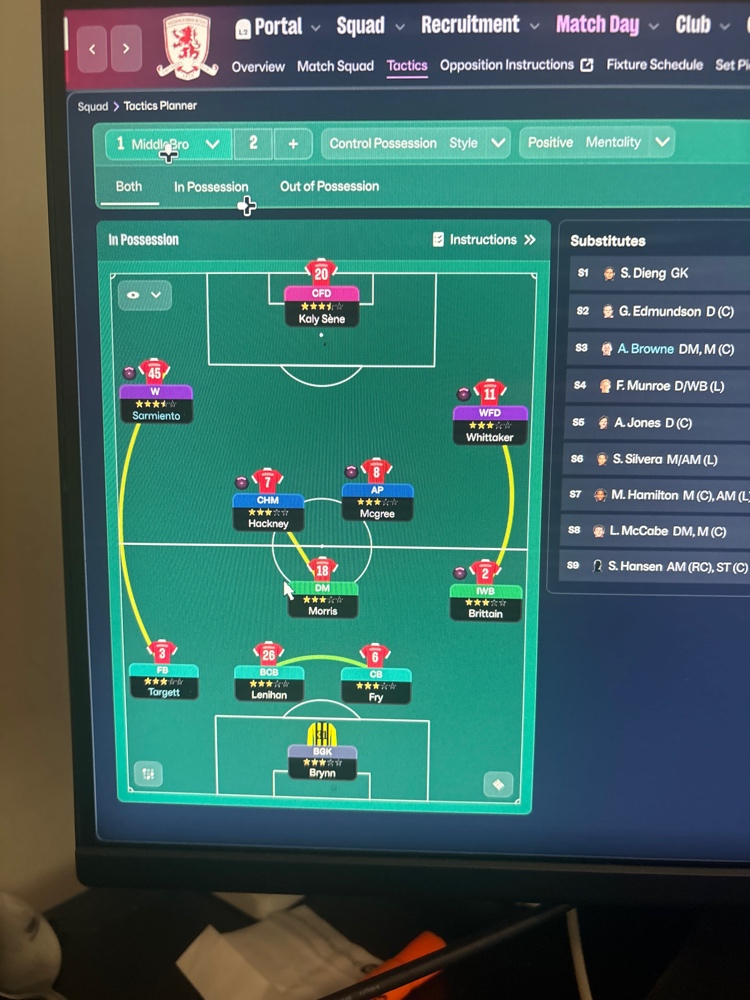
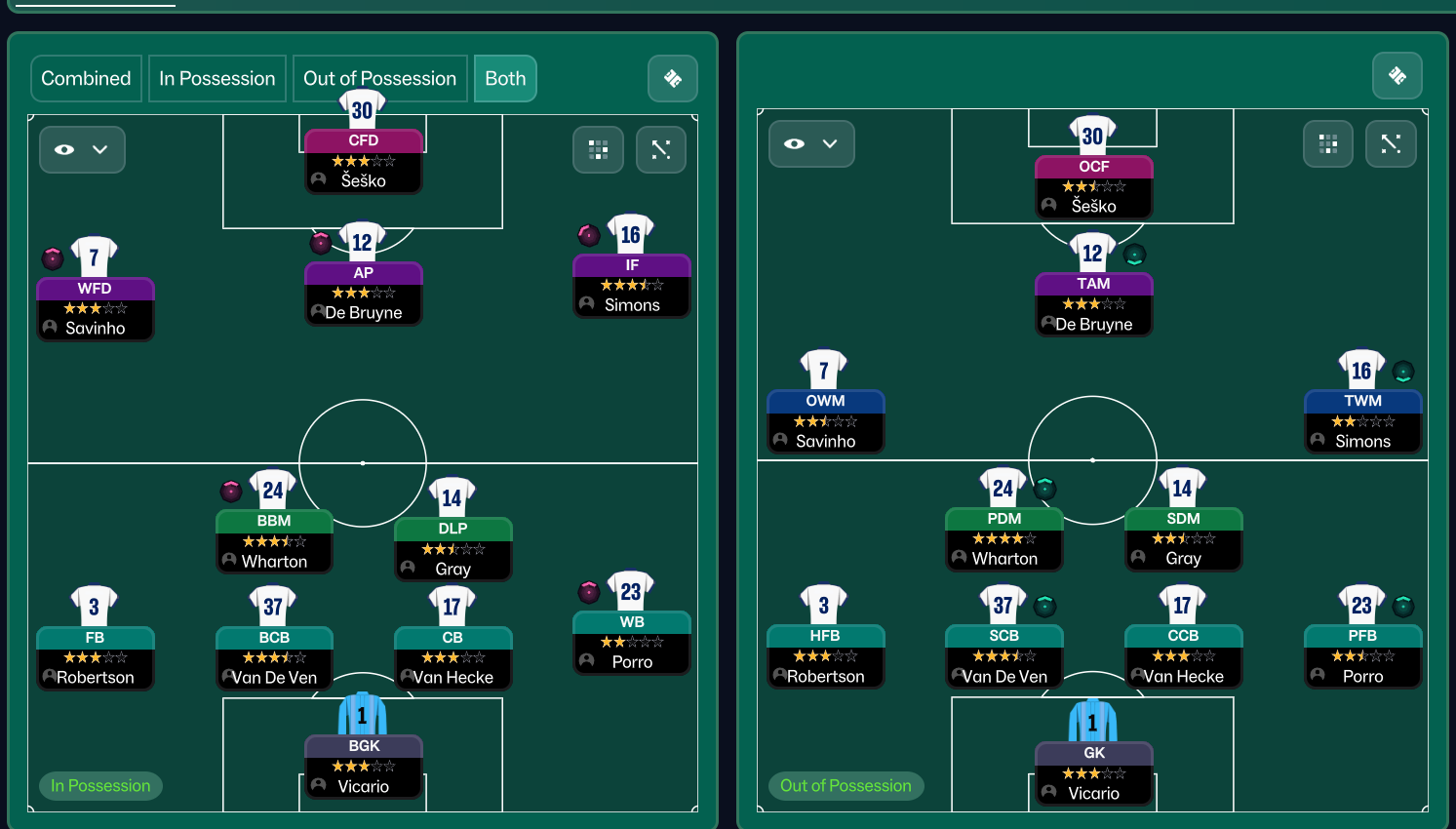
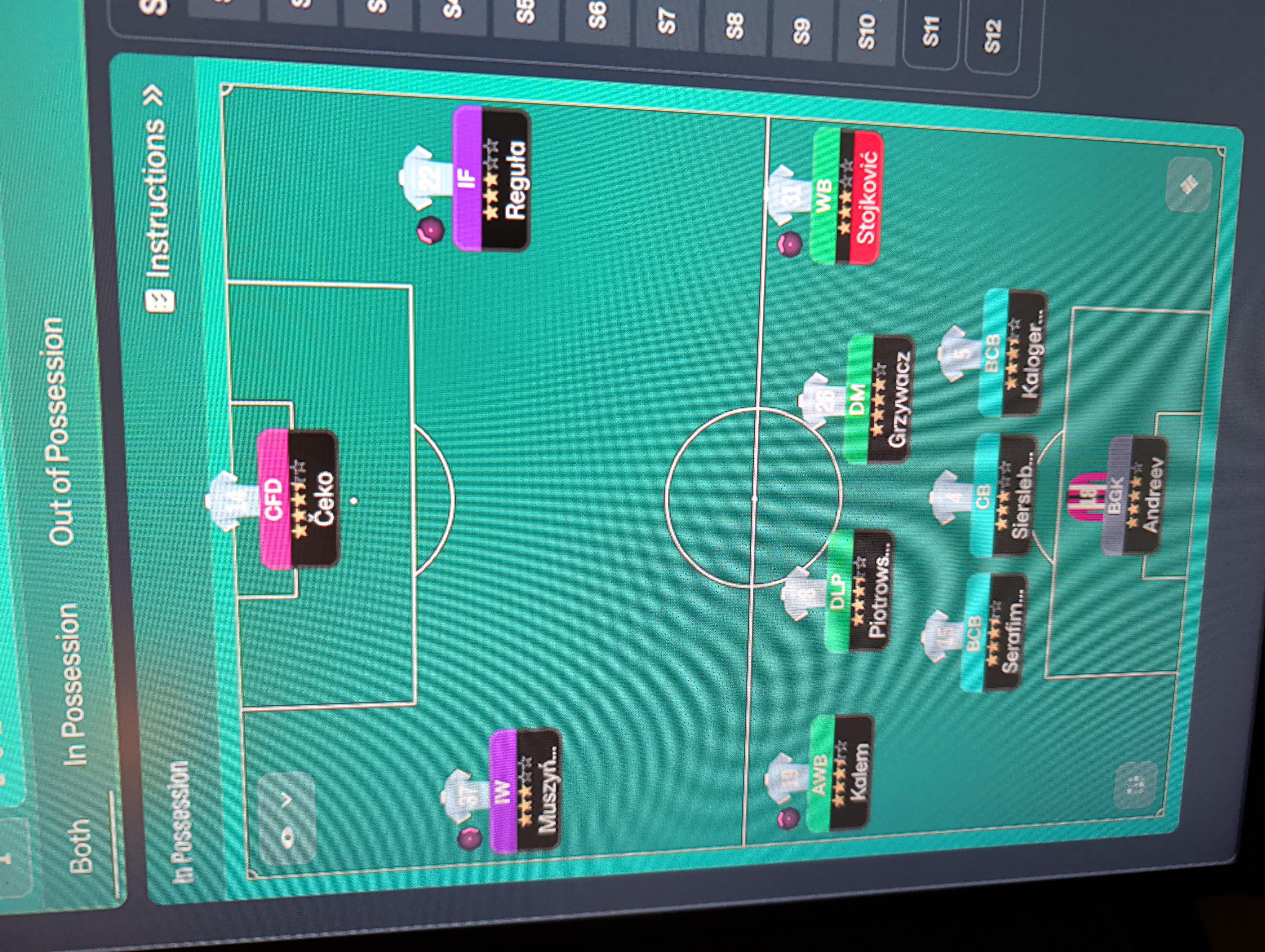
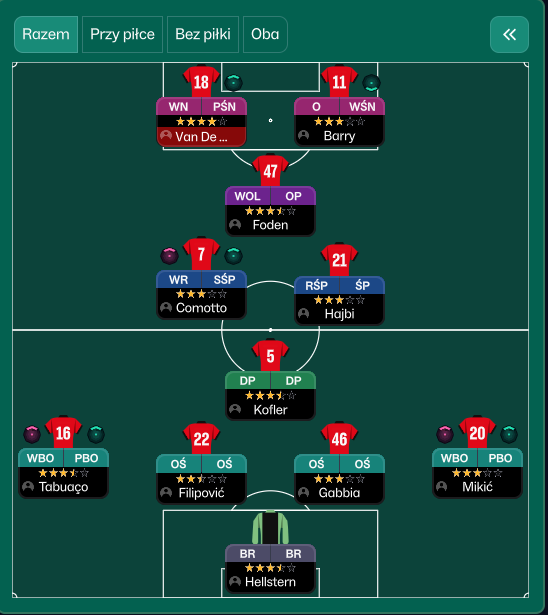
More Offensiv tactics
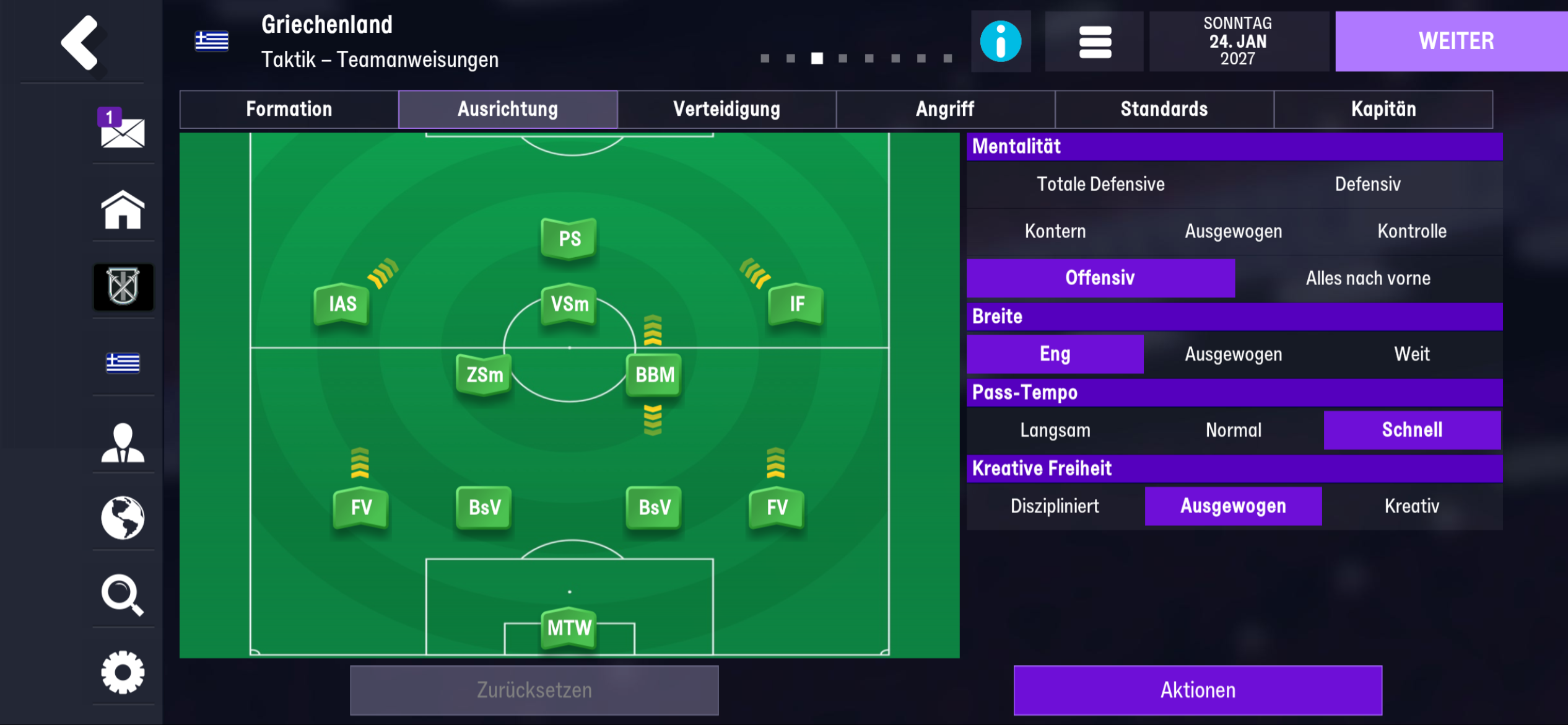
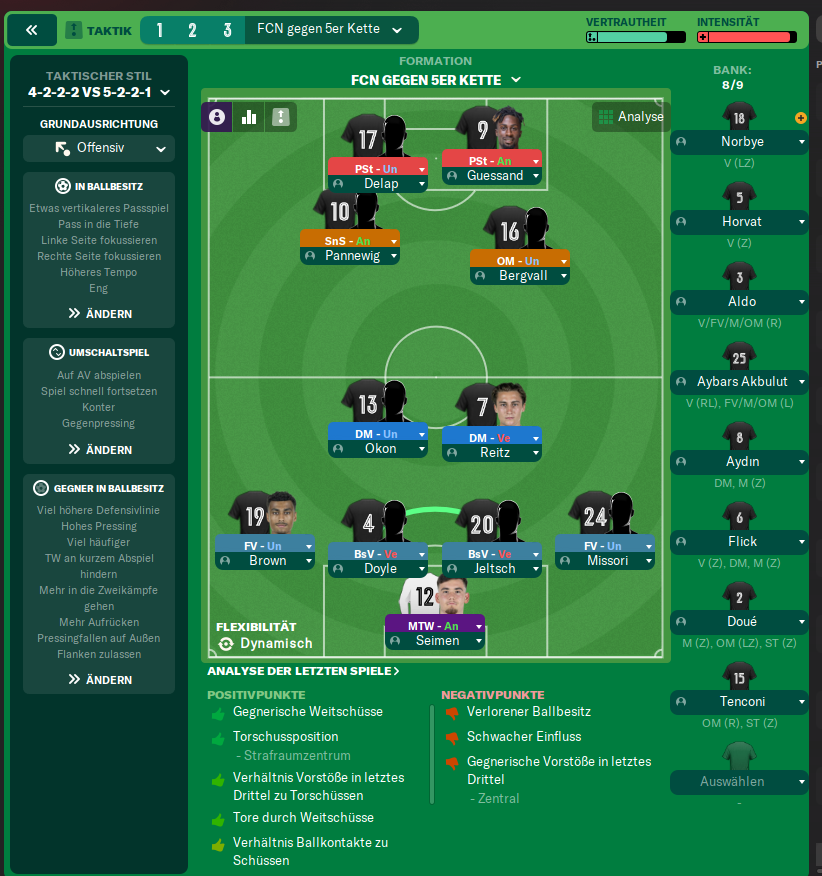
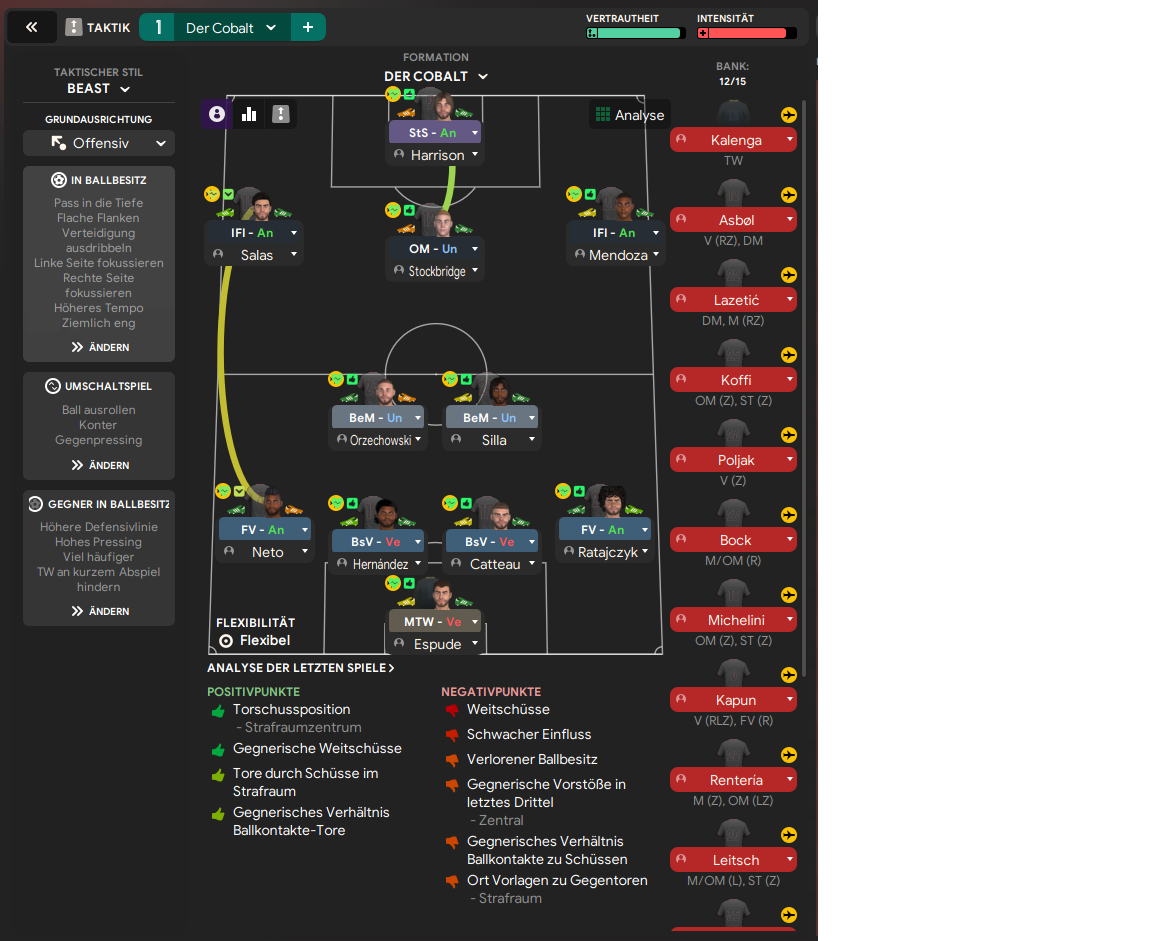
Guides for this formation
The tactical theory behind the 4-2-3-1 Wide: roles, instructions, and the trade-offs that decide whether the system holds up.
Player pairings
Midfield Pairs in 4-2-3-1 and 4-4-2
Double pivots and flat pairs in 4-2-3-1 and 4-4-2: when each pairing works, when it collapses, and the AMC unicorn that rescues both.
Read guide
Playing styles
Gegenpressing: A Full Guide
Klopp-style gegenpressing in FM, including squad profile, line-and-press pairing, sustainable workload, and the antipatterns to avoid.
Read guide