Uploaded Tactic
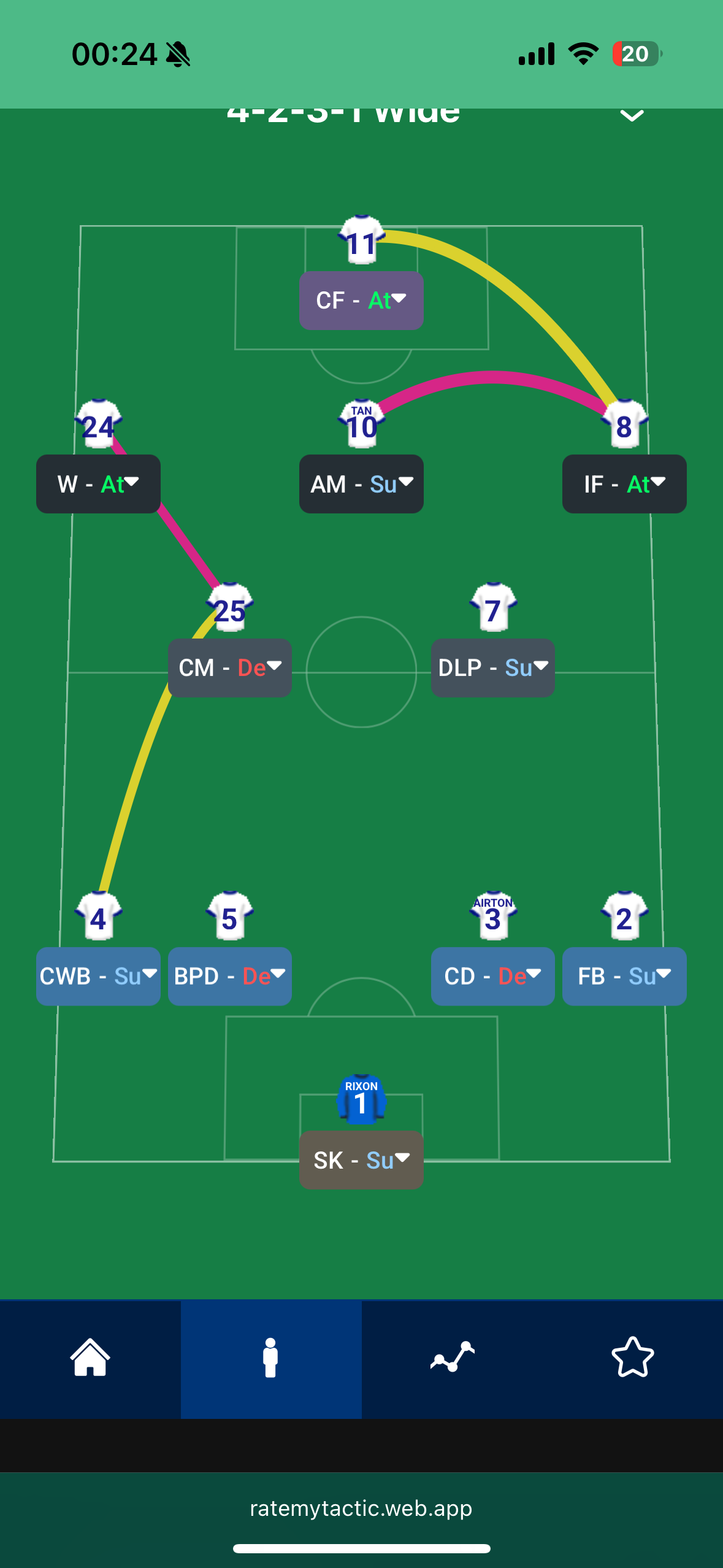
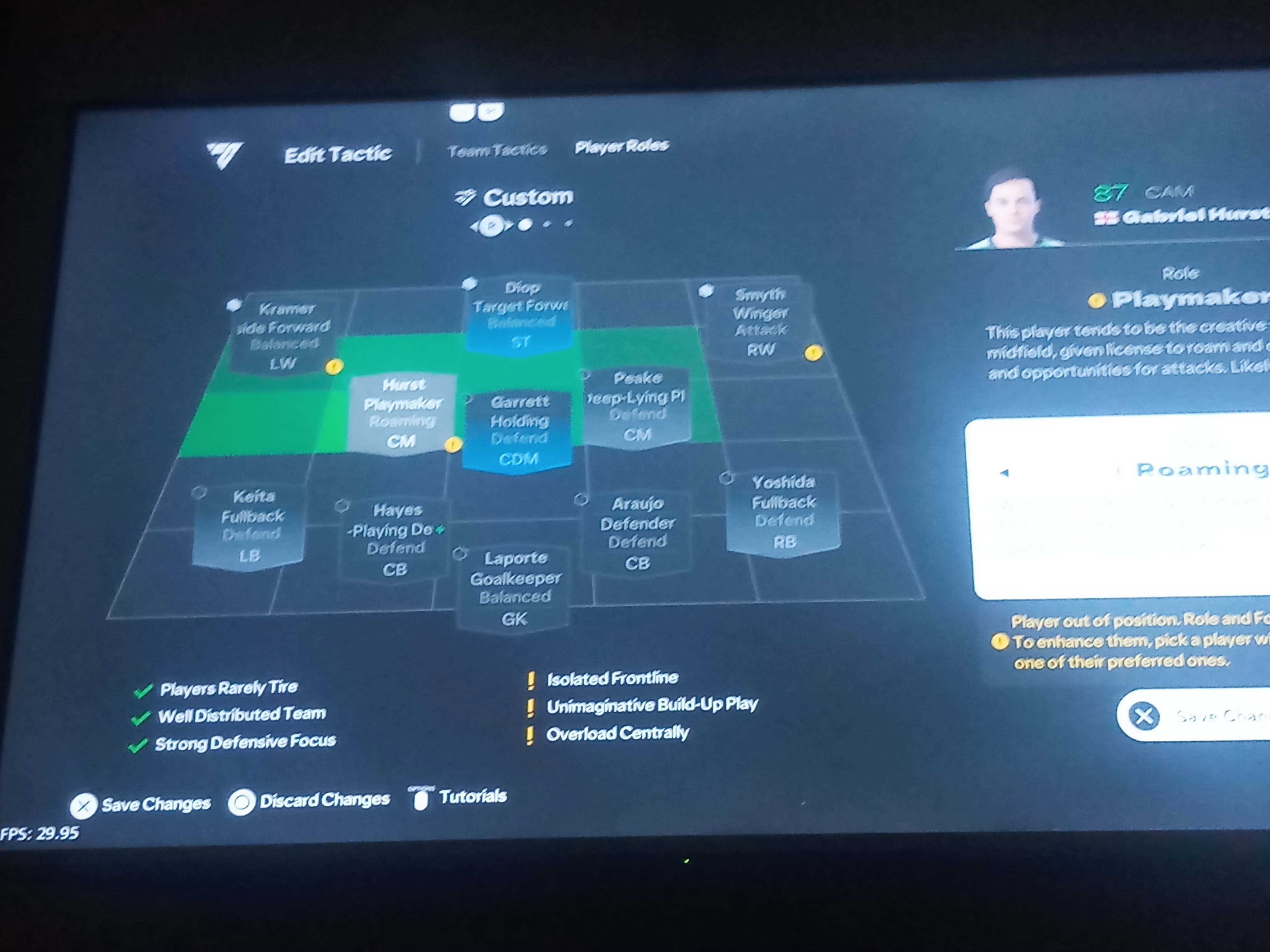
Formation & Style
Tactical Style:Balanced
Mentality:Positive
Formation:4-2-3-1 Wide
Team Fluidity:Structured
In Possession
Focus on quick ball movement through the midfield.
Utilize wide players (W and IF) to stretch the opposition.
Encourage overlapping runs from CWB and FB.
In Transition
Counter-attack quickly when regaining possession.
Maintain pressing intensity to win the ball back quickly.
Out of Possession
Employ a medium defensive line with moderate pressing.
Settle into a compact shape to limit central penetration.
Team Shape Without Ball
Shape:4-2
Description:A compact setup in defence with two banks of four, offering minimal space.
Evidence:CM at [4,3] and DLP at [4,4] support the defence with their duties.
Team Shape With Ball
Shape:4-3
Description:Wider shape in attack with wingers stretching the play, allowing central penetration.
Evidence:W at [6,1] and IF at [6,2] maintaining width.
Phase Description
Attacking Play
The tactic emphasizes width with attacking wing play, aiming to create space for the CF and AM.
Defensive Transition
The team should regroup quickly to form a compact structure when possession is lost.
Main Focus
To exploit wide areas and transition rapidly into attacking phases.
Key Strengths
Versatile Attack
The use of wide men and an advanced midfielder creates multiple attacking options.
Strong Defensive Midfield
DLP and CM provide a solid base to control the midfield area.
Overlapping Full-Backs
CWB and FB can provide width and support, creating overloads on the flanks.
Conflicting Directions
Defensive Vulnerabilities
A high defensive line may leave spaces behind that could be exploited by fast forwards.
Midfield Imbalance
One defensive midfielder may not be sufficient against stronger opposition.
Attacking Dependency on Wings
Over-reliance on wingers might lead to predictability in attack.
Tactical Suggestions
Increase Physical Presence in Midfield
Consider using a more robust midfielder to ensure solidity against physical opponents.
Adjust Defensive Line Height
Lowering the line could prevent pacey attackers from exploiting space behind.
Diversify Attacking Patterns
Integrate more rotations and fluid roles to make attacking play less predictable.
Ask Questions About Your Lineup
Related Tactics
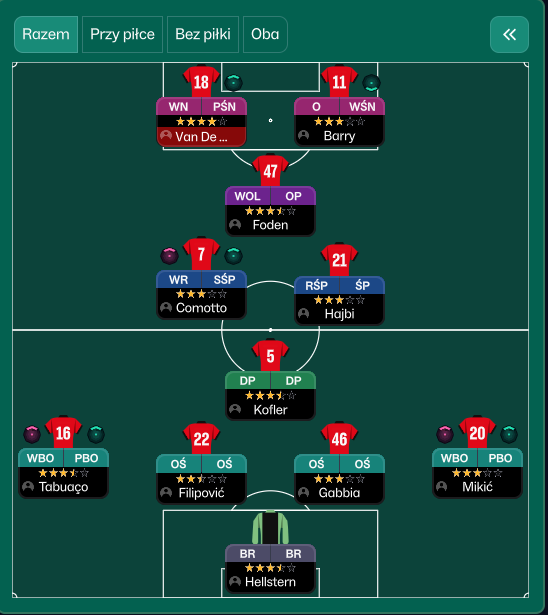
More Balanced tactics
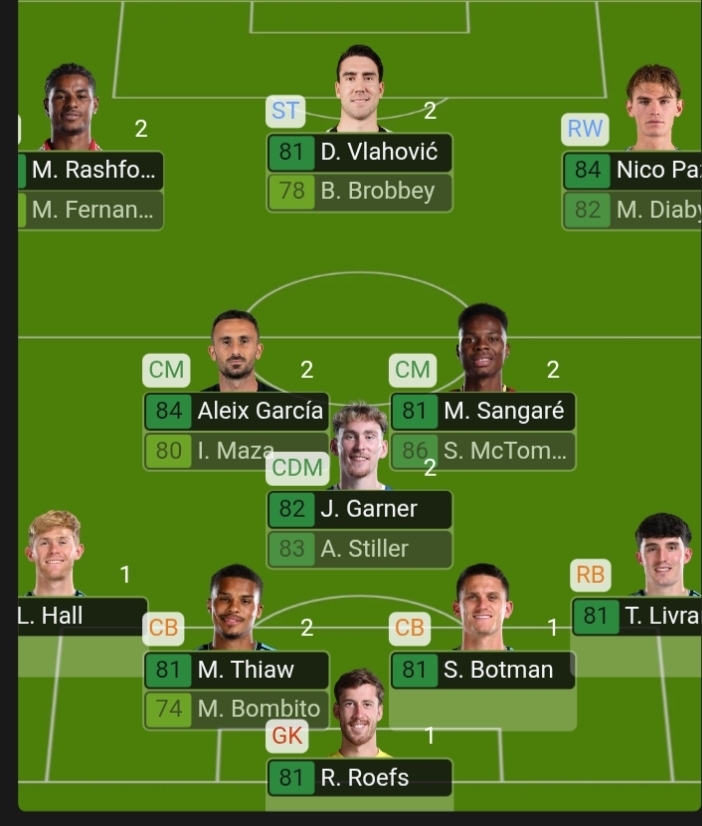
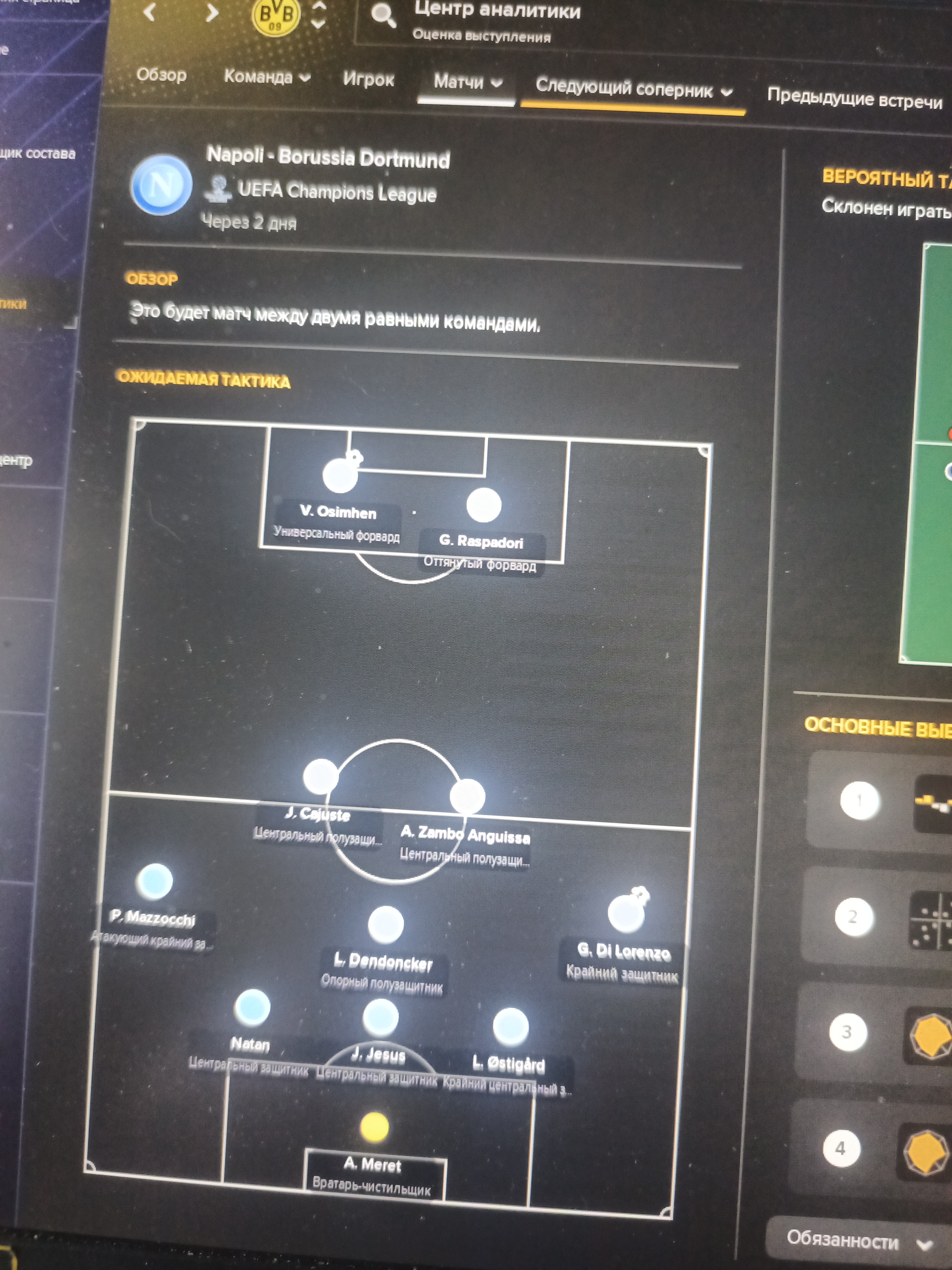
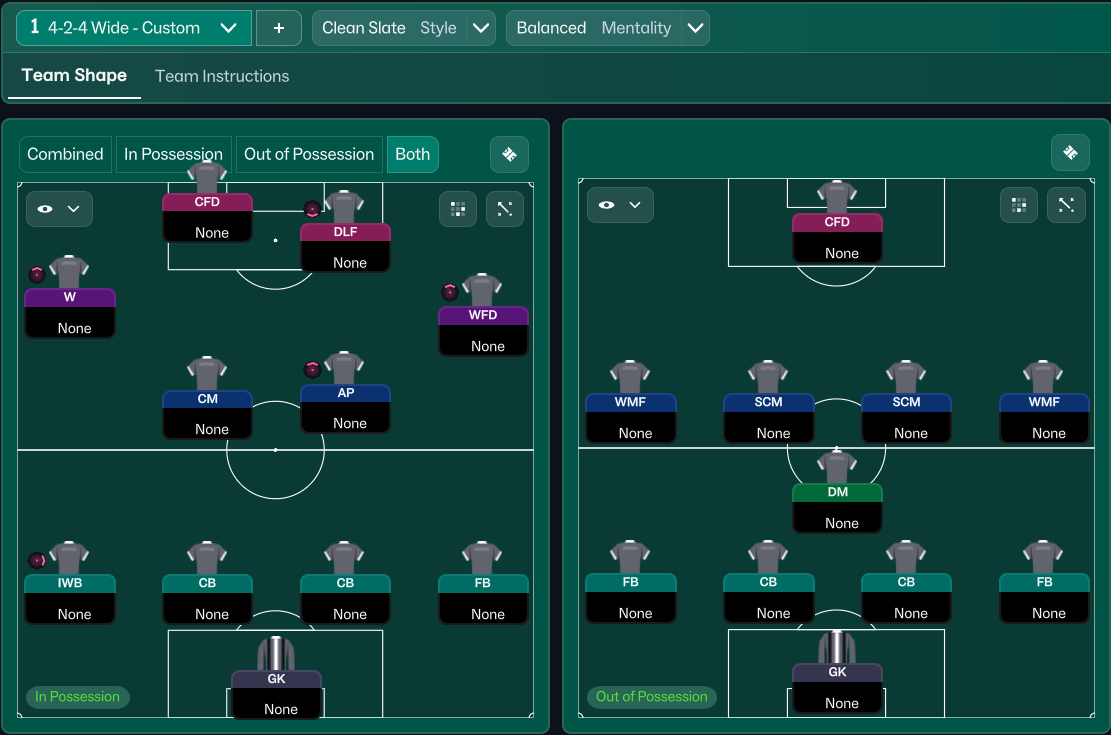
Guides for this formation
The tactical theory behind the 4-2-3-1 Wide: roles, instructions, and the trade-offs that decide whether the system holds up.
Player pairings
Midfield Pairs in 4-2-3-1 and 4-4-2
Double pivots and flat pairs in 4-2-3-1 and 4-4-2: when each pairing works, when it collapses, and the AMC unicorn that rescues both.
Read guide
Playing styles
Gegenpressing: A Full Guide
Klopp-style gegenpressing in FM, including squad profile, line-and-press pairing, sustainable workload, and the antipatterns to avoid.
Read guide