Uploaded Tactic
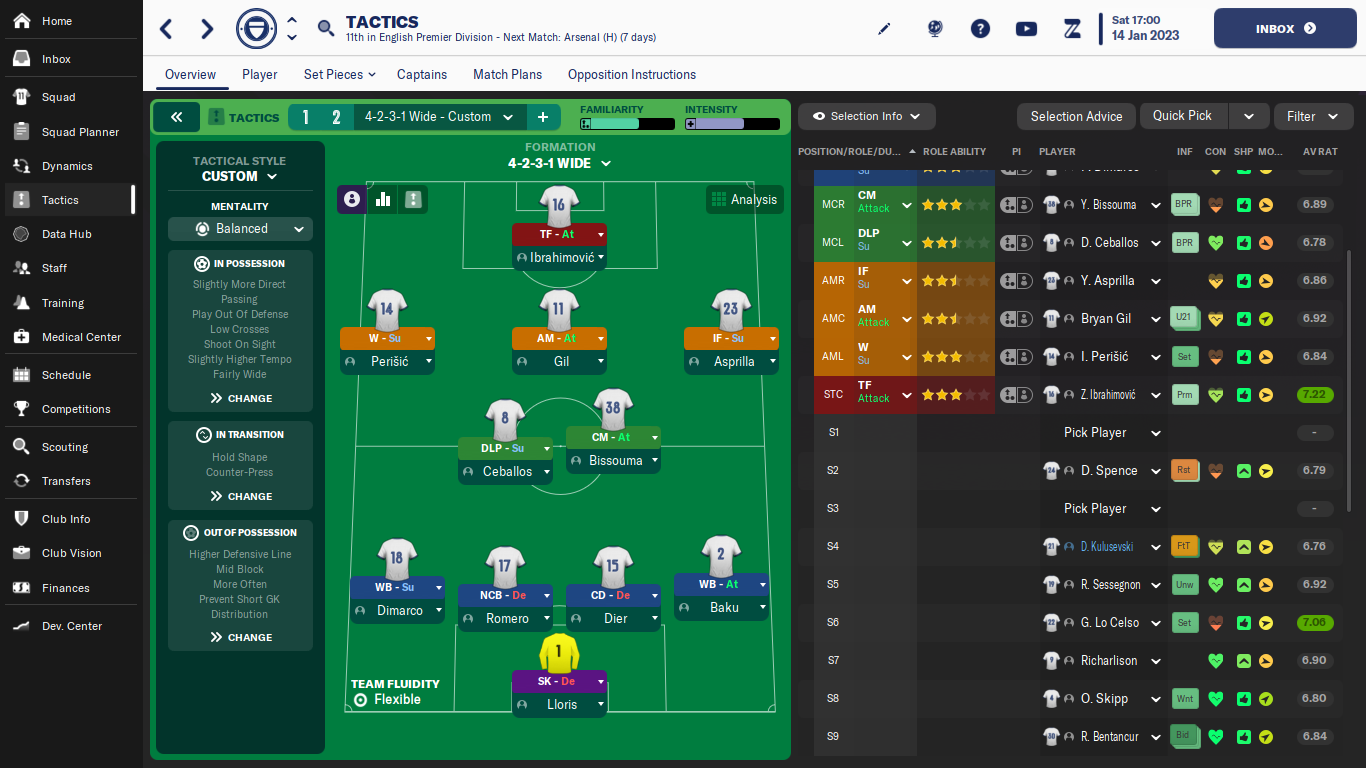
Formation & Style
Tactical Style:Custom
Mentality:Balanced
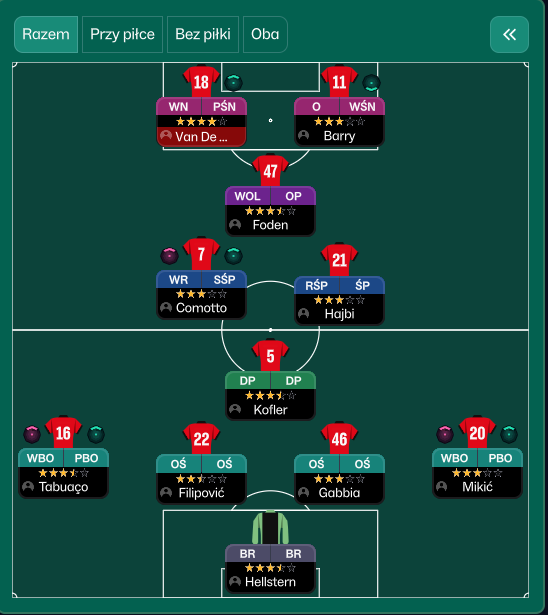
Formation:4-2-3-1 Wide
Team Fluidity:Flexible
In Possession
Slightly More Direct Passing
Play Out Of Defence
Low Crosses
Shoot On Sight
Slightly Higher Tempo
Fairly Wide
In Transition
Hold Shape
Counter-Press
Out of Possession
Higher Defensive Line
Mid Block
More Often Prevent Short GK Distribution
Team Shape Without Ball
Shape:4-2
Description:A compact defensive shape with two holding players providing cover and support to the back line while the wing-backs track their opponents.
Evidence:NCB at [2,2] and CD at [2,3] provide a strong central base.
Team Shape With Ball
Shape:4-3
Description:The front four stretch the opposition while maintaining connection with the midfield and full-backs for intricate build-up plays.
Evidence:AM at [5,2] and IF at [5,3] work well in tandem to create overloads.
Phase Description
Attacking Play
Utilizes width with overlapping runs from wing-backs and quick movement of the ball through midfield to create goal-scoring opportunities.
Defensive Transition
Focuses on retaining shape while pressing aggressively to regain possession, especially after losing the ball high up.
Main Focus
Creating goal-scoring opportunities through direct passing and utilizing the width provided by wingers and wing-backs.
Key Strengths
Wide Play Opportunities
The use of wing-backs and wingers allows for a diverse attacking strategy through width.
Ball Control in Midfield
Strong midfield setup with a DLP provides creativity and control over ball possession.
High Pressing Capability
Counter-pressing strategy helps quickly regain possession after losing the ball.
Conflicting Directions
Risk of Being Exposed on Counter-Attacks
High defensive line may lead to vulnerability against fast-breaking teams.
Inconsistent Support from Attackers
Certain attackers may not provide adequate pressure in defensive transitions.
Potential Lack of Depth in Midfield
A single DLP and a BWM may struggle against a more dynamic or packed midfield.
Tactical Suggestions
Adjust Defensive Line Height
Lowering the defensive line could reduce vulnerability to counter-attacks.
Increase Support from Wide Players
Encouraging wingers and wide players to track back would improve defensive stability.
Incorporate More Direct Play
Mixing in long balls could complement the current direct passing strategy.
Ask Questions About Your Lineup
Related Tactics
Guides for this formation
The tactical theory behind the 4-2-3-1 Wide: roles, instructions, and the trade-offs that decide whether the system holds up.
Player pairings
Midfield Pairs in 4-2-3-1 and 4-4-2
Double pivots and flat pairs in 4-2-3-1 and 4-4-2: when each pairing works, when it collapses, and the AMC unicorn that rescues both.
Read guide
Playing styles
Gegenpressing: A Full Guide
Klopp-style gegenpressing in FM, including squad profile, line-and-press pairing, sustainable workload, and the antipatterns to avoid.
Read guide