Uploaded Tactic
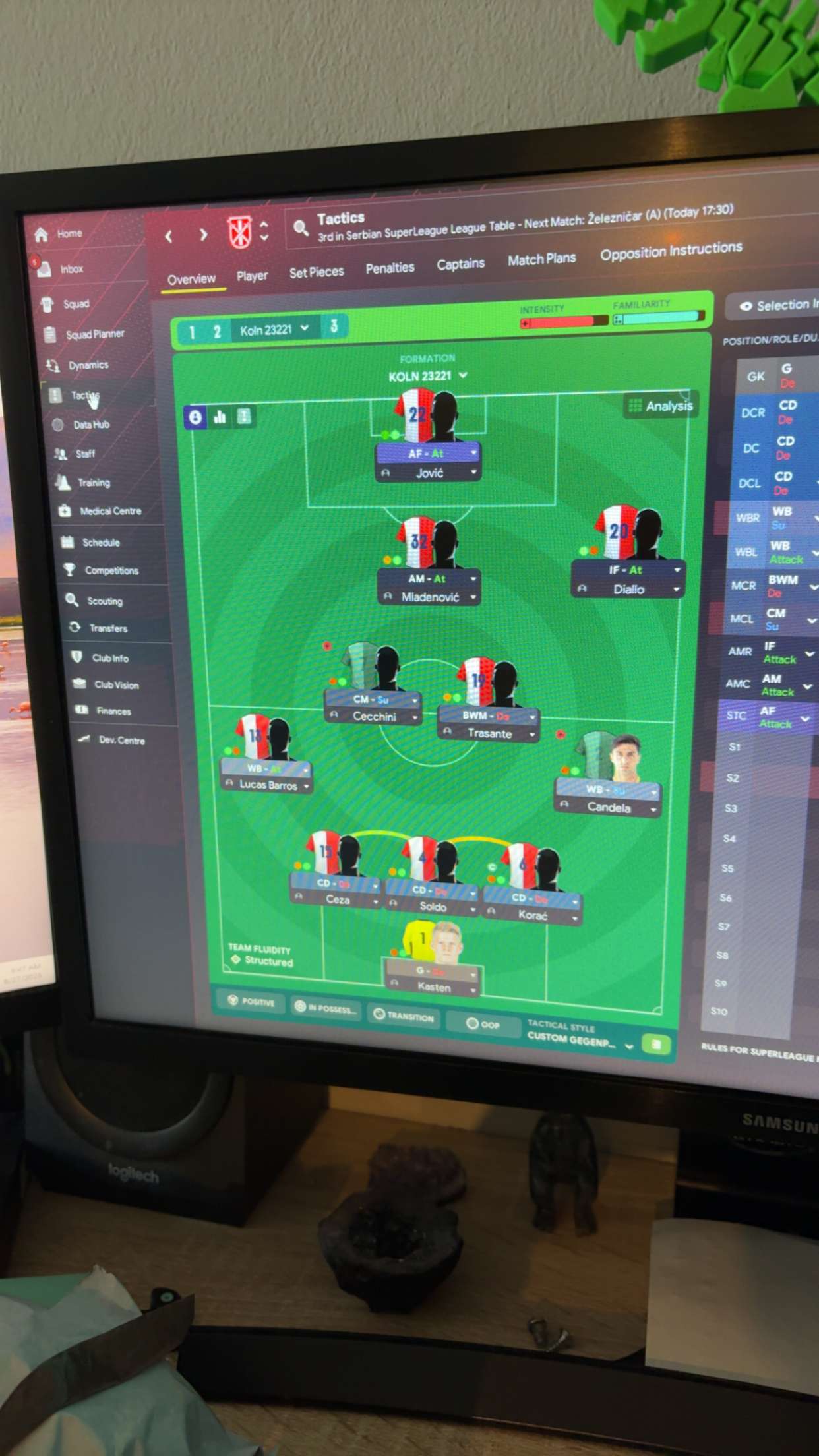
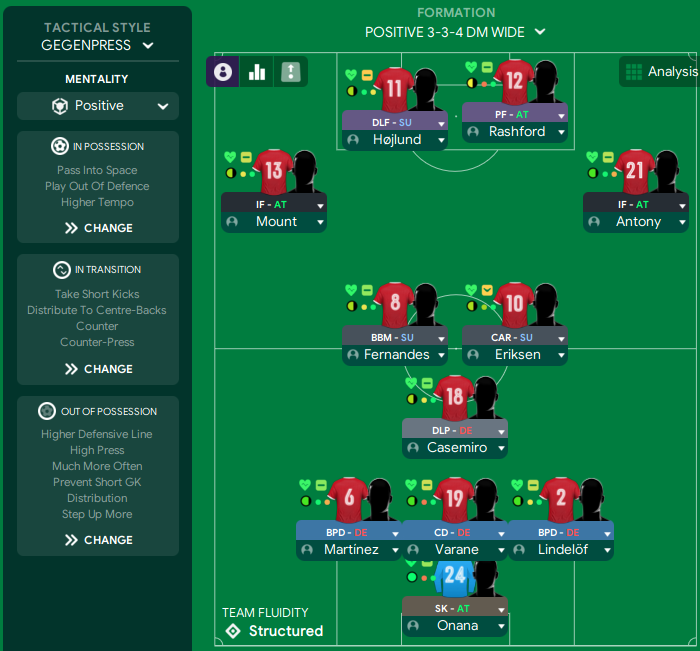
Formation & Style
Tactical Style:Gegenpress
Mentality:Positive
Formation:4-2-3-1 Wide
Team Fluidity:Structured
In Possession
Focus play down the wings
High tempo
Take more risks
Work ball into the box
In Transition
Counter-press
Counter
Goalkeeper distributing quickly
Out of Possession
Higher defensive line
Pressing intensity: More urgent
Use offside trap
Team Shape Without Ball
No team shape without ball data available
Team Shape With Ball
No team shape with ball data available
Key Strengths
Fluid Attack
The formation allows wingers and attacking midfielders to interlink, creating numerous attacking opportunities.
Dynamic Midfield
With a BWM and a CM, the midfield can regain possession quickly and transition efficiently.
Strong Pressing
The high pressing can disrupt opponent’s play, creating turnovers in dangerous areas.
Width in Attack
Utilizing wing-backs and wingers stretches the opposition, providing space for central players.
Conflicting Directions
Defensive Line vs. Pressing
A higher defensive line might leave space behind if teams exploit the press effectively.
Player Roles Responsibilities
The BWM may struggle to support attacking transitions if overly focused on defensive duties.
Winger and Full-Back Coordination
Wing-backs on attacking duties may overlap with wingers, causing confusion in positioning.
Aggressive Counter-Pressing
Teams may exploit gaps left by aggressive pressing, leading to counter-attacks with space behind.
Tactical Suggestions
Adjust Defensive Line
Consider lowering the defensive line to reduce the risk of being exploited on counter-attacks.
Reassess BWM Duty
Change the Ball-Winning Midfielder to a Support duty to provide more balance in midfield transitions.
Refine Wing Play
Instruct wing-backs to focus more on overlapping runs rather than providing primary width alone.
Increase Team Fluidity
Switch to a more fluid setup to enable players to interchange positions and create unpredictability.
Ask Questions About Your Lineup
Related Tactics
More Gegenpress tactics
Guides for this formation
The tactical theory behind the 4-2-3-1 Wide: roles, instructions, and the trade-offs that decide whether the system holds up.
Player pairings
Midfield Pairs in 4-2-3-1 and 4-4-2
Double pivots and flat pairs in 4-2-3-1 and 4-4-2: when each pairing works, when it collapses, and the AMC unicorn that rescues both.
Read guide
Playing styles
Gegenpressing: A Full Guide
Klopp-style gegenpressing in FM, including squad profile, line-and-press pairing, sustainable workload, and the antipatterns to avoid.
Read guide