Uploaded Tactic
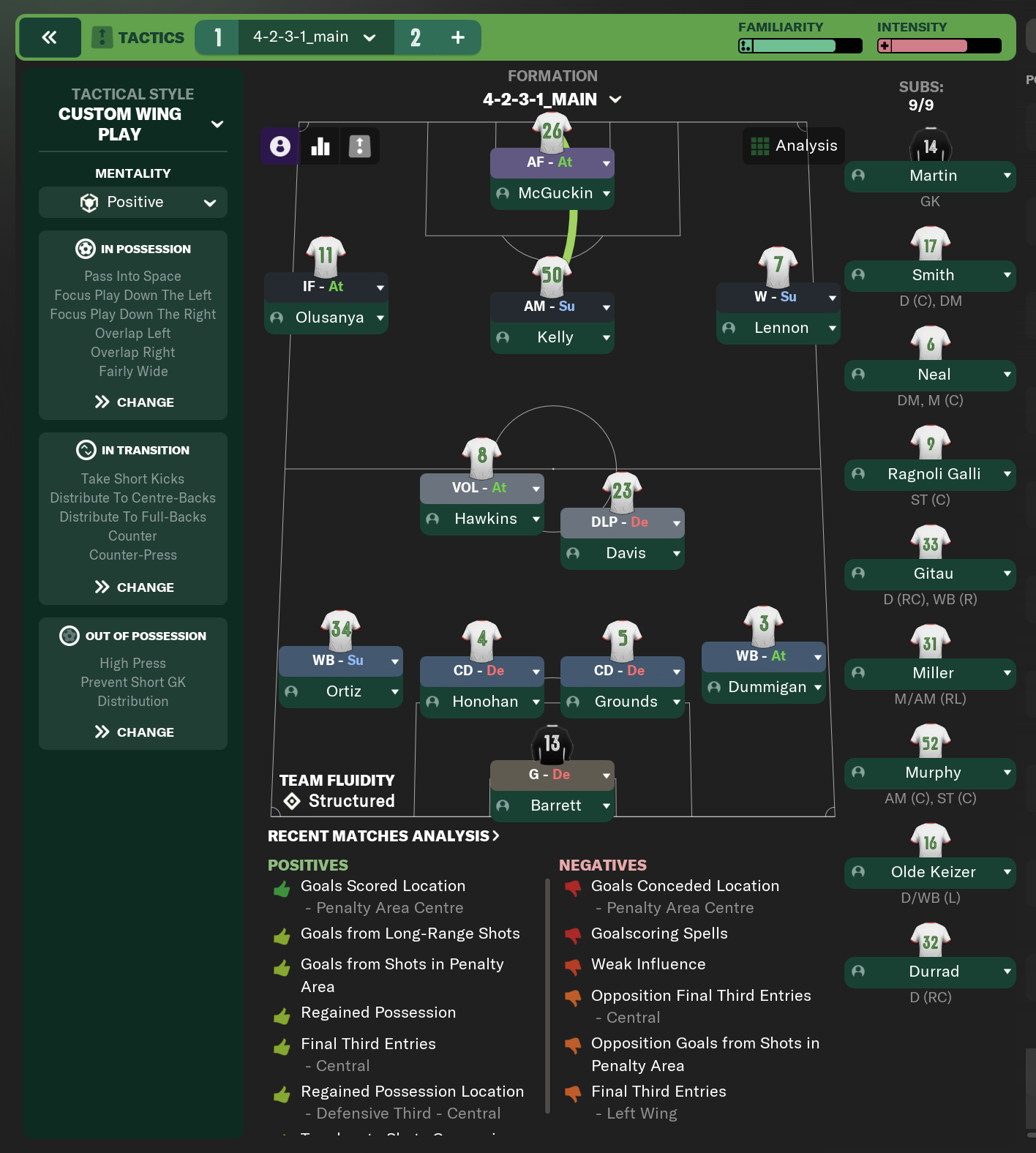
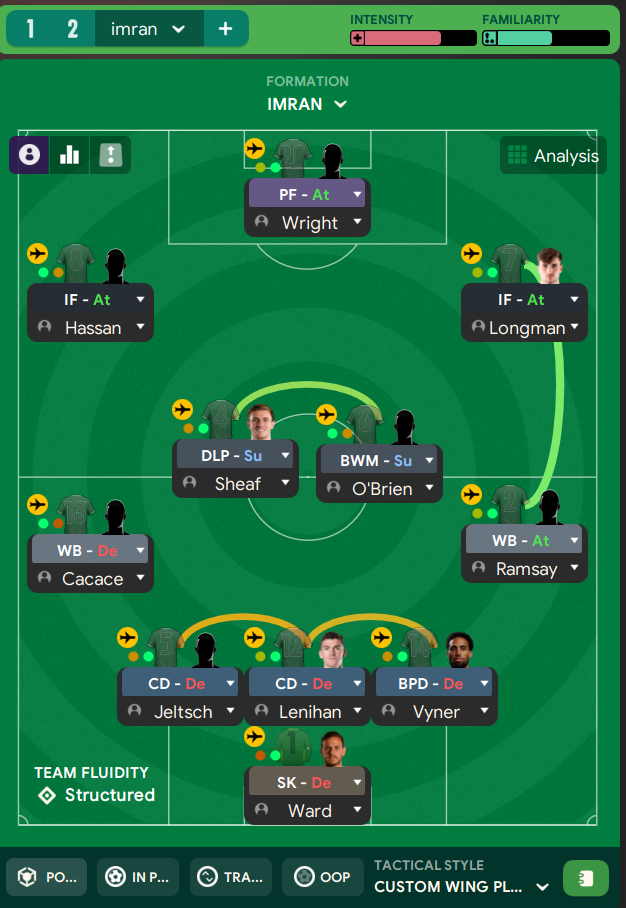
Formation & Style
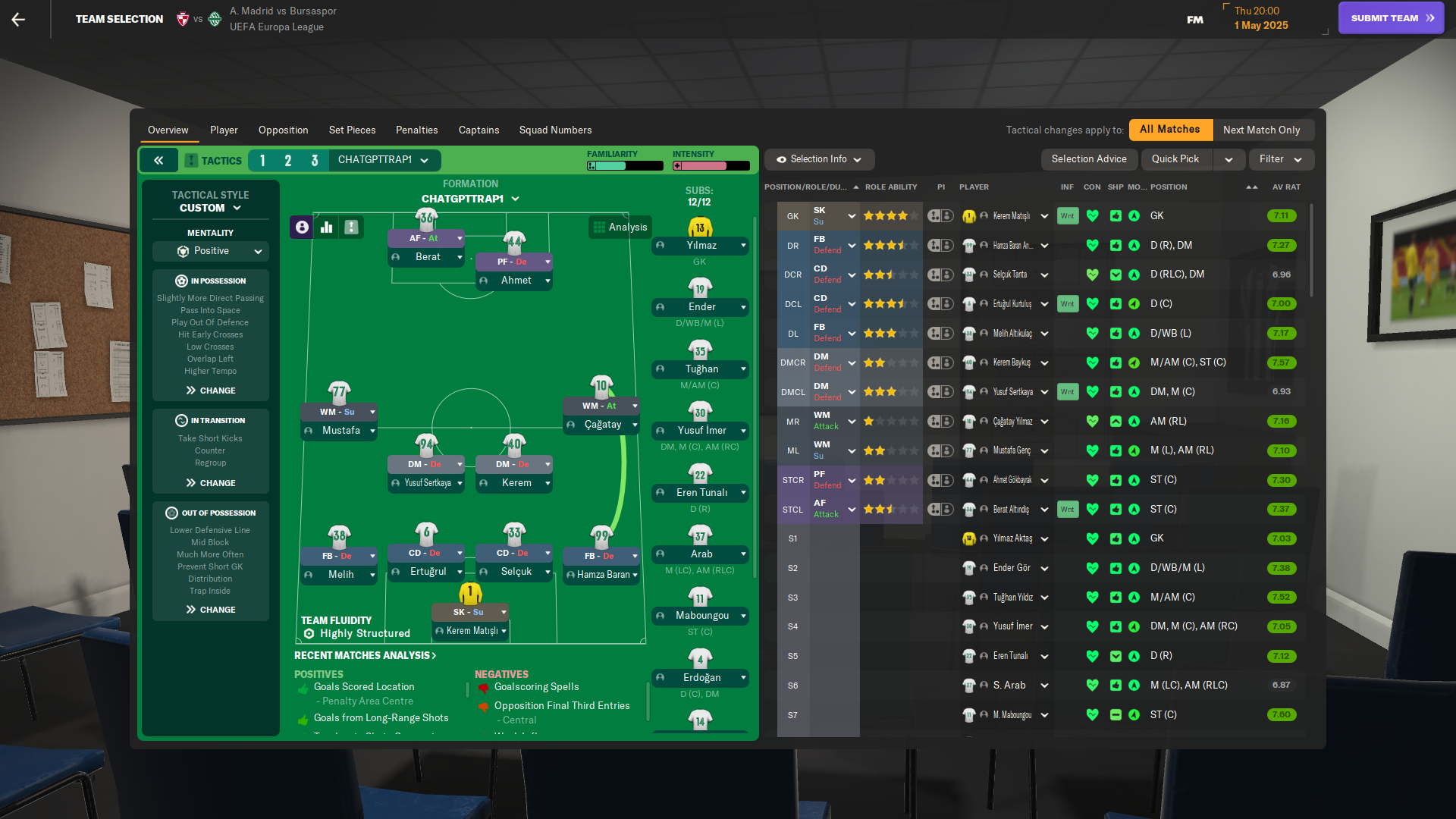
Tactical Style:Custom Wing Play
Mentality:Positive
Formation:4-2-3-1 Wide
Team Fluidity:Structured
In Possession
Pass Into Space
Focus Play Down The Left
Focus Play Down The Right
Overlap Left
Overlap Right
Fairly Wide
In Transition
Distribute To Centre-Backs
Distribute To Full-Backs
Counter
Counter-Press
Out of Possession
High Press
Prevent Short GK Distribution
Team Shape Without Ball
No team shape without ball data available
Team Shape With Ball
No team shape with ball data available
Key Strengths
Wide Play
Utilizing wingers and overlapping full-backs effectively stretches the opposition and creates space for the midfield.
Positional Play
Focus on play down the flanks allows the team to exploit defensive weaknesses and maintain possession.
Counter-Attacking Ability
Quick transitions after winning the ball can capitalize on unorganized defenses.
Player Roles Synergy
Roles like Advanced Forward and Attacking Midfielder provide strong attacking presence and link-up play.
Conflicting Directions
Defensive Stability
With two attacking full-backs, the backline may become exposed to quick counter-attacks if possession is lost.
Pressing Patterns
High press might leave gaps in defense if not properly coordinated, as it relies on all players executing simultaneously.
Transition Risks
Distributing to centre-backs may slow down counter-attacks, contradicting the vigorous pressing approach.
Flank Dependency
Heavy focus on width could lead to a lack of central penetration, making it challenging against compact defenses.
Tactical Suggestions
Adjust Full-Back Roles
Consider setting one full-back to a defensive role to maintain balance and cover against counters.
Enhance Midfield Dynamics
Introduce a box-to-box midfielder to add more presence in both attacking and defensive phases.
Refine Pressing Strategy
Tweak pressing intensity and direction to ensure a more coordinated approach, particularly in midfield.
Diversify Attack Routes
Encourage more central plays to diversify attacking strategies, making it harder for opponents to predict.
Ask Questions About Your Lineup
Related Tactics
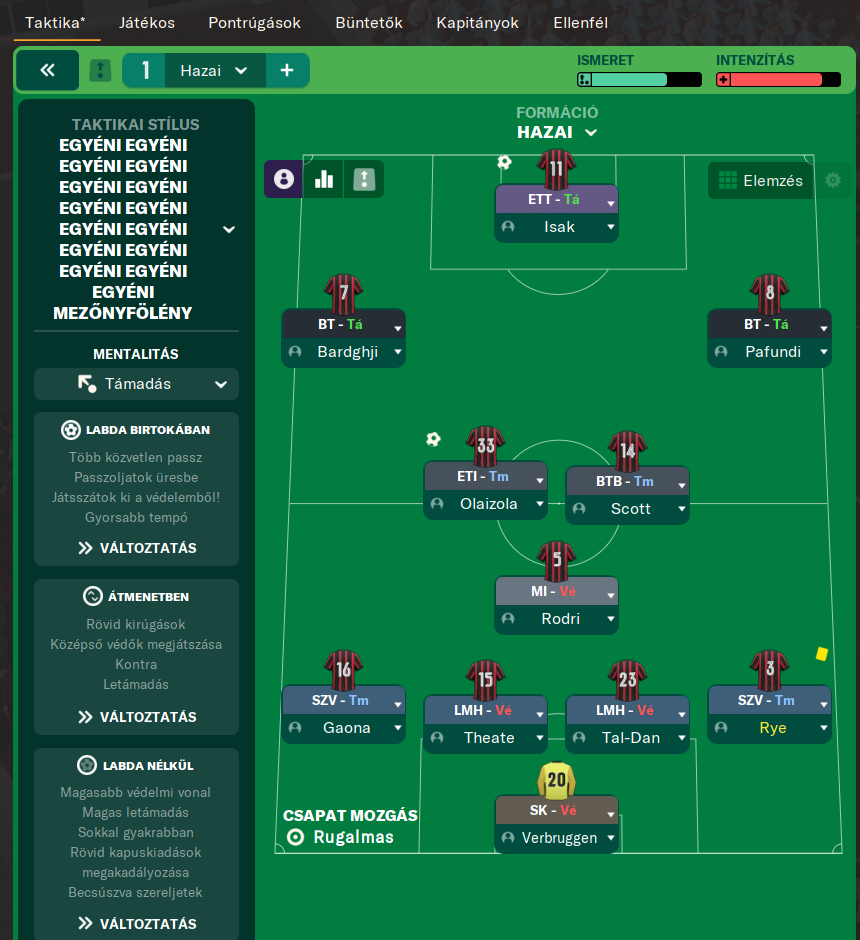
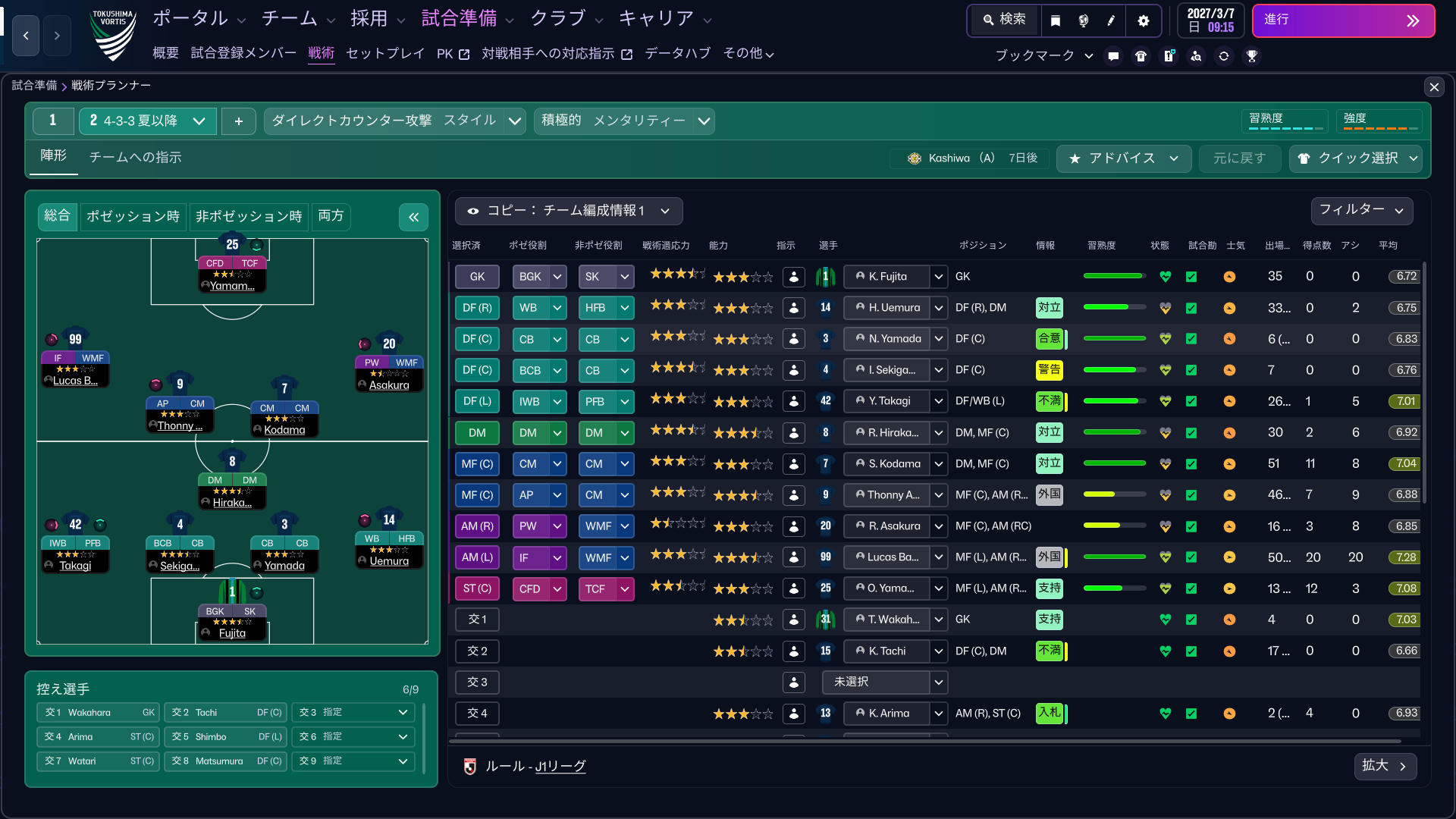
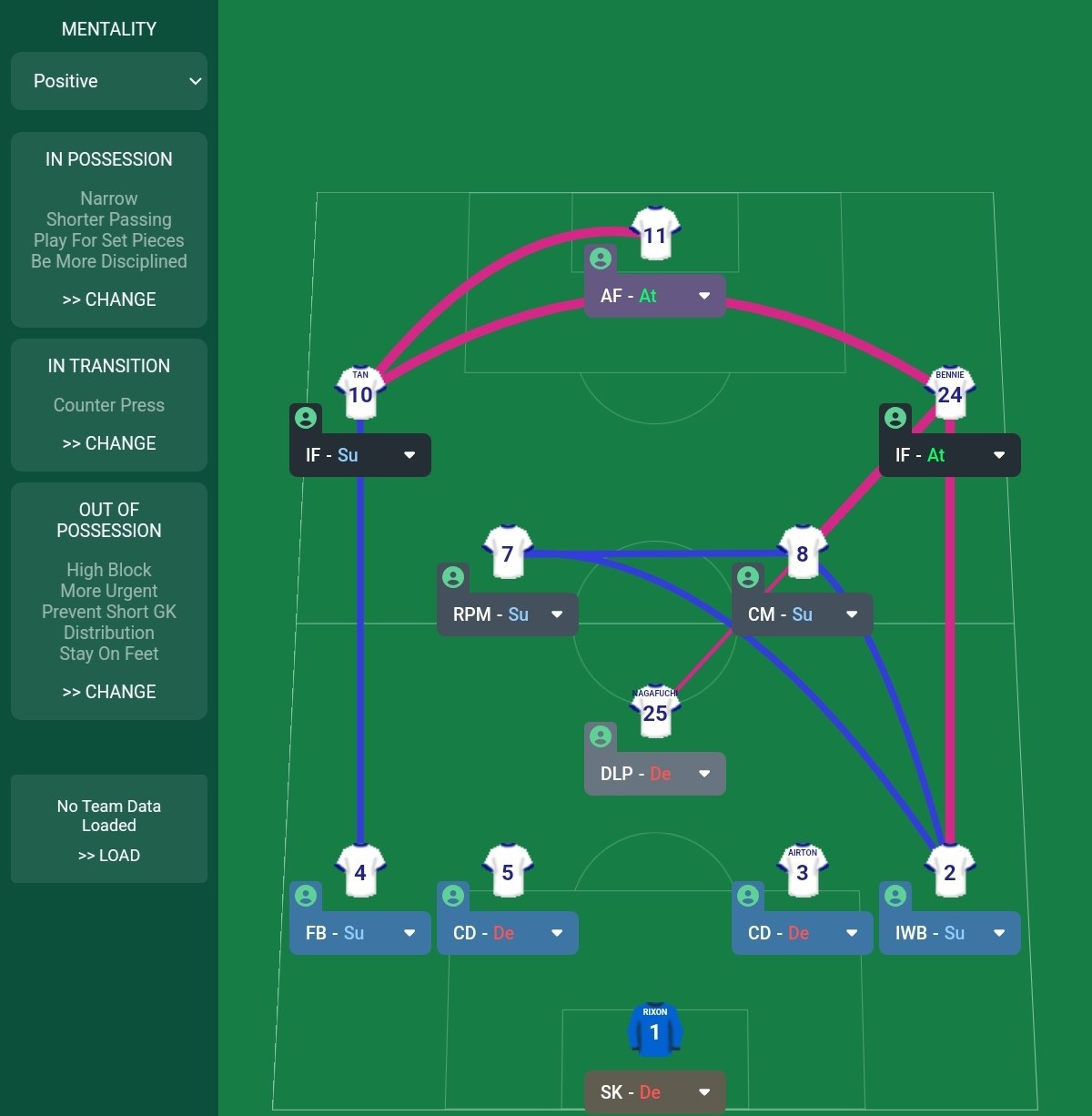
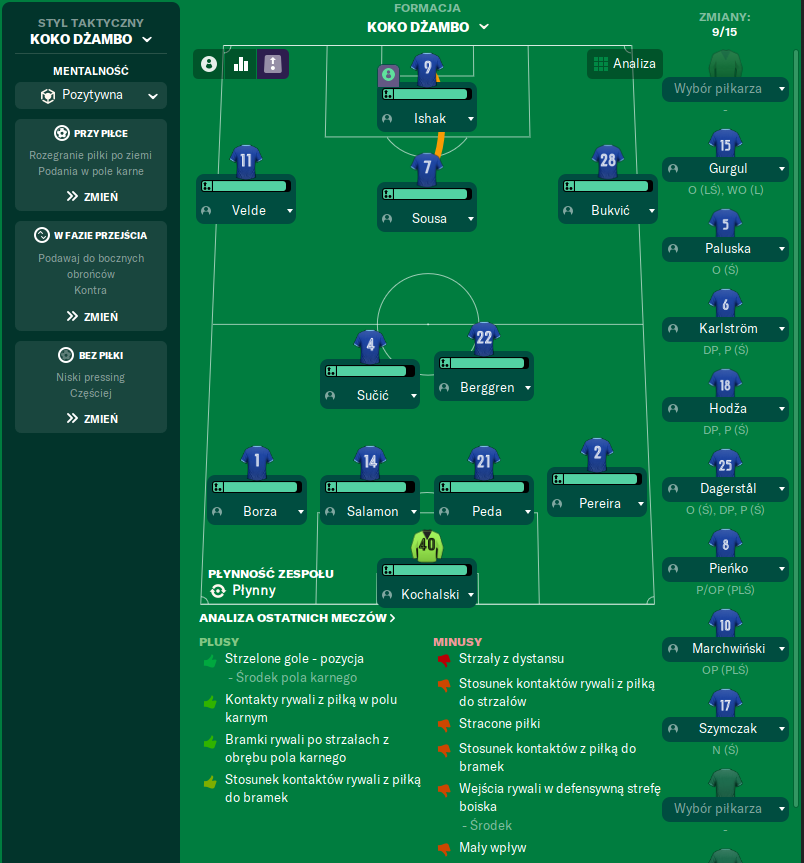
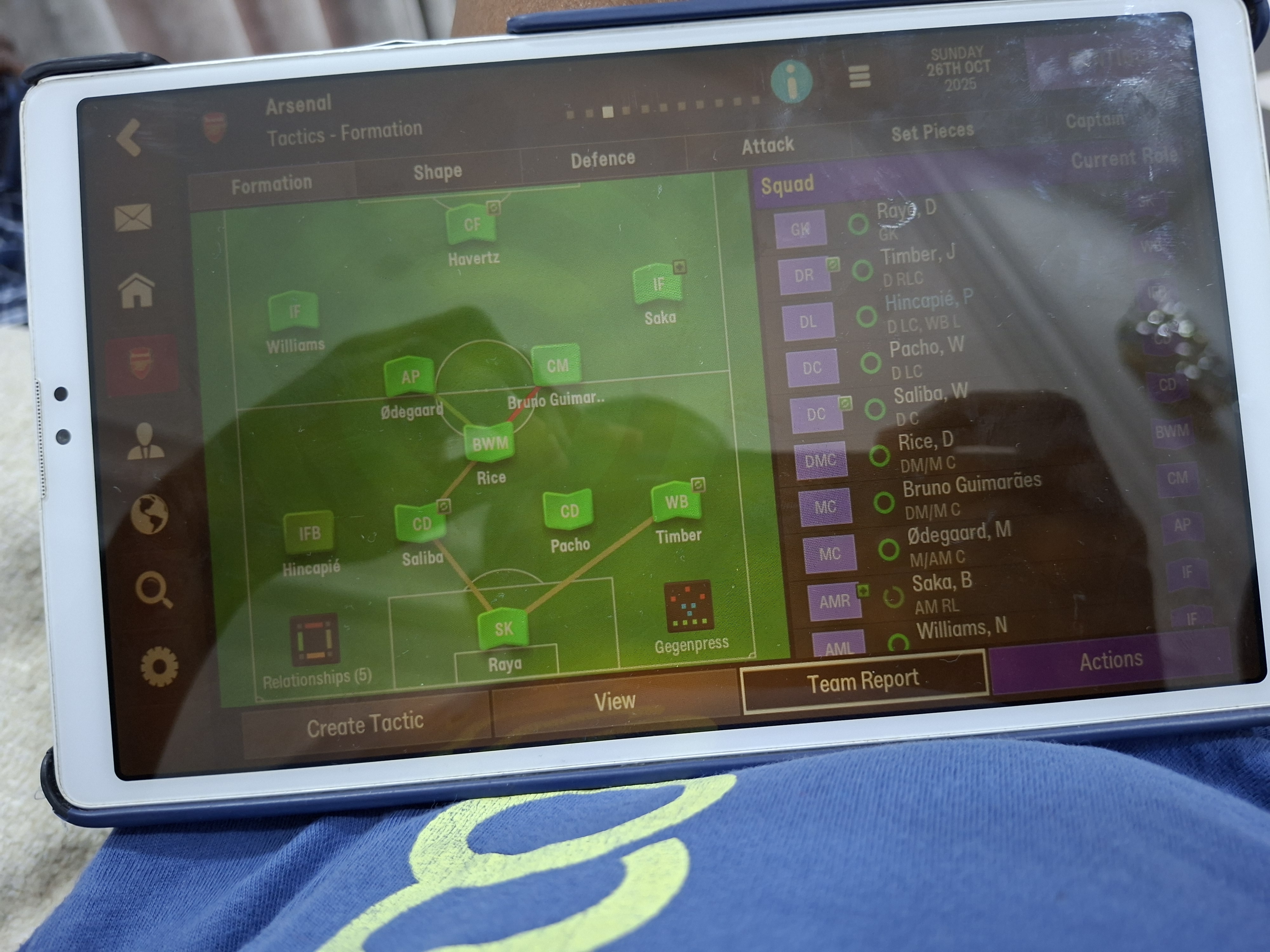
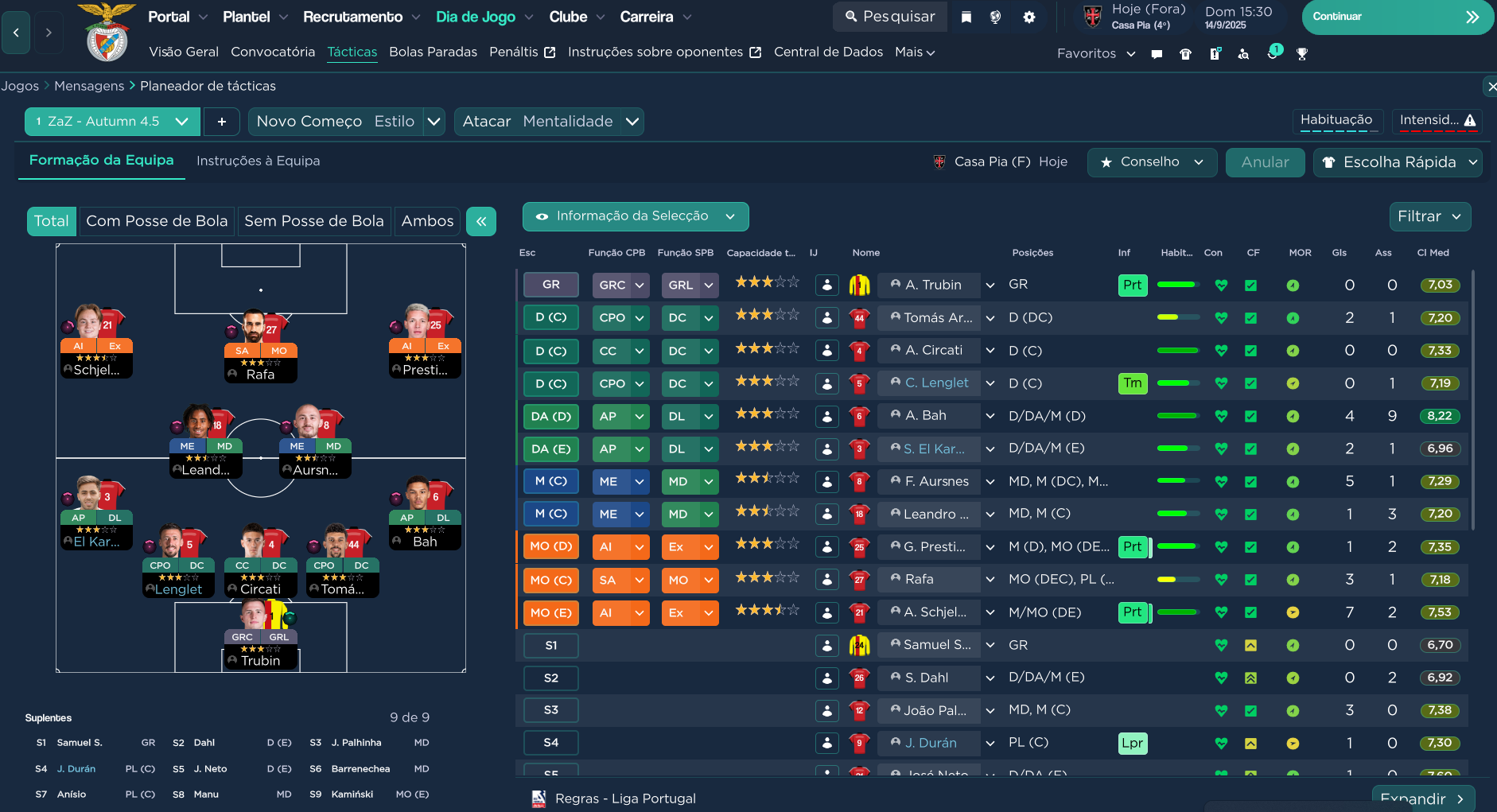
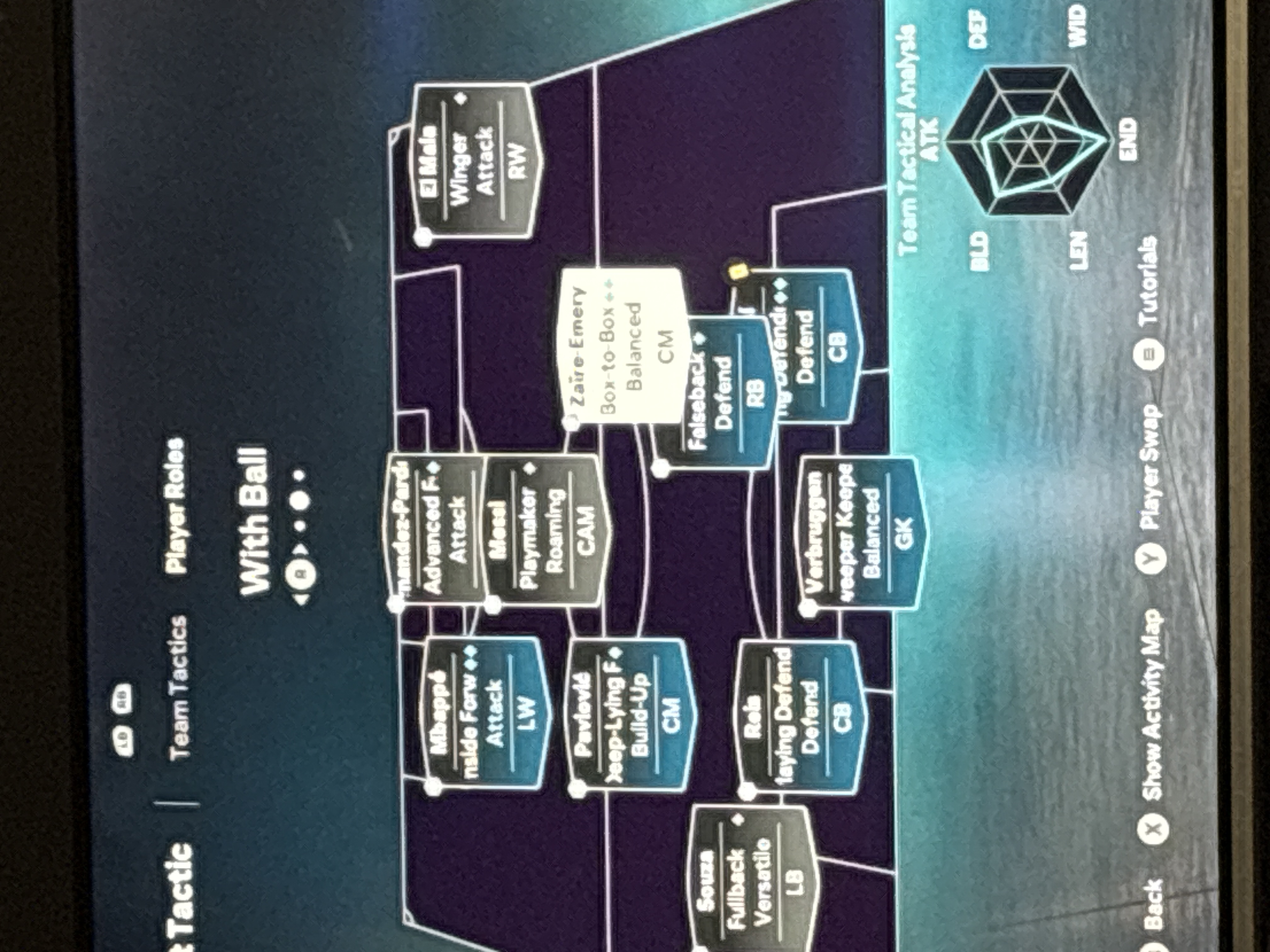
More Custom Wing Play tactics
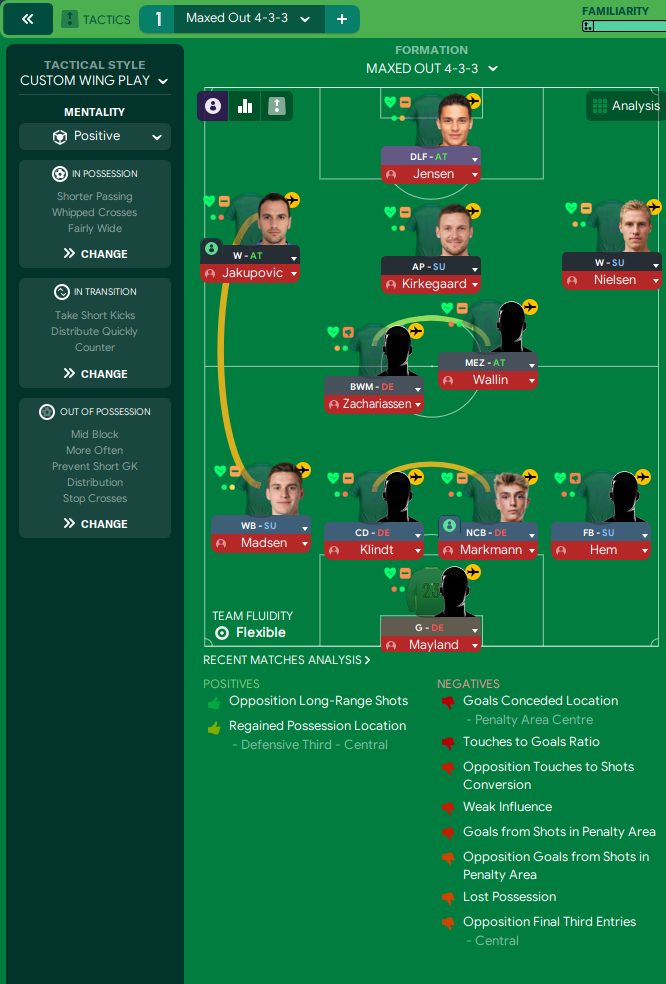
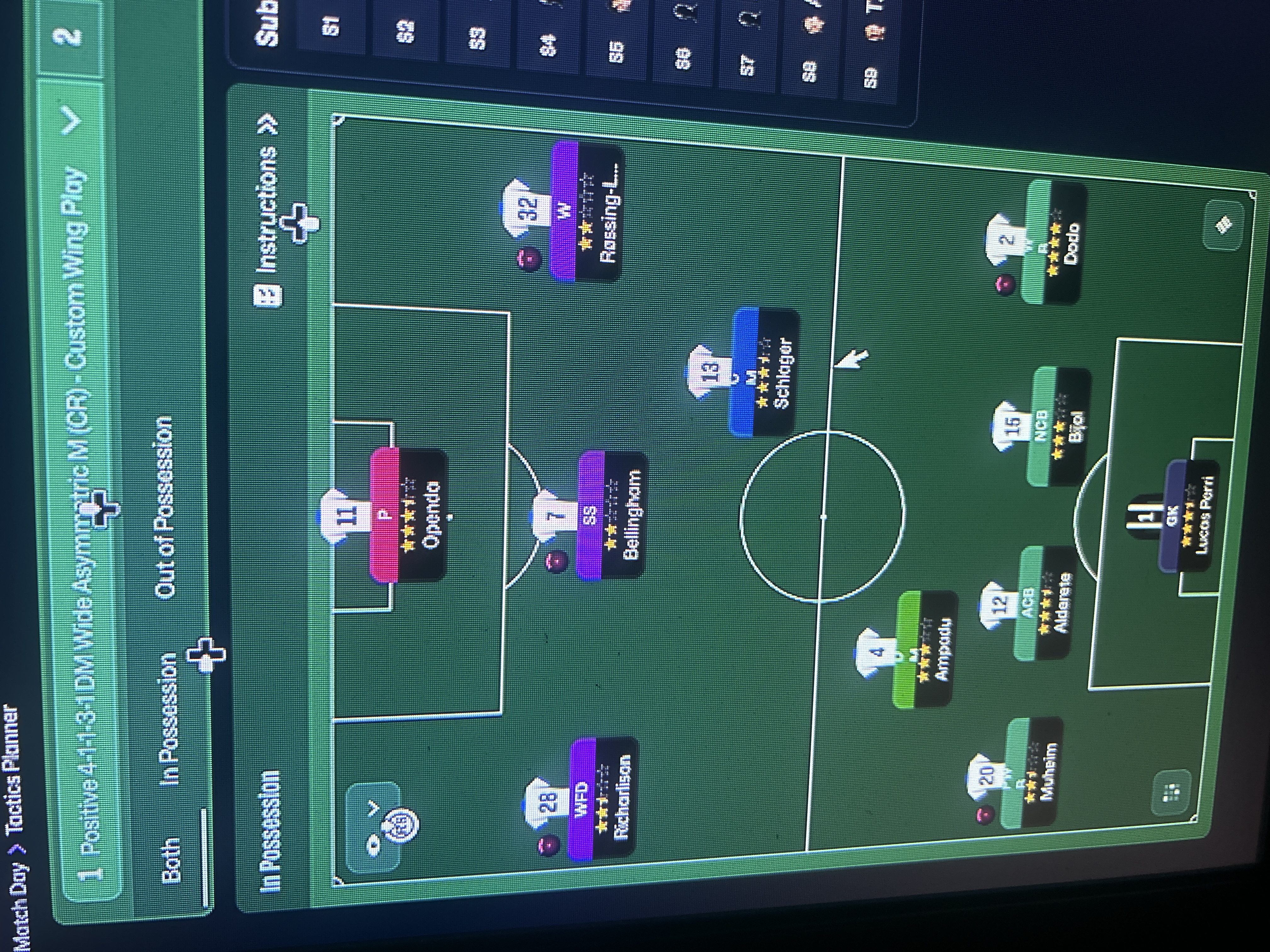
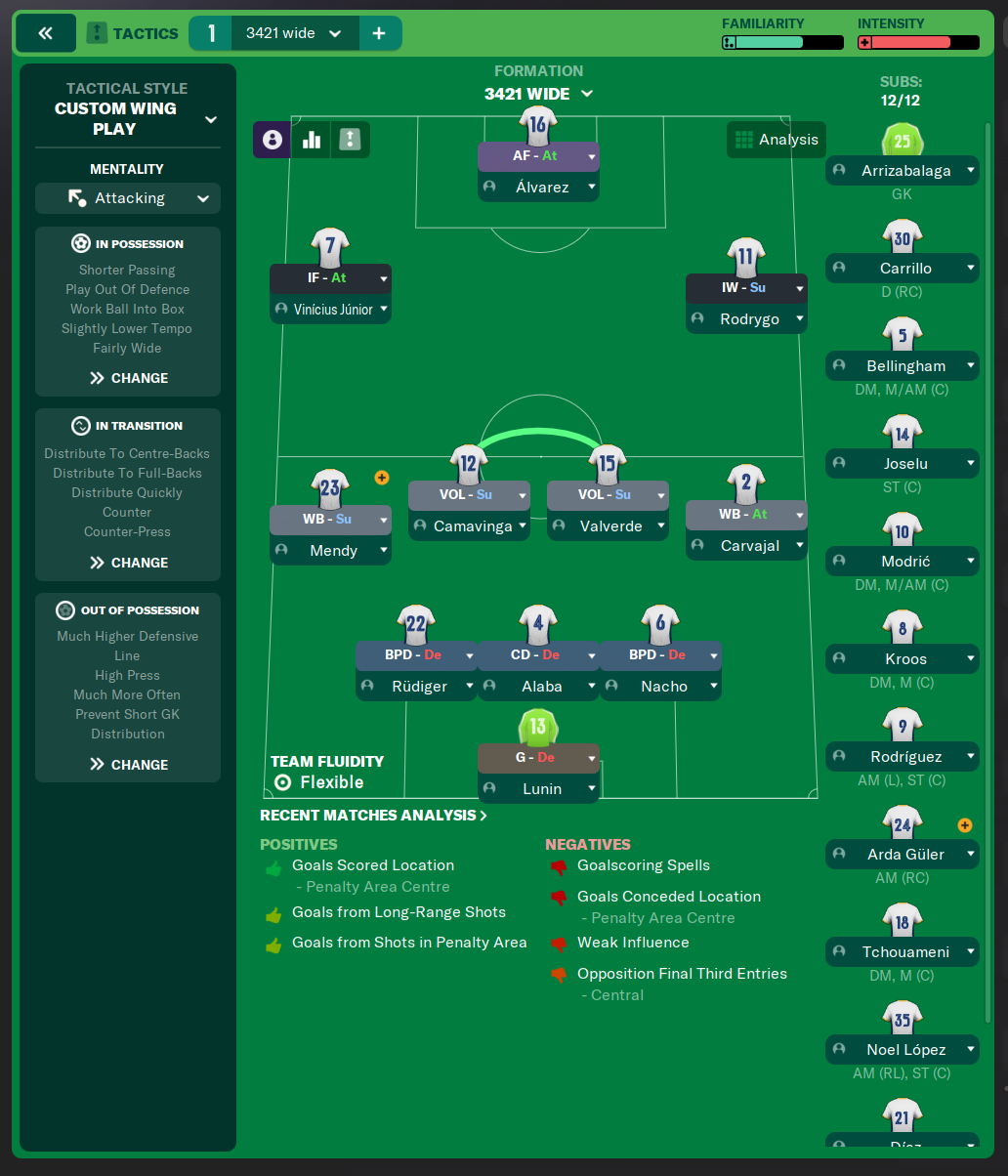
Guides for this formation
The tactical theory behind the 4-2-3-1 Wide: roles, instructions, and the trade-offs that decide whether the system holds up.
Player pairings
Midfield Pairs in 4-2-3-1 and 4-4-2
Double pivots and flat pairs in 4-2-3-1 and 4-4-2: when each pairing works, when it collapses, and the AMC unicorn that rescues both.
Read guide
Playing styles
Gegenpressing: A Full Guide
Klopp-style gegenpressing in FM, including squad profile, line-and-press pairing, sustainable workload, and the antipatterns to avoid.
Read guide