Uploaded Tactic
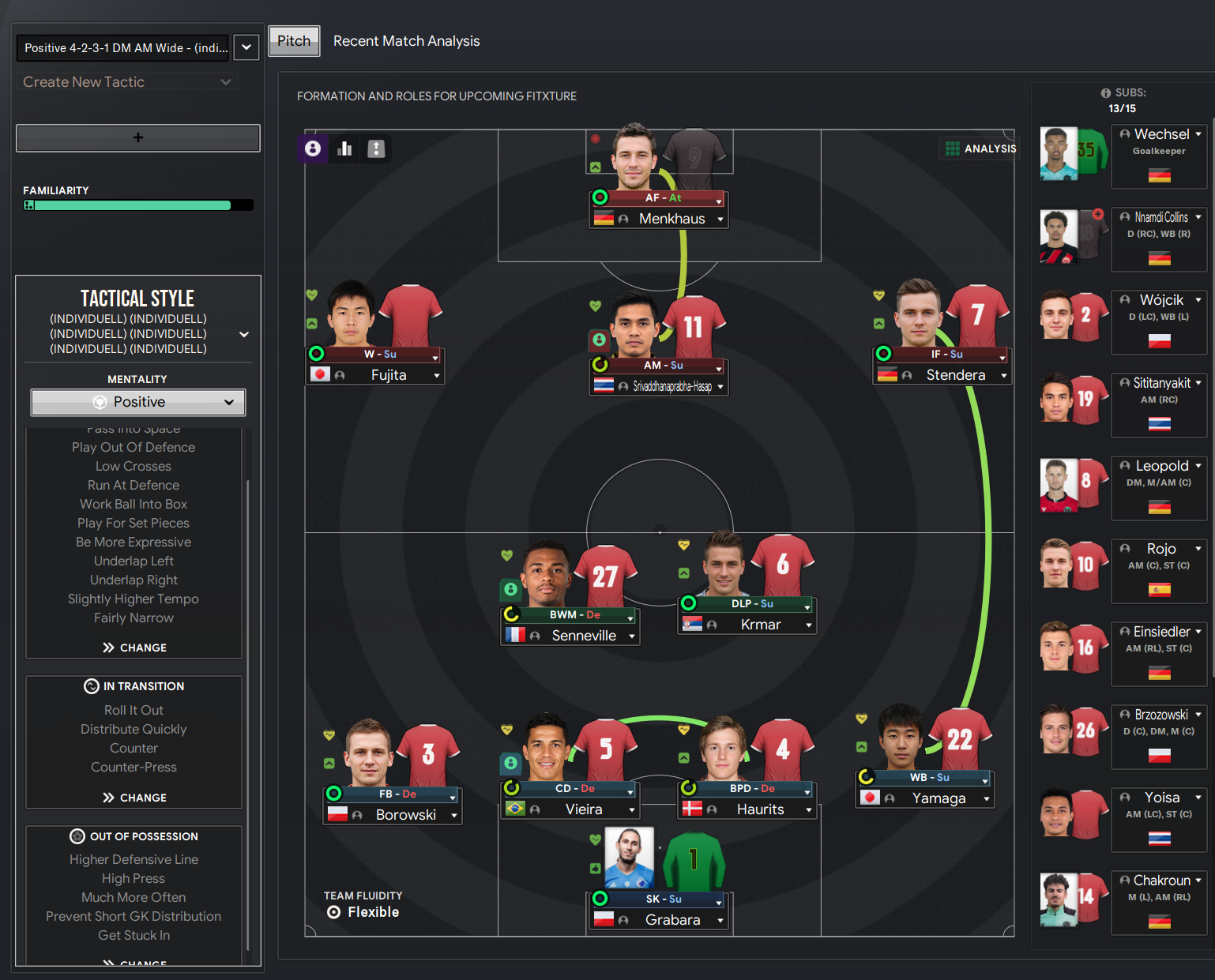
Formation & Style
Tactical Style:Individual (individual)
Mentality:Positive
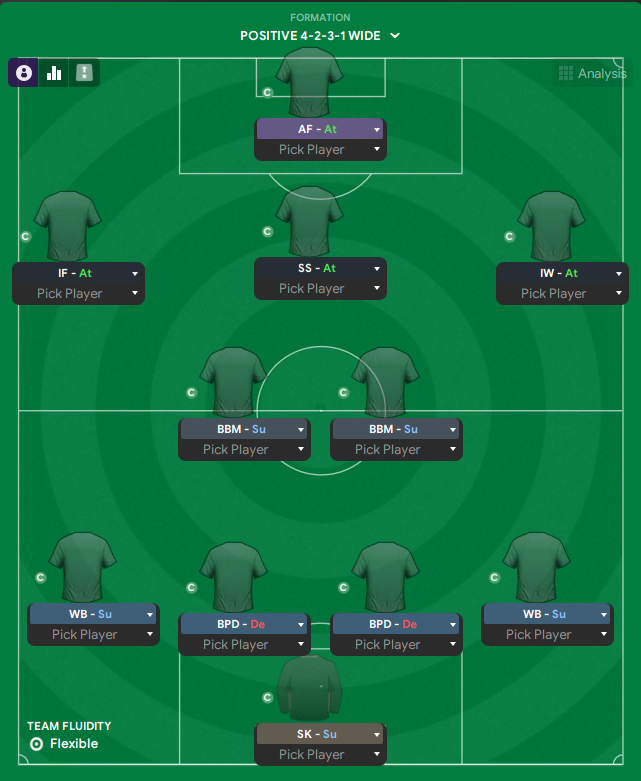
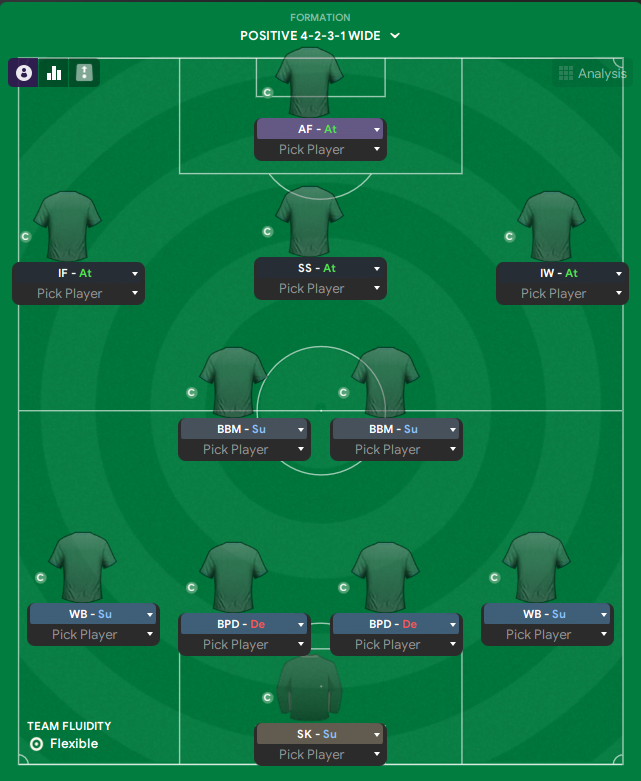
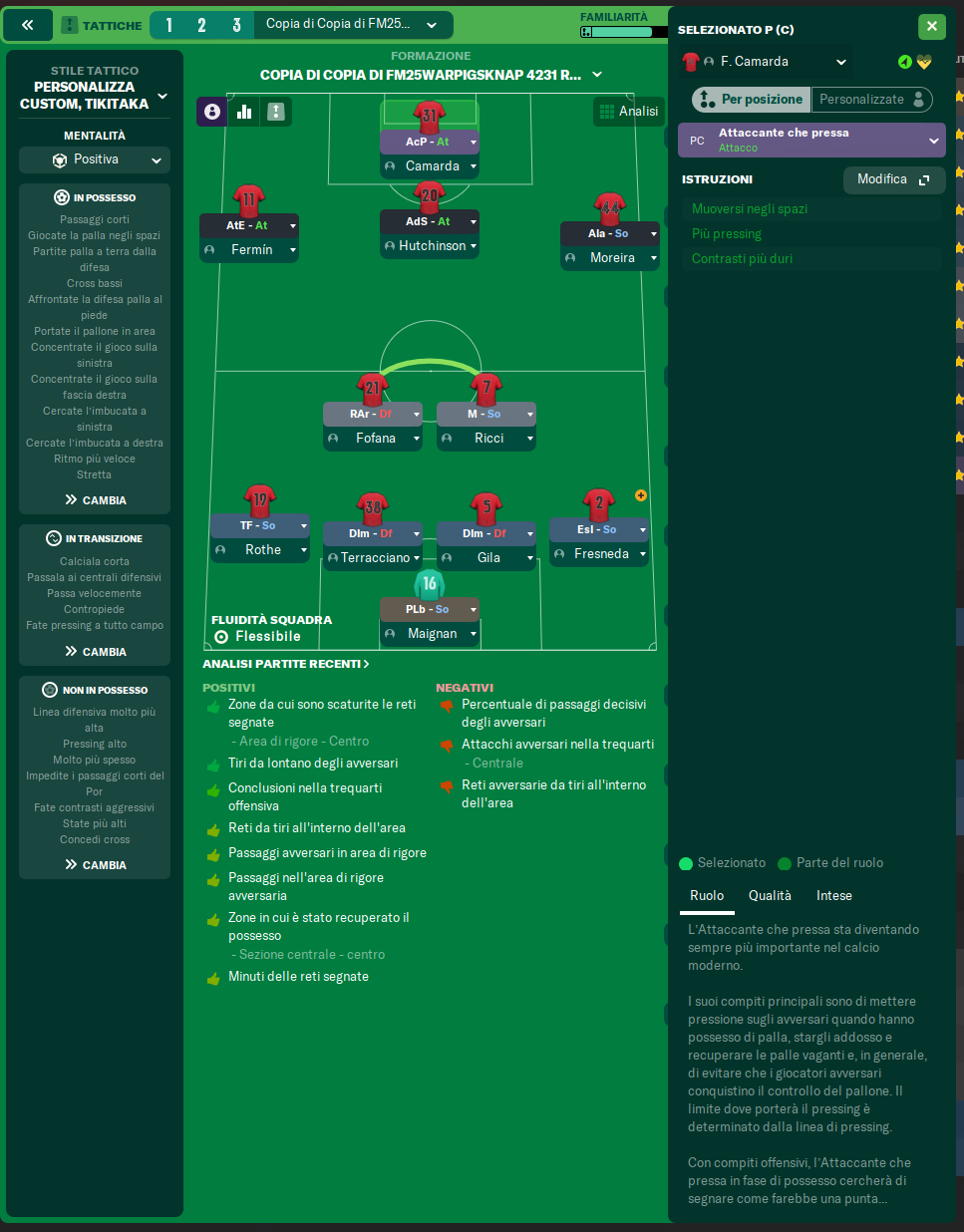
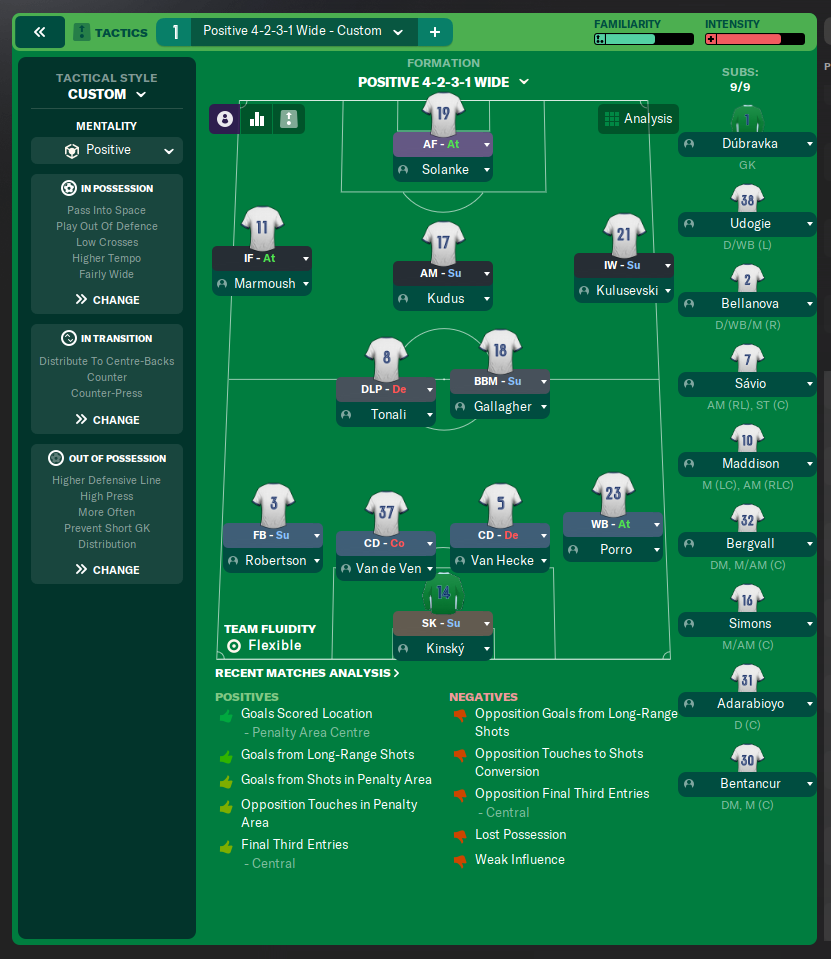
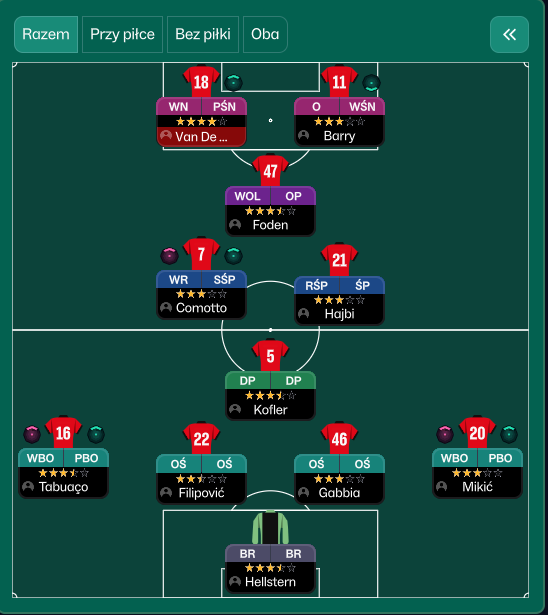
Formation:4-2-3-1 Wide
Team Fluidity:Flexible
In Possession
Play Out of Defence
Work Ball Into Box
Run At Defence
Lower Crosses
In Transition
Distribute Quickly
Counter
Counter-Press
Out of Possession
Higher Defensive Line
High Press
Prevent Short GK Distribution
Get Stuck In
Team Shape Without Ball
No team shape without ball data available
Team Shape With Ball
No team shape with ball data available
Key Strengths
Versatile Attacking Options
The 4-2-3-1 formation allows for multiple attacking outlets with an advanced forward complemented by shadow strikers and wingers, creating diverse goal-scoring opportunities.
Strong Midfield Control
The presence of a deep-lying playmaker and a ball-winning midfielder provides stability in midfield, enabling the team to dominate possession and transition effectively.
High Pressing Game
With a high defensive line and a commitment to pressing, the team can force opponents into mistakes, increasing the chances of regaining possession in dangerous areas.
Flexible Team Structure
The flexible team fluidity allows players to interchange positions and adapt to various match situations, enhancing overall team dynamics.
Conflicting Directions
High Line vs. Countering Style
While a high defensive line promotes pressing, it also risks vulnerability against fast counter-attacks, especially if the midfield fails to cover adequately.
Shadow Striker and Advanced Forward Dynamics
The roles may conflict in terms of space and movement; if both try to occupy similar areas, it could lead to congestion in the attacking play.
Non-aggressive BWM Role
The ball-winning midfielder (BWM) playing as support may not contribute enough defensively if the team is under pressure, which could expose the back line.
Inconsistent Wide Play
Assigning two support roles to the wing backs might limit width; using one as an attacking wing back could better stretch the opposition.
Tactical Suggestions
Reassess BWM Role
Consider changing the ball-winning midfielder from support to defend to provide more cover for the defense, especially against fast transitions.
Utilize Attacking Wing Back
Switch one wing back to an attacking duty to increase width and provide more options in the final third, enhancing the team's attacking potential.
Improve Shadow Striker Space Awareness
Encourage the shadow striker to create more distance from the advanced forward by adjusting player instructions, allowing for more fluid movement in and around the box.
Focus on Defensive Cohesion
Consider adopting a slightly lower defensive line during matches against fast-paced teams to maintain defensive solidity and reduce risk.
Ask Questions About Your Lineup
Related Tactics
Guides for this formation
The tactical theory behind the 4-2-3-1 Wide: roles, instructions, and the trade-offs that decide whether the system holds up.
Player pairings
Midfield Pairs in 4-2-3-1 and 4-4-2
Double pivots and flat pairs in 4-2-3-1 and 4-4-2: when each pairing works, when it collapses, and the AMC unicorn that rescues both.
Read guide
Playing styles
Gegenpressing: A Full Guide
Klopp-style gegenpressing in FM, including squad profile, line-and-press pairing, sustainable workload, and the antipatterns to avoid.
Read guide