Uploaded Tactic
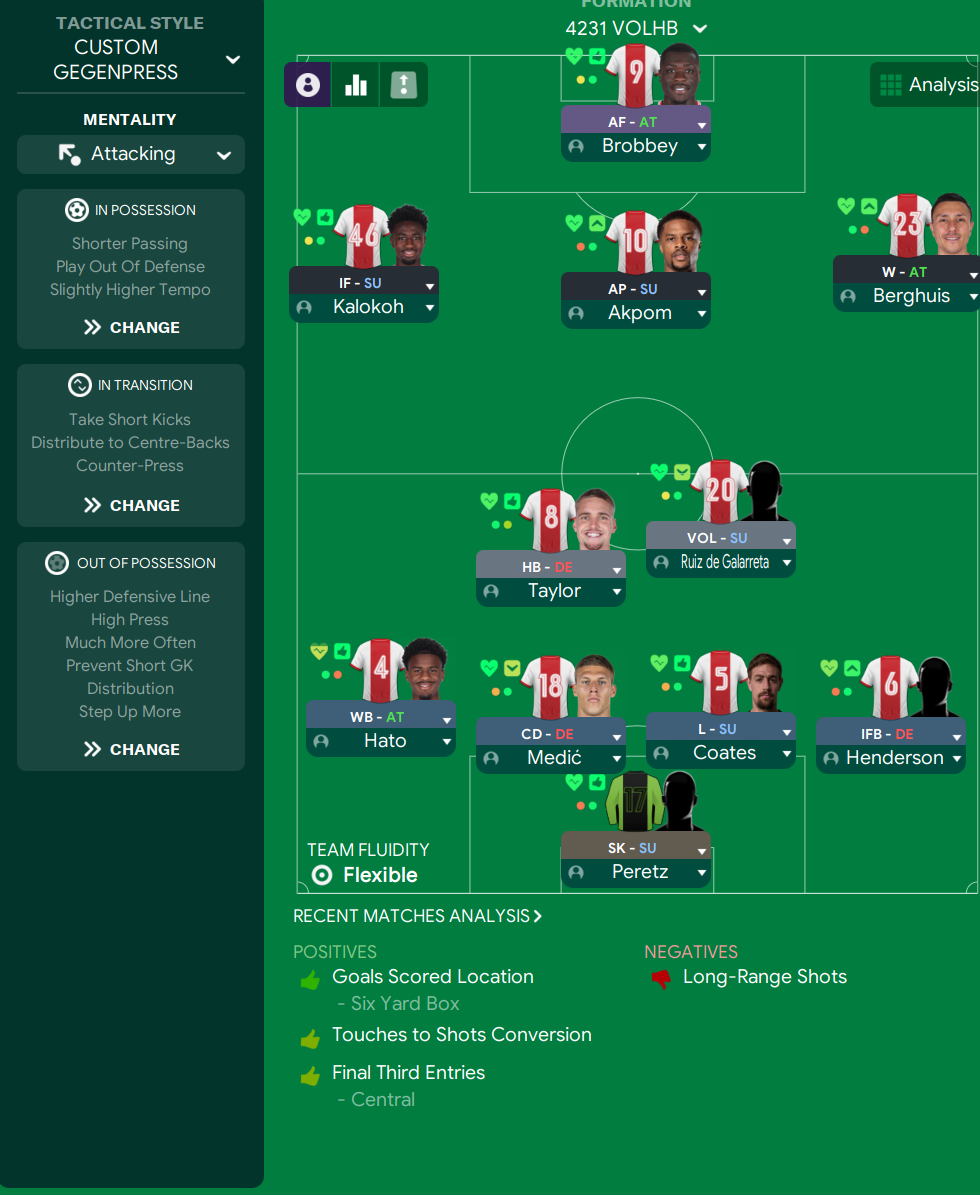
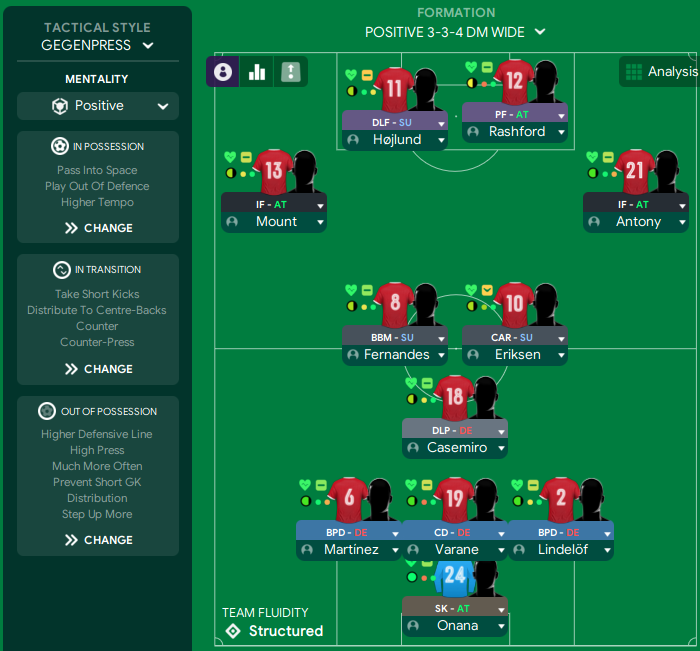
Formation & Style
Tactical Style:Gegenpress
Mentality:Attacking
Formation:4-2-3-1 Wide
Team Fluidity:Flexible
In Possession
Shorter Passing
Play Out Of Defence
Slightly Higher Tempo
In Transition
Take Short Kicks
Distribute to Centre-Backs
Counter-Press
Out of Possession
Higher Defensive Line
High Press
Much More Often Prevent Short GK Distribution
Step Up More
Team Shape Without Ball
Shape:4-2
Description:Defensive block with a focus on maintaining a high line to compress the playing area, supported by a high press.
Evidence:Higher Defensive Line + High Press
Team Shape With Ball
Shape:4-3
Description:Balanced attacking structure with width provided by wing-backs, a creative central playmaker, and inside forwards who can cut in to create chances.
Evidence:Trio of IF + AP + W to create space and opportunities
Phase Description
Attacking Play
Emphasis on high possession with a focus on creating central entries and utilizing width via the wing-backs.
Defensive Transition
Quick recovery of possession with immediate pressure on opponents to regain the ball.
Main Focus
Create scoring opportunities through quick combined play and exploit spaces left by the opposition.
Key Strengths
Goal-Scoring Efficiency
The team effectively capitalizes on goal-scoring chances, particularly in critical areas.
Central Penetration
Strong performance in creating chances in the final third, a crucial aspect for converting opportunities.
Effective Build-Up Play
The team demonstrates strong connections in play leading to a higher conversion rate of touches to shots.
Conflicting Directions
Defensive Stability vs. High Press
The high defensive line may leave the team vulnerable to quick counter-attacks, especially if the press fails.
Under-Utilization of Full-Backs
While wing-backs are tasked with attack, they may be caught upfield during transitions, which could leave gaps.
Inside Forwards' Dependency
Heavy reliance on inside forwards causing a potential stagnation in width; might limit the overall attacking dimension.
Tactical Suggestions
Increase Midfield Protection
Consider adjusting the duties of the half back to support transitions better.
Diversify Attack Approaches
Incorporating an extra deep-lying playmaker might help with transitions and improve connection in midfield.
Monitor Full-Back Positions
Evaluate the positioning of wing-backs to avoid being overexposed during counter-attacks.
Ask Questions About Your Lineup
Related Tactics
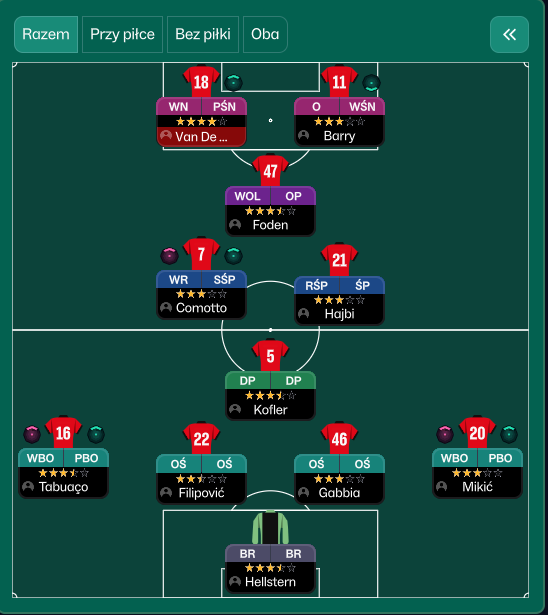
More Gegenpress tactics
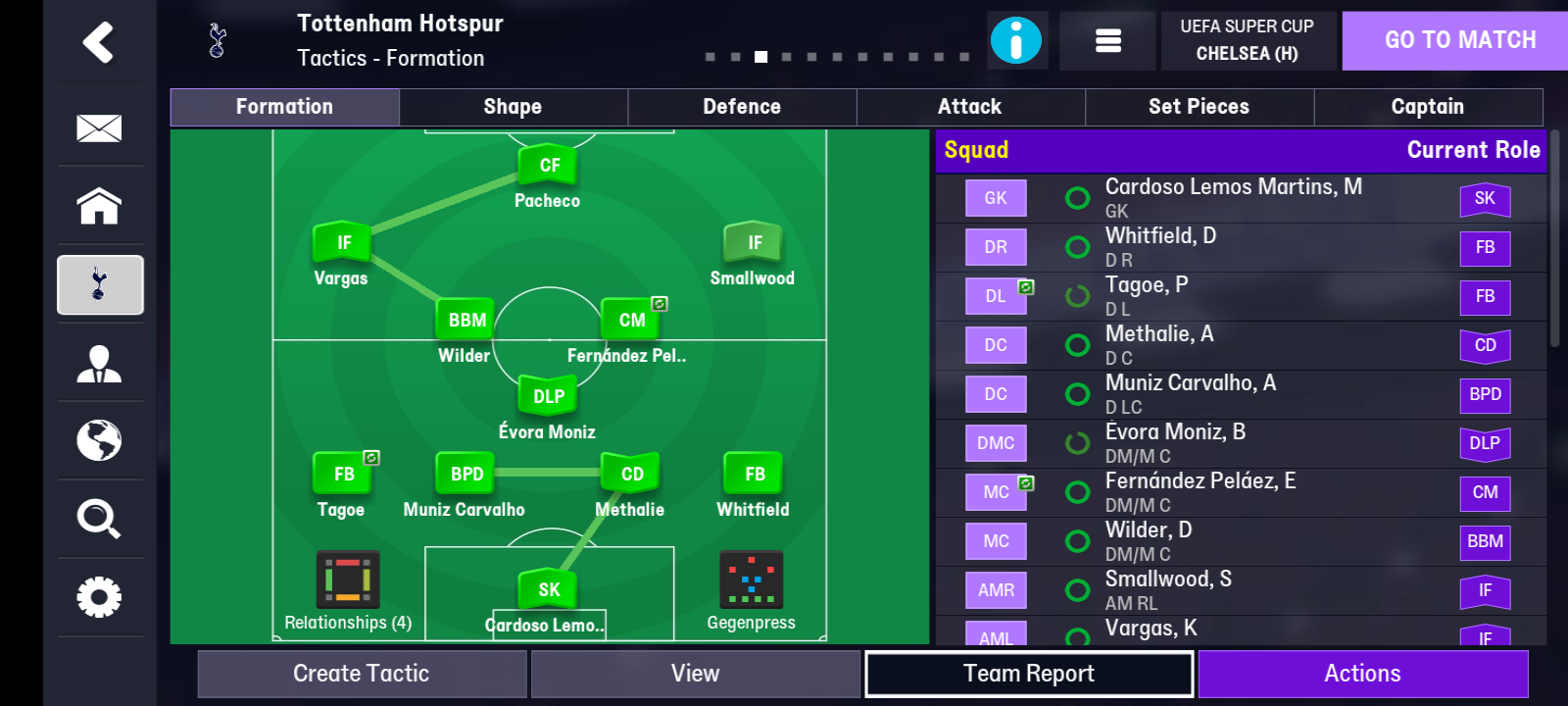
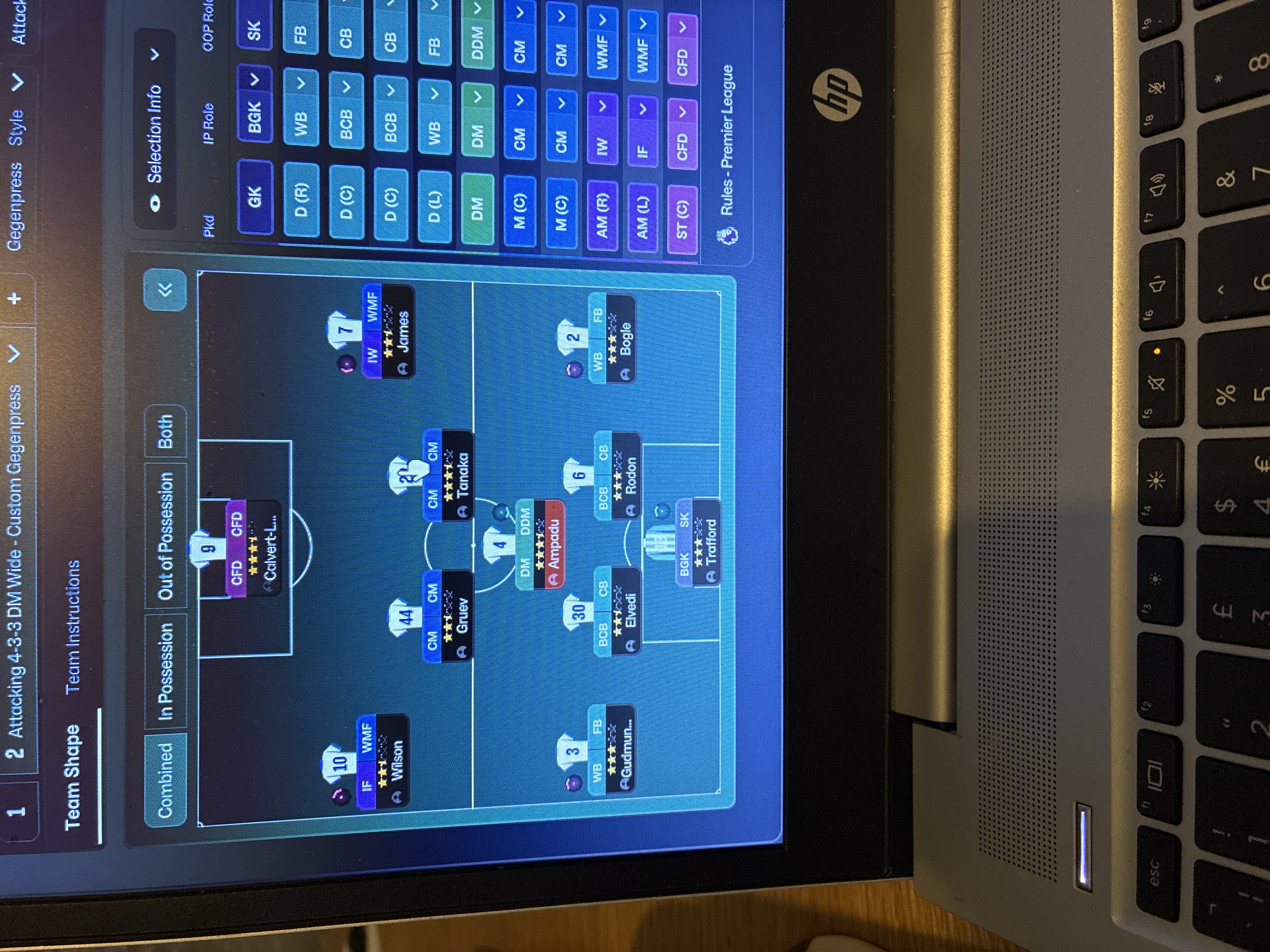
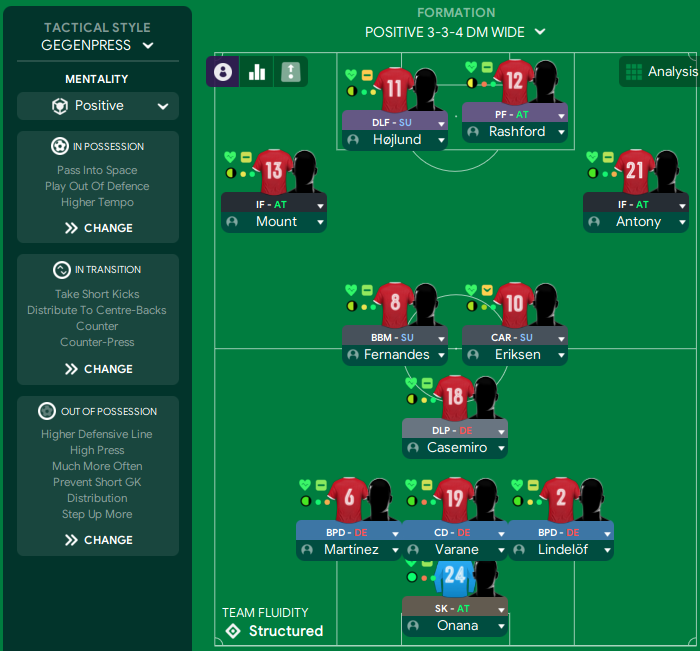
Guides for this formation
The tactical theory behind the 4-2-3-1 Wide: roles, instructions, and the trade-offs that decide whether the system holds up.
Player pairings
Midfield Pairs in 4-2-3-1 and 4-4-2
Double pivots and flat pairs in 4-2-3-1 and 4-4-2: when each pairing works, when it collapses, and the AMC unicorn that rescues both.
Read guide
Playing styles
Gegenpressing: A Full Guide
Klopp-style gegenpressing in FM, including squad profile, line-and-press pairing, sustainable workload, and the antipatterns to avoid.
Read guide