Uploaded Tactic
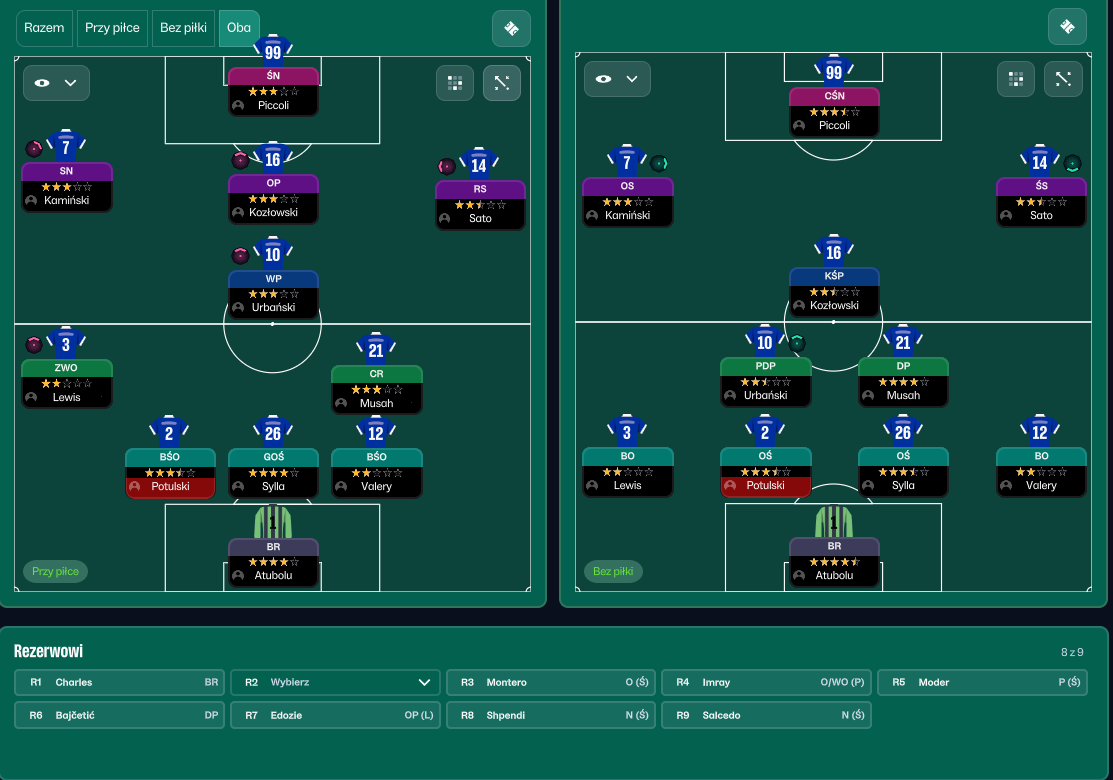
Formation & Style
Tactical Style:Direct Passing
Mentality:Positive
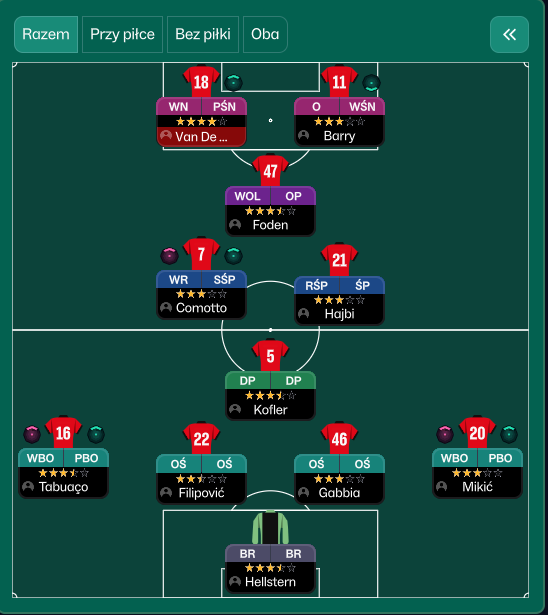
Formation:4-2-3-1 Wide
Team Fluidity:Fluid
In Possession
Play Out Of Defence
Employ Overlap on Left
Work Ball Into Box
In Transition
Counter-Press
Counter
Out of Possession
High Press
Prevent Short GK Distribution
Defensive Line Higher
Team Shape Without Ball
Shape:4-4-2
Description:The team forms a compact shape when out of possession, forcing opponents wide.
Evidence:The Wing-Backs (at [2,5] and [2,1]) drop back to help defend, ensuring width is maintained.
Team Shape With Ball
Shape:4-2-3-1
Description:With the ball, the team shifts to a more advanced structure, pushing Wing-Backs forward to create overloads.
Evidence:The Wingers (at [6,2] and [6,4]) stretch the opposition and create space for the Advanced Playmaker (at [5,3]).
Phase Description
Attacking Play
Quick transitions with emphasis on width and crossing opportunities from the Wing-Backs paired with through balls for the Advanced Forward.
Defensive Transition
Aggressive counter-pressing to regain possession quickly, aiming to shut down the opposition before they can break.
Main Focus
Exploiting the flanks with fast, attacking play while maintaining solid defensive cover.
Key Strengths
Dynamic Wing Play
Utilizing Wing-Backs to create width allows for varied attacking options and stretching the opponent's defense.
Strong Midfield Presence
The combination of a Ball-Winning Midfielder and a Deep-Lying Playmaker offers both defensive coverage and creative control.
Versatile Attack Formation
The formation provides attacking flexibility with multiple players capable of scoring.
Conflicting Directions
High Defensive Line vs. Fast Counter-Attacks
A higher defensive line may expose defenders to pacey counter-attacks, especially if midfielders are dragged out of position.
Width vs. Central Congestion
While featuring width, excessive reliance may congest the center when Wing-Backs are high and central players are drawn away.
Counter-Pressing Fatigue
Intense counter-pressing can lead to players tiring quickly, making it difficult to maintain energy levels throughout the match.
Tactical Suggestions
Consider a Balance in Pressing Intensity
Adjust pressing intensity to maintain player stamina, focusing on key areas rather than over-committing.
Utilize Substitutions Wisely
Plan substitutions to refresh tiring players, particularly in the midfield and defensive areas.
Adjust Width Based on Opponent
Vary the position of Wingers based on opposition strengths—reduce width against narrow formations to maintain central control.
Ask Questions About Your Lineup
Related Tactics
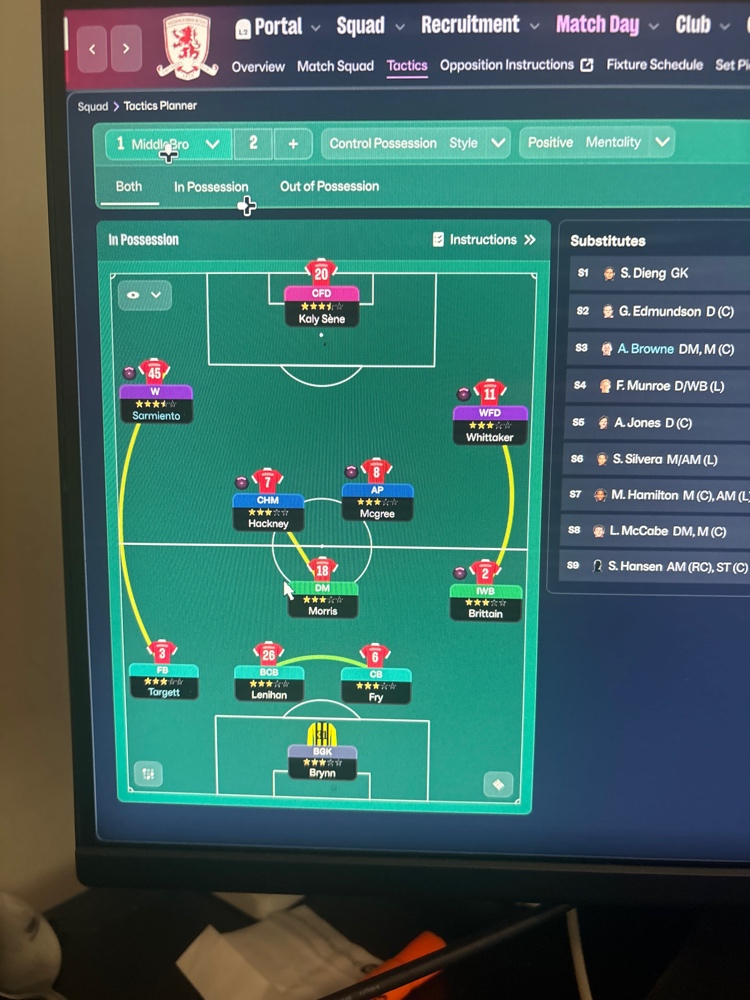
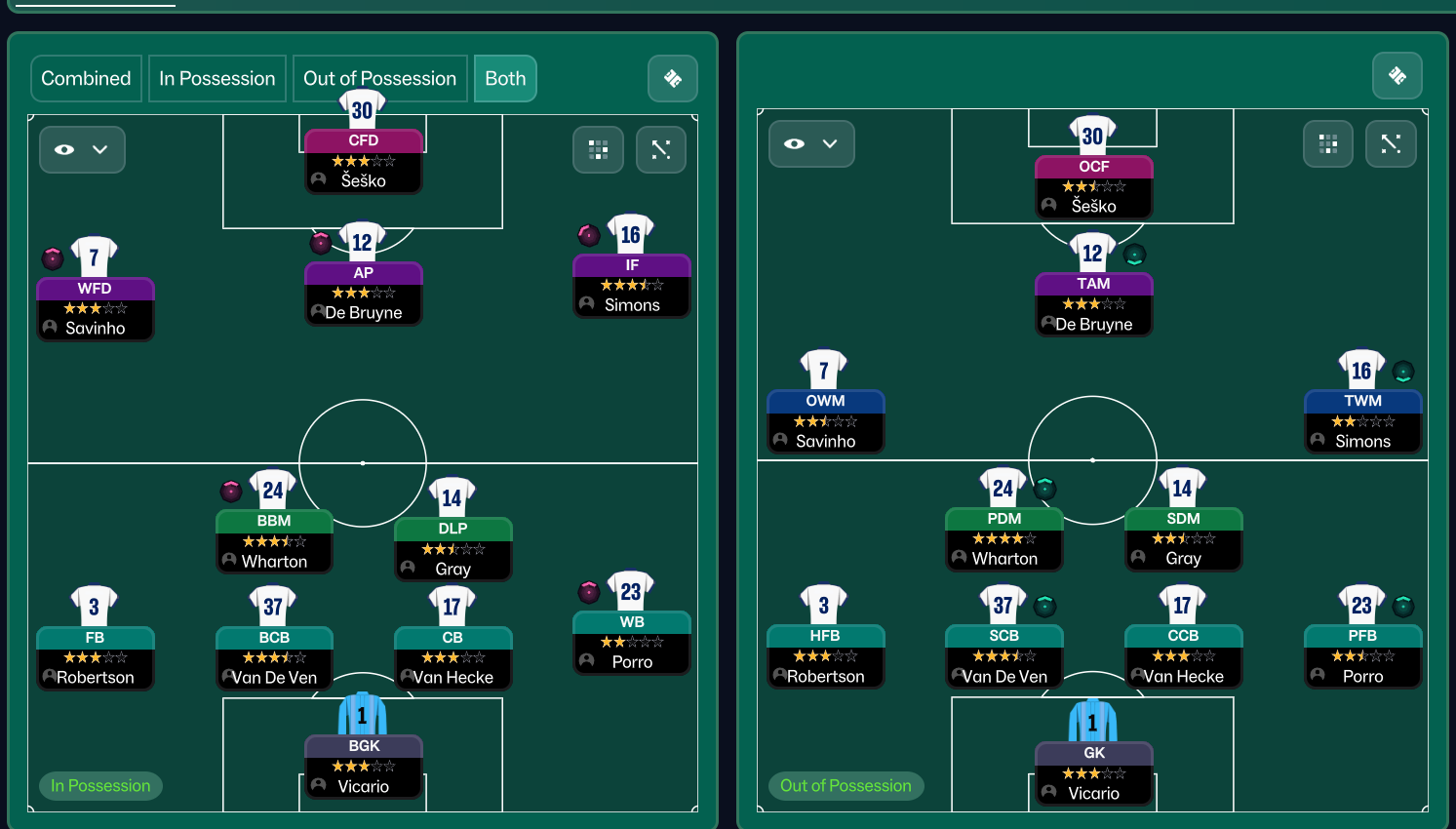
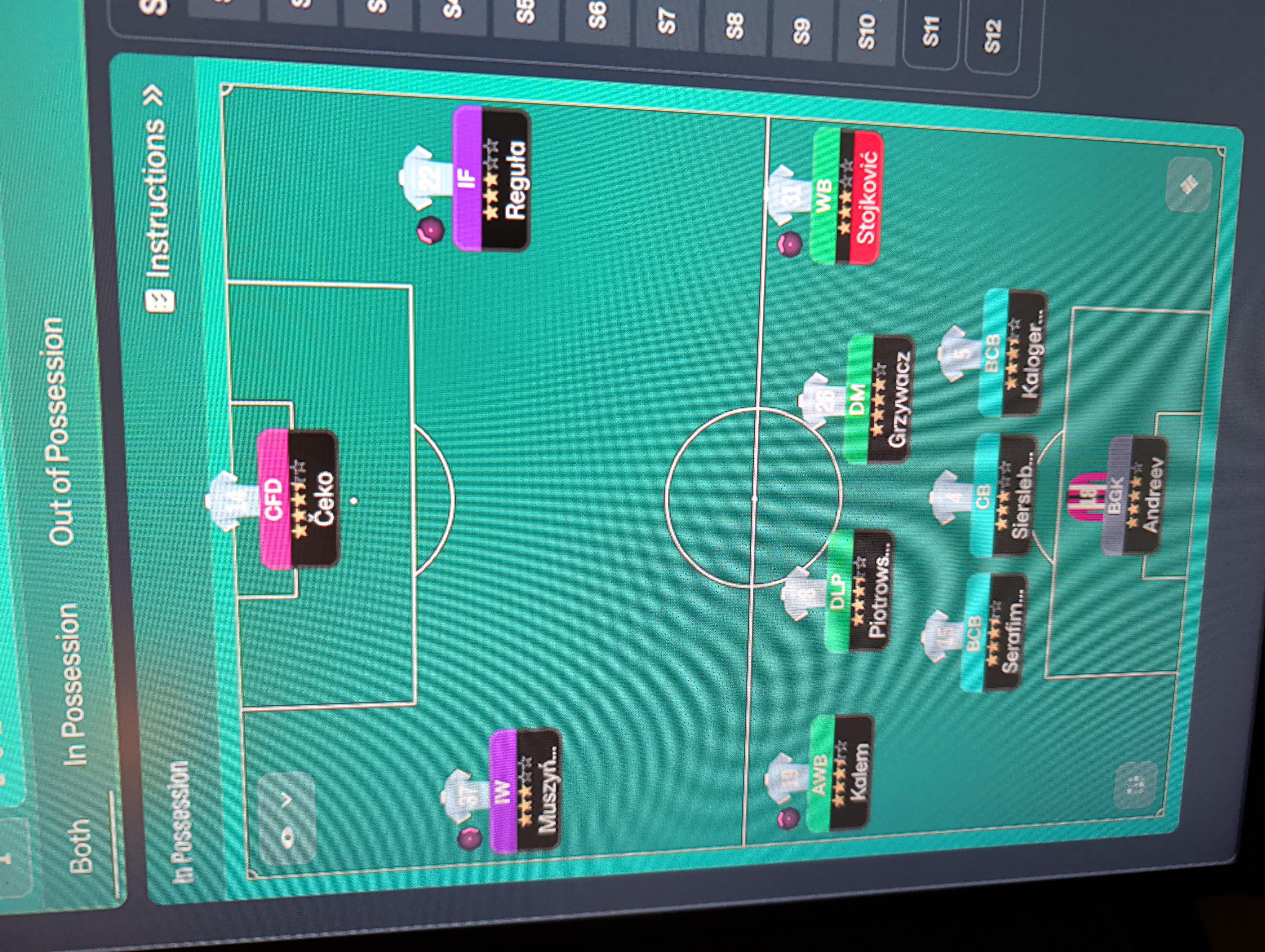
More Direct Passing tactics
Guides for this formation
The tactical theory behind the 4-2-3-1 Wide: roles, instructions, and the trade-offs that decide whether the system holds up.
Player pairings
Midfield Pairs in 4-2-3-1 and 4-4-2
Double pivots and flat pairs in 4-2-3-1 and 4-4-2: when each pairing works, when it collapses, and the AMC unicorn that rescues both.
Read guide
Playing styles
Gegenpressing: A Full Guide
Klopp-style gegenpressing in FM, including squad profile, line-and-press pairing, sustainable workload, and the antipatterns to avoid.
Read guide