Uploaded Tactic
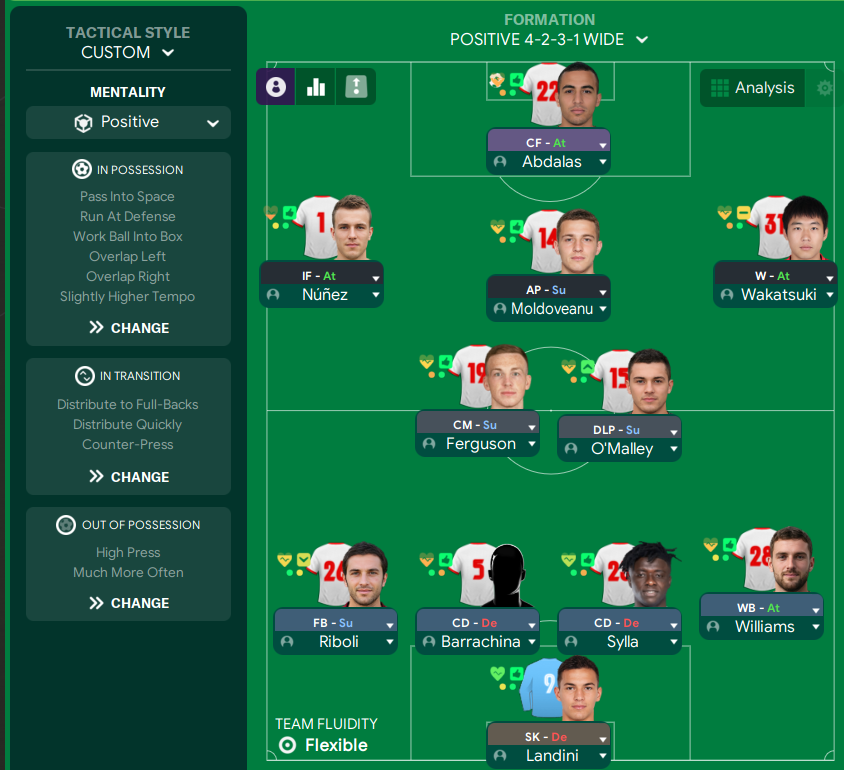
Formation & Style
Tactical Style:Custom
Mentality:Positive
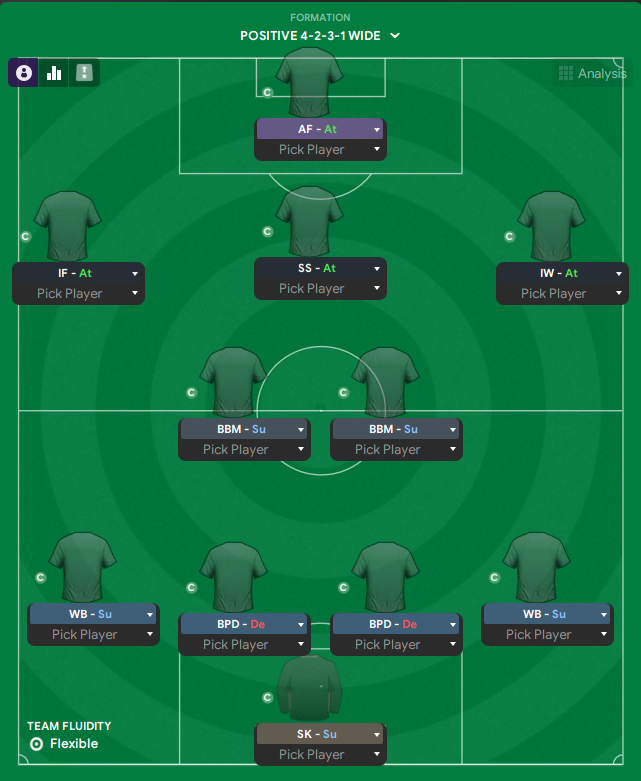
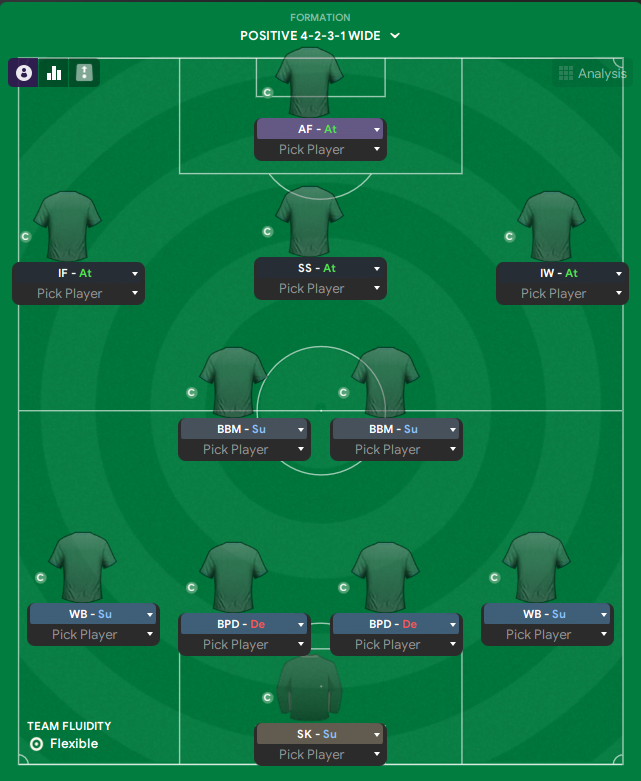
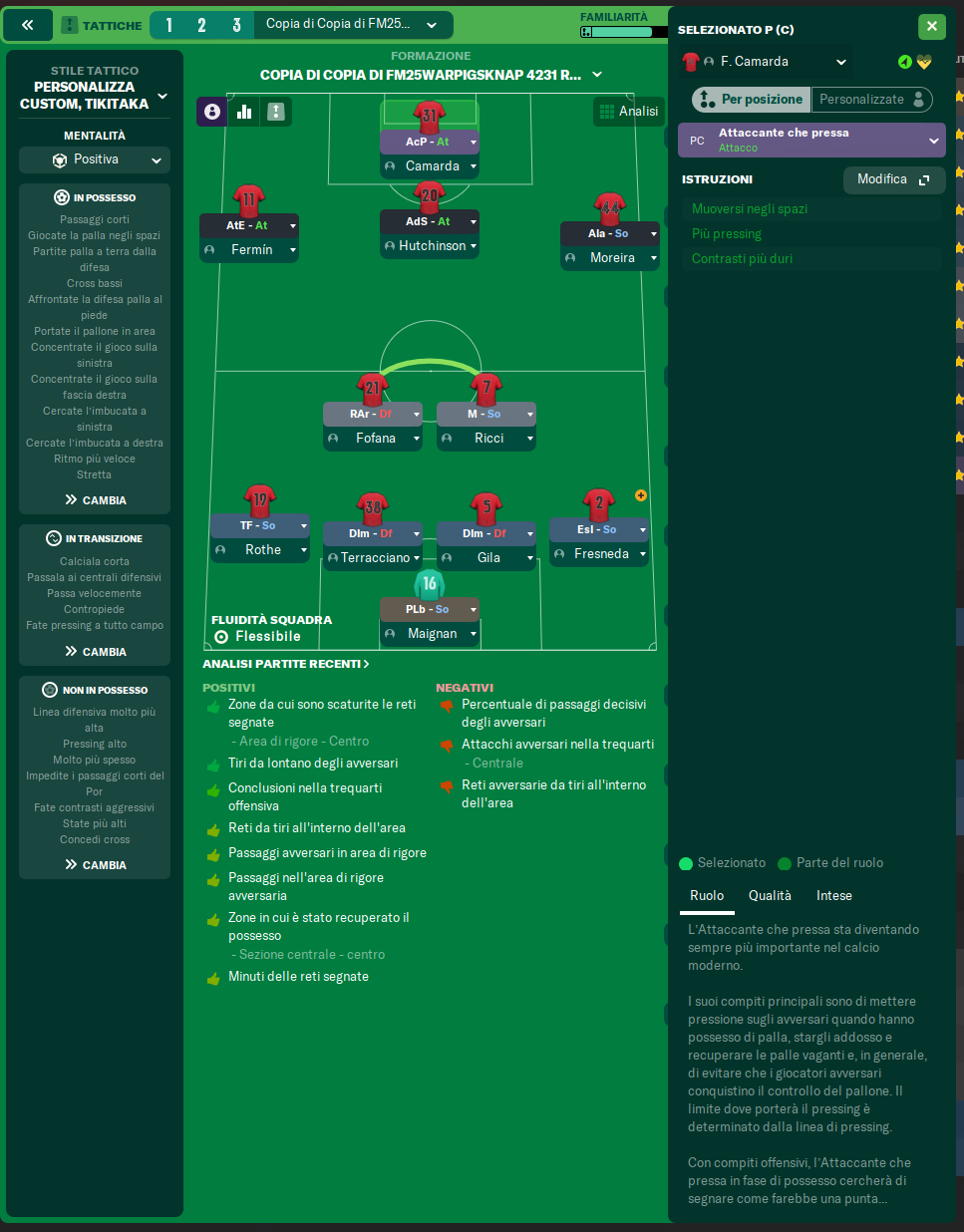
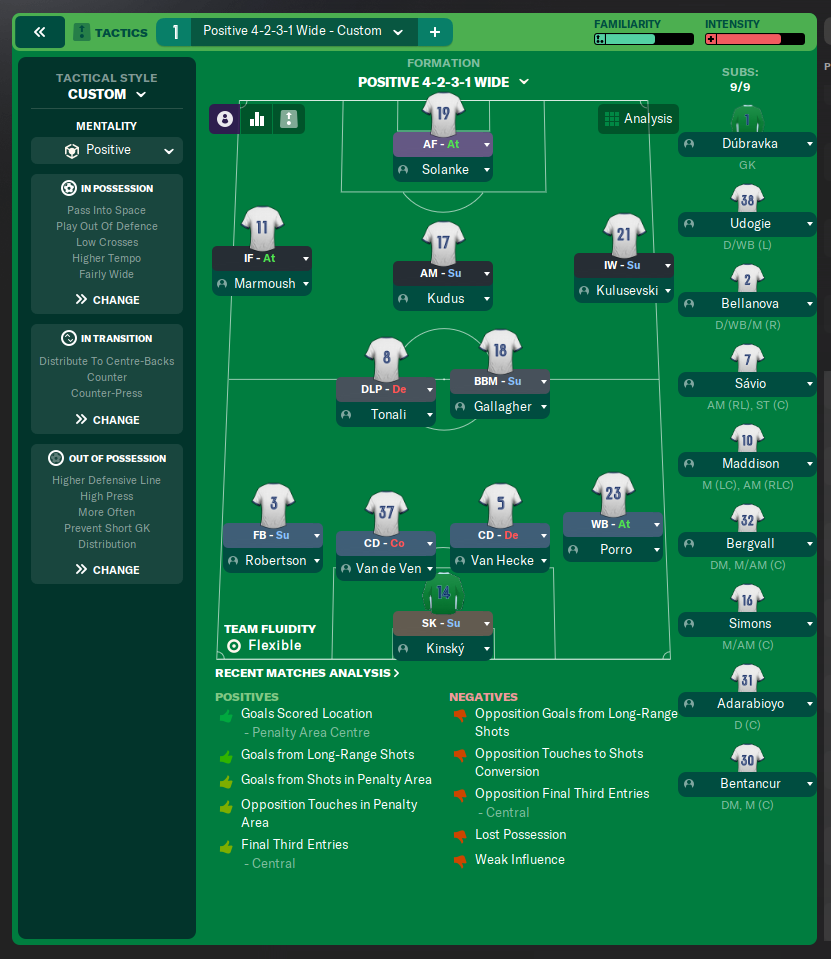
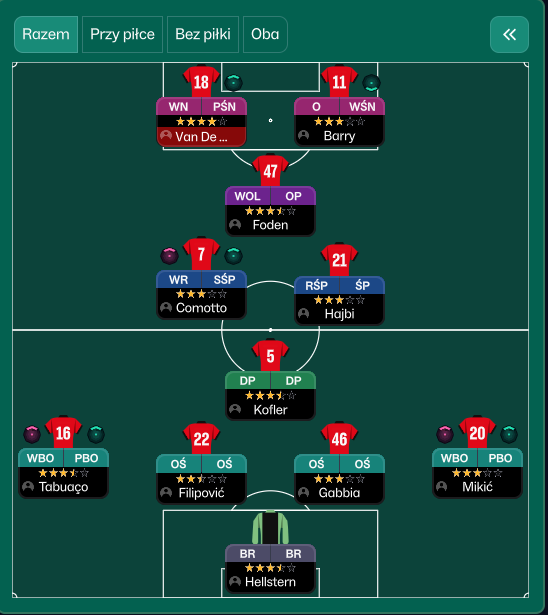
Formation:4-2-3-1 Wide
Team Fluidity:Flexible
In Possession
Pass Into Space
Run At Defense
Work Ball Into Box
Overlap Left
Overlap Right
Slightly Higher Tempo
In Transition
Distribute to Full-Backs
Distribute Quickly
Counter-Press
Out of Possession
High Press
Much More Often Prevent Short GK Distribution
Team Shape Without Ball
Shape:4-2
Description:The defensive shape maintains a compact structure with two holding midfielders providing cover for the back four.
Evidence:The CBs at [2,2] and [2,3] and DLP-S at [3,3] reinforce defensive solidity.
Team Shape With Ball
Shape:4-3
Description:The front three provide height and width while allowing midfielders to surge forward.
Evidence:The combined roles of IF-A at [6,1], AP-S at [5,2], and W-A at [5,4] define a fluid attacking front.
Phase Description
Attacking Play
The team combines quick transitions with an emphasis on width and creating space for the forwards.
Defensive Transition
Upon losing possession, the team attempts to regain ball quickly through a coordinated high press.
Main Focus
Utilizing width and quick passing to break down opposition defenses.
Key Strengths
Dynamic Attack
The combination of an Inside Forward, Advanced Playmaker, and Winger increases unpredictability.
Ball Retention
The inclusion of a Deep-Lying Playmaker and Central Midfielder enhances the ability to control midfield.
Wide Play
Full-Backs and a Wing-Back effectively provide width and overlapping options.
Conflicting Directions
High Press Effectiveness
While a high press is employed, it may leave the backline exposed to counter-attacks if not coordinated properly.
Midfield Overload
With three players in advanced positions, the midfield could become unbalanced, particularly against teams playing with three midfielders.
Overlap Risks
Overlapping play could leave defensive zones vulnerable if wing-backs are caught high up the pitch.
Tactical Suggestions
Adjust Pressing Intensity
Balance pressing intensity to avoid being overly exposed during transitional defensive situations.
Utilize a More Balanced Midfield
Consider adjusting to a 4-3-3 formation to bolster midfield strength and balance possession.
Introduce Tactical Flexibility
Incorporate more rigid tactics against stronger opponents to prevent being overrun.
Ask Questions About Your Lineup
Related Tactics
Guides for this formation
The tactical theory behind the 4-2-3-1 Wide: roles, instructions, and the trade-offs that decide whether the system holds up.
Player pairings
Midfield Pairs in 4-2-3-1 and 4-4-2
Double pivots and flat pairs in 4-2-3-1 and 4-4-2: when each pairing works, when it collapses, and the AMC unicorn that rescues both.
Read guide
Playing styles
Gegenpressing: A Full Guide
Klopp-style gegenpressing in FM, including squad profile, line-and-press pairing, sustainable workload, and the antipatterns to avoid.
Read guide