Uploaded Tactic
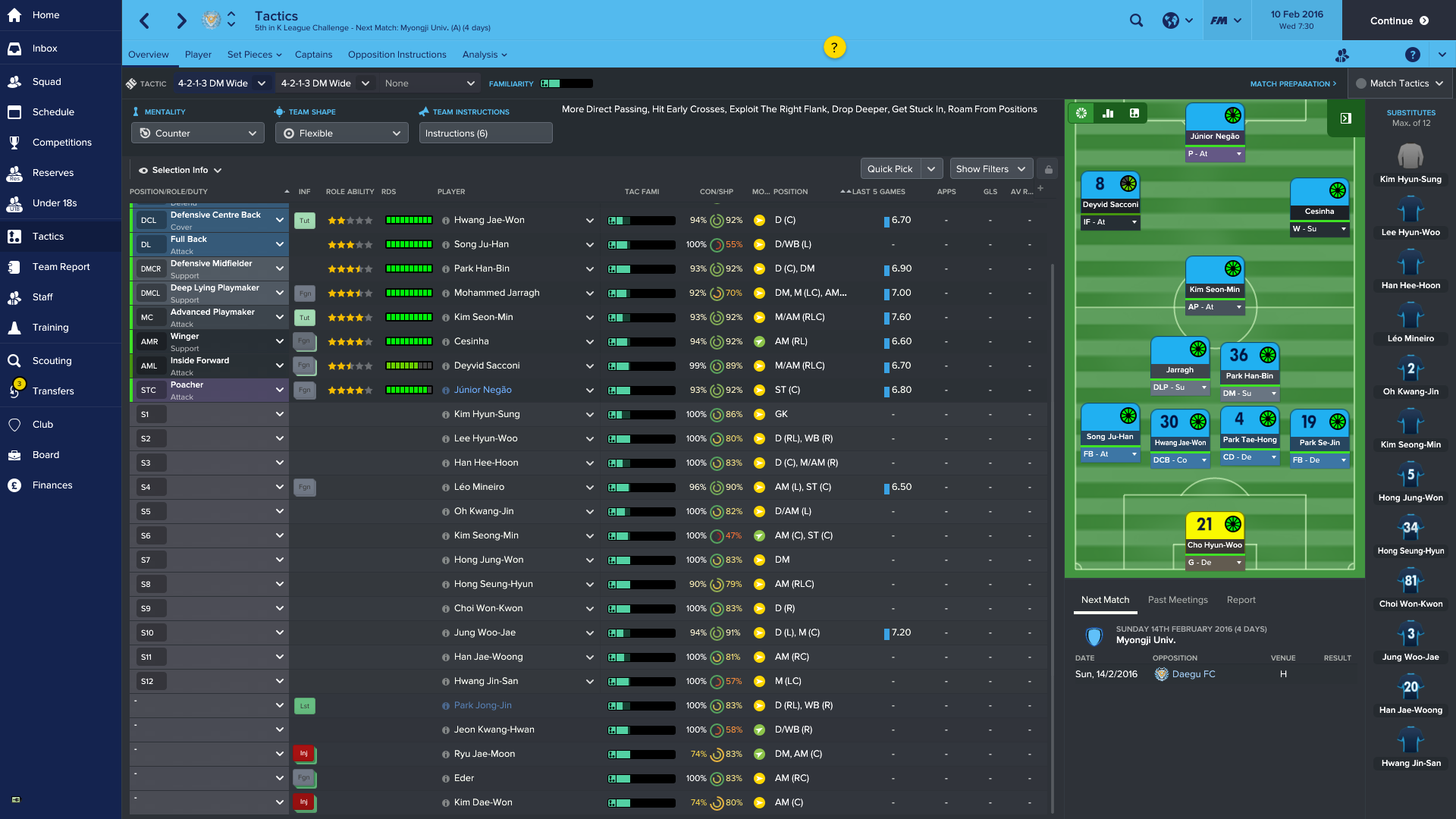
Formation & Style
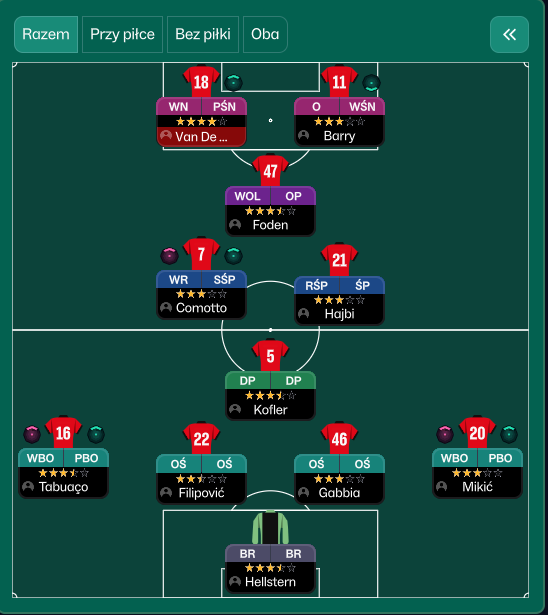
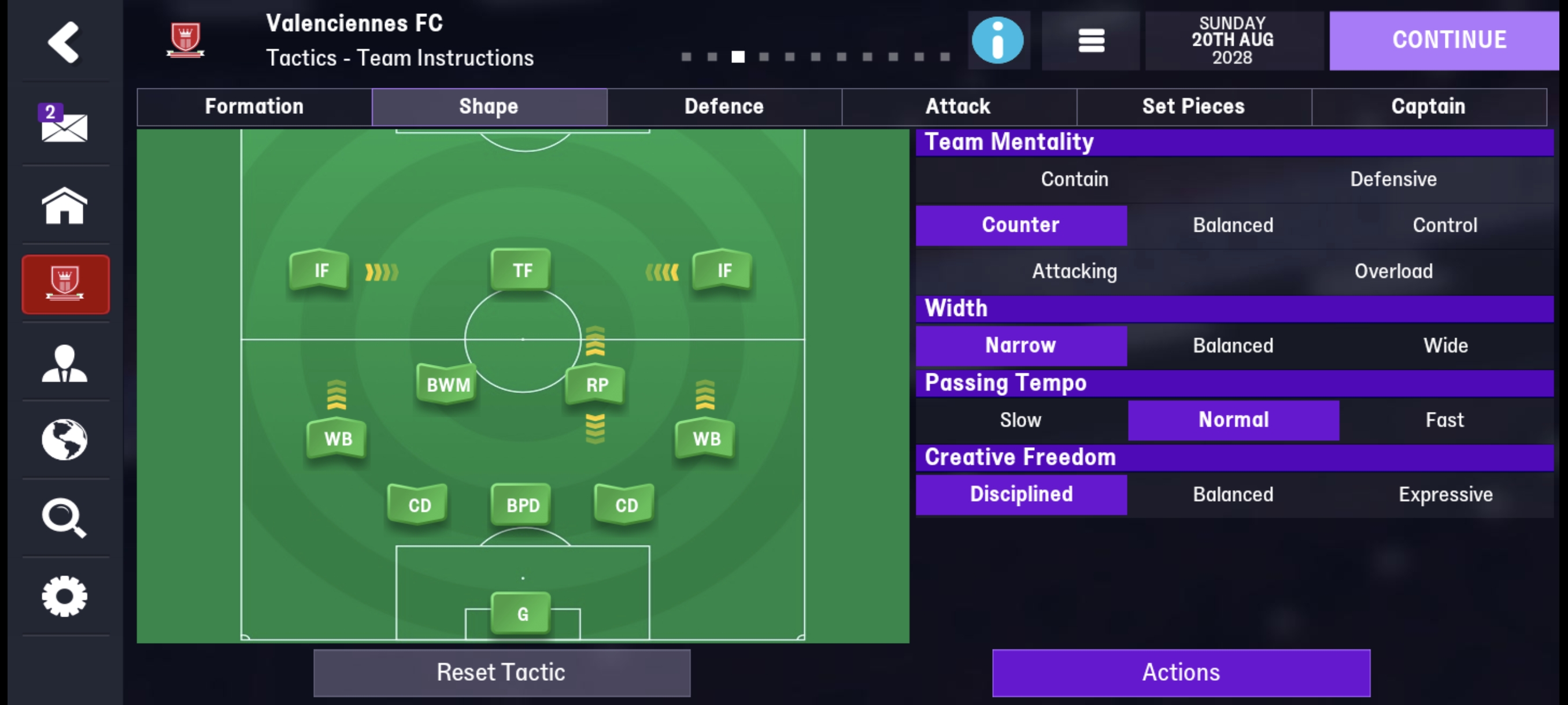
Tactical Style:Counter
Mentality:Flexible
Formation:4-2-3-1 Wide
Team Fluidity:Structured
In Possession
More Direct Passing
Hit Early Crosses
Exploit The Right Flank
In Transition
Drop Deeper
Get Stuck In
Out of Possession
Roam From Positions
Team Shape Without Ball
Shape:Compact Defensive Structure
Description:Works to maintain compactness in field, especially in central areas.
Evidence:DMC role at [3,3] provides a shield in front of defense, aiding cover.
Team Shape With Ball
Shape:Wider Shape in Attack
Description:The use of wide players allows for stretching the opposition and creating spaces in central areas.
Evidence:The Full Backs support attacks along with the Winger and Inside Forward on the flanks.
Phase Description
Attacking Play
The team aims to quickly transition from defence to attack, utilizing direct passing and exploiting the flanks with early crosses.
Defensive Transition
Players drop deeper to regain shape and prevent counter-attacks upon losing possession.
Main Focus
Utilizing width in attack while maintaining defensive solidity.
Key Strengths
Direct Attacking Play
The tactical setup encourages quick, direct transitions to create goal-scoring opportunities.
Flexible Midfield Options
With a Deep Lying Playmaker and an Advanced Playmaker, the midfield can adapt to various phases of play.
Width and Depth in Attack
The presence of a Winger and Inside Forward enhances attacking width, pushing defenders back.
Conflicting Directions
Inconsistent Pressing
The team could struggle if the pressing intensity is not uniformly applied.
Lack of Central Options
The reliance on wide play may lead to a congested central zone lacking creativity.
Transition Vulnerabilities
Dropping deeper can expose teams to quick transitions if players are not agile.
Tactical Suggestions
Increase Pressing Frequency
Consider implementing a higher pressing intensity to regain possession quickly.
Adjust Inverted Winger Role
Shifting to an Inverted Winger could create more central options while maintaining width.
Enhance Central Playmakers
Adding a more advanced midfield option could create an additional layer of creativity.
Ask Questions About Your Lineup
Related Tactics
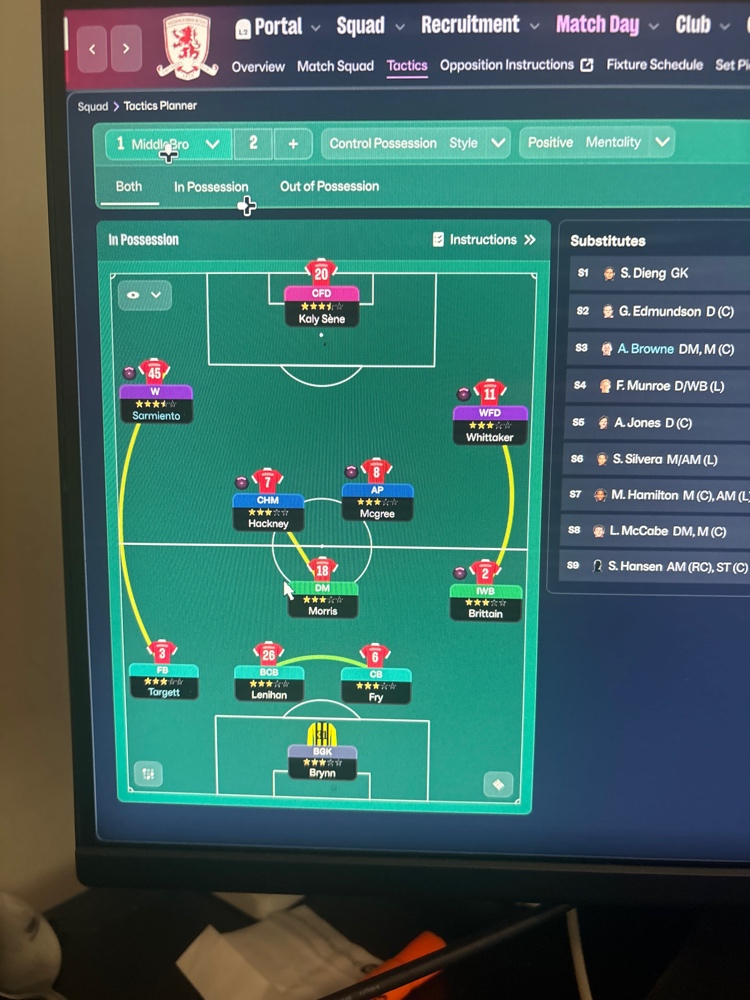
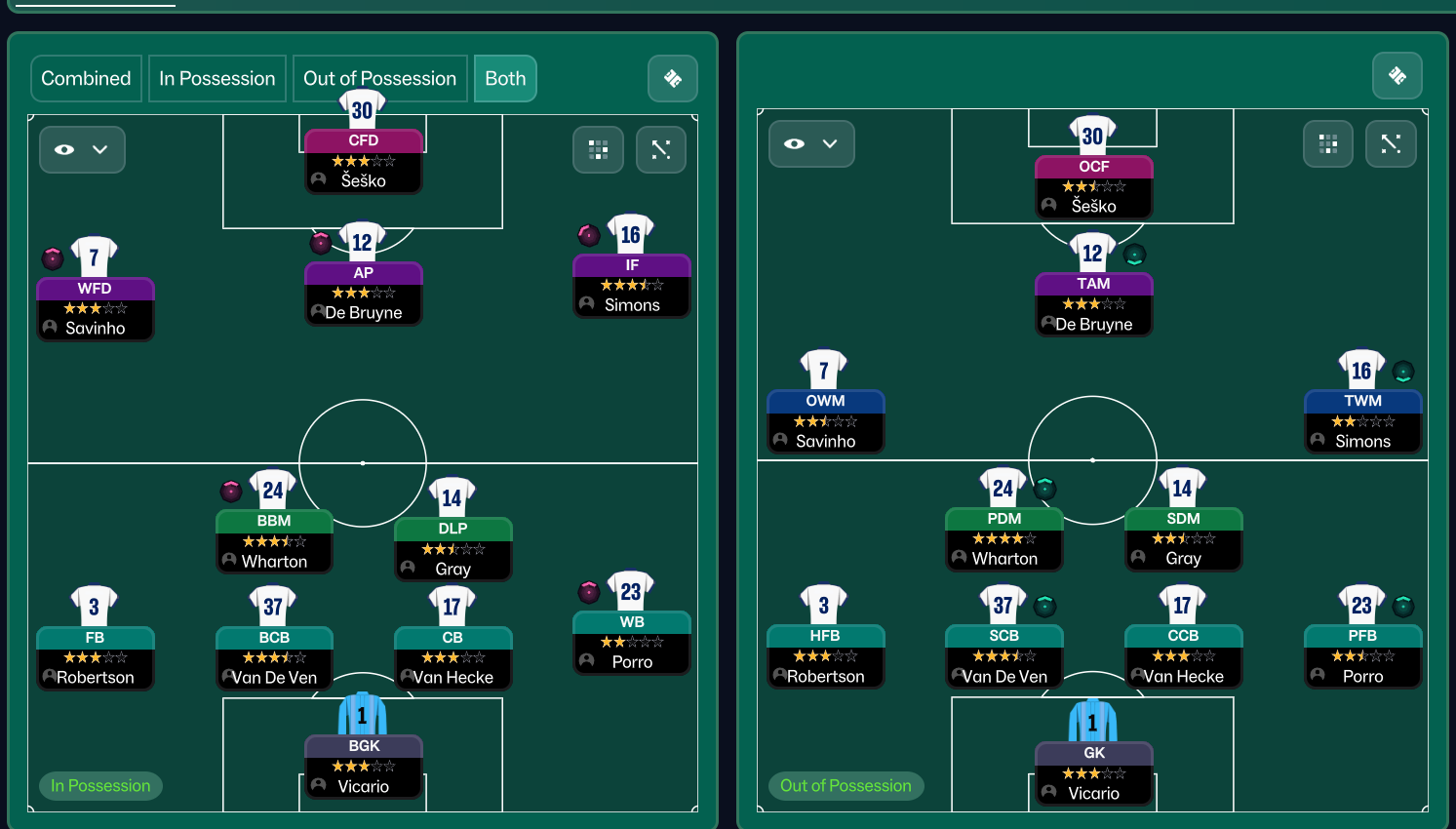
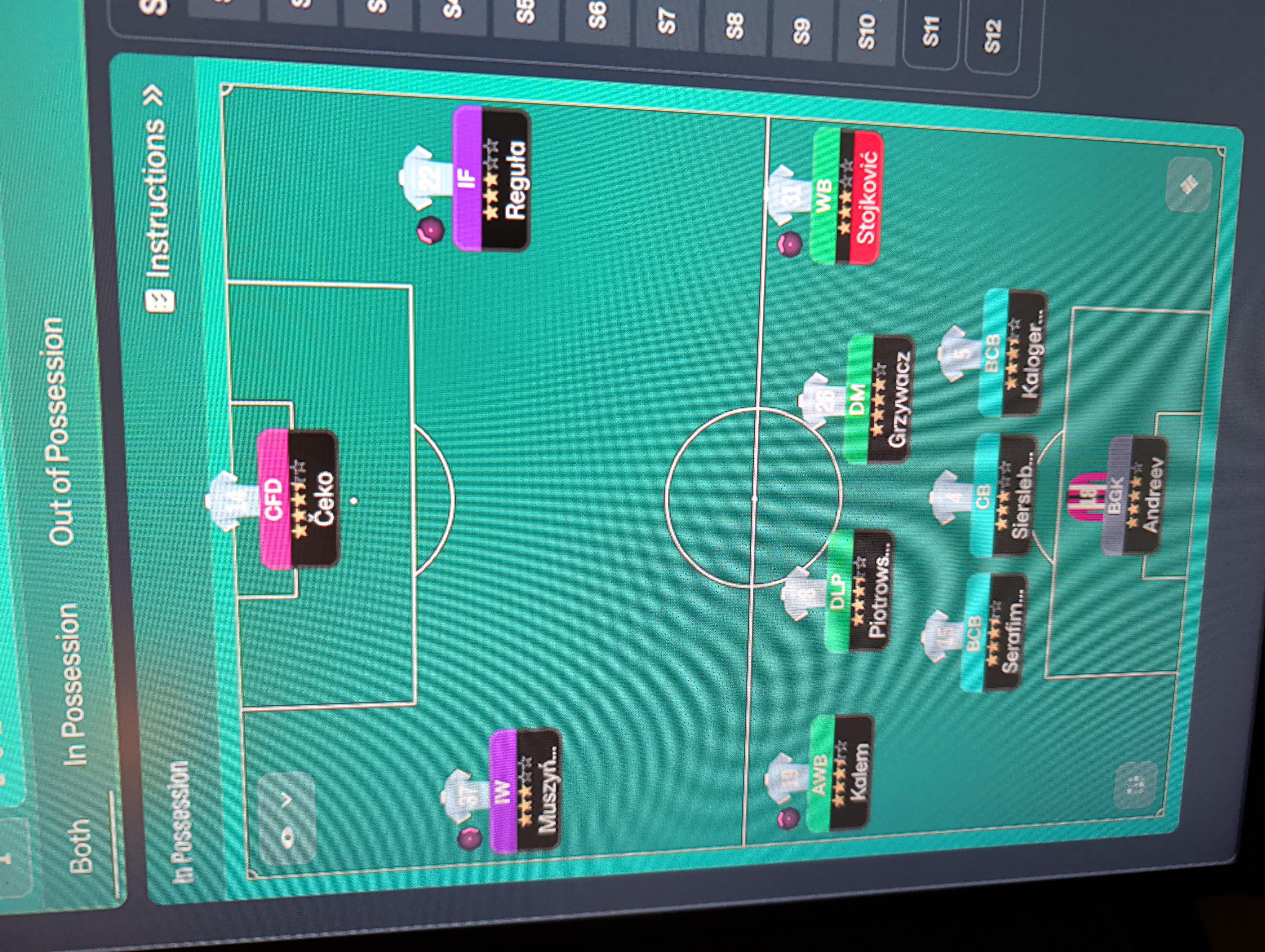
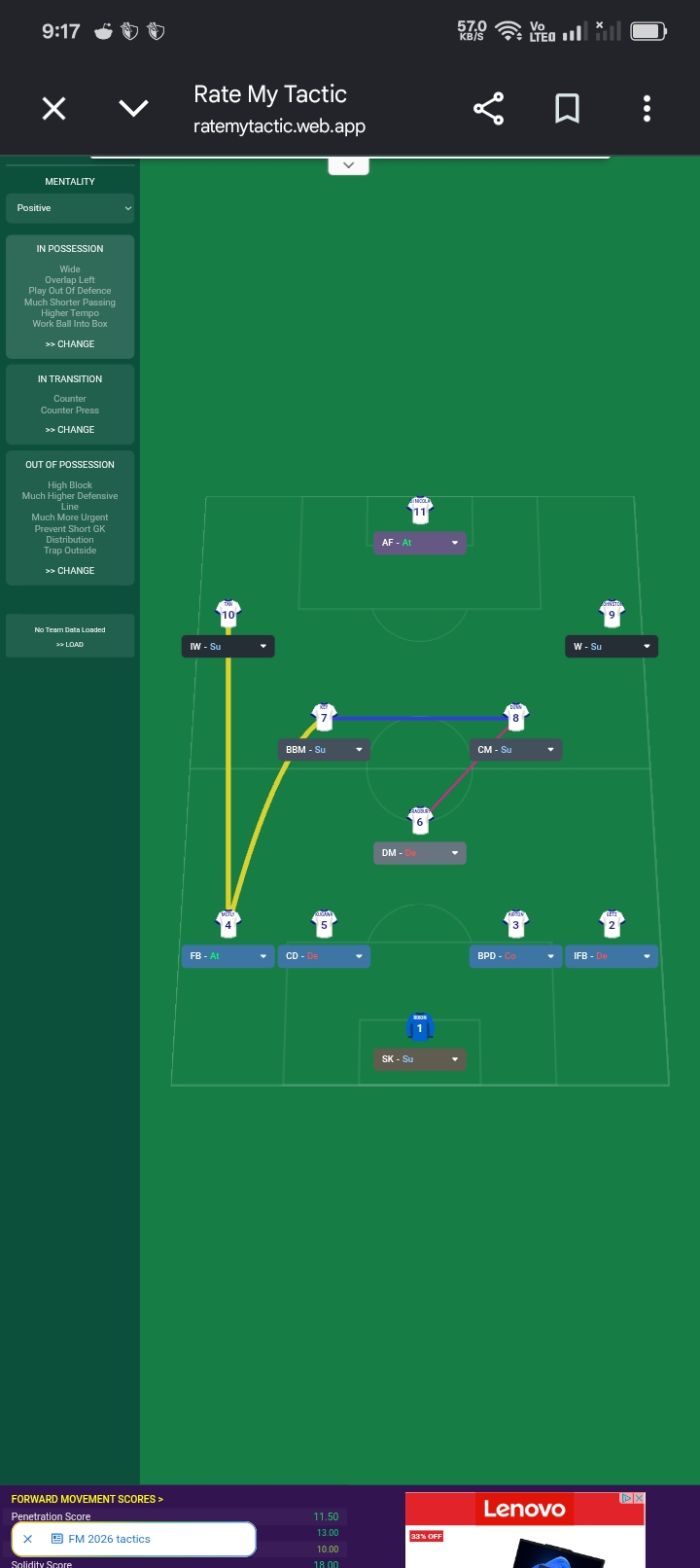
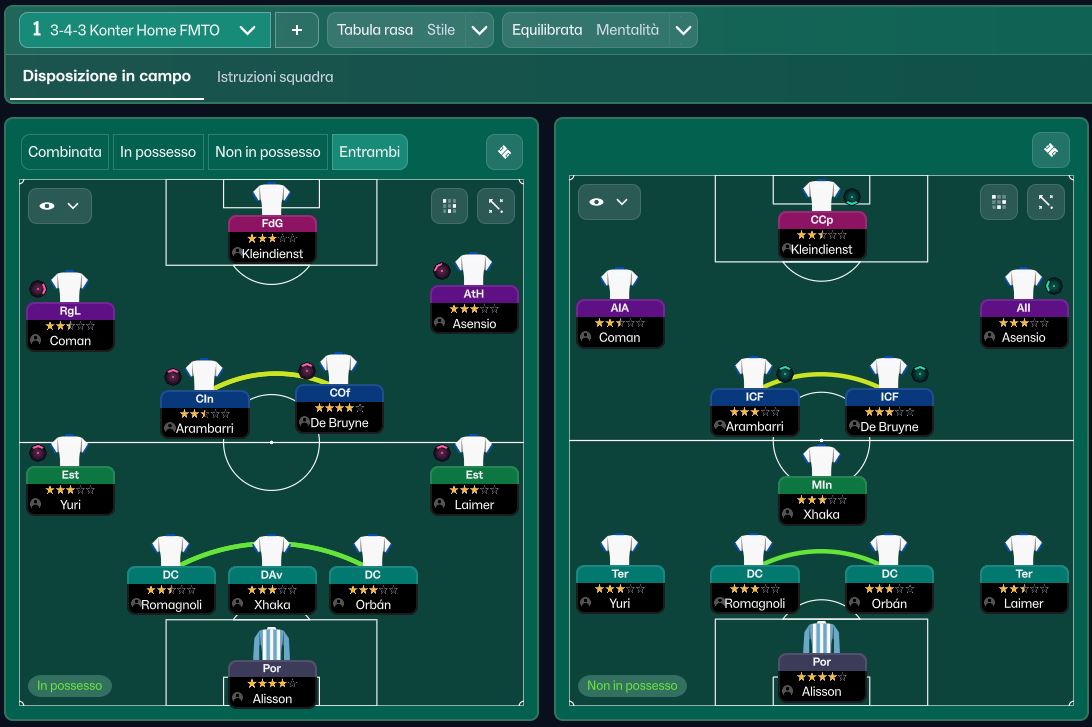
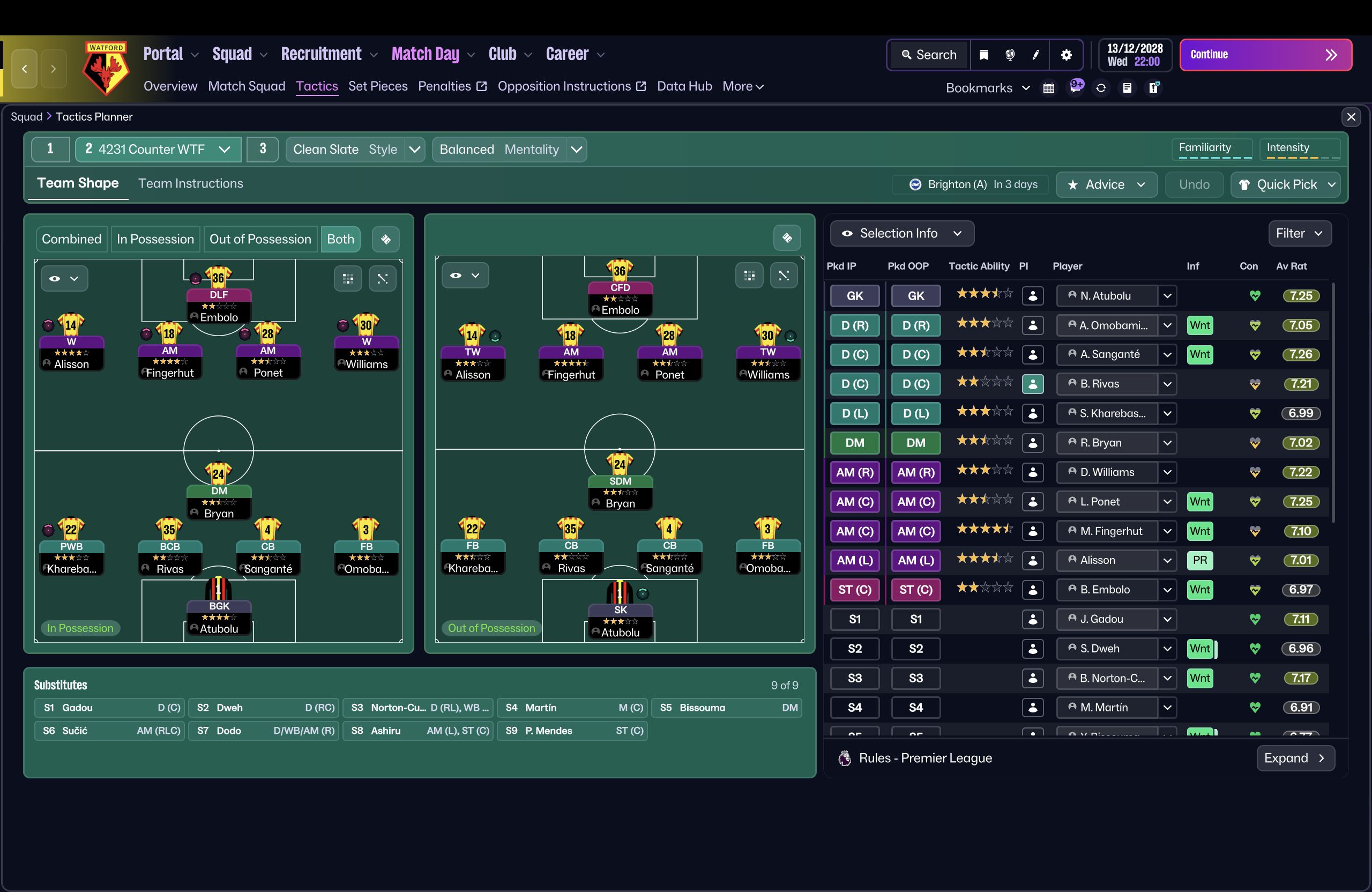
More Counter tactics
Guides for this formation
The tactical theory behind the 4-2-3-1 Wide: roles, instructions, and the trade-offs that decide whether the system holds up.
Player pairings
Midfield Pairs in 4-2-3-1 and 4-4-2
Double pivots and flat pairs in 4-2-3-1 and 4-4-2: when each pairing works, when it collapses, and the AMC unicorn that rescues both.
Read guide
Playing styles
Gegenpressing: A Full Guide
Klopp-style gegenpressing in FM, including squad profile, line-and-press pairing, sustainable workload, and the antipatterns to avoid.
Read guide