Uploaded Tactic
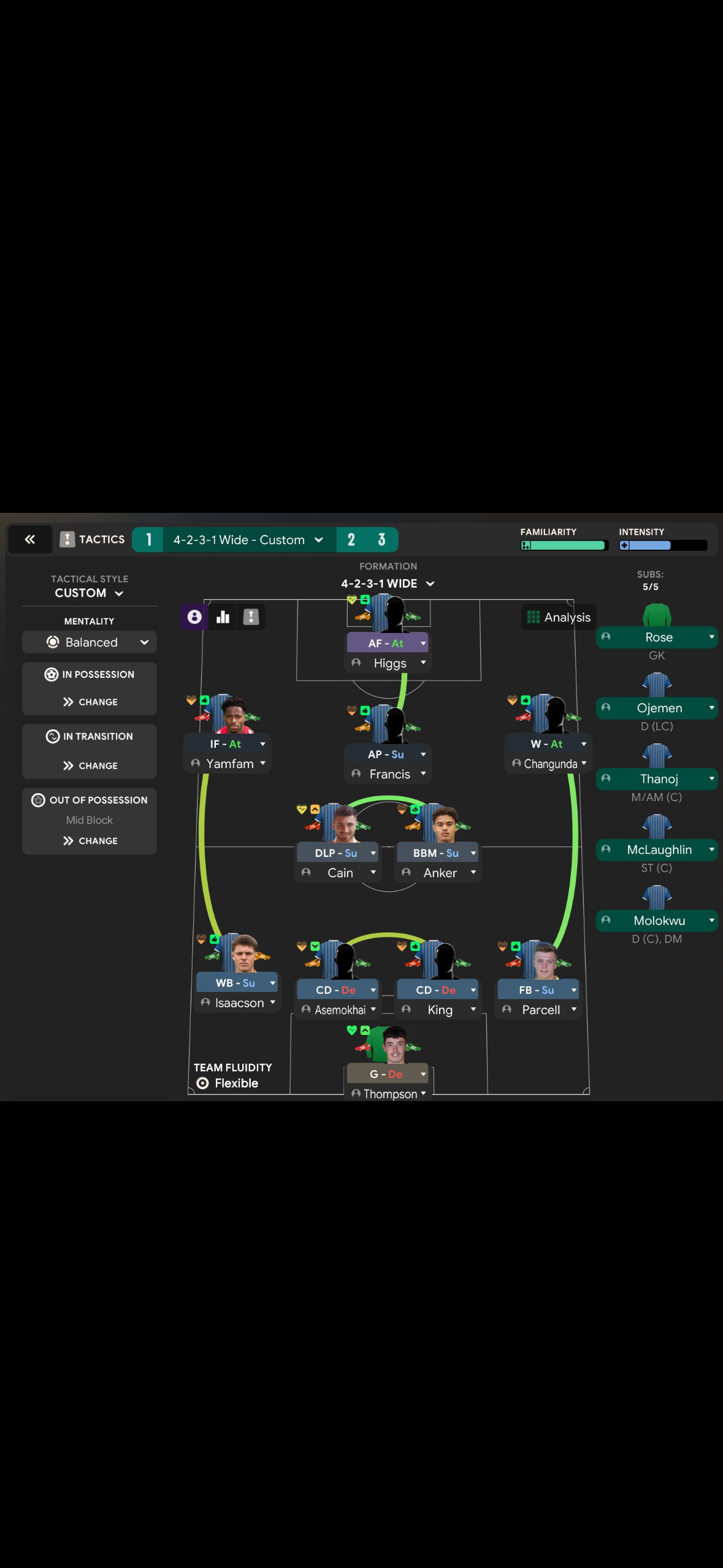
Formation & Style
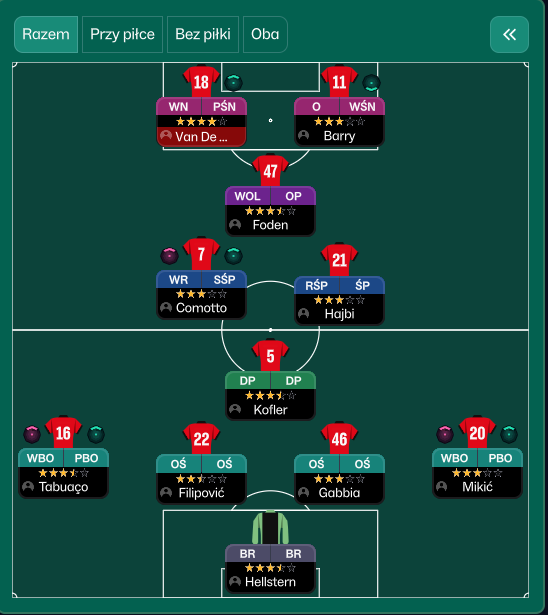
Tactical Style:Custom
Mentality:Balanced
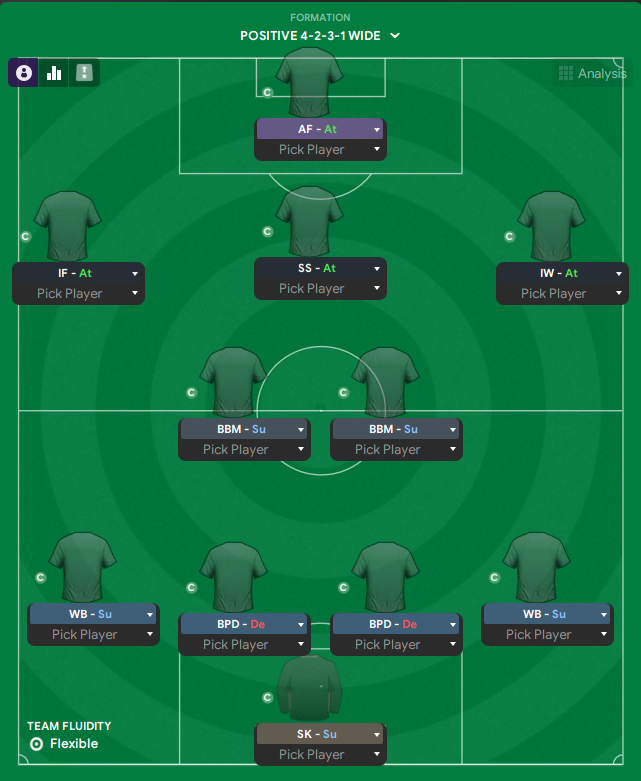
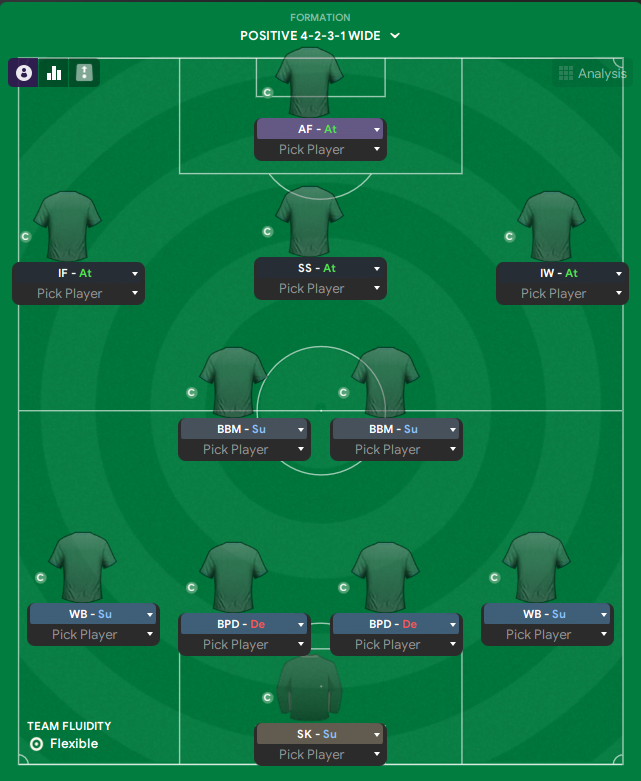
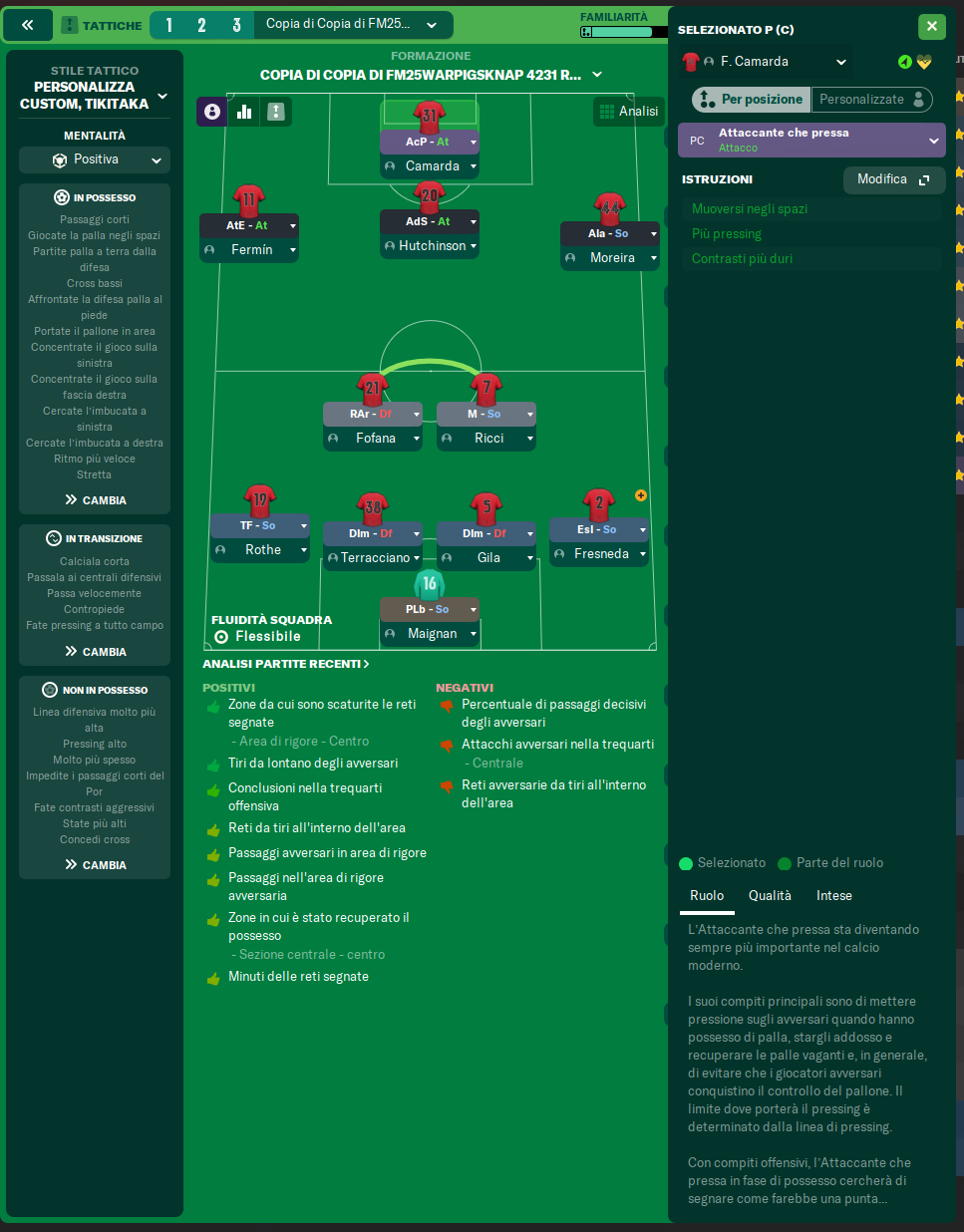
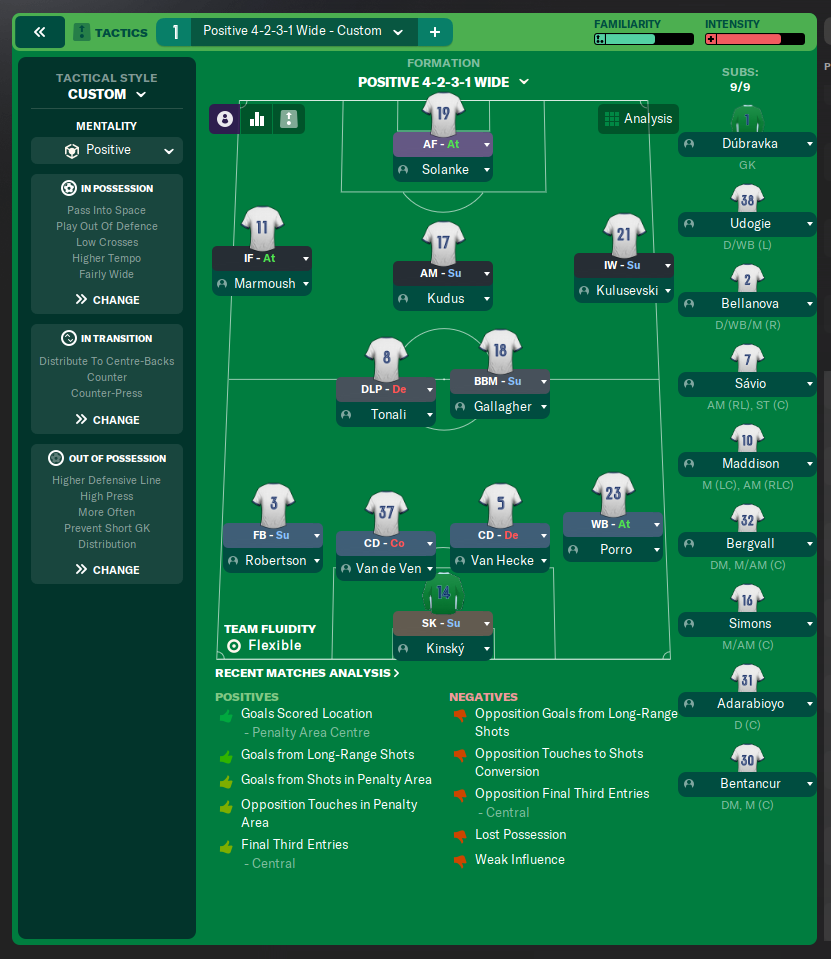
Formation:4-2-3-1 Wide
Team Fluidity:Flexible
In Possession
Focus play down the wings
Use of overlapping full-backs
Higher tempo passing
In Transition
Counter-press when possession is lost
Counter-attack quickly when possession is won
Out of Possession
Mid Block
Compact defensive shape
Team Shape Without Ball
No team shape without ball data available
Team Shape With Ball
No team shape with ball data available
Key Strengths
Wide Play
The formation effectively utilizes width through inside forwards and wingers, stretching the opposition and creating space.
Midfield Control
With a deep lying playmaker and a box-to-box midfielder, the midfield can dominate possession and transition smoothly.
Flexibility in Attack
The variety of attacking roles allows for fluid movement and adaptability in various attacking phases.
Defensive Solidity
Two central defenders and the mid-block approach ensures solid defensive organization, while wing-backs can support both defense and attack.
Conflicting Directions
Excessive Offensive Roles
Having three attacking players might leave the midfield exposed during transitions to defense if the wing-backs push high.
Overlap vs. Inside Play
The inside forwards may conflict with the wingers' need for space; coordination is needed to avoid congestion in wide areas.
Midfield Pressing
The ball-winning midfielder may not fit well with a deep lying playmaker if pressing is needed higher up the pitch.
Defensive Balance
The attacking duties of the wing-backs must be managed to prevent breakdowns in defensive structure.
Tactical Suggestions
Adjust Wing Roles
Consider tweaking the roles of wingers to avoid overlap or congestion in wide areas. A balanced approach may improve fluidity.
Integrate a Holding Midfielder
Introduce a holding midfielder for better defensive coverage, allowing the other to press forward without compromising midfield stability.
Control Tempo Adjustments
Control the team's tempo dynamically according to opponent strengths to retain possession effectively and minimize risks.
Utilize Counter-Press
Enhancing counter-pressing instructions can help regain possession quickly and maintain pressure on opponents.
Ask Questions About Your Lineup
Related Tactics
Guides for this formation
The tactical theory behind the 4-2-3-1 Wide: roles, instructions, and the trade-offs that decide whether the system holds up.
Player pairings
Midfield Pairs in 4-2-3-1 and 4-4-2
Double pivots and flat pairs in 4-2-3-1 and 4-4-2: when each pairing works, when it collapses, and the AMC unicorn that rescues both.
Read guide
Playing styles
Gegenpressing: A Full Guide
Klopp-style gegenpressing in FM, including squad profile, line-and-press pairing, sustainable workload, and the antipatterns to avoid.
Read guide