Uploaded Tactic
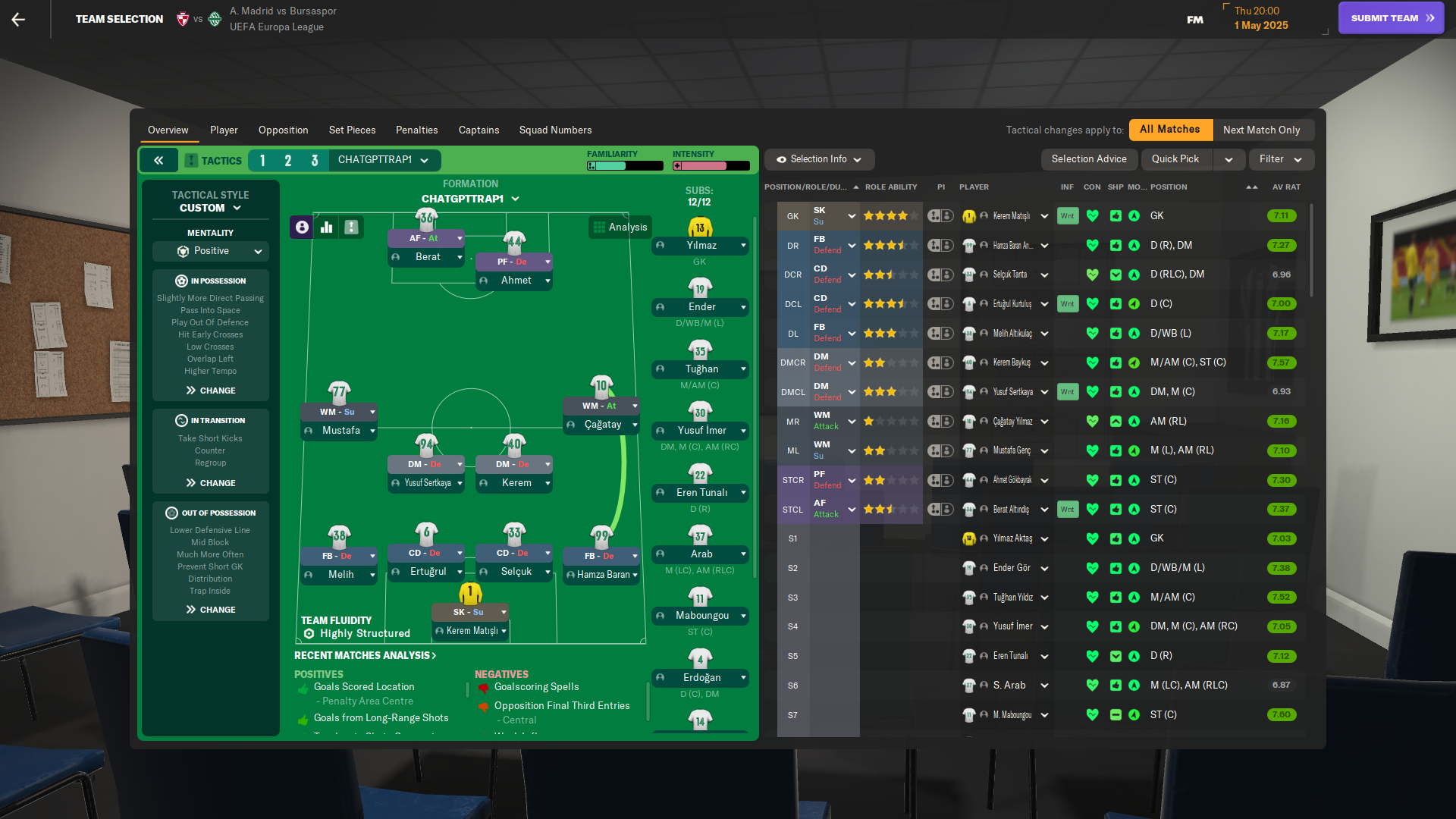
Formation & Style
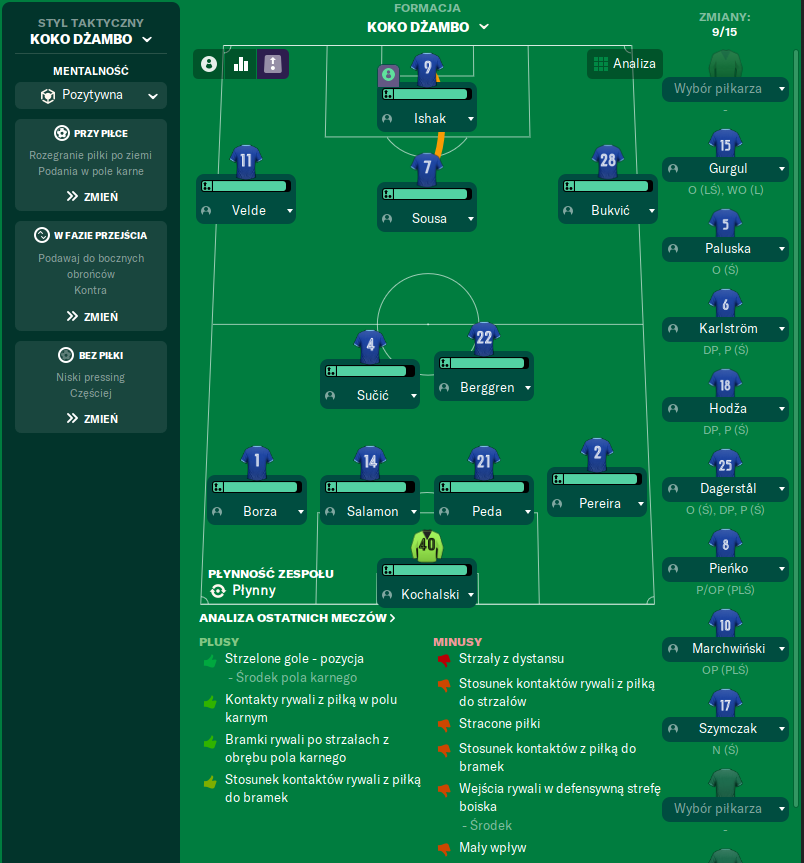
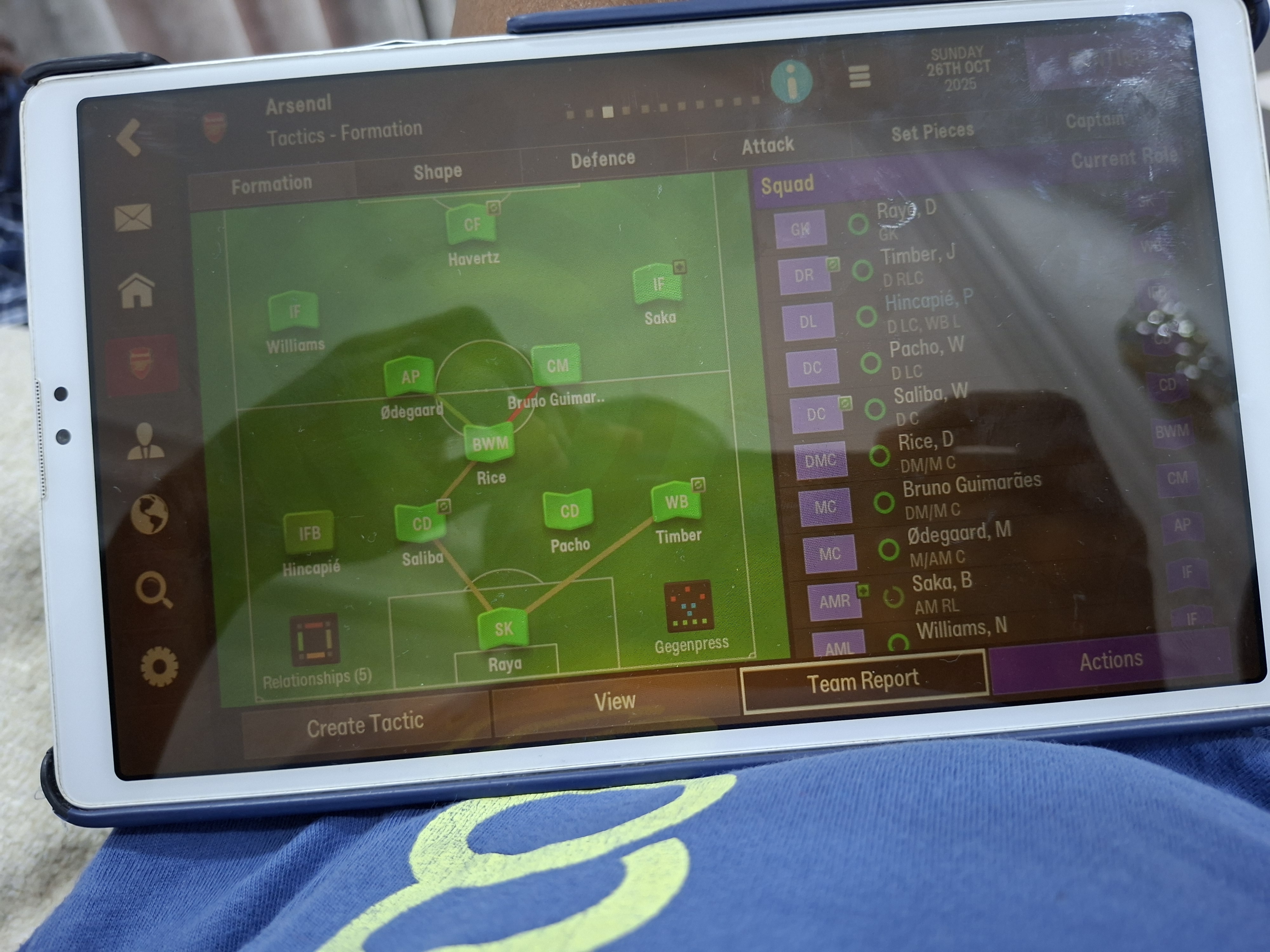
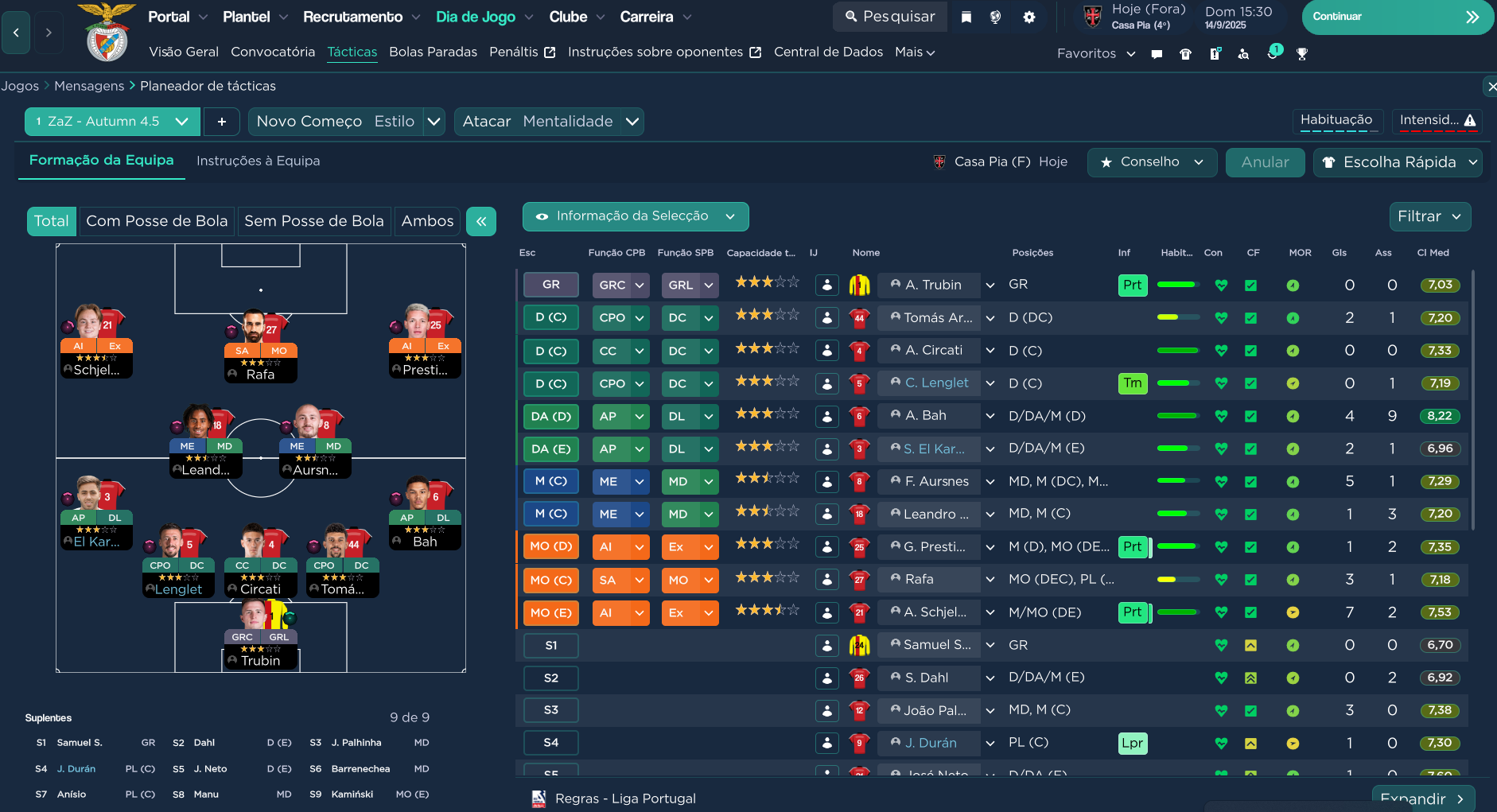
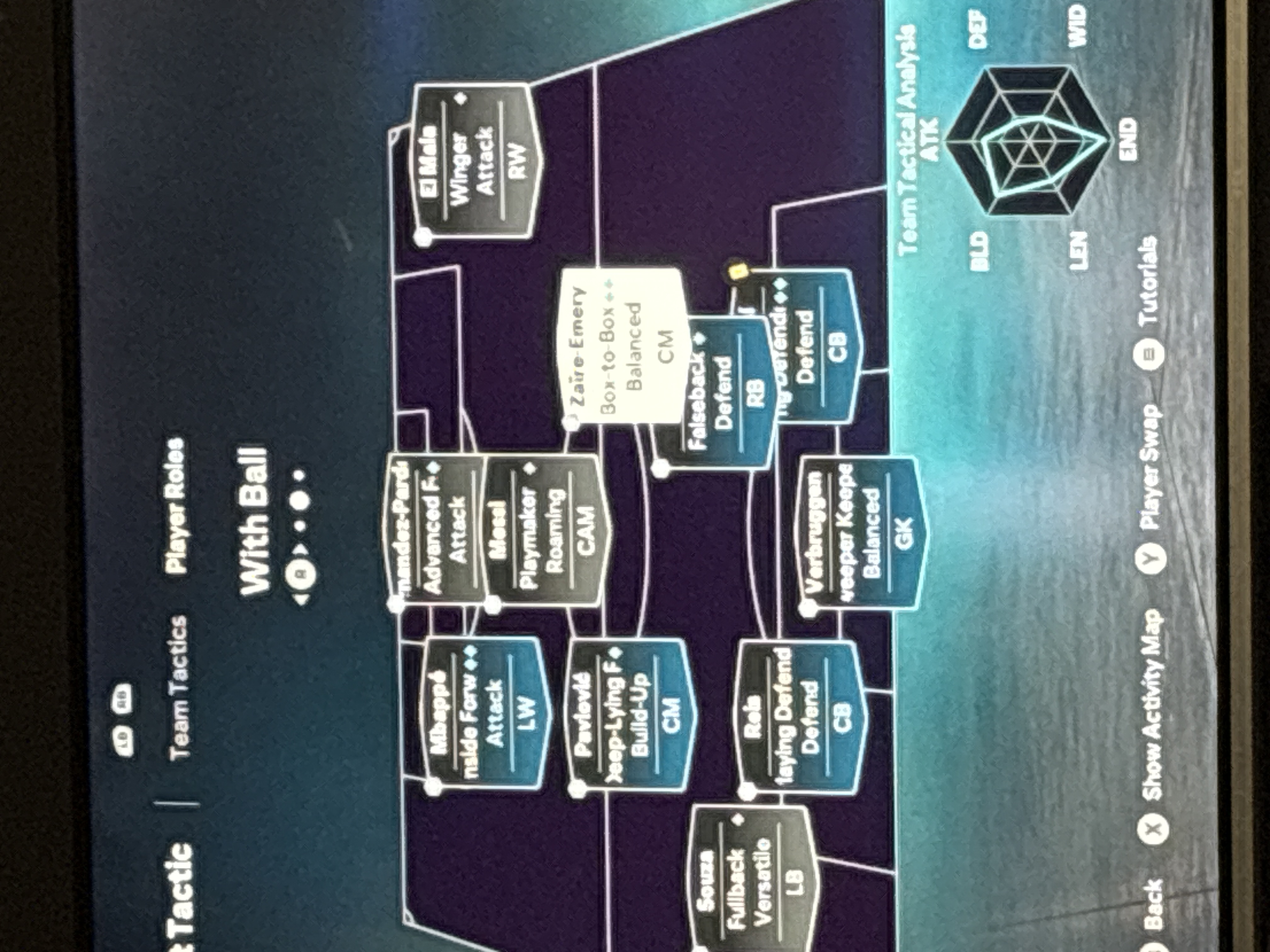
Tactical Style:Balanced
Mentality:Positive
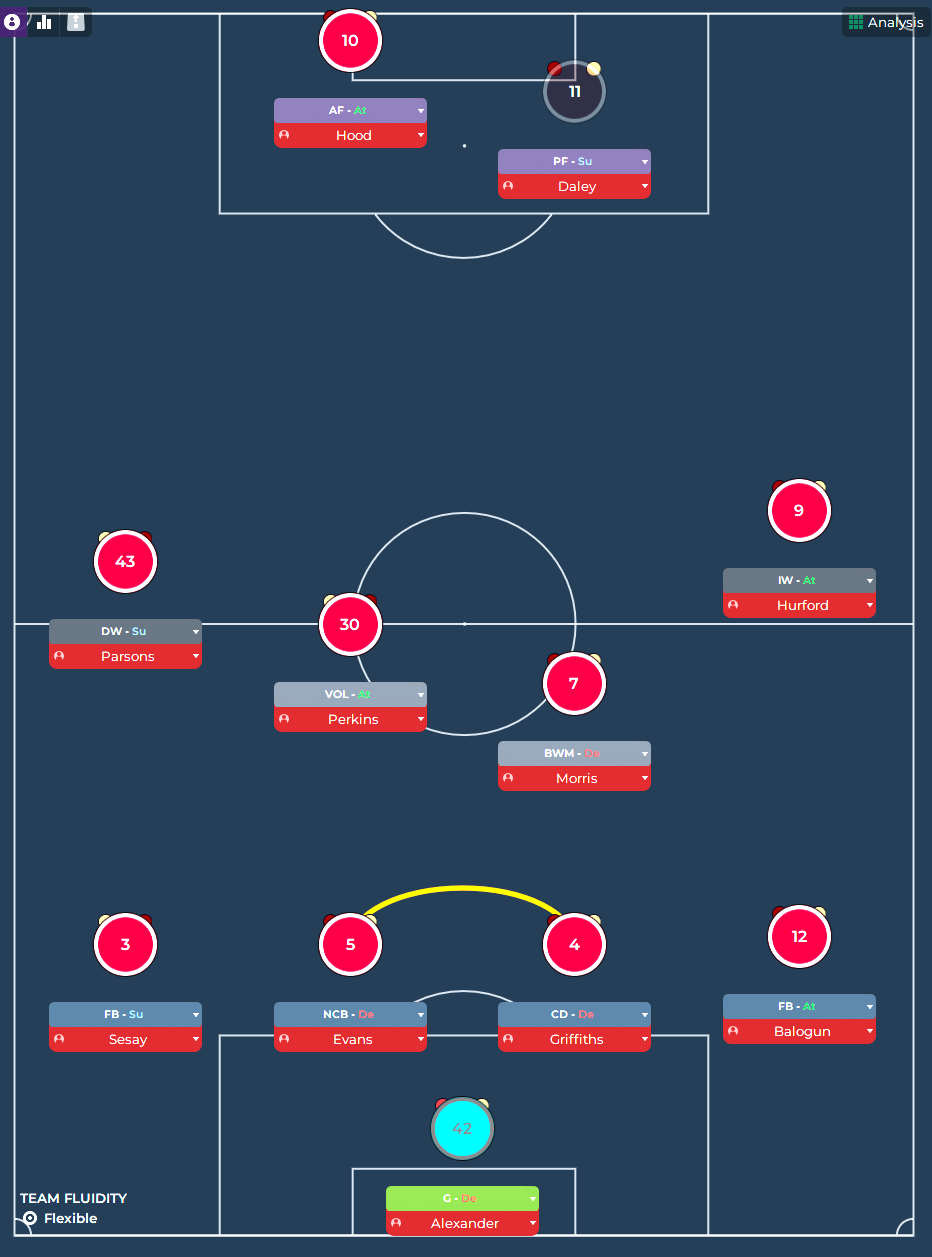
Formation:4-2-3-1 Wide
Team Fluidity:Flexible
In Possession
Build Up Play: Play Out Of Defence
Attacking Style: Focus Play Through Middle
Creativity: Be More Expressive
In Transition
Transition: Counter-Press
Transition: Counter
Out of Possession
Defensive Line: Higher Defensive Line
Pressing Intensity: More Urgent
Team Shape Without Ball
Shape:4-2-3-1
Description:A solid 4-2-3-1 defensive structure that can transition into a compact shape when out of possession.
Evidence:NCB-D at [2,2] and CD-D at [2,3] create a strong defensive pair.
Team Shape With Ball
Shape:4-2-3-1
Description:Wide play is emphasized with the wingers cutting inside, allowing full-backs to overlap.
Evidence:IW-A at [5,3] and FB-A at [2,5] provide lateral movement and width.
Phase Description
Attacking Play
Focuses on utilizing width through the inside forwards and wingers, while the striker plays off the shoulder of the last defender.
Defensive Transition
Quickly switches to a counter-pressing setup to regain possession high up the pitch.
Main Focus
Maximizing creative interactions in the midfield while maintaining defensive stability.
Key Strengths
Strong Midfield Control
The midfield combination of a Ball-Winning Midfielder and a Volante allows for versatility and control during transitions.
Attacking Versatility
The attacking setup includes varied roles creating unpredictable forward movements.
Full-Back Involvement
Full-backs with the attacking duty provide width and crossing options.
Conflicting Directions
High Press Limitation
The use of a high defensive line combined with a BWM may lead to spacing issues if opponents break the press.
Over-reliance on Width
While utilizing width is important, it can become a weakness if opposing teams counteract effectively.
Potential Lack of Defensive Depth
The attacking width may stretch the defensive layers when transitioning back.
Tactical Suggestions
Adjusting Defensive Width
Narrowing the defensive structure can help alleviate pressures from central attacking players.
Incorporating a License for Overlap
Encouraging full-backs to make overlapping runs will create more dynamic attacking opportunities.
Utilizing a Second Tactical Setup
Switching to a more defensive shape during leads can reduce risk of counter-press vulnerabilities.
Ask Questions About Your Lineup
Related Tactics
Guides for this formation
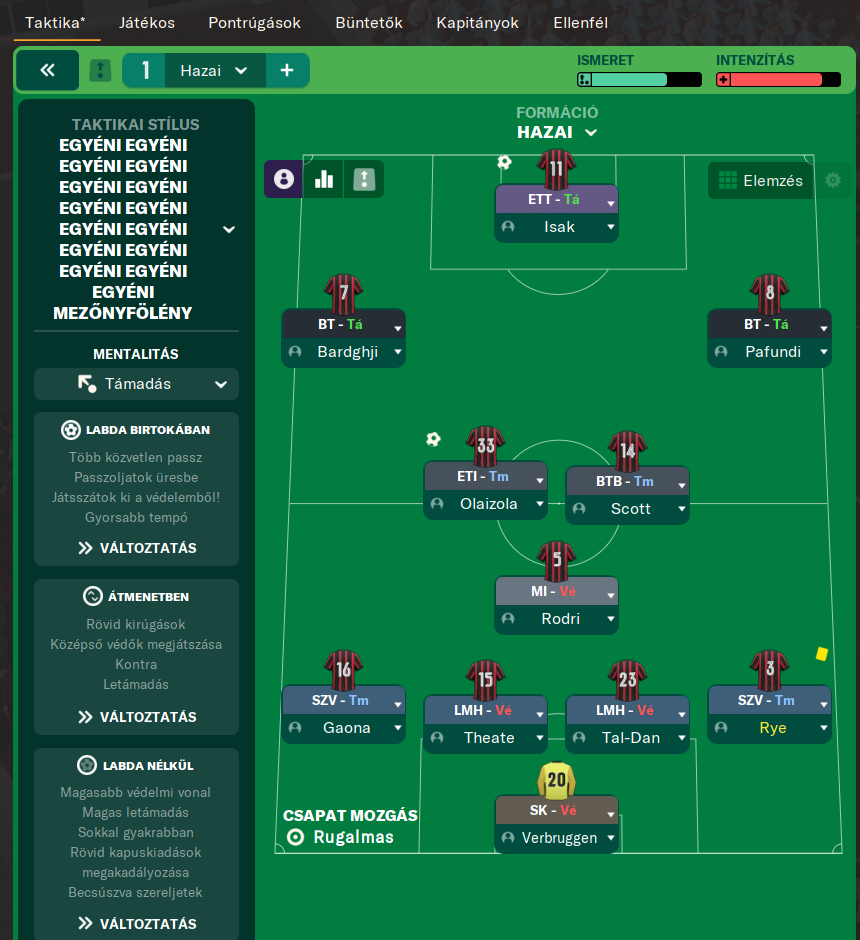
The tactical theory behind the 4-2-3-1 Wide: roles, instructions, and the trade-offs that decide whether the system holds up.
Player pairings
Midfield Pairs in 4-2-3-1 and 4-4-2
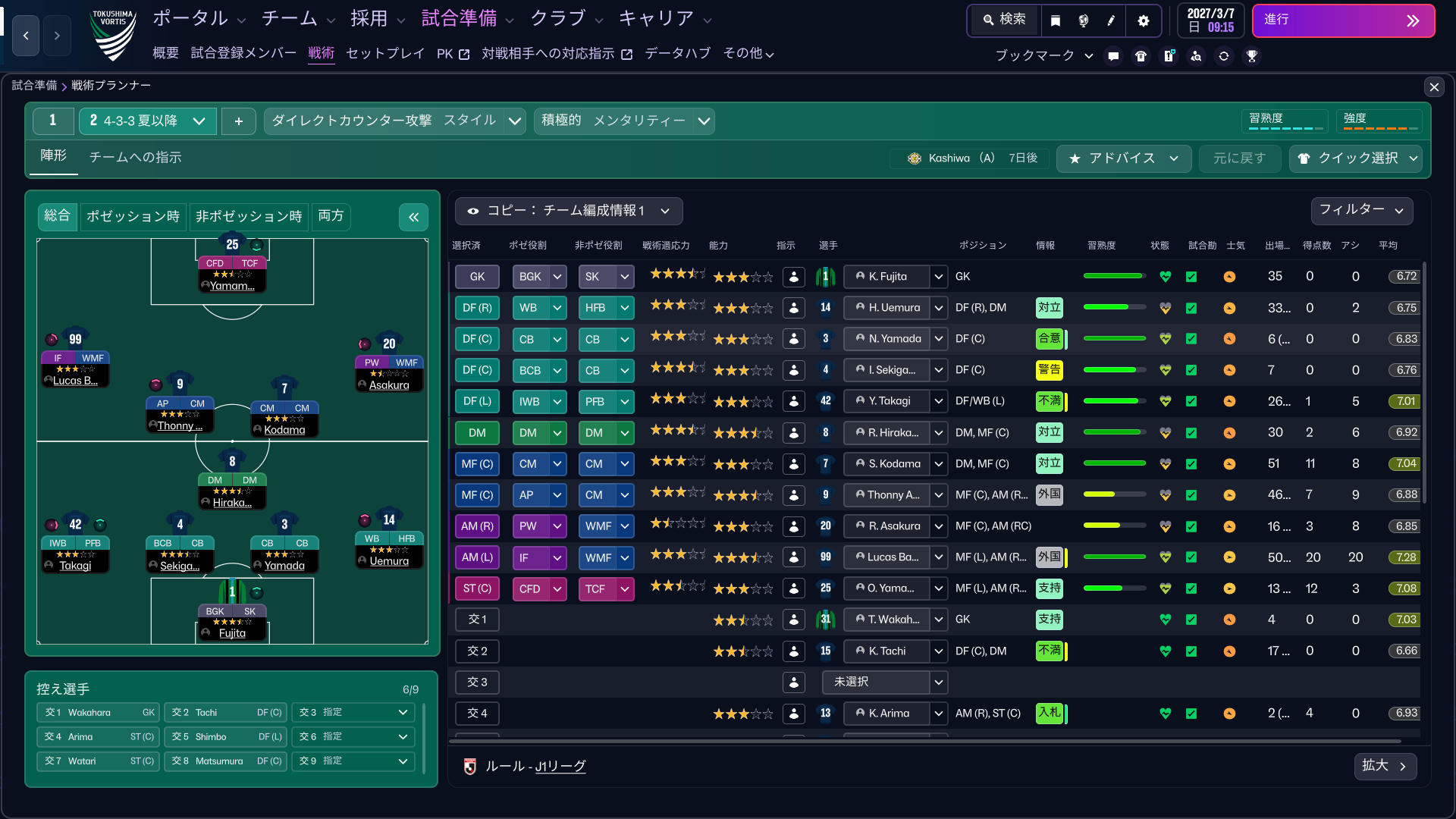
Double pivots and flat pairs in 4-2-3-1 and 4-4-2: when each pairing works, when it collapses, and the AMC unicorn that rescues both.
Read guide
Playing styles
Gegenpressing: A Full Guide
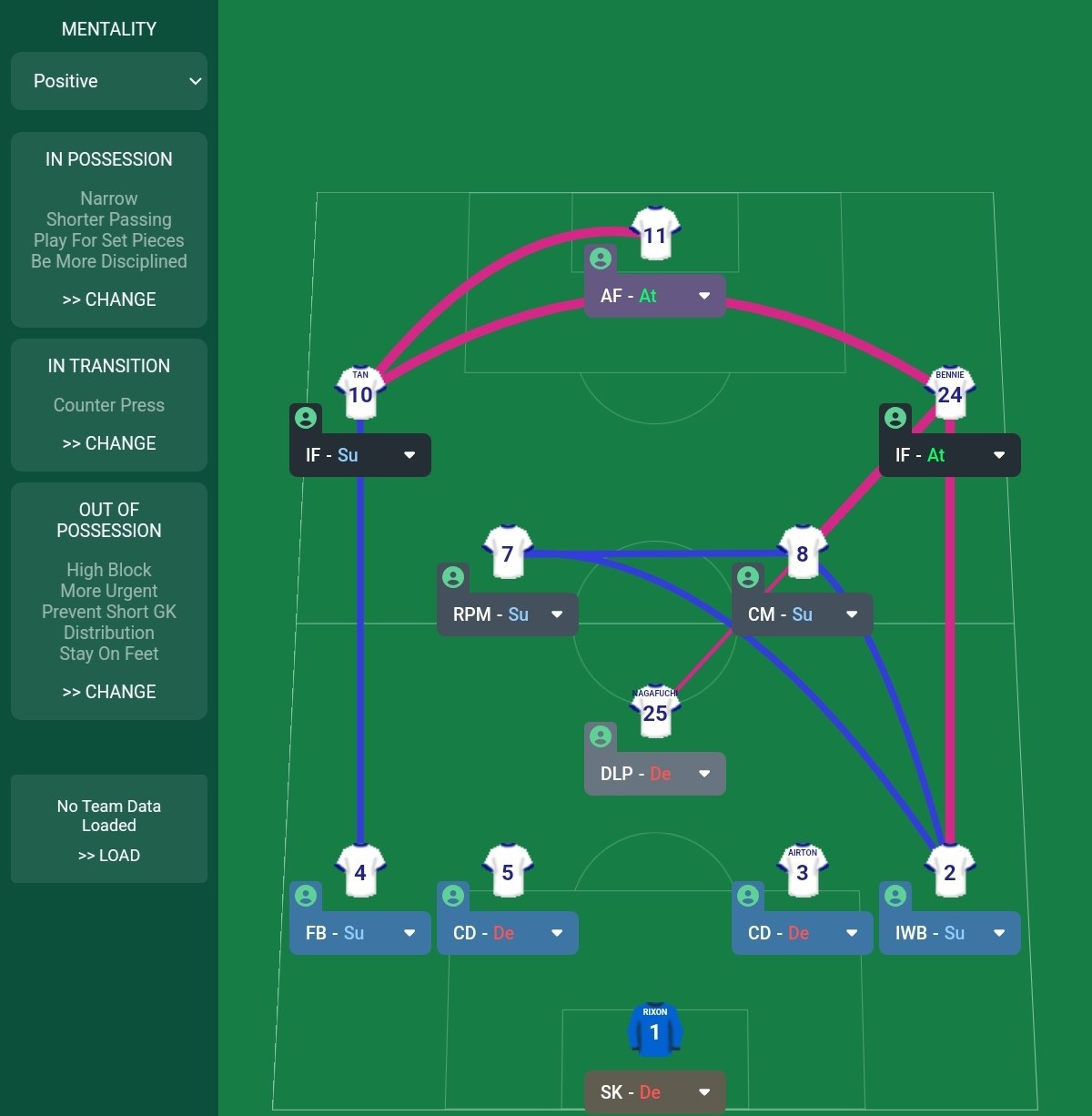
Klopp-style gegenpressing in FM, including squad profile, line-and-press pairing, sustainable workload, and the antipatterns to avoid.
Read guide