
4-2-3-1 Wide
Utilizes both the left and right flanks effectively, allowing for varied attacking options.
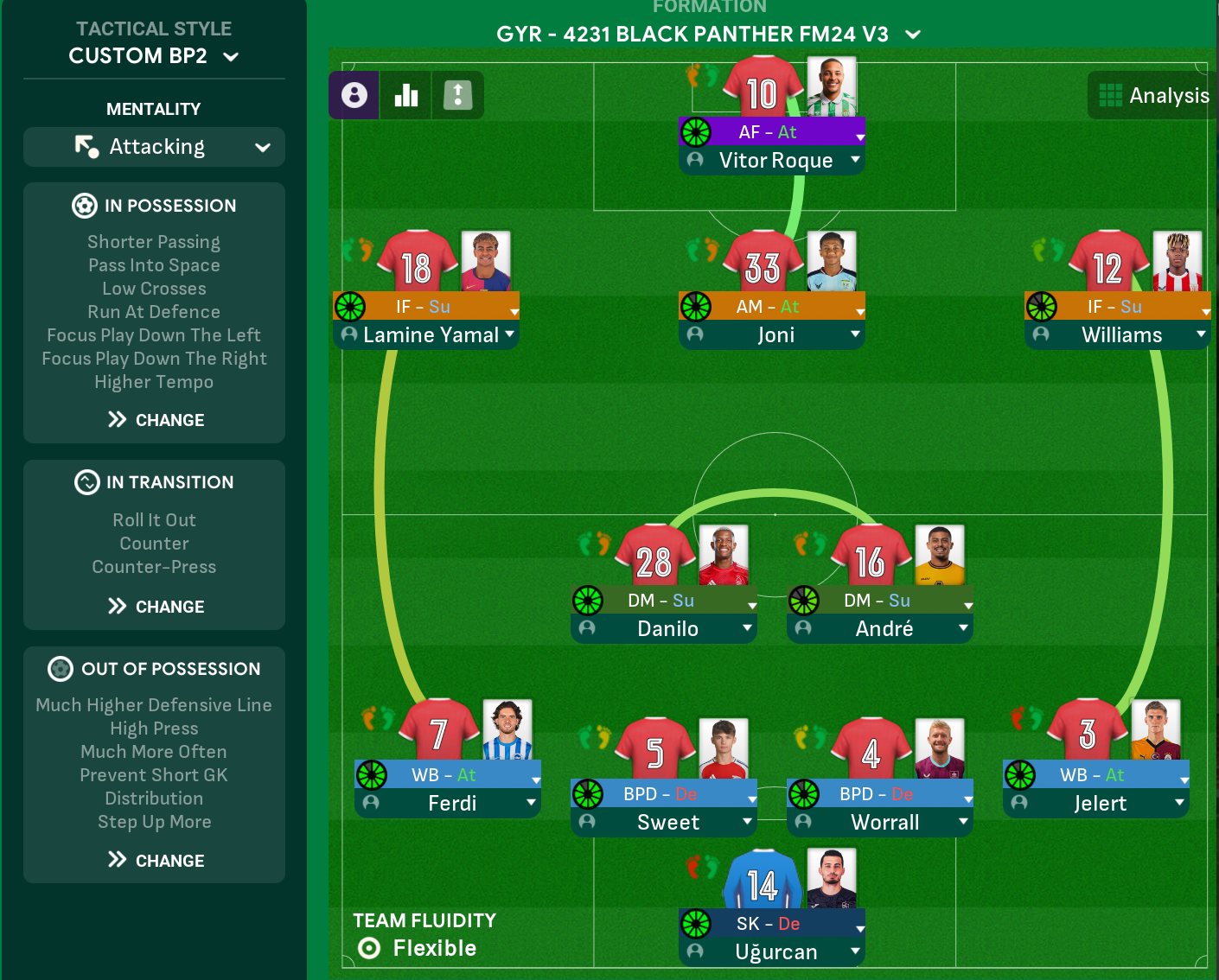
Loading tactical analysis...
Custom BP2
Attacking
4-2-3-1 Wide
Flexible
Shorter Passing
Pass Into Space
Low Crosses
Run At Defence
Focus Play Down The Left
Focus Play Down The Right
Higher Tempo
Roll It Out
Counter
Counter-Press
Much Higher Defensive Line
Much More Often
Prevent Short GK Distribution
Step Up More
AF
Advanced Forward
Attack
AM
Advanced Playmaker
Attack
IF
Inside Forward
Support
DM
Deep Lying Playmaker
Support
DM
Box to Box Midfielder
Support
WB
Wing Back
Attack
BPD
Ball Playing Defender
Defend
SK
Sweeper Keeper
Defend
Utilizes both the left and right flanks effectively, allowing for varied attacking options.
The combination of a Deep Lying Playmaker and Box to Box Midfielder enables quick transitions from defense to attack.
A much higher defensive line may leave the team vulnerable to counter-attacks, especially when pressing high.
The roles of the DM as a Deep Lying Playmaker may conflict with the pressing strategy by needing time on the ball.
How are the roles of your wide players affecting team width?
What adjustments can improve recovery after a loss of possession?
How do you address potential vulnerabilities in central defense?
Are your strikers capable of leading a counter-attack effectively?
How can set pieces be utilized given your current player roles?
Is the tempo too fast, leading to rushed attacks?
The tactical theory behind the 4-2-3-1 Wide: roles, instructions, and the trade-offs that decide whether the system holds up.
Double pivots and flat pairs in 4-2-3-1 and 4-4-2: when each pairing works, when it collapses, and the AMC unicorn that rescues both.
Klopp-style gegenpressing in FM, including squad profile, line-and-press pairing, sustainable workload, and the antipatterns to avoid.
What Higher Tempo, Wider, and Narrower actually do in FM, plus the dial contradictions and antipatterns players run into most often.







