Uploaded Tactic
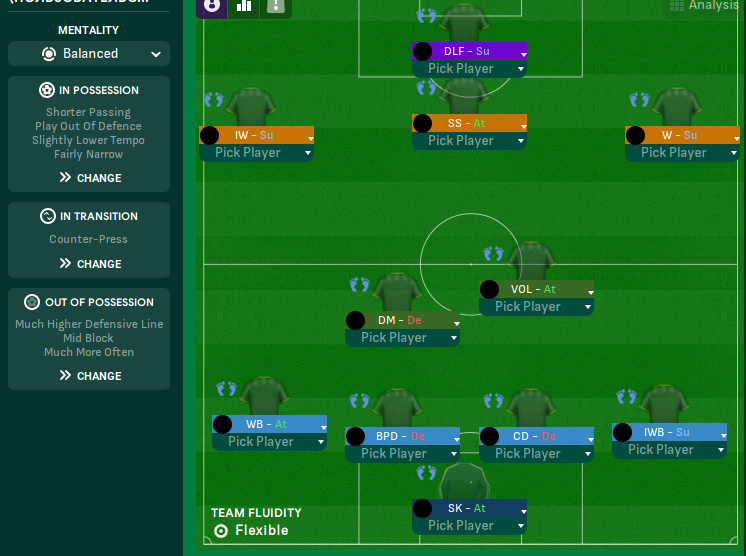
Formation & Style
Tactical Style:Balanced
Mentality:Balanced
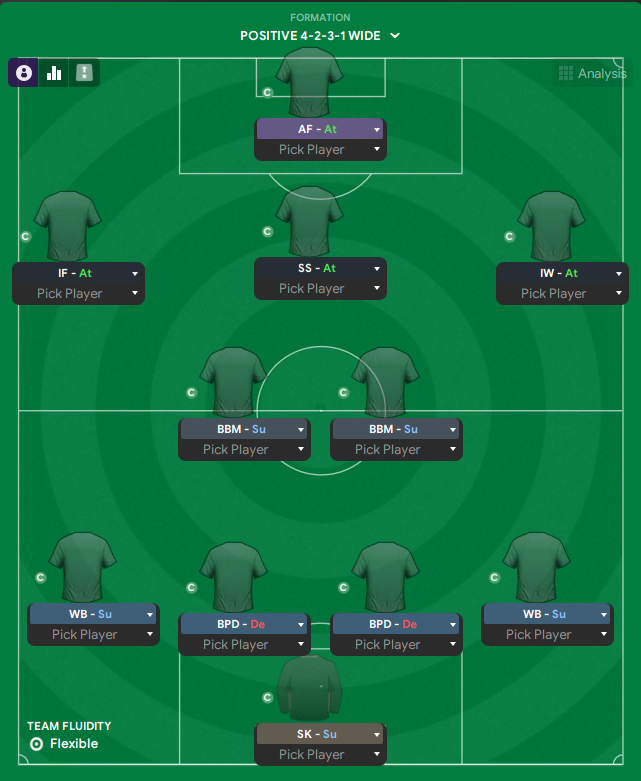
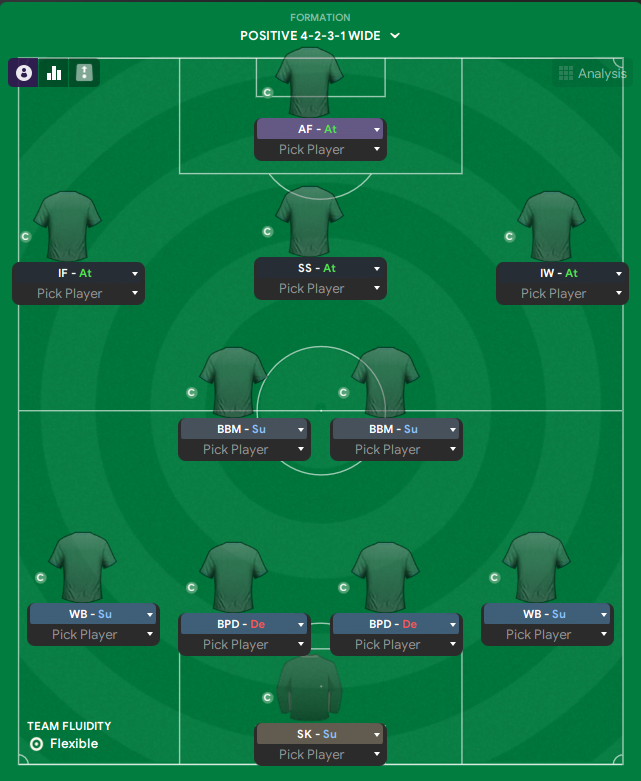
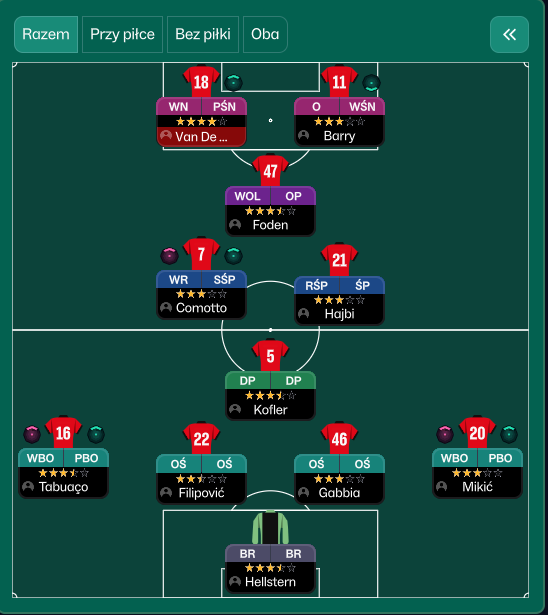
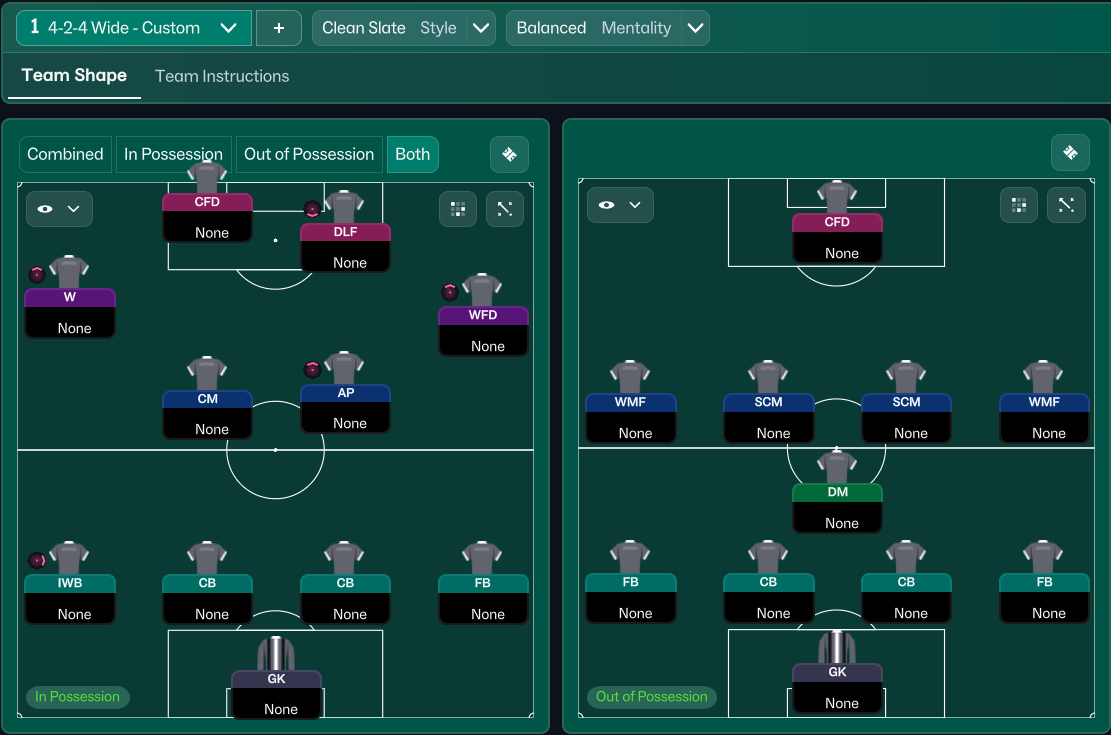
Formation:4-2-3-1 Wide
Team Fluidity:Flexible
In Possession
Shorter Passing
Play Out Of Defence
Slightly Lower Tempo
Fairly Narrow
In Transition
Counter-Press
Out of Possession
Much Higher Defensive Line
Mid Block
Much More Often
Team Shape Without Ball
Shape:Mid Block 4-2-3-1
Description:Maintains a compact shape with two defensive midfielders shielding the backline, facilitating a controlled defense.
Evidence:DM-De at [3,3] and BPD-De at [2,2] providing strong central coverage.
Team Shape With Ball
Shape:Wide and Fluid
Description:Favors width through the inside wingers and wing-backs, with quick support from the midfielders.
Evidence:IW-Su at [6,1] and WB-At at [2,1] working together to stretch the opposition.
Phase Description
Attacking Play
Utilizes width from the wing-backs and inside wingers, aiming to create overloads in the wide areas and find the Shadow Striker centrally.
Defensive Transition
Quick transition to a counter-press when possession is lost, ensuring immediate pressure is applied to regain possession.
Main Focus
Fluid attacking play with an emphasis on exploiting wide areas.
Key Strengths
Width and Fluidity
The wing-backs and inside wingers create width, allowing for fluid attacking transitions.
Counter-Pressing Ability
Quickly recovers possession in transition, utilizing the counter-press effectively to regain control.
Midfield Stability
Strong central combination of defensive and attacking roles enhances ball retention.
Conflicting Directions
High Defensive Line with Mid Block
Having a much higher defensive line may conflict with the mid block strategy if the team isn’t quick to recover.
Narrow Shape vs. Wide Play
A fairly narrow shape may underutilize the width offered by inside wingers and wing-backs.
Attacking Play with Defensive Duties
Balancing attacking duties like Shadow Striker and Volante with defensive roles may create tactical confusion.
Tactical Suggestions
Adjust Width in Attack
Consider adjusting the attacking width to take full advantage of the wingers and wing-backs.
Streamline Defensive Duties
Clarify defensive responsibilities to ensure the high line is supported adequately during counter-press.
Use of Volante in Transitions
Encourage the Volante to transition quickly into attack to exploit spaces left by the opposition.
Ask Questions About Your Lineup
Related Tactics
More Balanced tactics
Guides for this formation
The tactical theory behind the 4-2-3-1 Wide: roles, instructions, and the trade-offs that decide whether the system holds up.
Player pairings
Midfield Pairs in 4-2-3-1 and 4-4-2
Double pivots and flat pairs in 4-2-3-1 and 4-4-2: when each pairing works, when it collapses, and the AMC unicorn that rescues both.
Read guide
Playing styles
Gegenpressing: A Full Guide
Klopp-style gegenpressing in FM, including squad profile, line-and-press pairing, sustainable workload, and the antipatterns to avoid.
Read guide