Uploaded Tactic
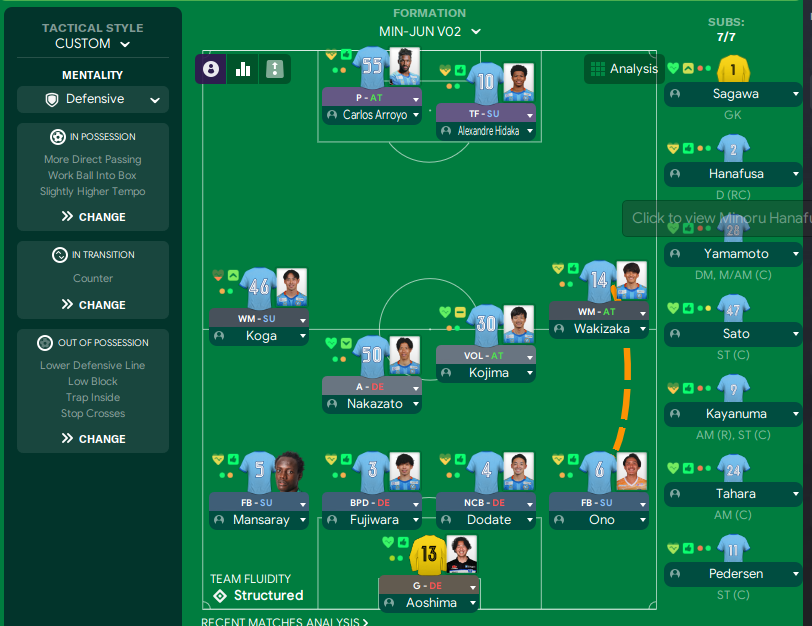
Formation & Style
Tactical Style:Custom
Mentality:Defensive
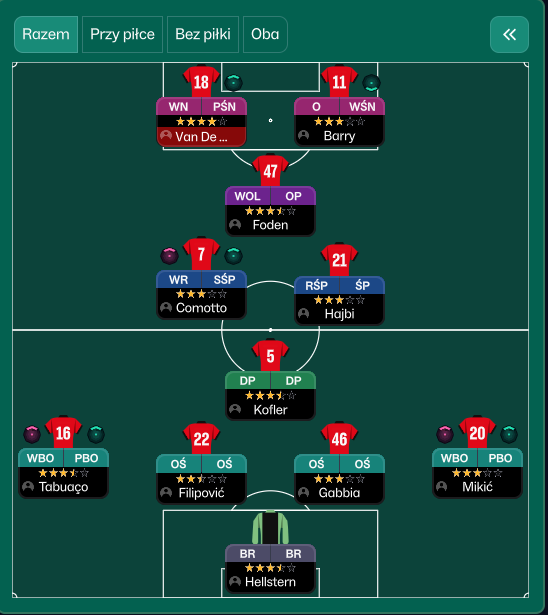
Formation:4-2-3-1 Wide
Team Fluidity:Structured
In Possession
More Direct Passing
Work Ball Into Box
Slightly Higher Tempo
In Transition
Counter
Out of Possession
Lower Defensive Line
Low Block
Trap Inside
Stop Crosses
Team Shape Without Ball
Shape:Low Block
Description:Defensive line is set lower to reduce space for the opponent's attackers.
Evidence:The 'Lower Defensive Line' and 'Low Block' indicate a cautious defensive approach.
Team Shape With Ball
Shape:Width-Based
Description:Attacking play is designed to stretch the opposition using wide players.
Evidence:The presence of two wingers alongside a target forward creates attacking threats from width.
Phase Description
Attacking Play
Utilizes direct passing under a structured fluidity, focusing on working the ball into the box.
Defensive Transition
Engages in quick counter-attacks when regaining possession with support from midfield.
Main Focus
Exploit width through wingers and set up scoring opportunities for the forward.
Key Strengths
Defensive Solidity
The combination of a low block and structured play makes the team hard to break down.
Dynamic Flank Play
Wingers provide width and can create chances through crosses.
Counter Attacking Potential
Quick transition from defense to attack can exploit opposition gaps.
Conflicting Directions
Attacking Depth
A low block may leave the team vulnerable to counter-attacks when pressing for goals.
Midfield Overload
With only two players in advanced positions, the midfield can become overcrowded.
Limited Width
With only two wingers, the team may struggle against compact defenses.
Tactical Suggestions
Increase Forward Depth
Consider adding a third attacker to increase pressure on opposing defenses.
Adjust Defensive Line
Consider raising the defensive line for a more proactive approach in home games.
Midfield Rotation
Encourage more dynamic movement from midfielders to invade spaces left by the opponent.
Ask Questions About Your Lineup
Related Tactics
Guides for this formation
The tactical theory behind the 4-2-3-1 Wide: roles, instructions, and the trade-offs that decide whether the system holds up.
Player pairings
Midfield Pairs in 4-2-3-1 and 4-4-2
Double pivots and flat pairs in 4-2-3-1 and 4-4-2: when each pairing works, when it collapses, and the AMC unicorn that rescues both.
Read guide
Playing styles
Gegenpressing: A Full Guide
Klopp-style gegenpressing in FM, including squad profile, line-and-press pairing, sustainable workload, and the antipatterns to avoid.
Read guide