Uploaded Tactic
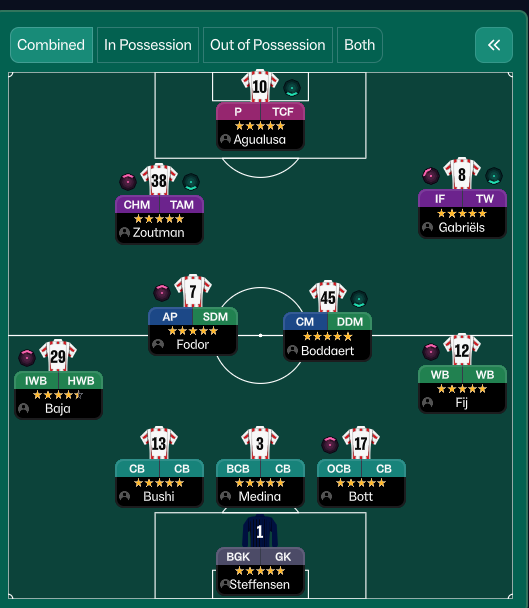
Formation & Style
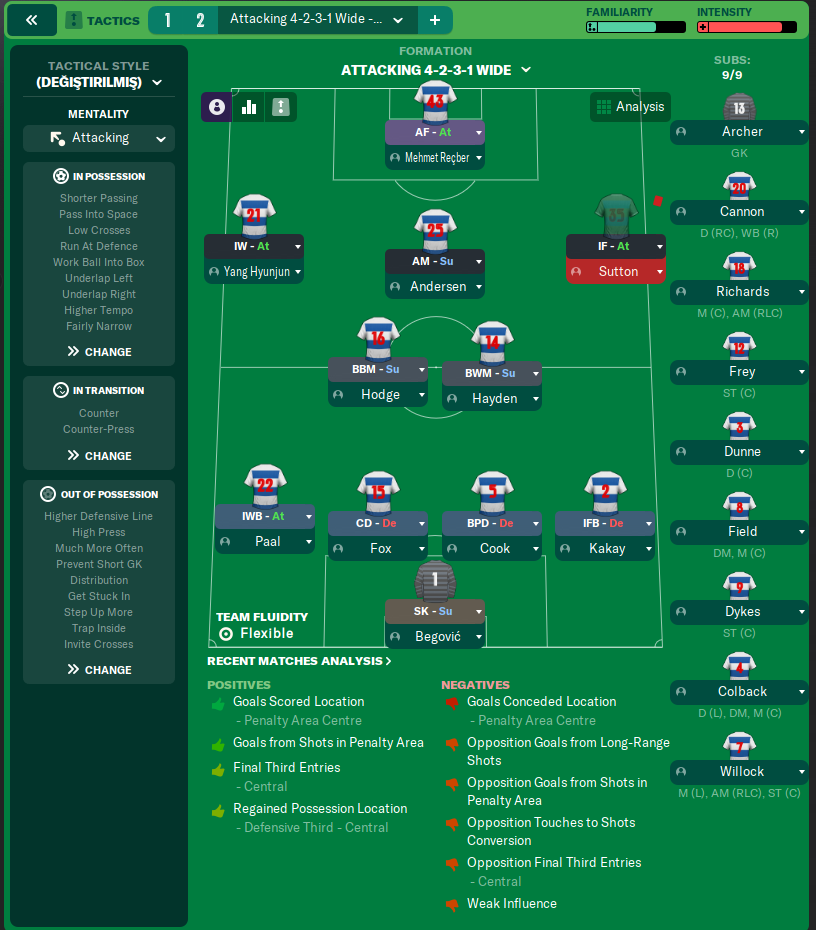
Tactical Style:Attacking
Mentality:Attacking
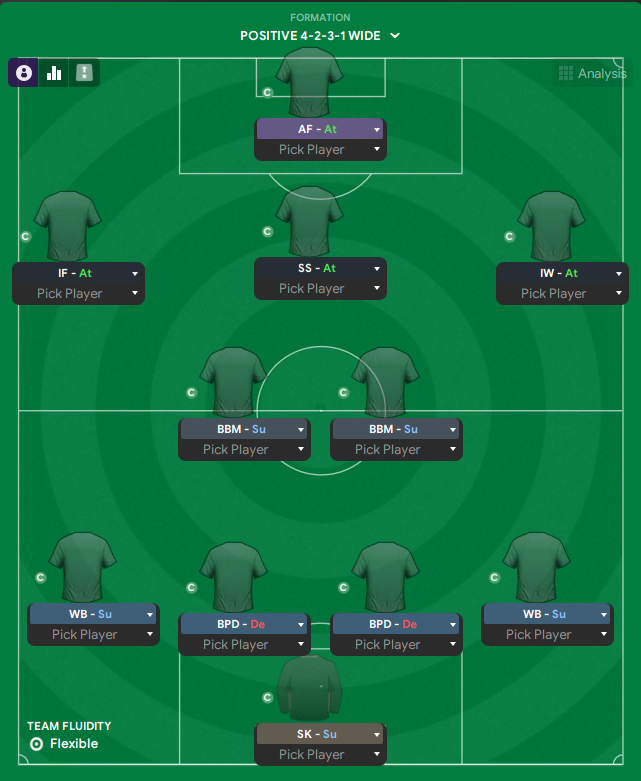
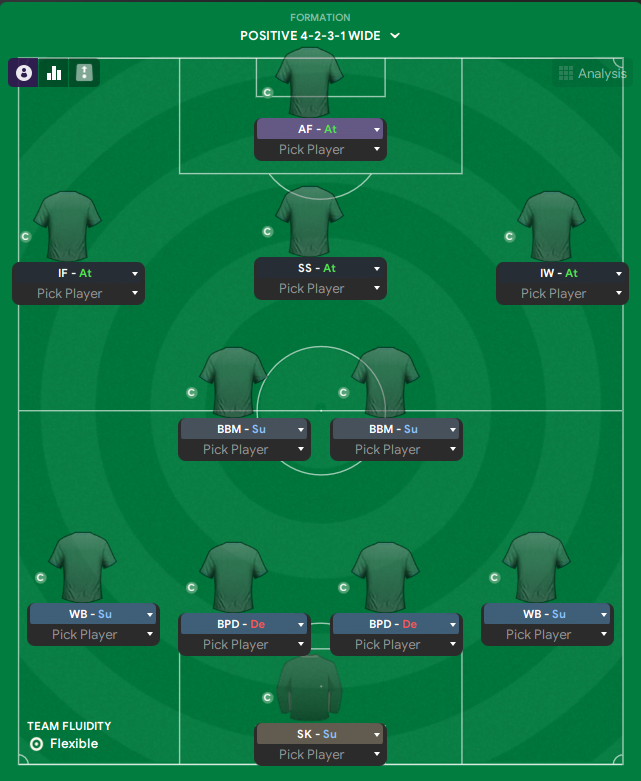
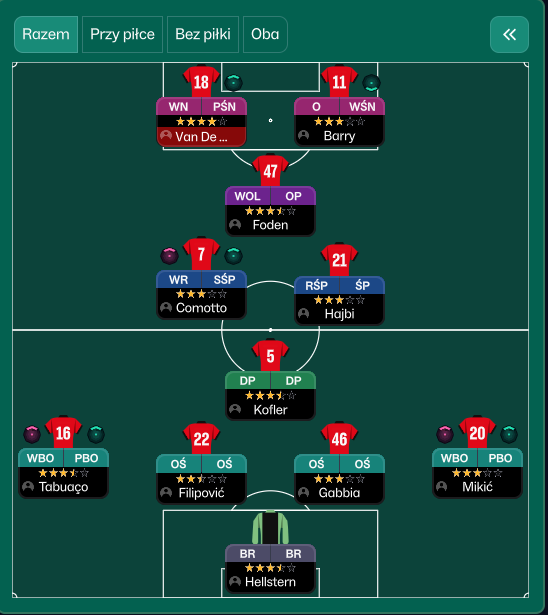
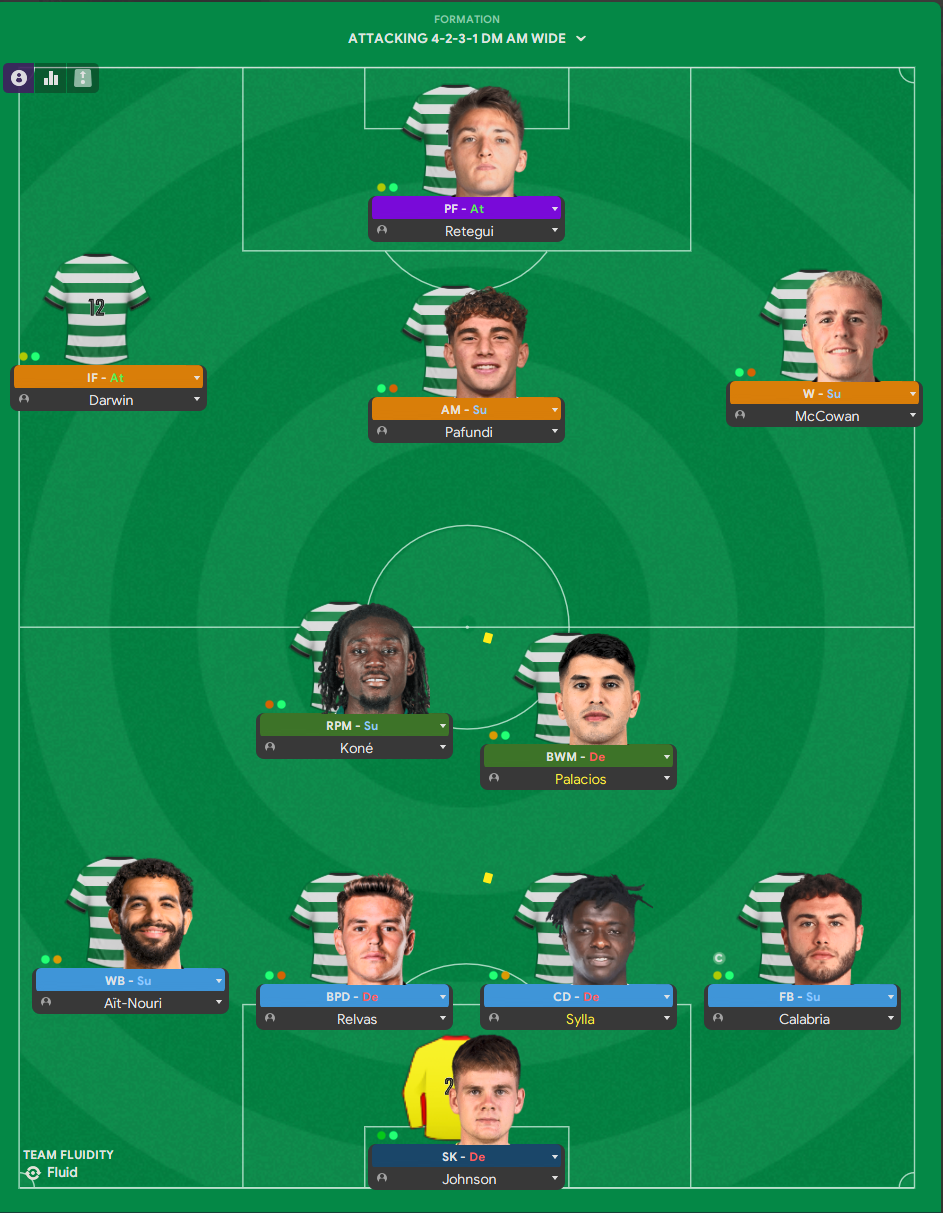
Formation:4-2-3-1 Wide
Team Fluidity:Flexible
In Possession
Shorter Passing
Pass Into Space
Low Crosses
Run At Defence
Work Ball Into Box
Underlap Left
Underlap Right
In Transition
Counter
Counter-Press
Out of Possession
Higher Defensive Line
Much More Often Prevent Short GK Distribution
Get Stuck In
Step Up More
Trap Inside
Invite Crosses
Team Shape Without Ball
Shape:4-2
Description:A compact 4-2 shape providing defensive stability with BWM offering protection to the backline.
Evidence:BWM-S at [3,2] supporting the defence and maintaining numeric superiority.
Team Shape With Ball
Shape:4-3
Description:Utilizing width from inverted wing-backs and inside forwards to stretch defenses.
Evidence:IWB-A at [2,1] & [2,5] combined with AF at [6,3] creating overloads.
Phase Description
Attacking Play
Aggressive attacking play leveraging width and through balls to penetrate defenses, with players instructed to run at defenders and create scoring opportunities.
Defensive Transition
Quick counter-pressing play aimed at recovering possession immediately after losing it, with a compact defensive shape to absorb counter-attacks.
Main Focus
Maximizing attacking momentum while maintaining a solid defensive block.
Key Strengths
Goals Scoring Location
Strong ability to penetrate the penalty area for scoring opportunities.
Ball Recovery
Efficient in regaining possession across the pitch.
Attacking Versatility
Diverse attacking options allow fluidity in play.
Conflicting Directions
Defensive Vulnerability
High defensive line may expose the team to counter-attacks.
Long-Range Shots
Weak defensive coverage against long-range efforts.
Weak Influence in Final Third
Challenges in converting entries into goal-scoring opportunities.
Tactical Suggestions
Defensive Depth
Consider lowering the defensive line to mitigate counter-attacks.
Focus on Transition
Enhance transition tactics to solidify the defense when possession is lost.
Enhance Central Width
Increase the width during buildup phases to create more crossing opportunities.
Ask Questions About Your Lineup
Related Tactics
More Attacking tactics
Guides for this formation
The tactical theory behind the 4-2-3-1 Wide: roles, instructions, and the trade-offs that decide whether the system holds up.
Player pairings
Midfield Pairs in 4-2-3-1 and 4-4-2
Double pivots and flat pairs in 4-2-3-1 and 4-4-2: when each pairing works, when it collapses, and the AMC unicorn that rescues both.
Read guide
Playing styles
Gegenpressing: A Full Guide
Klopp-style gegenpressing in FM, including squad profile, line-and-press pairing, sustainable workload, and the antipatterns to avoid.
Read guide