Uploaded Tactic
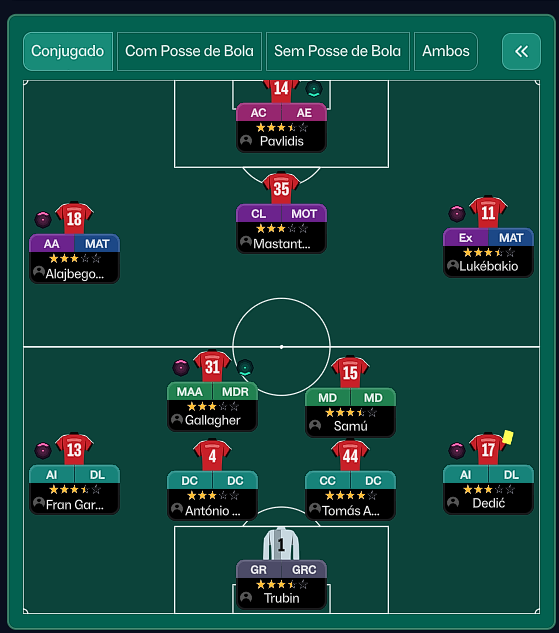
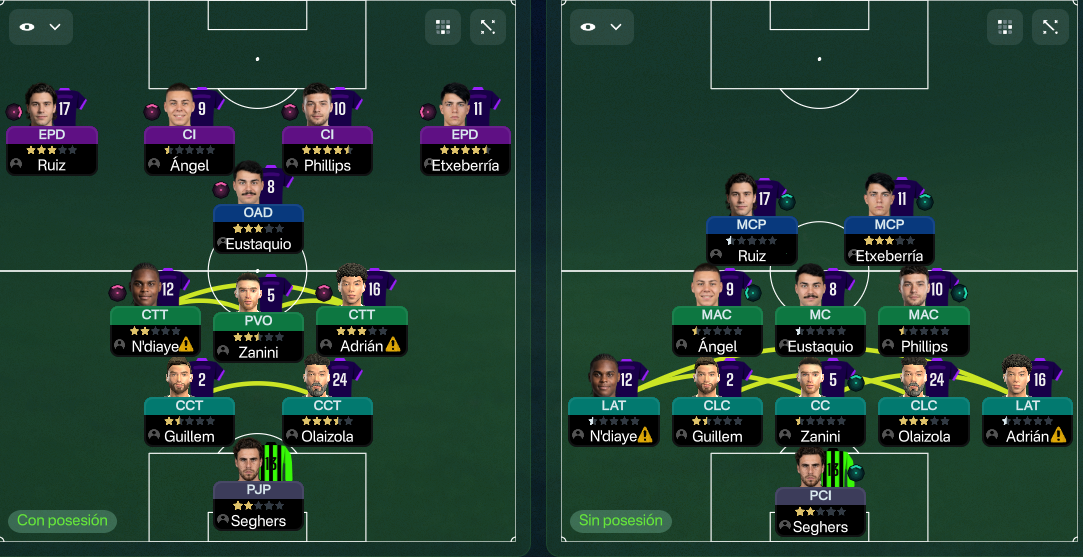
Formation & Style
Tactical Style:Possession
Mentality:Attacking
Formation:4-2-3-1 Wide
Team Fluidity:Flexible
In Possession
Play Out Of Defence
Be More Expressive
Pass Into Space
In Transition
Counter-Press
Counter
Out of Possession
Higher Defensive Line
More Urgent Pressing
Team Shape Without Ball
Shape:Compact
Description:Defensive block maintains compactness to limit space for the opposition whilst staying ready to counter.
Evidence:Two Centre-Backs at [2,2] and [2,3], supported by a Ball-Winning Midfielder at [3,2].
Team Shape With Ball
Shape:Wide and Varied
Description:Attacking players seek to stretch the opposition with a mix of through balls and wing play.
Evidence:Winger at [6,1] and Inside Forward at [6,5] providing width alongside an Advanced Playmaker at [5,3].
Phase Description
Attacking Play
Focus on building from the back with short passes and exploiting space on the wings through wide players.
Defensive Transition
Prioritize quick recovery of possession with an organized counter-press to disrupt opposition transitions.
Main Focus
Use the attacking triad to create chances, with emphasis on creativity and movement.
Key Strengths
Attacking Structure
The 4-2-3-1 allows for fluid transitions between midfield and attack, with players capable of interchanging positions.
Defensive Solidity
A Ball-Winning Midfielder complements the centre-backs, adding physicality and recovering possession efficiently.
Width in Attack
Wingers and an Inside Forward provide options to stretch defenses and create 1v1 opportunities.
Conflicting Directions
High Defensive Line
A higher line may invite pressure if not adequately supported by pacey players able to recover quickly.
Overcommitting Full-Backs
Full-Backs providing width could leave spaces in defending transitions if caught out of position.
Overreliance on Attacking Midfielder
Dependent on the Advanced Playmaker at [5,3] can become predictable if the opposition marks him effectively.
Tactical Suggestions
Consider a Deeper Defensive Line
Adjusting to a lower line could better absorb pressure against faster opposing forwards.
Use of a Wide Target Man
Incorporating a target man may help in holding up play and utilizing the width effectively.
Increase Defensive Cover
Adding a third midfielder in front of the defense could protect against counter-attack vulnerabilities.
Ask Questions About Your Lineup
Related Tactics
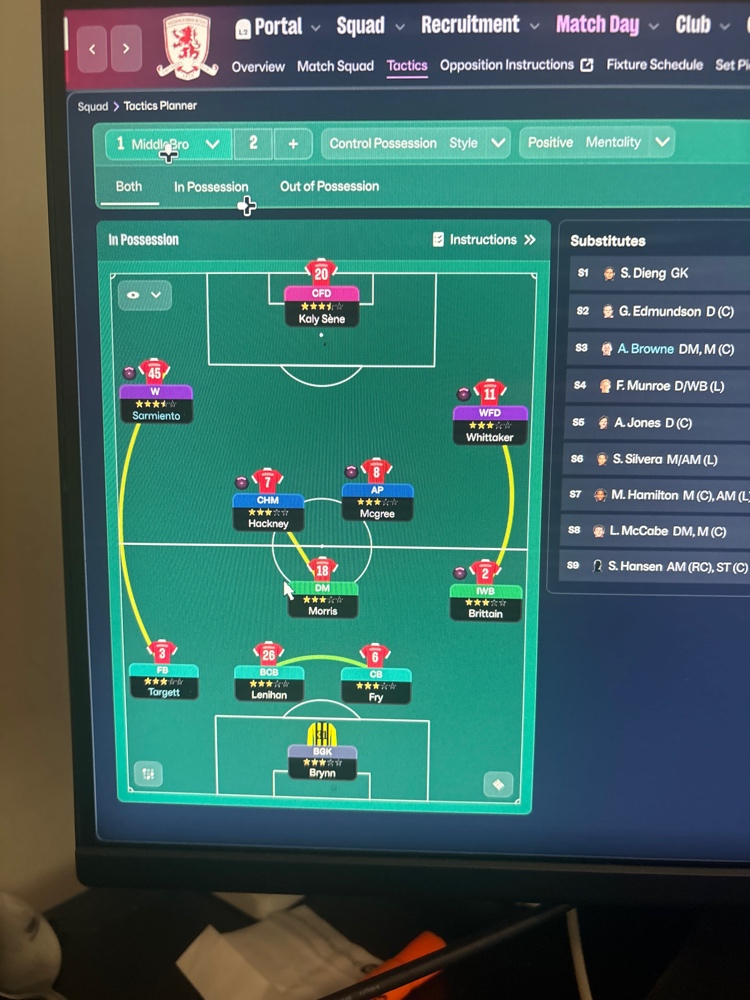
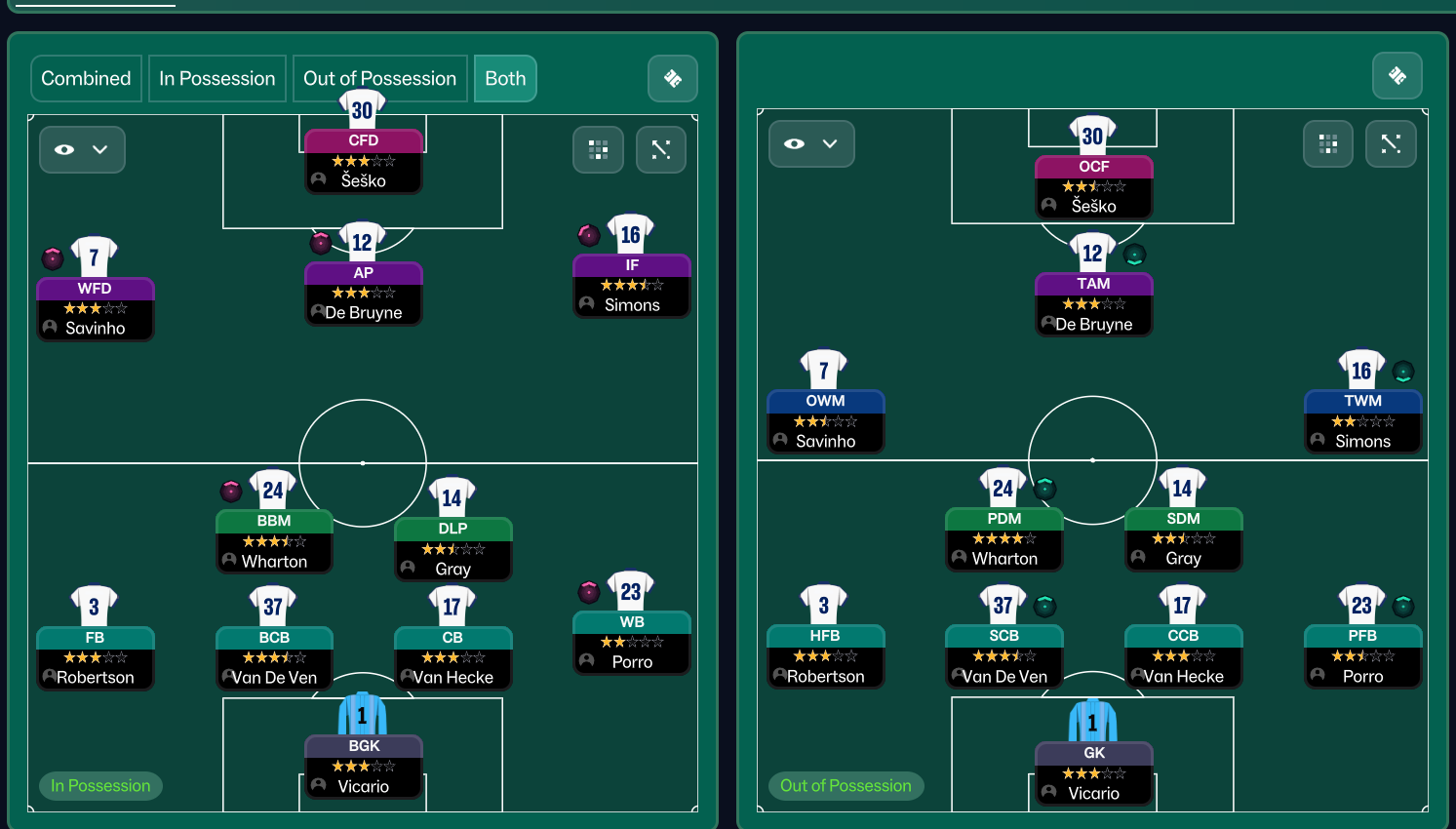
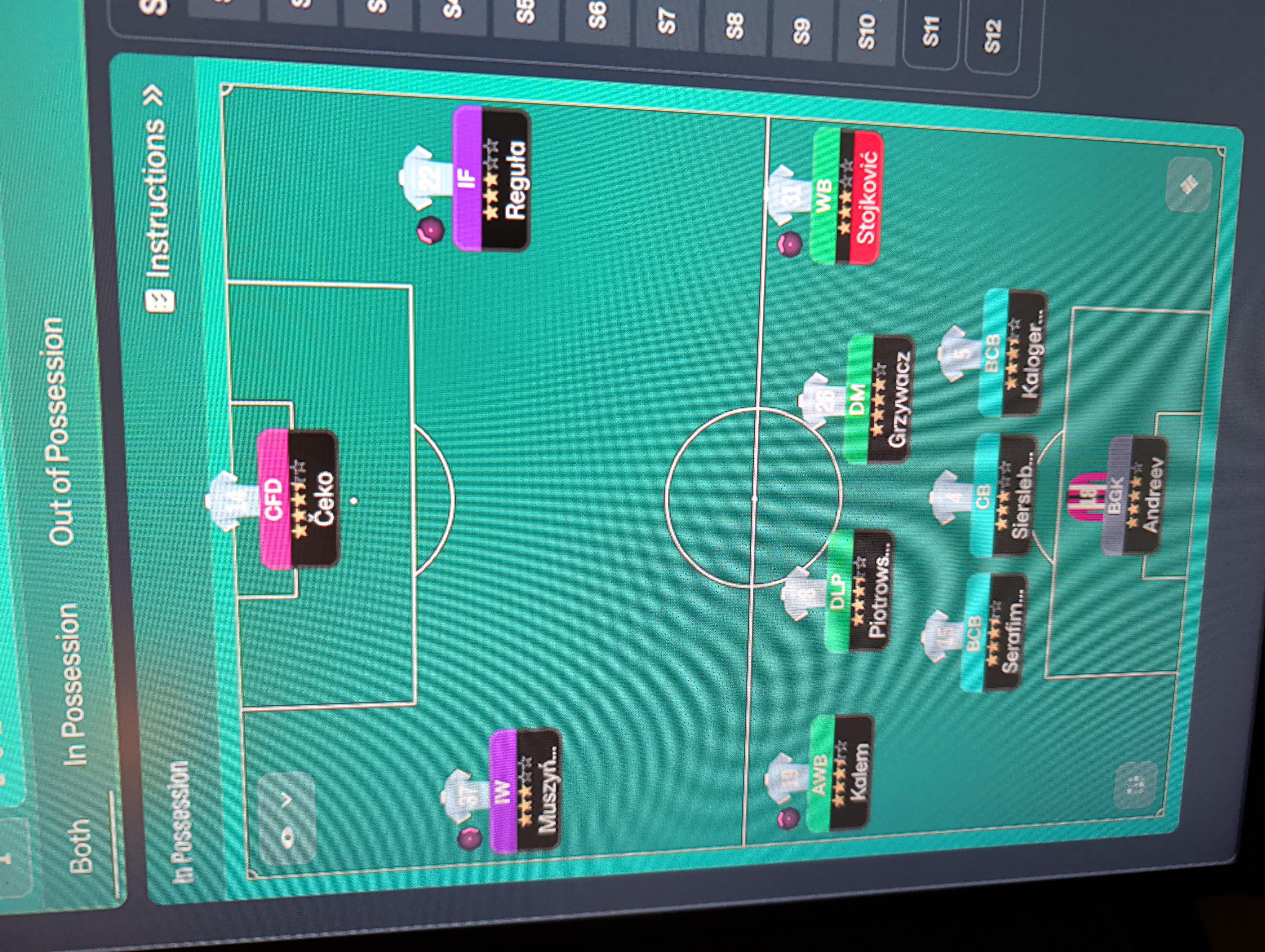
More Possession tactics
Guides for this formation
The tactical theory behind the 4-2-3-1 Wide: roles, instructions, and the trade-offs that decide whether the system holds up.
Player pairings
Midfield Pairs in 4-2-3-1 and 4-4-2
Double pivots and flat pairs in 4-2-3-1 and 4-4-2: when each pairing works, when it collapses, and the AMC unicorn that rescues both.
Read guide
Playing styles
Gegenpressing: A Full Guide
Klopp-style gegenpressing in FM, including squad profile, line-and-press pairing, sustainable workload, and the antipatterns to avoid.
Read guide