Uploaded Tactic
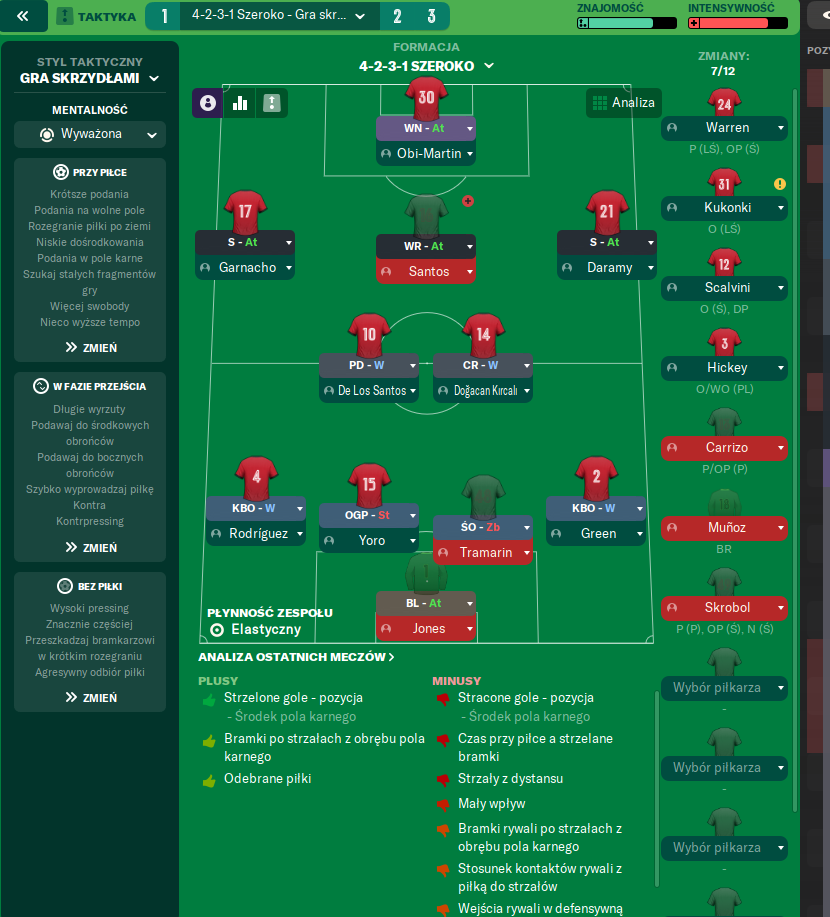
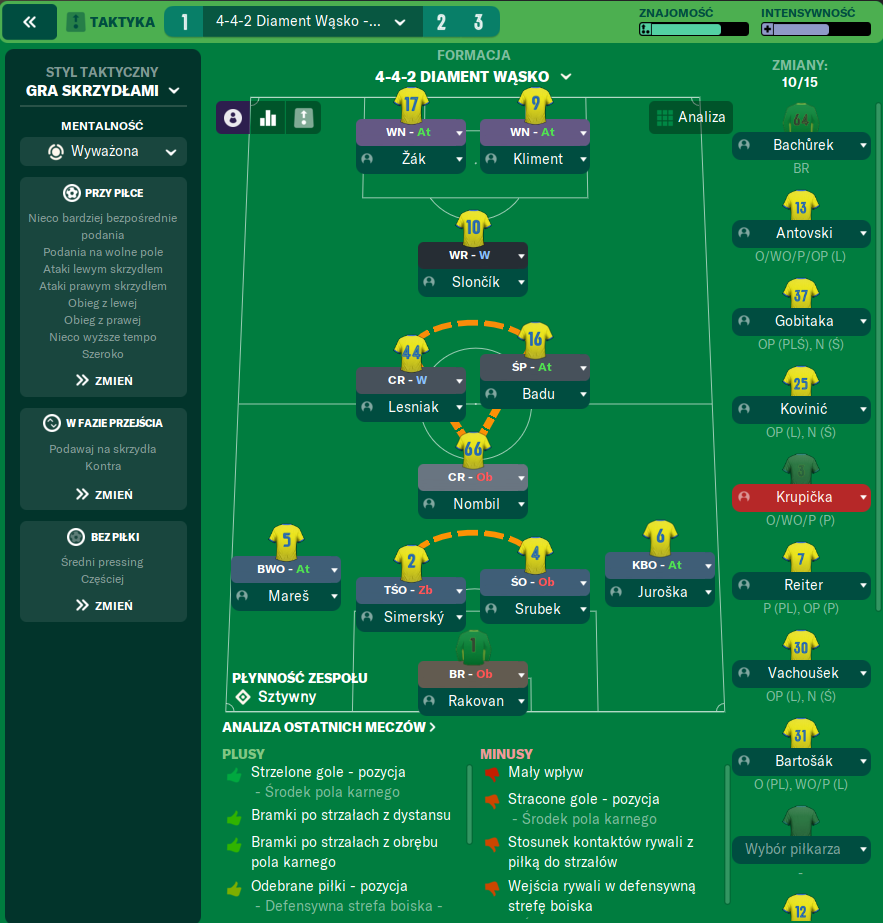
Formation & Style
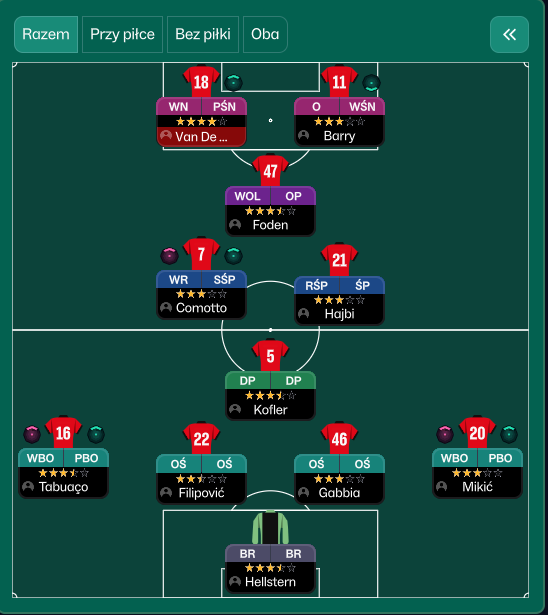
Tactical Style:Wide Play
Mentality:Positive
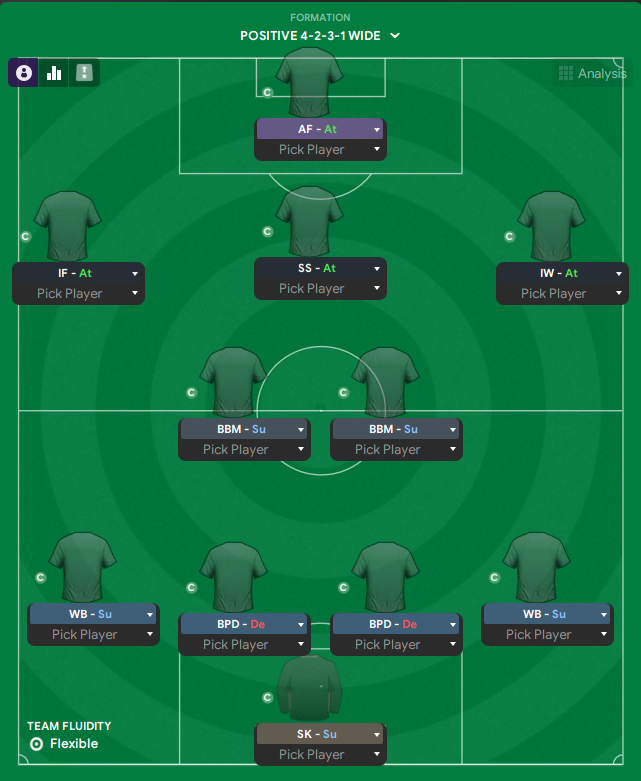
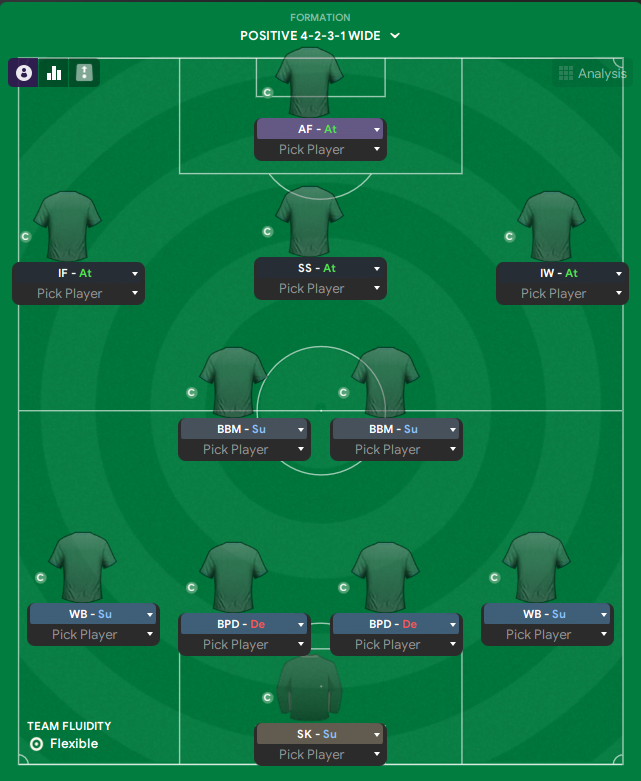
Formation:4-2-3-1 Wide
Team Fluidity:Flexible
In Possession
Shorter passing
Focused play through the wings
Low crosses into the box
Work the ball into the box
In Transition
Counter-press
Distribute swiftly to full-backs
Out of Possession
High press
Tighter marking
Prevent short goalkeeper distribution
Team Shape Without Ball
No team shape without ball data available
Team Shape With Ball
No team shape with ball data available
Key Strengths
Width in Attack
Utilizing wingers provides attacking width, stretching the opponent's defense.
Dynamic Midfield
Combination of deep-lying and advanced playmakers adds creativity and control in midfield.
Effective Pressing
High press can quickly regain possession, putting pressure on the opponent's back line.
Transition Speed
Swift counter-attacks exploit gaps left by opponents when they commit players forward.
Conflicting Directions
High Defensive Line
Could expose defenders to pacey counter-attacks, especially if wing-backs are caught out of position.
Aggressive Wing Play
Heavy reliance on wingers may lead to isolation of central players, creating challenges in building up play.
Vulnerable to Set Pieces
The tactical setup may struggle defensively during set pieces due to positioning of players.
Player Fatigue
High pressing and wide play can lead to quick fatigue among wingers and full-backs, affecting performance.
Tactical Suggestions
Adjust Defensive Line
Consider lowering the defensive line to mitigate vulnerability to fast counter-attacks.
Incorporate a Holding Midfielder
Adding a holding midfielder can provide additional support defensively and help maintain shape.
Rotate Wingers More Often
Substituting wingers frequently can alleviate fatigue and maintain attacking threat.
Enhance Set-Piece Training
Focus on both attacking and defending set pieces to improve effectiveness and reduce conceding.
Ask Questions About Your Lineup
Related Tactics
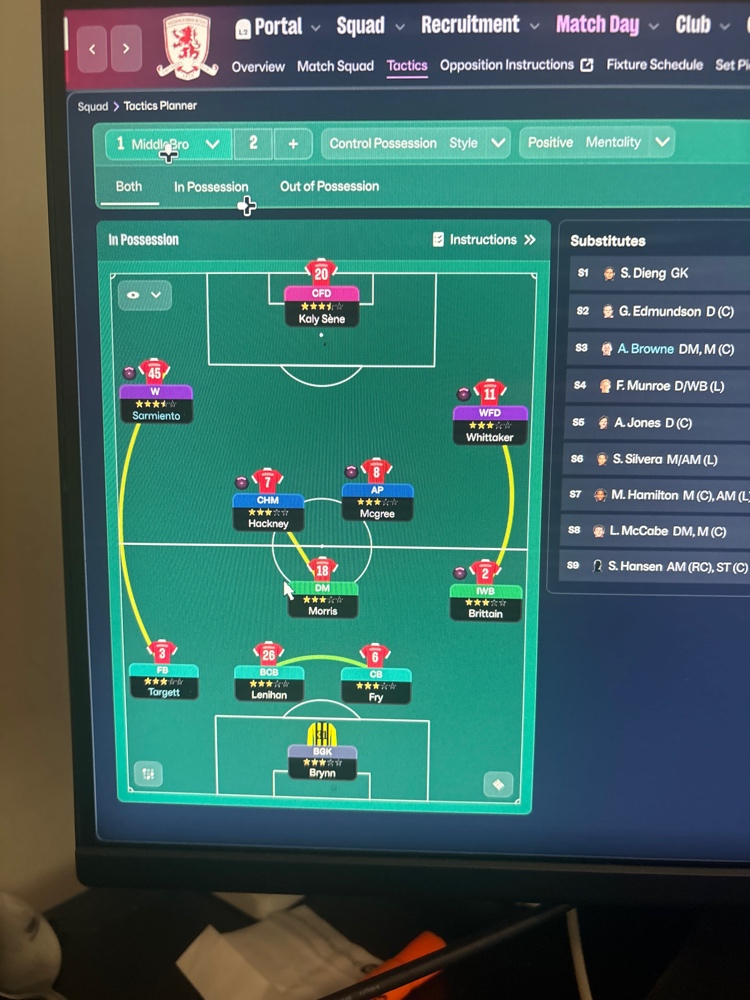
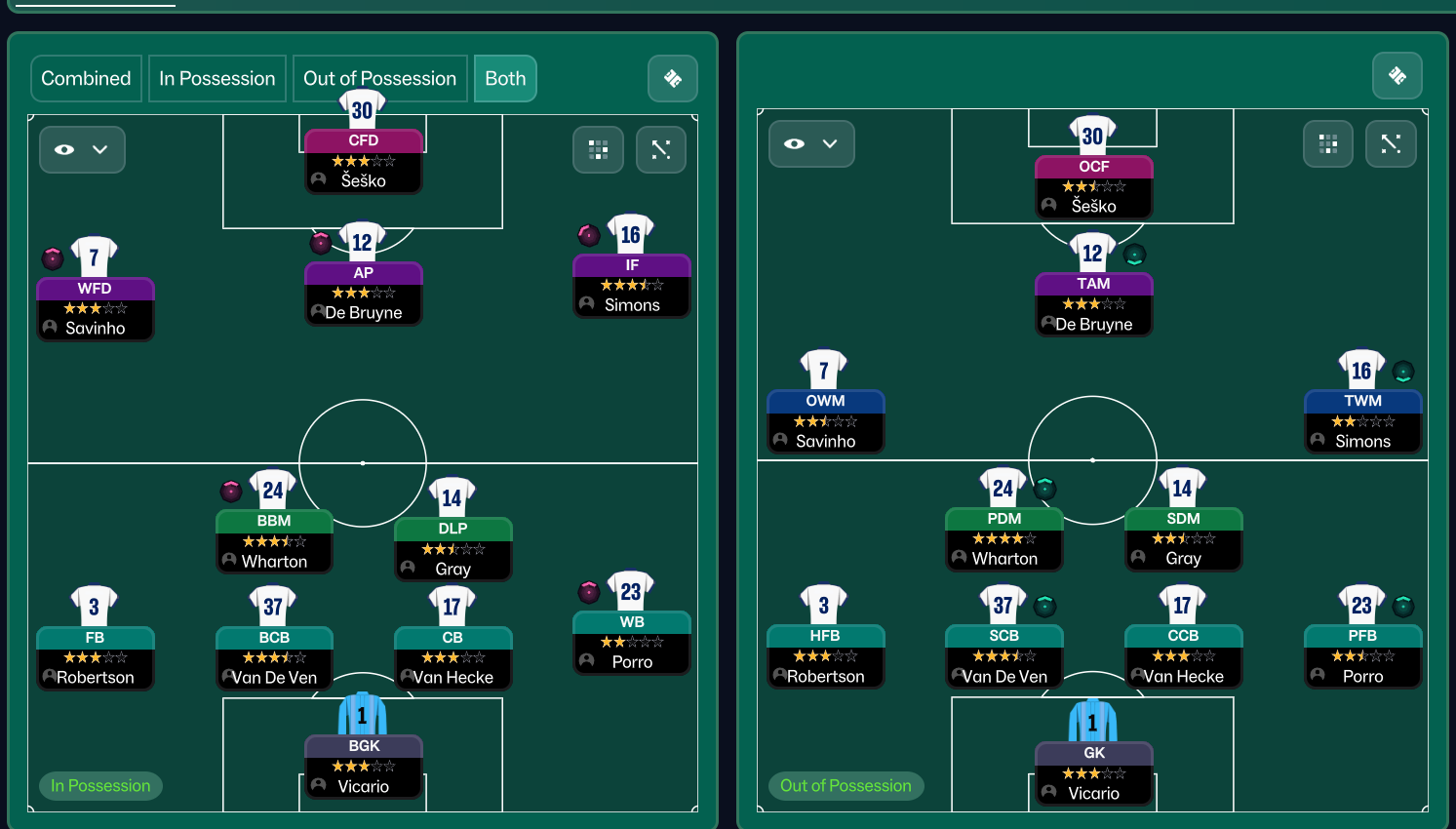
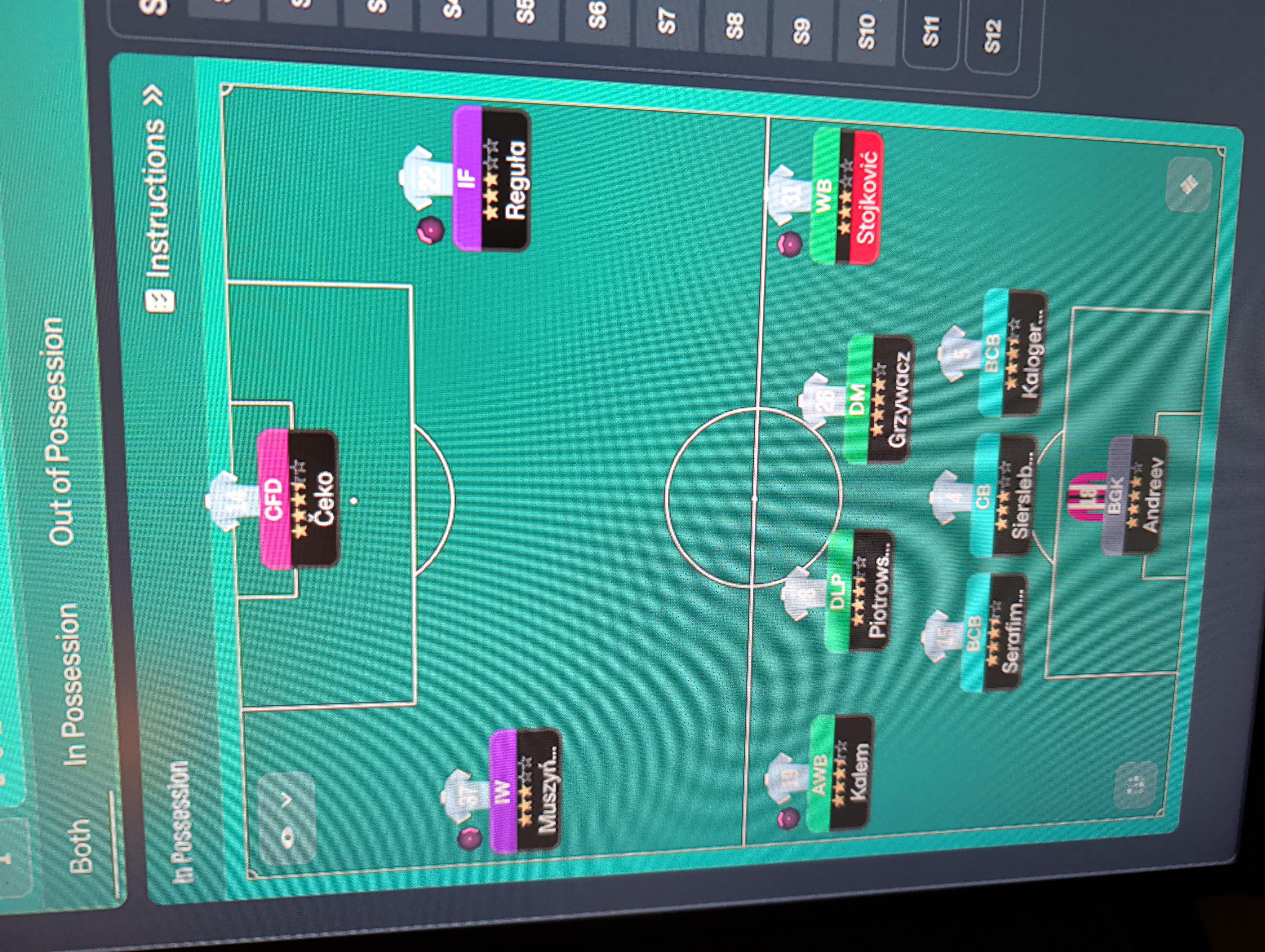
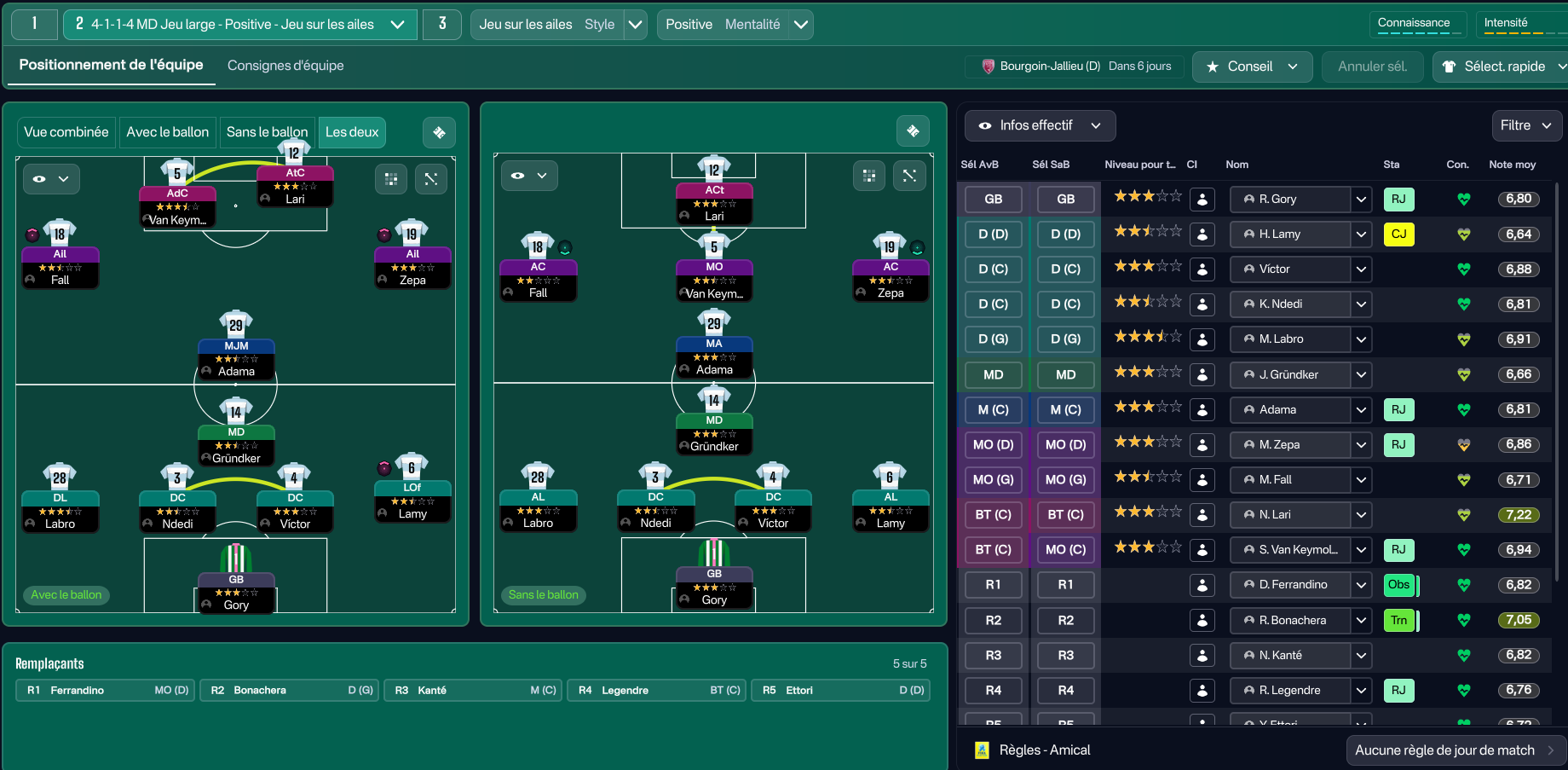
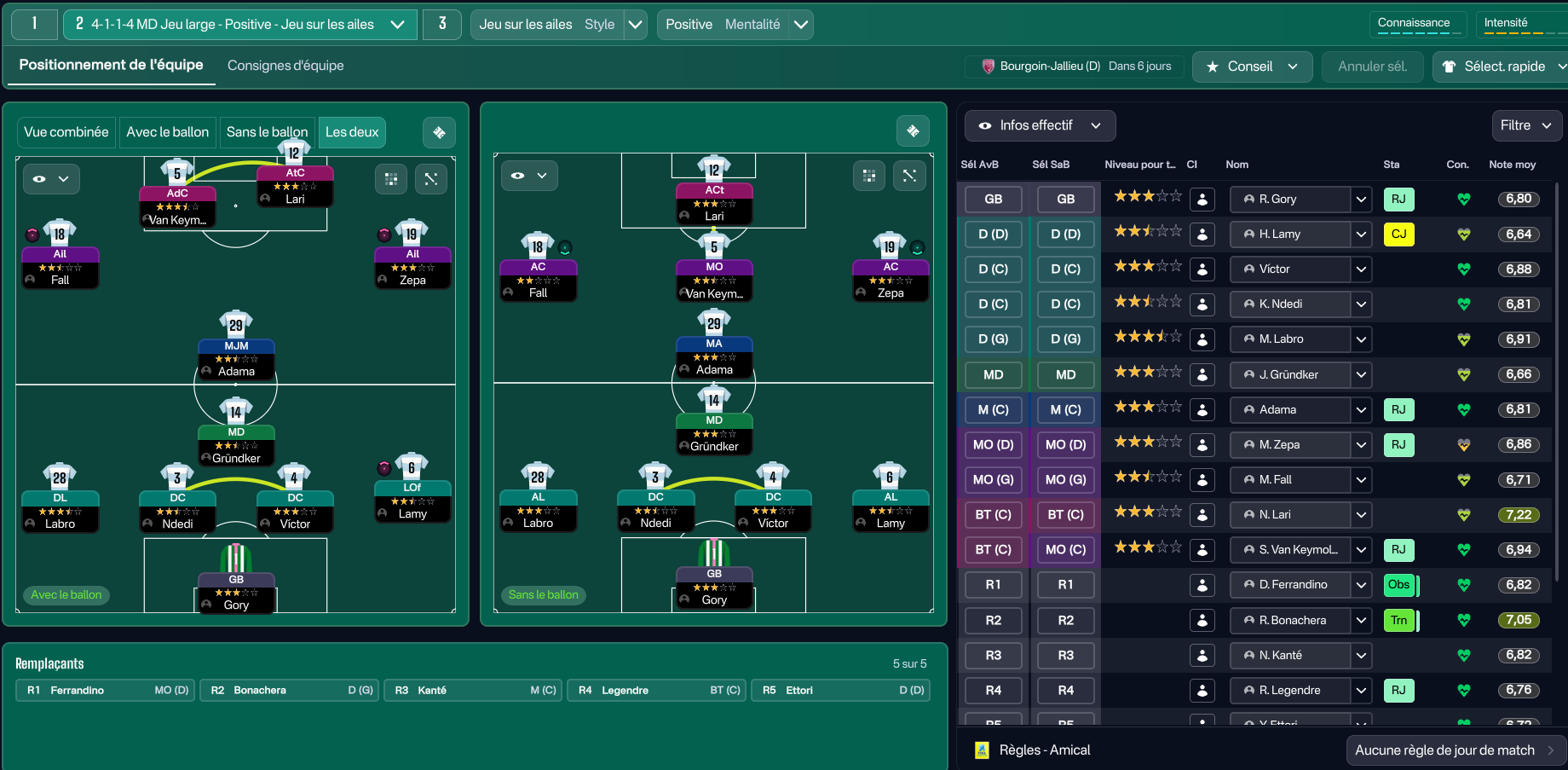
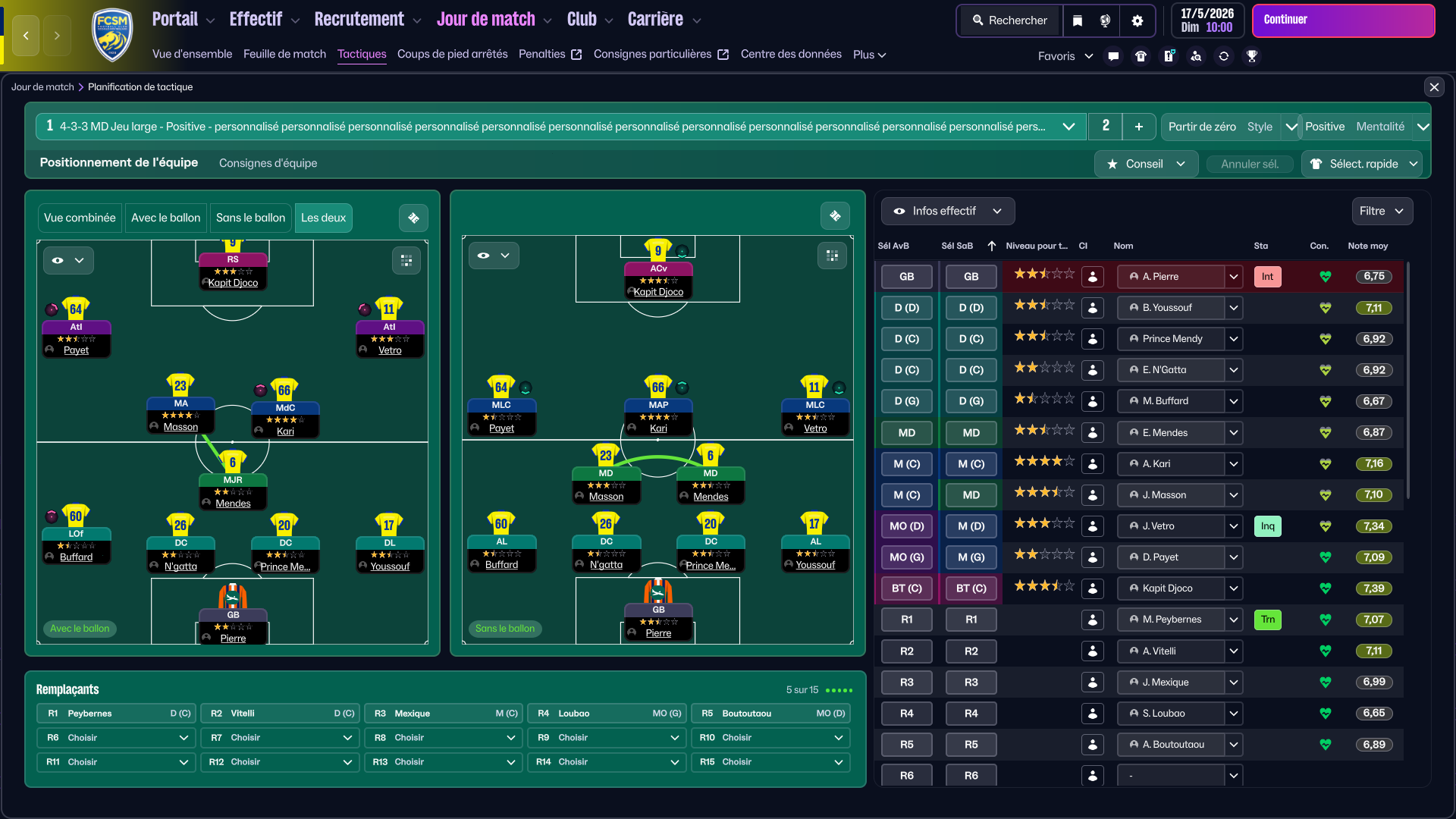
More Wide Play tactics
Guides for this formation
The tactical theory behind the 4-2-3-1 Wide: roles, instructions, and the trade-offs that decide whether the system holds up.
Player pairings
Midfield Pairs in 4-2-3-1 and 4-4-2
Double pivots and flat pairs in 4-2-3-1 and 4-4-2: when each pairing works, when it collapses, and the AMC unicorn that rescues both.
Read guide
Playing styles
Gegenpressing: A Full Guide
Klopp-style gegenpressing in FM, including squad profile, line-and-press pairing, sustainable workload, and the antipatterns to avoid.
Read guide