Uploaded Tactic
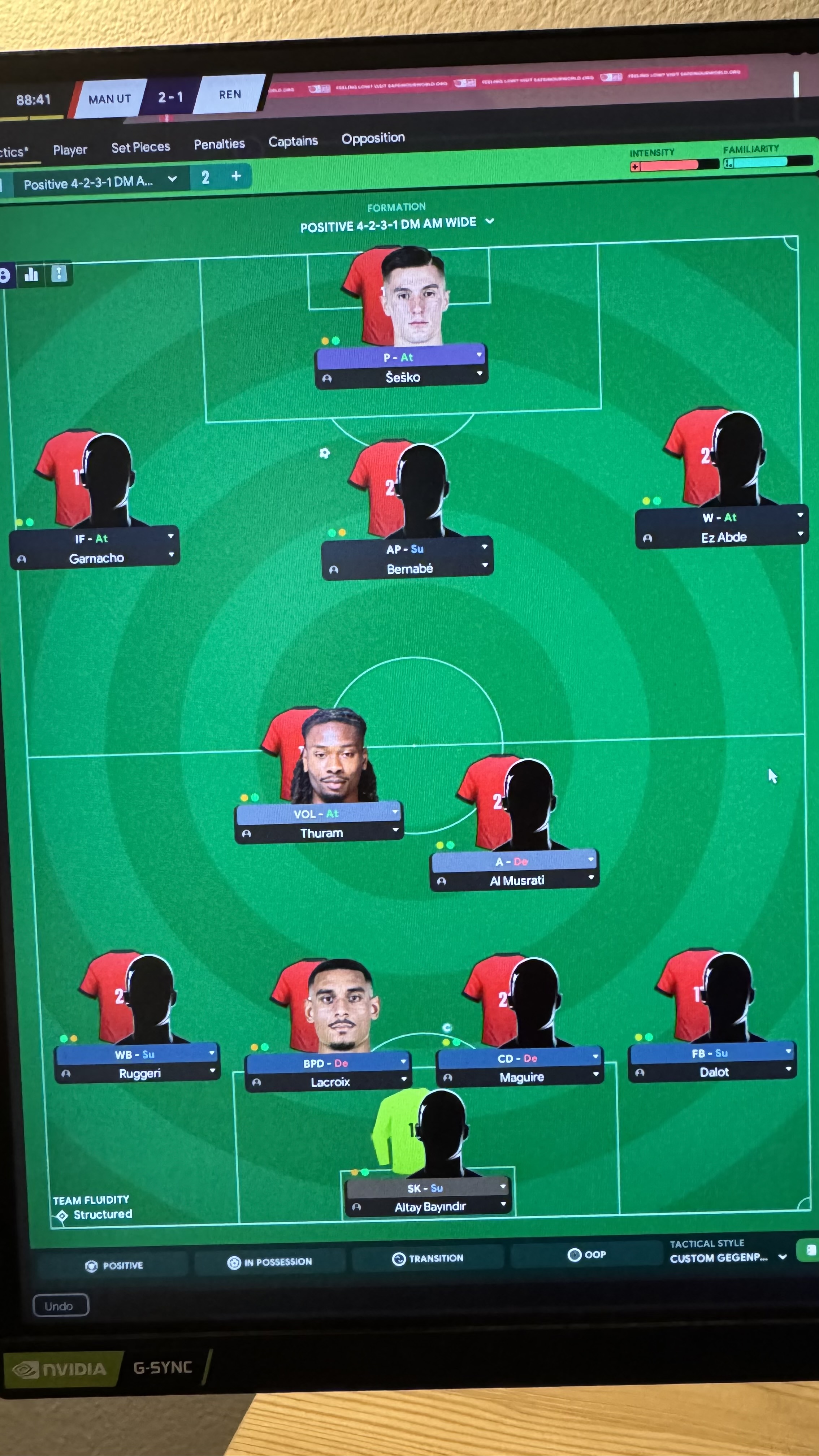
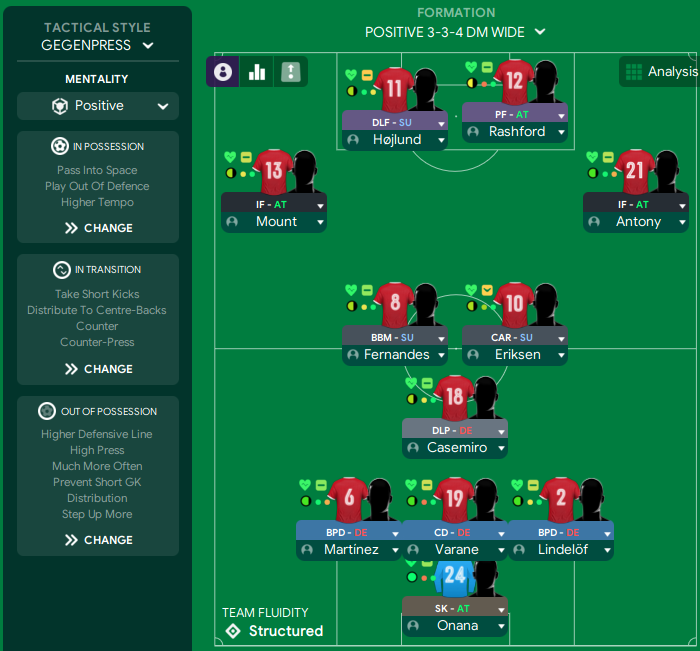
Formation & Style
Tactical Style:Gegenpress
Mentality:Positive
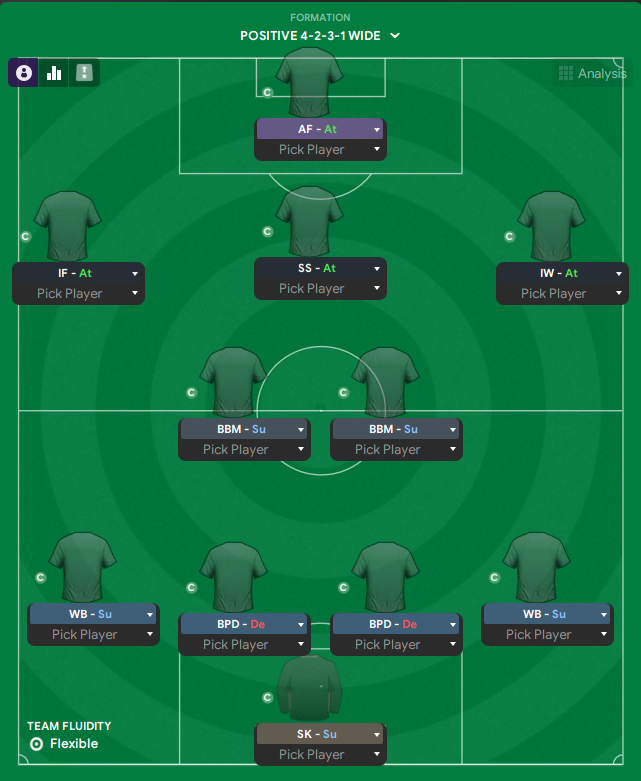
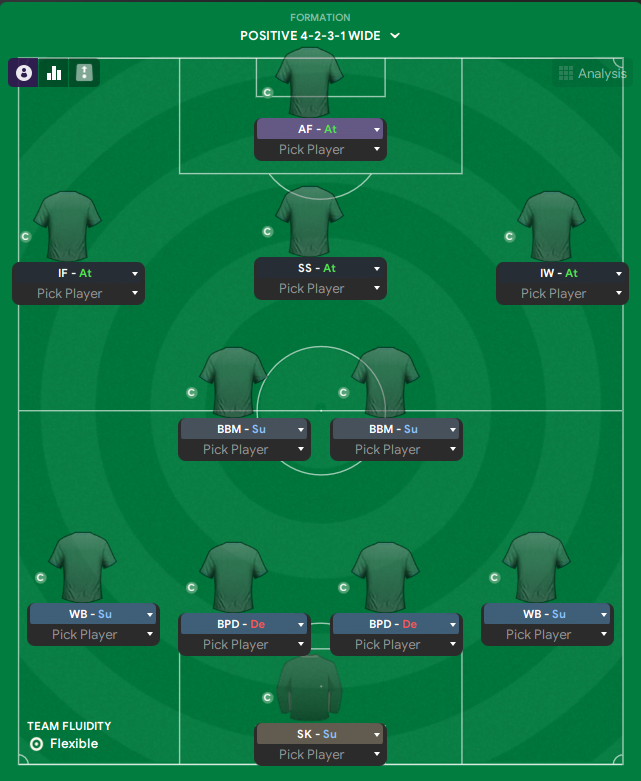
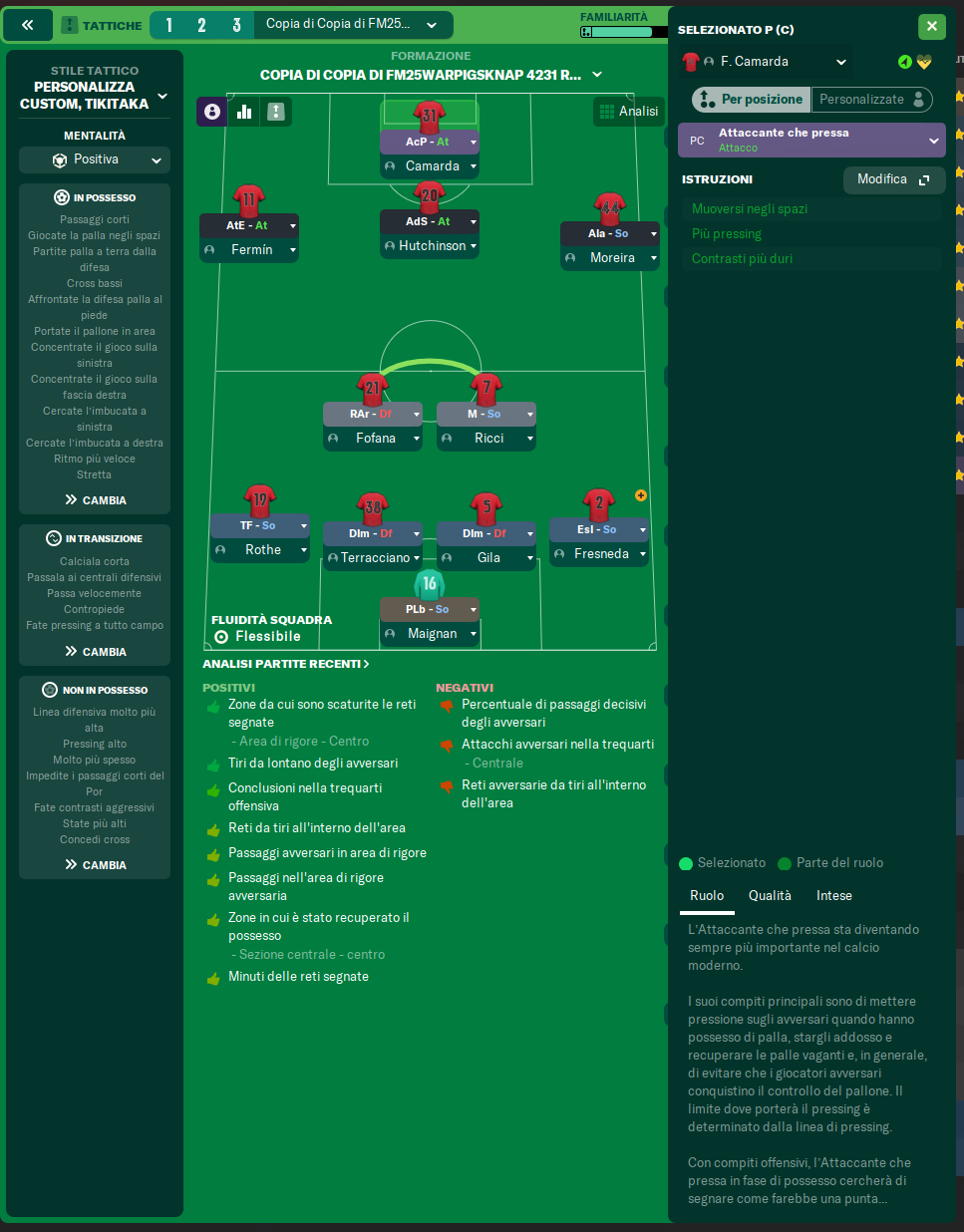
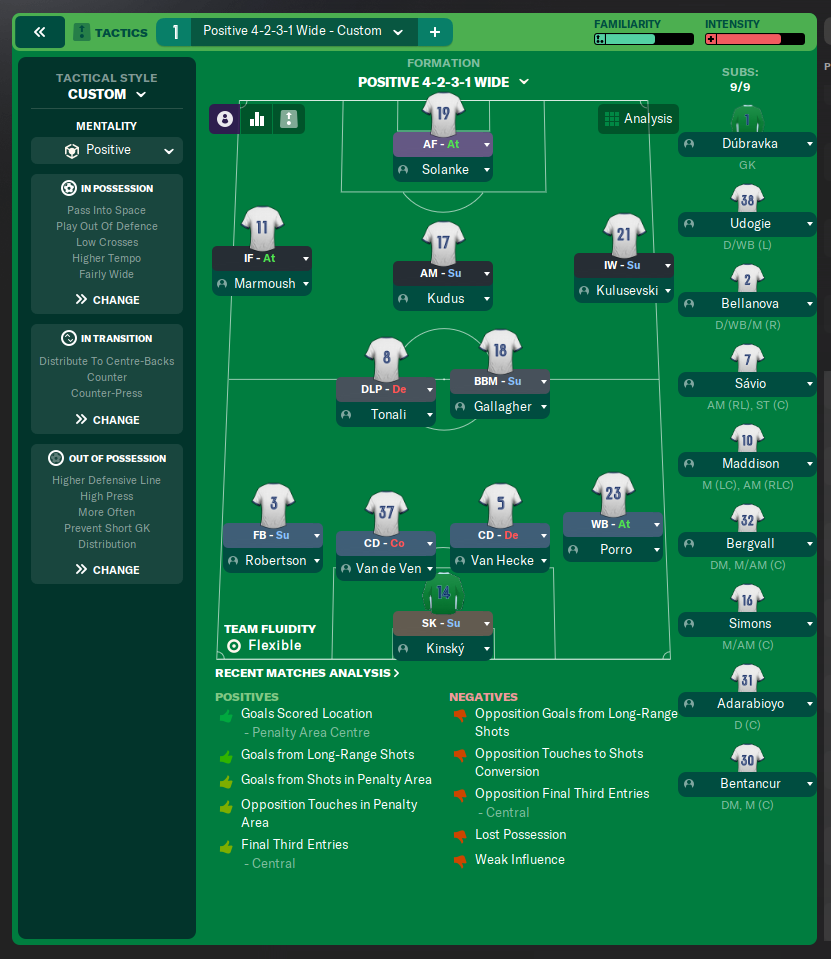
Formation:4-2-3-1 Wide
Team Fluidity:Structured
In Possession
Focus play down the wings
Use overlapping full-backs
Maintain short passing
Work the ball into the box
In Transition
Counter-press after losing possession
Counter-attack quickly
Out of Possession
Use an offside trap
Press high up the pitch
Mark tightly
Team Shape Without Ball
No team shape without ball data available
Team Shape With Ball
No team shape with ball data available
Key Strengths
Attacking Width
Utilizes wingers effectively, creating space and stretching the opposition defense.
High Pressing
The tactic's Gegenpress style allows for immediate pressure on the opposition after losing the ball.
Flexible Midfield
The combination of players like the Volante and Advanced Playmaker supports both defensive solidarity and attacking fluidity.
Defensive Resilience
The use of Ball-Playing Defenders and a solid defensive midfield allows for better ball retention and transition play.
Conflicting Directions
High Defensive Line vs. Speedy Strikers
Pressing high can expose the backline to pacey forwards if countered effectively.
Wing-Play vs. Central Overlap
Wingers may isolate the advanced playmaker, which could disrupt central dominance.
Control vs. Counter-Press
Overcommitting forward may leave the team vulnerable during transitions.
Player Role Compatibility
The pressing forward may require specific support from attackers, which can be limited if wingers do not track back.
Tactical Suggestions
Adjust Defensive Line
Consider lowering the defensive line to prevent excessive gaps that pacey attackers can exploit.
Instruct Wingers to Track Back
Ensure wingers have defensive duties to maintain shape during transitions.
Use More Direct Passing
Consider incorporating direct passing options to exploit quick counter-attacks.
Rotational Play for CM
Encourage the Volante to occasionally drop back to create overloads in midfield.
Ask Questions About Your Lineup
Related Tactics
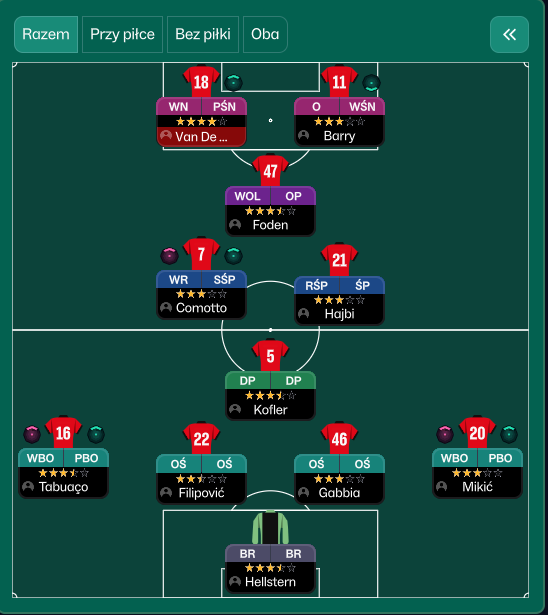
More Gegenpress tactics
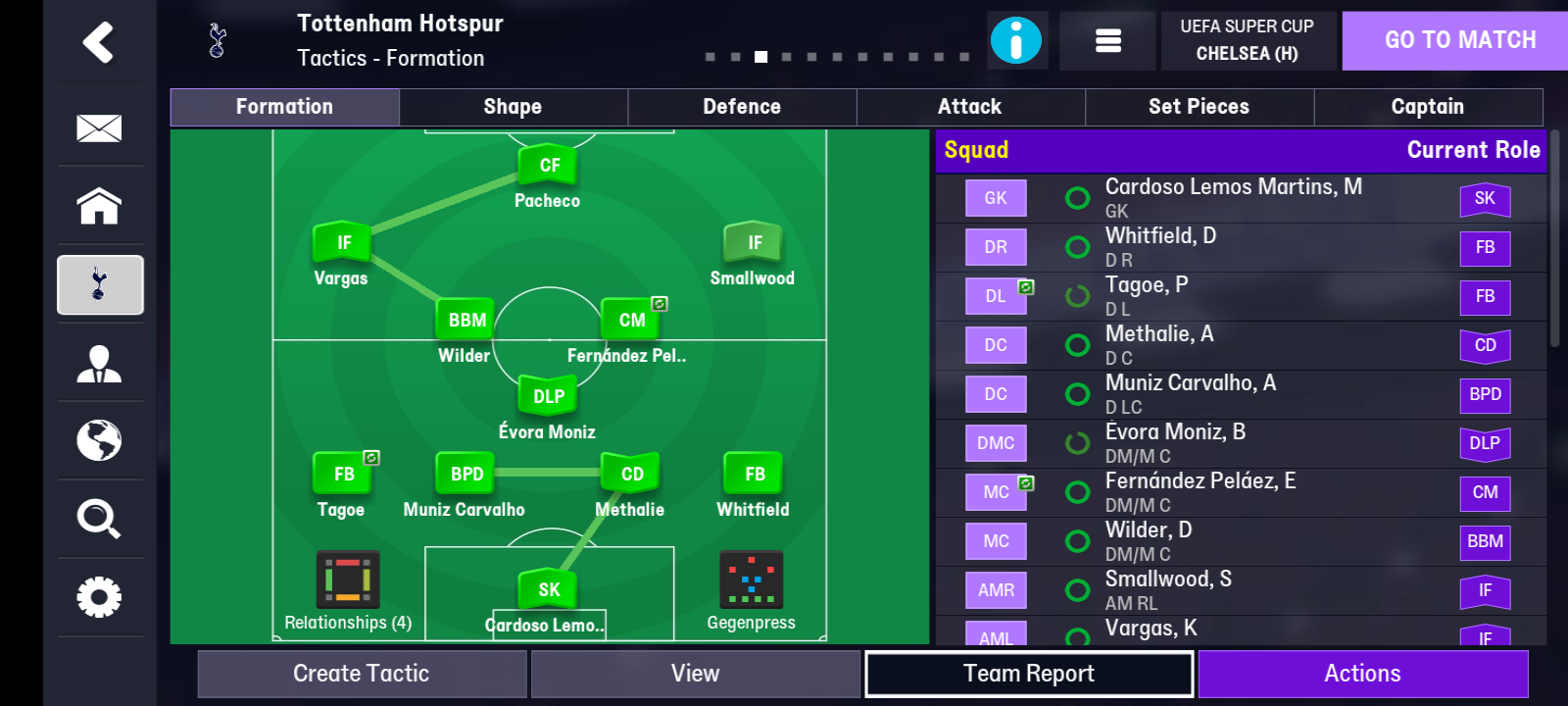
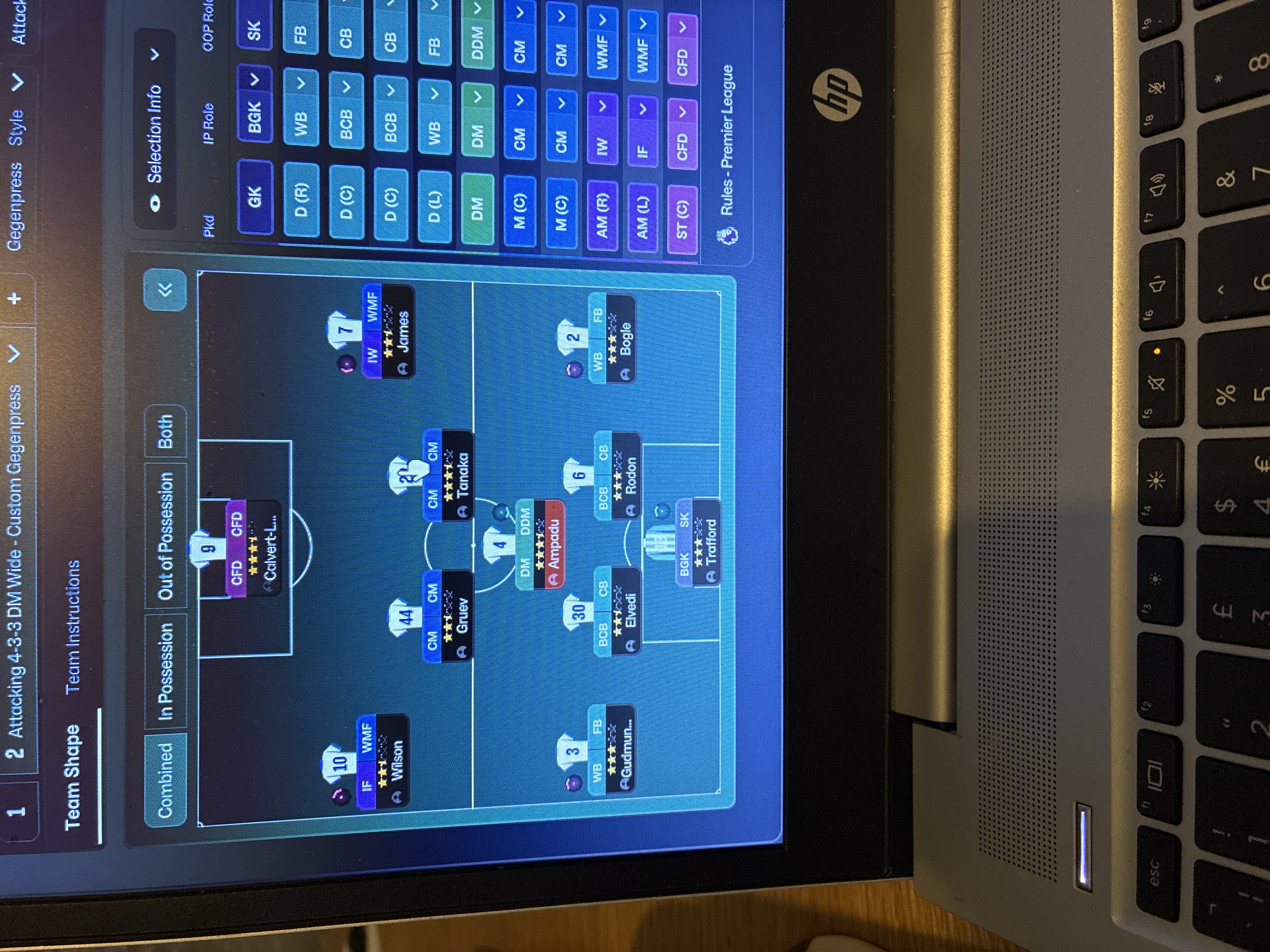
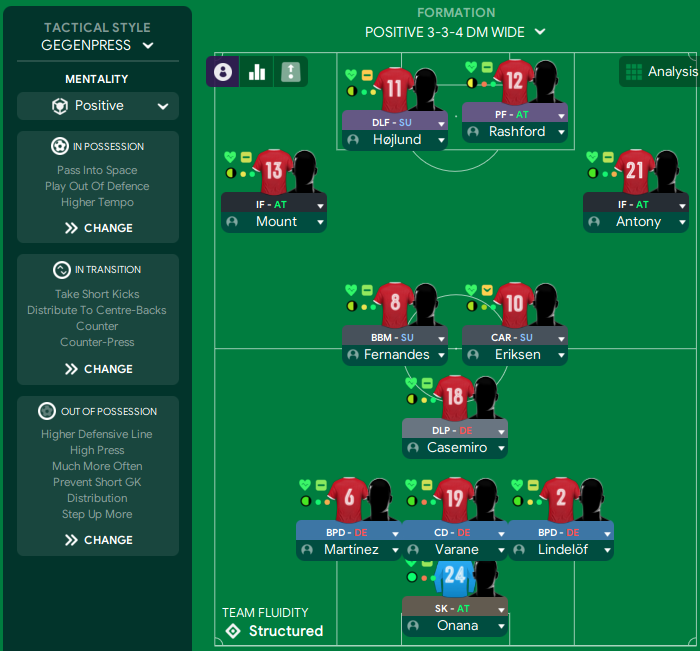
Guides for this formation
The tactical theory behind the 4-2-3-1 Wide: roles, instructions, and the trade-offs that decide whether the system holds up.
Player pairings
Midfield Pairs in 4-2-3-1 and 4-4-2
Double pivots and flat pairs in 4-2-3-1 and 4-4-2: when each pairing works, when it collapses, and the AMC unicorn that rescues both.
Read guide
Playing styles
Gegenpressing: A Full Guide
Klopp-style gegenpressing in FM, including squad profile, line-and-press pairing, sustainable workload, and the antipatterns to avoid.
Read guide