Uploaded Tactic
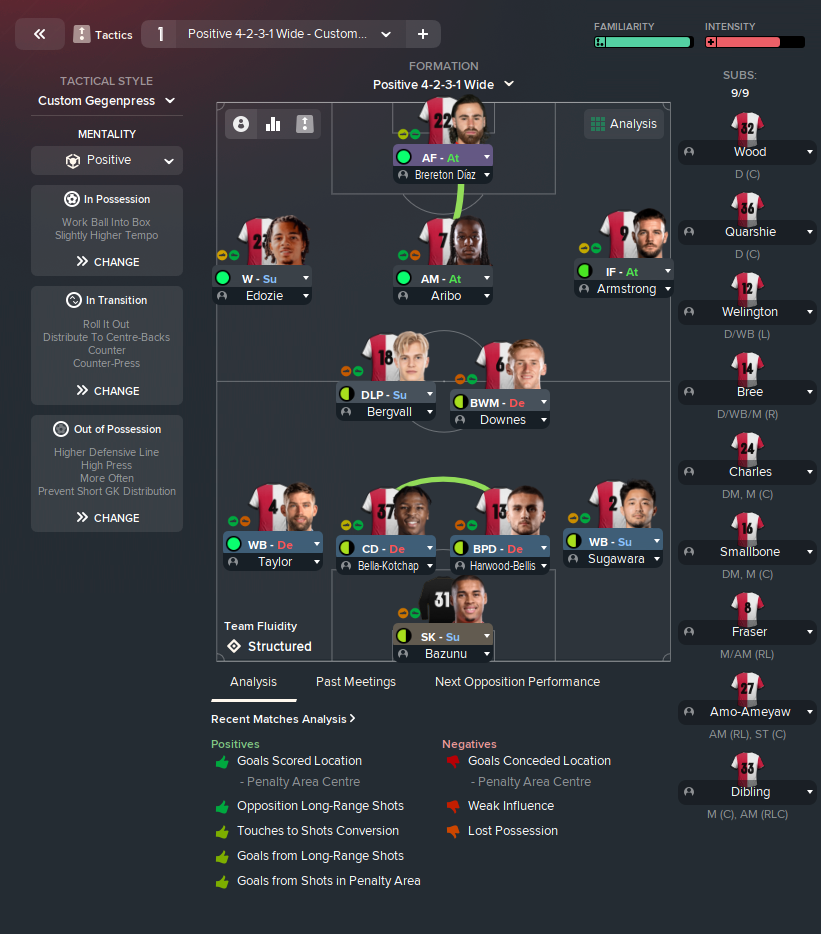
Formation & Style
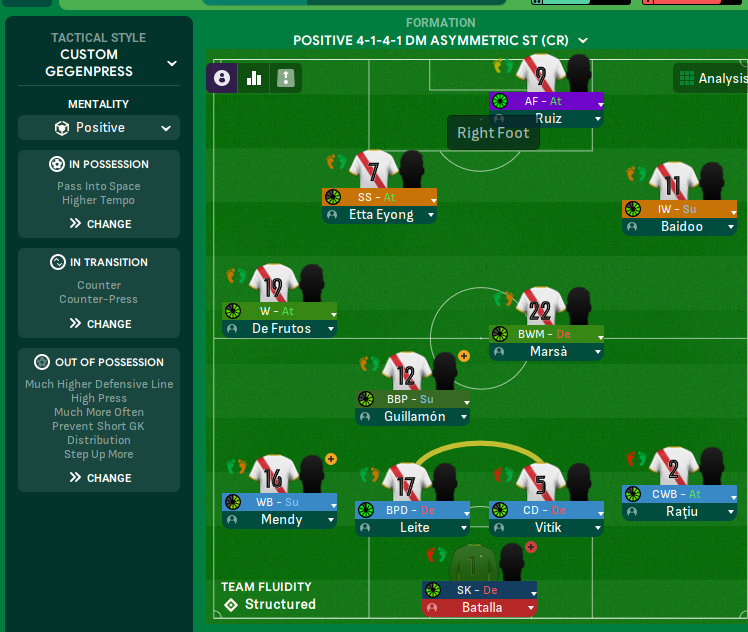
Tactical Style:Custom Gegenpress
Mentality:Positive
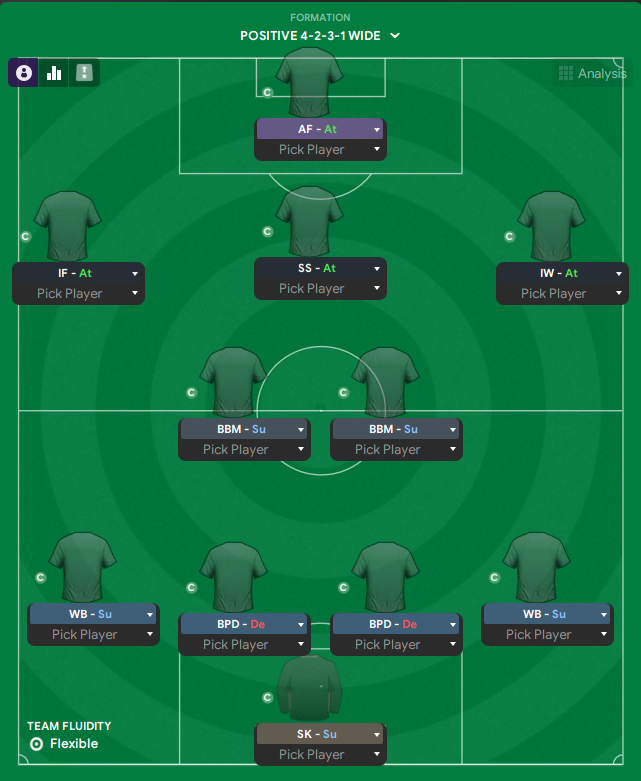
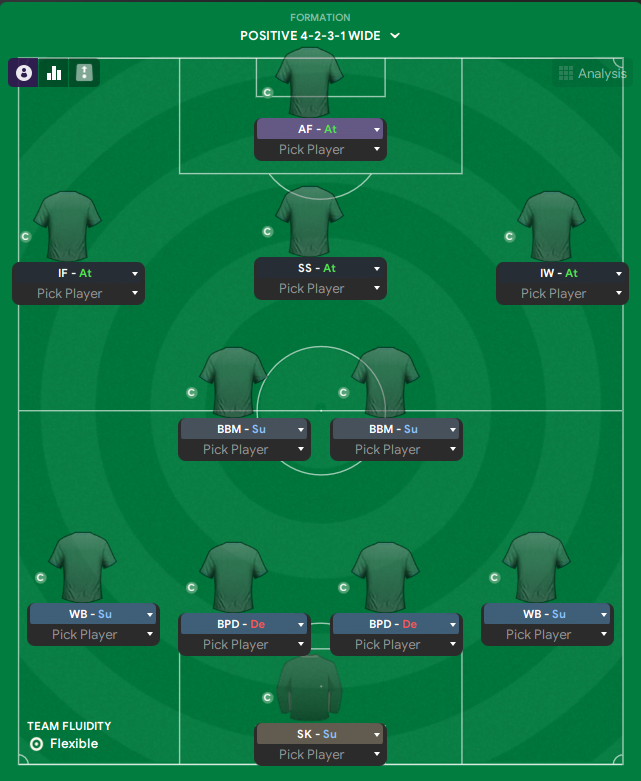
Formation:4-2-3-1 Wide
Team Fluidity:Structured
In Possession
Work Ball Into Box
Slightly Higher Tempo
In Transition
Roll It Out
Distribute To Centre-Backs
Counter
Counter-Press
Out of Possession
Higher Defensive Line
High Press
More Often Prevent Short GK Distribution
Team Shape Without Ball
Shape:4-2
Description:With a higher defensive line, the team aims to compress the space and apply pressure on opponents, forcing them into mistakes.
Evidence:Higher Defensive Line + High Press instructions.
Team Shape With Ball
Shape:4-3
Description:The attacking setup utilizes width from wingers and full-backs, supported by a strong central playmaker.
Evidence:Winger (Edozie) and Wing-Backs (Taylor, Sugawara) providing width while the Advanced Playmaker (Aribo) facilitates central creativity.
Phase Description
Attacking Play
As the team works the ball into the box using a higher tempo, the focus is on creating quality chances through combination play, especially from wide areas.
Defensive Transition
Immediate counter-pressing is deployed after losing the ball to quickly regain possession.
Main Focus
Utilizing the wingers and attacking midfield to exploit spaces in the opponent's defense.
Key Strengths
Effective Width
Utilizing wing play with support from full-backs creates multiple attacking options.
Dynamic Attacking Trios
Combining style of play from Striker and Inside Forward creates unpredictable movement.
Central Control
A strong midfield partnership helps in controlling the tempo and transition of play.
Conflicting Directions
Defensive Vulnerabilities
High defensive line paired with counter-pressing could backfire against quick attackers.
Attacking Overload
Despite attacking options, lack of width and creative spark may hinder breaking down well-structured defenses.
Possession Commitments
Increased attack emphasis may result in being caught out of position during transition.
Tactical Suggestions
Additional Defensive Midfielder
Introducing a third midfielder could stabilize central areas of play, enhancing ball recovery efforts.
Adjust Tempo
Altering to a more balanced tempo could aid in maintaining possession against stronger opponents.
Variability in Set-Pieces
Introducing different set-piece tactics could exploit defensive weaknesses of opponents more effectively.
Ask Questions About Your Lineup
Related Tactics
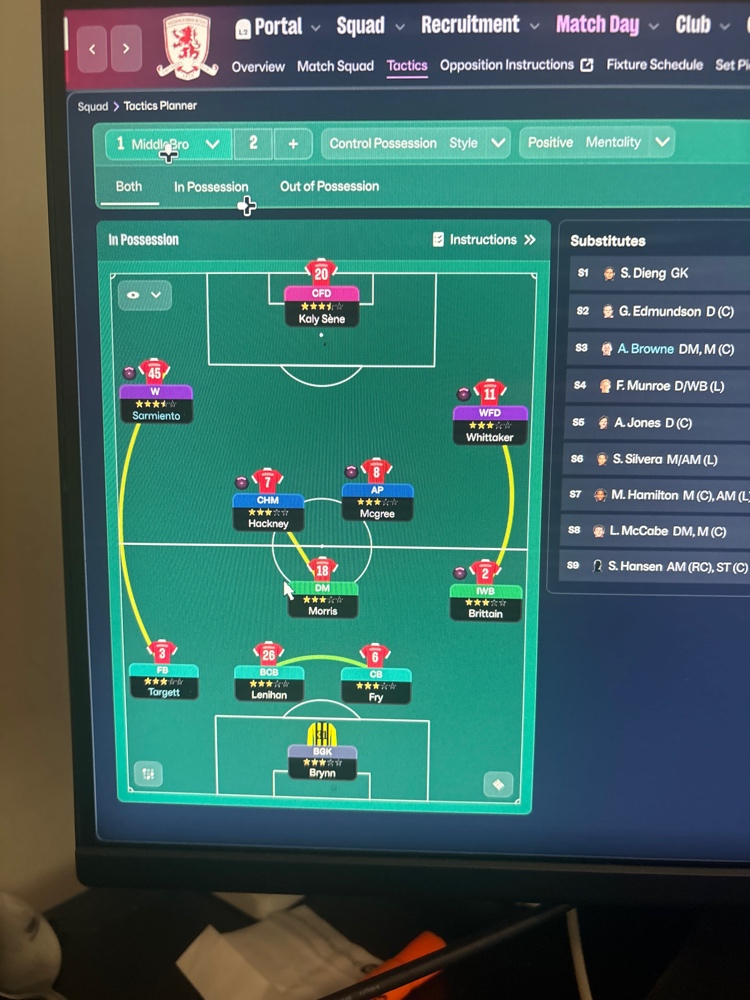
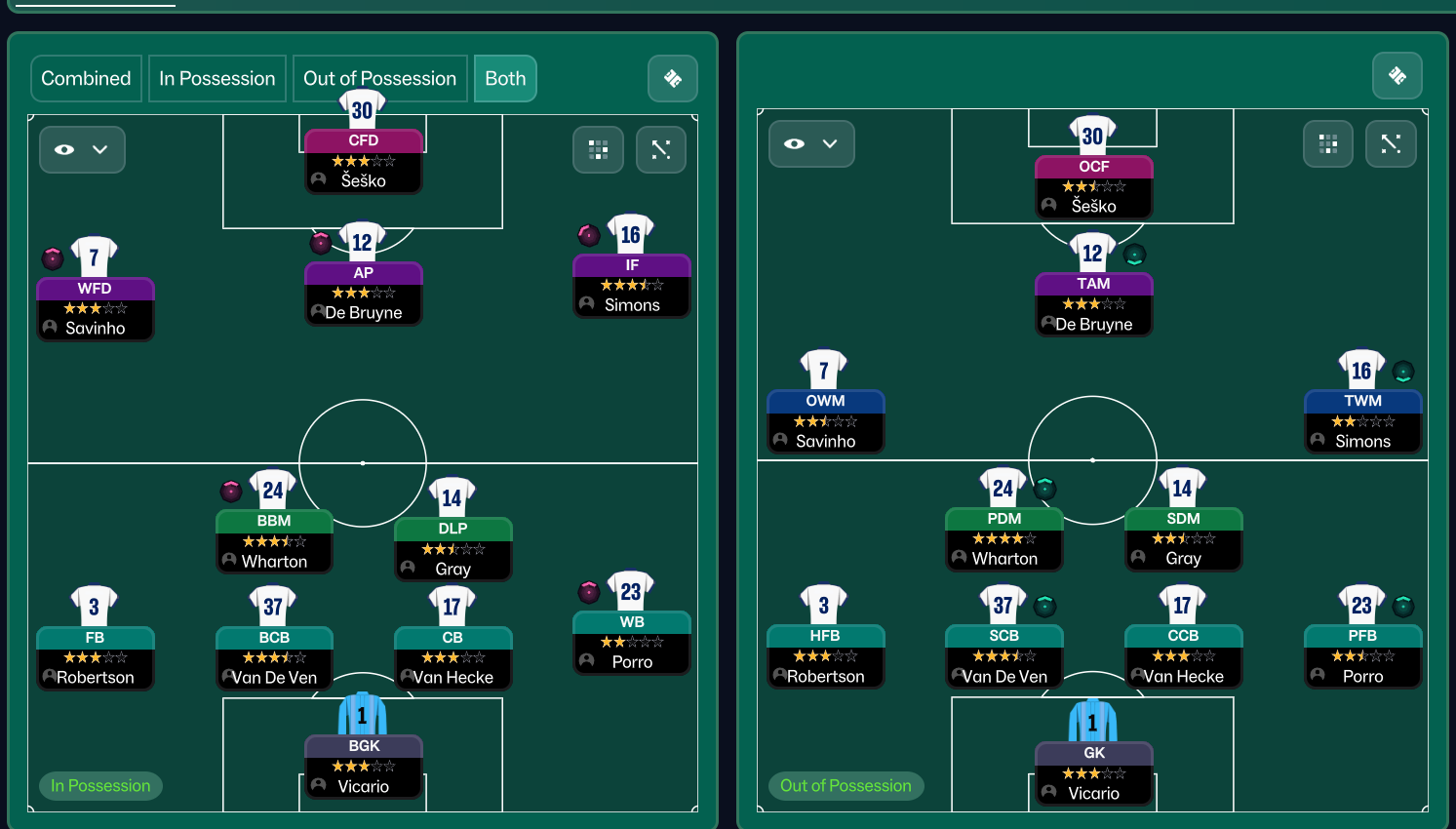
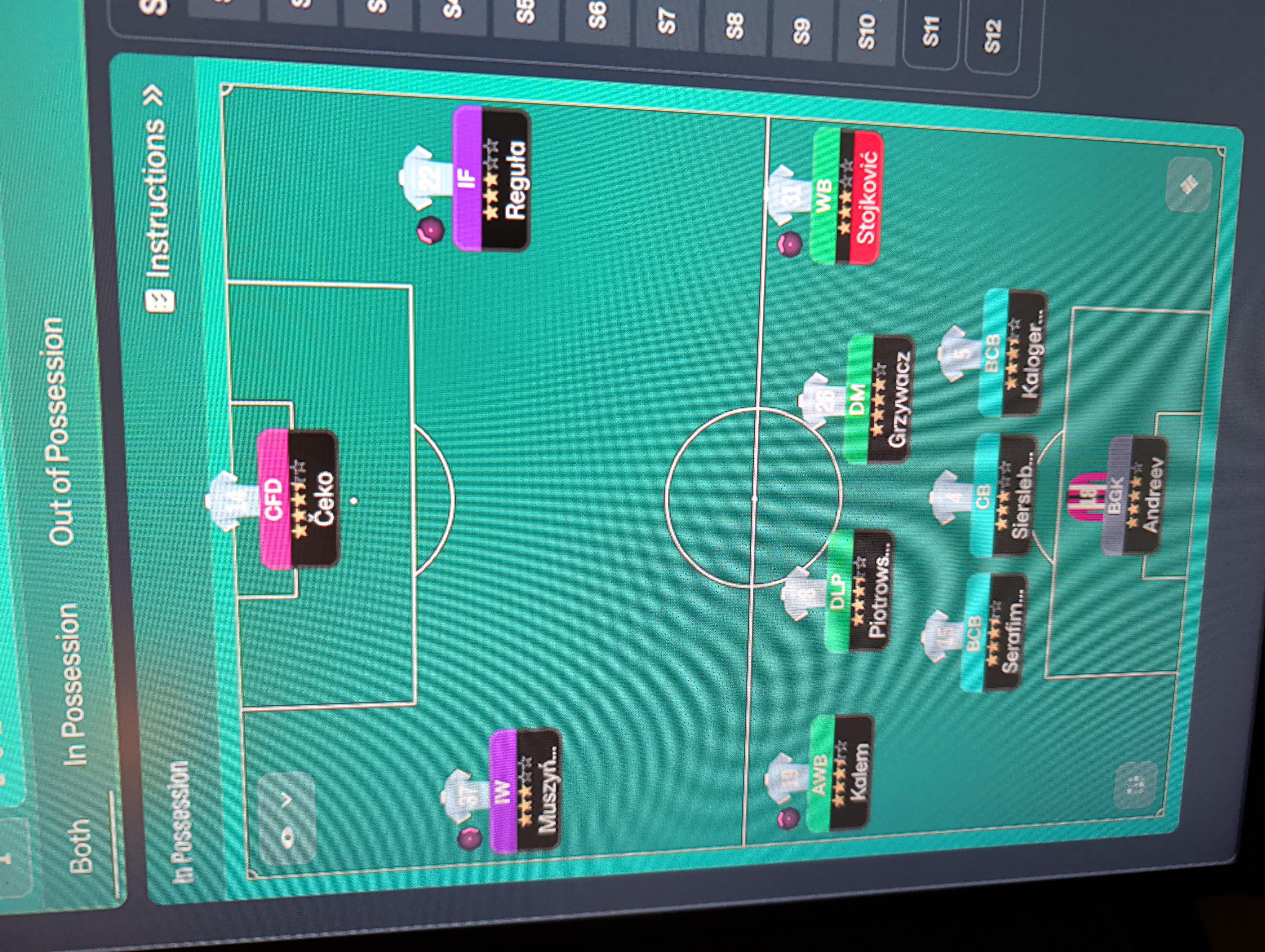
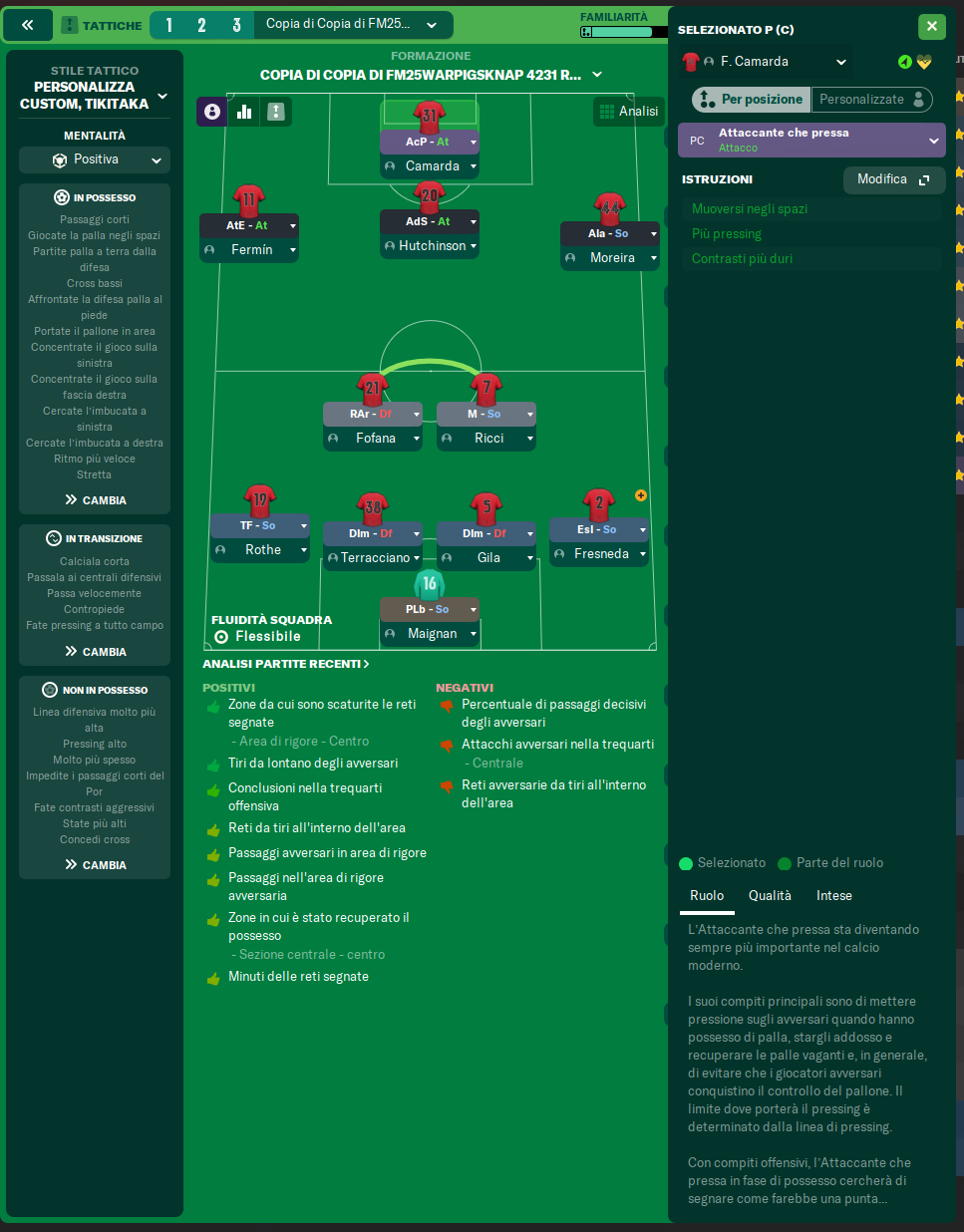
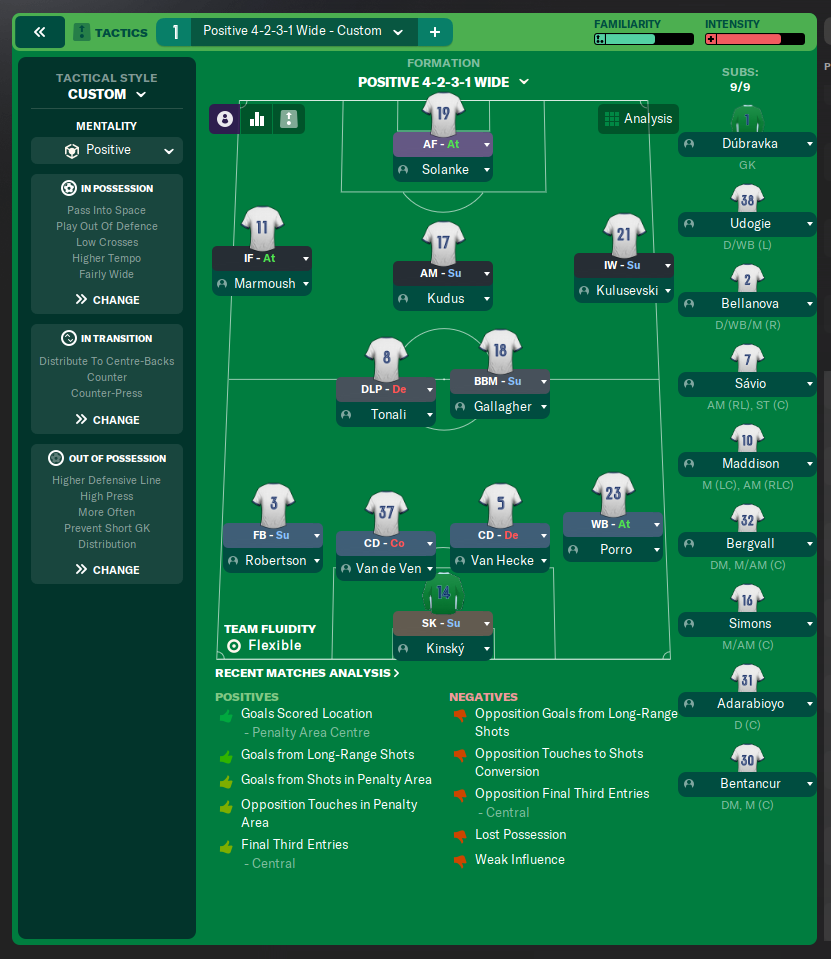
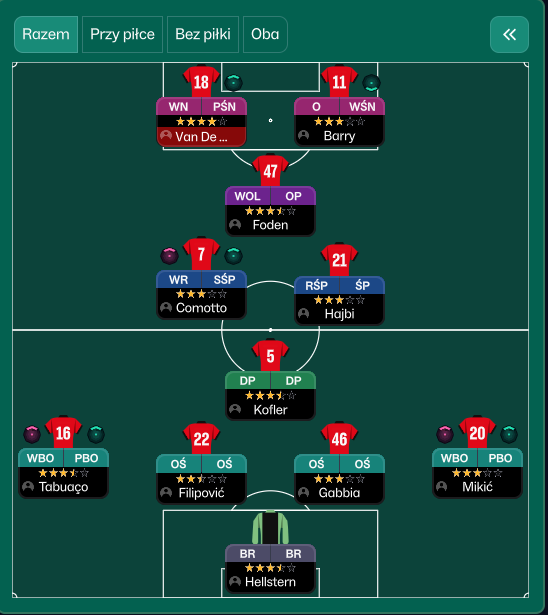
More Custom Gegenpress tactics
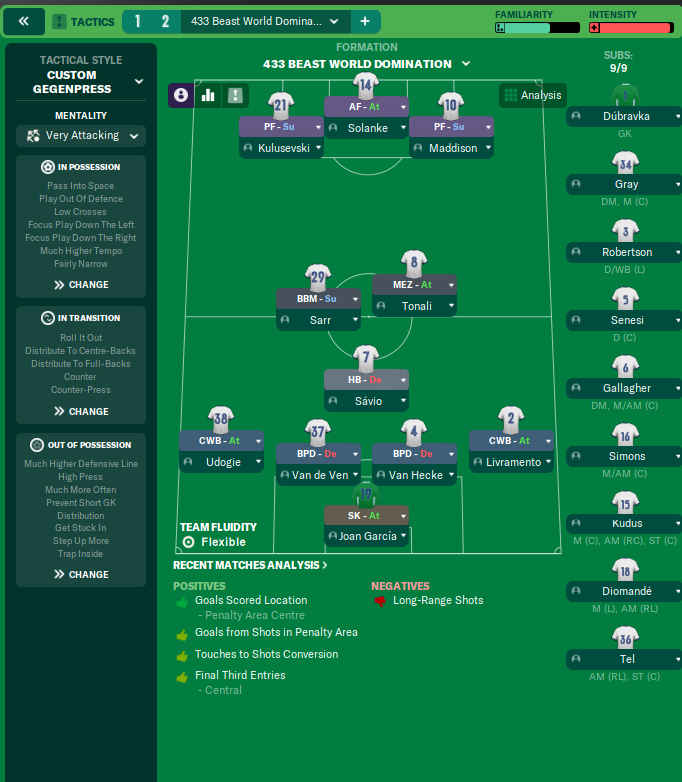
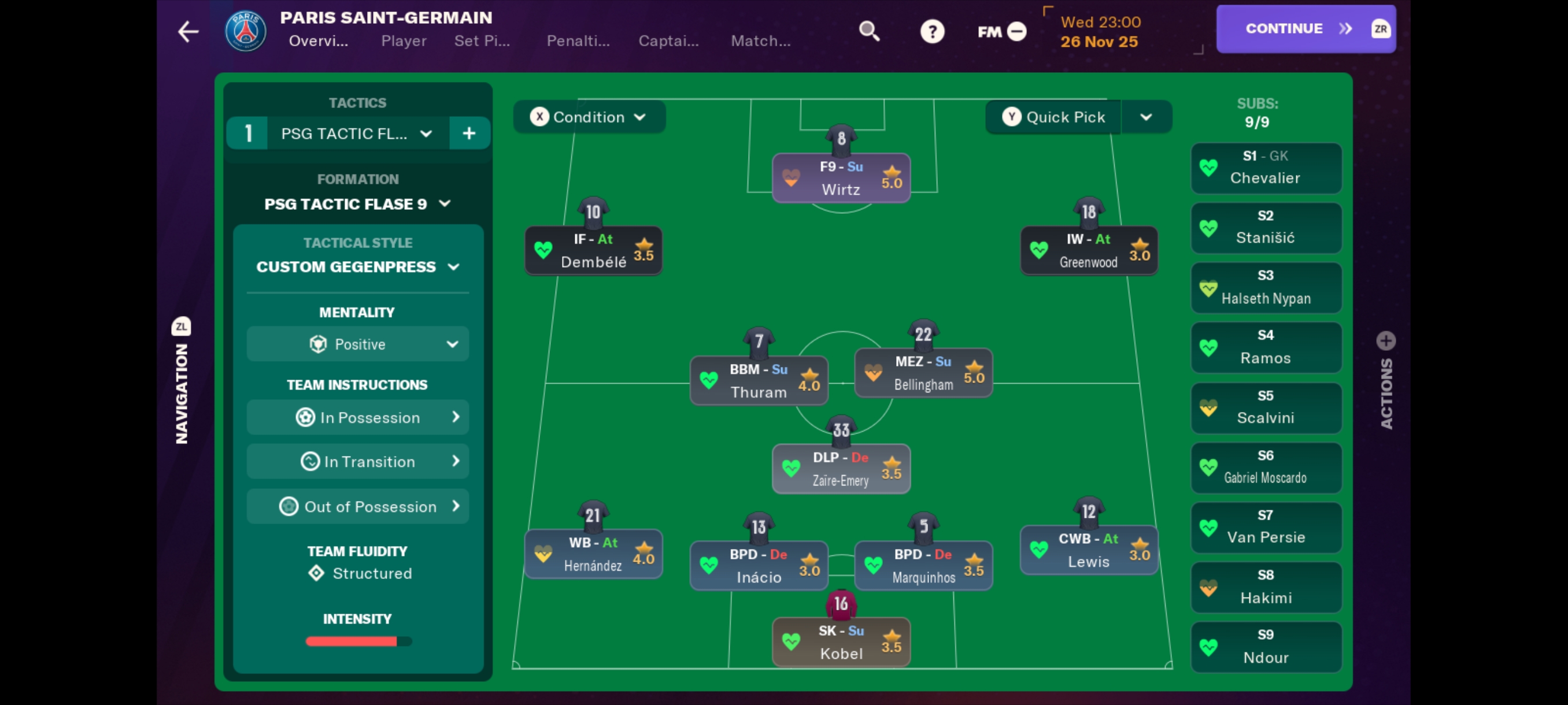
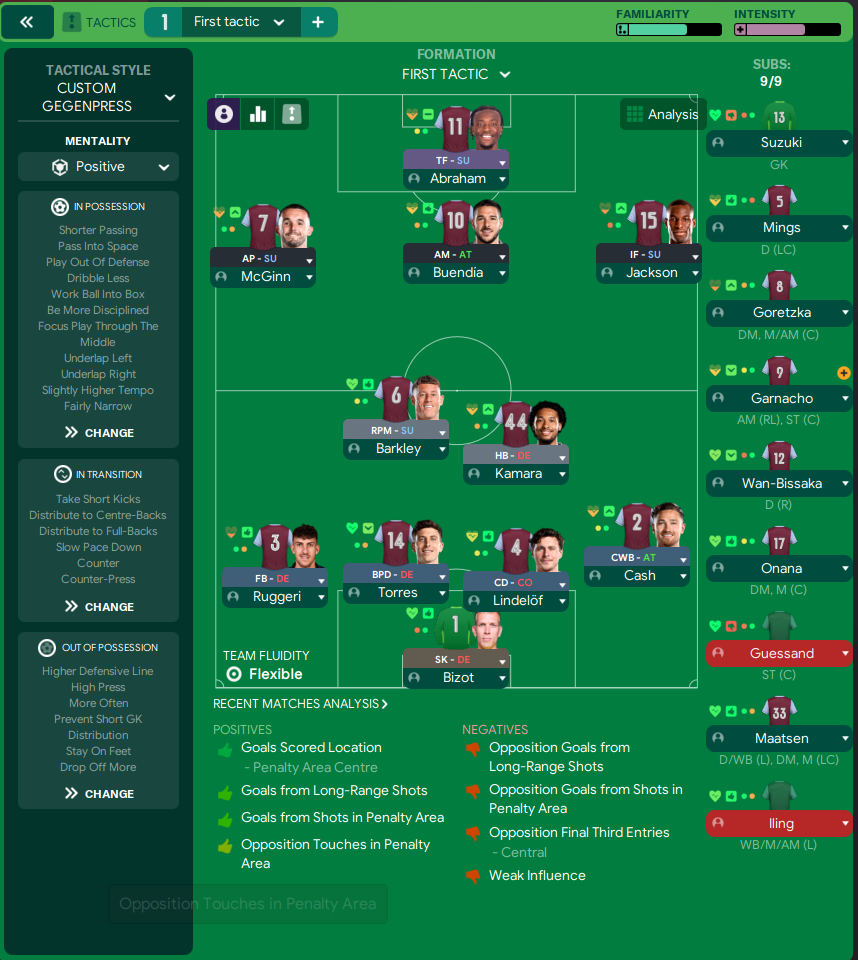
Guides for this formation
The tactical theory behind the 4-2-3-1 Wide: roles, instructions, and the trade-offs that decide whether the system holds up.
Player pairings
Midfield Pairs in 4-2-3-1 and 4-4-2
Double pivots and flat pairs in 4-2-3-1 and 4-4-2: when each pairing works, when it collapses, and the AMC unicorn that rescues both.
Read guide
Playing styles
Gegenpressing: A Full Guide
Klopp-style gegenpressing in FM, including squad profile, line-and-press pairing, sustainable workload, and the antipatterns to avoid.
Read guide