Uploaded Tactic
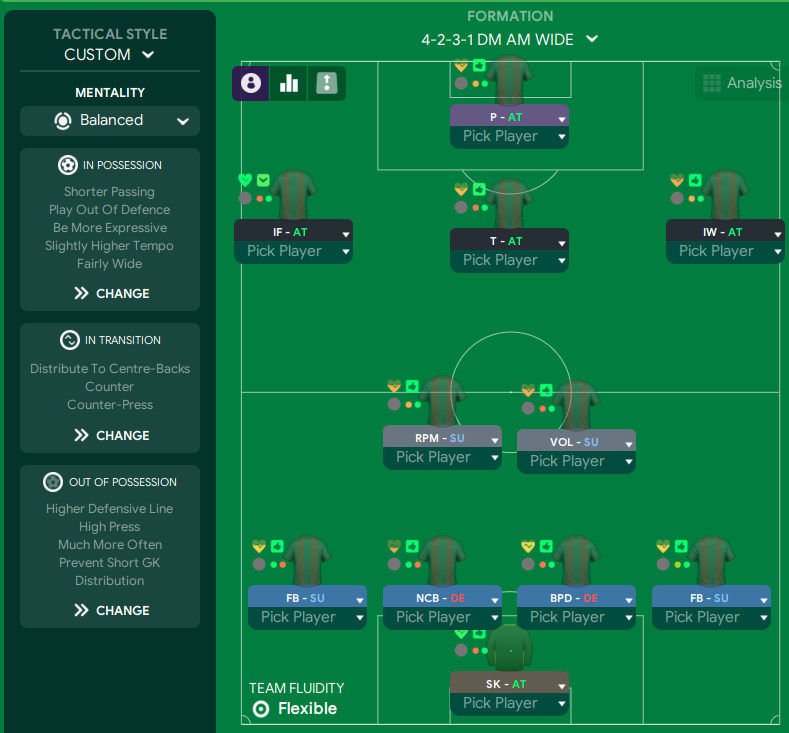
Formation & Style
Tactical Style:Custom
Mentality:Balanced
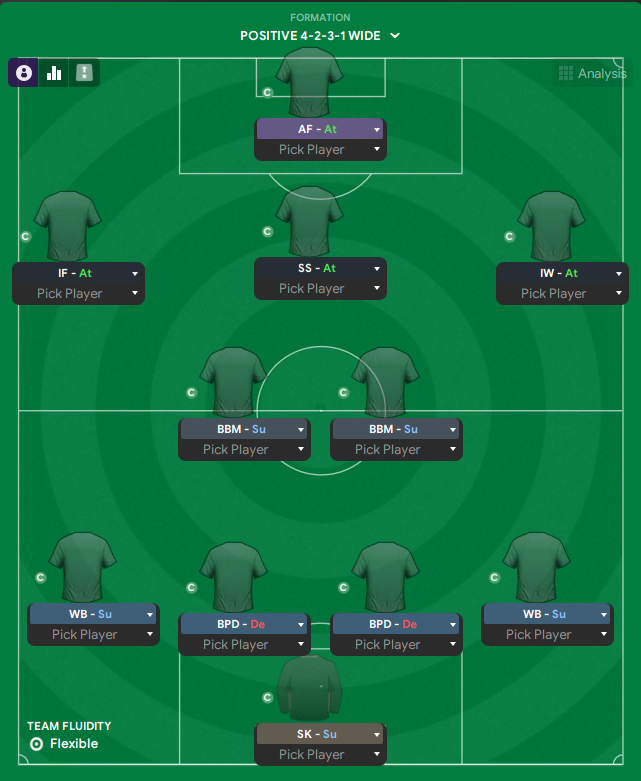
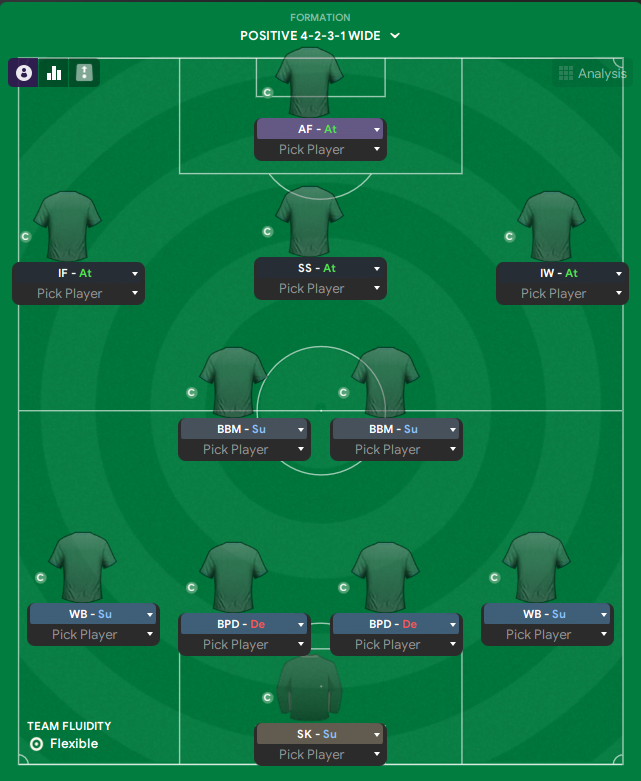
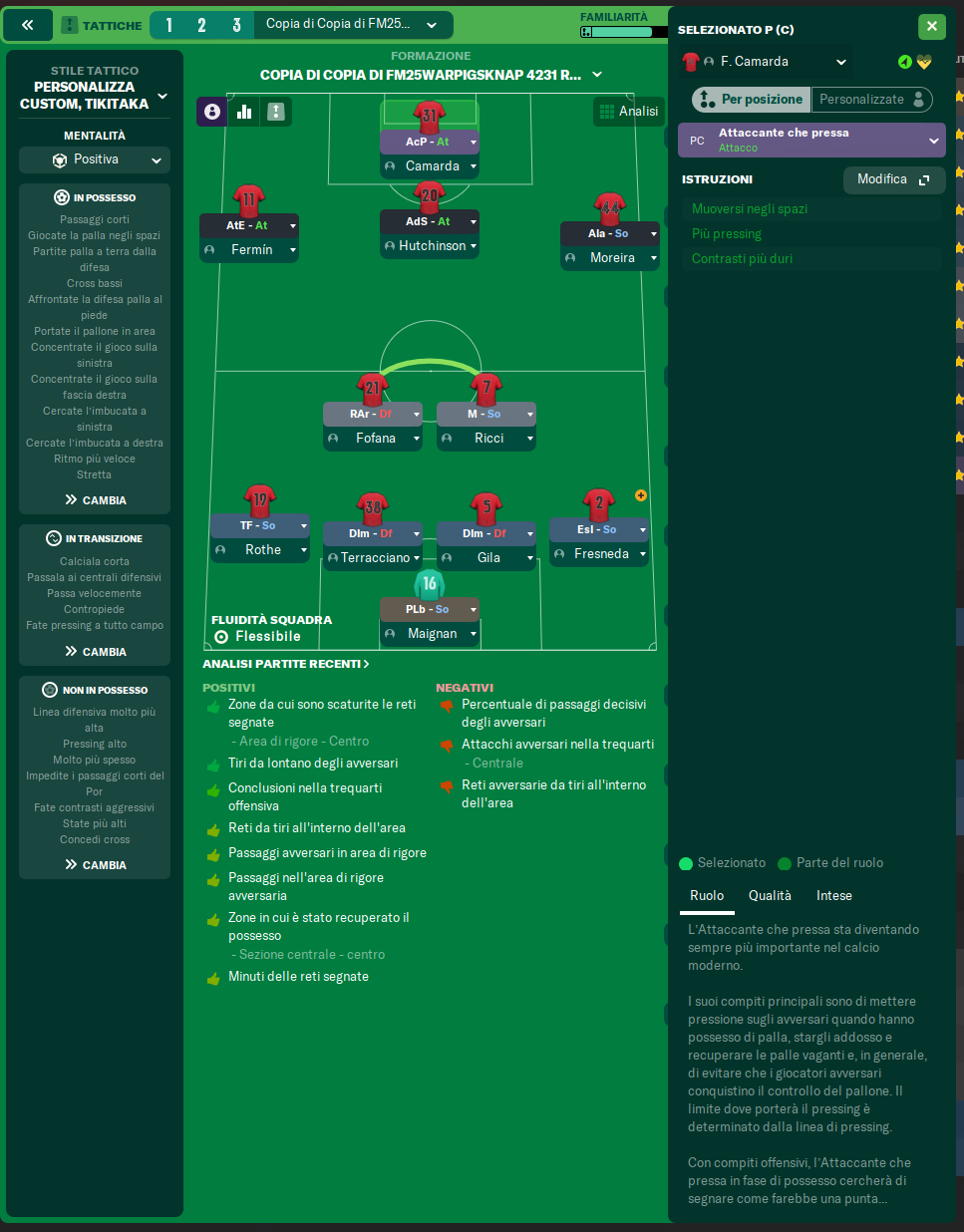
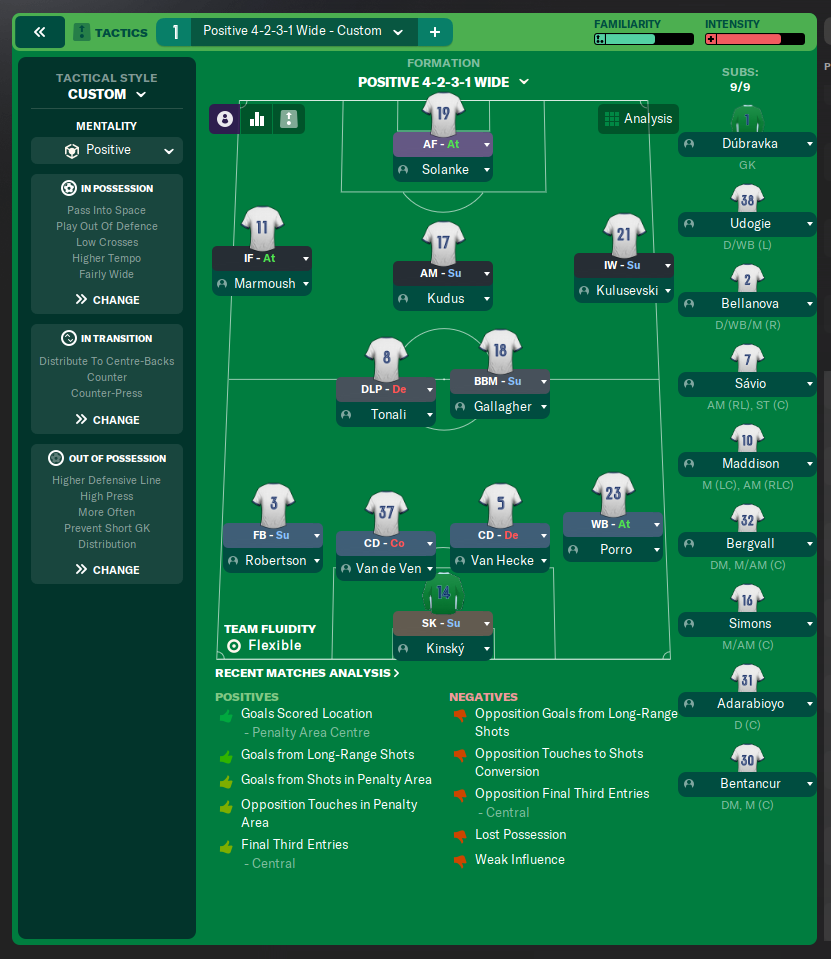
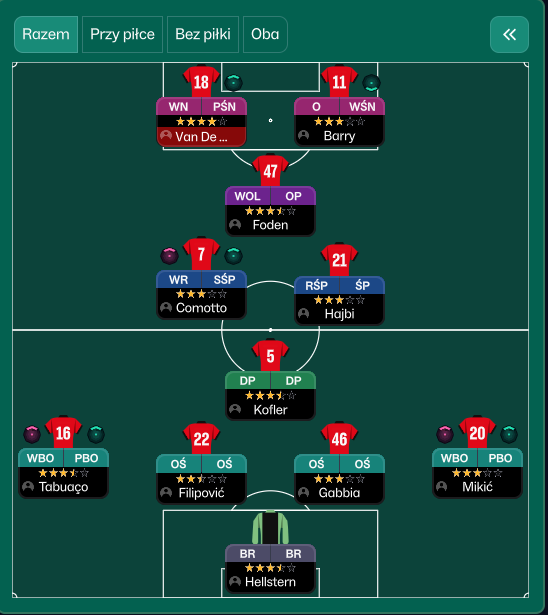
Formation:4-2-3-1 Wide
Team Fluidity:Flexible
In Possession
Shorter Passing
Play Out Of Defence
Be More Expressive
Slightly Higher Tempo
Fairly Wide
In Transition
Distribute To Centre-Backs
Counter
Out of Possession
Higher Defensive Line
High Press
Much More Often Prevent Short GK Distribution
Team Shape Without Ball
Shape:4-2
Description:Compact defensive shape with a higher line, pressing effectively to regain possession.
Evidence:Higher Defensive Line and High Pressing focus with support from DM roles.
Team Shape With Ball
Shape:4-3
Description:Fluid attacking shape with emphasis on width and varied attacking roles, maximizing creative opportunities.
Evidence:Multiple attacking roles (Inside Forward, Trequartista, Inverted Winger) creating diverse threats.
Phase Description
Attacking Play
Utilizes a balanced approach with shorter passing and a focus on playing out from defense, combined with a fairly wide shape to stretch the opposition.
Defensive Transition
After losing possession, the team sets up to counter quickly, aiming to regain possession before the opponent can organize.
Main Focus
Maintain possession while looking for opportunities to exploit spaces in the opposition's defense.
Key Strengths
Offensive Versatility
The attacking midfielders can interchange and create confusion for defenders.
Defense Stability
The two central defenders provide a solid foundation with varied styles.
Fluidity in Midfield
Ownership and control of the midfield through supportive roles.
Conflicting Directions
High Defensive Line vs Counter-Attacking
A higher defensive line can be risky, especially against fast counter-attacks.
Pressing vs Build-Up Play
A high pressing style may conflict with a build-up play mentality.
Width in Attack vs Overcrowding
Encouraging width may sometimes lead to a lack of central presence.
Tactical Suggestions
Consider Defensive Adjustments
Evaluate the effectiveness of the high defensive line against teams with rapid counter-attacking players.
Balance Width and Central Play
Ensure that there is enough presence in the center to maximize attacking efficiency.
Monitor Player Stamina during High Press
High pressing requires significant stamina, consider rotating players.
Ask Questions About Your Lineup
Related Tactics
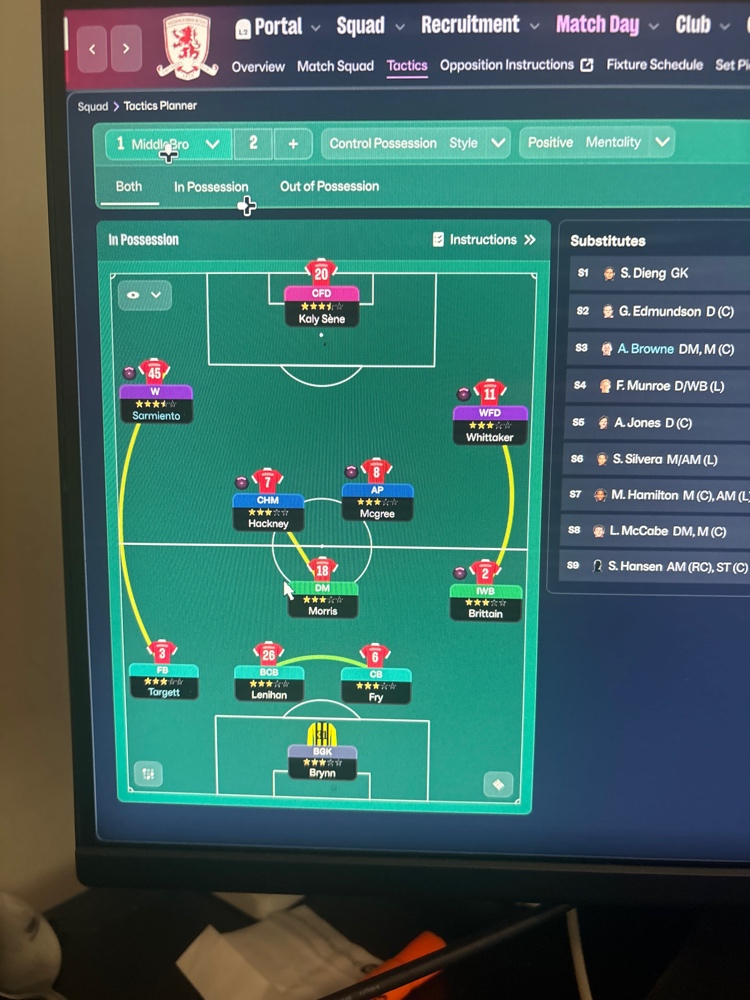
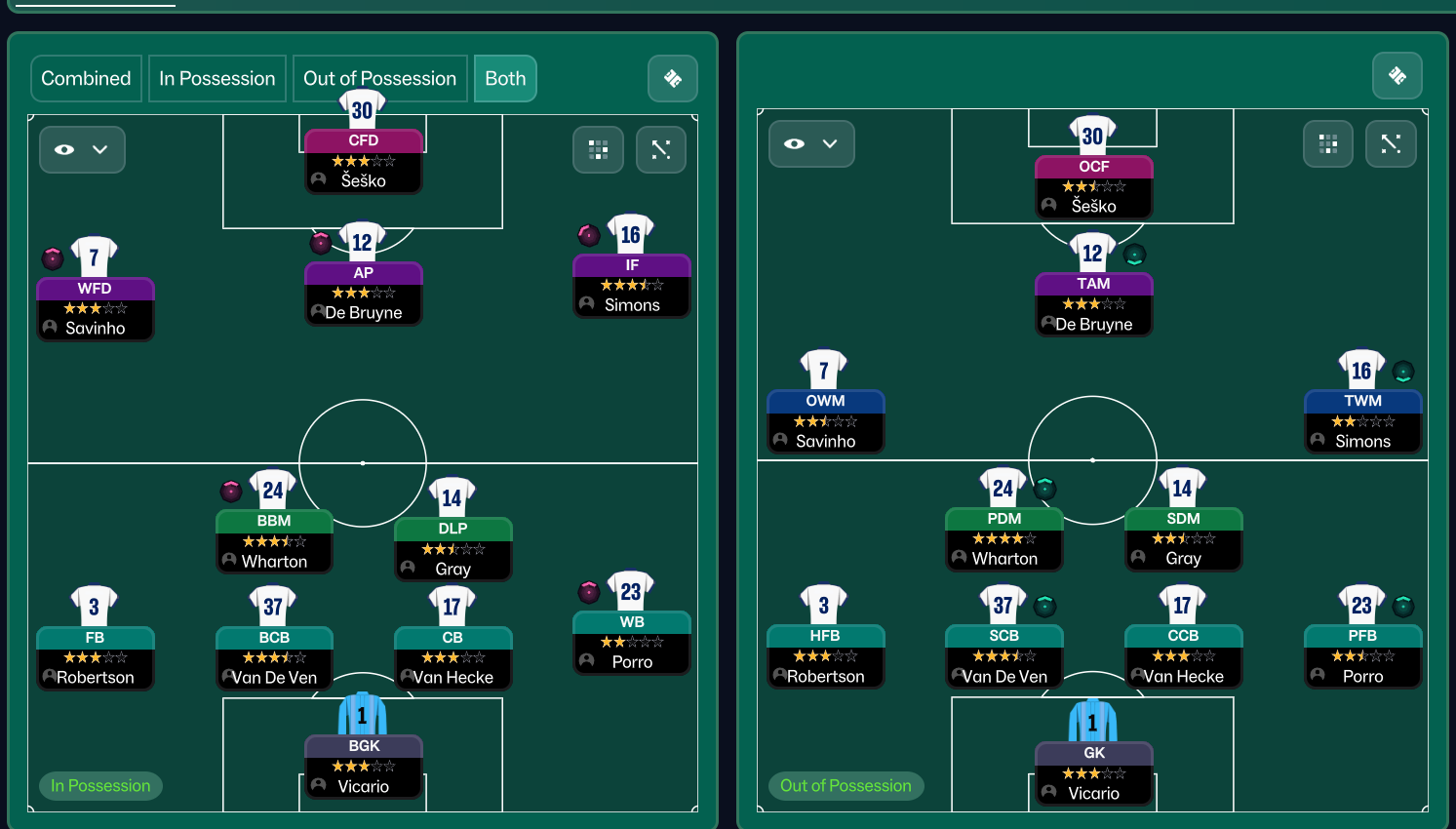
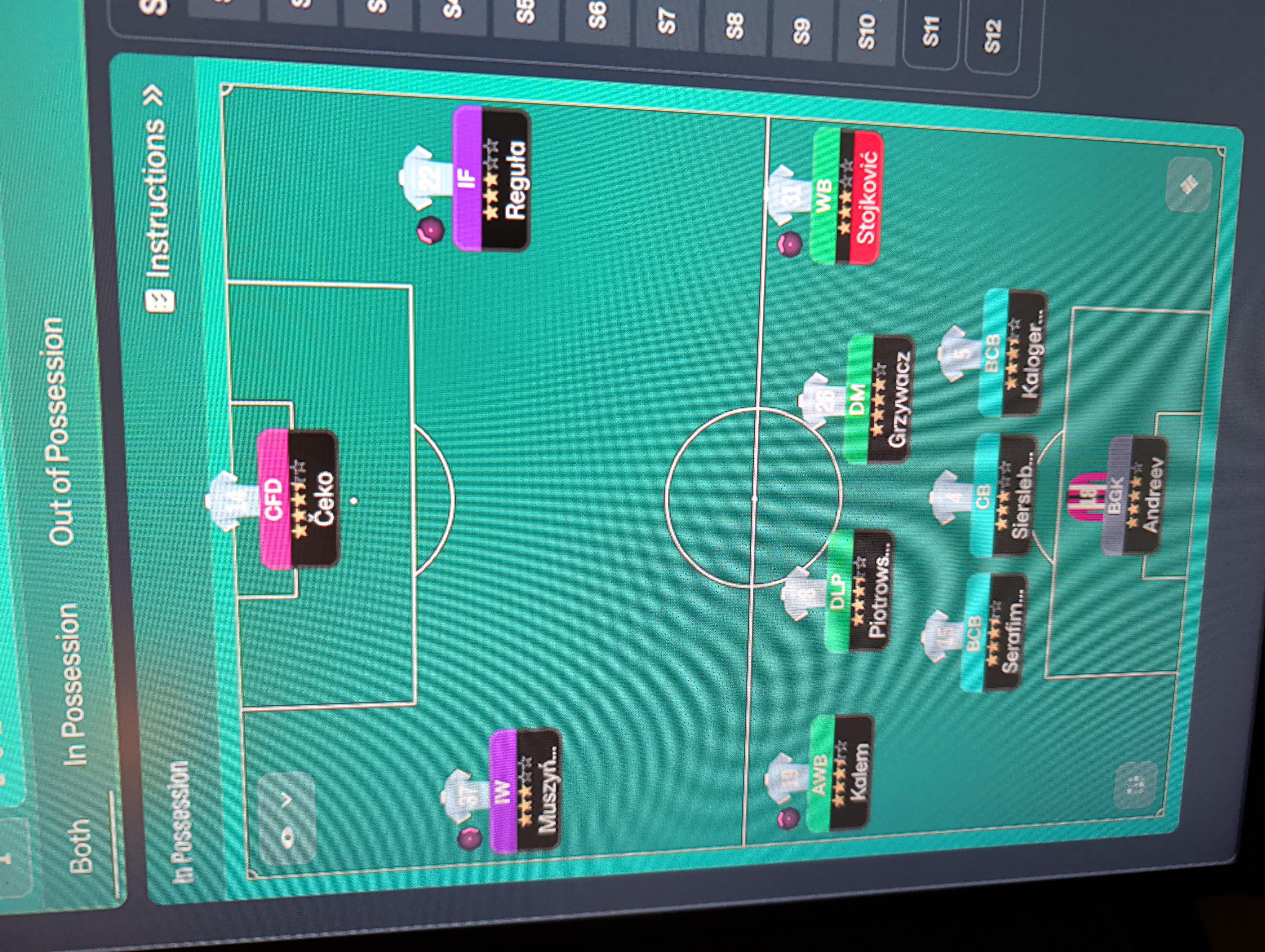
Guides for this formation
The tactical theory behind the 4-2-3-1 Wide: roles, instructions, and the trade-offs that decide whether the system holds up.
Player pairings
Midfield Pairs in 4-2-3-1 and 4-4-2
Double pivots and flat pairs in 4-2-3-1 and 4-4-2: when each pairing works, when it collapses, and the AMC unicorn that rescues both.
Read guide
Playing styles
Gegenpressing: A Full Guide
Klopp-style gegenpressing in FM, including squad profile, line-and-press pairing, sustainable workload, and the antipatterns to avoid.
Read guide