Uploaded Tactic
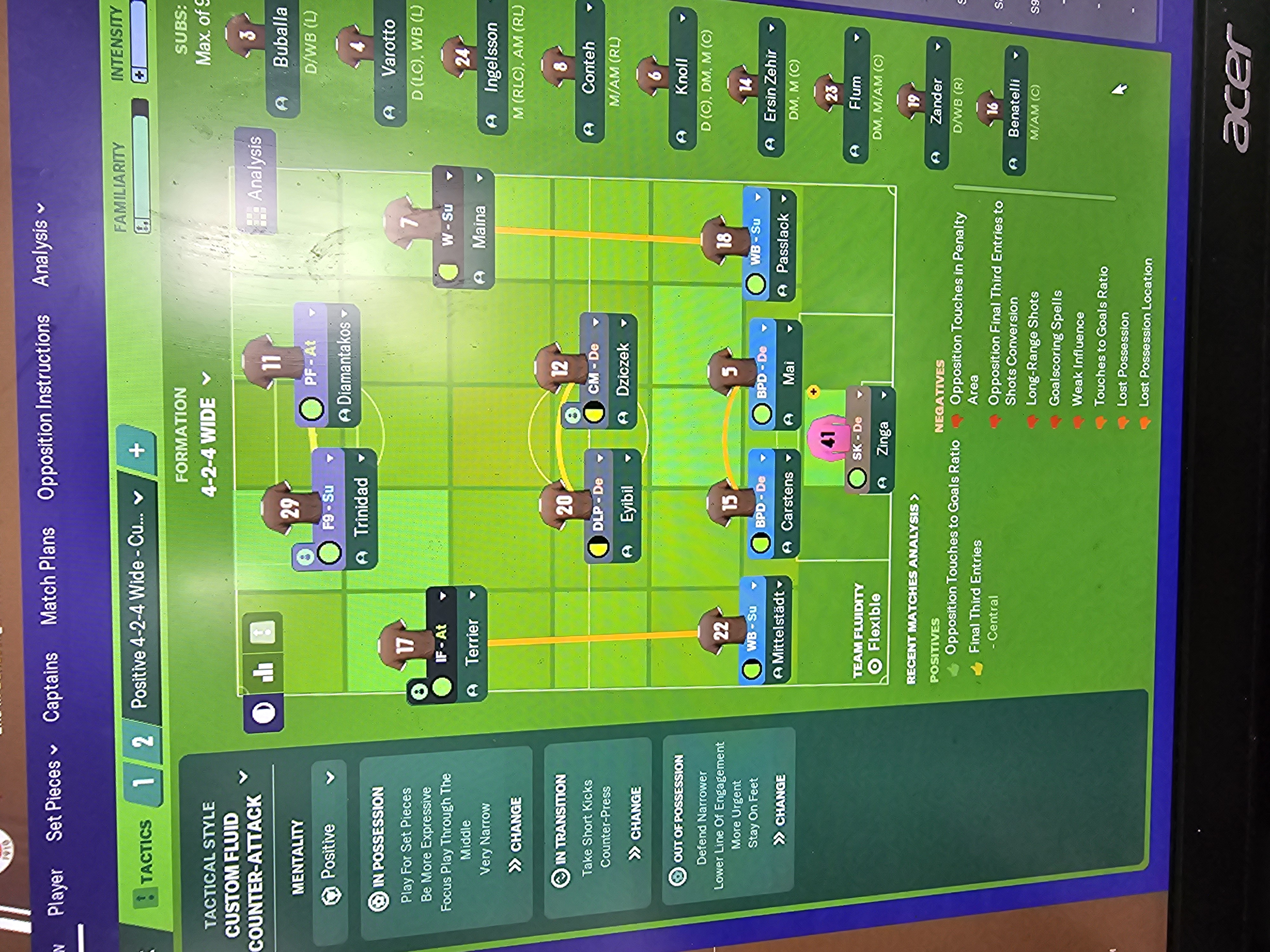
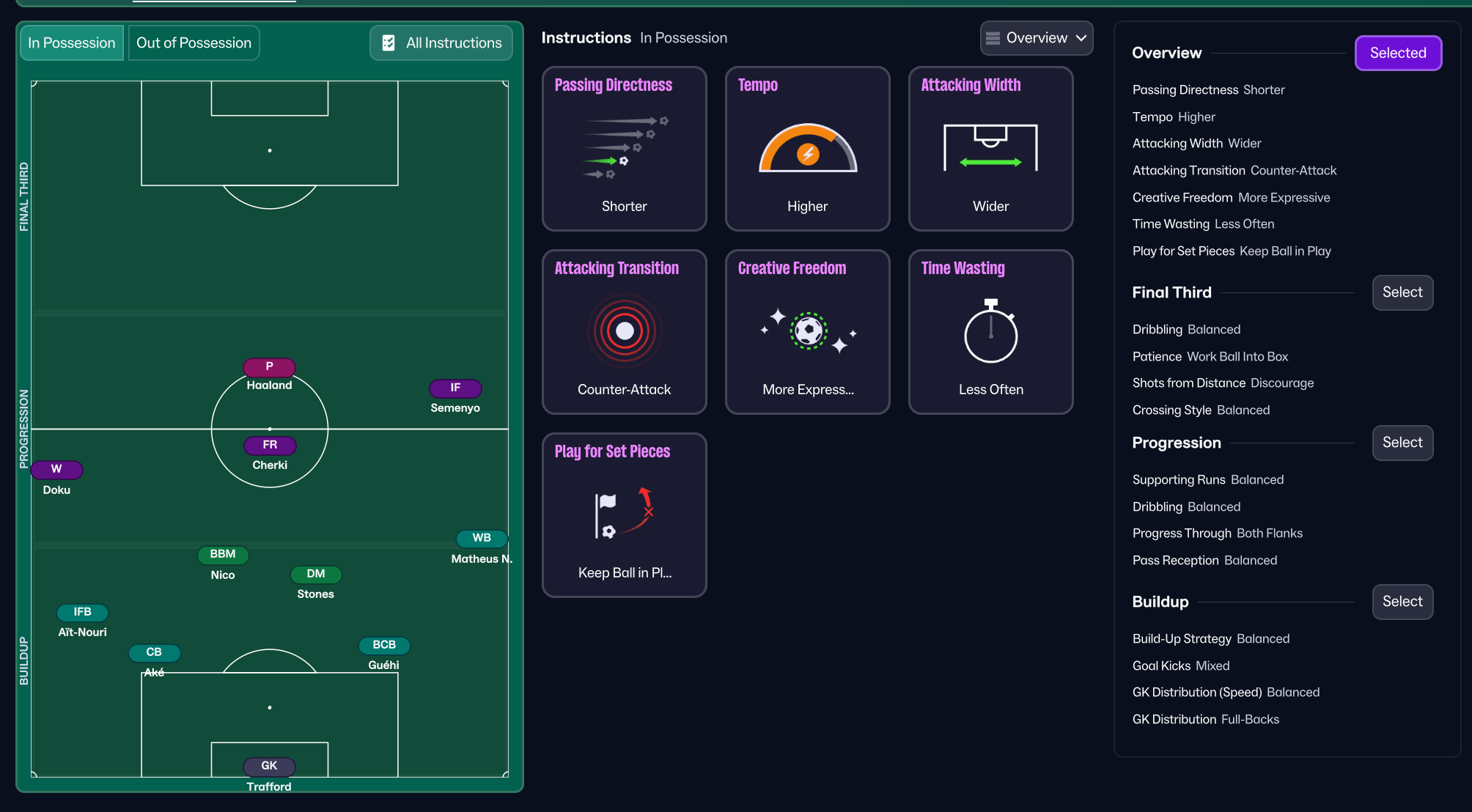
Formation & Style
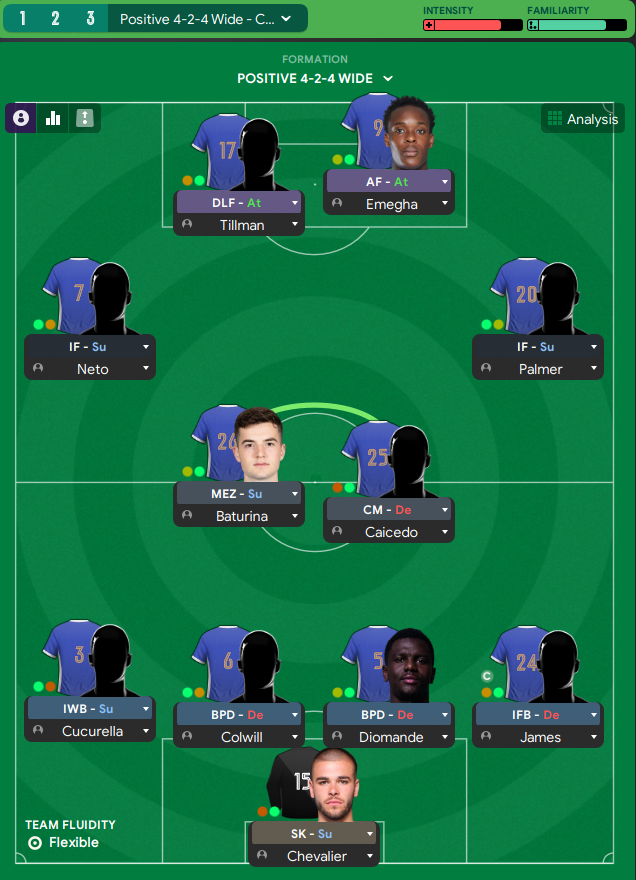
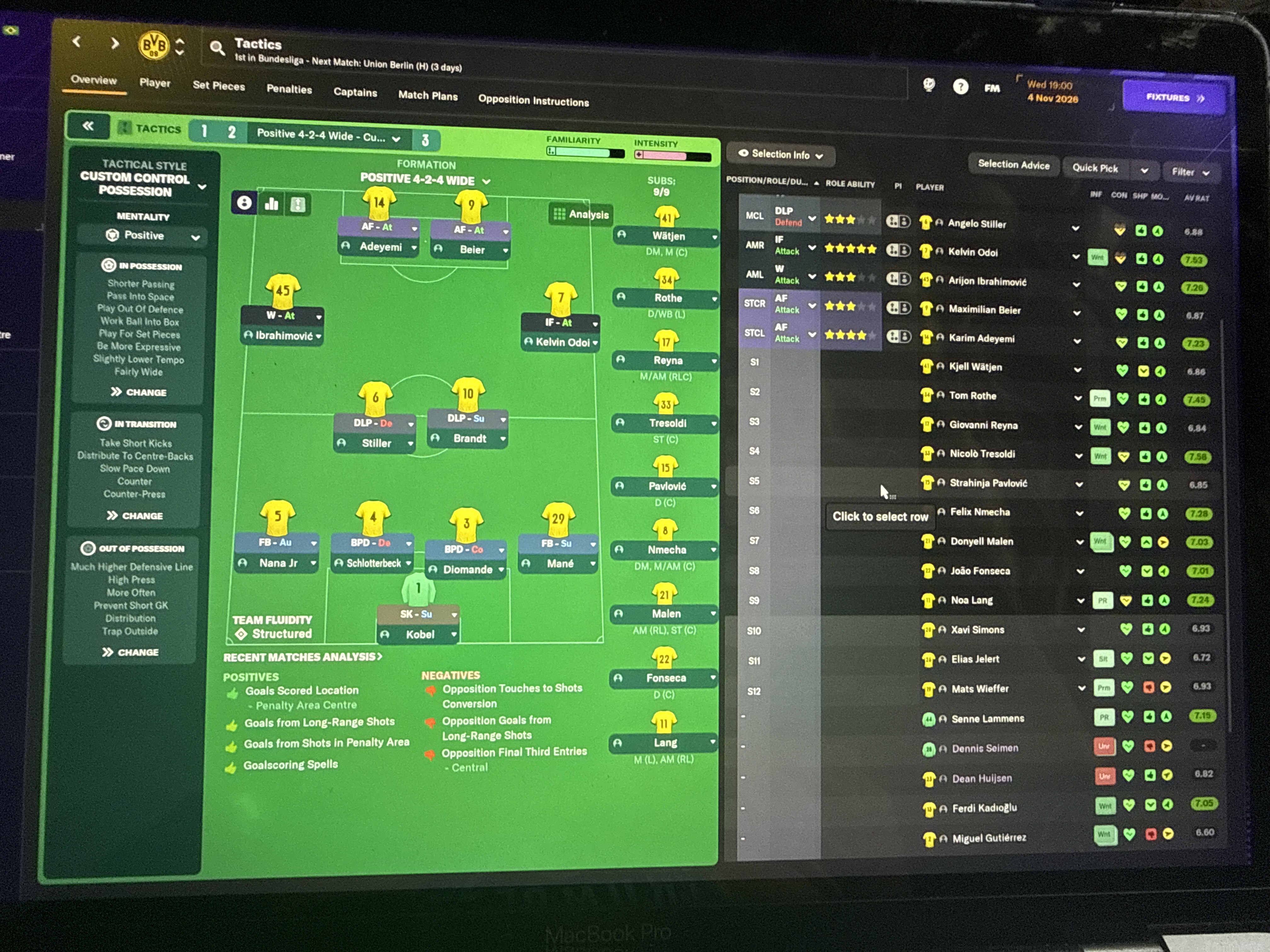
Tactical Style:Counter-Attack
Mentality:Positive
Formation:4-2-4 Wide
Team Fluidity:Flexible
In Possession
Play for Set Pieces
Be More Expressive
Focus Play Through The Middle
Very Narrow
In Transition
Take Short Kicks
Counter-Press
Out of Possession
Defend Narrower
Lower Line of Engagement
More Urgent
Stay On Feet
Team Shape Without Ball
No team shape without ball data available
Team Shape With Ball
No team shape with ball data available
Key Strengths
Attacking Width
Utilizing a 4-2-4 formation provides excellent width, which can stretch opposition defenses and create space for attacking movements.
Counter-Attacking Potential
The counter-attack style is well suited for quick transitions, allowing the team to exploit gaps as opponents push forward.
Engagement in Set Pieces
Players are instructed to play for set pieces, potentially maximizing scoring opportunities from free kicks and corners.
Dynamism in Attack
The combination of a False Nine and Inside Forward creates unpredictability in the attacking phase, making it difficult for defenders to mark players.
Conflicting Directions
Narrow Play vs. Wing Play
While the team is set to play very narrow, the structure includes wide players which can create a conflict in attacking dynamics.
Aggressive Pressing vs. Defensive Stance
Taking a lower line of engagement may limit the effectiveness of the counter-press strategy as players may be positioned too deep.
Inconsistent Roles
The combination of a Deep-Lying Playmaker with a high defensive line can lead to vulnerabilities, especially against fast counter-attacks.
Set Piece Emphasis vs. Open Play
The focus on set pieces may detract from building sustained attacks during open play, leading to wasted possession.
Tactical Suggestions
Adjust Width Settings
Consider balancing the width instructions to encourage both wing play and narrow attacks to prevent predictability.
Set Higher Defensive Line
Increasing the line of engagement could better suit the counter-pressing tactics and retain pressure higher up the pitch.
Improve Player Roles Consistency
Matching player roles more closely with the tactical intentions may improve overall team cohesion and functionality.
Encourage More Creativity
Loosening restrictions on creativity in midfield can help maintain possession and facilitate better link-up play.
Ask Questions About Your Lineup
Related Tactics
More Counter-Attack tactics
Guides for this formation
The tactical theory behind the 4-2-4 Wide: roles, instructions, and the trade-offs that decide whether the system holds up.