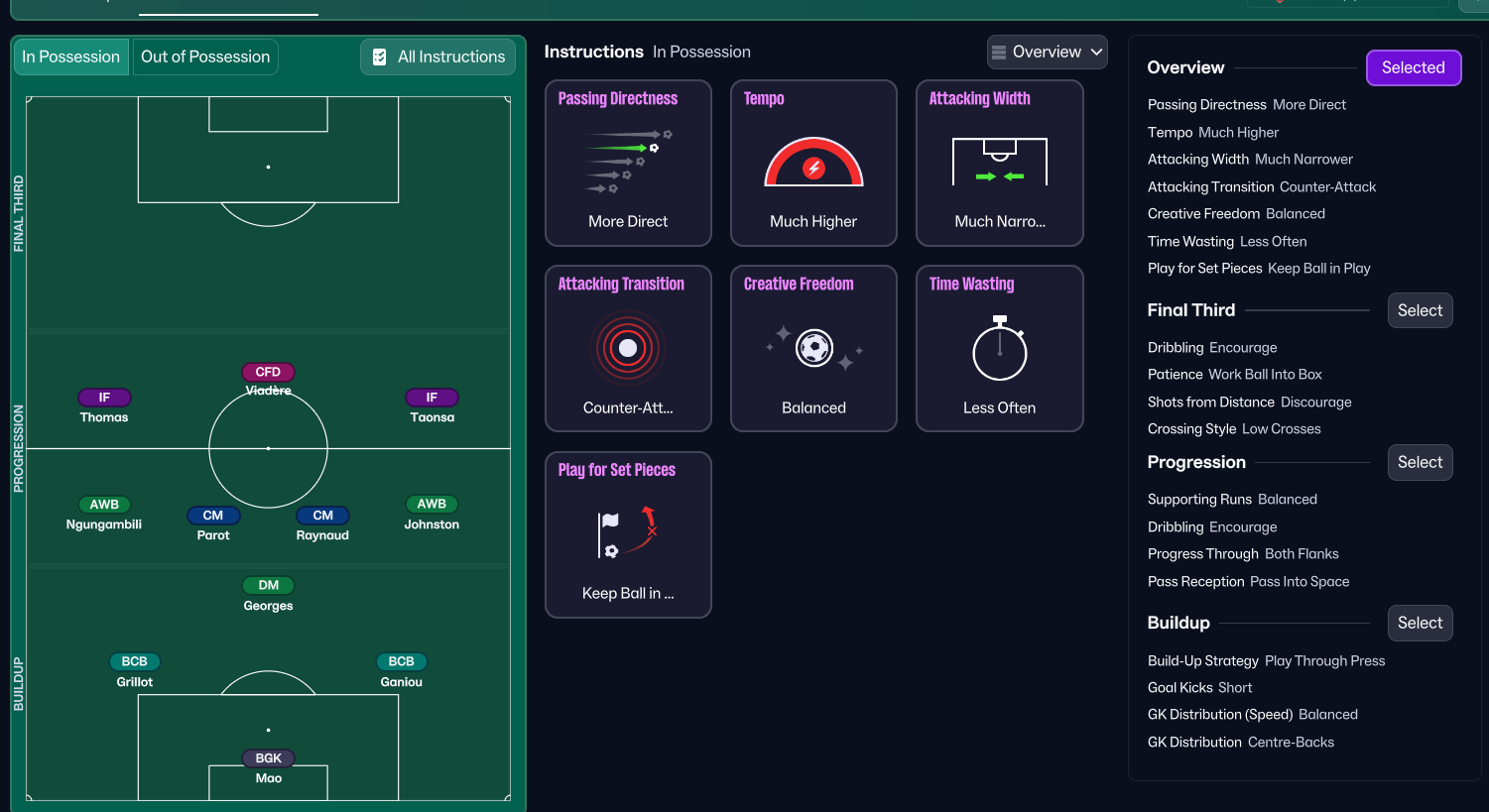
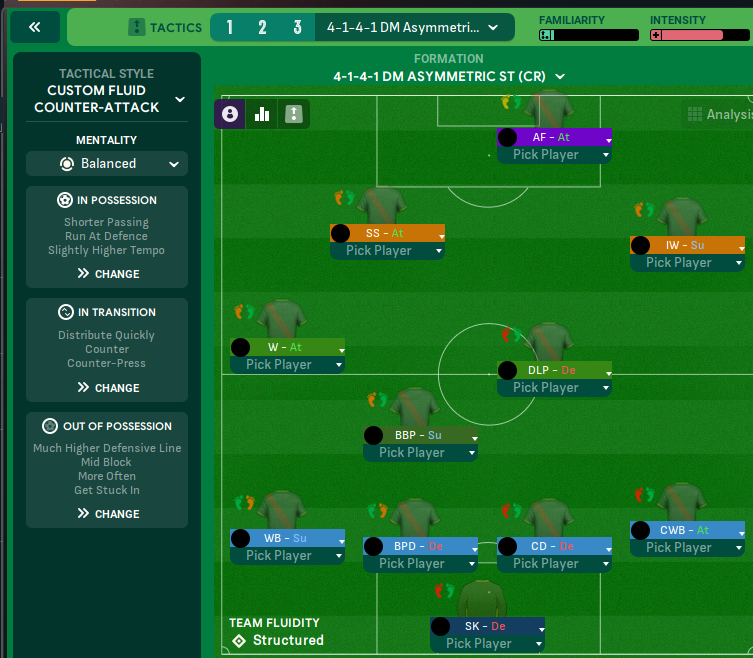
Positive 4-2-3-1 Wide
Utilizing the width provided by wing-backs and inside forwards to stretch the opposition. Wing-backs contribute to width, allowing inside forwards to cut…
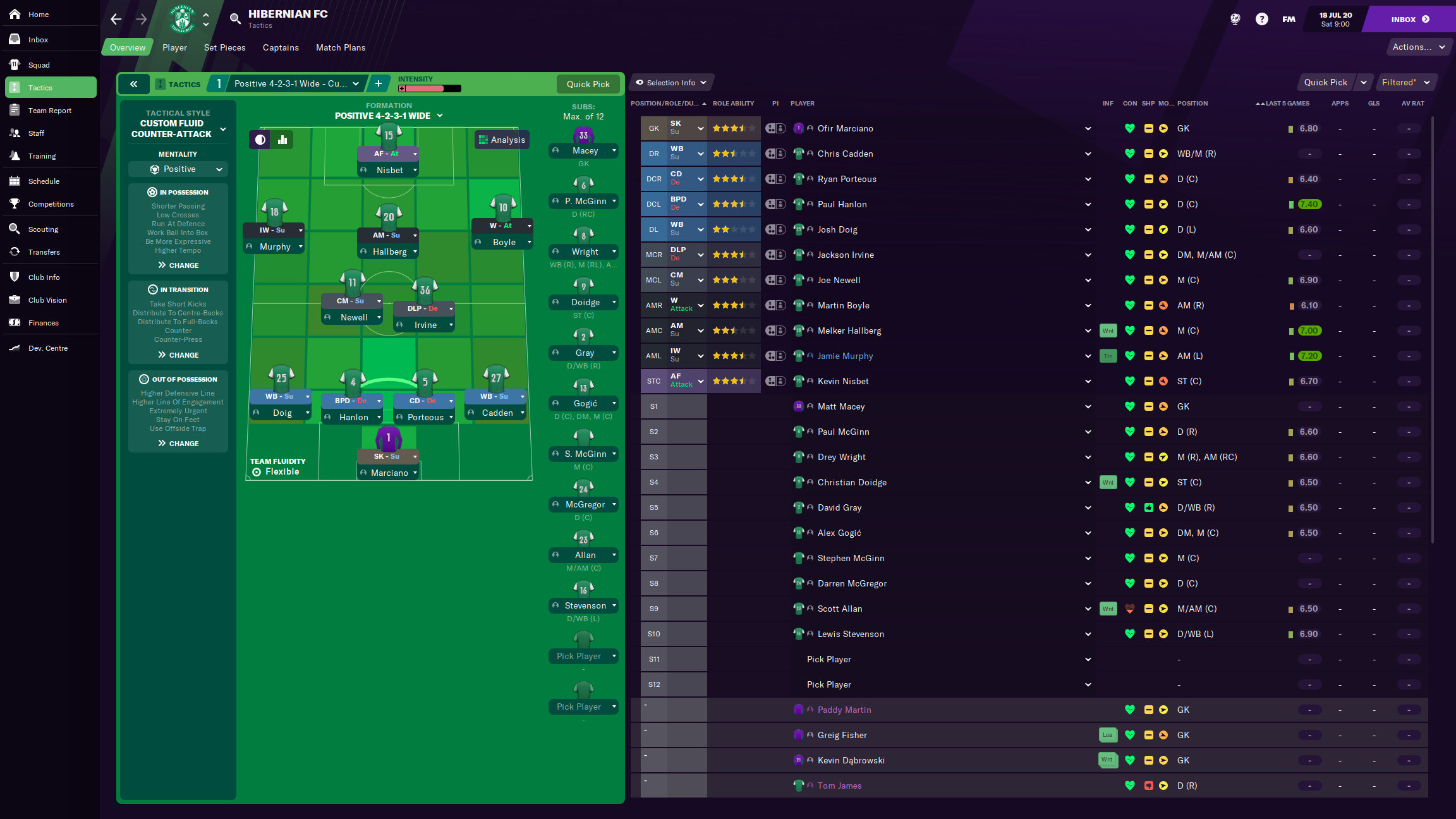
Loading tactical analysis...
Counter-Attack
Positive
Positive 4-2-3-1 Wide
Flexible
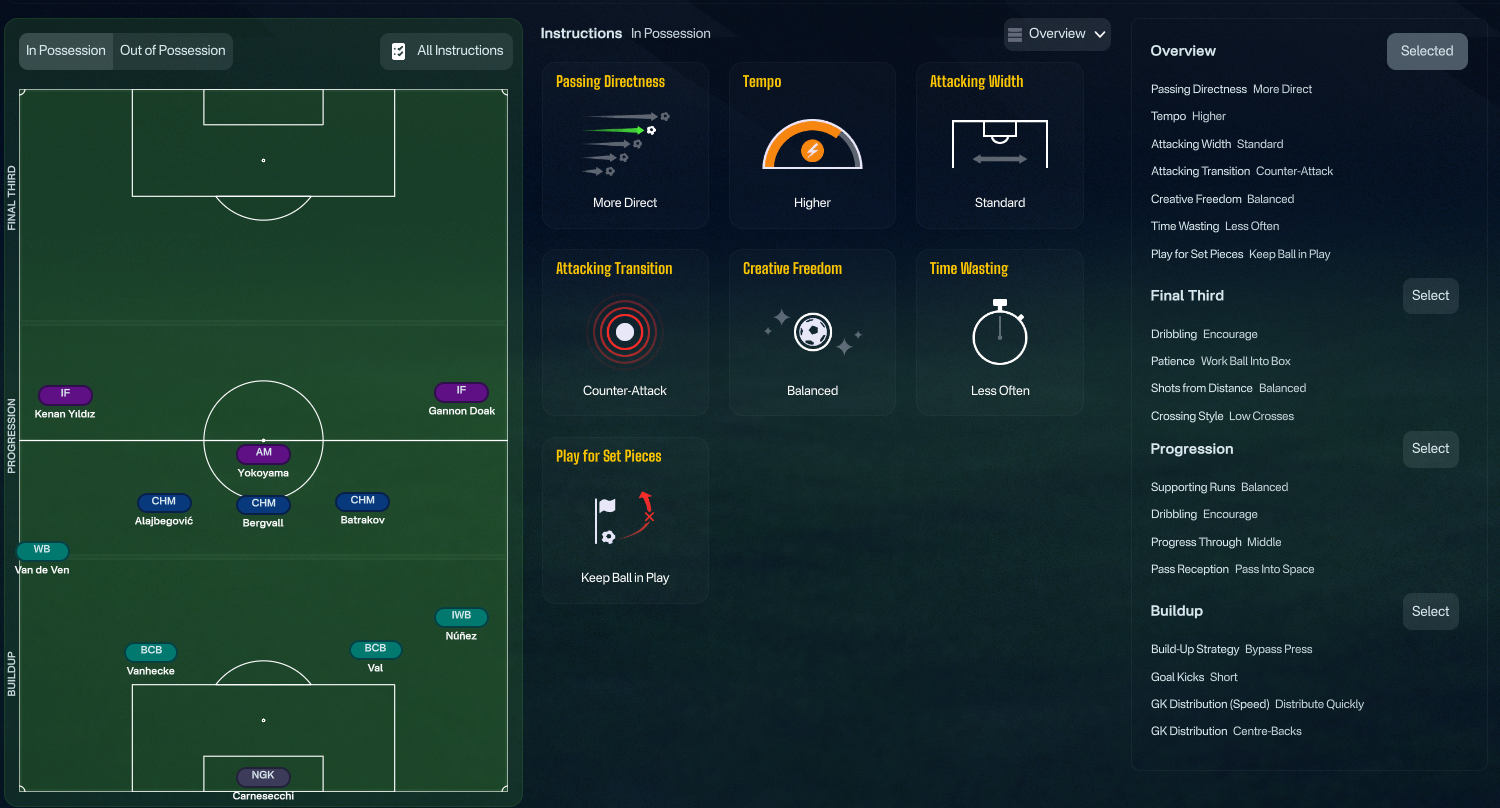
Take Short Kicks
Work Ball Into Box
Be More Expressive
Higher Tempo
Take Short Kicks
Distribute to Centre-Backs
Distribute to Full-Backs
Counter-Press
Counter
Higher Defensive Line
Higher Line of Engagement
Extremely Urgent
Stay On Feet
Use Offside Trap
GK
Sweeper Keeper
Support
DL
Wing-Back
Support
DC
Ball-Playing Defender
Defend
DC
Centre-Back
Defend
DR
Wing-Back
Support
DM
Deep-Lying Playmaker
Defend
MCL
Central Midfielder
Support
MCR
Box-to-Box Midfielder
Support
AML
Inside Forward
Support
AM
Attacking Midfielder
Attack
AMR
Wide Midfielder
Attack
ST
Advanced Forward
Attack
Focus on quick transitions from defense to attack, utilizing the pace of the wide players.
Structured pressing after losing possession to regain the ball quickly.
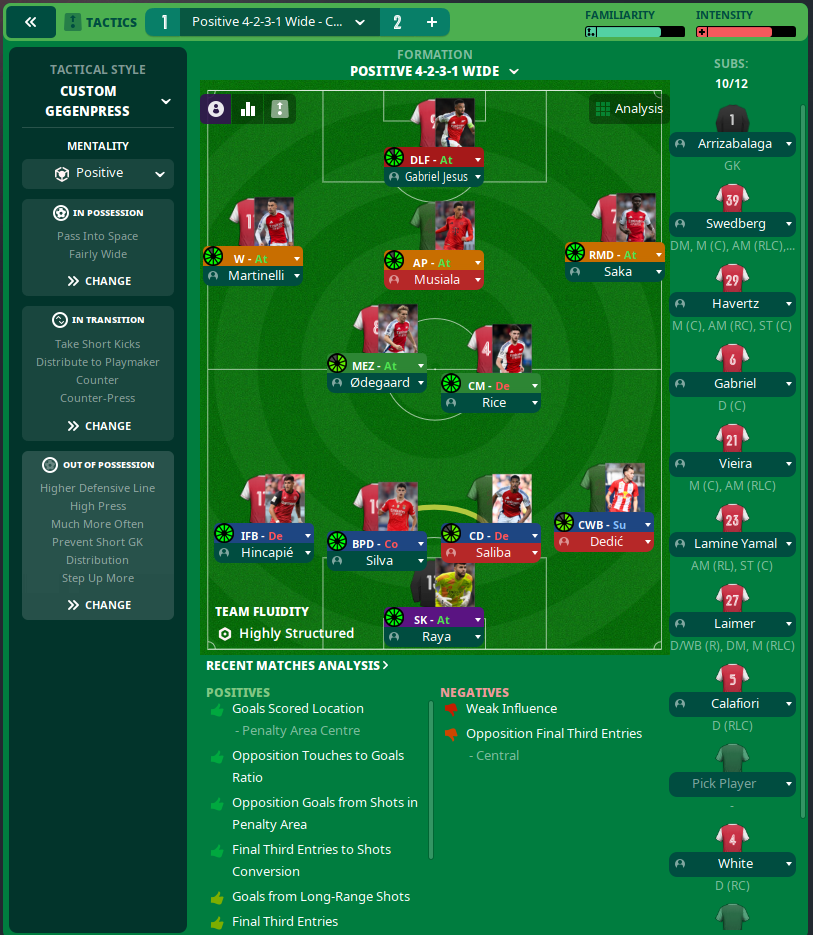
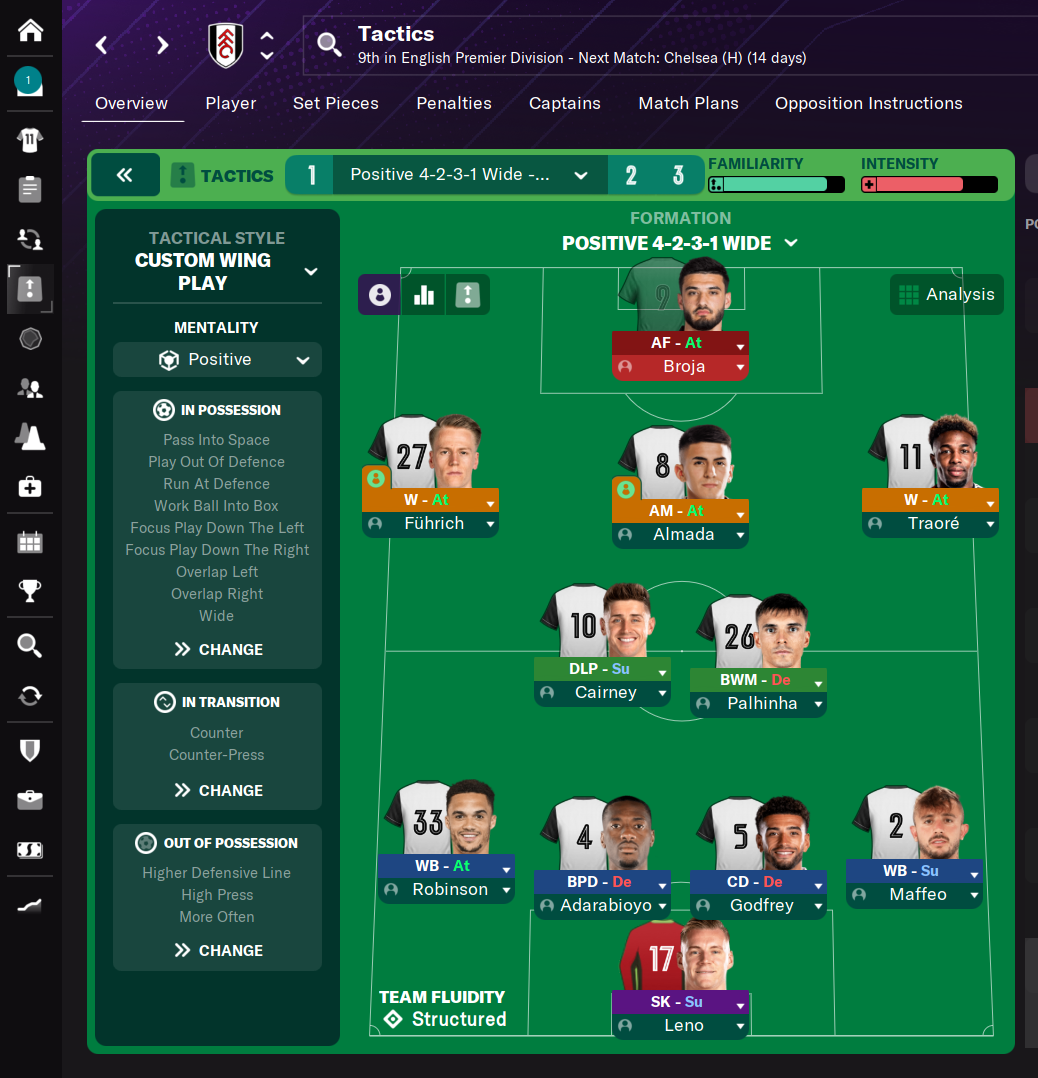
Utilizing the width provided by wing-backs and inside forwards to stretch the opposition.
4-2-3-1
Compact shape with a back four and two midfielders sitting in front, ready to break counter-attacks.
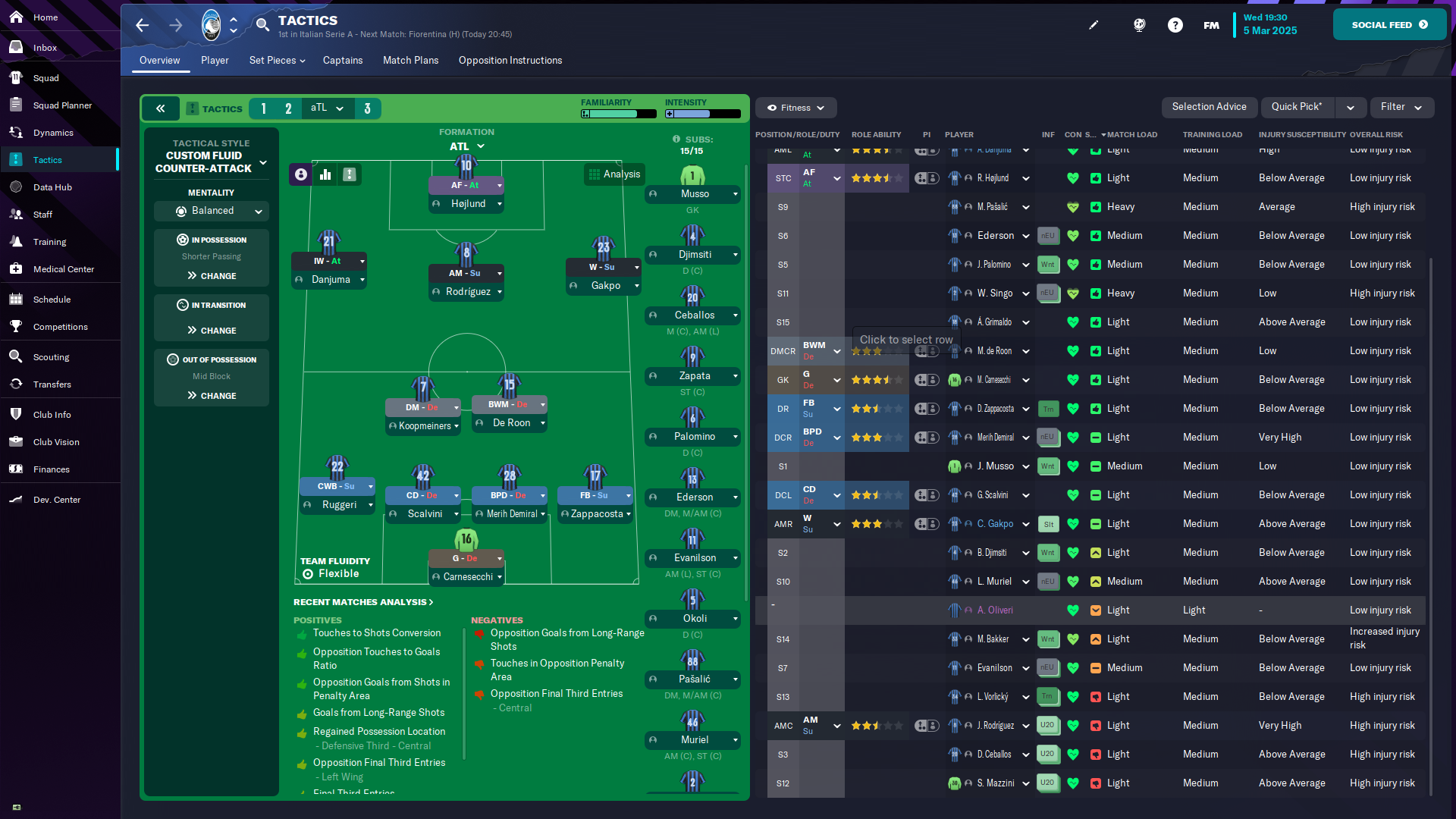
BPD (Porteous) at [2,3] and DM (Newell) at [3,3] providing defensive cover.
4-2-3-1
Utilizing width and through balls to create chances for the strikers and attacking midfielders.
Inside Forward (Murphy) at [6,1], AM (Hallberg) at [5,3], AF (Nisbet) at [6,3] creating various attacking options.
Wing-backs contribute to width, allowing inside forwards to cut in.
WB-Su (Doig at [2,1] and Cadden at [2,5]) facilitate the offensive strategy.
Two midfielders complement each other to control the game.
DLP-D (Newell at [3,3]) and CM-Su (Irvine at [4,3]) working effectively together.
While a high defensive line can apply pressure, it risks vulnerability to pacey counter-attacks.
Higher Defensive Line setting may leave space behind for opposition forwards.
Heavy reliance on wing-backs may lead to predictable attacking patterns.
Wing-Backs with support roles necessitate forward runs which can become predictable.
Defensive Transition
Exposed to counter-attacks if possession is lost quickly.
High line paired with aggressive pressing means quick transitions lead to vulnerabilities.
Wing-Back Vulnerability
Wing-back pushes lend space for direct counter-attacks if possession lost.
High involvement in attack may leave defensive gaps when possession is lost.
DLP-D (Newell) and BWM-Su (Irvine)
Great balance between playmaking and ball recovery.
DM line with DLP at [3,3] provides distribution while BWM supports defensively.
WB-Su (Doig) and IW-Su (Murphy)
Creates overloads on the left flank to stretch defenses.
Mutual support allows one to create space for the other.
How can I make substitutions more effectively?
What should be my focus in upcoming fixtures based on my current tactics?
How do I adapt against teams that press aggressively?
The tactical theory behind the Positive 4-2-3-1 Wide: roles, instructions, and the trade-offs that decide whether the system holds up.
The pairing rule for Defensive Line and Line of Engagement, all 9 combinations, and the gap that costs goals.
What Higher Tempo, Wider, and Narrower actually do in FM, plus the dial contradictions and antipatterns players run into most often.
Build through the wide areas or through the middle? A working framework for picking the right one for your squad.