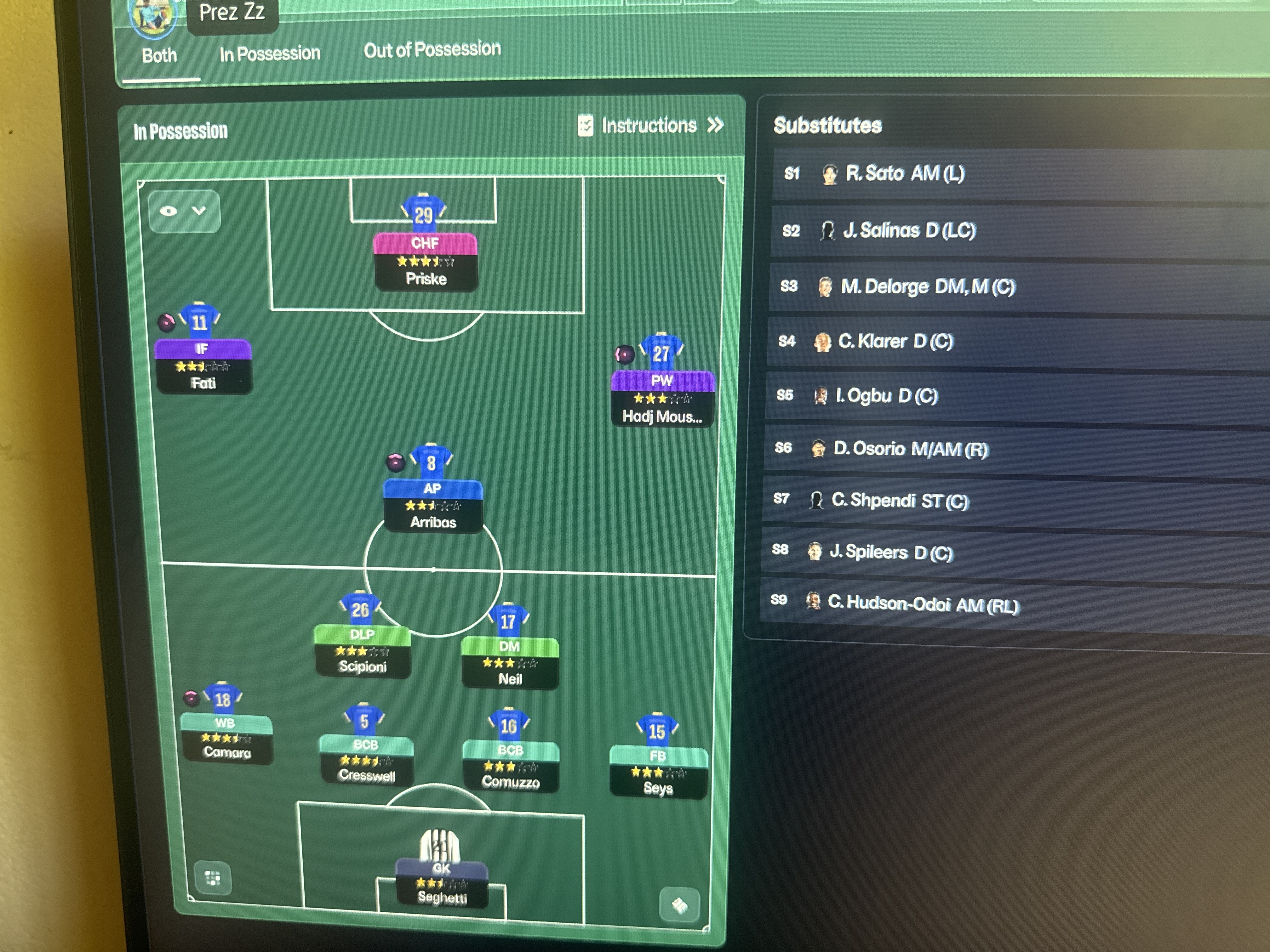
Uploaded Tactic
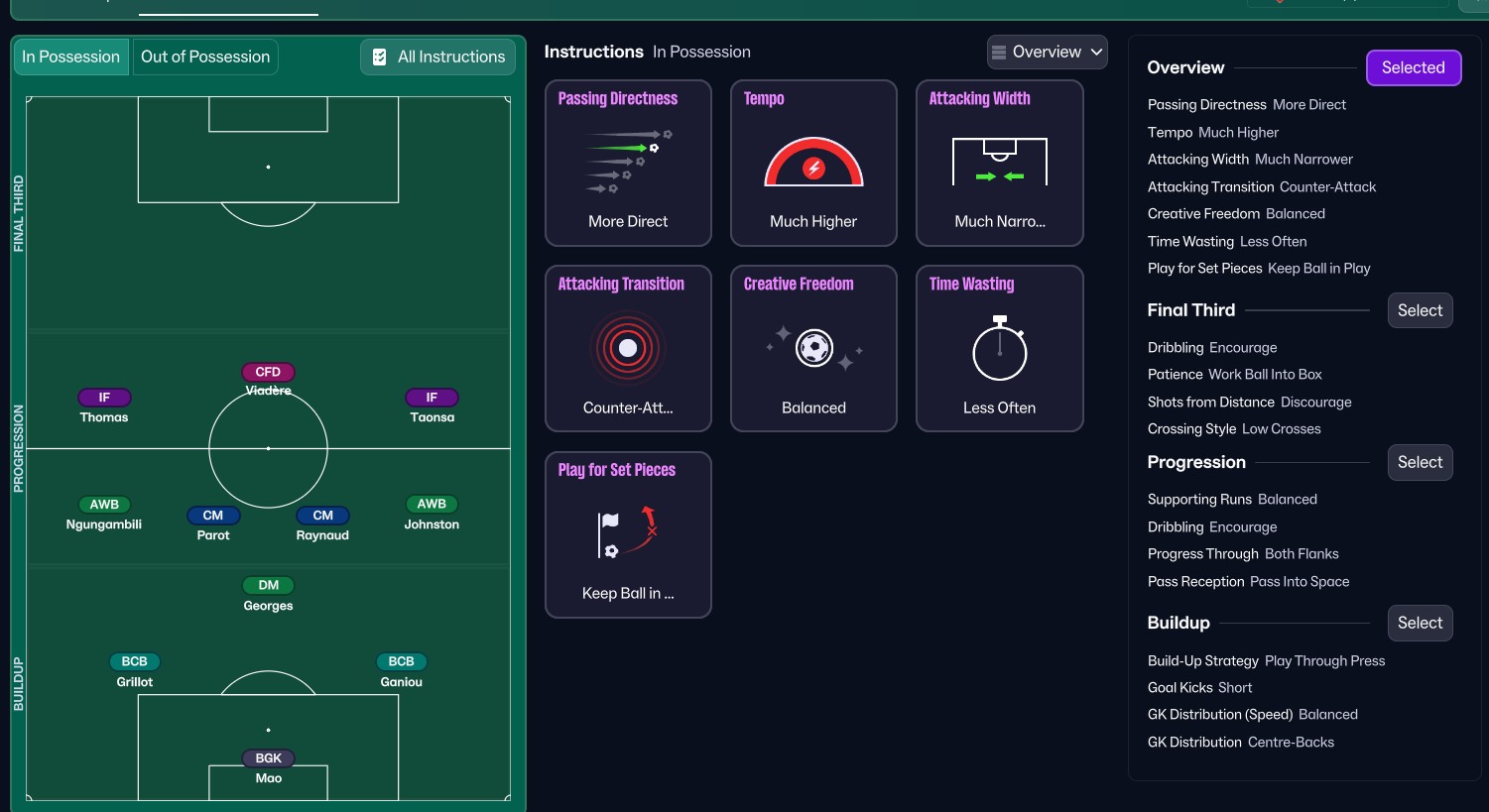
Formation & Style
Tactical Style:Counter-Attack
Mentality:Attacking
Formation:4-2-3-1
Team Fluidity:Balanced
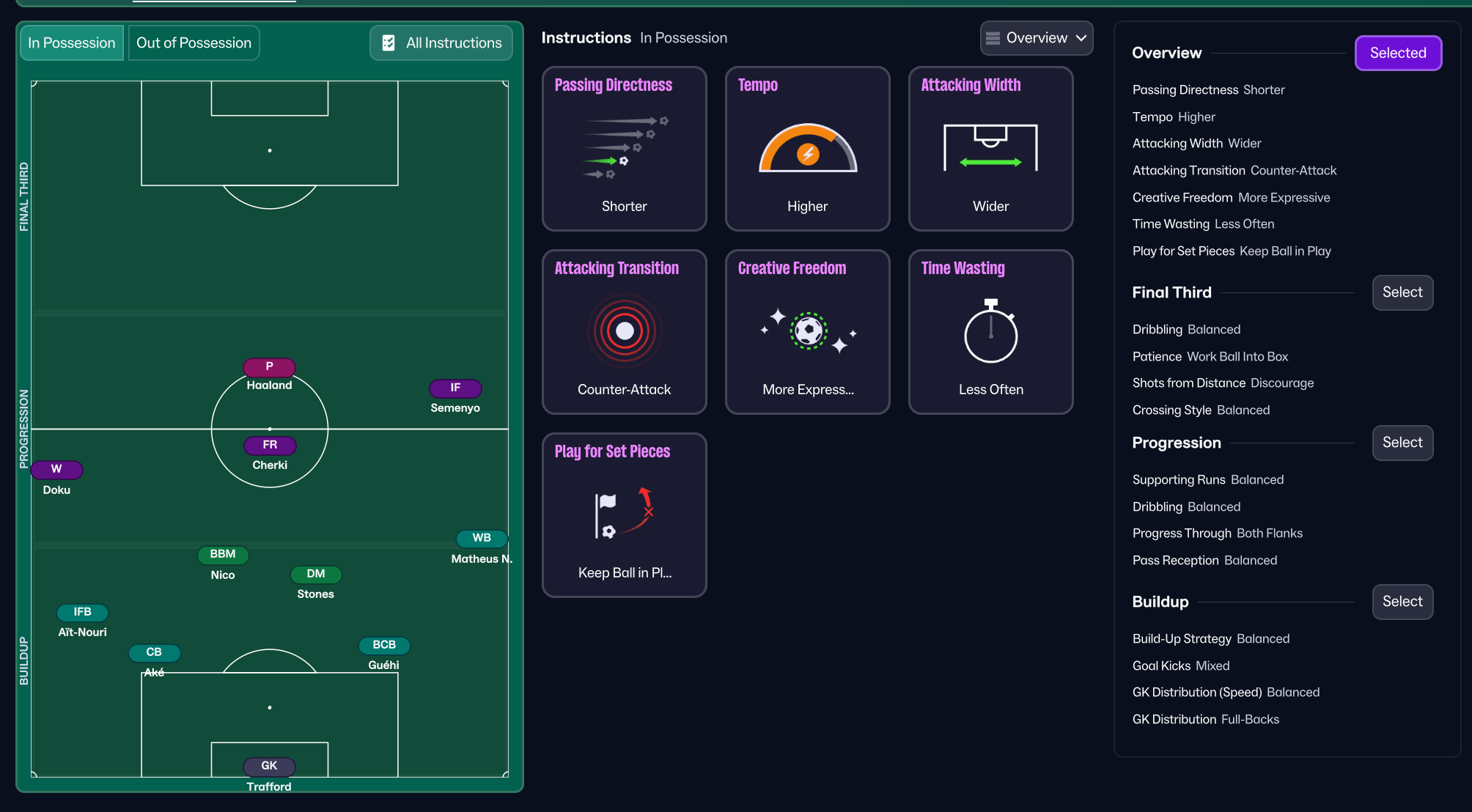
In Possession
More Direct
Much Higher Tempo
Much Narrower Width
Counter-Attack
Balanced Creative Freedom
Less Often Time Wasting
Keep Ball in Play
In Transition
Counter-Attack
Out of Possession
Defensive Line:Higher
Line of Engagement:Higher
Pressing Intensity:More Urgent
Offside Trap:Yes
Team Shape Without Ball
Shape:Flat
Description:Back four with close-knit central midfielders provide a stable foundation for defending.
Evidence:CBs at [2,2],[2,4] and DM at [3,3] ensuring solidity.
Team Shape With Ball
Shape:Wide
Description:Utilizes the width provided by wing-backs and inside forwards to stretch the opposition.
Evidence:IFs at [6,2] and [6,4] combined with the forward at [6,3] create space.
Phase Description
Attacking Play
Quick transitions focus on utilizing the speed of the inside forwards and complete forward.
Defensive Transition
Prompt counter-pressing to regain possession quickly.
Main Focus
Exploiting wide areas while maintaining central presence with the complete forward.
Key Strengths
Effective Counter-Attacking
The tactical setup encourages rapid transitions after winning the ball, utilizing quicker players up front.
Wide Exploitation
Wide attacking play allows for stretching the opposition and creating spaces for the forwards.
Solid Defensive Structure
The DM provides a protective layer in front of the back four, enhancing defensive stability.
Conflicting Directions
Narrow Width vs. Wing Play
The narrow attacking width contradicts with having wide players like wing-backs.
Possession vs. Counter-Attack
High tempo can lead to rushed decisions, conflicting with counter-attacking strategy.
Less Time Wasting
Less time-wasting can lead to an excessive focus on quick play, which may not suit all players.
Tactical Suggestions
Adjust Width Settings
Consider modifying the attacking width to better utilize wide players and create space.
Focus on Possession
Implementing more emphasis on maintaining possession could benefit build-up play.
Modify Tempo Settings
Adjusting tempo to high rather than much higher may help maintain control through transitions.
Ask Questions About Your Lineup
Related Tactics
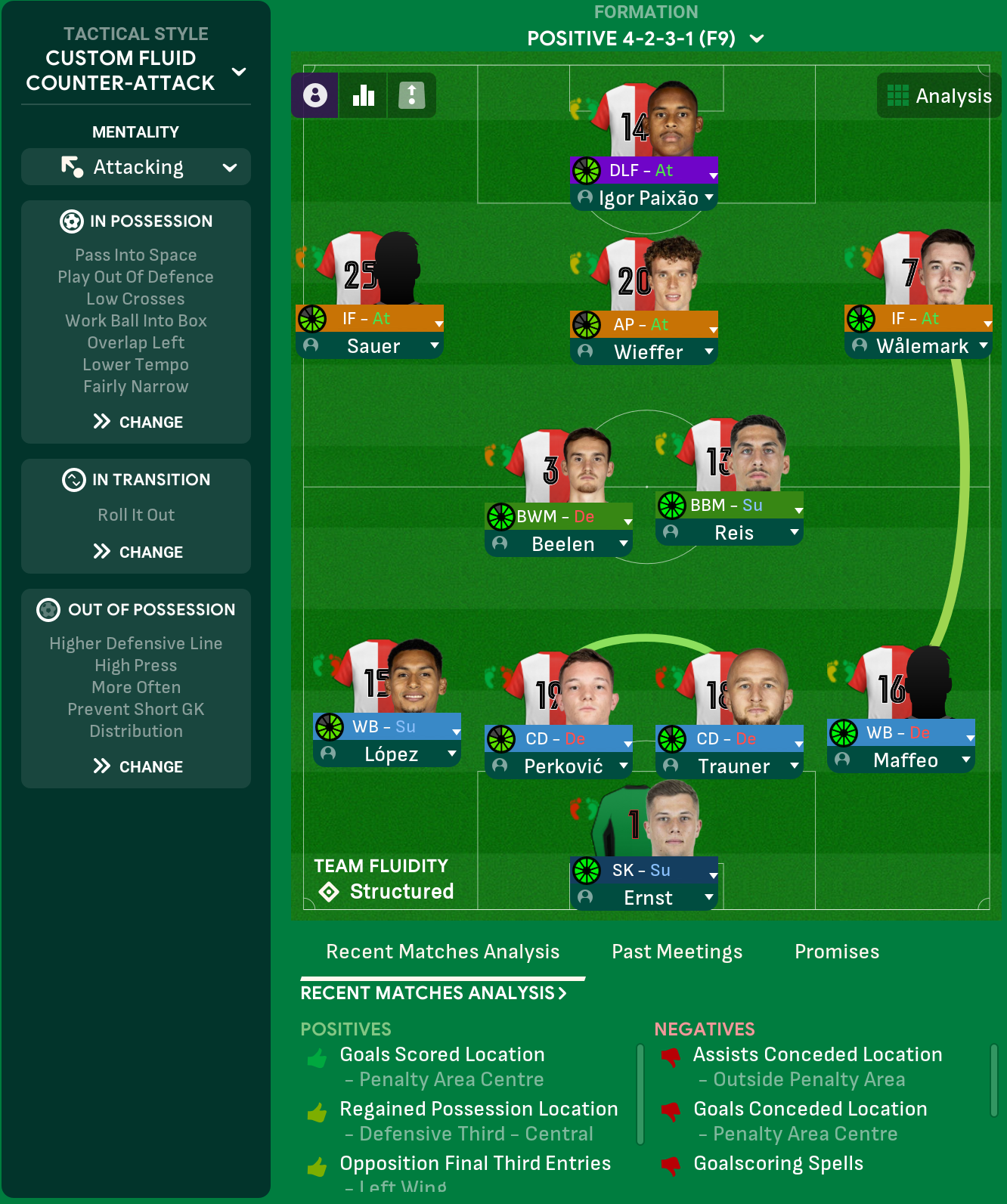
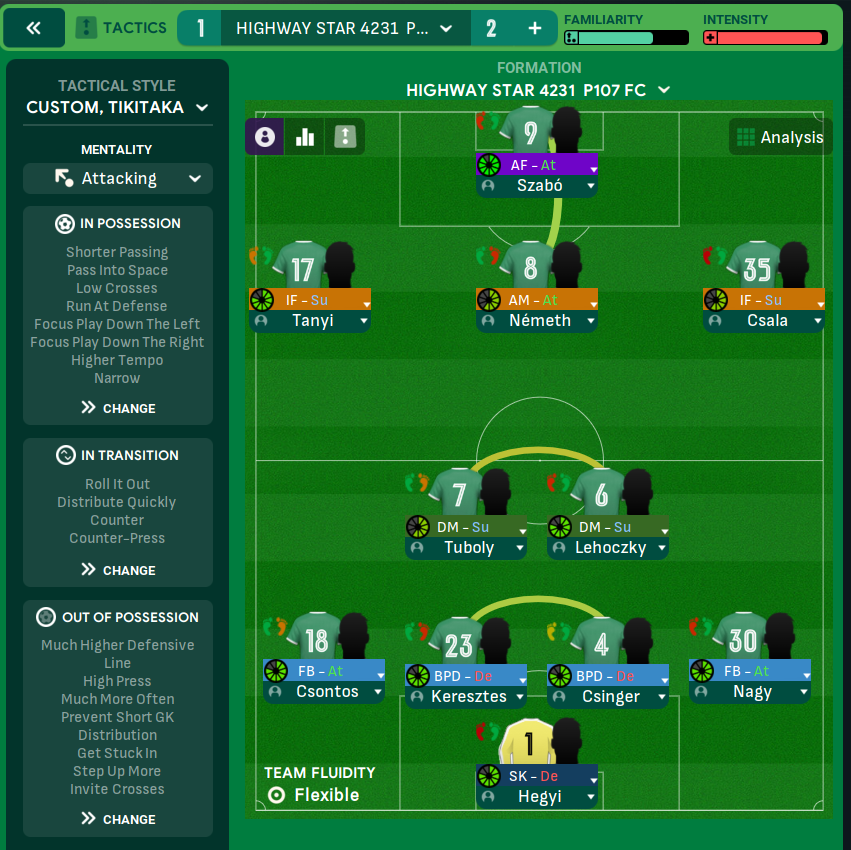
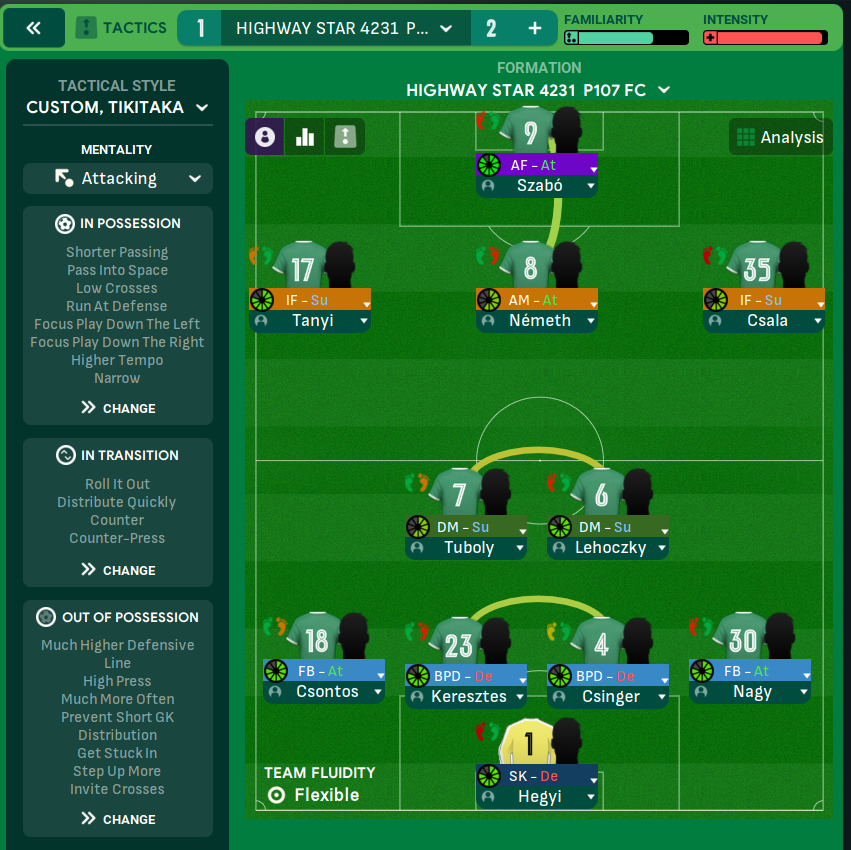
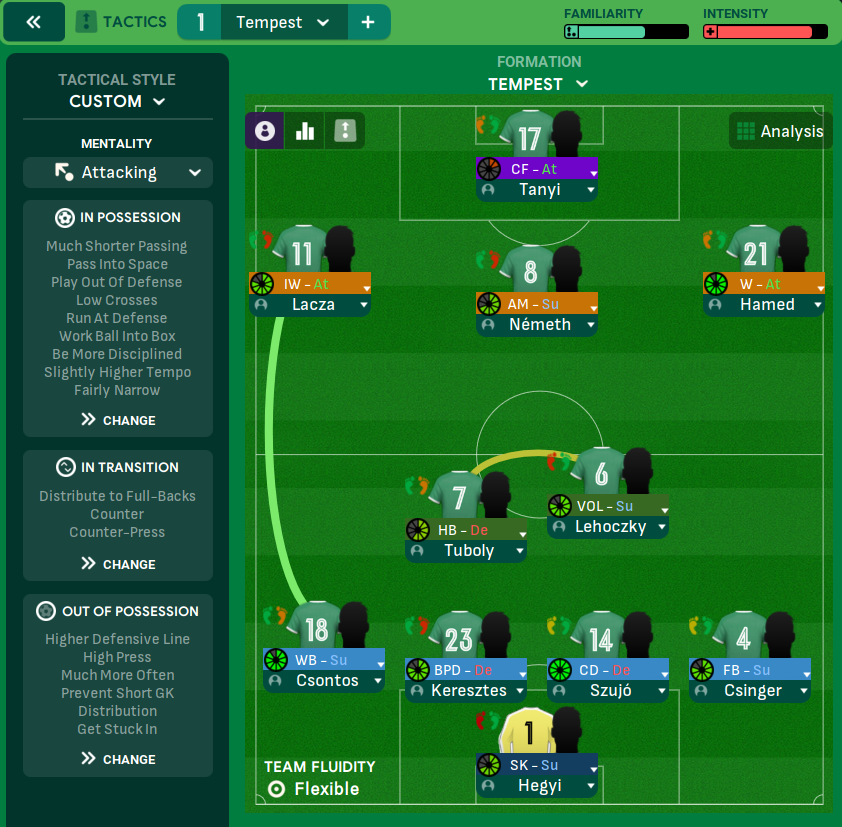
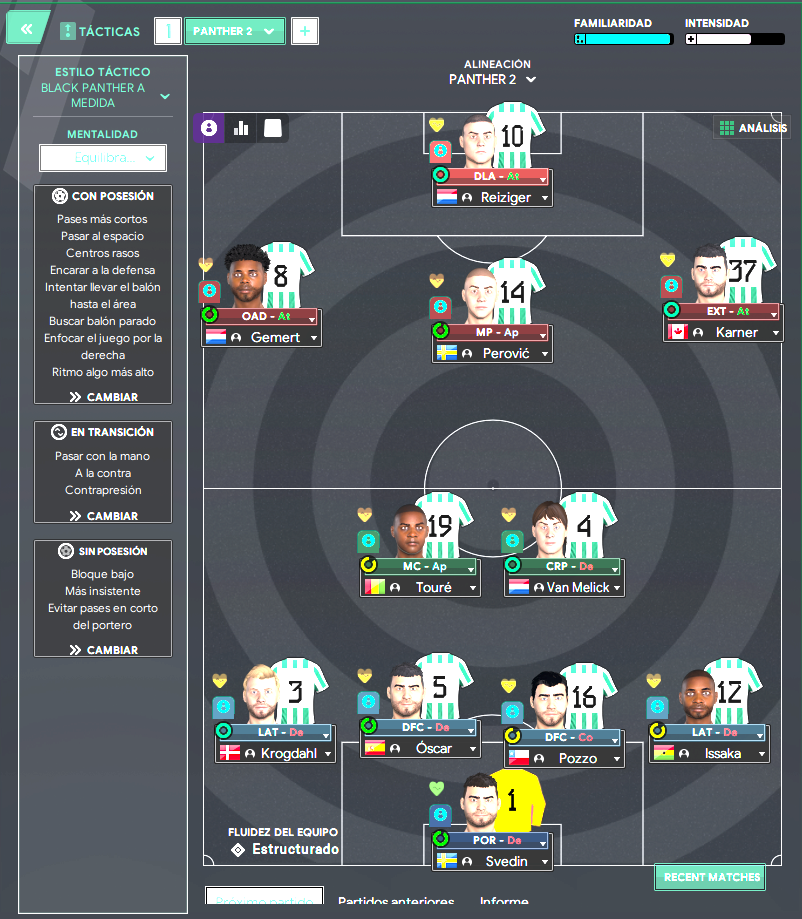
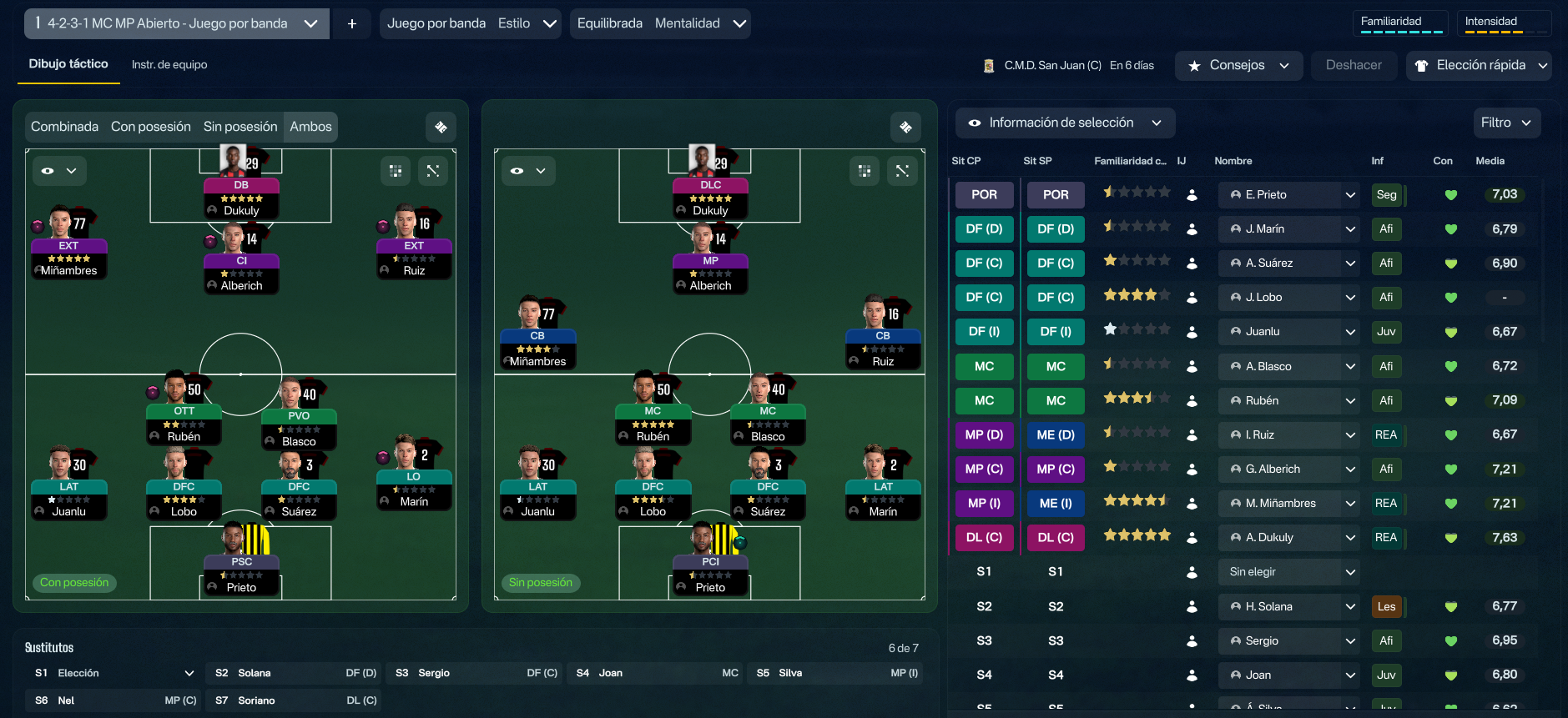
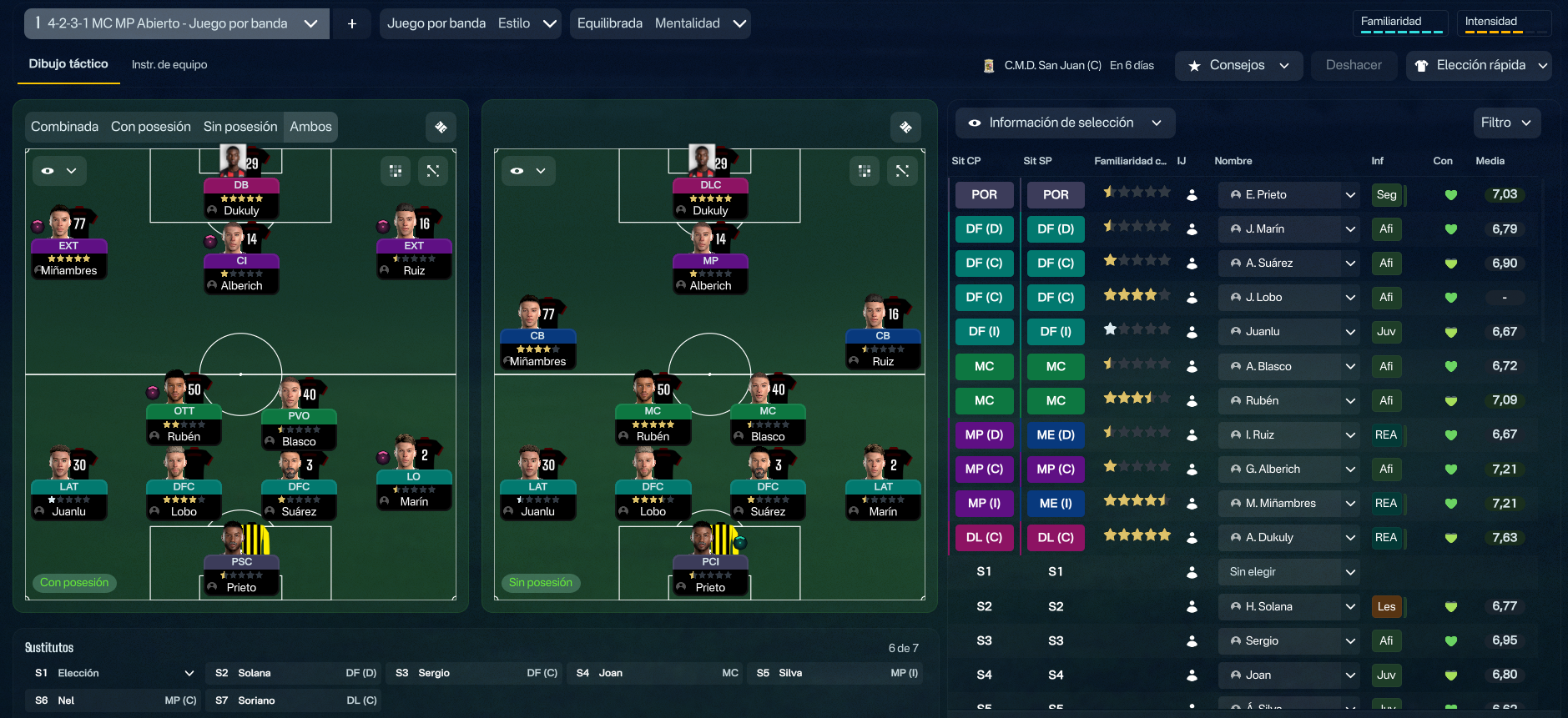
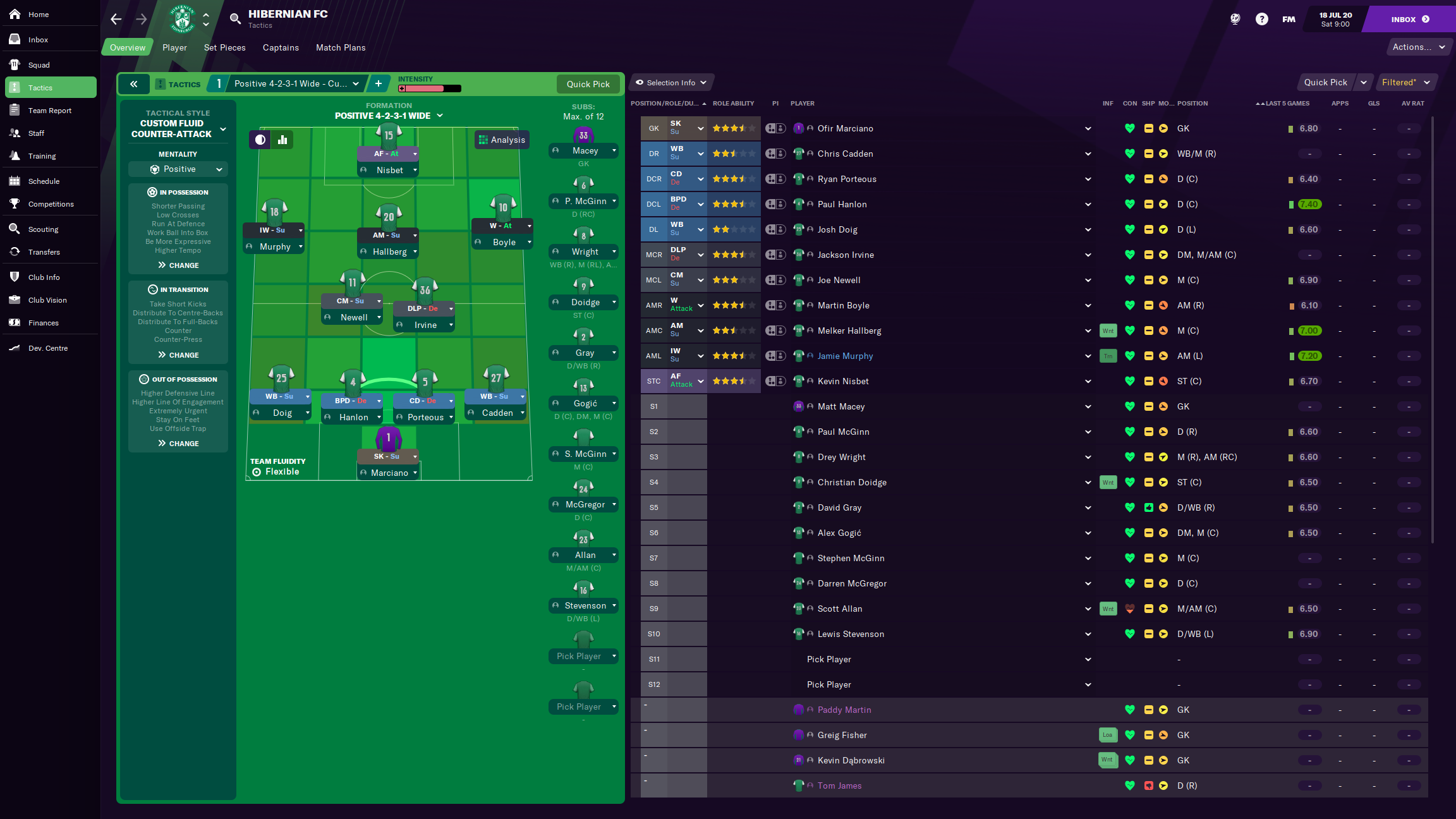
More Counter-Attack tactics
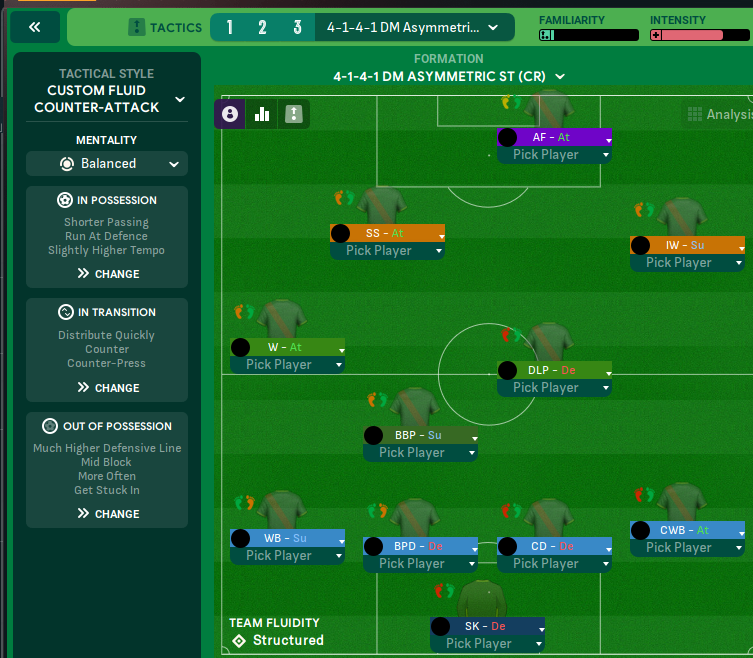
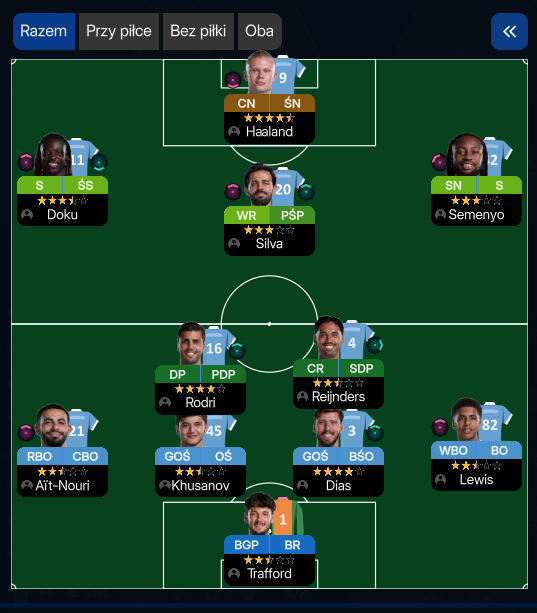
Guides for this formation
The tactical theory behind the 4-2-3-1: roles, instructions, and the trade-offs that decide whether the system holds up.
Player pairings
Midfield Pairs in 4-2-3-1 and 4-4-2
Double pivots and flat pairs in 4-2-3-1 and 4-4-2: when each pairing works, when it collapses, and the AMC unicorn that rescues both.
Read guide
Playing styles
Gegenpressing: A Full Guide
Klopp-style gegenpressing in FM, including squad profile, line-and-press pairing, sustainable workload, and the antipatterns to avoid.
Read guide