Uploaded Tactic
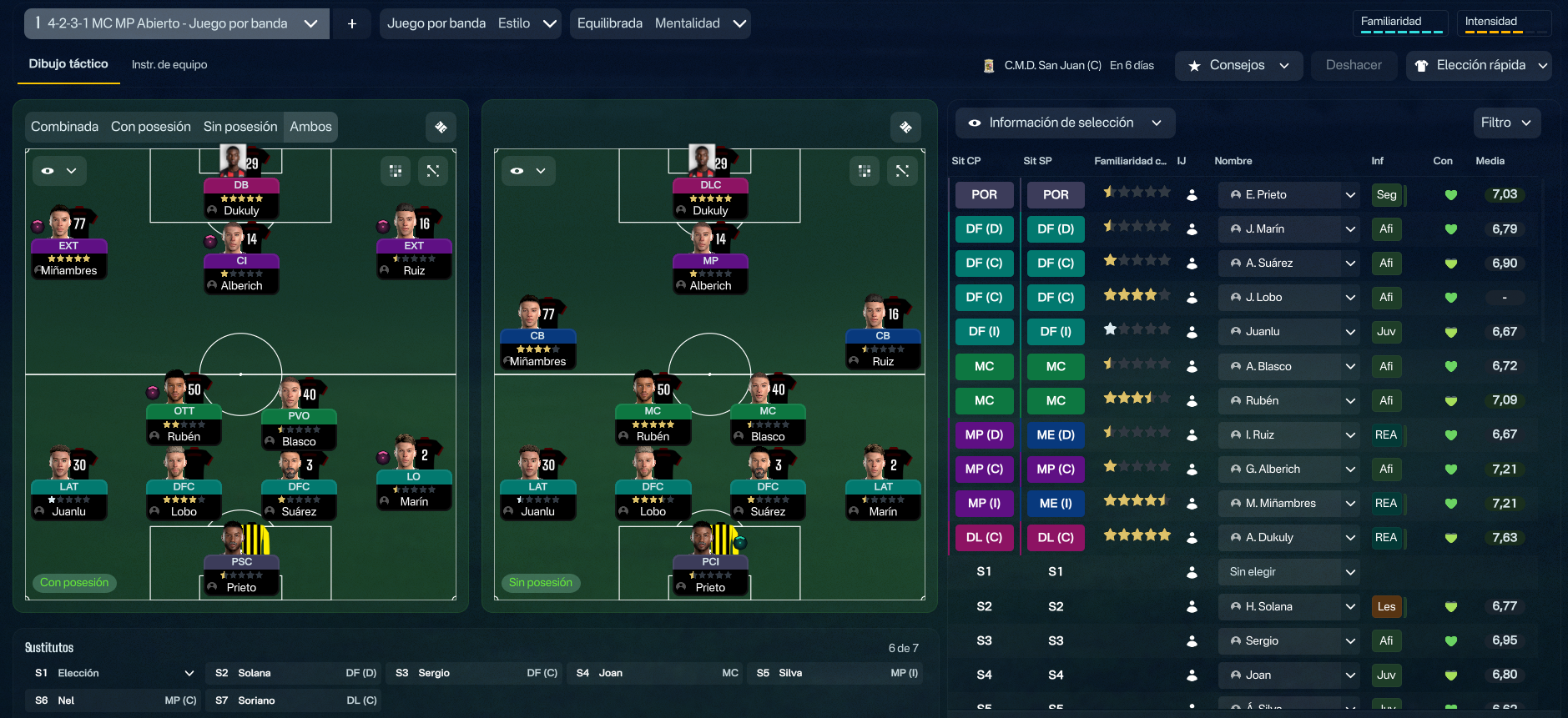
Formation & Style
Tactical Style:Juego por banda
Mentality:Equilibrada
Formation:4-2-3-1
Team Fluidity:Abierto
In Possession
Play Out of Defence
Focus Play Down Both Flanks
Overlap Left
Overlap Right
In Transition
Counter
Counter Press
Out of Possession
Higher Defensive Line
Higher Line of Engagement
Prevent Short GK Distribution
Trigger Press More Often
Team Shape Without Ball
Shape:Compact four-man line
Description:Defenders hold shape and work together to minimize gaps between lines.
Evidence:CBs and full-backs forming a cohesive unit with LBs and RBs supporting centrally.
Team Shape With Ball
Shape:Fluid attacking formation
Description:Attacking line looks to create overloads down the flanks, while CAM supports centrally.
Evidence:MP and EXT positions pulling defenders wide, creating central space for ST.
Phase Description
Attacking Play
Focus on involving wide players to stretch the opposition while the CAM links between play.
Defensive Transition
Immediate counter-pressing to regain possession before the opposition can settle.
Main Focus
Utilizing width through wingers while ensuring support from central players.
Key Strengths
Width Utilization
Dynamic play from wide areas allows for greater attacking options.
Midfield Control
Dual MCs provide numerical superiority, helping to maintain possession.
Defensive Stability
A solid four-man defense minimizes gaps and enhances counter-attacking.
Conflicting Directions
Overreliance on Width
Potential to become predictable when using only wide play.
Vulnerability to Central Attacks
A compact midfield may invite pressure centrally.
Counter Press Risks
Aggressive pressing can lead to gaps if players are caught out of position.
Tactical Suggestions
Varied Attacking Patterns
Incorporate central runs from midfield to diversify attacks.
Defensive Caution
Consider lowering the defensive line to prevent exploitations by fast attackers.
Increased Creative Freedom
Allow CAM more freedom to interchange positions with forwards.
Ask Questions About Your Lineup
Related Tactics
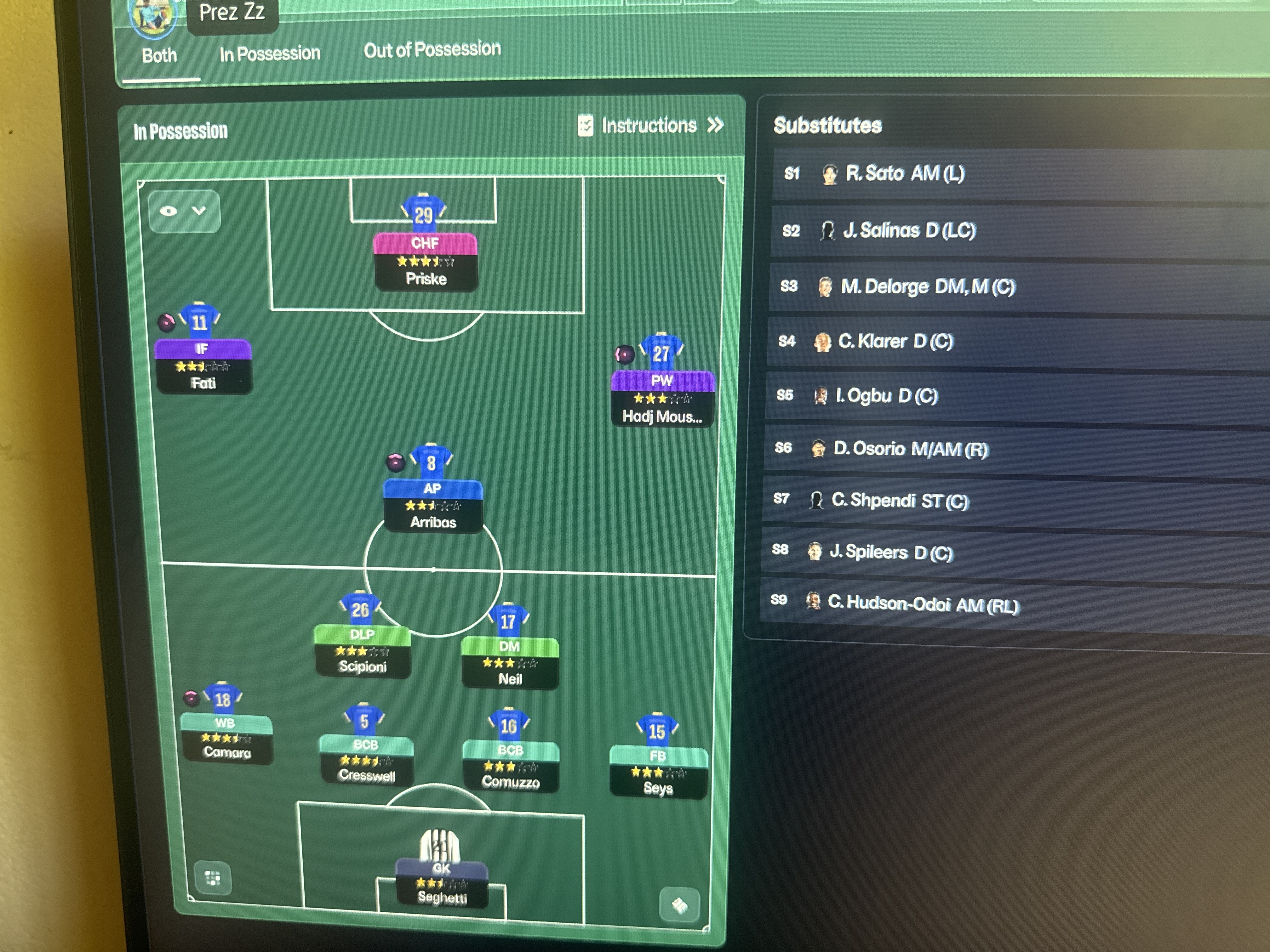
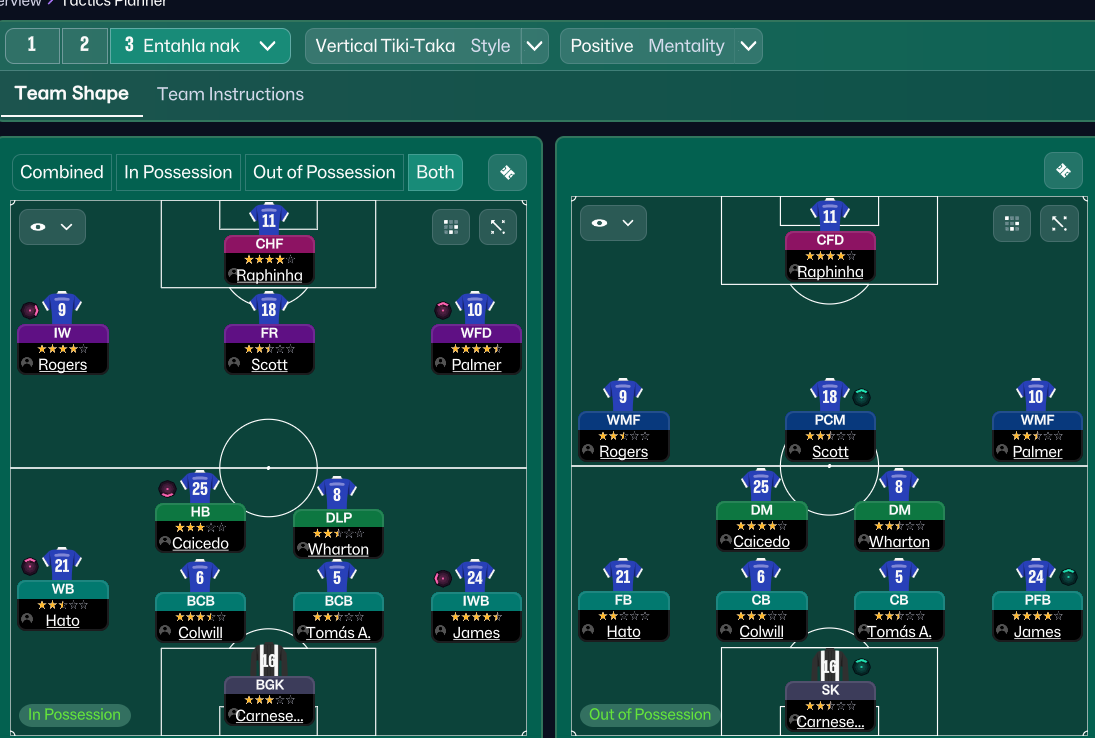
More Juego por banda tactics
Guides for this formation
The tactical theory behind the 4-2-3-1: roles, instructions, and the trade-offs that decide whether the system holds up.
Player pairings
Midfield Pairs in 4-2-3-1 and 4-4-2
Double pivots and flat pairs in 4-2-3-1 and 4-4-2: when each pairing works, when it collapses, and the AMC unicorn that rescues both.
Read guide
Playing styles
Gegenpressing: A Full Guide
Klopp-style gegenpressing in FM, including squad profile, line-and-press pairing, sustainable workload, and the antipatterns to avoid.
Read guide