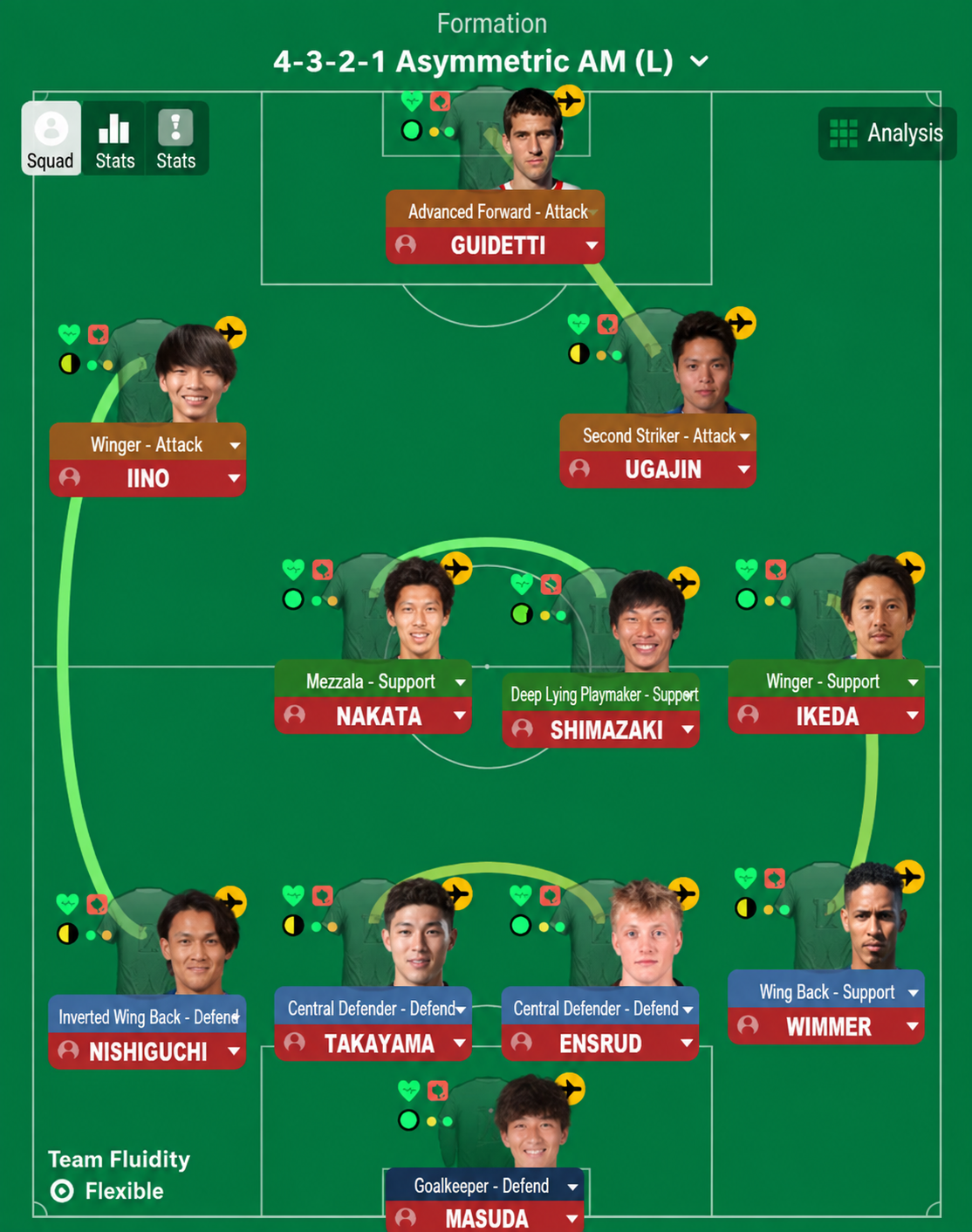
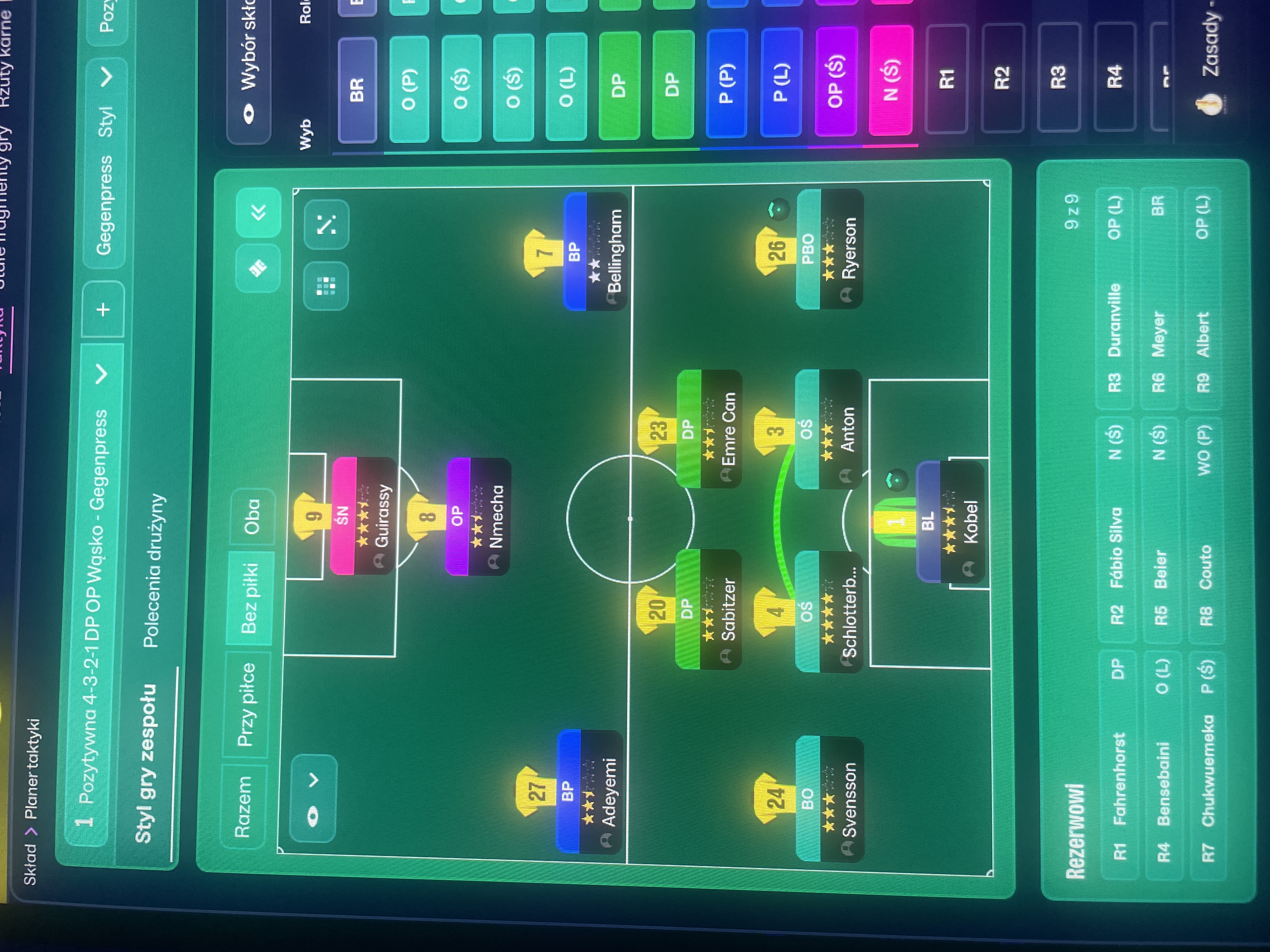
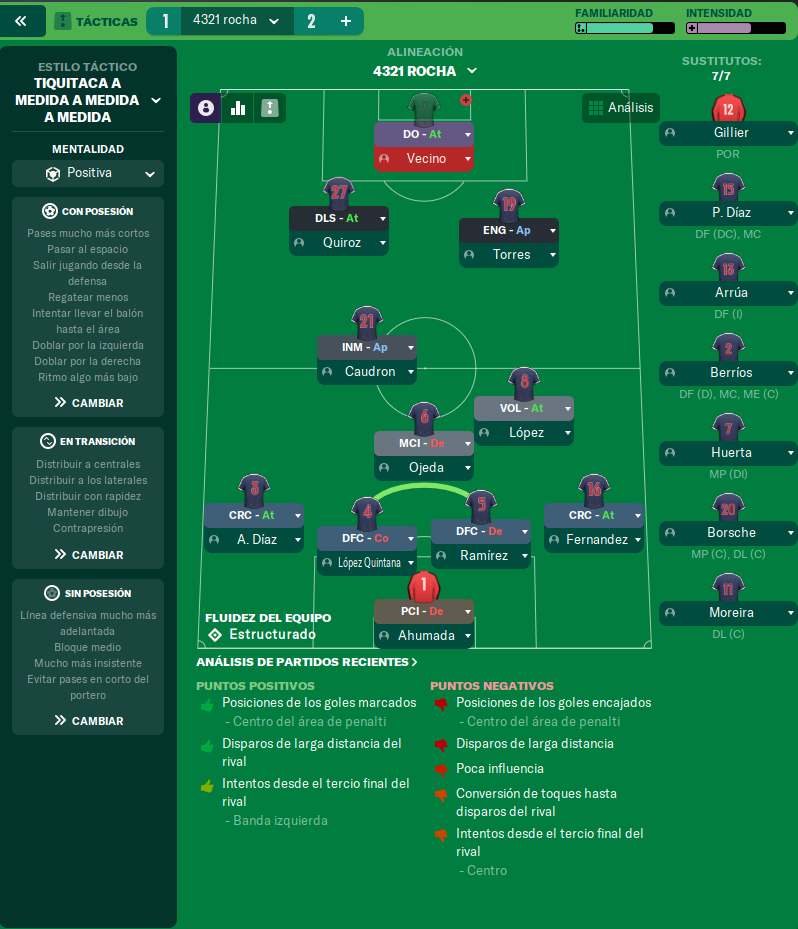
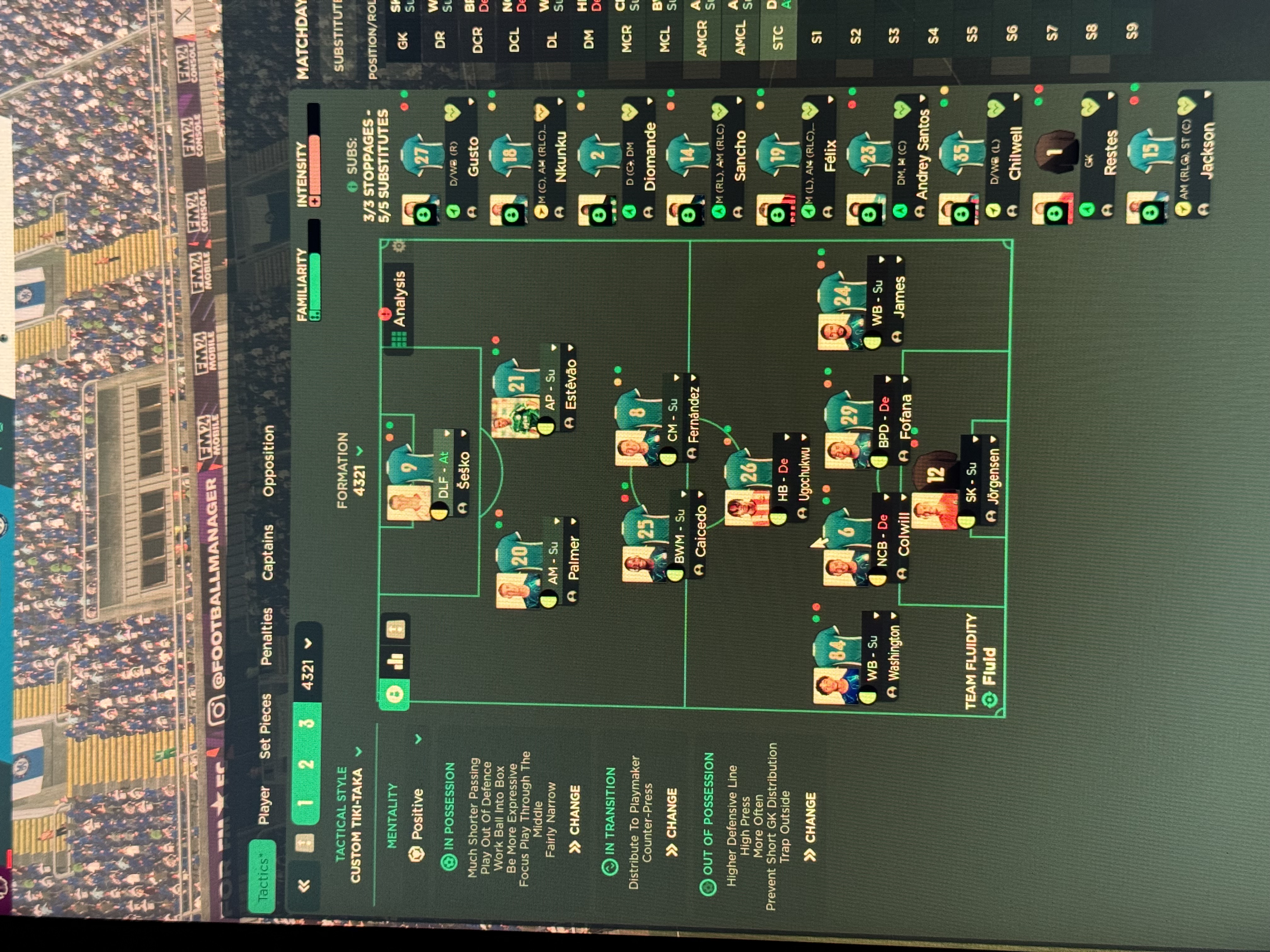
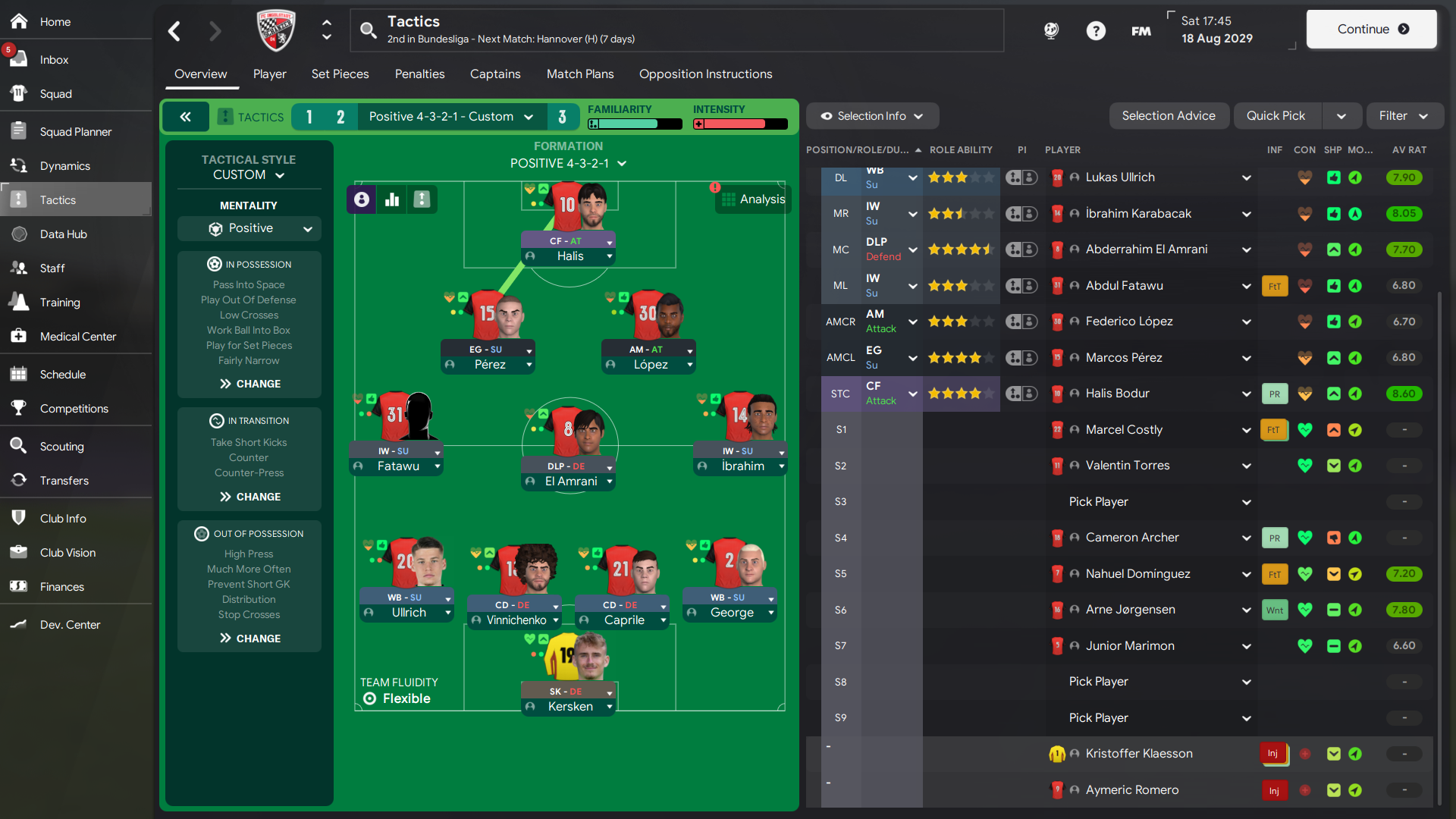
Uploaded Tactic
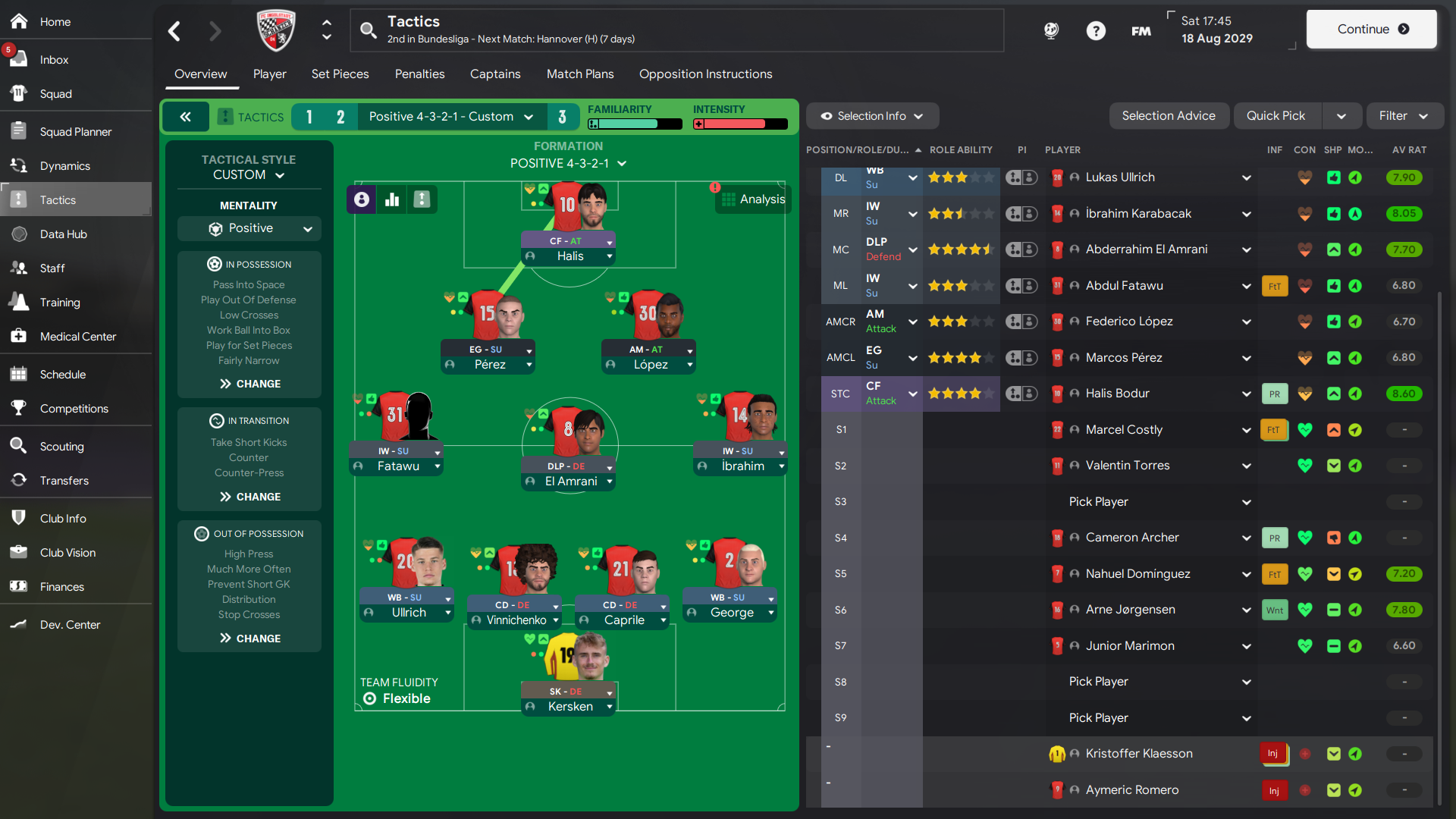
Formation & Style
Tactical Style:Custom
Mentality:Positive
Formation:4-3-2-1
Team Fluidity:Flexible
In Possession
Pass Into Space
Play Out Of Defense
Low Crosses
Work Ball Into Box
Play for Set Pieces
Fairly Narrow
In Transition
Take Short Kicks
Counter
Counter-Press
Out of Possession
High Press
Much More Often
Prevent Short GK Distribution
Stop Crosses
Team Shape Without Ball
No team shape without ball data available
Team Shape With Ball
No team shape with ball data available
Key Strengths
Fluid Attacking Play
The use of Inside Forwards allows for effective link-up play and creating space for the central striker.
Strong Midfield Control
The Deep-Lying Playmaker offers defensive stability while also being pivotal in transitioning play.
High Pressing Game
Implementing a high press can disrupt the opponent's build-up, regaining possession quickly.
Versatile Width
Utilizing Wing Backs provides width and options for both crossing and cut-ins, stretching opposition defenses.
Conflicting Directions
Overlapping Full Backs vs. Narrow Width
The formation encourages a narrow approach, which might not fully utilize the overlapping full backs.
Counter-Pressing with a DLP Role
The Deep-Lying Playmaker's role might conflict with a high-intensity pressing game, potentially leaving gaps.
Inside Forward Role in a High Scoring Setup
Inside forwards typically need space; if the ball isn't moved quickly, they may become isolated.
Flexible Team Fluidity with Rigid Player Duties
Having defined roles may impede fluid player movement encouraged by a flexible approach.
Tactical Suggestions
Alternative Roles for Full Backs
Consider using Full Backs on Attack duty to add more attacking dimensions and take advantage of space on the flanks.
Adjust Player Duties for Pressing
Changing the DLP to a more aggressive role (such as a Box-to-Box Midfielder) can enhance pressing intensity.
Incorporate a Secondary Target Man
Having a secondary striker or target man can provide aerial threat and assist with hold-up play.
Utilize Rotating Roles in Midfield
Encouraging role rotations within the midfield can help maintain fluidity and confuse opposition markers.